
James Bay: Imposter Syndrome, Trauma & Controlling The Voice In Your Head
嘉宾:James
全文文稿 · 按对话顺序保留完整内容,深入理解上下文。
§01Transcript — part 1
The thing I think about most, especially when I’m on the go, but also when I’m sat here in the Diary of a CEO studio, is the Wi-Fi and internet that we have to work with. In fact, anytime I’m filming away from the studio, one of the first things I do when I arrive is open up an app and do a speed test to see how strong the signal is.
The number of screenshots I’ve sent to my team about Wi-Fi signals at different locations is actually pretty crazy. It matters that much to me because it’s such a competitive advantage to have fast Wi-Fi. Because on any given day, if I’m recording, let's say, hours and hours of footage with a podcast guest, I then often have to have my team send that across to our London team who then do the edit.
So fast Wi-Fi and internet is not a nice to have; it is absolutely business mission-critical. So, when it came to finding the best provider who could supply internet and Wi-Fi to our new LA studio, which I’m sat in right now, we looked at every single option.
And of all the providers, the one that came back with the steadiest connection, as well as being the cheapest, was today’s sponsor, Spectrum Business. Spectrum Business keeps businesses of all sizes connected with fast, reliable internet, advanced Wi-Fi, phone, TV, and mobile services.
Millions of business owners already rely on Spectrum to keep their operations connected. So, if you want to join them, head to spectrum.com/business to learn more. That’s spectrum.com/business. Restrictions apply. Service not available in all areas.
I remember writing "Hold Back the River" and everybody at the label jumping for joy and thinking that they had a hit on their hands. I dreamt about being on those stages in front of all the people that my heroes were in front of. I remember this burning desire. I was dead certain that I wanted it more than everyone.
Chaos and the Calm comes out, debuts at number one. That’s crazy. Nobody could have made us understand it was going to be traumatic. Who I was on the Chaos and the Calm campaign, I needed to stop all of that for my soul and my mental health.
Yeah, it’s pretty intense. Ed Sheeran has invited me to open for him in football stadiums around Europe. And the bit I hate to admit, and I’m anxious to confess, is that life can take a toll on people. To be male and talk about your feelings, it was more about, "Can you suck it up, though?"
It’s all like an act. Would you do it all again? I’m really concerned about what happens next.
So, without further ado, I’m Steven Bartlett, and this is the Diary of a CEO. I hope nobody is listening, but if you are, then please keep this to yourself.
James, so you're a 90s baby?
Yeah, 1990.
Same as me, 1992. Okay. What about those early years defined you and the person you would go on to be? When you look back at the dots and say, well, that, that, and that is the reason I am who I am. What are those first dots?
I grew up in a commuter belt town called Hitchin in Hertfordshire, which is about an hour outside of the center of London. I hated going into London. It was horrible, busy, noisy, smelly, awful. The quiet calm of my little hometown was perfect. It was safe, pretty much safe.
I’m the youngest of me and my brother. And then there's my parents. My mom and my dad, and we don't have many—I only have one cousin who was born 10 years after I was born. So, we were a small family. It wasn't a big crowd; it wasn't the sort of noisy experience growing up in that respect.
My parents are pretty fiery people. And they’re kind of party animals in a way. They're very social. They're very loud and kind of excitable. So, I feel like that was going on all the time. They had people round all the time, and they kind of, I suppose, inspired me and my brother to be okay in all sorts of social situations.
I think all kids, myself included, go through moments of shyness and moments where they're a little more outgoing, then maybe a little more shy again, then outgoing again. I remember most vividly the sort of shyer times, and I stood behind my older brother, who would lead nine out of ten times into any situation with other kids or whatever.
So, I felt I was a more timid person, gentle compared to my parents and my brother who were more just louder.
Were your parents affectionate?
In a kind of wartime way, stiff upper lip kind of way. My dad was older than other dads. Still a great dad, but he was 42 when I was born. He's nearly 75. And he comes from like, well, his parents were—his dad was flying fighter planes in the Second World War. Most of my friends’ parents’ parents, like, there’s another generation usually involved, whereas for me, it was my dad’s dad who was doing that.
So, my parents come from this—you asked if they were affectionate. They were affectionate in a sort of steely way. It wasn't sweet and sugary and cuddly, to be honest.
For example, when I showed some vague interest in performing of any kind, my mom was less, "Oh, that's nice." That wasn't her energy. Her energy was like, "Okay, if you’re into it, do it, and do it like you mean it. Go on!" Like, it was with a bit of a smile. It was encouraging and I got on board with it.
But ultimately it was like, "If you're going to give it a shot, don't do it by halves. Look at"—and she'd name any one of my heroes or any one of her heroes musically. My parents are big music fans. She'd say, "Look at what they give it. You’ve got to give it that." And without quite saying it, she was saying, you know, you have to be believable.
It's all like an act. So, affectionate—they were encouraging and they were excited by, for example, when I got into music and wanting to play an instrument and performing and all that. They were excited about it, I think. But they weren't, like, if I wasn't into it, they weren't—if the one and a half times in the early days that I went, "Oh, I don't know if I want to play guitar actually, it's probably a bit hard," they weren't like, "Aww." And they weren't saying, "Try harder then." They were just like, "Alright, okay."
What about your dad then, when he finds out that you want to pursue that avenue?
Well, one thing my dad and both my parents said a lot about and kind of required of me was that I would do something to earn some money. And actually, go back to when I was 12 or 13 when they first said pocket money's done.
And I think I know a lot of kids who were getting that until sort of 16 at the time, some of them longer, because there were various kids whose parents didn't—they didn't need their kids to get a job. They just wanted their kids to be kids and have a nice time.
And I guess it's not that my parents didn't want me to have a nice time, but from like 12 years old they were like, "There are jobs you can get. There’s a paper round, there’s this, there’s that." And there was my dad, who had loved music and going to see music live since he was much younger, since way before me and my brother came along.
He was definitely like, "There’s a job at the market. So-and-so's kid is working down at the market. Go and ask him how he got the job, try and get the other shift." And I did. I got that shift. My brother got one of the shifts as well. And at 13, in January, at 4:00 AM, I was on my bike on the way to the market, in the dark, shivering my nuts off.
I remember the anxiety dreams that I would have before getting up for that, because as a teenager, I just wanted to be asleep for hours and hours and hours. And you’re supposed to—like, we know more about that now—it's like really good for teenagers to get as much sleep as they can. Kids of any age, but teenagers apparently, very important. My dad didn't know any of that, not interested.
"If James wants to buy guitar strings because he’s snapping them off his guitar all the time, then I can't"—he's like, "I can't keep paying for that." Which I respect. I didn't at the time. My dad and my mom, but also because my dad had had jobs as a kid, you know, helping someone at like a corner shop or something. He heartily believed in that and was trying to instill that in us from clearly, you know, very early on because whatever our hobby might be, he's like, "I don't want to have to fund it."
And I understand that. We don't come from money. My mom was sometimes working and sometimes not because she was being a stay-at-home mom half the time. But my dad was bringing in the big bit that paid for the family to sort of exist. So he believed as long as we could sort of fund the things that we wanted to do, more or less, then they were doable.
You talk a lot about how having idle time is really important to discovering who you are and being a creative and finding yourself. Something I’ve not really heard before from my guests is the importance of just having a window of time.
And I imagine even today when it comes to creativity, that's maybe a big part of your creative process. Can you talk to me about that early age then, how idle time helped you to become who you are?
Almost against the odds, basically, it helped me become who I am today and it helped feed my creative everything. What do I mean by that? My mom's the type of person who—so when I was a kid in the house, you know, if I was having some idle time—another way to say that is if I wasn't doing anything middle of the afternoon—she'd be on me straight away, or my brother, like, "What are you doing? You can't do nothing."
"You could tidy your room, you could come and clean this thing for me, you could go out the back garden and do this thing for me or you could do that. What do you mean you're doing nothing?" That's a vivid memory. And it's not like unfair. I respect it in certain ways.
But I know as a, at this point, someone who's professionally kind of creative and wound up in a position where I can sort of call that my job, that it's very important to be staring out the window. There was some quote, I can't remember who said it and somebody told me the other day and I haven't got any reference names for you, sorry, but a guy said—
Just say it was Einstein.
Einstein, perfect. Einstein's wife said to him, "What are you doing?" He was looking out the window. He said, "I’m working." And that was it. And it’s perfect for a creative, that, because it’s bang on. If I’m staring out the window into space, as the rest of us would might say, then it just looks like I’m staring into space. But I’m probably having an idea for a song or a lyric or working something over in my head.
I find it hard to say that stuff to you or anybody without worrying that I sound pretentious or like a bit of a dick. But I know that’s the experience. When I was a kid, thinking about something I wanted to draw, whatever it may be, and having some of this idle time, like I say, my mom was like on me, like, "No, that's not okay." So, maybe that's why I am sort of concerned even now that I look like a pretentious idiot.
No, I have to say I completely agree and logically it makes a ton of sense that you have to clear the mind to allow new ideas to arrive. And that we all—I mean, every business, every person that works in a business will know the best ideas don't come from a boardroom. They don't come when you're trying to think of them. They come when you go for a walk or you're in the shower, all these places where you have that space. So, it makes perfect sense.
I remember David Gilmour in Pink Floyd said, "Every time I sit down, guitar in hand, to write a song in that really creative mood, 'I want to write a song and I’m going to and it's going to be great,' nothing comes." And it is generally that way. So, it quickly, a long time ago, it quickly made me understand and sort of cherish the opportunity to sit around with the tools nearby and just exist, and think, and dream, and play, by which I mean play guitar, play music, but just play.
Creatives and just people generally, I think, have a lot of guilt associated with just sitting around, but it seems to be so incredibly imperative to creation.
It's a huge, huge part of it. It's probably 95% of the reason it ever works, if it ever works. 95% of it is about having—not watching a clock, not there being any sort of consequence. And we put—I put hundreds of consequences on myself, we all do. But as soon as you do those things, the quality starts to sort of lessen.
So, yeah, it didn't help that experience when I was a kid of my mom sort of going, "No, no, no, no, no, you've got to keep yourself busy." It was almost if I don't see you kind of playing and getting something from the playing, then you're not spending your time—you could be helping me, you could be doing this, you could be doing that. "Is there some homework you haven't done?" And yeah, there probably were like hundreds of bits of homework I hadn't done, but I was already so into trying to write a song or get better at playing the guitar or being creative in some other way that, of course, I was pushing the homework under the rug.
But that, unfortunately, that even that small sort of pressure that I felt then has ended up—as so many, like you say, you've met so many creative people who feel that sort of guilt—it has heightened the sense of guilt. So, it's a strange one to juggle, and I find myself fighting against it, and that's really inconvenient to what I’m trying to do as a passion and actually for a living suddenly.
What insecurities did you have at that young age?
Insecurities—I had an insecurity—so in school, in like primary school as a young kid, I was a fast runner. I was good at drawing and painting. I had these—a selection of things that I was good at. And the talk in the classroom was that I was the best at running, I was one of the best at football, I was the best at drawing.
And I’m not fully sure how, but that started quickly to really matter to me to the point that, as far as what insecurities did I have, I think back about the worries that I had about "Well, what if one day I’m not the fastest? And what if somebody draws something better than me?" And I hate to admit that. I don't know why I felt those things, but I had an ambition and a drive that wanted to be really, really good at these things. And as a kid, yeah, I wanted to sort of be able to feel like I was the best at them.
Why? Do you know why?
I don't know. Well, I know it's dangerous territory is what I wanted to say. I know now as an adult that that's dangerous territory because there's enjoying things and being really good at them, and then there's a difference between that and whatever somebody decides is the best.
One theory as to why—one of my theories I suppose, just as I think about it now, is that I could maybe then sort of—maybe I could validate idle time. I think I really enjoyed and to this day I really enjoy having an endless amount of time and space to create. And I’ll throw that thing about being the fastest runner sort of off the table for a minute because it doesn't really sort of relate to the context of the other things I loved then that have fed through into my life now.
Why was I—why did I worry about that stuff? Because, yeah, I wanted to—if I could say people think I’m really good at this, then I could have a reason for why I should be allowed any amount of time to focus on them.
And you could present that evidence to who?
My parents, anybody trying to stop me doing it. A part of my conscience, because I have a conscience that feels guilty. I’m looking at the clock all the time. It made me a very punctual person, but I also look at the clock out of paranoia. "How much time have we got? How much time have I got?" And it shouldn't matter at all to creativity that, but I find myself doing it all the time.
You know, I actually have a baby now. We have a nine-month-old daughter, Ada. Lucy went out, took Ada out the other day. And because Lucy is the absolute greatest, she was like, "It'll just give you a load of time to just have a guitar next to you and think about the things that you sort of—" You see what I’m getting at? She just gave me, "Hey, you just do you for a bit."
That’s a gift.
It's an incredibly generous gift, now I know what it's like to be a first-time parent and it takes a village. And still, an hour into that time, I knew I was an hour into that time because I looked at the clock. I didn't need to, but I still carry it. It’s frustrating.
Was there anyone in your circle at that early age that made you feel like that wasting, quote-unquote, wasting time or not using time in an evidently productive way was—meant that you were a lazy person?
It was—that was part of the language of who and what I grew up around. You know, yeah, like I say, we weren't a particularly wealthy family, neither were any of the sort of friends that my family had. Everyone was somewhere between working class and sort of just about middle class. But I felt a lot of penny-pinching all the time, partly probably because of what my parents come from, so how they operate.
And it felt like middle class came later in life. I think my parents are there now, but like that's slightly sort of beside the point. What I mean is time was precious, and you had to—the language around idle time was, you know, don't waste it. Before anybody had thought about what anybody was doing with idle time, they were already being told not to waste it.
That was a, yeah, in my wider circle as a kid, around my family and family friends and friends of friends, that was the energy. So there was like a pressure and there was of course, yeah, a narrative that said, "Oh, he just sits around all the time, he's so lazy." Not directly to me necessarily, but if anybody was doing any sitting around of any kind for any prolonged amount of time, "lazy guy." So it was a negative thing and I felt a pressure and a sort of self-conscious need to stay away from that. While all the while, I absolutely kind of craved it for being a creative kid who wanted to draw and paint and explore music.
Did you get the impression that people in your family and close to you had high hopes for your future?
You know, I do think that they thought I really wanted the kind of things I’ve achieved. I do think that they believed I wanted this stuff, and I think they saw that in my—how I went about my days.
I remember a friend of mine who’s still such a good friend of mine, Matt. We learned to play guitar together. Me and Tom, who I mentioned who plays bass in my band, and Matt, and my brother Alex and I, you know, we were all playing guitar at the same time, learning to do this, that, and the other. And me and Matt, we were doing our GCSEs and we were in like a biology class—we did the same science class. And we were talking—and Matt is a brilliant, beautiful soul who is a total party animal but he’s wonderfully earnest in his own way as well.
And we were sharing the pressures of what we’re supposed to do after our GCSEs, after our A-levels, are we going to do uni? "Oh my god, who are we going to be, what are we going to do?" And he said, "Man, one thing's for sure, I don't think you’ll ever have an office job." And I knew how he meant it and I really, I really appreciated it and I’ve never forgotten it.
And I think I’ve brought it back to him, I’ve brought it up with him again since. And in a strange way, it felt like he was a guy—you asked what my parents would say—well, he was someone who was very close to me at the time as well, who I felt believed in me.
What's funny is he was one of ten of us who were all starting to play the guitar at the same time. We all looked at Jimi Hendrix or the Red Hot Chili Peppers or any of our rock heroes in the same way and we wanted it. We wanted that. Because you do when you're 14. "Yeah, I want to do that."
And I remember this burning desire, and I can't tell you even to this day whether it was the same or less or more than any of the other guys, but in the moment, I was dead certain that I wanted it more than everyone. And I did sit with my parents some nights with some music on the TV or on the radio or coming off the record player and almost get emotional about how badly I wanted to do that kind of thing, make that kind of sound. "When I grow up," was the sort of thing I was saying.
And they didn't take the piss out of me. They were very straight-faced about it. I think they like—I think it excited them, and obviously, they had no idea if it was actually going to happen, but they did encourage it. So, my very long-winded answer to your question, if you called them up, is: "Yeah, I think they would have believed or hoped that I’d have sort of got close, maybe even half as close as I’ve come." Yeah.
And off you go to study music in Brighton. It was—it’s really a wonderful thing to hear that one of the real sort of catalyst moments in your early career was just a clip of some punter in a pub recording you singing that ended up on YouTube.
And I will say it was at a time when there were YouTube sensations popping into the charts, getting signed by big record labels. Very exciting because they got 500,000 views overnight. They put the video up at 7:00 PM and by 7:00 AM it had a million views, two million views. That video that went online of me, it was there for six weeks or more—25 views, maybe, maybe 26 views.
And I didn't—I hadn't thought about it. I met the guy because he filmed me, and he said he’ll put it online, you know, he’ll do like a little sort of filter on it, a little edit. "Thanks, man. Great. I’m just glad you like my song." And I didn't hear about it until this record label found it with its 25 views, and they called up my manager—I had a manager at the time, still same manager I’ve got today—called him up and said, "We love, we love this. We’d love to meet you, meet James. Can we fly you to New York?"
Which was sort of—that’s where they were based, the record label. And it was just a very whirlwind exciting experience just to go and meet these guys. They just wanted me to come and sit and sort of play for them, like, in the flesh. And so I did, and they went on to be the label that I sort of signed to after a second visit, and it was all very exciting given that it feels like—that was one of a million open mic nights that I was performing at at that time. Just rolling up, putting my name down, playing three songs, moving on to the next one.
What has that taught you about knocking on doors and you never know which one is going to open? You know what I mean? Because as you say, people look at that and go, "Oh, fucking so lucky," you know? But what is that—what has that told you about the nature of how life happens?
I guess it's taught me to use the idle time. My idle time in those years was long, empty evenings that I filled with finding open mic nights to hone my craft. Sounds a bit pretentious again, but it's exactly what I was doing. It’s exactly what I was doing and it’s exactly what I’m doing at every gig I do today.
The only difference is that there seems to be some people today who are actually there to see me and they've done a bit of homework, they say they like my songs, and that's so flattering. But every single show I do to this day, I just want to be a bit better. I just want to deliver a slightly more effortless every time, more effortless, hopefully more moving and enjoyable experience for the people standing in front of me.
Back then, it was seven or eight, maybe 11 or 12 people smattered around a bar, privately trying to have a drink, probably after work, trying to catch up. And I’m in the corner barking. And they don't know who I am, and they haven't paid to see me or anything, and I want their attention.
And I don't just want their attention. I want the thing that I have written to be good enough to effortlessly turn their head. That's how it has to go. And I had a lot of time to fill with those trials. It was all trials. It's all training.
So I did. And I remember earlier than when that thing was—when that guy filmed me in that bar, I remember years before that when, for example, I was taking a couple of originals and a couple of covers to an open mic night, and people really enjoyed my delivery of the covers, which was really encouraging.
And then I’d do an original and I’d play the verse and they'd just talk in a way, and I’d play the chorus and they're still talking. Then I’d play the bridge and a few heads would turn. And I’d go home that night thinking, "The bridge has got something, but the other bits need work. Clearly, the other bits need work because I didn't have them in the verse and I didn't have them in the chorus. But I had them in the bridge."
And that's why it was all training. And so I’d go home—this was when I’d moved to Brighton, actually, particularly—I had a lot of idle time between lessons and the course that I was doing. And I filled it with just trying to be better, just soaking up—I was going to record shops, this was just right before streaming sort of exploded. It wasn't like a thing, so I was buying records still. The difference I suppose for my generation at that time is I put them on my computer and stick them on my MP3 and I could walk around without a stack of CDs in my pocket or in my bag.
Anyway, I was soaking up as much as I possibly could, just trying to get better, trying to create a more enjoyable experience for anybody who was in front of me. Because that's all I love about music and that's what I want to—that's why I want to do it.
People often overlook that part, but it seems to be, if there was a sort of a throughline or a common thread between all the guests I sit here with, whether they're comedians or they're music artists, the ones that have become really successful and also really unique and—yeah, unique is the right word, really unique—is you get this like bit before where they were performing to no one and kind of just doing it for the love of it for themselves.
And it seems to be that in fact, that moment is the defining moment when no one's there, when there isn't the arenas and there's that part there, that 10,000-hour part that they talk about is the most important part.
Somehow I think it probably is. Everything that might follow that or that does, or everything that followed that for me has been so important. But there are moments in the very beginning for anybody whatever they're doing that are vital to how—to what happens next. 10,000 hours is the right description and reference.
And all those open mic nights, and I was busking when I was in Brighton as well, which is kind of wild. You just walking down the street with a guitar on your shoulder and then you stop amongst all the other people you're walking next to and you have the balls, the confidence, somehow the courage to start singing at people in the middle of the street.
It was always terrifying until I was sort of getting into the first chorus of a song. And then I could almost sort of blend in, but give it some to try and catch some people. Anyway, those—all of that—those times, they are vital. It's about learning about what doesn't work. It's about sometimes, you know, there's people who are like hell-bent on talking over you. And they've every right to. They've every right to.
If they haven't come to see you intentionally or it's not a private, you know, actual sort of venue where people buy tickets to come, then they've every right to. And it’s how—it was always about how I managed in those situations.
I remember going into noisy pubs that wanted to hold an open mic night at the same time, and someone plugging me into a PA saying, "Go on," and me thinking, "This place is rammed and they're all just having the greatest night of their lives, just having a big old chat and they're drinking their pints and all this and I’ve got to sing into this." And I remember being so excited. I remember thinking, "I’m going to get them all."
And I don't know that it worked every single time, but I remember winning over rooms and leaving. So these weren't open mic nights, actually, I remember in between the open mic nights, there’d be some individual who’d seen me and say, "Will you come and play at my pub?" which felt like a real win. "Will you come and play at my pub on Thursday night or Saturday night, whatever it might be, Sunday night?"
I say yeah, alright. And half the time they’d say, "There's 20 quid in it for you," and I’d say, "Oh, absolutely. Play for an hour, sure. You could pay me nothing to play for two hours at that time and I’d have done it." I just wanted the opportunity, the stage, the microphone, the opportunity. And I remember, yeah, a couple of like really busy rooms full of people who had no idea who I was. And I remember you catch some eyes of people going, "Oh, here he goes," you know? Another guy plugging in a guitar. "Let's all sort of speak up a bit when he sort of pipes up." I remember thinking, "I’m going to get you."
One of the really interesting things I was just thinking about as you're explaining that story is how the environment in which you started your career, in those pubs, noisy pubs, trying to get people's attention—you described it as actually changing the music. You would go home and say, "Okay, the chorus held them, but this part didn't." So the environment actually changed the creative because you realized that attention—you learned very early that attention is the thing.
We’ll all listen to a good song. But, you know, people forget the ones that aren't good enough. That's a quite a sort of brutal sort of comment in itself, because I, you know, I can't guarantee that every song I’ve ever written will hold every room in the world every time. But I still love it enough to try again and try harder.
So, yeah, it does change the—it absolutely changes the music because until I changed those things, I was just playing something that wasn't—because I was often going back to the same rooms. Not always, and it always eventually changed, but I would go back to the same place because that’s just another place that I knew I could go and play a few songs.
And if across a two-week period I didn't get round to changing some stuff and I still played the same song, then it just wasn't—every time, it wasn't working. Every time I was getting them for the same minute in the song, maybe it was the second chorus or something. So, yeah, it—you have to adapt. If you just keep taking the same thing and ultimately flogging a dead horse, I was never—if I kept doing that, I was never going to be on any of the stages that I’d seen my heroes on.
Now, when I was a kid at home and I was being affected by all that stuff I saw on TV, on VH1 Pop-Up Video or even music in movies or any live stuff that I got to see on TV, you know, that was broadcast on TV—I dreamt about being on those stages in front of all the people that my heroes were in front of, so many people singing their words back.
And I was never going to get there if I just stubbornly took around the same song that I wrote when I was 17 that I might have thought in my heart of hearts was so incredible. That doesn't matter. I have to open my mind up to what other people think and accept it. I was trying to understand and learn that as a 16-year-old, 17-year-old before I got to Brighton.
When we—me and my brother and Tom—we were in a band as 13, 14-year-olds, and then we were in another one as 15, 16-year-olds and 16, 17, and to 18, into 19, then I left. The bands kept changing. I just said "another one and another one." Often I was moving it on because something wasn't quite good enough, and so I thought, "Well, let's change it into this, and let's change it into this thing, and let's tweak that bit and that bit, and let's make that bit better and we'll change the band name and we'll be this and it'll be fresh for people and then we'll keep them." I don't know why I was thinking about that back then in such a sort of A&R kind of mindset, but I was, and I still sort of do.
So, six weeks after that clip of you singing in a pub—six weeks after that clip goes online, you end up signing a record deal in New York, right?
Yeah, it was—there were two visits to New York, so it was probably more like sort of couple of months, two or three when I—
Better for the story to say six.
Let's go six. It was actually—it was 98 days and four hours.
Very quickly after that clip, you end up signing this record deal. And then soon after that, your first EP comes to the world, The Dark of the Morning. Five tracks. I listened to it earlier on. It wasn't on Spotify, so I had to go on Apple Music. You owe me 16 quid. No, no, it's all good. It was a really, really great album.
Thank you.
What was that like then? That first EP goes out into the world. Does your life change at that point?
There was a change. It all felt too fast. I think once I signed a record deal, as exciting as the initial sort of part of the ride was, everything started to move quite fast. And in hindsight, what I realized—I was nervous about the pace of things, but I had this huge, I don't know what to call it, it's a record label obviously, this huge like backing, this body of people who wholeheartedly believed in me and wanted to sort of throw me kind of in at the deep end, but really just sort of throw me in the ocean where it's all really going on.
I’d been like on the shore training: open mic nights, little shows, solo acoustic stuff, whatever, writing, trying to get better, staying up all night writing, using all that idle time.
Learning to swim.
Learning to swim. And then they basically looked at me having visited New York a couple of times and played them some songs and gone, "Oh, you're ready to be in the sea. You're not like surfing a big wave yet, but we're going to put you in the sea now." And I was like, "Whoa!"
So, it felt fast. But within a year, you've got a headline sold-out UK tour. Yeah, there was—and on the one hand, yes, on the other hand, it was rooms full of sort of 50 to 100 people, but they were all there to see me for the first time ever. They’d all bought a ticket because somehow they'd found my music, they'd found the EP which, again, like because of where streaming was at, it didn't go straight onto Spotify and Apple and all that stuff. There was some like SoundCloud-like thing, it wasn't even SoundCloud, that it went onto where people had to go and find it. And I think they had—they had a choice maybe to pay if they wanted to, which is kind of sweet.
Like Bandcamp days?
Kind of, yeah. But it wasn't—it wasn't even Bandcamp. I mean, I don't know, I wasn't there yet. But, so I had those songs and they were like, "Let's record"—there was like a couple of months between signing, recording that EP, and releasing it. It felt very fast. And it was exciting, but yeah, I’d been in this training mentality, which I was doing kind of at my own pace. I was trying to do it all the time. I was constantly sort of training, as I say.
But I didn't appreciate there would kind of be an end to that in a way. In another respect, I’m sort of still training. But at that time, with what was going on, it was like, "No, we're going to step up a gear now, and there's a few more people involved and they're going to push you onto bigger stages, literally and metaphorically." So I didn't feel fully ready for it and I’m kind of glad. I don't think you're supposed to ever be completely ready for any of these things.
Things move even faster from then on, right? Because your second EP comes out, Let It Go, and then your album comes out in the same year.
Album was March 2015.
Okay. The EP was—so in the same six months.
It was that 2014 into 2015. And "Let It Go" had come out towards the end of the summer before and then and then the album in 2015. And I remember "Let It Go" as a song. I loved the song. I’ve never known really—I can't write a song and say, "That's a hit, guys." That's just not—I can't—I don't do that. I’ve tried. I’ve tried, but it's not really sort of my calling to be able to do that.
I write the songs and I remember writing "Hold Back the River" and everybody at the label and my manager and everyone sort of jumping for joy and thinking that they had a hit on their hands. Which was very exciting to be a part of. And I think at the time I thought, "Really? How do you know that?" And then they worked—they did their thing, they went to work, and they got that song around the world. And I got that song around the world, I suppose, as well.
And it kind of took off. But "Let It Go" was an interesting moment because I remember doing lots of different festivals in America and all round the world. I remember a place—there's a festival called Outside Lands, which is in San Francisco, or near San Francisco. And I got on stage in this sort of valley-type shaped bit of land throughout this outdoor festival because there were sort of banks of grass at the sides, quite a big stage, and it felt like quite a lot of people, sort of three, four thousand people.
I was like, "Wow, this is exciting." And they all sang the words to "Let It Go." Every single word, but particularly the choruses. And we filmed it as well, on like on my phone or whatever. And it was amazing. And I came off stage and the promoter said—I hadn't met him, I was like one of the newer artists on the festival—he said, "That was incredible." He said, "You were in front of 20,000 people there."
I was like, "No way!" I said, "They were all—did you hear they were all singing the words?" He said, "Yeah, 20,000 people singing the words." He said, "We’ll have you back." I said, "Thanks." And I sort of went on my way. But that was a real moment where everyone recognized that there was "Hold Back the River" and there was "Let It Go" as well. And "Let It Go" might be able to carry this album as well.
So that was—things moved fast again. I remember actually, as far as things moving fast, we got on a plane after that show in San Francisco at that festival, we flew down to LA, we crossed the airport, we got on a plane to Australia, we flew for 15 hours, we did a show in Sydney, and then we got on a plane and we flew back to LA and carried on the tour. So we went to Sydney to do a show for about—we were in Sydney for about barely 36 hours, 30 of them were on a plane.
Where's the idle time?
The idle time on a plane is like not what everybody sort of cracks it up to be. You can't get your guitar out and start writing. So I guess it's like emergency rest time in a way, to try and get your head down on a plane, which is, as we all know, kind of tough. But yeah, idle time starts to sort of disappear a little bit.
And it felt like writing a song in a hotel room on tour felt like such a heavy cliché to me that I was never very good at that either. I’ve got better at it now. But we had a lot of time in hotels and I was crap at using that—that idle time to write more songs.
What did you feel like throughout that process? So you put—you put the album out in 2015, right? So 2015 put the album out. That is a smash hit. "Let It Go" is one of my favorite songs, and it's so funny because when I listen to that song, it takes me back to so many times in my life. So many times in my life.
I was listening to it before and I almost start to feel the feelings of like the relationship heartbreak that I was going through when I was that age and—bro, I played that song all the time, all the time. I’m glad you like it. Thank you. So it's funny how music has that power of just sending you back to—
For what it's worth, just as a sort of maybe an interesting little sort of side fact, I recorded that album at the end of 2013 and at the beginning of 2014—two stints. And it came out in 2015. But I finished recording in January 2014. September 2020 was the first time I listened to it after I finished recording it.
Wow.
I just—I played those songs so much and I had the time of my life, but like I just—I didn't—you know, it's going to have something to do with the bit of perfectionist in me and we all have a bit of that. But like so much sort of pressure and hype felt—felt heated onto that first release for me, that first big album release, that I—I couldn't listen to it.
And I still don't, really. I mean, I don't—I suppose typically I don't spend my time listening to my music once it's out. I have to do so much listening as we're finishing the productions and the mixing, and then once it's out, it's—it’s less for me, it's so much for the fans. But the—the frenzy around that music on the first album in a way—and I don't—I don't resent anything or anyone here—but it—it stopped me listening to it. I was playing those songs every day somewhere in the world, live, and yeah, I didn't feel a need or a desire to listen to it at all.
So it was interesting, six, seven years later listening sort of for the first time and for the first time listening and going, "This is decent. This is okay." "Work harder, though, keep trying," that's really the other voice that sort of rings in my ears.
Chaos and the Calm comes out, debuts at number one. That’s crazy.
Yeah. Wow. The things that that sort of does to you emotionally and psychologically, and that I—it’s a—it’s a little bit of a trauma in its way, actually. I was—this is not to sort of drop names, that's not really my style, but I was at a show, a great artist called Maggie Rogers who is just fantastic. I know Maggie and I’m a big fan at the same time.
And I was watching this show with Sam Smith and Niall from One Direction. Three of us are watching this show in LA, and it's like her her debut album show, and she's had a really great reception, particularly in America but in various corners of the world as well. And it's a party. It's like a big event, you know, it's really fun and she's playing a great show. And Sam said, "She’s about to go on a rollercoaster ride and it will involve trauma. And it is trauma," he said. "And we know all about it."
Each one of us three—he was talking to me and Niall—he said, "We know what that's like." And he said, "We know that nothing could prepare us—could have prepared us for it and that nobody could have made us understand it was going to be traumatic in a way beforehand." And we—we see it now with Maggie and we're—we’re fans of hers and we’re so excited and we can't—you can't communicate that to someone.
And because I use the word trauma—it's good and bad. And again, I wouldn't change a thing, and I don't think Sam would or Niall or Maggie. I don't think any of them would change a thing about their—their ascent that they went through. But you just said to me, Chaos and the Calm went, you know, debut album went straight to number one. It did, and it was amazing and I’m still trying to work it out to this day.
You know, when I talk about sort of trauma because it really affects and changes someone’s life and changed my life. And I love so much about what happened and I would—I would love to experience that again. But also, it changed so much about me and my life and I’m still trying to work that out. Does any of that make sense?
All of it makes sense. The part of the trauma that changed you, what is that part?
Great expectations follow. That's difficult. And I thought my duty was to come with something brand new again, second album, third album. And I’m having a great time. I’ve just put out my third album and I’m—I can't believe I even get to say that. It's—it went in—it was number four, it's a top-five album. Not everybody got to—gets to say that about their third album, so I’m so grateful for the reaction, I really am.
And yet there’s a part of me that, you know, spent such a long time promoting that first album after it came out that, you know, I would like to create that exact same experience again for different music that I’ve made. That is easier said than done, every single time. The chances of anyone getting a number one album at any time—there's only one number-one spot, you know?
Me as a lover of so much music, with so many influences and inspirations—different artists, records, songs—I put a handful of those into—at the end of the day, I put a handful of those into my first album, what inspired it, you know. And then that created me as an artist, and I arrived, you know, the shock of the new on my debut album and a bunch of people around the world said, "Yeah, I’ll buy that. Literally and metaphorically, I’ll buy that. I’m into that." And I represented something to them.
I can't believe that. To this day, I can't believe I represented something to them that they were willing to sort of buy into and want to share and—and kind of agree with and feel the—the words and the—and the melodies in—in their way. And then another album, it’s time for another album. It was about showing a different side to myself.
And I appreciate now in the fullness of time with greatest perspective, or with greater perspective, years after my second album release, that only I am in my head. Nobody else is. So it was interesting who received the second album, who—who of all the people that got on board for the release of my first album and followed my music and me as an artist, some of them came for the second album, some of them I guess kind of went, "Oh, it's not the same thing, so I’ll just sort of come back when maybe it's—" I don't—I can't speak for people, but my expectation naively was that I could do the same thing again by surprising people with something they hadn't had before, because they hadn't had my debut album before.
And it didn't quite go the way I hoped it would go. As I say that, I don't want to sound ungrateful because I had so many people around the world really love my second album, and I’m so grateful for those people.
It peaked at number two in the album charts.
Yeah, I can't—I really cannot complain in the slightest. And when the one above it is this—it’s a soundtrack to a movie, it was The Greatest Showman that—that just reigned supreme for so long in 2018 at the top of the charts. There were various number of other artists who didn't, unfortunately, sort of beat that soundtrack either, so they all kind of went to number two as well.
But it did, it peaked at number two, people loved it and they're still telling me that they do, and I’m, you know, there's a—there's a real sort of clash between my gratitude towards all of those—that reception and the other part of my brain that I suppose bought into the hype of my first album and wanted the same frenzy.
In hindsight now, if you could go back and you could just move the order of things—you know what I’m going to say, right? If you could just move the order of things, would you maybe put Electric Light first?
Oh god, I don't know.
Because then that would have managed the expectations, right? The expectations are always the curse of happiness, it’s always the killer of everything. Because if I told you when you were whatever age that your album would date—would peak at number two in the album charts, you’d be over the fucking moon.
I would leap. Yeah, I’d leap, jump for joy, yeah definitely. Leap—that nice little plug. Sorry, that’s awful. Let me go again on that. I would jump for joy. I did not mean that, sorry.
But would you move the order of things? Honestly.
No. I wouldn't move the order of things at all. Because the psychological difficulty comes from purely the fact that you have to almost compete with your own success, right?
Yes, it does, but it was all my choice at the end of the day. And I—I still stand by—I love Electric Light and—and it came when it came. I—what's interesting is, Electric Light, I’m so proud of it and I adore it, every song. It was also a reaction to what I felt personally to me was—was like almost overkill on my first album.
I had had enough of who I was when I was roaming around the world on the Chaos and the Calm campaign, what I represented and the songs that I was playing. I needed to stop all of that for a minute for two reasons. One, it was exhausting. I’m—I keep wanting to throw this in—I was very grateful to have that experience, like beyond grateful.
But I just, for my soul and my mental health, I needed to creatively kind of go elsewhere. So I—so I did. And I also just had, like I say to you, as a creative, more than one thing or one set of things inspires me to do what I do. And I wanted to celebrate that in the music I created for a second album.
So I went deep on David Bowie and Blondie and Prince and LCD Soundsystem—all that list of artists and more. I love—I love that music. And I don't know that that resonated in the same way with all the fans of the first album. It certainly did with some of them and maybe it didn't so much with others.
I can't control any of that. The only thing I can control is what I create. And that I do—there is—there is so much of a part of what I create that I do for myself, which I think is the same for every artist. So I chose to do that. So, you see what I’m saying? In ways it was a reaction to something I needed to do as a reaction to how my first album campaign had gone. So I wouldn't have changed the—the things around, you know, the order of things.
When was your first sort of introduction to mental health? Good question, because it of course has become so talked about in the last five years. It's suddenly become like more okay than ever to speak openly about it. My first introduction to mental health—
When I ask that question, I mean your—I remember at one point thinking—so the timeline of my relationship with mental health is people with mental health at one point, maybe 10-15 years ago when I was younger, I thought it meant that you were crazy.
And then as as I experienced things myself and then there was a word for them, I understood that we all have mental health and that we're all—none of us are too tough to experience different mental health predicaments at times. And then going through my own journey with mental health, that's when I was like, "Ah, okay, I understand now."
As a kid, I thought it meant someone was unhappy and you couldn't help them. Depressed and—and unable to be helped. And as I grew up, I remember struggling with, you know, as a teenager to be male and talk about your feelings wasn't—should never be the sort of first choice.
I remember feeling like it was—it was more about, "Can you suck it up, though?"
Is that your dad talking?
My dad has been on his—on his own journey with mental health previously to me even being born. He—he had some struggles and he did—he did talk to some professionals about it. And I really respect that. So actually, it wasn't my dad talking. It's funny though—he comes from those kind of attitudes.
Both my parents come from those kind of attitudes. You know, it's that stiff upper lip thing again, that kind of brush it all under the rug thing again. I come from that. You know, difficult things we don't talk about them, or we shout about them—no in-between. And I didn't want the chaos of the shouting as a kid and as a teenager. I never wanted that. It was always too much to deal with.
So I joined the sort of brush it under the rug brigade. And so it took me until I was into my 20s. It took me until I was touring extensively and relentlessly—so really only five, six, maybe seven years ago—for me to sort of finally understand that life can take a toll on people when it's—when it's—when it's relentless, when work is relentless or when anything in life is sort of relentless and weighing down or bearing heavy.
It can take a toll and it's okay to talk about that to try and relieve some pressure and some strain and some stress. That came as a result of various individuals that I was touring with or that I knew doing their own touring needing to stop for a bit, maybe speak to a therapist to help them. And then it was okay. So it only came in the last sort of few years for me.
Reading back through your story, 2019 was a bit of a mixture. That's when you did the tour with Ed Sheeran. And I—I was reading about almost this conflict that you're undergoing, which is "I need to show up and perform and be who I—you know, who I have this responsibility to be," but also this other conflict of like you just weren't feeling good.
Yeah. I sort of have encountered various sort of people, fans or—or not, or people I work with or—or people interviewing me or whatever who—and this is ultimately like really quite flattering—they think I’m, you know, I don't know how to put it other than like bigger than I feel I am as an artist.
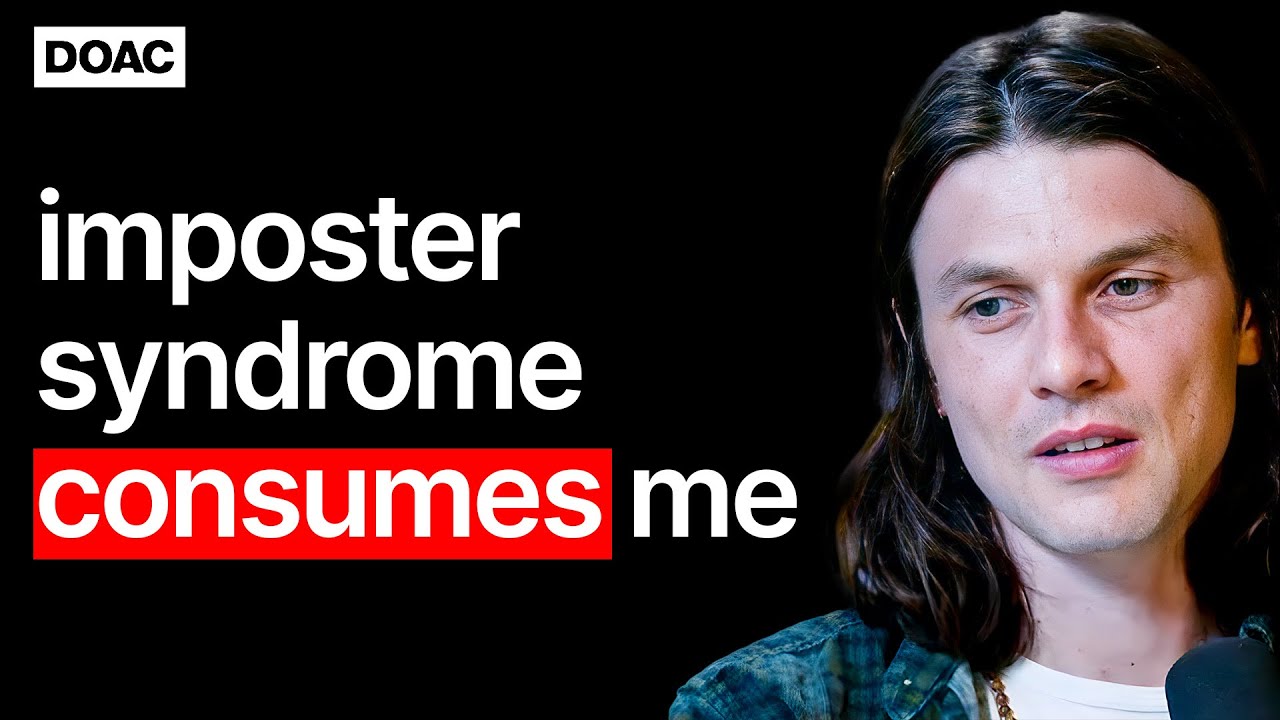
I don't know if I agree with them. And so I felt like an imposter essentially in that time. On the one hand, I’m being—it’s really disproportionate and—and probably unhealthy when I think, "Okay, Ed Sheeran has invited me to open for him in football stadiums around Europe for three months. There's 80,000 people every night." Wow.
And the bit I hate to admit, and I’m anxious to confess, is that there’s a part—there’s a voice in my head saying, "Why aren't you doing the stadiums, you—" call myself all sorts of names. "Why isn't it your show? Come on!"
I feel ridiculous saying that. I also just—it’s a little embarrassing because I’m doing good and I don't want to sort of get ahead of my station or I don't want to seem like big-headed. But I tell you I am very ambitious and driven. Everybody is, I understand that. And I am in my way. And so I do want those kind of rewards of selling out such an enormous venue and so many and so often.
In the way that—Ed’s an example. And also, I will say that Ed—he was kind of enough to have me on that tour as the main support act who would go on right before him. There was three of us most of the time—opener, second opener, me the third opener, and then him.
And it was pretty wonderful and exciting to find that in in almost every stadium it was—it was a third of that crowd, which rounds out at approximately 20 or 30,000 people singing all the words to my songs. Which was just, again, I was very thankful in that moment that he brought me in front of such big crowds because it was exciting to see that I—my music was still reaching.
And it stopped my ambitions and my drive feeling silly.
The bit—the bit I—I was a little bit confused about there is you're saying you felt like an imposter in those moments, but the voice is saying—so I would expect the voice in your head to be saying "Why are you here?" but the voice in your head is saying "Why aren't you at the top of the bill?"
Why isn't it your show? Why don't you have your own stadium show or, you know, even arena show, whatever it may be? "Why are your crowds not bigger yet, James?" Gosh, that’s such an insidious thought, isn’t it? Because if you're James Bay big and you still have that voice whispering about that, fuck me.
Yeah, it’s pretty fucking intense, and I appreciate that like it's probably a bit cruel. Cruel is a good word. It's just a—a standard issue I suppose, it’s a sort of—sorry, it’s a standards issue. I—you know, I’m holding myself to a standard that might be unrealistic. But then I’m so driven and I—or I feel so driven and ambitious to achieve those kinds of things that I can't shake that voice.
Where's that voice coming from?
Deep inside. Deep inside because it's—it’s sort of a voice I recognize from various chapters of my life. It's on the one hand I was—I was too sort of timid and uninterested in—in drinking and partying as a teenager to sort of go out and get amongst it. On the other hand, that voice was talking to me back then saying, "Don't waste your time doing that, James. Get better at songwriting, get better at singing, get better at playing guitar. Get to the point where it's—it’s, you know, you're able to confidently play well and make it look effortless. Get to that point and then, you know, then maybe we can have a night off."
Well you got to that point, and you—
I’m still—yeah, I’m—I’m still working, I think in my mind.
Is there not a—a bit of a fear in in terms of, "Listen, if I—if I’m playing in a big arena, there’s 20,000 people, they're all singing the words back to me and I still have that voice whispering inside my head saying 'This is not enough' or 'You've not achieved enough,' then that voice will always be there regardless of the—the height or how high up the ladder you are?"
I think—I think so. I think therefore trying to kind of come to terms with it is one of my big exercises at the moment.
Because it's holding your happiness hostage, right?
Kind of, yes. And I know that it's winding up my managers, for example, who I have a very close and long-standing relationship with, people I cherish. And they're saying, "James, like, mate, you—you’ve got to sort of rein that in. You’ve got to try and find a way to rein that in because because it's okay." More okay than I—than I’m able to realize half the time.
So, and I don't want to jeopardize my relationship with them or with all sorts of people. I’m working out therefore that I can potentially control some of the unhappiness and make my life better and easier as a result. I’m just trying to tame the various voices.
What do those voices say today?
They say—some of them say, "Oh, it's very nice to be here. You've been invited to talk on this on this podcast that's had so many exciting guests." Some of those voices say, "Yeah, they just they had someone pull out so they've got you last minute because, you know, they, you know, there was someone exciting who who, you know, who clearly you're a backup. You're just—you're just a backup. You know, you're just somebody who they thought 'Oh alright, okay, you know.'" There's a—there's a voice that's quite extensive in those kind of details and and sort of takes me apart a little bit.
So it's versions of one of that one voice and it's versions of that other voice that are—that are speaking in off often in my head and and that's what they're saying.
All of these voices, they—they have—they have adverse consequences. Some of those consequences are positive in the light of the world—they turn into drive and motivation or perfectionism which end up producing really wonderful art. Obviously, some of the consequences of those voices can be very personally, as it relates to your happiness, detrimental.
Right. Talk to me first about—because I want to talk about the positives that those voices that have, you know, the manifestation on that side—but talk to me about the the negative detrimental impact of being—having those voices.
The longer I sort of exist with these voices that—the negative ones—the more they can have an effect, unfortunately. A negative effect. The more that they can sort of—they can stop me going out into the world and doing certain things. You know, the more they can get into my head and sort of inhibit my ability to sort of speak to you in a free-flowing way, for example, or go to a party I’ve been invited to by an artist I might know or by a—by a—by somebody whose work I might admire.
I’m being sort of hypothetical in that respect, but it could very much sort of be a that could be a reality. And the benefits of coming and speaking to you and the benefits of going to some party or whatever are just that those are the things that color life. And that's—that's just a good thing.
But sometimes the voices get so loud that that that I don't go and do these things and I and and I—my life remains kind of gray. Just personally and privately. And that's not helpful to when I get that idle time back in the moments that I do, because all the things that color life feed wonderfully in my most of my experience into that idle time, whether I do create something or not.
So they—they are an obstacle. They are a barrier, those—those negative voices. And I’m trying to grow and get better at sort of managing them and dealing with them and understanding that no voices—no narratives kind of go away entirely, happy or sad. They—they don't. You know, 2019 was a difficult year and I’ve learned since then through various types of therapy—one of those is songwriting for me, another one is typical sort of therapy as we know it, speaking to somebody—I’ve I’ve I’ve learned a little bit more about sort of being able to quiet the—the negative voices or control them a little bit.
You can never do any one of these things 100%. I’m learning. And there's a part of my mind that wants 100%. Yeah. Here, there, everywhere. I want 100% be the headliner at this thing. I want 100% be able to stop those voices so that they never come back. And I’m just still sort of trying to learn that there's no 100% anything anywhere. Everything is a—is a—is a gentle sort of balance.
§02Transcript — part 2
That's a really liberating thought, though, because there's so many people that are still struggling with things after many decades and that will beat themselves up because it's still there. And and I actually had this conversation this week—this weekend—I think this weekend, yeah, it was on Saturday morning with my girlfriend where I said, "One of the things I’ve come to learn from doing this podcast and just my own sort of early traumas is that we shouldn't hold ourselves to the standard of completely ridding ourselves of our trauma or insecurities."
It’s really about diminishing the power they have over you to the point that your decision-making can be made through another set of stories. Yeah. So like with relationships, I’ve had a lot of traumas. So I still have those and I’m still—I still think to some degree a relationship is prison, maybe 40% now. It's still there, but the 60% is like, "You're being an idiot, fucking get on with it."
And it’s 60 rather than less, you know? But so, yeah, perspective. Trying to sort of gather a better and a broader perspective on your present circumstance or whatever, or me on my present sort of circumstance. Trying to sort of get the full context certainly helps the negative voices quiet down a little bit.
In 2019, you said you described it as feeling like you were drowning.
Yeah, and that was definitely—it had a lot to do with the—the negative voices and feeling like they were all getting way too loud and way too much and way too overpowering and—and it could feel at times like I was sort of drowning in those. And there was such a stark contrast between the walking on stage with the big sort of smile and the—and the grand gestures and the performance.
Because that's a real spike in the day. It's a real high. It’s wonderful and it's a real process and I know it to the point that a lot of it is sort of like muscle memory. I’m in the moment, no question I’m in the moment, I’m very present, but I know how to do all sorts of things on stage and I know I’m good at them and I’ve done them for 35 minutes and I’m off stage and the voices are back.
I’m walking down the steps from the stage and the voices are back in there.
Saying what?
Saying, "Could have been better." Saying, "They’re just waiting for Ed Sheeran" on that tour. Saying—which they were, granted. But like they’d take even something like that that was okay. You know, it’s okay that, you know, it's very exciting and flattering and humbling that I’ve been invited to open on that tour. And that's what it is. But the voices were turning those things around on me and saying and using them as a reason to tell me I wasn't good enough.
What is therapy taught you about that? Those voices.
Well, the things I’ve just said, really. They've—it—it’s taught therapy’s taught me very sort of crucially, it's taught me that they're not going to go away entirely. And I think that's been a really important thing to learn and talk about again and again and again because I can be quite—I can't think of the word, but I—I would absolutely like to work out how the—what the ingredients, what the recipe is to get them to go away forever.
I’d like to know what it is and use it and be done with it and never hear from them again. And so therapy’s teaching me still that that actually that’s not—that's not the process. The process is about talking with them and asking them, "Hey, you know," reasoning with myself, reasoning with them, bringing in more context, bringing in a a broader perspective and then asking myself, you know, "Are these voices right, honestly?" Because in the worst moments, I’m saying, "Yeah, you're absolutely right to all these voices and I’m not good enough."
In 2019, when you feel like you're drowning, what are the symptoms of that? What would a—what would I—what are the symptoms?
That's a—that’s a hard—that’s a good question, a hard one to answer. The symptoms are so invisible to most people, everybody really, and often me, because I’m—I—I feel a sort of duty, sadly, sometimes in my personal private life as well, to be so "on" so much of the time.
Sometimes as a sort of like a drug I use to keep myself high. It feels like that because that means that I don't have to feel the sort of despair. You know, I again, like when I go back to my parents, my family, my home life, they had lots of people around, very social people. And everything was very "up," or it was shouting and fury, or it was like calm water.
There was no in-between. And it sort of—it turned me into this person where, you know, if—if there are two sides and a river in between and, you know, there are two banks and I’m on one bank and I want to get to the other bank, I always try and jump over the river. And that’s not—that—I need to get better at getting in the water, getting a bit wet, wading through against the currents that are trying to send me downstream, and like climbing out the other side and drying off and it all taking the time that it takes.
Because you typically—the river I’m talking about is never any less than like 20 feet wide. So I’m not jumping over it. You can't. I can't fly. I’m going to have to just get in the water and go through.
What is the river in that metaphor?
The river is so many things in that metaphor. It's—it's all the—it—it’s the dealing with those voices. It's probably confronting, you know, some of the issues that I’ve carried forward from from my childhood, if not a lot of those issues. The river is the fighting with an imposter syndrome, a an issue with imposter syndrome.
The river is kind of a lot of the sort of demons that I have, ultimately. But—but getting in the water would give me sort of perspective. And wading through—that teaches a lot probably about like it being everything being about the journey rather than the destination. In my—in my household at home, it was about, "We're furious, we need to get to not furious, so we'll force ourselves straight there."
By blocking things out.
And there'll be no processing and talking about who feels what and how and how it makes them feel this, that, the other. But perspective is, you know, very important.
Zooming out, in in my life, I find is is helpful very often. Somebody actually, not to go off on too much of a tangent here, but it really resonated with me only a couple of days ago, someone from my label was telling me about her time a long time ago now, actually, but she was working with the Bee Gees.
And it was in the early 90s. And they’re a household name to us today. We know—everyone knows the Bee Gees' music like they know other household names. And this lady was talking to me, she was saying, "I was about to turn 34 and I was working with Barry Gibb. And he said, 'What do you think of my music? What do you think of me as an artist?'"
She'd been quite open with him about, "I’m about to turn 34, I’m ancient." People in pop music think they're ancient beyond 21, everybody. And he said, "No you're not, no you're not, don't be silly," because he was in his 50s or something at the time. He said, "What do you think of my music? What do you know about me?"
She says, "You’re a legend." She said, "You're just—you're a household name legend. I love all your records. You're brilliant." He said, "You know what?" He said to her, "When I was 33, I’d just got divorced, I’d fallen out with my brothers, I hadn't had a song on the radio for years. If we were doing any gigs, we were playing in working men’s clubs."
This was the late 70s, I think. And he said, "I was 33 and we'd had our initial sort of spike, our high, our hits late 60s, very early 70s. We had it all and it went away and I always believed that in pop and in music and in entertainment, you have—you have your big moment and then it's all down from there."
He said, "And then someone offered us the opportunity to write a soundtrack for a movie. The movie was Saturday Night Fever." And obviously ever since then, you know, he's talking as a 50-something-year-year-old, he said it's just been up and up and up from there. And now you're telling me I’m a household name. He said, "I, unfortunately, if I’m honest," he said, "I I still struggle with all sorts of these demons that I’m not good enough and having this and that sort of success."
But he said, "I’ve got more perspective now and I appreciate when you tell me that you, you know, you think my work is so well known. And I thought before all that that it was all over." I just thought it was a decent bit of wisdom from, obviously, yes, granted he's a total legend and, you know, he's going to be quite a good example in that respect. But like, it's so easy to slip into that mindset of like, "It’s all done. You've had your time."
But life is long. I’m trying to remind myself of that.
You're what, 31?
Yeah, 31.
Fucking nuts. That is so—most people don't start their careers at at by that point so—
Yeah, I I guess—yeah. But the drive is there. I keep coming back to things I’ve said before: the ambition is there. I’ve, you know, I’m very hungry to to be doing it.
What are you hungry for?
Connection. It’s my favorite thing about music: creating, writing, recording, releasing, performing. There in all of that is so many opportunities for connection. Not just with fans but with people I work with as well. I cherish my working relationships. I don't love lots of people coming in and out of my my sort of work circle. I like to grow with people.
Is there this weird paradox of the thing you're chasing in terms of, you know, that peak again—you talked about this like big moment that you you stood there and you watched this young artist who you know's going to go through it, but at the same time knowing that there comes a real cost with that?
Because I sometimes when I speak to musicians, it's—I have that a lot where they're like—I think I’m thinking of Craig David who I think he had his number one album at 18. Quite honestly says, you know, "I’m looking for that moment again, but it was also pretty much the worst moment of my life."
It's funny, man. Yeah, and it does come back to that when I referenced trauma and Maggie’s concert and Sam, what he was saying. It's funny how that—that works. But we see there are some real one-in-a-millioners who might have two, three, four consecutive peaks.
And all—everybody else looks at that, and even the people who go through that look at it as like, "But something could be better." It's funny how that works. I can't explain that, and I suffer from it like so many people do. But if nothing else, it's because I really care about and love what I do. And I really want to be in it. I really want to be kind of on the pitch—I’ve slipped into a football analogy.
But for good reasons or for like slightly toxic, insidious, like—
Because I love the game. For good reasons.
Are you sure? Are you sure it's good reasons? All?
Yeah. I’m talking about the the accolades here, though. Because number one is just a comparative measure, so it kind of—and actually I’m the same, but I’m—I’m just playing devil's advocate for the sake of conversation.
No, that's fair. A number one is just a comparative measure, there’s nothing inherently special about it other than you were better than someone else. I can't on that—just quickly on that, I can't tell you how many times people I work with have sort of like—and me as well—we’ve gone, "Wow, a Grammy would be great, wouldn't it? That would be awesome." And we’ve also said like five would be awesome, and we all know that ten would be incredible.
And just off the top of my head, a household name legend called David Bowie got one, I think, posthumous Grammy Award for a music video. And the the Grammy Award won for the music video is just as valid as the rest of them, but it's a little further down the list, you know, the big Record of the Year, Artist of the Year—all those ones are the the most exciting ones, apparently. And and he didn't suffer, it seems, for for that one music video Grammy Award.
And there's a handful of my other absolute favorite artists of all time who are recognized all around the world who haven't got near to certain award ceremonies or whatever, and it just couldn't matter. So, but I suppose my point is that I’ve found it unfortunately easy to get wrapped up in the hype of those those things. I hate to confess that, but part of my working through it all is is getting it out into the open so I can hear it sort of with my own ears as well.
Because music is not those things. It's so much more than that. And that's why I fell in love with it as a small child in a way that I feel is the same as I love it now. I love it just as much. I’m just as blown away by great music as I was when I was I don't even know how young.
Let's talk about your new music. Sure. Your new album.
You know, yeah, let's—we can do that. I struggle—I struggle talking about my stuff.
Why? Why do you struggle talking about it? Your body language has shifted somewhat.
Yeah, because I feel like a salesman.
Oh, right. No, it's fine.
No, I, you know, I also—the other reason—I feel like a salesman sometimes, you know, but also the other reason is that like these songs, they mean a lot to me. I just—I write about things that mean a lot in my life. You know, there's been a degree of sort of vulnerability that I’ve gone to in the writing of these songs for this new album, Leap, that I don't feel I I had been able to tap into before and reach.
This is why I asked you the question about your affectionate parents. Right. Because you’ve clearly been on that journey of learning how to be a different type of vulnerability. You know, the—as you talk about it, like the "thank you, I love you" vulnerable.
Yeah. Yeah. Which—that’s why I was searching for when I asked that question at the start whether you had a lot of "I love you"s, "thank you"s at home. I’m just remembering that whatever I said was sort of—we just laughed because it was so fucking stunted.
No, that's the point. That's why—that’s why I asked the question, because you've been on that journey of trying to be a different type of vulnerable. Yes. Yes. And that's becoming more evident.
Yeah. I you feeling it does in this new music? 100%. I’m really glad and that you feel that because I’m trying to access that for all the reasons that you're sort of circling around, actually. Yes. And that optimism as well comes through in a big way. Well, and when you sort of talk about, you know, I’m trying to access a different kind of affection and I am and I had said to you I am trying to access that and I had said to you that I felt like I was—I have grown up to be a different kind of affectionate than the people I grew up around—my immediate family.
Yeah, I’m not afraid to say that. Because I I don't criticize them for how they were affectionate. It was different. It was different. And as a result, and I’ve talked about it and I will talk about it now, like in the writing of this album, it's taken me going into a a new depth of vulnerability to find ways to say in songs these things: "I love you," these things like "I need you," these things like "thank you."
Because those those phrases were not thrown around freely in my in my house. It's not to say they didn't exist in my house when I was a kid. It's not to say they didn't exist there. But I’m not used to that environment. But I want it. And I’ve had a baby. And I I I want it in her life.
And I didn't write these songs when she was—she wasn't here yet when I wrote these songs. But for half of them, I knew she was on the way. So it changed my perspective again and it probably did affect the writing. And but it's all, you know, sort of so honest that it that it of course is rooted in feelings that are about me and how I feel.
And I just I’m trying to change the landscape—my immediate sort of landscape in my life, my personal life. And that's why songwriting is such a therapy, can be such a therapy for me, because those those very personal issues and scenarios will come out in my songs. And then I’m I’m actually glad to say that I’ve I’ve arrived now on this third album with songs that manage to say those affectionate things that we've now listed a number of times that will happily list again but probably probably make me feel a little bit uncomfortable.
It's so funny. But yeah, I what there's a song called—there's a whole bunch of songs on this album I could happily and easily reference—but "One Life" has been a big moment. "One Life" is a song that's been a—was a big turning point in the writing. I love the gesture of "I’ve only got one life and I want you in it" as a—as a lyric, as a notion.
Who's that for?
Lucy. 110,000%.
What does she mean to you?
Everything. Why? She knew me before I, you know, got near the music industry. I think she she knew me—we weren't together, but she knew me but like intimately as a friend before I even was certain how much I I definitely wanted to leave my safe little hometown, venture into the big wide world and try and do music. And she’s wanted to sort of stick with me ever since.
And there were many years when we had no idea where it was going or if it was going anywhere. And we're still not certain. We still we still live every day like it's it could all be gone tomorrow. And I and as a result, in the healthiest way I can possibly express, I feel like I need her. She has got the most healthy and brilliant bullshit radar I’ve ever met, you know?
Mine’s not so good. Mine’s sort of attracted to the shiny things and the shiny possibilities. And she she’s like—I suppose I’ll say she’s got my back, often better than I have.
Have you told her how much you appreciate her in person?
I hope so. I I I do try to. And you know what, in a beautiful way, she'll say, "Yeah, alright, shut up." You know, she'll say like, "Yeah, alright." She'll she will give me the time of day. But she’s steely, and I love that. And she’s driven. And she’s ambitious for me, for us, for our family. But I do tell her. I do talk to her about it.
What do you think your life would be like without her? God forbid.
Calamitous. Tragic. Difficult. Difficult. She sort of helps tame my kind of wild emotions. She absolutely sort of she knows them so well and she she I mean I think it's important to say like, and I do the same for her, she knows how to let them kind of run wild and free, but she knows how to sort of sharpen my focus when I’m struggling to do it for myself.
Yeah. She’s quite vital. And I’m very okay with saying that. We’ve been on a journey, man. We we, you know, we really have. And I can't, you know, we continue to get to be on one, and that's just so important to me. It’s a beautiful balance. It’s a beautiful balance.
It's a—it’s a beautiful thing to hear. I mean, you’ve known this person since you were 17?
I’ve known her since I was 15. 15.
You got together when you were 17?
Yeah.
You've been together some what 13-14 years now. That's that's one hell of an achievement and especially because you often hear that those earlier relationships when you really are changing and figuring out who you are are the hardest to ever hold on to because it's kind of like—the analogy I always think of is almost like two parallel lines, but at the start of our lives, these parallel lines like the variance in terms of the direction they can go in is so far.
You can become completely different person in your 20s. Yeah. Yes. And when you're 14, you don't know who the fuck you are. Correct. And so to survive all of all of those chapters, it’s amazing.
It I can't explain it fully. It feels like a wonderful sort of coincidence sometimes that we’ve, you know, we we all here we are all falling through life and our paths have never veered too far away from each other’s. There’s something about it that all kind of just comes down to chance which I love, because she never compromised, especially in the earlier years.
She had an opportunity through the degree that she did to go to America for a year and she did. And we decided to sort of hold on to each other in that time. I didn't get to go. But we sort of said we’d we’d we’d be together and just sort of see on the other side sort of thing.
But that’s where chance goes out the window because that's hard work.
True. True. And this is and this is some with the sort of soulmate analogy which can sometimes be a little bit dangerous is—
It can. I was asked if I believe in soulmates the other day and I didn't know what to say.
Yeah, because it’s yes and no, right? Yeah, but we're—we yes. But it was—I suppose as I look back in a sort of pragmatic kind of fashion at that moment when she went away, it was such a big scary big wide world moment for her. And I went into my first year living away from Hitchin, my hometown, first time ever that I was like on my own, doing my shopping for myself, or like, you know, paying the rent for myself.
And to check in with each other every other day when the time difference allowed on Skype or whatever it was, or a very expensive text message, was so critical to us feeling alright. And all anybody's ever trying to do, whatever age they are, is just feel alright. And she helps me do that, did back then and still does. And I I know I do the same for her. You know, she’s like a sort of anchor and my, you know, the rest of me is sort of floating around in a stormy sea.
How much did that go into this album Leap? How much of that those feelings towards her and this new sort of ability to be a little bit more vulnerable?
More than ever before. I’ve been very honest in all of my lyrics that I’ve sort of ever written really, but but vulnerability requires me to—being vulnerable in my sort of lyric writing requires me to kind of be more direct and open up and be more open and talk about what I’m talking about in the songs.
So so much of of of what she means to me went into this album in a more vulnerable and more direct way than it ever had before. And we were actually at a point I felt like it was overdue in a way because our choice, our choice together has been in the last nearly 10 years where people have known about me in some capacity, in some public capacity, and I’ve, you know, I’ve gone around the world and sold tickets to shows and released music and all of this stuff and been on TV a bit or whatever. Our choice together has been to keep our private life quite private.
But then there was a moment where it felt like she didn't exist. And that was just awful. It felt like that we were living a lie. So it's overdue in a way that I’m saying, "This is Lucy, she’s the—she’s like one whole half of me." And more than that, "Here’s what she means to me." So on the one hand, it's the first time I’ve been more sort of public about sort of talking about my my relationship; on the other hand, it's a total celebration, and rightly so. If she was sitting here now listening to me say that, she’d be like, "Cool down. Simmer down." Like, "You're getting a bit over the top," because she's the most humble person I’ve ever met. But yeah, it was it was sort of time.
Why Leap?
We need another two hours for for that. Because it's something I needed, it’s a bit it's been a bit of a mantra as a word. I I sort of needed it, I’ve needed to hear it, I’ve needed to use it, I’ve needed to say it, I’ve needed to exercise it.
"Leap and the net will appear" is a is a is a phrase, a quote from a guy called John Burroughs. He said, "Leap and the net will appear." I read that and it sort of blew me away because I’m so paranoid about the net: where it is, when it's going to be there, how strong it is, will it hold? I hate to admit I feel like I’m sort of revealing a side of myself that I’m quite sort of self-conscious about, but I’m very concerned about the net and I’m quite um can be so reluctant to leap.
If that surprises people because they think I sort of spend my life getting up on stage, that's a different thing. I know that might be confusing in itself, but it's just something I do and I know how to do and I love and I compartmentalized it in a different place in a different way. But just to leap in many respects, sort of literally, figuratively, spiritually, whatever, I struggle.
What is the cost if we don't leap?
You'll never know. You know, you'll never know if the net will appear. I think we want the net to appear. We want to leap, do something wonderful in the air and land safely. And if you don't leap, there's no wonderful in the air and there's no landing safely. So you've not gone anywhere or done anything and then you're probably dead.
Interestingly as well, I think regardless of really what happens in the air, I think like the leap itself is the—is life. And I think it also seems to be the case like regardless of what happens in the air, you land safely. Part of it seems to me that even if you land on your back, you you land comfortably.
But I I’ve struggled to trust this. Yeah. Yeah. And there's been some voices in my head that have really um stopped me sort of trusting those that beautiful sort of concept that you've just sort of presented there.
It was your concept.
Well, it was John Burroughs. No, it's the way that you've put it was really great and and and so I’ve looked at it from all angles. Yeah. If it's my concept then I then I’ve I have looked at it from an angle that from which I do celebrate it enormously. Which is also the way I think you delivered it then. But I’ve I’ve also sort of looked at it from a nervous standpoint and not and not moved.
But in in a fight against and in a campaign against the negativity that I’ve struggled with in the last few years and actually a lot in my life—it's not just about 2019, I just was having a particularly difficult time that year—I I wanted to use it as a as an album title to represent so much of what is in these songs: so much of the heart in these songs is about, "In the face of difficulty, I have I have this and this, and I have you," and that references Lucy quite directly most of the time. You know, that's the "you" I’m talking about.
Um, it's about silver linings. I’ve struggled to see them when they've been there sometimes. And I just needed to make music that that celebrated and represented them to remind myself. Because yeah, sometimes I feel like I’m drowning. 2019, before 2019, you know, but there is there is there is leaping always as an option.
Hindsight seems to tell us that the greatest risk is taking no risk at all. So you know, the greatest—the most costly leap would be taking no leap because if you think about that, and ultimately it means a life of stagnation, it means no challenge, it means no excitement, it means no heartbreak. If you never put yourself in a situation to even be, you know, and so—and I’ve seen that throughout my life is just that, you know, sometimes when I think about risk, actually it's a real misunderstanding of what the risk actually is.
The risk actually was—it's funny when I tell people I dropped out of university, started a business, this business made 700 million, whatever, they go, "Oh my god, you’re so courageous." And my head has always struggled with that concept, that I was courageous or brave. Because in my head, the courageous and brave thing to do was staying at university. That was the risk. The risk was staying and potentially ending up in a life that wasn't for me. The cowardliest thing to do was leaving and and going for it. That was the coward approach.
So I think sometimes if you like really like analyze—
Yeah, and sort of kind of swap the order around, you can be a bit more empowered.
You throw a bunch more perspective at it. Yeah, exactly. and sort of life context and and oh yeah, it’s there. Life context. People don't realize that they're going to die someday. You know what I mean? And I and I think about that a lot, that's actually I have a sandtimer—I don't know if it's behind me today.
It is worth reminding. Is that it in the bottom corner? Bottom left?
Yes, that's why it's there.
Well look at that guy.
Yeah, because that's the only way you can really see time. I think humans struggle with finality and infinity. The two concepts that something can end and that it can last forever. We don't think we—we really don't think we're going to die. You've heard about it, it's a story I’ve seen a couple of other people do it. But when you think about the things you're consuming your mind with—the concerns, the procrastination—this is not someone who thinks they're going to die. Right. You know, that there's a timer.
So we think we've got time to procrastinate.
Yeah. But no, it’s very true. It’s and it's worth reminding ourselves once in a while.
Just turning it over.
Yeah, and "Oh shit, I’ve got to go and leap," you know? I’ve got to go and do something. I’ve got to go and, you know, take a risk or else I risk nothing being my day-to-day. Yeah, that's um sort of dangerous and and uh I yeah, like I was just feeling quite sort of safe keeping my private life private and my—but there was so much I had to say about it.
My keeping my private life private and my and my, you know, trying to sort of say, "You know what my public life is, people who are interested and that's that." When I suppose I use this word, the most wonderful way to go about it was to share in the way that I have today with you, but also in by celebrating one of the greatest things in my life that will always sort of change and evolve and has done for the time that Lucy and I have been together.
Um, so it it doesn't sort of set something in stone that I can't then, you know, explore sort of sharing or, you know, um using is the wrong word, celebrating again. It's been it's been sort of enlightening and help me feel lighter to to share it, to celebrate, to celebrate like full stop. Because it's so easy to get dragged down by sort of darker thoughts that are always going to kind of exist. Don't like forget the the light on the horizon, the silver lining. That's there as well. Leonard Cohen, I’m not going to get it right, but he said something really great about like, "Everything has cracks in it, that's how the light gets in." You know, he smashed that when he said that.
Smash. Same.
Oh, this is an interesting one. So our previous guest leaves a question for our next guest. Right. Go on. Okay, so the question they um they left for you—and I really want you to think about this because this is a really interesting one—is: "Would you do it all again?"
Why are you battling with that?
Because it's like these consequences with how they ask it. I want to say yes. I want to say I’d do it all again because it was fucking brilliant. So much of it was brilliant. But there's a caveat to my answer: I would do it all again if you let me like I didn't if I wasn't going to waste the time I have going forward. Like can I just go back in time, do it all again and come back to this moment and then carry on from here as I was? Do you see what I mean?
I got you.
I don't want to fill the next 10 years with doing the last 10 again. Okay?
So but that’s not like a Dr. Who—
Yeah. Yeah. Well, it would be, you'd have to go through an experience it again so the next period of your life would be the same thing again, I’m guessing from the question.
Okay, see this is what we don't know. So because my answer—the reason I say no is because I wouldn't enjoy doing it all again because you've done it. Like I personally wouldn't get the same "Oh my god, wow! Oh," you know?
Yeah, see I was thinking I was at a I I didn't know that it was I’d been through it before. The old Men in Black. Men in Black. Yeah. Yeah. So otherwise I’m answering the same as you. Okay, interesting. I I there's yeah, there's a sort of fantastical fantasy world within which I would do it again, where I was where I was just doing it. But um before I said that, I thought, "Well, no, I really I’m really excited about what happens next."
What happens next?
I don't know and that's what keeps it exciting. That's also what makes me sort of you know fight with all these voices, but it's also what makes it exciting.
Well James, um you are a person who is particularly enjoyable to talk to.
Oh thanks, man.
Likewise, very much likewise.
Thank you. Evidence of that comes, you know, when you're looking at those music videos and they're giving you a little bit more depth, and you were the person to try and search out the depth from a very, very young age. You're clearly someone that wants to to go a little bit deeper. And that makes you a man of my own heart because I this is what I do in my spare time probably to the detriment of, you know, casual social situations.
Um, but your new music is testament of everything you've said today. It's it's evidence that you have unlocked a new sort of—I almost saw it as like a wall falling and like something wonderful flowing out of it that hadn't been there before.
Thanks, man. That was a—
I think people who listen to Leap are going to are going to feel this conversation. Um, but they're also going to feel this this new side of you that's um created art that feels much more relatable because it's much more well-rounded, if that makes sense.
So, look, I thank you. It really, you know, I’m those are incredibly kind words and I and I I appreciate them and um I’m a bit blown away so that you that you feel that towards the the music, so I’ll I’ll hold on to that for sure.
Thank you.
Thank you.
The thing I think about most, especially when I’m on the go, but also when I’m sat here in the Diary of a CEO studio, is the Wi-Fi and internet that we have to work with. In fact, anytime I’m filming away from the studio, one of the first things I do when I arrive is open up an app and do a speed test to see how strong the signal is.
The number of screenshots I’ve sent to my team about Wi-Fi signals at different locations is actually pretty crazy. It matters that much to me because it’s such a competitive advantage to have fast Wi-Fi. Because on any given day, if I’m recording, let's say, hours and hours of footage with a podcast guest, I then often have to have my team send that across to our London team who then do the edit.
So fast Wi-Fi and internet is not a nice to have; it is absolutely business mission-critical. So, when it came to finding the best provider who could supply internet and Wi-Fi to our new LA studio, which I’m sat in right now, we looked at every single option.
And of all the providers, the one that came back with the steadiest connection, as well as being the cheapest, was today’s sponsor, Spectrum Business. Spectrum Business keeps businesses of all sizes connected with fast, reliable internet, advanced Wi-Fi, phone, TV, and mobile services.
Millions of business owners already rely on Spectrum to keep their operations connected. So, if you want to join them, head to spectrum.com/business to learn more. That’s spectrum.com/business. Restrictions apply. Service not available in all areas.
Paying extra for tire care is BS. You know, bad service. So at Midas, we’re rolling out our BS-free tire guarantee. Included with paid installation and tax on every purchase, you’ll pay nothing for flat replacements, nada for flat repairs, and zilch for tire rotations every 5,000 miles.
That's $0 for all that. So with this limited lifetime tire guarantee, you’ll pay a whole lot of nothing compared to what the other guys charge for tire care. That's the BS-free tire guarantee, only at Midas.