
Victimhood & Self-sabotage Is Destroying The World In 2022: Africa Brooke
嘉宾:Africa
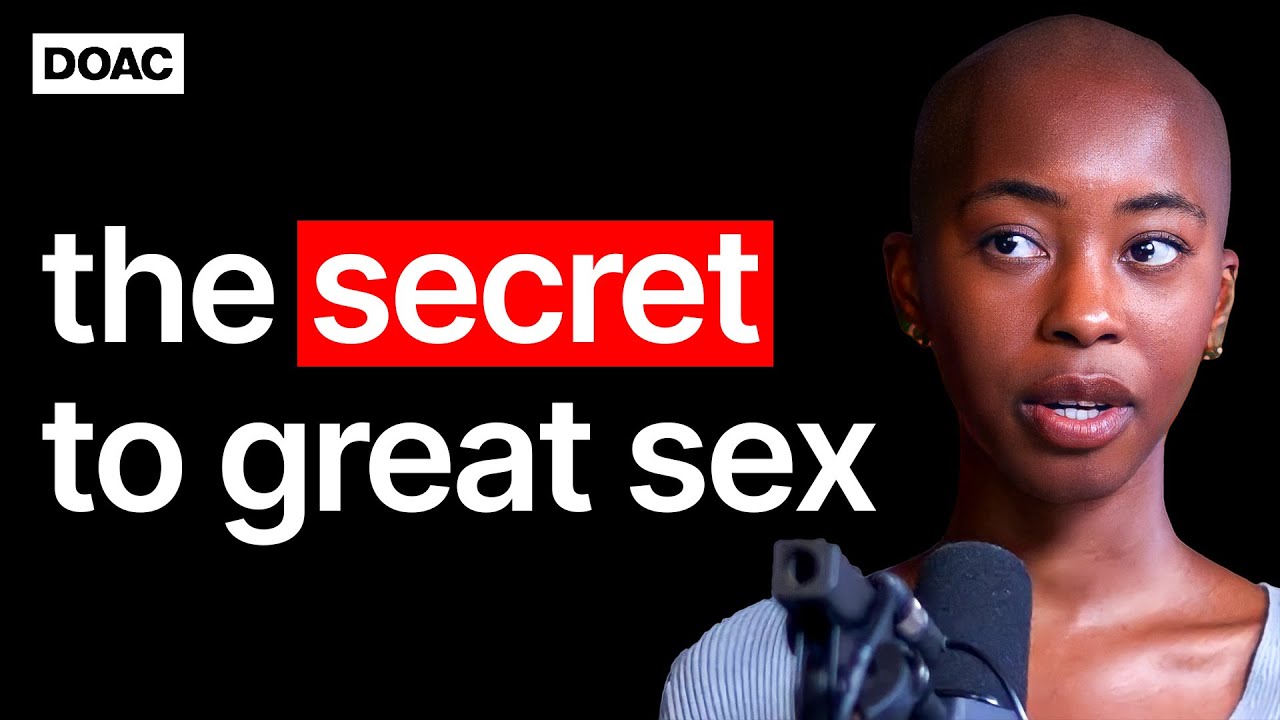
全文文稿 · 按对话顺序保留完整内容,深入理解上下文。
§01Transcript — part 1
The thing I think about most, especially when I’m on the go but also when I’m sat here in the Diary of a CEO studio, is the Wi-Fi and internet that we have to work with. In fact, any time I’m filming away from the studio, one of the first things I do when I arrive is open up an app and do a speed test to see how strong the signal is.
The number of screenshots I’ve sent to my team about Wi-Fi signals at different locations is actually pretty crazy. It matters that much to me because it’s such a competitive advantage to have fast Wi-Fi. On any given day, if I’m recording hours and hours of footage with a podcast guest, I then often have to have my team send that across to our London team who then do the edit.
Fast Wi-Fi and internet is not a "nice to have"; it is absolutely business-mission-critical. So, when it came to finding the best provider who could supply internet and Wi-Fi to our new LA studio, which I’m sat in right now, we looked at every single option.
Of all the providers, the one that came back with the steadiest connection, as well as being the cheapest, was today’s sponsor, Spectrum Business. Spectrum Business keeps businesses of all sizes connected with fast, reliable internet, advanced Wi-Fi, phone, TV, and mobile services.
Millions of business owners already rely on Spectrum to keep their operations connected. So, if you want to join them, head to spectrum.com/business to learn more. That’s spectrum.com/business. Restrictions apply. Service not available in all areas.
If I'm not drinking or snorting something, what do I actually enjoy doing? Who am I?
Africa Brooke is a speaker, a podcast host, and she's helped hundreds of thousands of people see the world in a new light. Africa does not give a fuck, and that's why I love her.
If you're on the left, then you're the good person. If you're on the right, you're the bad person. We're hanging out online where these platforms incentivize binary thinking: Are you with us or are you against us? There's only so much you can take.
Most people didn't like it when I said that as a Black person, I'm not oppressed. There is a very real difference between being a victim and making victimhood an identity. Because if you don't think that you're worthy, that's always going to be the belief that you feed every single time.
What became your dark side?
From the age of 14, I was a blackout drinker. That's when I started to see that I was behaving in the exact same way that my dad did.
Sex and sexuality—can you talk to me about what you've learned about those topics that might benefit me?
Wow.
Without further ado, I'm Stephen Bartlett, and this is the Diary of a CEO. I hope nobody's listening, but if you are, then please keep this to yourself.
Africa, let's start where I usually start. I was reading about your story and where you grew up. Give me your earliest, most relevant context of where you came from and how that context shaped the person sitting here today.
Oh, that’s good. I'm Zimbabwean. I’m from Zimbabwe. I think this accent always fools people into thinking that I was born and raised here, but I was born in Zimbabwe, which is in the south of Africa. I came to the UK when I was nine years old.
So, I remember my life back home in Zimbabwe quite clearly and vividly. I don’t remember it being hard, apart from my experiences with my father. Even though he could be the most charming man—he was such a beautiful man—he was the kind of person that walks into a room and you can feel that Maxwell has arrived.
Just a very beautiful spirit. But when he was drunk, he could be very different, completely different. So, the times that I can remember experiencing most of my sadness or frustration as a child was experiencing that side of my father, because he could be very abusive. He was physically abusive to my mom, to myself, and my siblings.
But I don’t even look at those things and think that I had a horrible childhood in Zimbabwe. I have so many wonderful, wonderful memories of being home. I still call it home. When people ask me where I’m from, I always say Zimbabwe before I say the UK or that I’m British.
When you say that you look back on Zimbabwe with fond memories, is that because at the time in your household, you didn’t understand that behavior? You didn’t understand that it was bad or abnormal? Or is it because, on balance, you consider it to be a happy childhood?
I think it’s actually the latter. I think I definitely understood that this wasn’t right. Although, to be honest, there were a lot of behaviors that my father exhibited that were considered normal just because of the culture. For example, things like disciplining your wife through hitting her, or your children—it was just kind of seen as normal.
But I definitely knew that it wasn’t right. I definitely knew that there was a problem. I knew that seeing a person that is that drunk was not something that felt comfortable; it wasn’t remotely normal. I’m able now, I think in adulthood, to hold multiple truths, which is something interestingly enough that I speak about a lot in my work.
The importance of being able to hold multiple truths. Because like I say about my dad, I saw him as a bad person. I saw him as an evil person even. He passed away in 2004. I never mourned his death because of the resentment that I was holding towards him.
But then when I got sober years later, I had to hold multiple truths about him to realize that he was a beautiful man. I got to experience him in the very early years of my life as being a very present father, as being a very loving father, before alcohol came into his life in the way that it did.
So, I had to then start holding multiple truths about him because it wasn’t all bad. I hold those fond memories because I’ve had to realize that they did actually exist beyond everything else.
You said in your teen years you started to realize how bad he’d been to your mother. How did you start to realize that at that age?
Through stories. Through speaking to my siblings about what we had all experienced in the home, because we never really spoke. I don’t know what it’s like in your family or when you were growing up, but we never really spoke about much, especially when it came to things that were potentially hard to talk about.
Things that revolved around emotions and being vulnerable. Things that had anything to do with intimacy or a lack of intimacy. Even the most obvious things, like seeing my mom being hit and not talking about it, almost just pretending that it didn’t happen.
In adulthood, when I started seeing how other families were, when I started to see how open other people are, I then started to see the lack in what I had experienced growing up. That’s when I started to want to know more. Did anyone else see what was happening? Did my aunts and uncles know what was happening?
Why didn’t anyone talk about it? Why didn’t anyone talk to us? I had so many "why" type of questions, which fueled a lot of my resentment.
Some of the terms you used there, you said "before alcohol showed up in his life." As you’ll know, we tend to attract these things into our lives usually as a "firmer lid" to hold some trauma. Did you ever understand the trauma that he was trying to bottle up using alcohol?
That is something that is still unfolding. I think there’s only so far that other family members will go in terms of really telling me and my siblings the reality of what was really going on. But I think he was also from a family where people didn’t really have many conversations.
His younger brother had committed suicide when he was 26. There were other instances of mental health that weren’t really spoken about because culturally people just didn’t talk about these things. So, I think there were things that he was suppressing that I’ll never ever know about.
I’ve had to make peace with the fact that I won’t be able to get all of the answers as to why and how. I just have to understand what did happen and what I experienced, and forgive where I can, get answers where I can, and also let go of expectations.
I had a guest on this podcast called Tim Grover, and he talked about his early upbringing. He ended up being Michael Jordan’s and Kobe Bryant’s trainer. He says that our childhood experiences tend to create our brilliance, but they also create our "dark side."
Dark side can sometimes mean insecurities; it can mean the worst traits or character flaws within us. From the experience you had, what became your dark side?
That’s a fantastic question. I ended up replicating pretty much the same drinking behavior that my dad had. From the age of 14 up until 24 when I finally got sober—so a decade long—I was a blackout drinker. I was a binge drinker very specifically.
I didn’t know when to stop because my intention was never to stop. From the first time that I drank, it’s almost as if something magical happened. I realized that I could change who I was. I realized that I didn’t have to feel insecure anymore. I didn’t have to think about the areas in which I’m different—the areas which can lead to me being abandoned because I’m different.
Specifically, when I came to the UK when I was nine years old, it was the first time that I realized that I’m Black. I had never, Stephen, had to think about it before. Ever. But we moved to Kent in 2001. In my school, it was probably me and my sister and one other boy called Curtis; we were the only Black kids in the entire school.
I know you’ve shared your similar experiences with just seeing how much you stand out in an environment that you have to be in. We were living in Kent for about three years and then we moved to London. But the imprint was already made: the insecurity around who I was as a young Black girl.
When I moved to London, it was completely different because now I was seen as pretty; I was seen as attractive. But that was also very confusing in itself because I still didn’t quite fit in. Now, to most of the Black people that I was around, I was "white" because of the way that I spoke.
By the time I was 14 and I drank alcohol for the first time, it sort of silenced all of those things. I remember it was in a park with some friends. The more that I drank, the more confident I became—or so I thought. The more that I just felt at ease in myself and in my body and with the people around me.
Even though I didn’t start binge drinking or blackout drinking from that moment, an imprint had been made. A pattern started to develop that every time that I drank from that time, the intention was to get fucked up. The intention was to experience that same level of comfort and confidence that I felt that first time.
I tried and did replicate that same pattern over and over and over again for 10 years. That’s when I started to see that I was behaving in the exact same way that my dad did. So, I think that’s the shadow that started to form.
Lying. That became a habit of yours?
It did. Compulsive lying.
What was compulsive lying doing for you on a psychological level? What was it allowing you to escape from or escape to?
It was allowing me to feel accepted. It was allowing me to sort of create my own world. Because the world that I’d been in—a world where someone that was supposed to protect me and my siblings and my family did the complete opposite and damaged our family in a very big way.
I remember that it did start in Zimbabwe when I would be at school and I was quite young, maybe even six or seven. I would go to school and sort of tell other kids about my dad and who he was and how amazing he was and all these things that he would do.
Parts of it were true, but most of it wasn’t. Most of it was just me trying to create a reality that I could live with—a reality that made me feel safe, a reality that made me feel comfortable, a reality that other people could sort of step into for a moment and think, "Wow, that’s incredible."
Therefore, it would make me incredible in some kind of way. So, I think I started to get rewarded for that and then it just became habitual. Because anytime that I felt like I wasn’t fitting in in the way that I wanted to, or that things were happening within our home that were just very uncomfortable.
I would then go into a different environment and just create a story. I resonated with your earlier guest Tim Grover so much when he said he was embellishing the truth to create a story. I think that’s exactly what it was for me, just trying to create a different world.
When alcohol was a part of that as well, it was just even more explosive. I think there was something quite addictive about that—being able to create your own reality and convince other people that that reality is actually true. So, it was definitely a big part of my drinking, something that would come out.
It’s so interesting, because when you were describing why you lied, a lot of people will listen to this and think, "Well, I can’t relate because I’m not a liar." But the lens in which I heard that through is that pretty much everyone listening to this is lying for the same reason.
The words you used were "to create a reality," then you said, "I would be rewarded for it and I found it better to live in." If you think about an Instagram filter—that’s a form of creating a world where you feel more comfortable and get more rewards.
Even like the selection of the online identity that some of us create where we show just the very best, or we try and change how we look or whatever—that is surely a form of lying to get better rewards and to create a world where you feel more comfortable and safer to live in.
Lying is not just saying something which is not true; it’s a morphing of one's identity to create a safer identity or story that the world might reward you for. But in doing so, you obviously abandon yourself.
Exactly. Another word that comes to mind is deception. It’s a form of deception. I think for me, it was not even just about deceiving other people; it was deceiving myself so that I could live with myself better.
It’s very interesting how we can hear certain words and think, "No, that doesn’t resonate with me; I don’t do that," but then it just shows up very subtly in the things we do every single day. But yeah, lying was a huge, huge thing for me and it’s something that I really had to look dead in the eye when I got sober six years ago.
Going back to that period where you were drinking and you were engaging in certain abandonment-style behaviors to try and escape from who you were—what is the cost of abandoning yourself?
The cost was that I never got to know myself. I never got to know myself, not in the ways that I really wanted to anyway. I got to know the version of me that I thought people wanted. So, I wasted a lot of time doing that.
There was also a very real mental cost. Waking up next to someone, not knowing where you are, not knowing if you’ve had sex with that person—there’s a huge mental cost to that on your self-esteem. It fuels a lot of shame. It fuels a lot of guilt because I would be in relationships sometimes when these things would happen.
Have I cheated on my partner or was this just something innocent because my clothes are still on? It really, really had a huge mental cost. So, there was a lot of anxiety; there was a lot of insecurity. I would even say a low-level paranoia because when you wake up not knowing whether you’ve done something but feeling like you will need to apologize for something.
Going through my phone just to have an idea of what I’ve done or what I didn’t do. Who was I with? How did I end up all the way in fucking Surrey when I was in Soho not too long ago? So, there was a huge mental cost, but also there was a spiritual cost because not getting to know yourself and then getting sober further down the line, you feel like you’re a newborn baby.
I didn’t even know what I liked to do. What the fuck do I actually enjoy doing if I’m not drinking or smoking something or snorting something? What do I enjoy? Who am I as an individual without all of those things? Can I even be by myself? So, there was a huge spiritual cost.
Once I realized the cost of all of those things, it was around the same time that I discovered the concept of self-sabotage. When you get in your own way. That helped me so much just to even have that language to understand what this thing actually was—why I had been in that destructive cycle for such a long time.
I want to just on that point of the destructive cycle. When you were explaining waking up the next day somewhere where you don’t know, you don't know what you've done the night before, and that giving you guilt, it hurting your self-worth—this was meant to be the medicine for a lack of self-worth.
It ends up taking even more of your self-worth. So, it's this kind of race to the bottom of your self-esteem by thinking that the medication is this kind of destructive abandonment behavior. And it’s weirdly self-reinforcing.
You do it to try and escape, but it harms you so much that you need maybe that surface-level attention, the alcohol, even more. So that leads you in the same place. That vicious cycle to the bottom of your self-esteem and then trying to pick yourself up out of that is one hell of a task.
Oh yeah. It’s probably one of the most grueling things I’ve done. Which is why actually I’m actually very grateful for all of those times that I did relapse. Because I was reminded every single time just how much I wanted to break this fucking cycle and how much I had to.
Anything that is familiar feels safe in some way. Even though objectively it might look like, "How is this person not changing their life?" Clearly, they’re losing everyone around them—and I’m talking about myself. Losing everyone around them, can’t even stay in any job for longer than a month, unable to commit to anything, incredibly unreliable.
How can they not see that something needs to change? But the thing is, when you are in that cycle of self-destruction, self-sabotage, if it feels familiar, it’s kind of all you know. When I would have those bursts of sobriety where I’d be sober for three months and six months and I didn’t have any chaos, I didn’t have any drama—I was reliable.
People were saying that they’re proud of me. I could see that I was doing well. It made me uncomfortable. It made me uncomfortable because it didn’t feel familiar. There was always this thing in the back of my mind that would sort of say, "You’re going to fuck up anyway, so might as well just do it now."
That’s when the justifications would come. Things like, "I haven’t had a drink in six months, so maybe if I just have one, it’s going to be different." Or I would say things like, "I have a problem with alcohol, but cocaine is not the problem, so maybe I can still have a line every now and then and I can still be with my friends."
All of these justifications. But when I really looked at it, I was uncomfortable with my life actually being drama-free, chaos-free and being reliable, being able to be there for the people that I love. I was just so comfortable in that destruction and I chose it every single time until I didn’t. Until I couldn’t.
If someone is listening to this and they’re in one of those downward, negatively reinforcing self-esteem cycles, what advice would you give to someone to try and break out of that?
I think questions are always the best place to start. I always like to think of self-sabotage and self-destruction as self-protection. You’re actually protecting yourself from something. And a lot of it is unconscious. You’re not consciously deciding to get in your own way.
You’re not consciously deciding to stay in chaos and drama because you just absolutely love it. Maybe for some people that might be the case, but for most of us, it’s entirely unconscious. Getting clear on what the benefits are, because you’re getting some kind of reward from it.
Because if you don’t think that you’re worthy, if you don’t think that you’re lovable, that’s always going to be the belief that you feed every single time. It’s some kind of confirmation. It’s like, "See, I said that I was unlovable. That’s why I choose someone who shouts at me, that’s why I choose someone who manipulates me, that’s why I choose someone who cheats on me over and over again."
There’s always some kind of reward that we’re getting from that situation. I think it can be a very important question to ask yourself: "What reward am I actually getting from this, and is this going to be worth it in the long term?" All of this to me kind of sounds like shifting your identity and allowing yourself to get used to things that might not be familiar yet.
I think you also have to understand that when you’re breaking some kind of cycle, it’s going to be uncomfortable. That’s why I’m a huge advocate for discomfort. Because I think a lot of us, when we change a pattern, the moment we feel uncomfortable, even though it’s good for us, the moment we feel uncomfortable, we pull the plug.
We often pull the plug so prematurely. I say to my clients and anyone that I speak to: allow yourself to be in that discomfort. Because a lot of the time it’s where you currently are with your identity and the identity that you’re trying to step into—someone who is more lovable, for example.
That middle part is going to be quite uncomfortable and you just have to stay there while things sort of reconfigure.
Is that like because you’re contending against two counter-narratives or counter-stories? It takes time to believe a new story, so you’re going to have to sit in a feeling of feeling like a bit of an impostor. All these stories are backed by either true or false but subjective evidence of who you are and what the world thinks of me and what I’m capable of. Rewriting new evidence is not an easy or a quick process.
No. And it’s not supposed to be. I think we also have this idea that it’s supposed to be easy. That kind of once you make a decision and you decide that you’re going to do it, that it should just work. And if it doesn’t, if it’s uncomfortable, that means it’s wrong, that means you should pull the plug. That’s not always the case.
What do you still self-sabotage with? Or how do you still self-sabotage?
Romantic relationships. It always helps me when I’m very honest about the fact that this is an area where I still have self-sabotaging tendencies. What that looks like is feeling, when someone is trying to get close to me, I will immediately start to feel suffocated.
I’ll start to feel like I need to find something wrong with you so that you don’t get too close. Even if I want you to get close. But it’s because a part of me doesn’t want to be vulnerable. Because vulnerability in that area means being exposed; it means being raw.
Exposed to what? Vulnerable to what?
I think it’s a feeling of, "If you really get to know me, you might abandon me." And I think this is not something that’s even on a conscious level because I have a strong sense of self, I know who I am, etc. But I think there are still those sort of traces from childhood, from everything that I’ve experienced in my life, those remnants that have that voice that says, "If I really let you in and you actually get to know me, you might abandon me. So what I need to do, I need to find a way to get in there first and abandon you before you abandon me."
So that might look like, as I said, once the person is starting to kind of get close, I will feel suffocated. I’ll feel like, "Okay, it’s getting too much, I need my own space. Okay, what’s wrong with you?"
Danger. Where did you learn that model that a romantic relationship might be danger?
I mean, take a guess. The first relationship that I ever saw and a man and a woman, a couple being together, was my mother and my father. That’s the model in which I had to kind of build my own idea of romantic love and what relationships look like. So I’ve never wanted to get too close.
I could never have said this to you before, I didn't have language for it, but when I looked at the patterns from relationship to relationship, I always saw that they had a timeline as well. Never going anywhere beyond the one-year mark. Always feeling like, "Okay, that’s enough, we’ve done our time, let’s move on."
So, romantic relationships is one, and I also had one in terms of money. This one I really had to nip it in the bud when I started my consulting firm five years ago. I used to sabotage any opportunity to potentially make more money than my mom.
My mom is a nurse. So when I started sharing my sobriety story and I started realizing that I’m actually very good at what I do in terms of speaking, in terms of supporting people, I’m a very curious person, and I do have a powerful story. A powerful story that allows me to reach so many different types of people.
So it gained a lot of traction quite early on in 2016, 2017. I would start getting speaking opportunities. In the beginning, everything was sort of free, and I was okay with that. Never had to negotiate things around money. Money was not something that was spoken about in my family growing up.
The only time that money conversations were really heard was through arguments. You would only hear money spoken about where there wasn’t enough money. So I always had so many different money stories. Money’s very hard to come by, money doesn’t grow on trees, you have to work hard for money.
So many ideas about rich people. Rich people are bad, rich people are this. No one in my family explicitly said that, but I think culturally it was sort of just a thing. Culturally, we all know what the stories are.
So when I would hear or get emails saying, "Africa, we’d love for you to speak at this thing, it’s just half an hour, what is your rate? We’re offering 3K." I would just experience so much discomfort knowing that my mom is working so many hours as a nurse on her feet and she’s probably making half of that or just about that.
So what I would do—and this was not a conscious thing until I started looking at my money story—I would let those emails sit. Any email that was saying I would be getting paid, I would let those emails sit until it was too late. They’d probably offered someone else.
Because I just felt so uncomfortable making money so easily. So I would sabotage any opportunity to get paid. But if it was free, I would reply straight away, "I’ll do it." But when you’re in business, that doesn’t fucking work.
Even outside of that, I was shown that because I was incapable of receiving when it came to money, I was incapable of receiving in so many areas. I was incapable of receiving love fully, because when I did, I would shut down because a part of me thinks I don’t deserve it. I was incapable of receiving opportunities because I’d feel like, "This has happened way too easily. It’s supposed to be hard, but this is so easy." So I would be suspicious of it and sabotage it.
So those are the two main areas that I’ve really had to do some work on over the past years.
On the first point, you were very much preaching to the choir there, as I’ve talked about quite a few times on this podcast. Why do I see relationships as like a bird trapped in a cage or someone trapped in jail? Well, I go, "Well, that’s what my father was." My father was trapped. My father, my whole life, I was convinced he was trapped.
That was my first model of what a romantic relationship was. So of course, it was the most evidence-backed. And so you’ve got to—it’s similar to what we were talking about earlier about like stepping into a new story.
Although every part of your being is going, "This is bad," you’ve got to stay, you’ve got to communicate with, in this case, the person and say, "By the way, this happens, so I struggle." And hopefully build new evidence. The right person can help you build new evidence, which is what my girlfriend helped me to do.
She helped me to build, by just being herself and not being a prison guard, she created new evidence. That new evidence is strong. It’s not—the old evidence is still there. I don’t actually think the old evidence will ever go.
I love that you say that, Stephen. I really do, because I think it’s again this idea that it has to go completely before we step into the other one. And I think that’s what holds people back from fully stepping into their new identity because they think, "If I’m really supposed to be here and this is actually real and I have all of this new evidence, that’s not supposed to be there at all."
Those multiple truths, they can coexist. It’s just what you choose to feed over and over again.
Yeah. And if you think of spiders, like, I’m not scared of spiders, but there’s a part of me that goes... you know what I mean? There’s a lot of evidence because I’ve seen other people running away from them, I’ve seen films. But I know objectively I’ve got enough evidence to say that spiders, they don’t even bite. Nobody’s dying of spiders really.
But I’m still—there’s still a little bit of evidence that says, "Be careful." And I can exist with those two truths as you describe them. You’re totally right, though, in the sense that people expect that they will get to a place where they are healed and cured completely. I just have never seen it.
Me neither. I think we have a current culture actually—so I’m a coach and consultant and speaker etc., who is in the realm of self-help, but despises the self-help industry for a multitude of reasons. Because I think it perpetuates that idea of healing as if it’s a destination.
You sign up for this course, get this book, listen to this podcast, and then it’s done, then you’re healed. So I think there’s a lot of people that are in a very good place if you were to look at it in a very holistic way, but continuously believe that they have to rid themselves of these very human things and this inevitable human discomfort that we all experience.
They put labels on it to make it mean like it’s this... so yeah, I think there is a culture right now where people are on this continuous journey of healing when actually some of these things won’t actually go away completely. And that’s fine. That’s normal.
That’s an interesting thing because there are some people out there as well—I want to get your take on this—that have basically made healing their identity. It’s their personal brand. It’s their safe space. Being broken and healing is who they are and they’ve embraced that. Is that harmful and dangerous in your view?
Absolutely. I think it is because it again perpetuates another idea, which ties into this, that we need to be on this pursuit of constantly fixing something. I think I’ve also seen people do that as a brand—people making it the actual business.
Their public persona, "This is who I am." And I think it encourages other people or makes other people feel that they need to do the same thing, or that they need to sort of make their pain their identity as well. You also see this with people who are contrarian just for the sake of being contrarian, right?
They just have to disagree with everything. No nuance.
No nuance. And they usually—that’s why when I talk about this seemingly a battle between the woke versus anti-woke, I always see that essentially they’re quite the same, they're exactly the same.
You will have the people that are, for example, anti-woke wanting to be contrarian for the sake of it, screaming about how woke everyone has got if people are, let’s say, talking about being inclusive; they’ll just label that as woke. It’s the exact same behavior as they claim to oppose, which I find very interesting.
How people can be so loud about something and be so convicted and be wanting to point out a specific type of behavior, not realizing that they’re behaving in the exact same way. But I think it is part of that performance where people are being rewarded because they’re performing in a very specific way.
They see that, "Okay, if I perform in this way, I’m going to get likes, I’m going to get opportunities, I get to sort of feel..." It really feeds the ego as well when you have your echo chamber and you have people that say yes to everything, you have people that see you as some sort of leader. But I think it’s building some very interesting characters online especially.
I wonder if both extremes, so the far left and the far right, I wonder if they’re just both low self-esteem. They’re the ones that seem to need the reinforcement. So "I will be militant about these views because by being further over here, I’m getting more people that are clapping for me."
Whereas nuance seems to be a place where you don’t care as much about the clapping. You’re not really doing it for the clap; you’re doing it for, in my view, more for truth.
Yes. I see that a lot. And have you found—I think from listening to everything you’ve said, I kind of have an idea of what this would look like for you, but would you say that you’re more in that nuance? Would you say you’ve always been more in the middle or have you ever found yourself on either side?
I used to think I was over on the left. Now I think I’m somewhere in the middle. So I can’t—what you described earlier as like an intolerance of ideas. Both extreme sides are both just really intolerant and they’re not willing to have a conversation with anybody.
So I find myself being pushed more towards this center point where I find people like me, people like you. I don’t know what—where you consider yourself to be on the spectrum.
Exactly the same. I don’t think I’ve ever even used language like "I’m on the left" or anything like that. And maybe there’s something about being an immigrant. Because when I speak to immigrants and people that are not from this country, I think we have a different relationship with politics in general.
You will never really hear most people saying they’re on the left or they’re on the right. I think the majority of people really are in that center, in that middle ground. I would say if you were to look at my values and what I stand for objectively, yes, I’m a left-leaning person.
But I don’t make that my identity. I don’t look at everything on that side and say, "Okay, check, check, check, I agree with that." Everything is context-dependent. There are many things that I agree with from different sides because I just look at: What is the context? What are we talking about? Does this make sense to me? Is this applicable in real life?
So that’s the sort of process that I take myself through. It’s neither left nor right; it’s very much in the middle, like the majority of people.
Yeah, I think the majority of people probably are. But I think especially in this day and age, it’s much probably easier because you get to fit in if you’re on either side. There’s no club in the middle. There’s no uniform in the middle.
So those that might want to fit in and be reinforced by a group aren’t going to find that in the middle ground. So, "Pick a side." It’s a club; they have a uniform, they have stickers, they have like a schedule, they have a doctrine, they have Ten Commandments. This is why people join cults, isn’t it?
It’s true. And you know what, speaking of cults, when I wrote my open letter "Why I’m Leaving the Cult of Wokeness," I was really trying to have this conversation. Because essentially, I was speaking about what we’re talking about now: an invitation into that middle ground where most people are.
Inviting people to acknowledge nuance and context. To really realize that Black people, for example, we don’t all think the same. We have very different experiences, we have very different opinions, we have very different beliefs, worldviews.
Most people that identify as being on the left would not have that conversation with me. It’s only just starting to happen now. The only people that would be willing to have those conversations with me would be people that would be seen as being on the right.
I found that very interesting. When you look at being a leftist, it is about being tolerant. It is about—well, I guess that would be—what would that be? Would it be classic liberalism, if you were to—I guess so, right? But even that approach is seen as right-wing now.
So I understand why a lot of people really are getting pushed out of the left and more into the center. Because most people would not have that conversation with me. Because the moment you critique something from the left, you’re labeled as being on the right, which is just the most absurd thing I have ever heard.
But I think now, two years on, things are starting to shift a little bit more. I think people have stopped being so fearful of what is known as cancel culture, even though I prefer to call it collective sabotage because I think that’s a much more accurate term for it.
I think people are being less afraid now to ask questions, to be like, "Actually, let’s hear what this view actually is. We don’t have to agree with it, but we can at least acknowledge that it exists." But I think people that are on the right, from my own experience, especially if we’re talking about media etc., have been more willing to have these conversations and to have more debates and to honor that gray more than the left.
I’ve probably had thousands of tweets from people telling me that I cannot speak to that person on my podcast, right? Thousands of tweets. I promise you, I’ve never had those tweets from someone on the right.
No matter which guest I get on or what they believe, no one from the right has said, "Steve, you cannot platform that person." It’s never happened. You’re basically going to punish me if I don’t say, think, and have conversations that are in line with your doctrine.
For me, that for me has been alienating. This is why I now consider myself to be more in the middle because I don’t agree with that intolerance. I think I should be able to have a conversation with anyone, including Donald Trump. I hope I never get to the point where I would not be willing to have a conversation.
That reminds me of the 18th century—I know nothing about history, I just named an old century—reminds me of the 18th century when they used to like burn books because they didn't even want people to hear stuff. Anyway.
Speaking of controversial topics, one of the things that’s become surprisingly controversial over the last couple of years is this idea of accountability. Which to me seems like much of the antidote to self-sabotage is like taking personal responsibility for your life and your situation.
I’ve heard you talk about this. I actually think this was the first—one of your first videos that caught my attention was you talking about taking responsibility in a really fairly direct way. So tell me how taking responsibility—what that means to you, but how that’s helped you to rise out of that phase you had from 14 to 24.
It was huge. It was huge and it had to be one of the first things that I did. Actually, as I think about this and sort of speak out loud, I think what allowed me to get and stay sober that eighth and final time was taking personal responsibility.
I think all of the other times I had wanted to place blame on a lot of things outside of me. So my dad would have been the easiest person because he was an alcoholic and because of his abuse and because of everything we experienced and because of the instability, because of coming to a new country, moving to a part of the UK where just me, my sister, and Curtis are the only Black kids, the adversity I experienced from there.
There were so many ways that I could externalize, right? But I think the moment that I was able to say, "Okay, well, Africa, what part did you have to play in this? So you’ve experienced all of this adversity. What now? What fucking now?"
No one else can do it for you. I think that helped me so much. Another thing that I had to do, which is a part of that responsibility and accountability, was making amends. People that have followed the 12-step program, for example, will know that making amends is a huge part of it. I didn’t follow the 12-step program.
What’s the 12-step program?
So 12-step is AA essentially, Alcoholics Anonymous. You go through a process, a 12-step process of accountability essentially. One of those steps is making amends: reaching out to the people that you’ve harmed and making amends.
That’s what I had to do. I really did that. There was a lot of shame, there was a lot of guilt. There were a lot of people that didn’t want to hear it. But there were a lot of people that were very grateful that even after all of these years I’m coming to them and acknowledging something that I did or played a part in.
Only then could I actually move forward with my sobriety knowing that I am responsible. Yes, I’ve experienced a lot of adversity, but I am the one that gets to decide what now. Fast forward to finding ourselves in a culture where even just conversations around personal responsibility have been politicized.
I’ve noticed they’re labeled as right-wing. Isn’t that weird?
It’s mad.
Isn’t that crazy? The moment you say you do realize there is a lot in your life that you can control, you’re called a bigot.
"No, I’m a puppet and I’m a victim and there’s nothing I can control. And it’s that political party that did this, okay?" Unfollow. It’s fucking crazy.
It’s mad. I speak to my family and my friends about all of these things quite a lot actually. Because I’m still very much in touch with everyone back home in Zimbabwe. Having that perspective, when I compare to that part of the world to the Western world, this just seems like a completely different world, like some kind of show.
It can’t be real that people can get upset to know that there are things in your life that you can control. Yes, you might have experienced X, Y, and Z, but you are responsible for how you move forward. Yes, there might be other components—maybe it is the system, maybe it is your familial environment, whatever the details might be—but there are also things within your control.
The fact that people can label that as being bigoted the moment you say... wouldn’t you want that to be the case? Wouldn’t you want to have things that you can control? The thought of being powerless to my circumstances is the most terrifying thing in the world.
Being a puppet that someone else is pulling these strings and that I have—I’m powerless to my situation. I find it empowering and liberating to say, "Do you know what? There is a lot I can control. Yes, I’m broke or yes, I’m in this situation, but there are—there is something that I can do."
I have to also express the nuance that you did, which is: there are a lot of people that are disabled. There are a lot of people that have found themselves in horrifically unfortunate circumstances through no fault of their own.
But I find it really important for my sanity of mind and my optimism for the future to know that there is something often—there is something that I can do to change my situation.
Imagine that. Would you have thought that?
I can hear the people typing down at you: "Easy for you, rich motherfucker with his car and stuff." What is it though? Do you think you know what that is?
Yeah, because it holds a mirror up to you. It makes you feel like for some people—and I think it was for me at some point as well—holding that mirror up and saying, "Do you know what? I might have had a part to play in this and I’m actually—I can have a part in getting out of this situation."
For some people, it is evidence of their inadequacy that they just don’t have the self-esteem to confront. So it’s easier to blame. Blame is a nice shield; it’s a nice way to deflect the attack against my already fragile self-esteem.
I would do that of course when I was younger and someone might point at something. Blame was a way for you not to hit me in the self-esteem. It was a way of saying, "No, no, no, no, that’s not because I’m inadequate or because I’m not capable or because I’m not smart or because I’m not working hard. It’s because of this other thing. So leave me alone, Africa. Block."
That’s my analysis of it often. For some people, it feels like evidence of their inadequacy. And why would someone not like that? Well, because it makes you feel like shit.
And I think because we’re also being encouraged—especially the younger generation, who I really, now more than ever, want to make more of an effort to really speak directly to them—is because I think we’re sort of training each other to not prioritize emotional resilience.
Along with personal responsibility, resilience is also another controversial word. This idea that you can build a strong foundation within yourself that even if something happens externally outside of you, you are able to deal with it. You don’t have to go into that deep, dark place and think that is it, full stop.
Because most people are not emotionally resilient and are not nurturing and sort of cultivating that within themselves, it continues that cycle where you just end up in perpetual victimhood. And then we are in a culture that rewards victims.
There is a very real difference between being a victim—someone who has genuinely been victimized—and making victimhood an identity. There’s a huge difference between the two. But I think when you start to make victimhood an identity for anything and everything, that’s when it might be time to actually hold a mirror up to yourself.
On that word resilience. I think the reason why resilience is, in part at least, why it’s a controversial topic is because it kind of starts to merge into the lane of mental health. People when they think of resilience, they think of "shut up and deal with it."
And then that acts in conflict to the narrative of like: express yourself, feel your emotions, it’s okay to be not okay. Talk to me about the distinction you make between those two things and your relationship with both.
I guess this is where I would bring it back round to holding those multiple truths. Why do we think that we have to choose between one or the other? Why can’t you be both emotionally resilient as a individual, as a being, and allow yourself to express yourself, and allow yourself to be vulnerable, and allow yourself to have those real low moments that we all do? Both can coexist. It’s really not one or the other.
What is the opposite of resilience then?
The word weakness comes to mind, but I don’t know if that’s accurate. I don’t know if that’s accurate to what I’m sure. But it’s interesting because the word weakness comes to mind and maybe a part of me or even for someone listening, we think associating the word weak to yourself means there’s something wrong with you, that it’s a bad word.
I think there’s this idea that it’s bad to be weak or it’s not acceptable to be weak. But I think we all have moments of weakness. But I don’t know if that would be the opposite of resilience. What do you think?
If we’re talking about emotional resilience, maybe the opposite is emotional fragility.
It’s something within that realm, right?
The reason I’m basically playing devil’s advocate with myself to see if it is two truths because of what we were describing earlier about being expressive and being in touch with your emotions. Is that being emotionally fragile or is that something else?
I wonder if—another word that’s coming to my mind for some reason: soft. I think it’s both possible to be soft and whatever you would consider hard. Because just in very simple language, when I hear the word resilience, you have to be hard.
There’s something sort of—it’s not necessarily stoic—but it’s sort of that kind of language where you’re really fully grounded in yourself, your back is straight, you’re internally up. Whereas the other side of that is maybe—maybe there is an element of fragility, which is fine.
I don’t think it’s a bad thing: allowing yourself to be soft, allowing yourself to not be as strong all of the time.
It’s interesting, because on one hand you’re saying "be resilient" but then also "be the opposite of resilience." But again you can be both. It can be context-specific behavior. You can be resilient in the sense that when someone pelts abuse at you in your Instagram DMs, you have the resilience to not internalize that, not let it destroy your day or your mood and to move on.
But then you can be—then your dog might die. I’ve got a lovely dog running around somewhere here. My dog might die and that is real cause for emotional expression and to be emotionally soft and to be open and to feel. So maybe it’s context-specific behavior.
I think so. But again, I think they can both coexist.
How did you get to this place of self-awareness? We all know people who are repeating cycles and they have no—either they're taking no responsibility for it, or they just don’t know that they’re doing it.
Sometimes as friends—and this is again us looking in on the situation as if we know what’s best for them—we see friends, family going through cycles and they don’t know what they’re doing and they don’t understand themselves enough to the point where you are today.
One of my favorite quotes that I’ve ever written was "You can read as many books as you like, but if you can’t read yourself, you’ll never truly learn a thing." You can also say you can read as many books as you like, but if you can’t read yourself, you’ll never make progress. Because you can have the information, but implementing it requires understanding the being in which you’re implementing that too. So how did you become so apparently self-aware?
I’ve always loved to read. I’ve always loved to read and to hear other people’s stories and to hear other people’s thoughts. One of the first people that I discovered the eighth time that I got sober was Carl Jung.
He’s an incredible psychotherapist who explores shadow work and our shadow self, etc. I think through his work and then finding many other teachers, many other mentors along the way through books mainly—books and self-study—I was able to finally have language for the things that I was experiencing internally.
So I think it helped that I did have that foundation of already being quite a self-aware person, but now having language for my behavior. Just through different practices, even reading something about why lying to yourself is a form of self-betrayal, it meant that every time that I was in a situation and I could feel myself about to lie, I would kind of challenge myself to not and to just say something different or to just say what I actually mean.
So I think it’s been a combination of self-study, reading, tuning into the self-awareness I already had but using it in just a different way and actually stepping into the arena and practicing. I think that has helped me develop my sense of self over time.
What about writing?
Writing has always helped. But you know what’s interesting? I found especially in those 10 years, I would write in my journal as if someone was going to read it. So I would lie.
What were you lying about in your diary?
§02Transcript — part 2
Oh, that’s a good question. I was lying about how I really felt about my relationship. So I was writing as if my boyfriend at the time would read it. So I wasn’t being completely honest about how unhappy I was.
I wasn’t being honest about cheating in our relationship when I was drunk. I wasn’t being honest about my relationship with alcohol. I wasn’t being honest about how I really felt about one particular family member who I really wanted to heal things with.
But it felt weird because we didn’t speak about emotional things in my family, so there was a lot of resistance around mending that relationship, even though I knew exactly what I needed to do.
Why do you speak of that in past tense?
Which part?
About that family member mending it. You speak of it as if it's past tense.
What exactly did I say?
Just—you're referring to it as if you haven't mended it.
I haven’t. I haven’t. And I wrote that entry—it’s in the journal that I found the other day. Thank you for pointing that out. I haven’t. It’s been seven years since I wrote that.
It’s bothering you. I can see it in your face.
Really? Yeah. It does, it does. She was on that list of amends that I had to make back in 2016. And I made amends with everyone on that list apart from her. And I see her quite often.
And there’ll be times where I feel like I want to say something. Because there’s not even anything specific that happened; it’s just the way that I was behaving at the time that I was in the height of my destruction.
She had just moved from Zimbabwe to here. And I was always her favorite cousin and we were so close and she was so excited to see me after all of these years. And when she came, she didn’t meet the me that she remembered. And I noticed that very early on.
And now we’re much older, it’s seven years later, I can still see that there’s a part of her that feels hurt in some way. And I know that there’s something that I can do and say to sort of break that, but I just—there’s a lot of resistance around it because in my family, there’s just certain conversations we don’t have.
But I’ve been starting to have those conversations with some family members, but she’s just the one person that I haven’t done it with yet.
Why?
I think there’s almost a fear of the unknown. Of what our relationship will look like beyond this. And I know it can sound mad because someone listening to this might think, "Just have the conversation." I’m a huge advocate for conversations that are uncomfortable.
But when it comes to this, for whatever reason, there’s a fear of the unknown. Even though I know that the unknown is going to be potentially a stronger relationship. So you could say there’s almost an element of self-sabotage when it comes to this. But it’s a fear of some kind of unknown around that. Any advice?
Well, I mean, I struggle with the same thing, so let’s not pretend that I am perfect in this arena. But what some of the advice that sometimes helps reframe the decision is taking myself to my deathbed and thinking about the decisions I would—if this was, if I was laying there and this was the last moments of my life, what decision would I wish I would have made on this particular situation?
That’s quite clarifying. And it also cuts out this kind of unconscious feeling that I think we all have that there’ll always be time to do it. We can always do it next year. But we don’t live forever, unfortunately. We live under the illusion that we do.
That’s why there’s a sand timer on there; it’s just a nice reminder to me that I’m actually not infinite; I’m finite. And so that gives me a little bit of urgency to live in a less petty way and in a more—a way that’s more aligned with like my inner truth and my inner values.
If you were diagnosed with something today and you thought, "You know what? Going to get my house in order," would you have that conversation?
I would absolutely have that conversation. And you know what? I’m grateful, very grateful that you and I have just had this exchange because when I found that journal a few days ago and I saw that entry saying I should speak to her, I wrote, "I’m going to do this this week."
And I finished the entry with, "If I don’t do this, I’ll never know what our relationship can be. I’m going to do this this week." And it was seven years ago. I’m going to fucking do it this week. You’re going to get a message from me saying, "She no longer talks to me; she’s blocked me on Instagram."
And then that was what the unknown was about.
Wow, my goodness. And you know, again, what you’ve just done is hold a mirror up. Because I can feel a sort of tightness in my chest, but I also feel kind of like a relief in my shoulders at the same time. So it feels quite conflicting but it makes sense.
Because you’ve just held a mirror up to me. Because in every other area of my life, whether it’s business or life or writing, I’m very sure. I can have any type of conversation. I’m very assured and confident and know exactly what I need to do.
But it’s amazing how in certain areas, there’s still that sort of childlike, "Oh, I can’t—I can’t do this, it’s too much, that’s too big." That’s why having someone, even in a brief exchange, that can hold a mirror up to that part of you and just ask just one question without asserting or trying to put forward a specific thing you should do—just a question that can kind of make you think, "Ooh, I hadn’t actually thought about that."
I mean, I’ve got those things in my life too. Of course I have. I’ve got conversations that I just—we all put off for various reasons. And I think one of the things as well that I often ask myself is, if you get too tied up in the outcome and it all becomes outcome-dependent—"What are they going to say? How is it going to be?"—you probably never make the decision.
But if it becomes based on "Why do I need to do this for myself irrespective of outcome?" then you start living more in your truth. And the second point I was going to say is that tightness in your chest—it’s an interesting thing because whenever we find ourselves in those situations where something is making us uncomfortable or you described as a tightness in the chest, the tightness in the chest is not going to—doesn't leave us because we ignore it.
It just—it’s like this little insidious force inside of us that will eat us up in little ways. And we think often, as I have in my past, that if I just suppress or compartmentalize that, that’s the best way to deal with it. I think the way that we release whatever that tightness is—the tightness in the chest is such a good indicator. It means we’ve got work to do, right?
Because I was thinking about that analogy, that conversation didn’t put the tightness in your chest. The tightness was already there. The tension was already there. You just—it just came to the surface. So the way to never have the tightness again is to release with the thing, the unaddressed thing.
One of the things I’ve heard you talk about a lot is your journey and your evolving relationship with sex and sexuality and how that changed from when you were very young through the period when you were drinking a lot to today. Can you talk to me about that evolution and what you’ve learned about those topics that might benefit me?
Yes, absolutely. So, I’m going to sort of keep referring to my sobriety and that period of my life because it was so transformative and it revealed so much to me. So much that I could have never imagined at the time.
Something that also happened when I got sober—I think this was about a year into my sobriety—I realized just how much sexual shame I was holding. So much of it. And I initially sort of wanted to fix it, wanted to do something about it. What are some surface-level things that I can do? What can I read? What can I sort of dive into? How can I deal with it from where I am now as a 25-year-old?
But I quickly realized that I actually had to trace it back to see where it even comes from. And I realized just like so many things, it did come from my childhood. Being raised in a Christian home, I learned, again not directly, more so indirectly, that being a sexual being was not something that was of God.
It was not something that was supposed to be a part of who I am. Pleasure was never discussed, sex was never discussed. Even intimacy in general. I never saw my parents hold hands. I never saw them kiss, I never saw them hug, I never saw any sort of affection.
But I knew that they loved each other, I knew that they cared about each other, but affection and intimacy—I just never saw that. Not for a moment. Did you see that growing up?
It’s a really interesting one because I’d say—I’d say yes and no. I’d say yes because below the age of maybe eight, maybe I’ve got memories of that. And then above the age of 10—no. And I call my parents by their first names.
I really struggled with intimacy because of the exact same reasons. Even the word "best friend" made me cringe until the age of—still kind of makes me cringe now. Like when people would say it or call me their best friend, this part of me is like, "Ugh." Even "boyfriend" would make me like, "Ugh, prison." You know what I mean?
Me too. That’s why when I found the word "partner," I was like, "Okay, that feels much better. We stand next to each other, we don't..." Oh my goodness.
So when I sort of wanted to really understand where a lot of this sexual shame was stemming from, or just more so, even outside of sex, intimacy—intimacy, feeling very disconnected to other people when it came to intimacy, but also from myself.
I realized that I could only be expressive as a sexual being if I was drunk or if I was high. If I was in that place where of course my inhibitions are low, but I had no insecurities. I didn’t have to feel like I’m doing something wrong. I didn’t have to feel like my pleasure was wrong.
But then when I got sober, all of those things came to the surface and then I had to look that in the eye. So that also became something that I started sharing over time, as well as sort of sharing my journey with sobriety. I then started sharing the things that were revealed as a byproduct of me getting sober, and sexual shame was a huge one, was a big part of that.
My relationship with sex has evolved a lot over time. I think it was early, in my early years, influenced by porn, as it is for many people. So that’s the way I went into the game—I just went in trying to be those male porn stars.
And I think over time, and I think there’s this wider issue in our society, specifically I’ve got to be honest, with men—what they think sex is in terms of this kind of very aggressive, often dominating, transactional encounter.
And then there’s—again, I’m just—I’m just talking freely, I don’t give a fuck what anyone thinks. But I’m seeing a lot in my close friends—they’re all in relationships, not all of them, but they’re having problems with their sexual relationship with their partner.
They’re basically saying things to me—and I’d say this is crazy, I’d say 75 to 80 percent of my male friends are saying, "My partner doesn’t want to have sex. She doesn’t like having sex." And I was there at one point too. My partner said that to me at one point too.
And I took it on face value. I thought, "They don’t like sex." What I came to learn was that wasn’t true. But that what I’d learned to be sex and what I was bringing as sex—this kind of aggressive, you know, whatever—was not the language that they spoke.
And I feel like I’m surrounded by men that need to start seeing sex as a language because then you can ask yourself, "Well, actually, she’s speaking Spanish and I’m speaking English. It’s not that she doesn’t like English; she just doesn’t speak a different language." You know what I mean? That’s a lot. I’m just dumping that on you to see how it resonates.
No, that resonates so much and I’m really glad that you said this because I think you’re speaking something that is on so many people’s minds or something that they’ve just never really put language to. A big part of my awakening, if you will, and really addressing that sexual shame is because I also learned sex from porn at 10 years old.
So by the time that I had sex for the first time when I was 14, it was very much like a porn performance, to put it very simply. And I speak to so many people—men and women—about this very specific thing. A lot of us learned that we should perform, that sex should be driven by orgasm and ejaculation and this sort of production, if you will, which is not actually accurate for most people when it comes to what really actually feels pleasurable, especially for women.
So I started to realize when I got sober that every time that I was having sex, for example, I faked every single orgasm. It was all a performance. I didn’t know much about my body because I’d learned from porn. And because the men that I was with had also learned from porn, we were just in a performance and no one’s actually talking about it, right?
So in times when I was in relationships and I made myself think, "I don’t want to have sex. I don’t want to have sex anymore." It actually was not that. I didn’t want to have this type of pornified sex. That’s what I actually meant. So what you just said is really important.
And I realized—that’s when I found tantric sex actually. Yeah, that’s when I found tantric sex around 2018. Because I realized that I had always felt like sex was being done to me, that I was not a part of it. And that is how most women feel.
I felt like I needed to apologize on behalf of men. Yeah, because that’s—that’s what I came to learn was that the reason why the person I was with had turned around to me and said, "I don’t like having sex."
And when we got talking about it, after I acted like—fucking—let me be clear, the first time she said that, I did not understand. My little chimp Neanderthal monkey brain went, "Duh, duh, duh." Like, I was emasculated by it. It made me feel, "Is there something that I didn’t do right?"
Of course, ego steps in, right? Ended up breaking up with this person, got back with this person a year later when I was maybe a bit more mature. I apologized and I said, "I want to have a conversation." And I also said to her that, "I’m going to be here regardless of whether we have sex or not."
And then she had a safe enough space to start talking to me about it. And what I discovered is she’d been with three previous boyfriends over the course of seven years. Her view of sex was this person comes and takes from you, treats you like this object—and she was with him for five years.
Treats you like an object, takes what they want from you, and then he was actually going and cheating on her as well. So not only was he taking, he was then like hurting her, and that cycle just repeated. Her relationship with what sex is was really, really toxic. She didn’t like *that*.
She didn’t want *that* anymore. And that’s what she and me probably referred to as this word "sex." So it was kind of like learning a new language of sex and what it actually is that meant she went from the place of like, "I don’t want to have sex anymore," to absolutely loving to have sex.
And I didn’t think it was possible. I thought if they don’t like sex, dump them and go find someone that will let me take.
Right. And you know what, you’ve articulated that so beautifully in terms of sex being a language. And it’s going to look different for every single person. Because something that I realized is that I could tell when I was with a man sexually—I could tell if they were sort of—if it was like a script almost, like a play-by-play.
Like, "This is the method: we do this, we do that, switch into this, switch into that." It wasn’t sort of flowing and very intuitive as to what’s actually needed in that moment, which reminded me of porn. And I would also realize, actually—and this is something that I’ve spoken about so much because I ended up starting a sexual wellness company called Cherry Revolution over time.
And I realized that even some of the positions I would get in were very much like porn, because certain positions in porn are like that because the camera is there. Not because it’s comfortable, because that’s the shot for the viewer to be able to see it.
So when I started to realize that I’m starting to replicate this in my most intimate private moments, but we’re both doing it, I made myself believe that I didn’t enjoy sex. So then drinking and drugs and everything that came with it, I felt like those were the moments that I could be fully expressive without needing to perform.
Which is very interesting because you would think it would be the opposite, that I would then perform more. But I felt as if I could actually speak my mind: "If I didn’t enjoy something, can we try this? Can I do this instead? Or I just want to give or I just want to receive. Can we be slower?"
And then when I was sober, I felt like I couldn’t say those things. Because if I say it to you as my partner, I might be emasculating you, I might be embarrassing you, you might think something is wrong. So I would just perform and you’re performing as well, and then it just causes a huge disconnect.
So tantric sex was the first thing that I came across that made me realize and really articulated that sex is actually not a specific destination. Did you know that you can actually enjoy sex without an ejaculation? That you can have a full-body orgasm, that you can be very slow?
That foreplay can be the main thing that you do? That you can experience orgasm without penetration? Just so many different ways of articulating that experience of sex, and it’s just that—an experience. And that changed so much for me.
It’s such a narrative violation for so many people who have spent their whole life watching porn and then recreating it. This idea that you can have an orgasm from touch, that you can use energy to cause someone orgasmic pleasure.
Yeah, I just—that’s a really important topic that I think people need to talk about a lot more. And I think just saying to someone that’s listening to this that might be in a relationship where they’re in a sexless relationship, just proposing the idea that: What if you both just speak—just say there was 10 languages, what if you’re just speaking the wrong language?
And what approach would you then take? You’d probably try and learn the language. And also communicate to them what language you speak and see how you can be bilingual, I guess.
You know what, it reminds me of—are you familiar with Love Languages and that whole thing? I realized that a lot of people expect someone to give in the way that they like to receive, you know? So no one really says, "Okay, how do you like to receive love? How do you like to give love?"
And the moment that I started asking those questions—even though I believe me, I fucking cringed in the beginning, I’m like, "Really, am I going to ask this?"—but you get used to it. And if they run off, good riddance.
It’s been a game-changer to just ask the person that I’m dating or my current partner, "How do you like to be loved? How do you like to receive love and how do you like to give it?" Because just those simple questions can change so much.
And then you can use the same with sex: What do you like and what do you not like? What have you changed your mind about? What do you like to do now and again or maybe not so much sometimes? How much time do you need? How does your arousal actually work?
And I know that some people might not know how to answer these questions for themselves, so it’s actually very good to start asking yourself those questions before introducing them to someone else. But they can change so much because I think we get into relationships and make so many assumptions based on our individual experiences and our worldview, and we expect the person we’re with to reflect the exact same thing back to us. But we don’t ask questions.
It comes back in many respects to what we were talking about earlier, this kind of binary approach to life: they either fit or they don’t. There’s no space for conversation and nuance and mutual development together towards the same place.
This idea that you have to actually build and develop a relationship towards a place of satisfaction as opposed to finding your perfect soulmate or perfect fit. That I’m going to find someone that likes to have sex like I do, that likes to talk like I do, that likes the things I do, as opposed to this kind of molding towards being more cohesive together.
I love that term "mutual development." And it makes me think actually that this is a term that can apply even outside, maybe even especially outside of romantic relationships. This idea that people don’t have to be perfect, that they don’t have to exist in the way that I want the world to be or in how I expect them to be. Maybe we can actually mutually develop a different perspective together because we’re two different beings coming together.
My most successful relationship, my current relationship—we are completely different. We don’t believe the same things, we don’t have the same fundamental beliefs, but the reason why it works is because of one very simple thing: communication.
A very healthy, high-respect communication where everything isn’t an attempt to win, it’s an attempt to genuinely understand to move forward. And I think you can have two people that want very, very different things, whether it’s in sex or in business or their beliefs about religion and spirituality, be bound together as long as they have respectful communication. Empathy is part of respectful communication.
This is a bit of a left-field question but it just came into my head because I remember a previous guest writing this in the diary after they left. Very left field: What is the pain that you enjoy having?
I won’t give my X-rated answer, let me think of another... What is the pain that I enjoy having? I experience a lot of growing pains now more than ever. Now as the work that I do in the world reaches more people and as I’m constantly stretched in a lot of ways, which I really do enjoy, but it challenges my sense of self.
I think sometimes it can feel painful to shed aspects of my identity, and I actually enjoy that. I enjoy that because it is part of my growth process. And this is not a PR answer or anything like that; it’s the absolute truth.
I experience the discomfort that I express, but sometimes it’s painful because it means that I have to make decisions that scare me. It means that I have to allow myself to be fully seen and really step into that idea of being visible.
And with visibility comes a lot of vulnerability as well. So I think that is a pain that I enjoy and will gladly accept.
You can say it if you want, I’m not going to...
No, no, no, this one I’ll keep to myself, thank you. We still want to monetize this episode, so thank you. Can I turn the question back onto you?
Of course you can.
What is a pain that you enjoy?
The gym. No, I’m joking. No, the first answer that came to mind quite honestly was heartbreak. Tell you why. Because heartbreak feels like the most intense pain that I think I’ve ever experienced, the most all-consuming black hole that I’ve ever been in is just having my heart broken.
But at the same time, that pain for me is evidence of so much. It’s evidence of my ability to feel so deeply. And so I almost feel sorry for people that never get to have a heartbreak because you never get to feel the full, what I think to be the full spectrum of your heart.
So it’s not something that I would ever wish for, but it’s something that is a real indicator that I had a chance to feel so strongly. Bit of a weird answer, but...
No, not at all. Not at all.
What ideas or beliefs do you hold to be true that pretty much everyone else disagrees with? Things that you are sure are true but most people...
I’ll tell you one of the biggest ones that most people didn’t like a couple of years ago. When I said that as a Black person, I’m not oppressed. And I mean, you could say that anywhere else in the world and it’d be like, "Yeah, of course, we understand," but people—maybe a small minority, but a very loud minority, especially at that time where everything was so overly politicized—really didn’t like me saying that as a Black person.
Here in the Western world, having come from Zimbabwe—a country that is, the population is genuinely, truly oppressed and I know what that looks like—I’m not oppressed. I’m not oppressed because of my race. I don’t see my race as a burden.
Yes, there are things that I’ve experienced, a lot of adversity that I’ve experienced. I know the reality of what it means to live under the systems that a lot of us do, in and out of the Western world. I acknowledge all of that.
And at the same time, I’m not oppressed. As a woman, I’m not oppressed. Yes, there are oppressive systems and things that absolutely have to be questioned and looked at, and there are many things that I advocate for where people are truly oppressed—FGM is an example.
I’m a huge advocate for working with survivors of FGM, female genital mutilation. So I work with a lot of grassroots activists. I do a lot of work around that. So I understand what oppression looks like, sex-based oppression.
But for me as a woman, I as an individual am not oppressed. And I think a lot of people didn’t like me saying that for some reason.
Why?
Because I think some people saw it as me undermining Black people or undermining women, which is very odd to even think about. So I think that’s something that is to me completely non-controversial that was seen as a controversial statement to make, maybe because of the climate at the time. But that’s one of the things that I can think of.
That’s a decision you’re making. It’s a decision you’re making not to feel, not to pick up that label and stick it on your chest and go, "I’m an oppressed person." Why are you making that decision?
I know why. I wasn’t raised to see myself as a victim. I just wasn’t. Culturally or in my family home or with everything that my family and I or I as an individual have been through, I have never for one second, apart from the moments where I needed to misplace my own anger and outrage and blame onto other people around me, I never saw myself as a victim to the world.
So I think for me, it’s not even a conscious decision that I have to be like, "Okay, I’m—" it just is. I don’t see myself in that way. I don’t walk through the world thinking that my skin color is a burden. I know that there are things that I might experience because of it, I’m very aware of that.
I don’t ignore that. But I don’t see that as the only truth or the only side of the coin. So it’s always been quite easy for me to say that. And a few years ago, I never would have had to declare anything like that at all.
But I think something happened, especially in the past two years, where to even sort of see yourself as a powerful individual means that you’re taking away from other people. Which is not true. I’ve just never seen myself as a victim. Ever. And I won’t. I won’t do it.
Why not?
There’s a real cost to that. Just like we were talking before, there’s a mental, emotional, spiritual cost to that and I just won’t fucking do it. And I think it’s a lie. It’s a lie to make myself believe that I’m a victim and that I’m oppressed and that I, you know, am a powerless individual. I’m not. I’m not. Are you?
No, I’m not. I can tell. Yeah, no, that’s why, you know, it’s—I get asked this question a lot when I do talks is about, "You know, discrimination, Steve. Obviously, being a guy, a man that was born in Africa, I’ve got a Black mother, I’m—I guess—I don’t know what the politically correct term is, so please forgive me, mixed-race, brown—I’m brown, okay? I think you are."
I think you are.
"Did you not experience discrimination in business?" I get this question a lot. And to me, it’s a fascinating question because my brain goes, "I don’t care." Because I can’t control it anyway.
Even if it were—I’m sure it’s true. I’m sure there’s multiple moments in the rise of my career when I went into boardrooms and everyone there was four times my age and white. I’m sure there was prejudices before I even opened my mouth that acted for and probably against me.
The thing is I can do nothing about them in terms of in that moment and in my day-to-day life. I can’t cure your prejudice or discrimination, and I don’t think it’s my responsibility to. What I see my responsibility as is doing the best that I can with where I am and with what I have.
And I then heard about this thing called labeling theory where in psychology, if you’re given a label, it then has a big impact on your future performance. So if I label myself as "oppressed" or "at a disadvantage," I will start acting like I’m a disadvantaged person.
I’ll show up with less confidence, with more pessimism, and all of those things are probably going to be more harmful than the discrimination itself. So it was a decision to focus on what I can control.
On a macro level, of course, you fight at every opportunity you have for equality and to end systemic discrimination and to educate people better from a very early age and to change the way that media looks and to have more Black podcasters as we’ve done a big campaign around and all of those things.
But on a day-to-day, do I want to burden myself, as you say, with a label which I don’t think will help me serve me, will help me show up better? The answer is no. And that is my personal decision. And others can do with their life what they wish. But I don’t think it will serve me.
And you can—again, this goes back to holding two truths. You can choose not to be oppressed, but then also fight for those that are oppressed or fight for equality at the same time. It’s not to diminish the authenticity of the issue.
No. And another reason why I’m very fierce about this is because I think as we have those conversations around representation, etc., I think we do need to see more people, whether it’s Black, brown, what have you, people that are in the minority depending on where they are.
I think we need to see them positioned as powerful, sovereign beings. So the reason I’m very serious about the conversations I have and saying, "No, I’m not oppressed. I do know what oppression looks like and I will continue to champion for, as you say, equality, etc."
But it’s actually my responsibility to claim my power as an individual who inhabits a Black body. It’s actually my responsibility. This has to be a part of the representation conversation.
We can’t always just want Black people to step forward to talk about the struggle. Because just like you say, I started to notice actually that every panel that I would get invited to or the interviews, it would start with something along the lines of, "So Africa, as a Black woman... Africa, as a woman of color, what have you experienced?"
Nothing! What if I haven’t experienced any kind of—what if I don’t have some kind of story? Because I started to find that it would put me into a position where I would kind of feel like I have to find a story where something... but what if nothing happened?
Why can’t I just be seen as a writer, as a consultant, as a business owner, as an entrepreneur without being a *Black* entrepreneur or a *Black* speaker? All of which I really value and I see the importance in recognizing those things in those specific terms.
But why does it have to be positioned in such a way where I have to look for adversity connected to my race? So I’ve really started to be very firm around that and to reject that. And in interviews, to say, "I’m really curious to know why you opened the question like that."
And sometimes people don’t even realize they’re doing it because it’s just become a script, you know?
That would be a terrifying rebuttal. If I had asked you that and I was not in a minority, I would be fucking terrified. Right, because there’s almost this assumption that you’re going to be the voice of oppression on this panel.
So "We’re going to come to the oppressed now and we’re going to ask you about oppression." Right. So I think there’s a bit of cognitive dissonance where then someone like me says, "Actually, no, I’m not oppressed." People don’t kind of know what to do with you then. It really violates a bunch of narratives.
Right. And that’s a good thing.
But imagine the opposite. Imagine them going, "No, you are." Africa, you *are*. And don’t forget that and be oppressed.
But Stephen, that happens. That happens in some messages that you get. "How can you deny—how can you deny that you’re oppressed?" I’ve had people tell me. So that’s very interesting because it tends to be white people a lot of the time that do that.
Because they kind of—and in a way, I sort of can understand where they’re coming from in that they really want to stand up for something. They really believe this idea that every single person that fits into this identity marker thinks and behaves and has had this experience.
So they don’t then realize that they’ve become quite regressive in their quest to be progressive, which is very interesting.
I had the most interesting conversation about racism on Twitter many years ago where—I think the trending topic of the day was like "You can’t—you can’t tell a Black person what racism is," or something like that.
And so I’m saying, "Well, no, like, racism can go both ways. I can be racist to a white person. I can. I can not give someone a job because they’re white. I can discriminate against them purely based on their skin color. I can be."
And this lady online was arguing with me, basically saying, "No, white people can’t tell a Black person what racism is." She was saying that to me. And I literally go, "You’re telling me what racism is right now, and that is totally okay."
And she apologized. She went, "You’re completely right, I should never have spoken—" She literally went, "I should never have told you what racism is." She got herself caught in her own—because she abandoned truth and she just started falling in line with this like binary nonsense narrative that white people can’t talk about racism. What are you fucking talking about?
To be honest as well, like, I’m half-white. Right? So I’ve got this luxury, I can shape-shift. So does that mean because I’m half-white, I can only half-talk about racism? Right. Because it’s also racist just to say that I’m Black. That’s just picking one half of my identity, right?
See how this entire thing falls apart the more that you sort of interrogate it in any way? You blow on it and it just fucking crumbles because it’s just bullshit. Propped-up bullshit by people that are virtue signaling that just don’t know what they think or believe. So they’ve just gone with the cult.
It’s the script. It’s the script. That’s why I think questioning, and it can seem so simple, but questioning can really allow you to sort of snap out of this trance. Because a lot of it is a trance. It’s a script that people repeat and you regurgitate and you parrot and you accept without interrogation.
Right. It’s like you wake up in the morning, you go to your side, and then they give you the beliefs, the 174 beliefs that you have to believe, and you go, "Okay, cool, got it." And you don’t even look at it; you just insert it in your little—it’s like a SIM card.
They just put it in your brain and you never understand why you believe these things, because they’re not your beliefs. Someone said to me one day, they said, "If you believe the same things as everybody around you, they’re not your beliefs."
That’s powerful.
Because think: if you believe pretty much everything that everyone around you believes, they are not your beliefs. They’re the beliefs of the society you lived in. And if I moved you to Germany at a certain time, you might well have had a different set of beliefs.
Exactly.
Or if I moved you back to the, you know, my history is good—to the 16th century when slavery was rife and you had a slave, you might have believed a completely different set of things were okay and normal. So beliefs, there’s very little correctness to many of them.
If happiness is this recipe that contains all of these essential ingredients in order for you to make the dish of happiness, what is your recipe? Which ingredients are you currently lacking for that recipe?
That’s a fantastic question. Which ingredients am I lacking for the recipe of happiness? Vulnerability. Really. Surprised a lot of people. Yeah. And it’s tied to what I mentioned around romantic relationships. Yeah. Allowing myself to be more vulnerable. I think that could allow me to have access to layers of happiness that I haven’t yet experienced.
That’s what comes to mind. But it feels like a very big question because I think it makes you—well, it makes me have to think about, even with the word lack, it makes me have to sort of turn that mirror onto myself. Yeah. But I think honestly, I’m able to be vulnerable in so many other areas, but if I think about the happiness that I could experience in terms of romance—vulnerability.
It’s funny when you were thinking, when you were answering that question, I was thinking about the analogy of ingredients. And one of the things that makes a recipe go bad isn’t a lack of ingredients, it’s the wrong quantities.
Yes.
Which is probably what people call balance. If I have—if I put a fourth egg in when it says three eggs, the recipe goes bad. So as I think about that in terms of balance, you think about the scales of ingredients that you’re weighing up, you’ve got to get the right quantity of each ingredient in order to make a great recipe.
Sometimes, I think in my case, I maybe have too much of—I have too many eggs. Too many eggs in the basket. I have too much professional commitment and I’ve got—I don’t have enough sugar, which is maybe romance and that kind of connection. So maybe one can have all the ingredients there but just have the complete wrong quantities, so that’s going to ruin the recipe.
That’s a good one.
We have a closing tradition on this podcast where the last guest writes a question for the next guest. What is the crazy big idea you would try if you knew you could not fail?
I want to start a festival or a huge annual event that is a place for all of us to express our unthinkable thoughts. And it’s going to be a place for people to come and see what honest, raw, unfiltered, respectful, compassionate communication looks like in real-time.
I want this to be something that is global. I want it to become something that has a life of its own outside of me. And I’ve wanted to do this for a very, very long time. And I know that I’d be able to do it very well. But I think it feels scary because I know that I could do it very well.
I’m not sure I understand that last part. It feels scary because I know I can do it.
To me it does. Really? Yeah. And I’ll tell you what I mean by that. It’s almost like that feeling that I was telling you of when I would get emails and offers to speak for half an hour, which come so easily to me and get paid so much money. So I would resist it because I know that I can do it and I know that I’m going to get rewarded so much from it, which means that there’s a leap in identity that has to happen, which feels quite scary.
So it’s almost the same with this event and this idea that I have. And it seems, as you say, like it doesn’t make sense, but it’s scary because you know that it’s going to succeed. You know that it’s going to work. And something that I’ve had to work on over time is the fear of success.
Fucking hell.
Yeah. So this event and this thing that I want to do is sort of linked to that. It’s a barrier that I have to break and will. So yeah. What a great question.
Africa, thank you. I wanted to speak to you because I saw so much nuance and truth and importance in the way that you communicate but also what you communicate. And so it’s very rare these days that I will DM someone out of the blue and say, "You should come on my podcast."
And that is just a for me that is a sign of how much I respect what you’re doing and how important I think it is to have conversations that are unthinkable thoughts and that are fearless and that are challenging, whether they are right or whether they are wrong.
I’m a big believer in just being able to have the conversation because I think that is the starting point of progress where you can where two ideas can clash and then they can merge and find the truth and move forward as maybe one shared idea.
And there’s not enough of that. There’s not enough people like you that are doing that. So you I have a suspicion, I have a very big suspicion that you are going to be a very important voice on a global level and that you are going to be a star.
I really believe that because you’re very rare. And it’s an important rare; it’s a very important rare and it’s a hopefully it’s a flourishing type of rare, but it feels like it’s become a bit of a dying breed of rare: people that are willing to have conversations regardless of how they might be perceived by those that receive those conversations.
So thank you for being that voice in society. I think this is just the start of our friendship, if I... that might make you cringe because...
No! Friendship! Please, more of that thing.
We are best friends. Yeah, let’s say okay, we’ll revisit that.
Stephen, thank you. I’m you know what I was saying to my friend Emily that I was really just looking forward to this conversation because, especially in a time where everything is so heavily politicized and people sort of lead with identity and what it means to be a certain person, I think I was just really looking forward to having this conversation with you because of the work that you do beyond the work in itself.
Your curiosity and your willingness to sort of learn and to be open and to change your mind and to be corrected and to also be assertive but to also be soft and to just allow for ideas to exist openly without disagreeing or agreeing, just hearing.
I think it’s yeah, I think it is, you know, something that is quite rare but I think through conversations like this, it actually causes a beautiful ripple effect. So I do think this is the start of a friendship. So thank you. Thank you.
[Music] Paying extra for tire care is BS. You know, bad service. So at Midas, we're rolling out our BS-free tire guarantee. Included with paid installation and tax on every purchase, you'll pay nothing for flat replacements, nada for flat repairs, and zilch for tire rotations every 5,000 miles.
That's zero dollars for all that. So with this limited lifetime tire guarantee, you'll pay a whole lot of nothing compared to what the other guys charge for tire care. That's the BS-free tire guarantee, only at Midas.
Paying extra for tire care is BS. You know, bad service. So at Midas, we're rolling out our BS-free tire guarantee. Included with paid installation and tax on every purchase, you'll pay nothing for flat replacements, nada for flat repairs, and zilch for tire rotations every 5,000 miles.
That's zero dollars for all that. So with this limited lifetime tire guarantee, you'll pay a whole lot of nothing compared to what the other guys charge for tire care. That's the BS-free tire guarantee, only at Midas.
When your cat is acting weirder or your dog is being louder, your turtle moves slower. Hello, Ted. Your cat seems thirstier. Whoa, slow down buddy. Or your puppy is acting clumsier. Day or night, if you don’t know what’s wrong, know where to go. VEG, ER for Pets. This is Kay. VEG, the better, kinder ER for pets.