
Mel C: The Harsh Reality Of Being In The World’s Biggest Girl Band
嘉宾:Mel
全文文稿 · 按对话顺序保留完整内容,深入理解上下文。
§01Transcript — part 1
Control, compliance, confidence. That’s what the American Express Corporate Program helps deliver. Customized rewards, centralized company spending, and count on world-class customer care. With Corporate Cards from American Express, your company can be covered. Explore more at americanexpress.com/corporate. Terms apply.
Before we start, I’ve got to be honest with you about something. When we recorded this episode with Melanie Chisholm, it was honestly one of the most moving, heartbreaking, inspiring, and revealing conversations I’ve ever had on this podcast. I’ve been looking forward to sharing this conversation with you for some time now.
And then we had an incident where one of our hard drives was stolen, and we lost the audio for Melanie’s mic. Which is really, really heartbreaking, because of all the episodes to lose the audio for, for it to be this one has been very hard to deal with. I want to start by apologizing to Melanie because she came here and shared her story in such a profound, vulnerable way.
I’ve carried this sense of guilt because when people come here, not only are they giving us their time, but they’re giving us their story. For some people, as is the case in this conversation, it’s the first time that story has been shared in this way. So, I’ve been really struggling with that. But because it was such a profound story, and to make sure we honor all of that which Melanie gave us by coming here, we spent a lot of time fixing the audio we do have.
This actually comes from one of the cameras that’s rolling, not from the microphone in front of her. We’ve worked with a specialist to try and repair the audio as much as we possibly can. This is one of the episodes where I’m asking you for a favor, which is to stay with us. I know it’s not always easy to listen to audio when it’s not as crisp as this audio sounds right now, but there’s a story underneath the lack of clarity in the audio that needs to be heard.
It’s one of the most amazing stories we’ve ever shared. I hope you enjoy this episode. We’ve put many, many measures in place to make sure that we never lose any audio or any footage ever again. In this case, it was out of our control, but this episode is worth it, so we’re putting it out anyway. You’re going to enjoy it.
There’s an element of guilt attached to my success. It was joyless, because I had a secret and it was killing me. The early days of the Spice Girls were the best, and I feel blessed. But with it has been some really tough times. It was dramatic how it went down. The tabloid media were brutal. We all got called terrible, horrible things.
Did you notice a change in yourself at all after that?
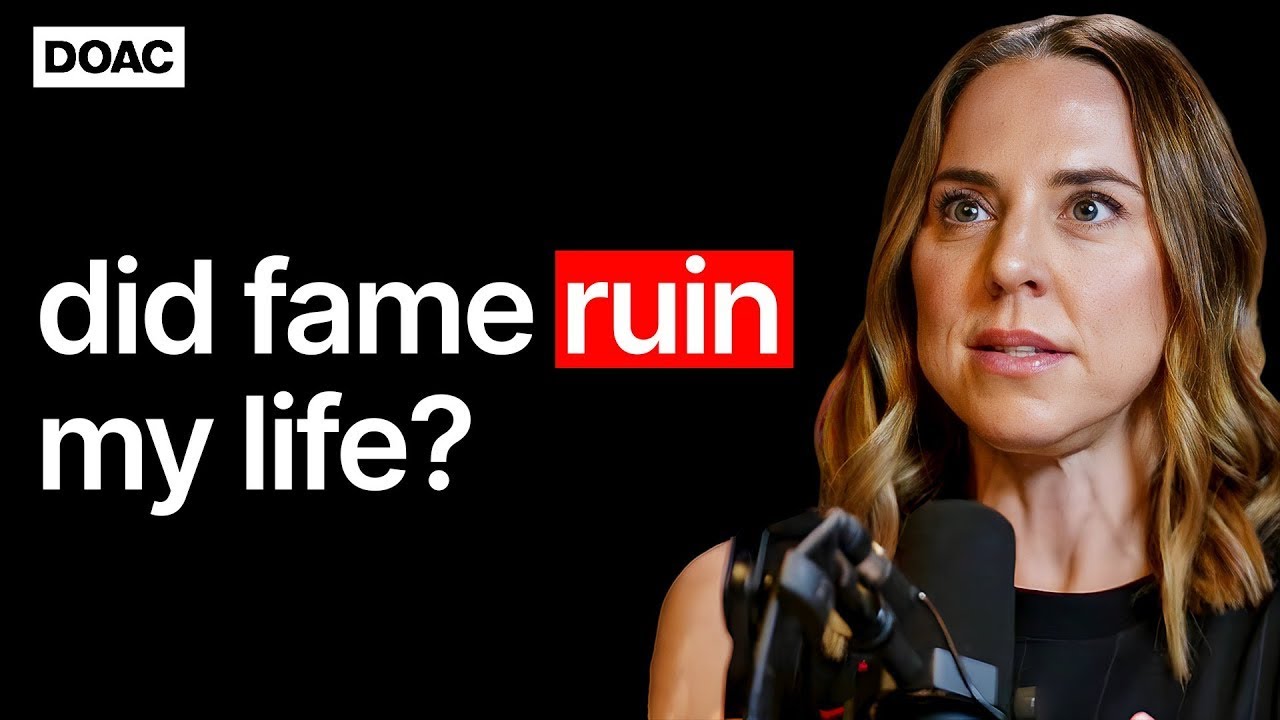
Definitely. That was the catalyst. I became very, very ill. I couldn’t control my eating. I was struggling to get out of bed. It was killing me. I think, did becoming famous ruin my life? Did it ruin me? Sometimes I question that.
Without further ado, I’m Stephen Bartlett, and this is The Diary of a CEO. I hope nobody is listening, but if you are, then please keep this to yourself.
Melanie, when I sit here with people, I always try and figure out the best starting point. I always know I’m going to start at the very beginning. But with you, when I was reading through your story, it was quite clear to me that the things that shaped you started at a very, very young age. I’m talking when you were two, three, and four years old. So, can you take me right back to the very start? I’m guessing that’s like sort of 1976-ish.
It is. And you’re right, things that happened to me when I was a toddler really defined a lot of who I became. I grew up just outside of Liverpool and I was born in Whiston Hospital. My parents and I lived in a place called Rainhill. They divorced when I was, I think I was about three years old. My life kind of quite quickly changed, as lots of young people would be affected like that. That was where the story began, me developing this need to succeed.
When you say your life changed, give me some color as to what that means for you.
So, I was living quite comfortably with mom and dad, the kind of happy family life. And then my mom and I left. We went to live with my grandparents, and then we went to live in quite a different area. It was still only about 15 minutes away, but it was quite different. We went into council accommodation. Quite quickly, my mom was in a new relationship, so there was this new guy around. Looking back, it was just very different to the world I’d entered into when I first turned up on this planet.
What was your family’s sort of economic situation throughout this journey? Were you a working-class family?
Absolutely, yeah. My family just still are very working-class through the generations. My mom and dad were doing okay. We had a lovely semi-detached house in a nice suburb of Liverpool. Obviously, with my mom leaving dad, as today lots of couples find, it is very difficult to start again. So, we were going into a situation where it was hard for mom to make ends meet. It was quite a tough area to be growing up in.
Where was your dad?
Dad was in the house we had been raised in for those first few years. Then after a couple of years, he went traveling and he went to work abroad, actually. So, I’ve always seen a lot of my dad, but there were periods of time when he was away. It was a bit of a shake-up quite early, during those formative years. As a child, your life is your life, but I think when you start to think about who you are and how you became that person, you just kind of pinpoint little moments that put you on that track.
So, when you look back to that experience of your parents separating at a very young age and your life shifting, in hindsight, what impact did that have on you?
I think it kind of confused me as a young person to have my location change, to be taken from the family home. Obviously, I was tiny, so I didn’t understand adult relationships. I didn’t understand why it was happening. Then I had a stepdad, and then I had a new sibling, and then I had stepbrothers. There were just quite a lot of big things happening in my little world. It made me just kind of confused as to where I belonged, who I was, and how I fitted into that new dynamic.
As I got older and my dad remarried, I have this incredible family. It’s very complicated and it’s huge. I have half-siblings, step-siblings, and step-parents. It’s lovely. But I think for me, being the only child of my mom and dad, sometimes made me feel a little bit like a spare part. I think that’s what made me feel like I had to make myself a place in the world, and my own place in the world. Also, it was about earning the love of these people. I kind of felt like I had to prove I was worthy of existence. It sounds dramatic, but as a young person, especially going through your teenage years, you question everything. A lot of that for me was like, "Do I deserve to be here?" And so, I had to make myself worthy of being here.
And you think that started because of the separation and this new context of siblings that felt like they maybe belonged more?
Yeah, I think so. Especially when both my parents remarried. They’ve both really happily remarried and have gone on to have more children. I love my parents and I love my step-parents and all of my siblings. But for me, I sometimes feel quite alone. I think that is what propelled me in some of the issues I went on to have in later life. Both for good and for bad, I think there have been real benefits to those feelings to make me very determined and very conscientious, but also it's made me very hard on myself and a bit of a perfectionist.
One of the things that I was quite surprised to read was this almost contradiction. You really looked up to your dad, I think you wrote in your book that you almost worshipped him, but then when he left, it was almost like there wasn’t a reaction from you.
I know, it’s so strange to me. It’s hard when you’re that young, isn’t it? Your own memories are such little tiny snippets. For my dad, I did, I put him on a pedestal and I still do. He is my hero and he always will be. But yeah, he went away for his own reasons, and as an adult, I completely understand that and he needed to do that. But yeah, I kind of shut down, I think. I have learned in my life, which has been really useful in my career, that I can have these incredibly intense emotional feelings, but they have to be buried. Not healthy, but helpful sometimes in the short term.
But I think if you have the knowledge that you do that, it can help in just maybe not doing it or trying to address it. Is that the first time you kind of recall those early years where you think you might have just buried a set of emotions and not addressed them? That blocking out of it just to keep on keeping on?
Yeah, I think some of it is my personality, but I think some of it was circumstance. I kind of don’t like to rock the boat. I don’t want to cause people problems. I want to always make sure everybody is okay. And I think that’s a lot to do with worthiness, feeling unworthy potentially.
Just so I’m completely clear in my own mind, that feeling of not feeling worthy came from that dysfunctional family dynamic? That's the first sort of hint you have of it?
I think so. I grew up in the 70s and 80s, and for me, in the environment I was in at that time, it was really unusual that parents separated. All of my friendship group, they had what I saw as the happy family, the family unit. I longed for it and I didn’t have that, and it made me different. Fast forward to today and I think it’s probably rarer to have the family unit. Life has changed so much. So, that’s how it affected me at the time. It made me feel like, yeah, an outsider and a bit strange.
You moved to Runcorn with your mother, which is where the council estate is where you lived. That area wasn’t a good area back then.
Runcorn is like a satellite town of Liverpool and lots of people were out there. This particular estate that we got housed in was very bizarre architecture. We had these huge round windows, and the houses, we used to call them the Lego houses because they were like blue and yellow. At the time it seemed very forward-thinking, but I think unfortunately it was one of those environments of which there are still many, where problems can occur. There were just opportunities I suppose for people to be quite discrete and there were lots of people there who were struggling. It was knocked down in about 1990 because it just kind of got too run down.
When you look back on your father’s decision to leave, is there any feeling of animosity towards that decision for him to leave your life? I understand the separation, but for him to then be absent seems like it was a catalyst moment for other things to then happen. Has there ever been any animosity when you reflected on it as you grew up?
No, there really hasn't. Because I think just that thing of being a kid, your life is your life. So it's just that you get told something like "Oh, okay then." And I think when I became a parent and I think about my daughter, and obviously I work away a lot, but I just... yeah. It's weird. I don't think you ever fully understand your parents, but I think you get a much better understanding of them when you become a parent. At the end of the day, as a child you look up to these adults thinking they know how everything should be and how everything should be done. Then when you become an adult you’re like, "I'm 48 and a half and I still haven't got a clue." And I still feel like a child. My mom is almost 80 and I get them now. We're all just trying to figure it out throughout our lives.
Dancing seemed to be your first love as I was reading through your story. Where did that show up?
You know, I think like so many young kids, you have this moment where you maybe go to ballet or disco or whatever in the local club. I went to ballet and tap when I was so little I can't even remember. But it must have struck a chord with me because when we moved to Runcorn, there was no way mom could afford for me to do dance classes. So I had this period of time without it. We moved to Widnes when I was, I think I was eight years old, and that's when I picked up dancing again. I think I'd really bugged my mom for years. I did sports at school, I was always very active. I was one of those kids who never sat still. I was always outside, I was always upside down or kicking a ball or something. Dancing for me was just a way of expressing myself and a freedom, and it was almost like a safe place.
A safe place?
Like many performers, and I'm sure you've spoken to people who are like this, I'm quite shy in certain aspects of my life, maybe like in a social aspect. Being at school I kept my head down, I wasn't very academic. But when I was dancing, when I was doing something creative and being able to express myself, I felt very confident and free and alive. So, dancing school was where I really felt in my element.
So you became a very obsessive dancer, practitioner. Very meticulous.
Yeah, I think there's something about classical ballet and the training of that, which there's a lot of discipline. And it just really worked for me. And even now, I have to have an awareness of this, that to have those parameters and to have that discipline makes me feel safe. I don't really know where that comes from, but I am very hard on myself and I think I'm a little bit of a workaholic because I feel like when I'm in a workspace and I'm being very disciplined, that I'm safe.
One might guess that if parameters and discipline and that structure makes you feel safe, then there might have been a time where a lack of parameters made you feel unsafe. Or a lack of a foundation made you feel unsafe.
Absolutely. I'm sure. I think there was a lot of, you know, my mom's a performer. And it's so weird now because obviously I find myself in a similar position, but she'd be away an awful lot. But there'd be times when I'd be staying with other people or, you know, having babysitters. And you know, maybe there was a little bit of instability felt there. That would definitely make sense.
A bit of instability. Is this... are you talking about your nanny?
It is. Yeah. There was a little period of time where my mom had employed someone to look after me who she felt was a great person for the role. But unfortunately, the girl, she was maybe a little bit too young to take on that responsibility and had kind of moved me out of our home and I'd moved in with her mom. And yeah, it was all a little bit shady. But yeah, as soon as mom found out she got onto it. But I think I was very quiet about it because I was still little, I think I was only about five. So I chose not to tell her. Probably didn't want to rock the boat.
What weren't you telling her?
That I wasn't at home and that I wasn't being taken care of by the girl she'd employed to take care of me.
That feels like a light way of saying something that is a little less light in reality.
Well you know, again, I was so young. I don't think it's something I've got over, but that was probably something that would affect you in a big way. But at the time it was just my life.
You recite this moment of just waiting for this person who was meant to be taking care of you, just not showing up on many occasions and you having to wait outside and- and peeing your pants at one point because you were waiting outside so long.
Yeah. I remember getting back from school and we had these concrete steps up to the flat door and no one was home. I was just busting for the toilet and yeah, I wet myself. Luckily the neighbor came home and she took me in and kind of cleaned me up. So that's... I mean, again, I was so young. There's just these little flashes of memories of those things.
I think when you're young you maybe don't... I think about my own life like, it's not that those things aren't impacting you, it's you're not really aware of the impact they're having or the stories that they're making you write about yourself and about your situation. And then obviously so often it seems that we, including myself, then see the consequences of it and in hindsight have to piece together where that came from. But that's... I mean, when I read that in your book, I was... I mean, that's almost like criminal negligence to treat a child in such a way. And I think about the departure of your father, your mom then departing to go and pursue her career, and then you ultimately ending up on these steps, you know, urinating in your underwear because of this negligent nanny. And that's, you know, that's where I think "Oh, that is, you know, that must have been formative in- in to some- to some degree."
Yeah. I mean, you know, I'm a big believer in therapy and I've been having it for many years. Probably I only started to do that because of my time with the Spice Girls and how much of a head-fuck that was. But it's really interesting because you do look at your habits and the things that you do and why you do them, and so much of it comes back to your childhood.
Dancing was your first love. You become very disciplined at that and eventually off you go to study in London. And that's where you find singing.
Yeah.
Which you hadn't... had you been doing it before?
You know, because my mom was a singer and she had deals in the 70s. She had a couple of record deals with different bands, but you know, it hadn't worked out the way she would have liked it to have. You know, she did great, but didn't get to those heights that all of us performers want to get to. So I just knew growing up it's really, really hard. Working in the music industry is really difficult. So, you know, my young brain goes "Okay, I want to be a pop star," but it's really hard. So I loved dancing and I loved singing, so theater, because I loved musical theater as well. I went to performing arts college and I was pursuing that. And I'd sung a little bit, but I just, I never really had confidence in my voice. But there was this like weird thing of- it just gave me so much joy. Actually more joy than dancing. I was in college, I was in my second year, and we had these competitions that would happen every year. And I was singing a song and it was the first time I just had a moment with an audience where they... I just really felt this energy, this transaction between myself and them. And it was when I was singing and that was it for me. That was the moment. It was like "It is singing. That is it. That is what I have to do."
So eventually you and 400 other young women respond to an advert in a magazine. What was that advert?
Okay, so the one I saw in The Stage newspaper was when you leave performing arts college, you're an actor or a dancer, singer, whatever, you go for your auditions. The Stage is where you find your auditions. I found myself at an audition I didn't want to be at, handed a flyer for a girl band, and I'm like "That's it. That's what I'm going to do."
You get handed a flyer. A lot of people are being handed that flyer. Did you know then that you would... you said "That's it, that's what I want to do." Did you know then that you wanted to be in a girl band, or did you mean "That's it, I'm going to apply and I think that's more befitting of what- where I want to go"?
It's hard to know exactly because of what's happened since then. Yeah, yeah, of course. Yeah. But my- my telling of the story is, I mean, I just had a really strong feeling at that time that I was going to- whatever this thing was, I was going to be a part of it and it was going to be something incredible.
What did that flyer say?
I think it said something like "Are you 18 to 24, streetwise, can dance, fun-loving," or I don't know. But it was, yeah, it was just basically an audition, an open audition. Anyone come along, putting a girl band together. Music management. And yeah, I went along to that audition.
And how did that go?
It went well. I was recalled. We had to dance and then we were recalled to sing, and then we were all sent away and then we- we were called back. But when we were called back, I was ill and I couldn't speak, let alone sing. So um, yeah, I- I missed my first opportunity of being in this band.
You missed your first opportunity?
Yeah. So I was really sick, I kept getting tonsillitis. And I, yeah, I was really poorly when the recall happened. And so I begged my mom to call in and just say "Give Melanie a week, let her get better, she should come and sing for you." But they were like "No, we've already chosen the girls, it's- I'm afraid it's a no this time." And there was lots of auditions that were no's, so it was like "Oh well, wasn't meant to be." But then a couple of weeks after that I got a call to say "Somebody hasn't worked out, we'd like to see Melanie again." And then that was my chance of getting in the band.
Christ. That is a pivotal phone call.
Isn't it? Yeah. It's bizarre. Yeah. And I, you know, I often think about the other girls who had potential because that still wasn't the five that everybody got to know. You know, there was I think there were three girls from the- the beginning of the band being put together who didn't end up being part of the final lineup.
Most people know American Express for our iconic personal cards. Some know us for our business cards to help entrepreneurs grow. But American Express also offers something built for companies at scale: the American Express Corporate Program. With the Corporate Program, you can apply for employee cards tailored to their needs, issue virtual cards to your team and suppliers, and even automate accounts payable with American Express 1AP. Along the way, your company can earn rewards or cash back as a statement credit to reinvest where it matters most. And because it’s all backed by American Express, you get the service, insights, and flexibility to help keep your business moving forward. The American Express Corporate Program, designed to help companies grow with confidence. Terms apply. Enrollment required and fees may apply, including an auto-renewing monthly platform access fee. Suppliers must be enrolled and located in the United States.
Corporate credit cards, cash flow management, centralizing spend, help with catching fraud. A powerful corporate card program needs to do a lot, so it should be designed to help work with your business. That’s why with the American Express Corporate Program, you can customize key elements to match your company’s needs. Explore and apply from a variety of card types based on employee roles. Select liability and billing options that fit your needs, add spending controls to support compliance, and decide whether earning rewards or cash back in the form of a statement credit delivers more value for your business. Learn more and start customizing your corporate program at americanexpress.com/corporate. Terms apply.
It’s funny isn’t it when you think back even being handed that flyer. You think, what path would I have walked potentially if that person that day hadn’t given me that flyer? It’s a really strange thought, isn’t it?
It is. It’s a sliding doors moment, isn’t it? But yeah, I really... because often in interviews you’ll be asked "Oh, if you didn’t do this, what would you do?" and I’m like, "I have no clue."
Funny. I think about it because I- there was an early- early point in my career where I got a phone call saying um, a- a day before saying this 16-year-old kid that was meant to be speaking at this event had dropped out last minute and could I get to London. I had no money, I ended up bunking on the Megabus. This 16-year-old kid just sold his business for 30 million, so they needed like a young entrepreneur last minute. Found me because I was on some website at 3 AM. Asked me to come, and that sent me off on my career. It was where I got my investors from, that one talk. I think if he hadn’t asked me to be there, how would my life have been different? And the weird thought, which we never consider, is that maybe I would have been happier.
Mm-hmm. Have you ever- have you ever thought that?
Often. Often, yeah. You know, I wouldn’t change my life. Obviously I’m so proud of the things that I’ve achieved and I have an incredible life and I absolutely do my passion, you know. That’s my... I’ve just had a weekend of it, you know, three shows over the weekend and I feel blessed. But with it has been some really tough times. And sometimes I do- I do think "Wow, I think... did becoming famous ruin my life? Did it ruin me?" Sometimes I question that.
It’s a hard one to answer, isn’t it? Because you don’t know the alternative, so you can’t...
Yeah. But I think the thing is it’s like, you know, it’s always so important, isn’t it, to remember we’re on a journey, right? What’s the destination? The destination is death. Just enjoying this journey. And I remember the early days of the Spice Girls were the best. Before we’d released anything we had the most fun because it was this excitement, "What’s going to happen? You know, what can it be?" And then when it happened, it was incredible, but there’s a lot of pressures that come along with it. So everything started to change.
In those early years then, so before you’ve released any music, you stumbled around trying to find management for a while, right? And then you recount stories in your book about some like dickheads that made some just like awful comments to you. Can you tell me about that- that comment... was his name Chick?
Oh, Chick, yeah. So he was a financial backer. So when we- we were first put together by a management team, and we were with them maybe for about a year. And Chick was um, yeah, the financial backer of these original managers and he’d commented on the size of my thighs. Which was something that really shook me. Because I went to a performing arts college which was predominantly a dancing college and, you know, body image was an issue there. There were girls with eating disorders, I’d been- you know, I’d been witness to that in my life. But yeah, it never affected me personally. Um, you know, I'm a teenager, putting on a little bit of weight, moving away from home, not really eating as well, going down the pub. And so my weight fluctuated a little bit, but it was never something that really bothered me. It was just, "Oh, help back a little bit, lose a few pounds." But somebody actually commenting on the way I looked when I was going into a career where so much of it is about how you look really affected me.
Did he make that comment in front of people?
He made that comment in front of the other girls.
There's something about um, when you're trying to fit in, when someone points at something which makes you different or that might make you feel like you don't fit in. And from just listening to your early years where fitting in and feeling worthy was so important to you, for someone to then in a group of people where- where you belong, those- that- that band, to say "This is why you don't fit in," essentially with that comment. I can't think of anything more- more hurtful for one's self-esteem.
Especially as a young person, because you know, think about it, I was probably 19 at that point. Which at the time, you feel like you’re all grown up and back at college, going out into the big wide world, you're a child. You know, you're still so young and so vulnerable.
Victoria said to you that he had said comments to her about her weight as well or her appearance.
Yeah. I think, you know, it was very much at that time... I mean, you know, I went to dance college so teachers would say "You need to lose weight, you know, what's that stomach doing there?" I mean, I've spoken to dancers recently about the culture of that because you know, um, recently there was a lot- there’s been a lot talked about in the gymnastics world. And there was definitely a culture within dance which was very cruel and heartless and shaming, body shaming. Um, which is changing, but you know, dance teachers, there are some really lovely nurturing ones out there, but some of the best dance teachers are horrible. You know, with- I mean, carrot and the stick, isn't it? It's quite an old-fashioned way, but it works in some ways, but it’s very damaging.
Did it change your behavior, that- that comment from him?
Definitely. That was the catalyst. That was the catalyst for me to- it was like a wake-up call, it was like "If I want to do this, if I want to be a pop star," and you have to remember this was like the 90s as well, so it was, you know, body image was a very different thing then. You know, thank God there's so much more body- body positivity now, you know. But back then, it was all about being stick thin. And I felt "Wow, if I'm going to do this, I have to fit the mold." And so then that was- it was- it was a gradual thing, but it was like the eating and the exercising and that's when- that's when it began. Yeah, from a comment like that. Which he probably didn't give a second thought to, you know?
Isn't that crazy?
It's crazy.
We never really appreciate that one comment can have such a profound impact and change someone’s um, the trajectory of their health or their well-being in such a significant way. Just one comment. Just a few words.
Yeah, you know, I think it's a bit of a trigger, isn't it? You know, the- so that happened, and I think obviously I was feeling vulnerable and it knocks your confidence. But then it’s kind of, I think it’s like a little chain of events that leads you down that road, you know? So that maybe was the little start of it, it ignited a fire.
The first domino to fall. On that journey trying to find new management, you- you stumbled across Simon Cowell as well and he- he must hate when you recount this story because...
It’s so funny because he- this is the thing, right, everybody remembers things differently. Because he remembers he said yes to us but we said no to him. So basically, we got to the point where we were going to record companies and we were looking for a record deal, so we’d left the original manager. And we had some demos, demo tapes, and we were going around meeting managers, meeting record labels. And most people were very positive. We got a very positive reaction. But we remember Simon saying he wasn't interested. Um, yeah, but he- he recounts it differently. So that's funny, isn't it? Because obviously to him it was the 90s, he was a record company exec, he- he wasn't known to the- to the wider public.
At this point when you're going around trying to find management, how are you providing for yourselves? Where's the money coming from to sustain the band? And was there ever a moment where you thought "Fuck this, I'm going to-"?
Never. Never, never, never. So when we were with our original management they- they did give us like a little bit of pocket money. They put us up in a house. I think they gave us about 60 pounds a week, which because we weren't paying for our accommodation at the time, you know, we could make ends meet. Um, but when we left them, I think I went to stay with a friend back in Surrey where I'd been to college, so I was like staying in her spare room. And then there was a period of time where Melanie and Geri were homeless, they were doing a little bit of sofa surfing. Yeah, and Emma went home to her mom's place in Finchley and Victoria was back at her mom's place up um, in Hertfordshire. So, yeah, we were... and it was so lovely. There's- I remember we'd go to Emma's mom's place and she'd do a load of toast for us and wrap it in tin foil and that would be breakfast. And yeah, we- we were just... we never thought- it was never an option to give up. We were on this journey and we were going to make it happen.
How long was that period when- when between you leaving your initial management to ultimately when you found Simon Fuller and you know, that kind of- it began with Virgin? How long was that- how big was that gap?
It- it wasn't as long as a year. Within a year. It was maybe about eight months or so. But we had um, somebody who was, you know, very kindly looking after us. So what we'd done before we left our original management, we talked our original management into putting on a showcase. So we did that and then we met some writers and producers and publishers and we made some contact. And we kind of knew already we were going to leave, but we just thought "Let's get this out of the way." And we did that and so we pursued that and we were with Mark Fox who was head of publishing at BMG at the time. And he kind of took us under his wing and would take us out for dinners and we'd get to meet people and that kind of got us on our road a bit more.
And then you met Simon Fuller. Talk to me about that and how that changed things.
Yeah, it was really interesting because we'd been... it’s so funny, isn't it, we really did take matters into our own hands and we talk about auditioning managers. You know, we were this unknown girl band, everyone was telling us girl bands don't work, but we were out there going "Right, is this manager good enough for us?" Um, so we just- we just had this attitude that we've got something very special and we're not going to undersell it or ourselves. And which is wonderful, you know, even if any of us had any doubts we were like "No, this is the way you do it." And I think that real determination, single-mindedness is a really important part of succeeding. It's like "No, there's no doubt this will not fail." So we went out there and met these people, and Mark Fox was introducing us to some writers. We met Matt and Biff who- who wrote 'Wannabe' and '2 Become 1' and 'Wannabe Forever'. And we also met Absolute who wrote 'Who Do You Think You Are', 'Too Much', those guys. And they were managed by a guy called Pete, and he was in Simon's office. And Simon heard the music and wanted to meet us, so he was the first person who approached us.
And eventually you signed with Virgin.
Virgin Records, yeah. We gave everyone the runaround and we got the money up and up and up and up as you could in those days. And we just loved Virgin. It was an incredible team and we just had so much fun with them. They really shared our vision. Great A&R, Ashley Newton. You know, obviously 'Spice' was such a great album, 'Spiceworld'. Um, so yeah, it was like a match made in heaven.
You recount that moment that Simon Fuller gave you your first um, 10K check, I believe. And this is before you've released any music, right? So this is like a si... is this a signing bonus?
Yeah, so we- we got like um, you get an advance when you, you know, when you sign a deal. Not so much these days, it's changed so much. But yeah, you- you get an advance. And we hadn't seen like what we would deem as proper money, and that was proper money. All them zeros.
What did you do with it?
Um, I think you know I did do with my first one.
No, I don't.
You don't? Okay. The first thing I did... I do know, you went and got some Nike shoes.
I mean, I think it was a check, right? I got the check. I actually remember like being um, on this kind of stairway in this party, giving me a check for 10,000 pounds on a- on a bloody check. I went down to Oxford Street, JD Sports, and I bought the Nike Air Max that I'd been like- keeping- I'd had my eye on for weeks. And I paid cash.
What did you do with the rest? Leave it in the bank?
Um, what did I do with the rest? I think I paid for some driving lessons for one. Um, yeah, I paid for my rent. And I mean pretty much when you- you get an advance, whether it's with the record company or publishing, it's your living expenses, you know, when you're a young artist and you've not released anything, that's kind of what it goes on.
How quickly did things move from the point of getting that check on that stairwell to um, 'Wannabe', the first single, taking off? How- how quickly was that?
Gosh, you're- you're really- testing my memory now. I think I want to say it was around Christmas time when we- when we got the check. And then 'Wannabe' was released in July of '96. So maybe about six months.
Six months.
It's not- it's not very long, is it?
It's not. And it's- it didn't- from what I read, 'Wannabe' didn't take a long time to record either.
No, it didn't. To write and record it, it was definitely under half an hour. There’s- we kind of disagree, was it 15 minutes, was it 20 minutes? I mean, it was kind of thrown together. Was it ever going to be a song? We wasn't sure. We were just kind of being silly. And Matt and Biff who are incredible, just obviously made it into something which- it went to number one in 37 countries. I mean, I don't think I even knew there was 37 countries, so fuck.
That's crazy. What does that feel like? So you release that single, then you start getting the- the murmurs, the noise, the world starts to vibrate a little bit. What is that- what is that like?
We had big ideas. We probably had big ideas above our station before we should have done, but it helped us. Our original management were always like "Don't get too big for your boots, you know, you haven't done anything yet. You need- you've got work to do." And we're like "We know we've got work to do, but we've got something special and we are going to make this happen." So we were always like we felt we were very important and very special. And when other people started to think that too, 'Wannabe' was released, it was still early days. But we released our album in Japan because at the time there was no internet. So artists would release music in different territories at different times, so you could kind of capture it with yourself, with your promo. We- we were able to do... I'd like to say we had time to do it, but hey, there's only seven days in a week. Our schedule was insane.
But we started in Japan, and 'Wannabe' went to number one while we were in Japan. So we didn't really get a sense of what was happening at home. And I think when we flew back to the UK, we were in Japan for about two weeks, when we- when we flew back everything had changed. And that was it when it was- when people really did start recognizing us in the street. Yeah, it all started to, yeah, increase at that point.
And how did that feel at first?
It was exciting. It was kind of like- it's almost like being put in a- like a catapult, you know? We've- we've done all this work, we've done all this work, we've- you know, and then you've gone and you're just on this- on this-
And it really was whoosh. I- I was trying to make sure I had the dates right before because when I was looking at the- the amount of time from that first single to the number one albums and the meteoric global superstar stardom, it feels like this much time. I was like I'm sure I've got the dates wrong, there must be like a decade missing or some like typo somewhere because it was just a couple of years.
It's, you know, it's not even a full four years, right? 'Wannabe' was released in July 1996, Geri left the band in the spring of '98 when we were two shows short of our European leg of the tour. So it wasn't a full few years that the five were together doing the thing, you know. It's-
That's mad. I don't understand that.
Right? We got together in '94, that's when we all first met. So together a couple of years beforehand. But yeah, by '98, spring of '98 Geri had gone. We went on to do our US leg of the tour as a four-piece. We come back, Melanie and Victoria had their babies. So obviously everything started to change by that point. It was a very different chapter in the life of the Spice Girls at that point.
In my head, the Spice Girls were like two decades.
Maybe that's why. Maybe the music lasted obviously, but um- but it- in- when I was reading that it was like two years. I was like "What? How is that possible? How is-"
Two- two- two albums and a movie and a world tour and yeah.
And all those MTV music videos that were playing in my house constantly because of my sister. Yeah, blame your sister. But I'd listen to a couple the odd CD when no one was in the house. But- this is a podcast, we can edit that out.
When you think about why you were successful, because there were a lot of other girl bands at that time, and there were even other girl bands that had a similar fundamental message of empowerment and as you- you call it "Girl Power". I think you can't say that anymore, I think that's a bit of a- people don't like using the word "girl", but um- Girl Power and feminism and female empowerment. Why in hindsight do you think that you broke through and and these others who were there before you and in some situations were much better placed? Why did you win?
I think the stars were in alignment. Whatever the magic was with that dynamic, that we are so different, that we are quite strong in our individuality, that we made the decision to dress how we each felt comfortable. You know, girl bands before us had coordinated their look or had a certain look, and we realized that didn't work for us. We wanted to make pop music, we loved pop music, we loved so many genres, but we felt like there was a space for a female band. You know, we kind of looked at bands like Take That and New Kids on the Block, and there was no girl bands doing that. And that's what we wanted to do. And I just think just all those little elements, a lot of them accidental, you know, our nicknames, which we never came up with, it wasn't a marketing idea. It was Top of the Pops magazine, Peter Lorraine who was editor there at the time, just thought it'd be really fun to give us some nicknames. And they stuck and they became part of the brand, you know, and they still live on to this day. I mean, in the US, we're known mainly by our nicknames. So, yeah, I- I just- the stars, like I say, it feels like they were just in alignment. It was meant to be. We had this idea that something was going to happen, but I think it was written in the stars.
Timing seems to be quite um, important in hindsight as well when you think about where the world was. Was it ready for this message? Was it ready for a band like this? Um, because you know if you had been maybe 10 years earlier maybe it wouldn't have worked out or 10 years later. But there's- it's funny, the- the case of timing, and then even when you think back to being handed that flyer, the timing of that, and it's quite serendipitous and you know the butterfly effect of just these- these things linking up and it can be quite spooky.
Yeah, it really is. You know, you're right, at the time, it's the 90s, it was a period of growth in the UK, you know. It was quite a positive time for the country. We'd just kind of come out of the grunge and Oasis music, indie was big here. And you know, we can't- you know, we can't say "Oh, you know, oh your world through female empowerment, yes, we- we brought that." This was something that was bubbling and moving and changing, and we were just really fortunate that we hit it at a time when more and more people were- were getting on it, you know. Um, and I think because, you know, people often talk about feminism and the Spice Girls and it's like, we feel like, you know, we were young, we had a point to prove. We wanted to be a girl band for girls. And we wanted to talk about female empowerment and how girls could do whatever they wanted to do. No one was telling us we couldn't do something. And it enabled us to take feminism and make it more um, you know, palatable to the young audience. You know, we had fans of three years of age. A pop band or a music act that had never happened before. You know, we- and even now, you know, it's amazing. I do these shows and I go out and I do solo stuff and I do a couple of Spice Girls songs and there's so many young kids in the audience loving and re- discovering the Spice Girls. And it's incredible, it still captures your imagination.
That um- that pressure though. People often talk about the pressure of being in a band, but the pressure of being in a girl band at that time, especially when even, you know, the media were- were very vicious, and there wasn't a- an awareness around the impact of words on mental well-being and how that can impact people. Um, strikes me as being an even more difficult time than today of being in- well we have social media now so in- which is also an exacerbating factor, but talk to me about the- the pressure of public scrutiny back then on young women.
You're right, you know, the tabloid media were brutal. I think things have improved. Not that much. I mean, it is quite shocking now when I look back over articles from the 90s and naughties just like the wording that was used. I think they're just a bit more sneaky with it now, you know. We're still saying the same things, but in a slightly different way. But back then, it was just... I mean, I got called, we all got called like terrible, horrible things. And as a young person, I think for anyone and you're right, you know, the generation now have social media to deal with, which I think is equally as damaging, if not more so in many ways because you can't escape it. Can you? You know, your phone is there. I wake up, first thing I do, look at my phone. Um, luckily now I have the skin of a rhino. I think if I read anything negative about me, um, you know, I can- I can usually brush it off. But yeah, back then, it was- I was trying to work out who I was, you know, "Who am I? These people are telling me I'm this thing." You know, they're criticizing me. I'm not talented enough, I'm not pretty enough, I'm stupid, I'm a loudmouth, I'm this. And it's like, "Who am I? Am I who I want to be? Am I who they tell me I am? Should I be who they want me to be?" It's so confusing. And that was I think another... you know, we were talking about these different elements that got me, because I became very, very ill. Um, around 2000 and you know the eating and the exercising and from Chick's words and certain things that had happened, being photographed constantly but being commented on constantly was a big factor in that journey.
Your demeanor changed when I mentioned that.
Did it? It looked like it- you genuinely, I could see how that- that phase of your life had impacted you just from the change in your- quite emotional. Um, yeah, it's... I don't think anyone can ever, you know, it's really hard, you know, because I'm always in this place where there's- there's an element of guilt attached to my success. And I think that's exacerbated by people going "Well you're famous, you know, you put yourself in that position." And something I explore in the book is, you know, people who want to be famous probably are the people least- well-equipped to deal with it because you know, we're- we're looking for acceptance and love and adoration and to be that vulnerable and to put yourself in that position only to be criticized is- is a bad combination. And I think you know with the tabloid media as it was back then, I mean it was horrific. I mean I've looked again recently because you know there's- there’s been certain reasons why I've had to read old articles about myself and I was shocked. Shocked at the negativity. I um, I mean I don't want to jump forward too far with the story, but I- I did suffer with a couple of eating disorders, one of them being binge-eating disorder. I was very depressed and I gained some weight because I'd been underweight for a long, long time. And my body was just like- it was just the reaction. It was like "I am starved of any nourishment, you know, heal me, feed me." And, you know, obviously the big change in that made me gain weight. And it only wasn't an enormous amount of weight. I think I went from a size probably about a size, it just sounds like a lot if you say like a size six to a size 14. But then a size 14, I don't think is even the average size of women in the UK. And they called me 'Sumo Spice'. I mean, how disgusting is that? So whoever this person is, I'm not going to say it's a guy, maybe it was, maybe it wasn't, the editor probably was. But they thought it was appropriate to call a young woman who actually had been open because she kind of felt she had to be about her issues, and it was okay to call her 'Sumo Spice'. How sick is that? It's really fucked up, isn't it? I mean, worse things have happened, and you know worse things have happened in the world. But in this, in my world, at that time when that happened, it was devastating.
Gosh, it’s disgusting, isn’t it?
They couldn’t do it now. They couldn't do that now. Like I say, they it's all of bit reading between the lines now, isn't it?
You- you were so young then as well. You were, you know, you're in your teen years, but you're still a child at that age and as you say learning who you are and what you mean. Was there a moment where you realized that- so that first comment from Chick sends you- changes your behavior. Was there a moment where you look back on it and go "That was maybe the- not the second catalyst moment, but my behavior took a really sharp turn there in terms of like exercise and obsessing over food and fitting in"?
Yeah, I- I think it was- it was more when we were in the public eye, being photographed, doing lots of photoshoots. Um, yeah, and you know some of it is linked to a- a need for control, isn't it? Because things at that point felt very much out of our control. Even though we- we wanted to take this thing, you know, in our own hands and we wanted to make it happen. Um, I think because when things with the Spice Girls became uber successful, which was very quick after the release of 'Wannabe', we're flying all over the world. You're in a bubble. You're in this crazy bubble and it's great, you're having an amazing time, but you can't- you can't do things on your own terms anymore. But you can control what you put in your mouth. Or you can be in the gym where people don't leave you alone because oh they don't- they don't bother me when I'm in the gym.
You write about how you turn into a robot. What do you mean by a robot?
Okay, so I think I- I found it the only way I could survive the experience was by switching off my feelings. Um, I had to eat a certain way, I had to exercise a certain amount, and I couldn't not do it. So I had to switch off any of those like human emotions or any of those- just even listening to my own body. This- there was a task that had to be done and I had to complete it. I'm robot, I must do it. And that was kind of my inner dialogue.
And you recount this- this day of- of reciting that while being on a running machine, which I found very almost quite unnerving and quite strange, looking in the mirror and telling yourself that you're a robot. That actually happened? You were looking in the-
I can- I can completely remember being in the gym. I was um- I can remember I was in Los Angeles, on the treadmill, kind of in the middle of a row of treadmills. And, yeah, that was- that was my way of coping. Just like shut down, shut off, just like- just this body is just a piece of machinery that will do what it has to do. And there was no- there was no choice. That was the thing, there was no choice. That was the way it had to be. And it wasn't until I had, which by all- you know, I imagine was a breakdown in 2000, when I just, you know, I hit bottom. And that's when I kind of fell apart because the robot wasn't working anymore.
Have you when you think back at that young girl, how have you got- how do you feel about her? As an- as an- you know, much more mature person now, how do you feel about that young girl that was going through that?
For a long time, I didn’t like her, you know. It was the most incredible time of my life and the hardest. And as much as I enjoyed it, it was joyless. You know, because I had a secret and I was dealing with what I had to deal with. And I didn't enjoy it at the same time. It was a- it was a head-fuck is what it is. Because I wouldn't change anything. I change that. I change that I became the victim of an eating disorder and exercising obsessively. I wish that hadn't happened to me so I could have fully enjoyed the wonderful things that happened to me 100%. You know, life isn't perfect, there's always issues, there's always things we have to overcome. But it was fucking dramatic in how it went down.
What would you say to her if you could speak to her?
I'd say sorry. I do, I feel so sorry that I did that to her. Yeah, I think I've been angry as well. I think I've aimed it at other people, but I think as an adult you have to take responsibility for your actions. Um, you know, I don't want to sound bitter and twisted, but- but you know, there were people or you know, the tabloid media. I don't want to bitch around about the tabloid media, but you know, they probably need to be bitched and moaned about because they've been a disgrace. Um, but yeah, I just- I- I feel sorry. I feel regretful.
What would you say sorry to her for?
For playing the truth. I think I had through that and and it feels like I kind of- I have a lot of guilt attached to what I was representing but what was really going on behind closed doors. And you know what, I'm such an honest person, I can't- I can't lie, I'm so bad at lying. And I- I feel so dishonest if I'm not baring my soul to people. But I was living a lie and that's probably the hardest part of it.
That um- that secret, the secret you're referring to is the eating disorder and the obsessive exercising, right? The secret you were keeping. When you say um eating disorder, are you referring to the binge-eating disorder that came after- was that- did that come after?
That was later. Yeah. So you know and the- the weird thing is actually as- as you put it like that, it's like I was in denial for so long as well. You know, because there is a little voice that goes "You can't carry on like this." But then the other voice, the bigger voice goes "You haven't got a choice." And the first eating disorder, I started to um, just to eat less, smaller portions, and then I started to eliminate food groups um, to a point because I was terrified of fat and then I was terrified of carbs and then I wouldn't even eat a banana because it's got too much sugar in it. I mean, I do not even know how I survived. And I think often now, I get so exhausted, I think it's probably two years of being malnourished. Um, I lived on fruit and vegetables for about two years. And I was underweight, my periods stopped. You know, I kind of- I've always wanted to be a mom, but I had no choice but to live this life I was living and I was jeopardizing the chance of being a mom. I mean, how crazy is that? Just this compulsion.
And then it all comes to a head in 2000 when the-
Yeah. I- I think like a lot of, and I won't say it's not women, but a lot of people we really hate our bodies, you know, we "Oh, I hate this." Oh, we used to get asked in interviews, but you know, "What- what’s your favorite," they- what would you call them like your "favorite attribute" or whatever, "You know, what do you- what do you like least about yourself?" You know, what- stupid fucking questions. Why would you- why would you ever say- never be negative in- in an interview. Never. Pull people towards your vulnerability. You know what I mean? "Oh, I hate my- my short stubby legs," you know what I mean? Just real focus on them. Um, but yeah, I- I hated myself. I was never good enough, nothing's good enough. Women do this all the time, we pull ourselves apart, you know, "I'm not funny enough, I'm not clever enough, I'm not pretty enough, I'm not sexy enough." All these things. And it's like, "Fuck, this body is amazing." And I spent all of those years just hating it because it wasn't what I wanted it to be. But you are not your body. You know, and I- I was talking to my family this weekend. I- I lost an older sibling a few years ago. And we were talking about when people pass, and you know, and sadly he died of cancer, and we know in the last stages, people with cancer it's- it's awful to see them in that way. But I don't remember him in that way. I remember the essence of him. I remember how funny he was and how naughty he was and- and it's not- I don't even remember anything physical, you know? And it's just we just need to get away from this physical being. What defines us- fuck, it's not what defines us, we are so much more than that. And um, I've completely forgotten what the question was, but I just got caught up-
No, no, it's- no, so- so powerful and um- it was linked to it- all- all of that sort of suppression and- self-abandonment coming to a head in 20- 20- 2000.
Yes. Yeah, so exactly. And I'd spent years like trying to make myself smaller, you know, fit into the form that I should be to be doing the thing that I'm doing. And it was killing me. And I- and this is why I started talking about my body because I'm so grateful to my body because it took over and it- and it said to me "We can't do this anymore. You're not doing this anymore. We are taking the control away from you." And it was hard because from being very restrictive with my eating and being anorexic, I started binge-eating. Because my body, it couldn't cope anymore, it wasn't getting enough fuel. And I was depressed, I didn't know I was depressed. I had no awareness, I'd never even crossed my mind that I had depression. I just knew I'd lost control over my eating and it freaked me out because it was all about the way I looked. You know, it was- it- it was vanity. I was like "Fuck, I'm eating, I'm eating loads." And, you know, I feel very grateful I was never bulimic. I tried, I couldn't make myself sick. And I- I'm so grateful for that because I know it's a really difficult illness to recover from. So I was getting bigger and bigger because I was eating more and more and more. Um, and then that was- it was the vanity that took me to the doctors. As well as being really fucking scared because I didn't know what was going on and I was struggling to get out of bed. And that was when I was diagnosed with depression, and that was my first step on the road to recovery.
You go to that doctor um who ultimately diagnoses you with depression. Can you remember that day vividly?
I do. I do. I remember sitting opposite him at his desk. And I think I said everything out loud for the first time about my eating, about crying and not being able to get out... I mean, I didn't have the words. I didn't know what anxiety was, I didn't know what depression was.
So what did you say to him, just- because I- I want to get a color of what the symptoms were that you hadn't yourself pinpointed as-
Well, that I was- I was tired all of the time. I couldn't control my eating. I mean, I was- I- I'd abhor myself because sometimes I'd catch myself mid-binge. It was so- it was such a compulsive thing. I'd like- yeah, I'd just be in the middle of just eating and I'd be like "What am I doing?" You know, and anyone, and um- sadly I know lots of people have these issues. It's like a cycle, because you do it and then you hate yourself. So you do it again. And- and you just- it just keeps um- you know getting worse and worse to the point where I had to go to the doctor because I felt like I was losing my mind. I felt like I was actually going mad. And yeah, and I didn't have the right words, and I know they are not the right words that we use today. But those were the words I had. Um, yeah, and he said "Well first of all, we have to- to deal with your depression." And honestly this weight was just lifted from my shoulders because it was like "Oh my God, it's got a name! It's something that can be treated, it's something you can recover from." And that was the beginning of a very, very long journey.
A very, very long journey.
Yeah. I think I'm still on that journey, to be honest. I don't think- I think depression is always there, it's always waiting in the wings, it's looming. Um, for me, anyway. Um, but I'm- I'm quite good at just keeping it at bay. You learn the tricks and the tools to keep it at bay.
You- you describe um, I believe, the- the fear of that looming um depression or, you know, I guess the fear of going back to former ways or finding yourself in that situation as being quite a scary thing. Is it a scary thing? Something you're- you're scared of? I don't want to mischaracterize your words there, but um- is it something that sits at the back of your mind in terms of you know that you- you fear there might be- it's like a catalyst, there could be one thing that could-
Yeah. The thing I fear the most is depression. Because you know I've- I've always felt like there's a fire in my belly and even, you know, mostly at my lowest of points, I can go "This will pass, we can do this." But there were times within my depression where I have doubted that. Um, but yeah, that's- I'm like "I can- I can do this." Yeah. My biggest fear is- is that, you know, really overwhelming depression where you doubt if you can make it through.
You had those moments post mainly where you didn't think you'd be- there was doubt whether you'd be able to make it through a moment. Is this post leaving the Spice Girls predominantly, or was there moments throughout the experience where-
It's never- we've never officially split up as the Spice Girls.
Oh really?
Yeah. We took that decision because there was so much press, you know, interest in us at the time. So you know, I was really, really struggling. We were working on 'Forever', which is the third album as a four-piece without Geri. And I'd worked on my solo record and I- and I was having a really, really hard time. And it was too much. I found the environment too much, and I think the girls knew me too well. You know, I was- I was dealing with these demons, these inner demons, and they- they could just read me like a book. And I just didn't want to be in their company because I had to deal with it myself, you know. So I- I did want to leave the band, but we- we took the decision to never officially split up because- because we didn't want the- the press intrusion. We were terrified of- because we knew... I mean I slipped up once on a TV show, I did a show with Frank Skinner, and I used past tense. I said "When I was a Spice Girl," or whatever the wording I used was, and the press jumped on it. And there was camera crews at the house the next morning, they chased me down the road. And yeah, and it was just like- we couldn't- none of us could face that. And the- the beauty of that is now, we kind of feel like- at the time, we needed separation. You know, we- we'd been- our lives had been so intertwined that we needed that space. But now we've had time to do that and grow and become individuals and moms and have these separate lives, we can come back together and- we really enjoy each other and respect each other. So we- we quite like that we've never split up. You know what I mean? We- we're always Spice Girls. When people say "former Spice Girl", I'm not a former Spice Girl. I am a Spice Girl, and we will always all be Spice Girls. Even Victoria, which didn't come on tour in 2019, she's still a very, very important part of that- that act.
2019. Your- your, you know, you recount in your book about how coming back together was actually a really pleasant experience and it- it taught you a lot about your previous time together in- in the Spice Girls. But let's start with the point about Victoria then. A lot of- a lot was written about that. Obviously, when press do interviews they're trying to twist your words and find something, "How can we turn them against each other?" Like, that's- that's the game, right? They- they do it. Um, so how- how did you all feel when- you knew that Victoria wasn't coming back to the group and you were going to be doing it as a four?
Yeah, there was a few feelings about that because obviously we were gutted. You know, we- we wanted her to be there. Total. Totally want her there. And we were scared because we thought "Shit, are people going to want us as a four-piece? Um, you know, in a different configuration?" And the thing is, you know, let's- let's be honest here, Victoria is a huge international icon. You know, she has gone on to be something in her own right, you know, in the fashion world, in the world of celebrity. She's much bigger than the others of us individually. Um, I don't think anything's as big as the Spice Girls, you know, we all feel that. But without her it's like, will they take us seriously? Um, so yeah, so there was different feelings around it. The- the wonderful thing about it was she was very supportive, and it was really important for us to make sure she was happy. So she was involved creatively, you know, we wanted her to sign everything off, we wanted her to know exactly what we were going to do. And it was such an incredible experience that it felt like she was part of it anyway.
Why didn't she- I- I missed the story at that time, but why didn't she want to be- what was her public statement? What was the reason?
Public statement is because of family and commitment. Okay, which is completely, you know, understandable. Um, but I think, you know, on a more personal level, and- and I think this has been said, I- I don't think she'd mind me saying, when we did the Olympics in 2012, yeah, she had a really hard time. Okay. It was- she was petrified. I mean, we were all bloody petrified, but to the point where it wasn't... yeah, yeah, yeah. But I think it was- it- she had a lot of anxiety around that performance, that she was like, "You know what, girls, I'm putting my dancing shoes up for- for- forever." So, yeah, so we totally got, you know, we respected her decision. Um, but yeah, we were still sad about it. But you know what, we went on to have the most successful tour we've ever done. Um, you know, with her blessing sadly without her, but we did it and it was incredible and it really is truly some of my happiest Spice Girls memories.
One of the things that I wish I'd asked Liam Payne when I spoke to him about One Direction and the- the group dynamic and then what happens when the group are no longer making music at the time- I don't want to say split up because that is a bit loaded- but when they're no longer together is um- what- what happens in the outside world in the media is people then start comparing the- the like post-band successes. And I think this can be very, very toxic because you're then being compared against in the case of like One Direction, these four- five other- five other individuals. You're then sort of measured. Your life then becomes measured against who did the best after. It was measured during, as you talk about in magazines where they said "Who is the hottest?" and "Who is the this?" and... yeah, exactly. Um, but then post, you've got, you know, as it relates to One Direction, you've got Harry Styles, who is just, you know, yeah, untouchable. Untouchable. And I- and I- and I wonder like no matter how amazing the objective successes of like another member, are they- they're always compared to this person. How true is that in your case?
Um, yeah, it's true. It's hard. It's so hard to go on and- and become a solo artist because you- like- this is what- what really jars me mad about the media, right? They tell you things you already know. Do you know? It's like "You're just not the Spice Girls." I know!
Yeah, they just want the Spice Girls.
I know. Um, but no, I mean that isn't totally true. But it- yeah, you're right, it's really, really hard because you get compared so much within the band and then post the band. But it’s like, you know, you- you have to have this logical brain, don't you, where you go "How do we measure success?" You know, for me, there's areas of my life I am so happy and I'm so successful, and there's others they need a bit of work. But I think as- as a fully grown adult you have to go, "Stop comparing yourself." You know, other people might want to do it, but you can't do it. We all do it. We all look on Instagram, we go "Her life looks amazing." Bullshit. No one's life is amazing all of the time. There's- there’s always something going on. So I- I think, yeah, it's just- we go off, don't we, on little tangents sometimes, but it's just to- to just come back home and- yeah, concentrate on the important things.
When- when you went on that- the reunion tour, what did you learn about your former experience from that tour?
I learned it was a shame that we couldn't fully appreciate it at the time. Because I and- you're never going to change history and you're never going to change things going forward because it's so chaotic and new at the time that you're just in little bit of survival mode. You know, you're just kind of at points going through the emotions. You know, I meet younger artists now, like I've been lucky enough to meet Billie Eilish a few times and I go, I- I can relate to her so much. I think I- I saw her perform at Shepherd's Bush Empire, and she was already way too big to be playing that incredible venue. And all these predominantly teenage girls were screaming for her, screaming at- at her, and singing her songs. And it just made me go back to Spice Girls shows. I know she's very different as an artist, but I just kind of felt this kinship with her. And so at times, I just look at her and I kind of feel like I know what she's feeling and what she's going through. So whenever I have the opportunity to see her, I just kind of have this little connect with her and it's just like-
Why does that make you emotional?
Because this incredible thing happens to you and it’s so hard to appreciate it because it’s so intense, you know?
Because that experience was so tumultuous for you, because there were so many difficulties. As you approach the reunion, was there fear of, you know, the- the former issues as well as- as the good times, but also the bad times coming with that?
Always. Whenever us girls get together there’s- there’s little triggers, you know. And I'm scared, but I have to face them because, you know, I've learned through experience of the other things I've gone on to do with the girls. We reunited in 2007, the Olympics, 2019. Face the fear and actually beautiful things happen. So, yeah, and you know what, we're much more mindful of each other now as well because, you know, everyone has their shit to deal with. You know, it wasn't plain sailing for anyone.
Was that tour much of the reason you were inspired to write your book?
It totally was. I mean, you know, sometimes I still question it. I'm still questioning it as we speak. I- I just felt like I started to be like, my story's kind of incredible. You know, I'm- I'm just a girl, I'm a normal girl from the Northwest, working-class background, and I have achieved my dreams and I go on to work in this industry, work as an international artist. I mean, it blows my mind when I think about what I've achieved, what I've continued to go on to do. And- and I want to inspire people. And I've, gosh, I've had hard times, you know. I've had times when I've thought "I don't know if I can carry on." I don't know if I can carry on in this industry, I don't know if I can carry on in this life. But I've done it and- and I just really hope that people can read this book and have a laugh. You know, there's been some funny bits, some great memories, but be inspired and- and also find some hope within it. Because you know I have- I- I personally for me feel like I've been at rock bottom at a time, but I've worked my way up, back up to- like feeling okay. I'm feeling great sometimes. So, yeah, I- I know people, lots of people struggle with some of the issues that I've had to deal with.
Why- what stopped you from writing this book sooner?
Fear. A bit scared. A bit scared to go back to those times. I knew it was going to be hard. It was actually harder than I-
Really?
Yeah. And recording the audiobook, which is something I definitely wanted to do, that's a lot. It's a lot because I think to write those words is one thing, but then to speak them is something else. Um, you can be interviewed and talk about these situations, but kind of going through it chronologically is- is really brain-draining. Yeah.
You've just been writing- reading the audiobook out in a studio. You sit there alone in these um audiobook recordings in a small room. Is that- is that- same experience?
Yeah. Oh yeah. And you read through this- this book that you've just written. Um, what was the hardest part for you to read?
I'm only halfway through. Okay. I haven't even got to the really tough bit yet. Um, but you know what's weird? I wonder if you would find this too. Sometimes it's the things you don't expect to get you. Get you. And I got really upset the other day when I started reading a part... I can't even remember which part it was, but it- it really surprised me. Because I know there's like chapter 14 which is like ingrained in my brain, chapter 14 is when I talk about my eating disorders and- and depression and- and the really lowest point um of my life. I know that's going to be hard to read, I've not got there yet. Um, but yeah, some of the other points have- have been quite emotional.
And is that- is that part hard to read and recount now because- because of those feelings you described earlier where you have the sadness for that younger version of yourself and you- you also said anger? Is that why it's hard to- to even read it out now at-
To be honest, I'm really curious to see how I'm going to do on chapter 14. Because I think I've built up like this resilience to it as well. Because I- I have spoken quite openly in the media about depression and eating disorders. And I actually started talking about it probably before I was ready. Because at the time, I- I felt like, you know, being a Spice Girl, it felt like it was your duty that our lives were in the public domain. And it was such a weird time because there were so many things going on. You know, there was so much exposed about myself and other people in the- the entertainment industry um because of phone hacking. You know, there were so many secrets and things that probably would never have made the papers, but you know they were listening to people's messages. We know now this is a fact. So, yeah, there was this- I felt like I had to spill my guts, and I was still so vulnerable and- and still very ill, you know. I wasn't anywhere near on the road to recovery, you know. It was just the very beginning for me. So I've- I've had to build up, yeah, this wall around me. So I- I wonder whether I can speak about that now and it not affect me emotionally. It's funny, I'm curious to see.
Is that wall a good thing?
It's a necessary thing, you know. Yeah. I think some of the other points in the book, you know, talking about my childhood and my parents and- and they're quite new things that I've never really discussed them publicly before. Um, and so they're quite hard. And also how they affect other people. That's what's been hard about this book. It's not just about- that's like fame, right? Fame just doesn't happen to you, does it? It happens to everybody around you. And they didn't ask for it. No. So, and then the guilt kicks in again. There's so much guilt attached to fame, I think.
Where is your line in terms of sharing stuff? This is something that I always think about. Um, obviously I have a podcast, so I talk a lot about my childhood and all the things that happened, and I've always wondered, you know, there's being transparent and honest because it will help others that have gone through that experience, and that's really important, that's how we all learn. You saying one thing can quite literally save lives. Um, but where is your personal line in terms of- because you kind of alluded to it there where there's things where you just can't, maybe it's not the right time or...
I think, you know what's really important with this book is it's my story and it's in my words and it's my perspective. And I think the line for me is, you know, it's not my place to tell other people's stories. And, you know, to the point of hurting other people. That- that's- I can't... I- I just couldn't live with myself. Um, but I know sometimes we hurt people unintentionally. And- no. So that's probably my fear around the book coming out now. Um, it's not my intention to hurt anybody, I've tried to be very careful. Um, but obviously, like, your parents reading how you feel about things, you know, that's- that's going to hurt. Mm.
When- one of the things as well that fascinated me was um your relationship with- with money. You know, um and and this the suggestion that you had almost guilt for your success. I've heard that a few times on this- on this podcast, and it always seems to come from people that have a working-class background. Can you tell me about that from your perspective?
I think for me, it's- you know, I all around me, all of my family, all of my friends' families, everybody works really hard. You know, really hard whatever, you know, world they'd work in. It could be manual labor, it could be... you know. I mean, my dad, God bless him, he's in his 70s, he's still traveling around like a young man and doing this crazy job and doing super long hours. And, you know, they- my dad loves his job, but it's, you know, it's a necessity to work that hard to put food on the table, to pay the bills, right? I- my- my work can be hard, it can be grueling, but I go on stage and I sing and it's my passion and I'm very lucky to do it. And sometimes I could maybe earn in a day what people in my family might earn in a year, you know? And it's- there’s guilt attached.
When um- when you think about the- the thing that made you successful the first time around, you- you talk about it a lot that- and I talk about it as well that insecurities were one of my biggest drivers. They were this, you know, you're trying to fill some kind of void and you end up- it ends up resulting in perfectionism and overworking and all those things. How do you control that- sort of those inner insecurities that- I could probably ask this question in a different way. Those things that drove you then, which ultimately are quite unhealthy and toxic and end up creating a lack of balance in one's life. How do you stop those things driving you now? How do you stop being toxic-driven?
§02Transcript — part 2
You know, I think partly age, just like for you, because you're so exhausted. Right, yeah. We haven't got the energy! You're right. To be that... you know, I think the thing is is- you know, we live and learn, don't we? And I'm a mom now, so I have a different set of priorities. I love my work. Sometimes I get the balance completely wrong. You know, I'm- with the book and everything, my workload is huge right now. It's the school holidays, you know, I'm not around enough for my daughter, so it's eating me up inside. But you know, I- I will find the time and we've got holiday planned. And I- I think it's just kind of learning from past mistakes. That, you know, be driven, but not to the point where it's detrimental. The biggest mistake I made as a young person was I believed other people knew better than I did. No one knows better than you about you. Just listen, just- and it's so beautiful. I've spent time this weekend with like really young people in front of me, and I- and I just look at them and I just think, there’s the essence of you. You know, because I think when you're a kid, I mean obviously people have different circumstances, but this essence of you has all the answers. It's all you need! You know, and then life comes in and just like makes it all a bit out of balance. So I just like really encourage young people to just really, you know, trust their instincts.
I'm really- I've been really thinking about that lately. I've been thinking because when I go up on stage and I try and give people advice, you're sometimes, people will often sometimes overcomplicate the answer. But as I've like looked back at my own life and what I'm hearing from you as well is that I- I knew the answer the whole time, but there was a narrative that persuaded me to ignore it. So sometimes that can be your- your immigrant parents telling you to go and become a doctor or lawyer, when you really wanted to just dance. And so you kind of place their narrative over the top of your own feeling. And so then the other one can sometimes be social media which tells you that you should be an X or a Y or a Z. But inside of you, I think it's really liberating to consider that you might already have all the answers if you just listened and tuned out these other voices.
Easier said than done.
Super easier said than done. Almost impossible.
Yeah, no, and I think the thing is as well, it's like- because you think "It can't be that simple."
Yeah. Maybe, maybe. Maybe, especially if the answer is happiness. If it is material success, then maybe you should go and be a doctor. But if it is happiness, which I think is the answer um in the long term, if you- you don't want to avoid a mid-life crisis when you're in your doctor's suit at 40 and you go "What the fuck am I doing here?" whatever, um maybe that is the approach to take.
But I always want to say, life is a series of chapters, right? So what's right at one point, might change. So I think that's, you know, that is the thing as well. It's like "Okay, a decision might be made and you're following a path, and then at some point you're like 'You know what, this isn't working for me anymore.'" So you can change. I think that's- I think that's really powerful to know. I mean, it's fucking scary. And not everybody has the luxury of just going "Okay, I'm going to change my career, I'm going to move house, I'm going to- you know, move country," whatever. But I think what's powerful is actually you have the power. You've just got to find the way to do it.
Yeah. The practical way to- I think that's the most important thing. Um, one of the- the other things I wanted to ask you about is when I reflect on my own early upbringing with my parents and the- and the model of love that they taught me... not all great. What impact did the model of relationships and the separation of your parents have on your own model of- of a relationship and love, if any?
I think the biggest impact that my- my parents' relationship and breakdown of their relationship and my childhood has had on me is that I yearn for a family. I yearn for that security. Um, and I- I have a little girl, I'm not with her dad. And that was really difficult. Because I didn't want for my little girl what had happened to me. Um, so yeah, I- I think I'm always- I'm always looking for that- that environment that I don't feel like I've ever really had.
We have got one last question for you. So the last guest asks a question for the next guest, but they don't know who they're asking the question to. So they write a- a question in the book. I don't see it, on my mother's life, I don't see it until I open the book. That was the last question. Okay, here we go. Interesting. Hmm. This is interesting because it's a question we've- we've been asked once um before. So it's interesting that it's come up twice. Um, what is a pain that you enjoy having?
Oh wow, okay. This is interesting. Um, I've had a little emotional turmoil recently and I was in the gym and I was stretching to the point where it hurts, but it felt good. And I think sometimes, and this is a little bit self-harmy, I think, like physical pain sometimes will alleviate- like, you know, when I'm exercising to a point of it hurting, can help with my emotional pain. You know, exercise is a really interesting thing because, you know, obviously I have a- a difficult relationship with it in a sense because I did used to exercise obsessively, which I don't anymore, but I do exercise a lot. And I do it for my head more so than my body at times. You know, it's really, really important to me. But I can feel so low and so tired and so lethargic and I can go to the gym and I'm a changed person in- in an hour. You know, it's- it's like a- it's a miracle drug, right? That it's the endorphins, the serotonin that's produced. Whatever happens. It's like when people say to me "Oh, you know, how do you encourage people to do exercise?" and it's like, "Listen, just go. No pressure, say I'll do 10-15 minutes, and I bet you're there for an hour."
I completely agree. Yeah. That is when I was first- when that first que- when that question first came into this book, my immediate response was exercise. And I've never really thought of... I was always curious as to whether there was an element of like escapism there as well and I- I'm always conscious about escaping issues or um and then when you reframed it then as you- you described it then as you're going through an emotional pain and the pain of the exercise almost helps to relieve that. It's quite a curious thing. Because I understand the endorphins and all the chemicals and stuff, but the pain itself being a medicine is an interesting concept.
Yeah. The other thing I think with exercise is, because you say about it because I've used running sometimes like that thing of running away. You know, if you're running, no one can catch you, you're running, you're running, right? But it also makes you very present. You know, when you are running, you are present. And I've actually done a lot of problem-solving when I've been running, had some little epiphanies as well. So it's- I think exercise is- you know, we were built to move. Let's do it.
Melanie, thank you so much.
Thank you so much.
Thank you. I enjoyed that. And your book is um truly important. I think that's the best- the best way to describe it because- because the depth of your honesty and the uniqueness of your experience offers- means that it offers so much to so many people and even someone that obviously, I mean there's probably- there's probably almost no one on planet Earth that can relate to the experience itself. But the lessons that are within your book and the lessons that you've managed to pull out of those experiences are- lessons that we can all use to change our life. And I- I said to you before we started recording that I usually don't make that many notes and I just- I made way too many. And it's really because I had so- I gained so much from reading it about, you know, even my own life, having not walked in your shoes, that um really helped me in so many ways. And I know that everyone listening to it is going to gain so much from it. But I also really have to specifically thank you for your honesty around the eating disorders and your depression because that will quite literally save people's lives. And you may never see it, you may never, you know, get to hear directly from those people, but I assure you of that. It- it definitely, definitely will.
Well I- thank you so much for saying that because I- I've been honest in the interview to say that I- I still fear releasing this book. But you know what, if it- if that is the case and to hear that from you, then I- I feel good. I feel good about it and getting it out there. Thank you.
Thank you.
Paying extra for tire care is B.S. You know, bad service. So at Midas, we’re rolling out our B.S.-free tire guarantee. Included with paid installation and tax on every purchase, you’ll pay nothing for flat replacements, nada for flat repairs, and zilch for tire rotations every 5,000 miles. That’s zero dollars for all that. So with this limited lifetime tire guarantee, you’ll pay a whole lot of nothing compared to what the other guys charge for tire care. That’s the B.S.-free tire guarantee. Only at Midas.