
Editor Of Vogue (Edward Enninful OBE): How To Become No.1 In Your Industry Against All The Odds!
嘉宾:Edward Enninful
全文文稿 · 按对话顺序保留完整内容,深入理解上下文。
§01Transcript — part 1
The thing I think about most, especially when I'm on the go, but also when I'm sat here in the Diary of a CEO studio, is the Wi-Fi and internet that we have to work with. In fact, anytime I'm filming away from the studio, one of the first things I do when I arrive is open up an app and do a speed test to see how strong the signal is.
The number of screenshots I've sent to my team about Wi-Fi signals at different locations is actually pretty crazy. It matters that much to me because it's such a competitive advantage to have fast Wi-Fi. On any given day, if I'm recording hours and hours of footage with a podcast guest, I then often have to have my team send that across to our London team who then do the edit.
Fast Wi-Fi and internet is not a "nice to have"; it is absolutely business mission-critical. So, when it came to finding the best provider who could supply internet and Wi-Fi to our new LA studio, which I'm sat in right now, we looked at every single option.
Of all the providers, the one that came back with the steadiest connection, as well as being the cheapest, was today's sponsor, Spectrum Business. Spectrum Business keeps businesses of all sizes connected with fast, reliable internet, advanced Wi-Fi, phone, TV, and mobile services. Millions of business owners already rely on Spectrum to keep their operations connected.
So if you want to join them, head to spectrum.com/business to learn more. That's spectrum.com/business. Restrictions apply. Service not available in all areas.
It feels like you've lived an impossible life. But with it came all the—I just needed to be able to look at myself and not hate myself.
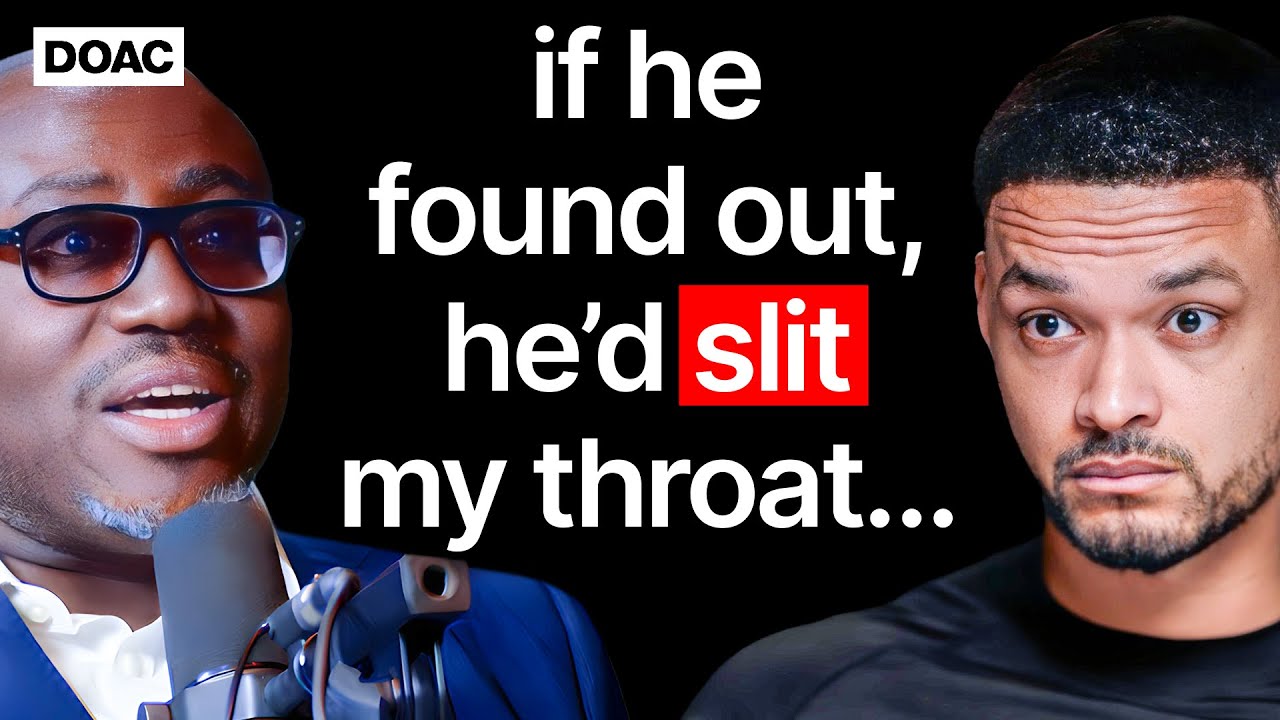
Edward Enninful: the first Black man to become editor-in-chief of British Vogue. One of the fashion industry's biggest names. He's single-handedly changing the face of fashion. In your book, you talk about understanding that you were gay from a very young age. Had your father known, he would have slit your throat.
I grew up petrified of him. Each day, I was being told you're going to be a lawyer or a doctor. I knew that wasn't going to happen. At the age of 13, I came from another country. 16, I was modeling. 18, I was an editor. It was quite fast. Work was everything for me. There was this notion that women of color on covers don't sell. I knew I'd need to do something about it. I didn't just create a magazine that looked good, but it's so financially successful.
I was just so consumed with work. Work was where I felt like an imposter. Really? I mean, I never look at anything I've done and think this is amazing. I wouldn't sleep. That leads you to drinking, and that leads you to drugs. You always have to fight. But that fight comes at a cost. I woke up one day and I saw these black markings in my vision. I was so scared. I knew after that, that I had to change my life.
You sit here as one of the most successful people in your industry. What would 51-year-old Edward say to 18-year-old Edward?
The one regret I do have is—
Edward, it feels like you've lived and traveled an impossible life. You sit here as one of the most successful people in your industry, but when I read about your earliest context, that's why I use the word "impossible." Can you give me the information I need to know to understand how the man that sits in front of me today got here? I'm referring to that early information—the context that molded you into the man you are today.
Thank you for having me. So, as you read in the book, I was born in a city called Takoradi in Ghana, West Africa. My dad was in the army; he was a Major. My mother was a seamstress. We lived on a military base in the town. So already there was a weird way of growing up where you are in a town, but you're not in the town; you're on a military base with its own set of rules and traditions.
So that's where I was, and my mother was a seamstress. I grew up in love with clothes, in love with my mother, and in love with clothes. I was always with her when her customers came in. My mother was one of those rare women who had her own business in the '70s in Africa. She had an atelier with about 40 women. So I'd spend days just really helping her fit women into clothes.
A little African boy standing around the corner, listening to the gossip, being shooed away. But I always say that's when I developed my love for women—all women—because my mother's friends, my aunts, were all bodacious women of different sizes. Big women, if you want to put it that way, but they were just beautiful and vivacious and alive.
So really, that was how I grew up in Ghana. I was always a sickly child, so I would always be with my mother a lot. I really learned about women and what really makes them tick. I always say I can tell when a woman is happy in a dress by the flick of a wrist or a little wince of the nose. My mother was a really great influence.
I didn't know anything about fashion, but I had an aunt who had a salon called Dolly Dots. She was a hairdresser, and that was like paradise for me. It was there that I discovered magazines. There was a magazine called *Ebony*, which was an American magazine that they would get every month. Another one called *Jet*, and another called *Time*. I would literally devour those pages. I was really happy; it was a really happy childhood.
And then we had to move to London because there was a military coup and my dad, from one day to the next, had to leave. So that was the next chapter.
You were the fifth of six children. The figure in that equation that wasn't mentioned is your father. In your book, you talk a lot about the fear you had of your father growing up. Can you tell me how that shaped you as a young man?
My father was a military man. He was in the Peace Corps from Ghana, so they would spend ages procuring peace in places like Liberia and the Middle East. He was there, then he wasn't, but we were petrified of him. When he was around, you wouldn't play outside. He expected us all to be home studying. He was very authoritarian, very African, very strict.
So yes, I was always very scared. I was sort of the creative child, always drawing illustrations, drawing women all the time. I'd hear, "Your dad's coming!" and I would just rip them up because I was literally in fear of him. My dad had this thing—we laugh about it now—but when he got angry, it wasn't just with one; it would start with number one, and then the anger would descend to me, essentially number five.
Because my sister wasn't born then. Yeah, he was very terrifying to me in all aspects. But then my mother was just the most creative, most incredibly warm mother who would literally say, "Here's the paper, here's the pen. Come in the room, there's this lady, sew her into the dress, zip her up."
So it was very weird having my dad, who was not artistic in any way but so disciplined, and my mother, who was just a creative. It's really funny because now I am literally both. I am so disciplined in my work—so disciplined, there on time—and then also so creative on the other hand. So I got something from both. But yes, in those early years, my dad was a source of terror to me.
What impact did that have on you? When you look back now in hindsight—I do this sometimes with my parents—I look back and go, for better or for worse, this parent shaped me in this way. It might have created a... I had a guest on this podcast called Tim Grover, who trained Michael Jordan and Kobe Bryant. He says at that young age, we develop both our bright side and our dark side.
Sometimes the same incident can give us both our brilliance and our things we struggle with most. What "dark side" did you inherit from that early upbringing?
I think what I inherited from that period was just this overriding fear that never leaves you. A sense that I was never good enough, a sense that I had to hide any form of brilliance. Looking at those early drawings that I did, they're not far removed from what I do now. But it was just like: don't show how brilliant you are, don't show how good you are, hide it, hide it.
Were you burning the drawings? I heard you were ripping them up.
Ripping them up, burning them, whatever I had to do so there would be no trace of it. I can't fathom that. But can you imagine as a creative child? That's your calling, but you don't even know at that age that this is what you're meant to do. You just know it felt like something that was wrong.
So I spent a lot of years just really loving what I do, loving the fashion industry, but at the same time thinking there's something wrong with that. While all this was going on, each day I was being told, "You're going to be a lawyer or a doctor or an engineer." To me, those were the great careers that you needed. Those were the great careers for an African child. For an African parent, that was it: a doctor, a lawyer, or an engineer.
So I always felt, sometimes even in the fashion industry when I was younger, that I'm not really doing what I'm supposed to be doing. If I were a doctor, my dad would be so proud. I carried that with me for years until I had to deal with it. Our parents shape us without really realizing. Someone said there's no real book to being a parent, so they learn as they go along. My dad was a young man, and in the later years, things got better.
You end up moving to the UK roughly around 13 years old. When you come here, you experience racism for the first time. It's an interesting thing to experience racism at your teen years because you don't even understand the concept of racism. Tell me about that.
As I said before, I grew up in Ghana where everything is possible. The doctors are Black, the president's Black, the lawyers are Black, everybody's Black in every profession. Then one day we're on a plane to England—me and my siblings—because my dad had gone ahead and my mother had to stay behind.
We arrive at Gatwick Airport and we're detained because we didn't really have the right papers. Before Margaret Thatcher laid the law down, you could come to England from any Commonwealth country without a visa. But we didn't realize she stopped it sort of a month before. So we came anyway, were detained, and I remember looking around the room and saying to my brothers, "Oh my god, everyone's white."
It was the strangest thing I'd ever seen because in Ghana everyone's Black. We decamped to Vauxhall to my aunt's flat. This was the year of Margaret Thatcher's reign, the sus laws, and the Brixton riots. I remember the first time I was stopped on the street by the police with my brothers. Teenage Black kids—they assume you're up to no good.
We had to go to school in Vauxhall, Lilian Baylis school, over the bridge. It was just scary leaving the house. My father was so traumatized by this country. There was a military man who ran a battalion; now he couldn't work, had to seek asylum, and we were the lowest of the low at the point. At school, I'd remember people would use words like, "Oh my god, they're the Booboos," which was the word they used for someone from Africa.
Not only was it tough, but I went to an all-Black school, thank god. I think my dad knew that the country was so different from anything we knew that he put me in an all-Black school. To this day, I'm so grateful for that. My work later—everyone talks about "How can you portray Black people so beautifully?" and I'm like, "That's all I know." But those early years were tough. A new country, a new school, and you felt a sense of not being liked as a Black person.
What impact has that had on you and your work? Professionally, you were hiding and had some sort of shame and insecurity around your creative expression back in Ghana. You come here now and the world once again says "You don't belong here." In your book, you talk about understanding that you were gay from a very young age. You said in your book that had your father known, he would have slit your throat.
He would say things like that. "If I knew any gay person entered this house, I'd slit their throat." But my cousin was living there, my cousin Michael; he was gay.
How did it make you feel? It feels like there was a lot that you were shielding or being forced to hide from the world: identity, creative expression, sexuality. Is that an accurate assessment? As a young man, did you feel like you were kind of suppressing these things?
I was very shy. I was painfully shy. I couldn't speak up. Sometimes I couldn't even walk into a room if there were people in there. It was this shyness and I just didn't feel worthy, I didn't feel good enough. I didn't feel like I had the right to even be who I was. I just didn't feel like a wanted child, really.
It wasn't until I was stopped on the train to be a model that things really changed. Before then, I was just the immigrant kid, number five. Anybody knows when you're number five, nobody's got any time for you. That's true! I always kept a very low profile, didn't really want to stand out because that would mean you'd be punished. I led life a lot like that.
So you were stopped on the train. Tell me about that. Nobody stopped me on the train and asked me to be a model, by the way. I'm still waiting!
You're very kind! I was about 16. A guy named Simon Foxton. I had left Lilian Baylis school and wanted to go to Kingsway Princeton College. I remember saying to my mom, "I don't want to wear glasses anymore," because I'd had these huge, thick lenses my whole life. I discovered there was something called contact lenses.
I said, "Mom, can I get a pair?" We didn't have money, but she somehow... I went to the optician, and because my vision is so bad—it's always been in the minus nine, minus ten range—they gave me contact lenses. The really hard ones, if anybody remembers.
A week later, I was on a train going from Hammersmith to college and I was stopped by a gentleman who turned out to be one of the biggest fashion editors in the country to be a model. I didn't even know what modeling was. I remember going home and telling my mother, and she's like, "No way are you going into that industry with *those* people." I didn't even know what "those people" meant, but years later, I think she meant gay people.
Of course, I found out later Simon was gay, and the whole industry was gay. But I wore her down. Eventually, she called Simon and I went on my first photo shoot. Then I was stopped by model agents and I got an agent, and my love for the industry really began from there.
What about your dad? Did he know?
I was hiding it. My mother and I were hiding it. My mother was so good. The first job, she'd go with me to castings and on my shoots sometimes because I was 16—I was a baby. She really trusted Simon Foxton, so then Simon would look after me and we kept it all from my dad.
I had a sister who was again stopped in Canada by a famous model agent, John Casablancas, to be a model, and my dad was like, "No way are you doing this." So somehow in the back of my head, I knew he wasn't going to stop me. I was pretending to go to school when I was going to castings; I was pretending to go to school when I was going to shoots. It was very cloak and dagger. It was fun!
That was your introduction to that world: fashion, modeling. Pivotal.
I remember the first day I walked onto a photo shoot. I think it was the Pepe Jeans shoot. I looked around the room and I saw photography, I saw lights, I saw styling. I saw just a world where everybody seemed so happy, so collaborative. In that moment, I knew that I wanted to be in this world. The second I walked in, I also knew that it wouldn't be as a model in front of the camera, but that I would be something else.
I didn't know anything about the industry. Also, don't forget when our parents came over from the Commonwealth, they didn't know what media was. If you said to my dad, "I'm going to be a journalist," he'd be like, "What?" There were the practical jobs. I don't really blame my dad now that I'm older; he just wanted me to have something that was secure. But try telling a 16 or 17-year-old who's discovered a world where they belong to turn back and be a lawyer. I knew that wasn't going to happen.
But off you went anyway to university?
I did for him, for my dad. But the brilliant thing about going to university was I was doing all these things—I was establishing myself as a model, I had pictures in magazines, I had worked on shows—and I thought I could do this side by side. It wasn't until I got to Goldsmiths University and I went for three months, and one of my lecturers literally was like, "So what do you do outside of here?"
I explained what I'd been doing. I'd also been working with a magazine called *i-D* as an intern. I was so in love with this world. I was at college, I was modeling, I was doing whatever I could. I remember the teacher saying to me, "You know, what you're doing now is what most of our students would like to do when they leave, so just follow it." And I never went back. I dropped out.
Three months in and you dropped out. But then when you dropped out, you were also offered a job as Fashion Director for *i-D* magazine when you were 18. Did you tell your dad you dropped out? I remember telling my mom I was dropping out of university and I didn't speak to her for two years.
I remember one day coming home and my dad was like, "How's university?" and something just said, "You can't lie to him anymore." So I said, "You know what, Dad? I've been working as a model, I've been working at *i-D* magazine, I haven't really been going to university." He was furious. He threw my things out the window—my clothes out the window.
I remember picking them up and thinking, "I am never coming back here." Funny enough, that's what propels me. Sometimes I have dreams where I've gone back home because things didn't work out. I remember saying to myself, "I am never coming back to this house with my tail between my legs." The same day I went into *i-D* magazine and the Fashion Director, Beth Summers, was leaving, and she said, "You're taking over."
There's so much to unpack there. He kicks you out of the family home, and in your head, you go, "Now I have no Plan B." It's Plan A or Plan A. Nothing. Sounds great, but that also sounds like—
I was terrified. Fear as a driving force can be a little bit unhealthy, right? This sort of fear of going back.
I can relate to that as well because similar situation—called my mom, dropping out of university, she goes, "Don't talk to me or the family until you go back." So I have two years of no Plan B. It was just forward. And that's wonderful for achieving great things, but it can also cause, in my case, severe workaholism because you're driven by fear. Are you driven or are you dragged?
Driven and dragged! Basically, all I know... anybody who's started in an industry at a young age will tell you that you're just driven. I didn't even know what I was heading towards. All I knew is that I was a workaholic. I would do anything that was needed to be done. I wouldn't sleep. If I had to return clothes from East London to West London, I would walk. It didn't matter.
And you are also shaped by certain people around you at the time. I had great mentors: Terry and Tricia Jones, who owned *i-D* magazine, were really supportive of me. I had Simon Foxton. I always say to people, I couldn't have succeeded if I didn't have great people around me. I was so lucky to have not only the best people in the industry but also people who were caring.
Had I been on my own out there in the world, I don't know what would have happened. I had Judy Blame, who said, "I've just got a new house, come and stay with me rent-free." I was 18. I had editors who would just give me money like, "Okay, you're working so hard, here's 10 pounds for your lunch." I was so lucky. That's why it's so important for me to mentor young people.
It's so important for young people to have mentors because had I not been looked after, I don't know where I would be. Also, I had this work ethic from my dad and my mother, coupled with the fear of going back home. It was just forward, forward motion.
Were you running toward something or running away from something?
Both. I was running away from a life that had proven too difficult. As you said: Black, young, gay—all these intersections, as they call it today. I really wasn't fitting at home and I was just... I don't know what I was hurtling towards, but I just knew that work would get me there. That my family wouldn't get me there, but work somehow would get me. And I didn't know where I was going.
Was it a distraction?
Work was everything for me. Work meant everything. Work was when I was happiest, work was when I was saddest, work was when I felt like myself, work was where I felt like an imposter. It's almost like every emotion you have in a family dynamic, I had at work. It goes back to being in an industry from a very young age—from 16. Don't forget, at the age of 13 I came from another country. 16, I was modeling. 18, I was an editor.
So the imposter syndrome... I look back at my journey now and writing the book, it's like it was quite fast—quite a fast ascent, maybe. But with it came all the issues. You didn't speak to your father for another 15 years following that day that he chucked you out of the house. Did you also sort of reject the family?
Yes. Work became, as you described there, your new family. I rejected my family. I thought they could have done more to help me. I had a baby sister who's now my agent, and she didn't understand why from one day to the next I left. I was seeing my family less and I embraced a whole new world. In this world, I was Edward, I was beautiful, I was shiny. Back then, they used a word I hate—"exotic." It felt like this is where I needed to be.
But underneath, I was a mess. I was the same insecure little boy hiding from my father. But because I was in a position of power, I had to cover up the shyness and essentially grow up again.
When your cat is acting weirder, or your dog is being louder, your turtle moves slower... hello, Ted! Your cat seems thirstier... whoa, slow down buddy! Or your puppy is acting clumsier... day or night, if you don't know what's wrong, know where to go. Veg ER for pets. This is Kate. Veg: the better, kinder ER for pets.
You describe yourself as being lucky, but I'm not sure I necessarily agree. Most people don't open up their home to someone. They don't give them money when they need it. They don't bring them in just because they are 18 and young. So if you were to tell me how you created that luck, why people were pulling you up, why they were giving you the job as Fashion Director at 18 years old, why they were letting you in their home—why was that?
I always thought it was luck. I always thought I was in the right place at the right time, I'd met the right people. But I learned later on, of course, that I must have had something in the raw. I must have had a raw talent, I must have had some kind of a raw vision—something that people wanted to help hone.
Had I not had these people, I would never have known how to research a great shoot or how to write a great story. I must have been so wide-eyed and innocent that everybody wanted to help me. Everybody wanted to help me win. But I also know that you do that with people... for me now, I do that with people I see have a certain talent, a certain raw talent.
So I think now it's not down to luck. Luck will get you through the door, but something has to sustain you. But in those early days, I was so grateful for all these people who thought I had something special. Even working at *i-D* when I was so young, I didn't have an assistant. So I would literally work on the cover shoot, style it, find a photographer.
I'd write all the shopping pages, I'd work on layouts, I'd shoot fashion stories, I'd write designer interviews. It was like a one-man army. I didn't realize that I was soaking in an industry. Everything I do in my job now comes from those days. But there I was in a magazine for young people, by young people, and I was learning my craft. It was exciting.
Every day I didn't want to sleep. I was definitely a workaholic. Work meant everything to me, and if something went wrong in work, I would just collapse and not know how to handle it.
Because it was so closely linked to your sense of self and identity. That again can be unhealthy, right?
Oh my god, I talk about imposter syndrome. And then your mind is saying to you, "You're not meant to be here. You're this little African boy. Who do you think you are?" I speak to a lot of young people today, and when they hear that I suffer from imposter syndrome, they can't believe it. I'm like, "That's just part of life. It never goes away; you learn where to put it."
Like, I know that I've done this long enough to know that what I do is okay on a good day. But yes, it was quite difficult. Those early days lead you to drinking and going out just to numb your insecurities and your fears.
Do you think you could have gotten here without your imposter syndrome? If you didn't feel like an "imposter," would you be sat here now?
No way. I always say had I not had my imposter syndrome, had I not had the need to be better... I mean, I never look at anything I've done and think, "This is amazing." I'm always like, "No, how can I do better? How can I make this better? How can I make this issue better? How can I make this better?" That's really what's driven me all these years.
Even when an issue comes out of British *Vogue*, I don't look at it till two months later because I will literally see all the mistakes. That's something I learned from back then. So my insecurities really... that's what drove me, that's what kept driving me. Not the successes. It's the fact that I thought this wasn't good enough, or that wasn't good enough, or this could be better.
But I got to a point where I went, "Okay, you can let that go for now and see things from a different angle." But yes, my imposter syndrome definitely propelled me.
If you have that, where you're looking at your work and you're always self-critical of it and always thinking about how you could have done it better, how are you happy in the moment? Because that sounds like you're kind of deferring your "enoughness"—the feeling that I'm enough and it's good enough and everything's fine—off into the future behind the next goal. So how do you become... at that stage in your life, were you happy in the moment?
Everyone says, "Why this sense of insecurity?" What you have to remember is I was in an incredible home and I lost it. An incredible country—lost it. An incredible family—lost it. Went into a gay scene that was so different from what I expected, so lost that. So for me, there was always a sense of loss that I had to overcome.
I had to belong somewhere. I never felt I really belonged anywhere, and that really was a factor. Sitting here, 50 years old, I've been able to deal with my demons through work, through therapy, whatever you want to call it. So I'm a different person now, but I still have those feelings of... yeah, you just have to make it as best as it can be.
But now, not detrimental to my health, not detrimental to my mental health. But as a young person, you don't think of that. You just have to move forward and you have to be the best you can be, whatever that is.
You start that treadmill at 18 years old, which is much earlier than a lot of people start as Fashion Director of this magazine. You start moving forward. You work, you don't sleep, you give everything to it. And at some point, it tends to be the case when I speak to these incredible people that there's a moment where you go, "F***, where am I? How did I get here? I need to change something." Was there a moment in your life where you realized all this running was maybe just a little too much running and you had to stop for a second and take a moment?
I remember sort of around 2002. I'd been in the industry for so long. I was creating fashion shows for the best designers in the world. I was flying every day or every few days to a different country—living "the life," as they call it. But I was also the most miserable I'd ever been.
I would be in a room surrounded by lots of people and feel really lonely. There was a sense of loneliness that was sort of creeping into my life every day. There's this saying that you can be in a room surrounded by thousands of people and be lonely, and that kept getting stronger and stronger. So I started drinking a lot, and I started going out a lot, recreational drugs.
One day, I was supposed to go to Italy to work on a show—a big show for designers called Dolce & Gabbana—and I had a party and I lost my passport. I was supposed to be there on day one, and by the time I got my passport back, it was day four. I literally went to the British Embassy to get my passport with a bottle of vodka in my hands.
You're joking.
Yes! Which I put through the security thinking there was nothing wrong. But I remember getting to Milan and literally breaking down and calling a friend and saying, "I think I'm done. I think I'm done with drinking. I think I'm done." And I became sober for the next 14 years or so.
I knew my life had to change. I moved from London to New York to be away from everyone. And that's what I did. But my career was totally unaffected. People who have addictions can be functioning. So my career was at the top at the time, and I could have just carried on. But I just knew that life had to change.
I just knew I had to develop some kind of spirituality. I just needed to be able to look at myself and not hate myself. Hate myself, yeah. Work was always great, but like you said, behind the curtains: the insecurities, the loneliness that a lot of high achievers feel when you don't have a partner, when you don't have a family to go back to. You're literally a lone wolf with a lot of friends.
Everything in life has a cost, and the cost of being dragged or driven by success is often something has to fall by the wayside. For so many successful people, that is social connections, it is all these other things that make life quote-unquote "balanced." Because in the moment, those things seem disposable when you're so focused and driven. What were the symptoms? You said the word "creeping"—creeping feelings of loneliness or depression. What were the signals, the signs of that? Because there will be someone listening to this now that it might just be creeping, like a frog in a frying pan slowly heating up.
The signals were like, not really sleeping. Not really ever engaging with people on a one-to-one, always being better with crowds of people around. Avoidance of certain situations, certain people who are quote-unquote "good for you." Avoidance of people who you really loved before and who were really kind to you, all of a sudden avoiding them for a new group of shiny people. Nights spent watching endless amounts of TV, but then realizing for the past six hours you can't even remember what you've been watching. Staring at the screen, but the mind... and a mind that wouldn't stop. No meditation involved. Just a mind that was working overtime.
And what was it feeling like?
It's a feeling of emptiness. I can describe that feeling. Now when I meditate, I'm like, "Oh, so that's the feeling." But it's a feeling of emptiness, a feeling of loneliness.
Disconnectedness.
Disconnected from everything. And everyone's telling you how brilliant you are. You have the magazine covers. I remember one month I went to the newsstands—I had the cover of *American Vogue*, *Italian Vogue*, *American Vanity Fair*, *i-D* magazine—and feeling empty. People saying, "Oh my god, look at what you've achieved," and just wanting to destroy it.
Really?
Wanting to destroy whatever talent there was, wanting to destroy it, not really caring, not really taking care of it. I mean, now I know that when you're given a talent—I don't know where that comes from—you have to protect it, you have to nurture it. But when you're young in your 20s and you have money and jobs are coming to you, you just don't see the value.
So what changed at that moment in your life? You gave up the alcohol.
And I went into AA, Alcoholics Anonymous. In AA, oh my god, I learned to do service with homeless people. In AA, it's a leveler. So I would have... you do service with homeless people, you would go for lunch with people from all walks of life. Don't forget, I'd been in this industry since 18 and I hadn't stepped out of it. The only people I knew were actors or musicians; I hadn't stepped out of this.
But meeting real everyday regular people, that really helped me. And also doing service—one day you make tea. I had sponsees—a sponsee is someone who wants to not drink and change their life, so you're someone's, in a way, mentor. But I was really in the program and that really gave me a spiritual side to be able to deal with the world and even to have a relationship. I'm married now; like I said, I've been in a relationship now for 21 years.
Had I not taken that step, had I not woken up and thought, "I need my life to be different," I don't know where I'd be today. Because the party moves very fast. The train moves very fast. And a lot of people in the fashion industry don't get the chance to step back and re-evaluate. You just go. You could go from party to party and it will be okay. But I just knew that coming from where I came from, that I needed to change my life.
Going from party to party and it will be okay. That almost seems like a metaphor for how a lot of people are living their lives even outside of the fashion industry. Going from job to job—lawyer to senior lawyer to partner at the law firm—without really having that moment to step back and say, "Who am I? How did I get here? Do I belong here? Do I feel okay? I know the external world's telling me I've done well, but does that match with how I feel inside?"
You have to know what you feel inside. A lot of times, too many people, young people, are doing what they think other people want them to do. "Oh, you're great, you'd be good at this, you should ask for this job." Sometimes you have to ask yourself, "Do I want that?" That's what I did. Everyone says, "You need to take this campaign, you need to work with this designer." So I did. But did I really want that? Maybe I didn't. But you just do it because people's expectations of you. I did that for years and now I don't do that anymore. But it takes a while to be able to figure that out.
If you could have had a chat with Edward, that 18-year-old Fashion Director at *i-D* magazine, and you could have just sat down with him and given him a couple of listen-up tips... "Right, Edward, this is what I need to tell you." What would 51-year-old Edward say to 18-year-old Edward about career advice and equipping him for the next couple of years?
I'd say, "Don't just give everything to work. Find moments for yourself, find moments to self-reflect." I always go back to meditation. "Find moments of self-help because that will carry you much longer." A lot of people I started out with are no longer around. So many people along the wayside decided the industry wasn't for them or was bad for their mental health, and I just kept going.
And I would have said to my younger self, "You know what? Sometimes maybe some jobs aren't worth it." But when you're 18, everything is a must, isn't it?
Do you think he would have listened?
No way! He would just do the same thing all over again. But that's the beauty of youth, isn't it? There's some lessons in life that you have to learn for yourself. I wouldn't have listened to anyone; I didn't listen to anyone, really. Little Edward.
But you know what was really great about that time? I go back to saying I was "the chosen one" or "the token," whichever way you want to see it. But I even learned at that age that I needed people like myself around. I needed Black people around me, people of color around me. So I became really good friends with a young model, Naomi Campbell; a young makeup artist, Pat McGrath; another hairstylist, Ben Skervin, Patti Wilson.
We became our little group in the fashion industry through the '90s. You always need your people.
Why?
Because you just do. Because there's certain things that I was facing that you wouldn't know as a person who wasn't Black. That Pat would understand, that Naomi would understand. We were navigating spaces that most Black people weren't, and you just need someone to understand when you had a problem, someone to understand and help you navigate, really. Those friendships that we had as kids in the early '90s, we're still so close; we speak every day, all of us. So you need your tribe. I remember even the day I stopped drinking, I called Pat and I called Naomi. They've been so consistent in my life. I had my tribe in an industry that wasn't really for us.
You stayed at *i-D* as Fashion Director for a long time—20-something years. Most young people, especially these days, wouldn't stay in any job for two years.
After six months, they're coming to me to say, "What is my prospect?" I'm like, "I don't even know you!"
But that's... when I read that, I was like, is that correct? You stayed in one job, the job you had at 18, for 20-something years?
Not 20 years as a full-time, but 20 years where I was also freelance and still doing the job. But *i-D* is such a special magazine. It became like the coolest magazine in the world. Every model, every actor, everybody wanted to be a part of it, so there was no need for me to leave. I'm also very loyal. Loyalty is so important. So everywhere I go, I never leave.
There's something to be said for that, though; it's rare in the modern world, that loyalty to a profession or a craft.
Yeah, and if someone is loyal to you, I believe in being loyal back. If someone nurtures you, then you want to be there. Like I said, it replaces the family dynamic, which I didn't have from that age.
Do you think that's part of it, the reason why you've been so loyal? Because you're searching for somewhere to belong?
I know that. Because even when I was at *i-D*, my friends would say I was never alone at my desk. Every day you'd come in, there'd be the hottest actor, singer, dancer of the moment around my table. The next day would be a writer. It was like, "Yeah, come in, come hang out. Let's go hang out for the day with Edward." That's what *i-D* was.
And what was that making you feel? When there were people around you, from an emotional standpoint, how...?
I'm great with people. I love being around people. I have a husband who's very... wants to be on his own. I grew up with five siblings, so I don't even know what being on my own is like. Now I do, but back then, the more people around, the more they gave me energy and creativity. I love creative conversations. I love being in the moment, I love arriving at a creative decision. So that was really my fuel.
*Vogue*—how did that happen?
So after *i-D*, in the late '90s, I started working for *Italian Vogue* for the great editor Franca Sozzani. *Italian Vogue* was sort of, of all the *Vogues*, you could say the most creative, where she would give you 30 pages to shoot—incredible images. I did that for maybe 10 years at *Italian Vogue* as the main stylist.
Then I got a call from Anna Wintour in America to come and work for *American Vogue*. So from *Italian Vogue*, I moved to *American Vogue* and I was there working for Anna for seven years.
Damn, you do long stints!
Oh my god! And then you're going to love this—then I got a call from *W* magazine to work with Stefano Tonchi, a really great editor, and I was there for seven years. Wow! But when you're having fun or when you're enjoying what you do, time is of no essence.
I'd say, "Oh, the issue comes out in six months," and someone's like, "That's six months away," but for me it was like tomorrow. So yes, and then one day out of the blue, I got a call from Jonathan Newhouse—a very great... he owns Condé Nast, the company that owns *Vogue*. He said the editor who was there had been there for 26 years—nobody leaves any job!—was leaving and would I come in for an interview?
I came in for a couple of interviews. I didn't think I was going to get it because, to be honest, I thought *Vogue* wasn't meant for people like me. I thought *Vogue* was meant for women from a certain background. I was the boy from Ladbroke Grove, I was gay, I was outspoken, I was good at my job. But I went for the interview and I literally told them how I would do *Vogue* for 2017.
And what was that message?
To make it inclusive, to make it diverse. There was this notion in the fashion industry that Black women or women of color on covers don't sell. It's been in the industry for as long as I could remember. But I saw all these affluent women—not just Black women, gay women, women with working-class backgrounds, Muslim women—all these British, who are British essentially, not seeing themselves reflected in the magazine.
I thought, well, not only is it bad business, it's not good business. I wanted to create a place or a safe place where women could just feel welcomed. Because I always remember my mother always said to me, "If you can see it, you can be it." So I wanted to create a magazine where women of all shapes, sizes, race, age, socioeconomic backgrounds could see themselves reflected.
And that's all I did. I didn't reinvent the wheel. I just thought: who are the women out there that I want to reach? And that's what I did. Thank god the world was... I mean, now diversity is a buzzword, right? But in 2017, nobody wanted that on a magazine. I knew I'd probably be fired three months in.
But I also learned—and this is what I got from my father—I'd rather be fired for something I believed in than to go in half-assing it and get fired anyway. Half-arsing it, I think. So yeah, that's how *Vogue* happened, and the world was ready.
When you got that call saying that you were going to take that top job at *Vogue*, how did you feel? It gives me the goosebumps.
I felt scared on one hand because I knew the type of person I am, that I wouldn't just go in and try to make do; I'd need to change everything. I also knew that *Vogue* had such a huge history that I wanted to be a part of it but make it about today, and I didn't know if the readers would be ready.
Before I started the job, there was speculation in the newspaper. I got called all kinds of "African." I got called the "Black cat." What was it? They said it was like going to Crufts but a cat won. Like a whole other breed. So already I had that on my shoulders. It was a really tough time.
But I didn't speak; I just thought, let me just bring out the magazine. And when the first issue dropped, December 2017 with Adwoa on the cover—an issue that was dedicated to Great Britain, the country that gave me a home, the country that I loved—and featured all the best: Zadie Smith, Naomi Campbell, Sadiq Khan... the best of Britain. The world got it straight away, and from that minute, the magazine just went up and up and up, and we haven't looked back.
I read about that story of the newspaper when you got the job. "Like Crufts, but the cat winning." Racism. And then I also recall a story you tell about arriving at *Vogue* one day and a security lady not letting you in because they thought you were the delivery man. And at that point, you were the editor?
I'd been editor for years. The woman was hired from god knows where. I walked in, and without asking for anything, without asking for my ID, it was like, "Loading bay!" And I was like, "Excuse me?" She said, "You have to use the loading bay," and I was like, "I'm the editor of this magazine."
But what that taught me was never to feel that the work is done. Never to feel that I'm okay. Never to feel that I've made it. Those moments remind me that there's still a lot to do. A younger person walking in there would have been paralyzed with fear, but I knew how to do something about it.
And this also happened years ago at a show where they put all fashion directors in the front row and put me in the second row, and I literally was on Twitter the next day. I'm not scared. Fear is not an option for me. From a young age, I've never been scared of fighting for what I deserve or fighting for what people from different backgrounds deserve.
So yes, that happened at *Vogue*, but it also made me realize that you always have to fight and you can never be complacent. Even today, I think I've proven myself. At the end of the day, I didn't just create a magazine that looked good, but also a magazine that is so financially successful. Diversity sells.
I remember taking the job and people saying to me, "Diversity is down-market." Yes, I heard that. Then I had Oprah Winfrey on the cover wearing the most incredible diamond earrings, and it sold out. So every day I continue to challenge what the idea of *Vogue* is and the idea of being an editor is. But now I look around at all the magazines, and diversity is now a part of the media. Having Black models on the covers—that's no longer a big deal. Having issues around gay issues or trans issues—it's no longer an issue. But in 2017, it was unheard of. So it shows how far we've come, but there's still a long way to go.
You've fought, Edward. You've fought for your entire life. You've fought for yourself, you've fought for others, you're fighting for your people. You're doing that every day. It's so clear in all your work. I was reading also about the "Black Issue" you released and how well that sold out where you put all sort of Black models throughout this magazine. That fight, again, comes at a cost. And one of the costs it came at was your health. I read about the health scare you had. Can you tell me about that? The doctors linked that back to your lack of sleep. It sounded like some kind of culmination of fighting a bit too hard.
Even on my way here, I was in the car with my PR, and she's like, "You're always fighting! You're always pushing forward." Yes, basically, all those years of just not sleeping, just working, overworking, traveling... I woke up one day and I saw these black markings in my vision. It turned out that I was having a detached retina.
The retina did detach eventually. One surgery, then it detached again, and it detached four times in the same eye. And then as all that was happening, my other eye started, so they had to operate on that. I've had five operations. And you know, I work with my eyes. So can you imagine what that did?
That was really harrowing. And then also I developed tinnitus—the hearing. I had that. It's hard to explain. You can't explain it. If I said to you your ear is going to ring, you'd go, "Okay," but when your ear rings non-stop... you think you're going crazy. I had it for about 15 days.
Only 15 days?
It went, yeah. Oh wow. I started reading online about it and it says you're going to have this for life. And then I read about the psychological impact and your mental health of having it for life.
Can you imagine having that and then having my eyes? But what it did teach me... I didn't work for two years. People didn't realize. While my whole eye issue was happening, I didn't work for two years. But in the industry, you have so many shoots banked anyway, so it looks like you are. But I knew after that that I had to change my life. I had to practice self-care. I had to work hard but not travel as much, not take every job, not... and British *Vogue* came at the right time because it meant I'd be in one place a lot; I'd be in an office. Which was also very new because I hadn't been in an office for a while. And yes, it really helped me turn my life around. I mean, now I'm such a health nut.
A purpose-driven man like you that's so in love with his work, for your work to be taken... because your eyes, as you say, are central to what you do. You can't see films, TV, shoots well. What was the sort of mental health implications of that?
Oh my god, I was a mess. I was living in New York at the time anyway, and I saw a therapist who said I had PTSD. Because I was so scared of losing my vision, it spiraled into all my relationships, it spiraled into my life. I was so scared. I remember the idea of going blind wouldn't leave my mind for one second. It wasn't like every day I thought of "Oh, I might go blind" once; it was every second on my mind. I could be happy and then it would go back: "You're going to go blind."
The mind, the brain is so powerful. So imagine you're leading your life and then there's this thing running behind your brain: "You're going to go blind, you're going to go blind," non-stop. It took a lot of therapy, cognitive therapy, to help me deal with that. Because I was convinced—not just one eye, but two. But then I found the most incredible doctor in New York, probably the best in his field, and my eyes are good now. I mean, not perfect, but at least I can see or partially see.
I don't know if it was slightly after that, but we've talked about the incredible impact and inspiration from a very young age that your mother was to you. She was everything you've described: vivacious, an entrepreneur. She was the reason why fashion became such an important part of your life as a young man drawing fashion designs under her workstation at work and so on. While she was away visiting Ghana, she had a stroke. From there, her health deteriorated over the coming next couple of years. In 2016, at 44 years old, your mother passed away. What impact did that have on your perspective in your life?
Oh my god. My mother was somebody who wouldn't stop working. She was somebody who wouldn't sleep. I get all that from her. She was obsessed with beautiful clothes, bringing beauty into the world. But I also watched her; she didn't eat so well, she wouldn't exercise, she'd just wake up and just work.
My mother was the love of my life, and it really made me stop to think. Strokes are nothing to be messed with, and it runs in my family, so that was already a sign to really look after myself. But losing my mother really left a void that will never be filled. But now I don't remember the... a strange thing happens when you lose a parent. Now I don't remember her being ill. I just remember that vivacious, gorgeous, creative woman who was so full of life. My mother always taught me not to be scared of anything. All the memories I have of her are so great. But she also helped me change my life. She was the love of my life.
In your words, what do you owe to her?
I owe her everything. My god, I owe her the love of fashion and color and people. The delving into your imagination, the creativity, everything that I create that's beautiful. The love I have of women of all shapes and sizes and ages and race—everything good in my work, but also in my life. She was the kindest, most nurturing human being. That's something I try to do with my staff, that's something I try to do in my everyday life. They used to call me "Teacher" when I was young, so I really like teaching the next generation and really nurturing them. All that really came from my mother. And empathy—being able to put yourself in someone's shoes. All that came from her.
After her stroke, it was almost 15 years where you described it as a sort of decline in her health. When she did pass away, was there any thoughts of sort of regrets? This is something I always wonder about my parents, because I've still got my parents, but I play out the scenario of how I'll feel one day when I've spent all this time working and our relationship... I think I've gone through life thinking my parents will live forever, to be honest.
Everyone thinks their parents are going to live forever. I say to my friends, "Please make sure you see your parents as much as you can," because when they're gone, they're gone. I still pick up the phone to call my mother and she's not there. But spend as much time as you can because they're not here forever. You think they are.
The biggest regret I have is all those years I spent working and traveling and not seeing enough of her, and not going back to visit. I was just so consumed with work. The one regret I do have is I wish I would have spent more time with her. But I thought she was going to be around forever. So yes, spend as much time as you can with your parents. Build whatever bridges you can build. I know some bridges are impossible, but if you can build bridges, do, because when they're gone, you will miss them.
Did she ever hear from you directly the impact that she had had on your life?
Before she had the stroke, she saw how well I was doing. She'd see different articles appearing in different magazines. She knew that... she was African, so she knew that I was financially secure. Secure enough to look after the family. So for her, even though she didn't see me get to this level, she knew that I was able to buy a place when I was very young and I was able to sort of look after them. She saw that, and I think she was very proud of that.
You went to therapy after she had passed away. What has therapy given you? What's the practical...?
Therapy really gives you the practical tools to cope with life. I've always been very good with boundaries—it teaches you boundaries. I've always been very good. When I was a teenager, I just wanted to do what everybody wanted, but then the older I got... it teaches you boundaries. It teaches you to speak up when things are not right.
Again, I've always had that. But it teaches me to be human, to be caring. Certain people in our positions, when you're successful, sometimes you discard opinion so fast, or you discard people's ideas. I'm now learning to be a better listener. All those things that I wasn't when I was growing up. And maybe it's turning 50 as well, who knows? I'm more patient now, definitely.
Who knows you best professionally?
My sister. My younger sister, who was also my agent for 15 years.
If I asked her what you're good at—because you've reached this position where you're the top of your game in what you do, from the most incredible start in life to here now—so we talked about your talent, but we didn't really figure out the specifics of what that talent is in your own words. If I was to ask your sister, "What's Edward's talent? What is the thing that he's good at that the peers just can't quite do as well as he can?"
You should ask her! I should have asked her. What do you think she'd say? I think she probably would say that I am in sort of perpetual forward motion. That I don't take no for an answer, probably. And that I'll do whatever I can to make the best magazine, or to make the best picture, or to make the best... I'll go to the ends of the world to make things happen.
Isn't it difficult for someone who doesn't have that same standard to work with someone like you then? If I don't care as much about the detail as you do.
Yeah, but I also think that it comes with time, doesn't it? I think you can see diamonds in the rough. So I don't expect everybody to be like me, but I can also see potential, and then hopefully you can nurture that potential to its fullest. So I don't expect everybody to come in... sometimes the best people you work with are the quiet ones in the back, the ones who are not good in interview situations, but the ones who work and are workers. She'd probably say that I am definitely a worker. Like, I work very hard.
Do standards matter to you?
Very much so.
Do you sweat the small stuff?
Yes. Why does that matter? The devil's in the details. You have to, to create on a level that we create. You can't just say, "Okay, everything's fine, everything will work out."
Can you work with people that are like that? That don't sweat the small stuff?
So long as there's people there who *can* sweat the small stuff. Maybe other people's talents are something else, but there needs to be a balance. It can't just be everybody there sweating the small stuff, but there also has to be dreamers and creatives. Someone said to me once, "What do you look for when you employ staff?" And like I said, it's not the best interview. It's when you are walking towards my office, am I happy to see you? Like, what are you bringing to the job? So someone comes in my office, they're sweating the small stuff, and somebody can just walk in and go, "I have a big idea!" And that's what I love about what we do.
Do you think you're successful?
I'm successful at my work, but I'm still a work in progress where life is concerned. Every day I learn something new about myself. I feel like I missed a lot of years growing up. For years I was always jealous when I saw people who went to university together, or when people who went to university together had all those escapades and I was working. But now I realize that everybody has their own path, and mine was to go and be a worker.
I sometimes ask my friends this: if happiness were an ingredients list, if it was a recipe that needed certain ingredients in certain quantities for the recipe to be complete, is there anything missing currently off your ingredients list that you think if you just had a little bit more of that, then maybe you'd be even more fulfilled, content, happy?
No, for me, it's more the opposite. I'm now like: if I don't want to be in a place, whether it's dinner or in a job or in a situation, I'm out. That's the ingredient that I have now—that I don't want to spend any time... life is too short, I don't want to spend any time being in a place where I don't want to be. And that came with years and years of failures and successes or whatever you call it. Now I know where I need to be, who I want to be with, and that's the ingredient that's been added.
I'm 30 now, right? So there's about a 20-year gap between me and you. What advice would you give me as a 30-year-old man right now? I've got another 20 years ahead of me; it's a different chapter of life. I love that piece of advice you said about boundaries and like, "If I don't want to be there, let someone down, get out of there." Is there anything else you think that, as a 30-year-old man, would equip me to make the next chapter of my life as brilliant?
Don't take no for an answer. Keep doing what you do. There'll be naysayers along the way, people like, "Oh, you can do it like this, you can do it like that. This person is more..." Don't listen to any of that. You've already set yourself on a great path. Manifest it, keep moving forward. Yeah, but really, don't be distracted by people telling you you can't do this or you can't do that or shouldn't do this. One thing my mother said to me is when you go into a place, a situation, and they say, "No, we do things like this," you should say "Why?" Always have that on your mind: "Why? Why does it have to be like this? Why can't we change?" So "why" is a very important word to have.
Amen. How has love changed your life, Edward? 20 years married now.
I mean, love—I never thought I would have love. I always thought I would be like a lot of those career-minded people where you get to the end of your life and you've achieved everything without a partner. And then I met Alec when we were in our 20s. I was in my late 20s, he was in his early 20s. Part of the reason why I got sober. He has taught me about just being a person, being human, being grounded. He's so special. Really just normal things in life.
But he's also very creative, so he tells me when a cover is awful and we fight! And I say to him, "What do you mean this is awful? Everybody loves this!" and he goes, "Yeah, they're telling you what you want to hear." So he's my home, my safe space. He's just very kind. He taught me to be kinder.
Have you learned to express to him what he means to you?
I think he read the book! No, he knows what he means to me. Without him, I wouldn't be here. I probably wouldn't even want to carry on doing what I do, but he's so excited—he's a director, so he's also so excited by work and our life. We have two puppies, so we have a great work-life balance.
You wouldn't want to be here?
§02Transcript — part 2
No, I wouldn't want to be here doing what I do. I'd be like, "Oh, I'm just quitting." Or those days when you go home like, "Argh, I've had those... I can't be bothered to deal with that." And he's like, "Yes, you will! And you'll go back tomorrow." He's really normal and so lovely.
Edward, we have a closing tradition on this podcast where the last guest leaves a question for the next guest without knowing who they're leaving it for. I get to see it when I open the book. And the question that's been left for you by our previous guest, who I shall not name, is: If you could be part of any brand or company, past or present, which would it be and why?
Obviously, I go back to the first magazine I ever saw, which was *Ebony* magazine. There was a great woman called Eunice W. Johnson, and she was the editor's wife. She was one of the few Black women who would go to fashion weeks, as we call it now. Do you know that poor woman—they wouldn't lend her the clothes to shoot. She had to buy the couture with her own money to do these fashion shows called "Ebony Fashion Fair" around the deep South of America in the '50s and '60s. This woman was so incredible, Eunice W. Johnson, *Ebony* magazine. I would have loved to have been her right hand. I would have loved to have gone to the shows with her and fought with her to get... I mean, what I have now, access to everything, is because of women like her. So *Ebony* magazine in the '40s and '50s next to Eunice W. Johnson would have been incredible.
Edward, thank you. Thank you for fighting, because by doing so, you're laying the foundation and opening doors not just for people in the fashion industry, but for people in every industry that come from where you come from, that look like you, including me. Because of role models like you in our society, you're opening doors for people like me that are coming through in different industries so that we are accepted and enabled, and our talents are put first and foremost beyond anything else that might be our skin color, our background, or our creed.
Your book is incredible. It's a very important book that I think tells a story, and as I call it, an "impossible story" of a young kid from Ghana that gets to the very top and becomes the first Black editor in British *Vogue*'s history. But it's also just such a human story—the struggles that you're very vulnerable and open about, and the ultimate sort of triumph at the end of this story. I call it the end of the story—I mean, you've still got a vision board—but a triumph that is impossible but important and generational. You're an incredible person. Thank you for fighting. Please do keep fighting. And I recommend everyone to go and check out this incredible book, *A Visible Man*, because it needs to be a visible book because it's certainly had a profound impact on my life. So thank you, Edward.
Oh, thank you for having me, and keep on doing what you do.
I'm going to. I hope you do too. Thank you, Edward.