
Lessons from The Years of Lyndon Johnson by Robert Caro [Narration]
精读 · 按主题梳理核心观点、论证与案例。
§01Three Kinds of Doing Everything
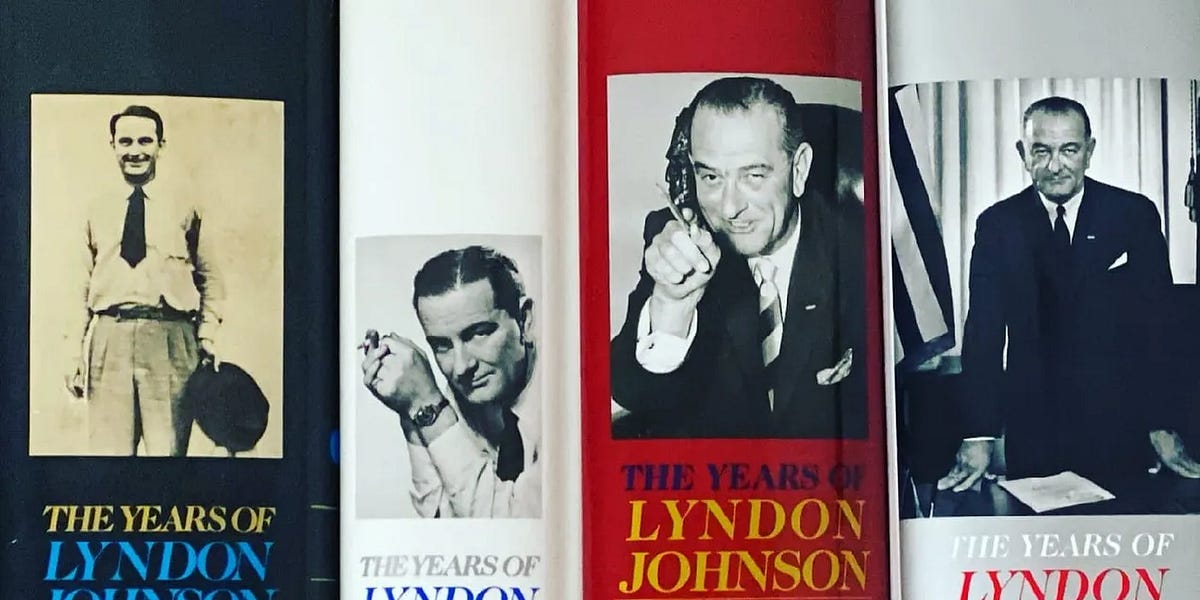
This episode is not an interview but a narration of Dwarkesh Patel's May 2023 essay on Robert Caro's four-volume life of Lyndon Johnson. The framing is deliberately immodest — Caro's books are offered as candidates for the best books the author has read, not merely the best biographies — and the claim deserves to be treated as an argument rather than a blurb, because what follows is really a theory of what extraordinary effort consists of and why the capacity for it is distributed so unevenly among people who otherwise look equally talented.
The organizing slogan is Johnson's own: "If you do everything, you'll win." Patel breaks it into three behavioral types, and the taxonomy is the most useful thing in the piece. The first type executes perfectly on the 20 percent of actions that produce 80 percent of the result — standard advice, and what most ambitious people actually do. The second extends the same care to the remaining 80 percent, on the theory that every marginal increment, however diminishing, is worth the squeeze. Johnson is a third type: he performs not only every action that might reasonably improve his odds but the unreasonable ones too, accepting assignments with only the remotest chance of mattering and completing them with the intensity of the assignments that will decide everything.
What keeps this from being a productivity typology is the evidence for the physical cost: weight gone, eyes sunk into the skull, face gaunt, hands trembling, rashes raw. The detail that does the most work is smaller. At the end of an interminable day, realizing one more task remained, "he would turn without a word hinting at fatigue, to do it, to do it perfectly." The absence of complaint is the tell. Effort that is announced is effort still being priced; effort that is silent has stopped being a decision.
Patel then holds two descriptions in one frame. "His career had been a story of manipulation, deceit, and ruthlessness." But it was equally a story of striving, and the decisive sentence is that "He would sacrifice himself to that ambition, as ruthlessly as he sacrificed others." The usual way of domesticating Johnson is to separate the admirable drive from the deplorable methods. Caro, as Patel reads him, refuses that separation: the same indifference to limits that made Johnson effective made him predatory. The virtue and the vice are one mechanism.
§02The Biographer as Specimen
Why is Caro's account persuasive at all? Patel's answer is that the biographer is a specimen of the same species. Nearly fifty years on one subject, decades sifting thousands of crates in the LBJ Library, getting former operatives to admit how they helped steal elections, moving to the Texas Hill Country to feel the poverty of Johnson's youth — the list is offered as evidence rather than color. Someone who has done these things understands the aphorism from the inside, which is not the same as agreeing with it.