
(EXCLUSIVE) Billy McFarland: The Man Behind The Infamous Fyre Festival Disaster
Guests: Billy McFarland
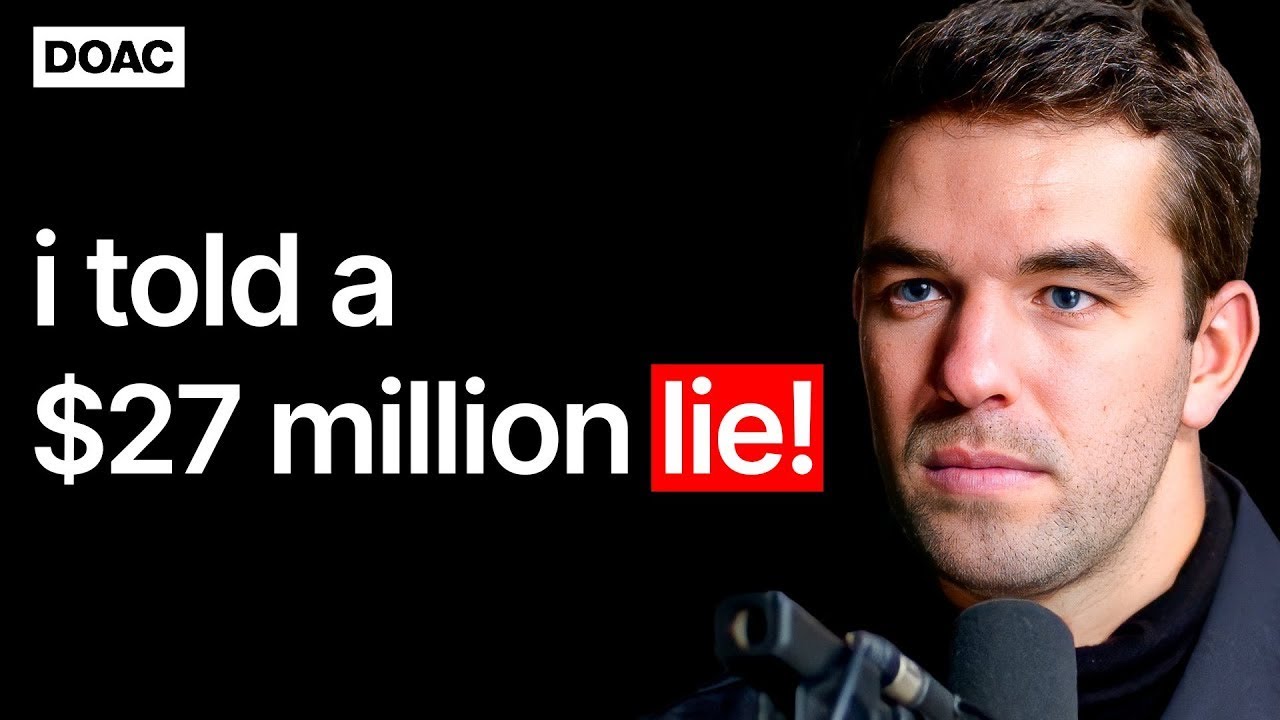
Full transcript · Read the full conversation in order, with its original context.
§01Transcript — part 1
Were you nervous coming here today?
I didn’t know how in-depth we were going to go. If I knew the questions, I don’t think I would have slept last night.
Are you a pathological liar?
Billy McFarland, he's the man behind the infamous Fyre Festival.
Island getaway turned disaster.
The Fyre Festival is the subject of two documentaries.
I will never forget.
When did you realize it had all gone wrong?
We were at the point where the timeline I had come up with was just so off. I’d wake up some days and it’s like, we need four million dollars by 2:00 PM.
Did no one say to you, "this is fucking craziness"?
I just didn’t have the ability to say, "Okay, what’s actually happening? How can we prevent this?" And then almost as if on cue... a storm rolls in.
Billy McFarland pleaded guilty to fraud charges, sentenced to six years in prison.
You come back to a shitstorm. The criminality doesn’t stop, does it?
But I couldn't really understand the magnitude and the gravity of the crimes I did commit.
Your lawyers tried to get you off the 20-year prison sentence by saying that you suffered from untreated bipolar disorder. Do you have bipolar disorder?
I did two stints in solitary. The seven-month stint was because I tried to do a podcast over the payphone. They put the paperwork in to send me to a terrorist facility. When you’re rendered useless and powerless, that just kind of kills your humanity. That’s fucking scary. That keeps me up at night.
Andy King. Did you ask him to suck a penis?
Here is what actually happened.
Billy, how are you doing?
It’s been crazy. A little less than three and a half months since my sentence ended, and it's really just been a whirlwind of finding the right people, finding the right opportunities, and really just dealing with this overhang of probation and the constant fear that there's someone out there who could send me back at any time by taking a wrong turn. So, I'm trying to avoid paying people back in every sense of that word and emotion, while dealing with this fear that I could wake up one morning to a phone call saying, "the joke's over, you're gone back."
So take me back. One of the things I’m so curious about with everybody that I sit here and talk to is their earliest context and their earliest upbringing and how that’s ultimately shaped who they are today. So take me way, way back to New Jersey. When you were under the age of ten, what was your context? Your parents, the situation in which you grew up?
I grew up in a pretty normal suburban American household. I think the defining moment was when I was ten years old and I got a cable internet line into my house. This was the really early days of the internet and it was pretty much like the Wild West era where a lot of the framework and regulation and mature social platforms that we have now just didn’t exist then. We were in the infancy of HTML and CSS and the practicality and accessibility of some ten-year-old putting a website online. I really found the internet to be this outlet where I could push the boundaries of everything that I thought was possible as this young suburban child, and really as a way to start getting in trouble and seeing what it was like to get in trouble and see where I could go.
Talk to me about your parents. I’ve not heard much about them in your interviews, but I’d love to know the influence they had on you and how that shaped you.
I think they were great. They were super loving, super supportive. I think I’ve been asked this question so many times, whether it’s the jail therapists or the probation department. I think it’s interesting that there isn’t like a defining moment that kind of set me down the entrepreneurial journey. I think I was just really weird in this desire to make my own path and to really test what was possible. So I was always kind of looking for journeys to start businesses and really test the bounds of reality and of the constraints placed on me at various times in life. Obviously, the constraints of a ten-year-old are much different than they were when I was twenty-four in the midst of the Fyre Festival, and then much different at twenty-seven in solitary confinement. But I think the reoccurring theme was trying to find ways to test those restraints, and that took me to the very best times, but also the very worst times in doing four years in prison and owing the world—whether that’s time, money, friendship, or an apology. So yeah, it’s been quite the journey.
My question still becomes: why, though? Testing the restraints of what was possible? Why does a kid want to do that? What was it about you at that age and your childhood or the circumstances you found yourself in, or what behavior was being reinforced and what behavior was being punished, that made you go off on that journey? You referenced a townhouse therapist, and they were probably asking you these kind of questions as well. Did you learn anything about yourself from those conversations?
Totally. I think there has always been this desire to prove that I was different. I don’t think I really understood what "different" meant. I don’t think it meant trying to be the smartest or the most interesting; it was like trying to prove that I could create my own path. I think that’s always been the desire.
Why did you want to create your own path and prove that? I hear this word "proving" a lot through your story—a desire to prove yourself right and prove yourself to others. It comes up over and over again in the conversations you’ve had. Where did that desire to prove yourself come from? Do you know?
I don't know. I remember back to getting an Alphasmart in early grammar school, and I was so desperate to hack the teacher's admin password for the Alphasmart to change the settings on it. I just wanted to show—or I think it was really proving to myself—that I could do something different. I never really did well in terms of a structured learning environment. I was always either super disinterested or very, very passionate about something, whether it’s technology or computers or the internet, and I just wanted to dive in and almost test against myself what was possible and what wasn't possible.
Did those around you, like teachers and your parents, have high hopes for you in your opinion?
I think so, but they were also—I don't like the word realistic—but I think they were very realistic and structured hopes. My path was certainly frowned upon by teachers, friends, etc., throughout the years.
Even when you were younger?
Even when I was younger. I think teachers were always concerned that like, "Why is he starting a business and not focusing on his math test?" So it was always a problem since a young age.
Do you remember getting critical or pessimistic feedback at a young age about your ambitions and what was possible for you?
Yeah, absolutely.
Can you give me some examples?
I had started a social network a couple of years later when I was twelve years old. This was the early days of MySpace, before Facebook had really gone outside of Harvard and the initial Ivy League schools. I created a private social network for my middle school. Out of nowhere, the site blew up and it was the talk of middle school for a few days. The teachers basically called me in and said, "The internet is not safe, you have to stop this right now, you have to get rid of the website."
And how did that make you feel?
It made me feel like I thought I was creating something of value, but I felt like what I viewed as value wasn't agreed upon by everybody else. It almost created this reinforcement of, "No, I know this is tangible, I know this is real, and I know people are enjoying something I made." I felt it was just so cool to have—at the time it was hundreds of people, whatever—but having hundreds or a couple of thousand people using something I made as a twelve-year-old was just really, really interesting to me. I think it kind of created this deeper desire to prove, whether it was to those teachers or to the friends who weren't supportive, that there is a different way than the way that we're all taught.
What did your parents want you to be? My mom wanted me to be a doctor or a lawyer. What did your parents want you to be in your own opinion?
I don't think they really cared as long as I followed the traditional path of studying hard in school, doing well, going to a good college, having a good college experience. I think beyond that, they didn't really care too much. I went to school to study computer engineering; didn’t last very long. So, I didn't really study computer engineering, but that was the intent.
What's the defining difference between both of them? If you had to describe them in a couple of words each, what words would you use?
I think entrepreneurial, quick—like, quick minds, they're sharp, they're smart—and honest. I think integrity is the big thing; they're very honest, good people. That's been part of the hardest part to me, is them—and not just them, it's other family members and friends—trying to understand how I could go down this path where I was just lying. Lying to investors and partners and employees, and whatever it may be. Just understanding how I got there from the path I had taken.
Have you had that conversation with them?
I have. It comes down to, I think you nailed it super early on, it was just this desire and, I think more than a desire, probably a need to prove myself. Fast-forward many, many years later with Fyre and the Fyre Festival, that need was to these investors who basically took a chance on me when I first dropped out of school and had been backing me for five, six, seven years before the Fyre Festival came to be. My life, I felt—and it sounds so silly to me now—but my life, I felt to me at that time, was making them happy and making them money. Obviously, the initial investors, if Fyre didn’t work and didn’t work honestly, they probably would have been okay and they would have been far more understanding than the fact that I ended up lying at the end to get their support. But this need to prove that I could do it, and the ones who did believe in me, the need to prove that they were right to believe in me, just really led me down this terrible, terrible path of however long it was where I was lying.
That need to prove oneself can garner some fantastic results in life because you end up striving and being ambitious, and it acts as a source of motivation. But then it can also get ugly at some point when that need overshadows the need to be ethical or to even have work-life balance, whatever it might be. Have you ever managed, in all the time you've had to reflect on it, to figure out why you of all people had that—and you use the word *need*, not desire? You refer to it as a need to prove yourself. Where did that come from? Do you know?
I don't know. As I said, I've been asked so many times by people, obviously not as smart as you, but I've been asked by a lot of people and I don't think I've given a good enough answer and that's probably something that I need to think about.
Because it's dangerous if that's still driving you from the backroom of your subconscious, where that might take you again in the future, right?
Agreed. I think it’s more about where I can find fulfillment. Making people happy because they’ve made money or invested in success is probably the wrong formula in a lot of different situations. I think, especially prison has made me very, very relationship-focused, and I feel a stronger need to be trusted by someone more than to make them happy. I think that's the furthest area that I've improved in over the past five years.
I've never heard you talk about the conversations with your parents in the wake of everything that happened. What have been those conversations? If I was privy to some of those conversations in person, what would I have seen?
I think I've just tried to find the way to apologize, and it's been to everybody. It’s been to close friends who I think were hurt emotionally as well, other family members, other supporters. It’s just been trying to explain to them why and finding the real words to apologize. It was just so crazy, as I’ve had all this time to obviously reflect about it, how I thought I was trying to make people happy, but I was really just burning down these relationships and hurting them along the way. I just so messed up that pursuit and path.
Have you actually apologized to your parents?
Oh, absolutely. Yes.
And what's their stance been throughout jail and before and even now? What's their perspective been?
Close family is different because we're obviously in touch and family is family. I think for childhood friends who I was probably closer with on an emotional level, it's been a little weird when I essentially was on the sideline in a way for four years or whatever the time frame was. During that time, I'm kind of sheltered from the media and the comments and everything. I don't necessarily hear or even see everything that's happening. The bulk of that is directed towards other people, whether it’s family or friends. So after so long of being the target, just because I'm not there to be the target, they start to form different opinions and their minds start to wander. I think when I've seen people for the first time since jail, I can kind of see like a switch flip in their head after like four or five minutes. It's like, "Oh, okay, he's the old Billy that I used to know," and they start acting normal again. Which is really crazy to me that when I was in jail, I just didn't really understand or appreciate the terrible shit, basically, that close people to me had to go through just because I wasn't available to be at the receiving end of everything that's happened.
What did they go through?
I think the emotional trauma. People are looking to blame someone and to throw shade and hate and deservedly so on someone. If I'm not there to be able to take that hate because I'm physically locked away somewhere, people need a target for it. Unfortunately, I think for a lot of people—and I learned this in jail too—a lot of people in jail, the ones that take it the hardest are the friends and family, just because they're not the reason why you're there, but they suffer almost the most from it. It's just not fair.
Did they tell you that they had been on the receiving end of that abuse?
Yeah, and a lot of friends too.
What kind of abuse? Did they tell you explicitly what kind of abuse they’d been on the receiving end of?
I think it’s just the mental and emotional anguish. I've had friends even who didn't work with me, but who were super close and around for a lot of the build-up of the events. From their family or their friends or their employers: "How could you not know? How could you have been with him?" People are looking for—I think the public looks for—someone to blame, and if I wasn't there to receive that blame or wasn't responding to that blame, they just look for other targets. I think that's what crushed me the most is this limited contact with friends or family or whatever from jail—hearing the sadness and abuse they were taking and being able to do absolutely nothing about it. Just totally powerless.
Going back into your story, it’s—I was reading through all of your entrepreneurial endeavors you did as a young man. Even before the age of fifteen years old, you had started companies, you’d sold companies, just a long, long list of continually starting another business. Starting at nine years old, you started programming. Thirteen, you start this outsourcing startup, which eventually gets sold on an auction site called *Your Hot Site*, I believe.
Yes.
And then at fifteen years old, you create a company called *24-Scene*, which is eventually sold to BuddyTV when you were fifteen years old. You graduate at eighteen from high school. You go off to university and in your freshman year, you drop out and start a company called *Spling*. You raise $400,000 in a Series A round for this company called Spling at eighteen years old, right?
The financing rounds today are a little different. This is like 2010, but crazy how the world's changed.
Yeah. So you raise that capital at eighteen years old. Is that your first window into the fact or point of awareness where you think, "Fuck, I can raise capital for things that I have ideas for"?
I think the biggest thing there was having someone so much smarter and older and more successful than me actually believe in me and back it up. The idea to any friends and any family that I'm taking time off school or dropping out of school was totally not okay. But the fact that I can point to a small group of these early investors who were clearly established and amazing icons in their own fields, that was when I was like, "Look, I have this real group who is supporting me beyond their words, and I need to show not just them, I need to show the world that these people were right and everybody else who is saying what I'm doing is wrong is incorrect."
Who was saying you were wrong at that age at eighteen? Who was betting against you?
I think every peer. All your friends, all your family members. Not all, I think the majority. I think the big thing with my friends at that age who, especially the ones who did better in school and were probably a little bit smarter—it’s just really, as much as they can’t admit it, and I know I do this to other people too, so I think I see it—they don’t want to see someone (obviously we're super young at that age) but succeed beyond them when it's like, "Hey, I'm studying 70 hours a week, I know I'm smarter than he is, and I'm working just as hard or harder than him. Why can he go and do this and I can't?" I think that’s kind of like a mantra that I’ve noticed a lot amongst close friends. Obviously, I see that same behavior in myself. So yeah, I think that part just sucks.
On Spling, it was an avenue for you to eventually move to New York. What happened to that company? Eventually failed?
Yeah. Moved to New York, actually in the second ever WeWork space in New York. This is 2011, I think. Yeah, second ever WeWork space in New York. Spling started as a social network, and that was kind of parlaying off of what I had built in middle school and high school, and had those really small websites that ended up selling, which is great. The social networking aspect of Spling never really took off and ended up making software and started to sell it to these record labels and TV networks. I was like the suburban kid who was already weird for programming, and now I'm the suburban kid who's weird for programming, crazy for dropping out of school, and now I'm sitting in the office with the heads of these like massive media companies that we've all heard of that I didn't even know really existed. To go meet with the boss at Def Jam or Hearst or Discovery or Disney, all these companies that were just like a logo on TV for me as a young kid, I was now tangibly there and they were paying for something I was building. Which was such a wild experience to go from being in a dorm room in the middle of nowhere to in the midst of the entertainment world in New York.
And so at some point, you make the decision to close Spling down?
Spling was going and I just got super distracted by these entertainment companies that I was going to. I kept trying to tell back to these childhood friends, I kept trying to explain to them what was happening. They didn't really believe me. That was really the genesis of Magnesis, was that I wanted to take the nineteen-year-old me who wasn't working at Spling and give him access to this world of entertainment and fashion and media that I was finding myself stumbling into in New York.
And so I'm trying to get to the point of like, there comes a day where you go—I mean I've had this in my life, my first startup failed as well when I was literally eighteen, and then left it at twenty and started my next business—but there's a day where you go, "Fuck that, I'm going to do Magnesis instead."
So I basically said, "Fuck that, I'm going to do Magnesis," but still keep Spling going. Spling kept operating for a few years with, let's say, 10 to 15 hours a week of attention, whereas the vast majority of my time was focused on Magnesis. I think one of the reoccurring themes is just not seeing things through, and it happened again with Magnesis into Fyre—jumping ship when Spling would not have been as big as Magnesis or Fyre could have been, but it still could have been okay and I could have had a successful exit for people who were involved. Just not seeing that through was just wrong.
Reoccurring theme. I see that throughout your childhood and then into your early twenties. That ambition and that sort of constant inspiration you have leads you to kind of abandon the last thing. An entrepreneur's currency is their time and attention, and as you've cited there, it's finite. It means that the old thing gets a fraction of your time when really, if it's going to succeed in that market, it needs more than all of your time. This leads you on to Magnesis in 2013, launched in 2014 eventually. Magnesis was a—tell me what it was and why you chose to switch your attention to this.
Magnesis was a network that was seeking to give young people living in major cities access to better benefits, events, and networking than their credit card would give them. Literally, this is 2012, I just I started doing the Magnesis card before it launched. I went on Alibaba—this is like ten years ago before Alibaba is Alibaba—bought this blank black sheet of metal and a credit card copier. Literally went and copied my really crappy debit card with $20 on it onto this black metal card and just went to the pizza parlor across the street. The guy just made a total scene when I went to pay and went and showed the card off around WeWork and started to sell cards to interesting entrepreneurs at WeWork. That was literally the genesis of Magnesis.
And the core of the proposition was that it was kind of elite and exclusive?
Yeah, so it was definitely trying to cater towards this upwardly mobile entrepreneur-style crowd.
That feels like a through-line across many of your businesses that went on, which was appealing to people's desire for status and clout. Because when I was reading about Magnesis, at the end of the day, it felt like it was a black metal card, which was again appealing to people's egos because everybody wants that American Express black card, but they can't get it because you need to spend like a quarter of a million to get it. So it makes people feel amazing. And then you're promising them—the application process was only a few people could apply. It was all appealing to people's desire to be status-rich.
That’s where it started at when I was nineteen or twenty, whatever the time was. Then it ended up growing, and the real benefit was a network, and there were certain members or cardholders who were meeting other members and kind of giving them value. I think the first concept of Magnesis was: one, I wanted the black card, for sure, and that was the fun novelty, more of the marketing aspect of it. But two, I wanted a vehicle to share and really invite my friends to all these entertainment properties where I was starting to experience and explore because they didn’t believe me. So it was almost to show them what I was telling them was actually happening, and then have an excuse to bring people along through this club or community built around Magnesis.
And you raised capital for Magnesis?
We did. $1.5 million before we launched and then $3 million plus after. So the total was in the mid-threes. Nothing crazy, but...
Okay. And Ja Rule comes into the picture sometime around Magnesis?
Yeah, so started basically—once again, Magnesis was all about: one, fulfilling my fantasies of places I wanted to go and could get to, and then once I was there, having all of my friends come too. I just loved hip-hop as a kid. So throughout Magnesis, we booked probably close to a dozen and a half or even 20 rappers to come perform these small concerts for Magnesis. That’s what started the whole ball rolling towards the Fyre App and that concept.
So when did you meet Ja Rule?
During one of these Magnesis member events. The thing that really struck me at the time was how hard it was to book him. When he finally received the offer, he said yes almost instantly. The problem was this web of quasi-agents and middle-men and managers who all kind of claimed to represent or know the talent, but in reality, they knew someone who knew a sister who knew a brother who knew a cousin. It’s this terrible, really opaque, nasty world. Coming from a technology background, it made no sense to me. I knew there were other kids like me who would pay something reasonable to get access to this kind of music talent. So we started talking about building an app, which ended up becoming the Fyre App, to provide like a window into the entertainers' pockets for anybody to give them offers directly.
And because of that experience with Ja Rule and just general artist booking, that was the genesis of this Fyre App?
That was the complete genesis. Booking a lot of these rappers through Magnesis, realizing that almost every single time we were going through middle-men who weren't really the manager or the agent, and then realizing, "Okay, I now have this network of 20 artists and their real managers, so I can give access to other people through technology."
From what I was reading, this is when one of the first big lies was told, which was around the success of the Fyre mobile app. I read this—I can't remember where I saw it, it might have been the Hulu documentary or something—it said that in a term sheet to investors, it was claimed to be worth $90 million but was actually doing $60k in business. What is the truth around that? Where was the lie told here?
Yeah, so the Fyre App and the Fyre Festival really all come together at the same time. It’s crazy to think back how quick I went down a bad path, but how quick everything happened as well during that time period. This was all 2016. The Fyre App was launched at some point mid-2016, and the Fyre Festival was conceived in September/October of 2016. So it was all kind of around the same time.
Why Fyre Festival? How did that come to be? Because the Fyre App came first. How did you get from there to Fyre Festival?
So we had a townhouse space, basically this clubhouse if you will for Magnesis members. One of the people working at the front desk (I lived a handful of blocks away) calls me one night and says, "There's this guy here who is building some crazy things like Google, but he says he flies planes and wants to fly you, and I think he's telling the truth. You have to come and meet him." So I ran over to the townhouse, met this guy—absolute genius, like one of the best developers of AI I've ever met in my life, and he's going to go on to I think change our world in very many ways. But he's like, "Listen, I fly for fun, I have a bunch of friends who do the same thing. We should take a few planes and do a trip to the outer islands of the Bahamas for your Magnesis members." So we'd been running these trips for years. I found these outer islands to essentially be this welcoming playground where there might be ten people who live on the island who are just so amazing and kind-hearted and warm. Once you bring 18, 20, 24 people there from New York, everybody kind of drops their pretense. If you connect them around these almost like life-defining experiences and adventures, they really, really come together. So it was running these trips for a number of years when I literally brought one of these childhood friends that I mentioned. Fyre App had just launched. He said, "Hey man, you should totally do a music festival here for all Magnesis members." So that was the real person who came up with the idea, and that's how the Fyre Festival happened.
And where was the first lie told in the fundraising process? Was it on raising capital for the app? Was it capital for the Magnesis?
Yeah, so the Fyre Festival app didn’t raise much money prior to the festival announcement. We came up with a festival idea in September of 2016, shot and released that promotional video that I think a lot of people saw in December of 2016, and announced an April of 2017 launch date. So the period was super, super short. So somewhere in the weeks leading up to that December promotional video, I started lying. That was lying to Fyre App’s investors, lying to Fyre Festival’s investors, lying about Magnesis’s numbers—it all kind of hit when, "Oh shit, Fyre Festival is real. We’re announcing a festival. We have X number of months to build a city in the middle of nowhere. How the fuck are we going to do this?" That just set me off down that path.
From what I recall, there was four months between you announcing the festival and the festival happening. So you're going to the middle of nowhere. You've got to build power, sewage, infrastructure—basically a city from scratch—at twenty-five years old, without the capital to do it and without the experience in doing it, in four months. In 120 days.
So stupid. So bad. I think on my twenty-fifth birthday, we launched the trailer for the Fyre Festival. And I still didn’t think it was real at that time. We had these great trips with a few dozen people and those we could totally handle. We launched a trailer, then I remember waking up—quasi-hungover five or six hours later—and we'd sold half a million dollars of tickets.
If I said that to people now in my team—and I'm thirty now, same age as you—I've got huge amounts of resources in terms of contacts and capital. Everyone in my team would turn around to me and give me that look and say, "This is not possible, Steven." Did people say that to you? Did no one say to you, "This is fucking craziness"?
Absolutely. I think that part of the curse and part of the gift at the time was a lot of the reasons that were being given to me why things were impossible were all solved with these short-term miracles. Of course, everybody said, "Hey, the end goal is impossible, you're a moron, you don't understand what this takes." And then they would give three or four reasons about smaller problems, right? And then I would go and create magic and solve these three or four problems and be like, "Look, we've proved that. We can handle the bigger stuff too." I think it just took so many random rolls of the dice to go our way to be able to create a failure so large. Because if we'd found a stumbling block or a roadblock earlier on, it would have stopped the whole thing. But it was like this weird combination of smart, crazy people all kind of coming together for this wild idea and solving things we should never have been able to solve until we couldn’t.
Lying plays a big role in that, though. I think you have to add lying to the mix because I don't think you would have gotten those people to that island on that plane without a series of almost non-stop lying. There's no way that, in my view, if people knew the reality of the numbers and the situation on the ground—and I remember watching the documentaries, which I know you haven't seen still... we're going to talk about that—but I remember seeing there were moments where you were saying to team members, "Don't tell this investor the nature of the situation." Had you been honest, I think investors, from my experience of building companies, would not have backed the reality of the situation. If they knew the truth, they wouldn’t have backed that.
Agreed. I almost think that lying hurt things the most. The lying really pushed away the help that I needed. I think that how we just announced the festival with our trailer video, we had already proven our ability to create hype, to bring a manageable number of people to these islands, to give them an amazing experience. If I'd just thrown my hands up the next day and said, "Okay, I didn't expect to sell this many tickets and I don't have the resources or wherewithal to actually execute this now," I think the professionals would have flocked to me and said, "Okay, we are experts in doing this. Let us take over and you do what you're good at, but let us be the adults in the room and make this thing actually happen."
And why didn't you throw your hands up and say that?
That's how I've lost sleep over the past five years. But that's where, beyond lying, like breaking all the ethics and morals—which I totally did and totally wrong—it pushed away the help.
Are you a pathological liar? This is a claim that I’ve heard leveled at you by the judge in your case, by other people that were working on Fyre Festival, people in the documentaries.
I think my entire mantra and drive right now is to form super, super close relationships. I want those six or eight people to never question my integrity. I think getting on a microphone and telling the world, "Hey guys, I'm not a pathological liar," it's like, "Yeah, shut the fuck up." But it's like, I want to feel pride where I can go home tonight and I know that these six to eight people that I can call or they can call me, we will have each other's backs. I really don't have the answer in terms of how I address it to the world, but it's like to the six to eight people—and you guys know who you are—let's build that trust.
Even when I was thinking about doing this interview, obviously the foundation of *The Diary of a CEO* is honesty. And I'm thinking, after all this stuff I've seen in these documentaries, how do I know that he's not just going to come here and bullshit me? How do I know that I'm not going to be one of the investors or one of the other people that was lied to? How do I know he's going to give me the truth? How do you receive that?
It's just so hard to hear. It's super hard to hear. I think natural reaction is to always fight back and argue, "Oh, I'm not a liar," but then you just—it just digs you down a further hole. So I think it's just finding pride in a different area. I am highly flawed, and any claims made to the contrary are just wrong. For whatever good ideas I've had, I've had ten times as many bad ones. Clearly, I lied to an extent that I would really hope the vast majority of the population would never be comfortable doing. So yeah, highly, highly flawed, and I think the next 30 years of my life will be defined by: can I focus on my skill set? Can I be honest with a small number of people around me? And can I get help in those areas where I clearly need it?
You haven't watched the documentaries?
No. At the first prison I was at—when they came out—the guys got a USB stick with both the documentaries and watched them. I literally went outside. I think I was like one of two people who wasn't in the TV room watching the documentary, but couldn't do it.
Why?
I think at that time, I was still—this is early 2019, so I was less than a year into my sentence. I think I was still in the combative phase where I just hadn't come to reality with everything that had happened. I was too scared to hear allegations or comments by other people and not be able to respond. I realized being locked up, and then having someone say something where it's probably like 70% true and 30% false, I wouldn't have focused on or internalized the part that was true even though that was probably most of it. I just would have gotten enraged by the false part, but I wouldn't have been able to do anything about it. So I felt like I was not stable enough or mature enough at that time to watch it, and I probably still am not, but...
Really? Because I was going to ask you: why haven't you watched them now then? If that was 2019, we're in 2022 now. Why still?
I caught myself the other day. Someone asked me the same question. I said—and I think this shows I'm not mature enough to watch it yet—I said, "No one real interviewed for the documentary. Why would any business person who has anything going on in their life attach themselves to the event?" That’s mostly true, obviously, but still some of the people who did interview, I'm sure were sharing real stories of real things that happened. So I'm just not ready. There's no—I don't know why, but I'm not ready.
Because of how it might make you—it might trigger you in some type of way?
I think so.
I did ask myself, I said, "Would I—if that had happened to me, would I watch the documentaries?" And I'm going to be honest, I don't know. I don't know. But you must everywhere you go now have piece together those documentaries because people like me ask you these fucking questions.
For sure. For sure. Unfortunately, I think I've heard more than I wanted to, but I think I understand.
How do you feel about the fact that probably for at least some time now, the center-point of conversations you have and interviews you do is going to center on that? That’s going to be a real defining thing for many that meet you.
I think it’s super interesting to think about personally. It’s almost like weird because a lot of the people who have watched a documentary, whether they’re friends or family members or other people, their advice is like, "You are incompetent. You can’t do anything going forward. Go work some entry-level desk job for 70 hours a week for the rest of your life and shut up." I think it's kind of ironic, right? Because then you’re stuck living with the remorse, the guilt, the failure of what you did before. I think the other option is: can I go about it, but go for it, and go for it honestly? And if I fail, it’s okay, but at least take the swing. Which path would make you prouder? And I've chosen the latter, which might be right, might be wrong. But I just think it's really weird to me how a lot of the close friends who have watched a documentary, almost all their advice has just been like, "You can't do anything now." And maybe they're right. But it's like that's been—I think that's the hardest thing to internalize from the whole aftereffect process where we currently stand.
Well, you've clearly got an internal bias to just prove everybody wrong, which doesn't seem to have left you. So when you hear that, the Billy that I've come to learn in the last couple of minutes that we've been speaking together, we're just 100% use that as fuel, right?
I think I find pride differently now. When you're locked away for four years and ten months of when you're alone or with a cellmate, but in solitary confinement and you can't leave, you have to find pride in the littlest and weirdest things. Once you leave, 95% of it is just like irrelevant and goes out the window. But I think like finding pride is where it stands. Do I want to be the guy who's honest but quit, or the guy who's honest but went for it and then whatever the outcome is, the outcome is? To me, I can find more pride in that path.
Fyre Festival, you raised more than $20 million.
Yeah.
Now that alone is not an easy thing to do. Lying definitely aided that.
100%.
But even if people were lying, even if someone was just purely lying, there’s still an element of salesmanship that goes into accomplishing such a big investment raise for a first-time music festival when you're 25 years old. What are your skill sets that made that happen? Let's just—lying we put that on the table, you lied.
Yeah.
But what are the other skill sets that enabled that massive failure?
I think just taking a second to dive into the lies and why it was so bad. I think there's like a misconception, at least from what I've heard, that I woke up one day, made a fake spreadsheet, which is totally true, and then with that spreadsheet, went and raised a bunch of money. I think the reality is it’s just not that simple. I can make a bad spreadsheet tomorrow without my background and you’re just not going to go and raise $20 million. It doesn't go like that. I think the hardest part is the trust—is that the majority of the people who were backing me had either invested in me since I was nineteen years old, or had seen me work since I was nineteen, or were referred or trusted someone who fell into one of those camps. So it was like six years of trust and failure and struggle that I had to go through to get to the position where I could even ask for that kind of money. So more than the lie about the revenue at the time, which I almost think is not as bad as betraying the trust of the years it took to get to that point where I was even in the position to lie about the revenue.
So there's that trust building which again, the jury's probably out on whether that trust was built honestly, because you talked about Magnesis also being inflated in terms of the numbers, there being lies there. But then your personal skill—like, what is it that in hindsight you think, "Why did these people back me as an individual?" What are your skill sets? Charisma? Is it your ability to talk? Your communication skills? What was it?
I almost think that you could find similarities in these early trips that led to the Fyre Festival, in some of the Magnesis experiences, which is taking people who wouldn't usually meet, bringing them together, and then taking them to a place they've never been before. Whether that's like a jet ski race at midnight around these uninhabited islands or spear fishing for your own lobster with someone you've always wanted to meet. It's about just like connecting interesting people with a tinge of crazy around these adventures. Those adventures could be physical, it could be virtual, but that's kind of always been, I think, what has intrigued backers, whether that's a friend, a partner, a sponsor, an investor—is to be part of that tornado of activity and connection and excitement.
Interesting. So the people that invested in you wanted the same thing as the people that bought tickets to Fyre Festival: they wanted to be part of something really cool themselves.
They wanted to meet interesting people and do interesting, crazy shit. That’s the ammo.
And you ended up selling some 8,000 tickets for two weekends at Fyre Festival. Everyone remembers the orange tile campaign and the use of influencers—Kendall Jenner, Bella Hadid, Hailey Baldwin, Emily Ratajkowski—and you shot this promo video in the Bahamas which became pretty viral because no one had ever seen that group of influencers together before. At that point, you're now two months, three months out from the festival. You’ve sold these fucking tickets. This is when the lies get really out there. In one of the documentaries, it says that you put a villa up on the site for a quarter of a million to try and raise some money that you didn't have. And then I read further and further and I was trying to understand the world you were in that was causing you to continually lie and lie and lie, and I heard about this "Urgent Payment Sheet." What was this "Urgent Payment Sheet" and how was that driving you?
We were at the point where the timeline that I had come up with was just so off and ridiculous. It just made all of the payments and vendors just go through the roof in terms of the cost to make something happen so quickly. We just had no money, right? And we were just trying to get money from any source, whether it was investors or sponsors or customers or ticket sales, consulting jobs—I was wearing ten hats to try and get the income we needed to fund the Fyre Festival. The money crunch was so bad, I'd literally wake up every day at 9:00 AM to a sheet where we had a list of every payment we had to make before the bank wire cut off at 4:00 PM that day. So I knew that by 2:00 PM, I’d had to have that money come into our account so the team had enough time to wire it out before the 4:00 PM wire deadline. And so I'd wake up some days and it’s like, we need $4 million by 2:00 PM. So I’d have five hours to go out, source the investors, come to terms with them, and actually get the money in the account or else we were dead in the water. We managed to survive like this for almost 60 days. Some days it was $100k and some days it was $4 million. But it was wild.
That day—$4 million. You got until 2:00 PM. What’d you do?
Start calling investors and saying, "We’re fucked unless we have this money." And I think that a lot of the investors almost adopted a similar mindset to me, that "we're in so far that we've already spent X, what's an extra couple of million dollars at this point, because if this thing works, we're all going to make money." That was the mindset that I was trying to build and I truly believed, obviously was so silly now to look back on.
Because in one of the documentaries, they paint the opposite picture. They say that you were calling investors and not telling them the extent of how bad things were. There was one particular moment where you'd sent an email telling someone not to tell the investor the true nature of the situation with the accommodation because they wouldn't give more money. So the documentary tells a completely different story about being opaque and untransparent to investors in those crunch moments.
I think one of the bad things is I definitely sheltered information. Like not every investor would have the same information, not every team member would have the same information. So I certainly kept a lot of the logistical problems in the dark. But if I knew like one investor could solve this problem, I would tell them about the logistics problem, but then say "don't tell anybody else but we need your help here." So I was picking and choosing people who I thought would be sympathetic or capable of handling certain situations. Terrible approach. But it was like a mix of, "Hey, we’re in this far, we need a little bit more, so give it to us," and also a mix of, "Well, we can’t tell everybody this because if people realize we need $4 million by 2:00 PM today, we sound crazy and we’re dead."
People hearing that situation where you have this Urgent Payment Sheet and you’re waking up in the morning and it says $100k on it, $200k, $50k, $4 million—one of the things in the documentary showed that you were popping up like fake villas and stuff like that to meet the debt owed on that payment sheet. So if you owed $50k that day, pop a villa online, call it the "Dolphin Villa," sell it for $50k, and that would cover the solution. Is that true?
I don't think it was as one-to-one as that. We certainly were trying to sell as many expensive ticket packages as possible. Whether it was boats or yachts that we would go and charter, or whether it was high-end villas that we were trying to rent. So I think our numbers were not like one-to-one at the end of the day. However, we did rent a couple hundred villas. I know I've heard so many conflicting stories from this, but we did rent a couple hundred villas. I’m sure we were off by a number, but it wasn't like, "Hey, we had no villas on the island."
There was a quarter-million-dollar package for like a villa or a yacht or something. Did that sell?
I think we sold a couple boats for like in that range. And then there were a couple houses on the island which are like these 10-bedroom private estate type things. We sold a number of them. I don't think it was tons, but we sold a couple.
Did the boats exist on the day?
Yeah, we partnered with basically like this yacht brokerage company. So we would just route it through there.
And as the—going back to my point about that Urgent Payment Sheet. You just said that you’d wake up on days, look at the Urgent Payment Sheet, you’d be like, "Oh shit." Now I've sat here with the CEO of one of the disruptor banks out in Europe called Tom Blomfield, and he talked about the mental torment. He had a red phone by his bed; he's running a bank here. So he'd wake up every day and he’d have a moment of like dread waking up because the stress and the pressure of having to run a bank. When you’re waking up on those days, what is the mental health implication? What did you feel?
It was awful. And I think the one benefit and detriment that I had was an end date. Like, this is all going to end on the festival date, right? We’re either going to succeed and be champions, or we’re going to drastically fail. Either way, let’s go all in to try to make that happen.
And what was the—you say the word "awful." Take me into the world of "awful." Give me a description of what that actually means in reality. What are the symptoms of that?
I mean, I was fat as shit. My heart was out of rhythm. I think I lost interest in sexual relationships, lost interest in friendship relationships that weren't transactional, and it became like all work and nothing else mattered. Looked terrible, felt terrible. And it just sucks. I can’t imagine the red phone at the bank because that's never-ending, right? Maybe you can say, "Hey, I'll sell or hire a new CEO in seven years," but I can't imagine that kind of window.
Well, he ultimately quit after seven years building a business worth—I think it was valued at billions when he quit—and when he did a piece in one of the newspapers, he cited his mental health. Did you experience anxiety?
For sure. I was afraid to show weakness, right? So it’s like, I didn’t acknowledge it to myself, I certainly didn't acknowledge it to anybody else. But I knew something was wrong. I shouldn't be twenty-four and my heart skipping beats; like, that’s not normal. There’s no reason why that should be happening. But I just refused to acknowledge it and would tell myself, "Oh, you're just soft. Plenty of people have had to live with much worse stress than this. Figure it out, suck it up."
Do you know that feeling of anxiety? The one I’m talking about, where it’s like a constant state of fear? And you were experiencing that in the lead-up to the festival?
Absolutely.
How badly?
It was bad. I mean, looking back, it's crazy. No one wants to live with the dread to wake up every morning not knowing what that Excel document is going to be and then who I have to beg or call or plead or sell to solve that problem. It was just a shitty life.
But you thought you were in too deep and you couldn’t turn back?
Yeah, I thought that I wrongly convinced myself that there was an end goal and there was a solution. If the event worked and it went well, we'd have a great brand and everybody's happy, everybody makes money, everybody's going to want to come next year. Obviously, it was so stupid and silly, but that was the had the finish line in sight.
When did you realize it had all gone wrong?
The night before—so the festival was scheduled to be Friday, Saturday, and Sunday for two weekends. We had to charter two 737 planes and open up like a temporary terminal in Miami to basically fly everybody to the island. Given we only had two planes, we started to fly guests in early on a Thursday morning before the festival started on Friday. Late that Wednesday night, we were rushing to get everything ready in time. Walked into the room around midnight and the entire team was slumped over on their chairs, asleep on the couch, heads leaning on the kitchen table. It seemed like all the energy at the same time just left the entire team. And almost as if on cue, as if written by a movie, a storm rolls in. Late that Wednesday night and it's like, "Oh shit. I've lost the team. You can't beat the weather. We're not in a good spot."
Thinking back to the promo video that you made and a comment you made on the *Full Send Podcast* about how the guy that buys the yachts and gets all the girls to come and then pays for it and subsidizes it is never a happy man. Are you—that was a question I was pondering as I was reading about your story—what are your insecurities? Because a lot of this seems to be driven by some kind of deep insecurity to prove others right, to be "the man," to be the guy to throw the best party. The validation on a psychological level that must be giving some kind of insecurity, some hole it must be filling. What are your insecurities and what were they?
Good question. I think the need—it always kind of came back to the need to prove this path, right? Of like, "I don't need school, I don't need the path that we were all taught as the right path. My path is better and it leads to a more interesting and more exciting life." I think I always knew that, but I was so insecure and I wanted to have everybody else believe it. I would get frustrated when people didn't share those same beliefs as me. So I think it's been part of the learning process as well, to understand that everybody can't believe and like the same thing, and that's okay and not taking it personally when that happens.
Have you got any insecurities around women?
I don't know.
It just seems to be centered on this desire to like, "prove everybody wrong" and "fuck the system." I still have—I'm still not quite clear in my mind where that came from. I'm like, "Was he bullied in school? Was there a teacher that said some shit to him that he couldn't do it? Was it his parents told him he couldn't do it?"
I think part of it is like the curse of things never being enough, right? And I guess I don't know what the derivation of that is, but whether it’s business success or friendship success, where you live, your home, your possessions—the love that someone has for you—especially during that time of my life, I was almost like jaded into always thinking that it wasn't enough. If someone loved me, they didn't love me enough. Or if I had a great day at work, the day wasn't good enough. I think it all kind of comes back to—maybe I'm just thinking out loud here—maybe it was like the early exposure at eighteen and nineteen to like titans of industry and then me comparing myself to them. Where it’s like not feasible to get there without 20, 30, 40 years of work that they had put in. But it’s like I wanted everything at that level and I wanted it now, so if you gave me this much but it wasn't where they were, I wasn't satisfied with it. So I think it was the early exposure combined with like the impatience and need to have it.
There's this really well-publicized scene where you're stood on a crate on the day of the festival. You've got all of these partygoers around you kind of screaming and asking questions, and some of them are a little bit drunk because they'd been sent off to a bar on the other side of the island when you were trying to sort of buy yourself time. What was going on when you were stood on that crate and what were you thinking and feeling? Were you shitting yourself?
I mean, right now I realize just how bad my management skills were. At the time I'm like, "Where the fuck is everybody?" We had almost 800 people, the day of the festival, working there. I just felt like I was surrounded by these people, I couldn't find any of my team members. And I had a publication on the phone with me saying, "We heard you ran off on your yacht with cocaine and hookers." I don’t have a yacht, never done cocaine, there were no hookers. But they were also live-streaming me on the cover of their webpage. So I'm like yelling at them, I'm getting yelled at by the 100 concertgoers right there. I just couldn't find anybody. But it just goes to show I just didn't have the systems in place or the knowledge to manage everything. But that was my first reaction—like, "Where the hell is everybody?"
I heard you made the decision to cancel the festival when someone incorrectly told you that people had died.
Yeah, I was told shortly after that moment, maybe an hour or two later, that three people had died. Thankfully no one was physically hurt at all to my knowledge, but I was told these elaborate stories.
Who told you that?
Team members, employees. I think the reality was, looking back now, concertgoers were reading things on Twitter and then coming and running to employees and telling them this. Verified Twitter accounts back in '17 were announcing like gunshots, fire, people hit—it was going all over Twitter that people were getting shot and things like that, and none of this was true. But by the time it got to me, the details were so vivid, I just didn't have the ability to step back, take a deep breath, recalibrate, and try to think through the information. It was like, "Oh shit, people are dead? Okay, cancel this. Turn the planes around, get everybody home."
How did that feel when you heard that?
I just freaked out and said, "Get everybody out of here, get everybody back to Miami." And that was the response. But yeah, I just didn't have the ability to say, "Okay, what's actually happening? How can we prevent this?" It was more of just like a quick knee-jerk, "All right, send everyone home. It's over."
One of the legendary moments from the documentary, which I know you've been asked about and heard about before, is when Andy King says that you called him and asked him to suck a penis—literally suck a penis—to have the water imported because the border agents had held it up. What's the truth in that situation? Did you ask him to suck a penis?
I've heard so many variations of this story, and no, he was never ordered to go suck a guy's dick.
He literally put mouthwash in. He was going to suck some dick. He was—
That’s news to me. I mean, I've obviously heard the story many times, but I think the comment was in jest, like, "Go suck this guy's dick, get this water—whatever it takes." More of like, "Go suck up to him and get the water released. Do anything beyond paying this guy," because you can't pay the customs people. So like, "Go do whatever it takes and just convince him that our festival is going to fail if people can't drink water."
He's obviously a gay man. And the border agent was gay, right?
I think so, yeah.
So the assertion in the documentary was because he was gay, you'd asked him to suck a dick if he had to. And he took that literally. So he says he went and put mouthwash in and he headed down there fully prepared to suck a dick.
I think that makes for good TV, but yeah, I certainly don't recall it happening like that, unfortunately.
Do you still speak to him?
I’ve heard from him recently. Yeah.
Are you on good terms?
He’s a good guy. I think he tried his best to help. Unfortunately, he was brought on pretty late in the process, so he wasn't there from the beginning. But I think, obviously, if he was willing to do that, he went above and beyond to try and make the festival happen. I'm sure—yeah, I wish him all the best.
In the wake of Fyre Festival, what happens? You eventually fly back to New York. One of the scenes that really did get me in the documentary on an emotional level was watching that wonderful Bahamian lady talk about how she had lost her life savings. You know who I'm referring to, right?
I do know, yes.
How do you feel about that when you hear that locals who worked on that hadn't been paid and they're in—they're not living privileged lives necessarily?
I mean, it's terrible. And the reality is there are people who are owed there, and they're owed for the last two weeks of work before the festival. I think everybody's a little bit different, but getting them paid back is super important to me and trying to find ways to start that process now. I've never met that lady before, but her story is obviously super sad. I have heard from her through friends recently and hope we can figure out what is owed to everybody and start making those steps there. But yeah, unfortunately, I never met her, but hope to make right by her.
When you leave the Bahamas after that event, you come back to New York. You come back to a shitstorm. The people that have given you $26–$27 million in cash must be pretty mad.
For sure. I land back on the Sunday night after the festival around midnight, and then that morning early, the FBI is at my door. I think the initial investors who got really mad thought that the whole festival was a hoax and that I had stolen the money and had it hidden somewhere and was lying about the entire thing. And so I just enter this whirlwind of hell.
Your investors basically went to the FBI?
Yeah, from what I understand, yes.
What gives you that understanding?
Basically I was called and told what was going to happen. It's like, "You fucked up, it's too late, here's what's going to happen now." And like, I was totally, totally guilty and I would have gone to jail if no one made that phone call; it just made the process kick off faster. But once it kicks off, you know, it's out of the hands of the investors and into the justice system and I was black-and-white guilty. There was no gray area there.
And one of your investors called you and told you that if you didn't give them X dollar in cash, they would do what?
The exact lines were like, "We need this amount of money or else you're going to be in handcuffs on the front page of the Wall Street Journal." And I just didn't have the money, first of all.
How much was it?
I don't want to say because then people will know who the investor probably is, but—seven figures. Yeah. More than a million dollars, more than one less than ten. I didn't have it. And I was also kind of like, certainly naive in my response. At the time, I just couldn't fathom that I was lying to investors. I knew I was trying my best to make the festival work. And the media's initial line of questioning and the guests' line of questioning as it was all falling apart was like, "This is a scam, you didn't try to do this." So my reaction was like, "No, I tried, I'm trying my best!" But I couldn't really understand the magnitude and the gravity of the crimes I did commit. So I was still kind of fighting back like, "I didn't do anything wrong, I tried my best!" And then of course, I get back and realize, "Oh shit,"—it didn't happen overnight, but like—"here's what actually happened."
When you get back, the criminality doesn't stop then, does it? No. This is the bit, honestly, that really got me in the documentary because I was like, "Oh man, you know, some could say: young kid, negligent, inexperienced, his ambition was greater than his execution, told loads of lies, at that point he learns his lesson." But then for the criminality and lying to continue beyond that point with this *NYC VIP Access* where you start selling fake tickets. Give me the context. Why did that happen?
Yeah, many smart people have said the same thing as you. I was just caught in this process where, okay, this investor—he didn't threaten me, but the investor kind of gave me an ultimatum. I blew him off and he was right—he got me arrested. It's all about the money. I have to pay everybody back now. All right, I'm going to get him his money and I wasn't communicating with him at this point, but, "I'll get him his money, I'm going to pay everybody else back, and then this is all going to go away and I can solve this." I thought that the proper response to a criminal process was to solve the problem, when the proper response to a criminal process is to sit down, shut the fuck up, and accept your punishment and just take it. Any other response is just like the wrong way to do it.
§02Transcript — part 2
So you were on bail?
I was on bail. And it was all about this desire like, "Okay, now it's about the money, let me pay people back." Back in the Magnesis days and the early Fyre days, brands would essentially pay us to host these events for members or to invite members to random things, and I would always get invited to these like charity events and the charity galas and concerts and award shows and whatever it may be. I could get plus-one or plus-two depending on it. And I thought like, "Oh, this is a great way to make money, I can just call these brands back and ask for a favor and get a few spots and sell these tickets." I was so stupid and so wrong and obviously couldn't fulfill what I was selling and fucked up. It’s kept me awake at night just as much if not more than the festival.
So you would—Hamilton, the Super Bowl—you would email people, cold call them, tell them you had tickets, take the money, and then when the event happened?
I would scramble and try to get it, and sometimes I could, but many times I couldn't.
And you would keep their money?
I would refund it if the event didn't happen, but the problem was I was just so sold out for events in the future that I had no chance of actually fulfilling that when my bail got revoked and I got arrested, they just lost their money. It was impossible.
And you were doing this—were you doing this in the Magnesis days? I heard a story about Hamilton. You said you had 200 tickets to Hamilton and then when the event came near, you just randomly scrambled on like TicketHub or StubHub, whatever it is, and bought the tickets last minute and would go out and hand them out.
Yeah, so when in the lying period leading up to the festival, I was trying to get money from everywhere and definitely was trying to get more money from Magnesis to help pay the bills as well. I was so stupid and was certainly overselling access to Magnesis events. But we ended up either buying the tickets at an inflated rate or refunding everybody, so I lost money every single time. It was crazy, just so stupid.
Your ability to be so comfortable with lying at that point in your life is terrifying. One could almost say it's kind of lucky that it wasn't on an even bigger scale and it wasn't like life-or-death stuff that you were doing because if you're that comfortable lying to people... how has your relationship with lying evolved in the last couple of years since you've been in jail and you've come out? Honestly, how has it changed?
The lies at the time—I think just the craziest part was how stupid it was from every level. You work hard to build relationships with friends, with loved ones, with supporters, and obviously as soon as you lie to them, it's going to get found out. Whether it’s the next day or in a year and five years, they're going to—
You didn't believe that. You didn't seem to ever believe they would be found out.
I always knew in the back of my mind they're going to find out, but I convinced myself that if I had made them—if I gave them what they want, which I thought was happiness and success, it wouldn't have mattered. And that's where I went wrong. It's like, "Okay, they're going to know that our revenue wasn't this, but I'm going to make the money and they're going to have fun, so they're going to love me still." It's so crazy to think about now, but that was the thought process. And that's like even for the Magnesis tickets—if we oversold a ticket for an event, I was literally running around when I came back to New York for a weekend, I'd go outside Madison Square Garden and pay like four times the price and make sure that person was like happy in the moment, not realizing I just lost a ton of money in the deal and actually hurt everybody else because we were losing money on it. I was so focused on this long-term goal or short-term goal of happiness and success for everybody around me, and that's obviously driven due to insecurity and whatever these desires are. That was my personal justification. Crazy, but that's what it was.
That day when the FBI come knocking—this is before you're put on bail—what is it like? Because I'm fucking terrified of the FBI and I've never met them, just from movies. Tell me what that was like.
Scary as hell. I think I wasn't defiant. I was more like, "I tried my best!"—that was my own internal mentality. Everyone at that time was accusing me and the festival of all being fake. And while obviously I made a million management decisions, the crime was lying to investors. But I just didn't comprehend yet what I had really done. I didn't realize that I was doing all these crimes for this end goal of making people successful, and even if it worked, I still would have gone to jail. But it didn't work and I was fucked. I just couldn't understand at that point what was happening.
When did remorse show up? And that realization of guilt and what you had done?
I think the first day where I was like, "Something is really wrong," was at sentencing when the judge said, "Six years," and I kind of looked back at the faces of the friends and family that were there. That was hard. It's like I legitimately just hurt 30 people in a way that's going to affect them not just for four or five or six years, but for 20 years, 30 years, and it's never going to go away. I don't think that was all the lessons learned in one day, but that I think was the start of what would take another 18 months of being in jail to really reflect on, of like, "Wow, this is fucking bad."
Ja Rule was your co-founder. Did he throw you under the bus?
I think he did what most people would have done in that situation.
Which was what?
I think he certainly—I mean, he’s got a lot of talents, right? But I don't think going to jail was on his agenda. And I was the guilty one. He should not—if all things shook out fairly at the end, I don't think he should have gone to jail. He didn't commit any crimes. But like, I think like most people, they quickly made it known what I did wrong and how I did it. But yeah, I mean, I feel bad for him, I feel bad for everybody else who was trying their best, or trying hard to make things happen.
Do you still speak to him? Have you spoke to him since you've been to jail or during jail?
Shortly after getting arrested, I spoke with him like one time. This was right when bail started. And then didn't speak with him again.
And so your bail was revoked because while you were on bail you started this *NYC VIP Access* and that violated your bail conditions because you weren't allowed to keep lying.
That was it, yeah.
So you go to jail. There's this lawsuit where you were sued for $100 million, but you go to jail, you get six years in jail. And in your sentencing, you're not allowed to start another company again. What's the actual terminology there?
So I have an SEC rule—the Securities Commission of the US—where I can't be an officer or director of a public company for life.
Public company. But you can for private?
Yeah, for private, yeah.
Okay. But for life, which is a good problem to have.
You get found guilty of two counts of wire fraud, but then you also get charged again for selling fake tickets to events like the Met Gala, Burning Man, and Coachella on top of that, which makes the sentence even worse.
For sure. So stupid. Ridiculous. Just didn't know how to say that I was wrong and accept that admission.
You also have to pay restitution. What is restitution for anybody that doesn't know?
So it's basically wage garnishment forever until I die or until the people who were defrauded are paid back.
So on all the money you make for the rest of your life, you have to pay the investors who you lied to and you raised $26 million from back a percentage of the money.
Exactly, yes.
Do you know what that percentage is?
I think it changes based on your income level. It's been like three months for me so far, so I'm just not making a ton of money right now. I've literally made like eight restitution payments so far in the first three and a half months, but I think the percentage just kind of goes up and down based on what you're earning. So it's something I guess I'll continue to learn about or hopefully learn about more as I'm able to earn more.
Jail. I said to you before we started recording that one of my recurring nightmares is going to jail.
I appreciate you being able to voice it, though, because I had the same one, but I could never have told anybody about that ten years ago.
Tell me about jail. I hope I never find out.
So much of me just wants to like put it in the past and never think about it again, but it'll always be there. And the hardest part is the distance. It’s like you're in timeout and you can't get consoled or can't love anybody, can't talk to your family and friends and any partners, whatever else it may be. It's the forced distance that is the hardest part.
And what does that do to you?
I think when you're rendered useless and powerless for an extended period of time, it really messes with your psyche. And I feel it every day now, but I can only imagine for the people who are there for 20 years, 30 years—what it does. I think the system is designed to break down ambition and creativity and to "institutionalize" you, which is the word that is commonly used. I think that just kind of kills your humanity and it kills your psyche and it just makes you feel worthless.
How has it changed you in a negative way? Can you see symptoms of how it’s had an adverse impact on you?
I think, and no disrespect to people who have been through way, way worse—and there's many of them out there—but like having, I think from solitary confinement, having this weird almost like a PTSD paranoia where I now know that there's someone out there who can snap their fingers and shut my lights out, right? And there's someone who can wake up and say, "We want him in a concrete box for four years, ten years," and they can do it, and I can't stop it. That's fucking scary. And like, that keeps me up at night.
That’s because you’re on probation.
Probation, yeah, exactly. So it’s like, you jaywalk and that's enough where they send you back to jail, and then, "Oh you get to jail, we're going to put you in solitary confinement now." And like, someone can snap their fingers and do it.
Does that mess with your head?
I think I'm just—before I was very quick to pull the trigger in both good and bad ways. Now I think I'm a little trigger-shy in a lot of aspects of life, and I worry that I won't get that back in the good ways. Because every time I think like, "Am I going to make a decision where someone's going to construe this as me breaking a rule, whether my intentions are or aren't?" It's just scary. And like, just knowing that I was so guilty in the first place and deserved everything that happened, but then also knowing that it doesn't have to be that way, and there are people who weren't as guilty as me who suffered as bad or worse than me—I think that fear is always been there. And like when I was told my release date from jail, the two months I had to wait after receiving the date were the hardest time in jail. Like every morning I'd like be shaking in bed like waiting for them to call my name on the loudspeaker to tell me it was a joke and like I'm not going home. And like I didn't believe I was going home. So for those 60 days it was unbearable. And then like when the day comes, I'm waiting in like the cage—they literally lock you in a cage for them to process you out—and I'm like, "Okay, the FBI's going to show up and tell me it's all a joke, like I'm not getting out of here." And it's like just the constant disbelief that anything ever is going to happen again was the hardest part.
And how long is your probation? How long have you got to live with that fear?
Three years.
In terms of lasting memories that jail had on you and lasting impact, take me to what are the worst things that happened in jail that will stay with you for life?
I did two stints in solitary. First one was three months, second one was seven months.
Why?
The seven-month stint was because I tried to do a podcast over the payphone—which is a terrible idea to anybody listening.
Well, I didn’t want the competition, so I'm glad they shut that down.
But they tried to send me to a terrorist jail in basically in retaliation for that podcast. And they put me in—officially put the paperwork in to send me to like a terrorist facility. And I’ve since gotten out and looked the facility up and like there’s like a list of the inmates on Wikipedia who were in that jail, and you know, I’d be one of like three non-terrorists there. And like, it’s fucking scary. It’s like I wanted a podcast, I was super boring and vanilla—so stupid to do it, should not have done it, you can't do a podcast from jail, it doesn't make any sense—but like, it all kind of feeds this concept where there's like—and I'm not a conspiracy theorist believer—but there's someone who can snap their fingers and your life is done. And thankfully, like somewhere in the higher up chain outside of the facility I was in, rejected that and just sent me somewhere else. But that was a very real possibility.
How were you trying to record a podcast in jail?
They have payphones that you're able to make—I think like 20 15-minute calls every month, but you can do them all in like one day. So you have to wait 30 minutes between each call. So I had like a podcast company set a podcast up where over the course of two days I would call in every half hour for a few hours a day and record the podcast.
And they found out when the episode was published?
The trailer came out and like an hour or two later, they came and grabbed me and yeah, so that's it.
Solitary confinement. Ten months in total in solitary confinement.
The worst part is not knowing when it's going to end and they were like fucking with me. Like, "Hey, here's where we're going to send you," and they would like send me a program statement. It's called the CMU, the Communication Management Unit at like Marion, Illinois. Like, "Here's where we're going to send you." And I thought they were bluffing. But then like two weeks later, "Oh McFarland, they actually put your paperwork in for there, you're fucked," and it's like the whole time and no one was going to tell me how long it was going to be or when it was going to end and that was the hardest part. It was like a never-ending saga.
They were taking enjoyment out of fucking with you?
Oh, of course. I mean, deservedly so. I guess if your job is to work inside a concrete bunker and this asshole kid comes in, I don't blame them for their actions.
I heard you tell a story on the *Full Send Podcast* about a young guy arriving in jail and you overhearing his rape in Brooklyn. Tell me about that.
That was really, really early on in my jail stint when I had my bail revoked and went to the Brooklyn Detention Center here, which ended up being there for seven months. That place is certainly like violent; they have all kinds of crimes and levels of security people there. It’s like all kind of mixed into one big like fish-tanky cell block. At that point, I think I was just so wide-eyed as to what was happening, I just couldn't really process everybody's pain yet at that point because I was trying to like understand my own pain. But yeah, you see and hear things that you don't think are real, right? And just didn't have the exposure to those to that thankfully in my life before that point.
What did you see and hear in that instance?
Desperate people with nothing to lose who are looking for attention or looking for an outlet taking advantage of others and it's rough. It's just bad.
Do you feel uncomfortable talking about that?
A little bit. I think like there are obviously some great people in prison who I met, but there's just as many bad people and it's like bad people surrounded by other bad people just kind of creates—it doesn't create anything good.
The story that I’m referring to is I heard you talk about quite recently was that a young man had come to the jail and you’d heard him at night being raped by another more dominant inmate and you had to sit in your cell and overhear that rape. And you saw him the next day—he didn’t tell the police guards because he didn’t want to get hurt.
So what was so weird about that situation was he was scared to tell the police guards like what happened, but he had to move cells because like he couldn't deal with it again. So he found a reason to move to a different cell like in the same building that we were all in. But the word got around between the other inmates what happened. So the other inmates pressured the guy who raped him to do something about it basically, and he went and like took a razor blade and slashed the guy the next day. So it's like you're damned if you do, damned if you don't, and like how does that kid handle that situation? If you tell on the guy, then your entire prison experience is going to be terrible. If you don't tell on him, you're going to get raped. If you quasi-tell on him, you'll get moved then stabbed. So it's like what do you do? And that's like just like a wild, terrible situation.
How old was that young guy?
I think he was like a year or two younger than me. So this was my first seven months so I was twenty-five or twenty-six. Early to mid-twenties.
Do those things stay with you? Is there like almost a jail PTSD?
I think from solitary—I was kind of sheltered at that point because it was so early. That was the first and only time I saw someone get raped. I’ve obviously had heard stories later on but never actually like—I didn't see it, but like heard and heard the—heard what was happening there and heard like his blood, like "help me," like scream the next morning when he was getting slashed. So that was wild. But I think it was so much happening at that time I didn't fully like take stock into what had happened. So if that happened a year or two later, I think it would have been more like difficult to comprehend. But just the fact that so much was going on at that point was like an overwhelming like emotion. Like if you have a thousand loud sounds blasting in your face and like one more like horn plays in the corner, you're not going to really register the horn as much as if it was the only sound hitting you at that time.
And you had therapy in jail?
They had jail therapists, yeah.
Did that help you at all in any way?
I think so. I think it’s all like—it's a journey, right? And you need to be the one who kind of drives that car yourself, but I think like experienced people can push you to start thinking about the right things.
Really while you've been inside over the last five years, the topic around mental health has really emerged in culture. What has your journey been like with your own mental health? We talked about anxiety earlier. At any point did you experience what people call depression?
I don't know. I think like my the mental health journey started more out of angst. I was in solitary for—it was my first stint there and I had a *Wall Street Journal* newspaper come in and it was around the holiday time. So getting ready to do Christmas like alone in the cell, obviously super stressful. And there was like a whole back-page spread in the *Wall Street Journal* about dealing with your anxiety in the wine store because there were so many options. And I'm like, "These motherfuckers! Do you know what I would give to be able to go to a wine store like right now and how is this real?" So I think like my initial like intro to like the in-vogue mental health was like a bit of like, "this is bullshit," and then I think it took a period of a couple years to start like opening up to the topic and the concept.
Have you opened up to the topic?
Not fully. I guess like for better or worse, I'm of the belief that I committed the crime and I could have and should have stopped myself, and getting mental health like wouldn't have stopped me from committing the crime. I also believe that like I'm present to the point that I certainly believe I know right from wrong moving forward, and if I commit a crime in the future, it’s not going to be because of like a mental health issue. It’s because like I’m taking a shortcut and copying out.
Your lawyers tried to get you off the 20-year prison sentence by saying that you suffered from untreated bipolar disorder. "The success reinforced his grandiose and distorted sense that there were no boundaries." Bipolar disorder. That's the defense that your lawyers gave. Is that true?
I think like I am extremely flawed in a lot of ways and I'm embarrassed about a lot of things, but I'm very embarrassed about using like mental health as part of my defense. And I just don't believe that that's an excuse for what I did. So I think that was a wrong approach that I took there.
But is it true? Do you have bipolar disorder?
I don't think I'm bipolar. I'm sure I have mental health concerns as many people do, but yeah, I don't think I'm bipolar.
So you think that was your defense and you using that as a way to try and lower the sentence?
Yeah, and I think I was stupid. It was wrong.
There's a quote from the prosecutor as well where they said that the defendant is a serial fraudster and to date his fraud like a circle has no end; Mr. McFarland has been dishonest most of the time. Do you agree with that statement?
I think the magnitude of the lies that led to that point were just so large and so bad that it erased any good. And so I think that was accurate at the time.
That time inside. You know you’re getting out. What’s the plan? You start writing books in jail. What’s the plan? When you're looking forward at your life with your ambition, what are you thinking—"I'm going to get out and I'm going to do what?"
The craziest thing is that I never thought I would get out. And I’d spend the time like planning things and thinking about what I wanted to do more as like a mental escape, but I was just so convinced that it was never going to end. Obviously it sounds silly, but that's really been like the "aha" moment—like, I am out of prison right now and I just truly didn't think I would be here. Crazy I know, but it was like the paranoia of the situation really, really convinced me that this was not going to be over.
And you've started a new company.
Yeah, so I am out, so I guess I have to do something now.
You could have done a lot of things. You could have gone and, as you said, people told you to go get a job. You could have played it safe. You've started a company called *Pirate*. Interesting name. There’s a little bit of humor in there, a little bit of a pun. Hopefully people understand the self-deprecating nature, but yeah. And even the way that you're marketing Pirate—you’re very much embracing what’s happened. At the start of the marketing collateral, you say, "Listen, I’ve got a lot of people to pay back here." You're embracing what's happened. Was that a strategy?
Yeah, I think like beating around the bush and hiding from the truth just makes no sense, right? And like people are owed. They're owed money, they're owed trust, they're owed an apology. And not doing it and avoiding it I think is worse than saying "it is what it is and here's my step to make it right." And like I can't promise that Pirate is going to be worth anything one day, I can't promise it'll work or not work, but I can promise I'm going to try.
Are you really sorry?
I'm super sorry.
Who are you sorry to?
Family, friends first, supporters second, and then goes down the list from there.
And what’s the plan with Pirate? Is it a festival?
Not yet. For all of the really bad stuff, I think the one crazy positive takeaway of solitary was that it gave me time to think past tomorrow. If you kind of go back to like those Fyre days with the Urgent Payment Sheet, I couldn't afford to think past 2:00 PM, let alone like three years from now. So the benefit of solitary was like: read a lot of books and really just thought about technology in a way that I didn't have the luxury, or due to my own mistakes, of doing before. Plus the reflection about like what I suck at and what I'm good at. So Pirate's like the combination of the time to think seven years ahead and the time to reflect on the areas that I need help and the areas that I think I can succeed at.
What do you suck at?
I went way too fast. I turned down experts in certain areas like thinking I knew more than them. I'm terrible managing finances, I'm terrible with logistics. But I’m good at building products quickly and I'm good at marketing. And I think most of all, I'm good at taking people and allowing them to find value in others that they might not have found without me, and then inviting them and convincing them to go try some experience they would never have done without me and finding like joy and success and ideas from those experiences and connections.
And that’s what Pirate's really trying to do, right?
That’s what Pirate's about.
Tell me about Pirate. If I’m a potential customer, what's the sales pitch?
So, working to partner with a really small boutique hotel in an adventurous island somewhere where we can host the content creator from London, the entrepreneur from New York, the music artist from LA on a permanent basis. Connect them around all these adventures to go night diving, to go spearfishing for their own lobsters, to make music by the bonfire at night as many weekends out of the year as we can. But this time, instead of trying to bring like thousands of people there, we're rigging the area with these 360 cameras. We're going to be live-streaming it to the rest of the world. So all of their fans, no matter where they are, can watch what's actually happening and then take advantage of these emerging technologies to own and even affect the experience. So for example, people online could chip in a dollar and build a beachside bar and sell drinks to their favorite artist. Or like, once I'm allowed to travel, I can be swimming at the reef and they can decide to chum the water and like the local captain, who's like an amazing character, like dump bait in the water and I think given all the crazy sharks in the area, people would love to see the results live of that. But it's all about taking people on a manageable scale physically to different places and then virtually allowing them to connect with people they never thought were possible and partaking in these experiences.
So for me, I would go out to some island somewhere and then I'd be on the island chilling and then my audience watching can fuck with me?
Exactly. Or affect your creative experience even as well. So you could be hosting a bonfire chat or you can do a podcast from a different island location and they can say, "Hey, we want you to do the podcast from this island today with this guest and ask these questions," and they can kind of get involved and help own that experience.
How are you going to fund this?
Yeah, so like right now just doing everything and anything. Have a TV deal, have been signing baseball cards, I'm on Cameo like literally, like doing marketing for other small startups. I think like things have to grow and it's super, super early on, but just trying to find any way to get the revenue to do all this.
You going to raise investment again?
I don't know. Not tomorrow, not this week, but you know in 6, 12, 18 months. I have to kind of see what I'm allowed to do and what I'm not allowed to do, so taking it step by step.
Do you have this kind of—because it's been such a public failure and it's tarnished by this subject of "lies," "liar"—every interaction you must have now, is there a part of you that knows that they don't trust you?
I think what's really interesting, especially from the team standpoint, is I'm having an easier time finding team members and partners and employees whatever it is now. And with having no money and having the tarnish that I did before. I think for the 90 out of 100 people who just want to hate and distance themselves, that almost inspires the 10% of the people to really want to fight for it and make something happen. So I almost have deeper and I think more trusting relationships with my small circle than I did before. But obviously I'm going to encounter millions of people who are just going to say no at first pass, so it’s an uphill battle.
When I heard you talk about Pirate recently, a couple of weeks ago, you referenced the Bahamas. Now when you just told me about Pirate then, you said "some island." I saw you on *Full Send* say you wanted to go back to the Bahamas.
Yeah, I'd love to go to the Bahamas. We'd been working with a small local development on an island called Blackpoint and we had a super connected, tight local team that I had known there for years that I call my dear friends. A few weeks ago the Bahamas basically announced that I wasn't allowed back, which was super hard for me to hear. I think the reality of the situation is that there are people in the Bahamas who are still owed for their work and they need to be paid back. So before any talks of returning there happen, they need to be paid back and I'd love to readdress that relationship once that happens. But in the meantime, Pirate is the technology we've built, it is these experiences, so it’s early and I don't have the answers yet, but looking for other locations to start testing what we've been building.
Who said in the Bahamas you weren’t allowed back?
The government made a statement saying that I'm not allowed back. I think like some media announced that I was doing a festival there again, which was not the situation and I don't think I ever announced that—I hope I didn't—but I think that narrative was taken with and run with to this overall ban which came out of left field for me.
What did the statement say?
That I'm a "fugitive of the Bahamas." So if you go to the Bahamas they'd arrest you? It sounds like it. I'm not aware of any charges at any time over the past five years, but once again, I think the reality is people who worked hard for Fyre Festival there—vendors, contractors, whatever it may be—are still owed. And if I can start paying $100 a week or whatever the number is, let's figure that out and get that done.
How are you doing?
The stress is there. And it's literally been three and a half months, right? And it's like: how do I deal with this? I think one of the toughest things for me when I first got out of jail, I was in like a halfway house program for a number of months. The first people that kind of came to me were people who I had met in prison and they were trying to essentially partner with me and getting in close. Then as I've learned more about those people over time, it's been more of like separating myself from them and just building and rebuilding with old friends and new friends as well. So the human aspect took some time, and I think I kind of viewed the end of my sentence as like a fresh start. So August 30th came, I kind of had to separate from the people I'd been around for just over four years at that point and start reconnecting with old friends and new people. That's been a challenge. I think I've got a really great small group right now, but it's a struggle to survive. I have no money, you know, I'm trying to earn however I can and just get consulting, marketing, media jobs and just doing my best, but it's not going to happen in six months or nine months. It's going to take time.
Are you happy?
I think I'm excited, but also super paranoid and nervous. So it's a mix and I feel like I have a good four to five years to rebuild a foundation before life is like copacetic again.
And obviously coming in doing podcasts like this, it can't be easy to do this every fucking day. You know what I mean? People like me calling you a pathological liar and just reading off all this stuff that you've done in the past.
To be fair, you've been harder than every other one I've done, so good for you though. But no.
Well, do you know what it is? It's not just that I feel like I have a responsibility to it. It's like on this process you're on now, there's questions people want to ask, and until those questions are answered, they're going to remain. And in fact, for me, I think liberation for you is like facing those tough questions and answering them because eventually the truth is people are going to stop asking them if they have those answers. And you know what, I think it's worth me saying as well: I believe you should have a chance. I'm very much of the opinion that like people like you that have done wrong and that fucked up and that have held their hands up and said "I fucked up, I'm wrong"—whether you're telling the truth or not, I don't know you, I take you on your word—but I believe that if we have a society where people don't get a second chance, that is a worse society. I spent a couple of weeks ago, I went to a prison and spent pretty much all day there meeting inmates and speaking to them and the potential I saw—it really did open my eyes because as you've described, I saw unbelievable potential. I saw mistakes that people had made in their lives and then I saw a desperation to fix them and to get back out and be productive. So I think a society that has open arms to ex-offenders who have committed certain lower-level crimes I think is a good society. Not saying yours is a lower-level crime, I'm not passing judgment on your case. I think that's a better society to live in, or else it's a waste of talent.
Now do I—do I believe everything you’ve said in terms of like "you’ll never do it again"? I don’t know. The scary part was you made a massive mistake and then made another one. You know, Fyre Festival was a fucking very public shitshow, and then to then scam people with the tickets, I'm like "damn." I hope everything you've told me is the truth. What message would you want to send to the world? Like all the people listening to this around the world, what message do you want to send to them?
I think the beauty that we all have in some capacity is time, right? And it's the patience, too. I don't need anything from anybody listening to this. I just hope that in 20 or 30 years we can look back upon this conversation or snippets of this conversation and say, "Oh yeah, like oh, this came true," or "Oh there’s where you messed up," or "There you did a good job." I think it's just like documenting the journey and allowing time to run its course. Time reveals all, right?
Pirate. Where can we find Pirate? If we want to go check it out, we want to be part of it, where do we go?
Pirate.com—P-Y-R-T.com. And @BillyMcFarland on socials.
Great domain name. Really cool domain name.
Who paid for that? Thanks to a TV contract. Just doing a small follow-on docu-series about the attempt to build Pirate.
Nice. I can tell you're excited.
Yeah.
Were you nervous coming here today?
Not really. I didn't know—I didn't know how in-depth we were going to go. I’m glad I didn't really know because if I knew the structure and the questions, I don't think I would have slept last night. So I'm glad I came in a little blind. I've done three podcasts so far. I did the first one like maybe two weeks ago, and then I filmed the second one this morning, which was fun. And then I guess I kind of came in thinking this would be more jovial, so I'm really, really glad I didn't know the depth of this because I would have been super nervous and definitely not have slept yesterday.
Of all the things I've asked you, what was the most uncomfortable thing? The thing where you go "Ah"?
Insecurities. Drive. The "why." I think it's the most uncomfortable because I don't have the answer.
You're good. And because you don't have the answer, it's still might be running the show in the background a little bit, right?
Sure. Of course.
I’m speaking from my own experience. I talk a lot on this podcast whether I’m driven or whether I’m being dragged by something. And I’ve only in the last couple of years started to realize that I was being dragged by my insecurities a lot of the time. My goals reflected that: Lamborghini, Range Rover, six-pack.
We have a closing tradition on this podcast, Billy. The last guest asks a question for the next guest without knowing who they’re leaving it for. So they didn't realize that they were leaving it for you. Interesting question, and I feel like I might know the answer based on what we've discussed. Okay, I'm going to make a rule: you can't repeat something you've already said here, okay? Make it a little more difficult. The question left for you is: **What scares you the most today?**
Can't talk about probation. Taking a shortcut. I think I have a propensity to go fast, and it’s good in tech ways, but it’s bad in life ways. And there will be opportunities that come from the media, from podcasts, from being out of jail—and it’s not taking a shortcut. It’s like: don't get distracted by the glittery lights in some opportunity that ultimately represents a shortcut.
Thank you, Billy. Thank you for being so open.
This was tough, but I'm super glad I did this. The line of your questioning is amazing, so respect where it comes from. You're a master at this. Thank you.
Thank you, Billy. Hope you pay all the restitution back. Hope Pirate becomes a huge success. Hope all the lessons that you've learned over the last ten years—God, you've learned lessons—are learned and they're applied. And I hope we can sit here someday five years from now, ten years from now, and talk about the opposite: the success, what you've built, how you've done it, and share all of those insights and lessons.
Okay. (Closing theme music plays with visuals through 01:44:03)