
Chris Kamara: The Untold Heartbreaking Story Of A Football Legend
Guests: Chris
Full transcript · Read the full conversation in order, with its original context.
§01Transcript — part 1
When your cat is acting weirder, or your dog is being louder, your turtle moves slower, your cat seems thirstier, or your puppy is acting clumsier. Day or night, if you don't know what's wrong, know where to go. Veg ER for pets. The better, kinder ER for pets.
Every day I wake up, the first thing I think is, "Am I going to be able to talk today?"
There's been a red card, but for who, Chris Kamara?
I don't know, Jeff, has there?
One of Britain's best-loved football pundits.
Unbelievable Jeff, what a cracking game! As a young Black kid, thinking that one day I'll play for Middlesbrough and Leeds—ambition and dream achieved.
The story of your mother I found very difficult to read.
It was difficult in those days. Men were physical towards women. I made the mistake of telling my dad on his deathbed that it was wrong. I should have kept it to myself.
For someone that has never experienced apraxia, what does it feel like for you in your head?
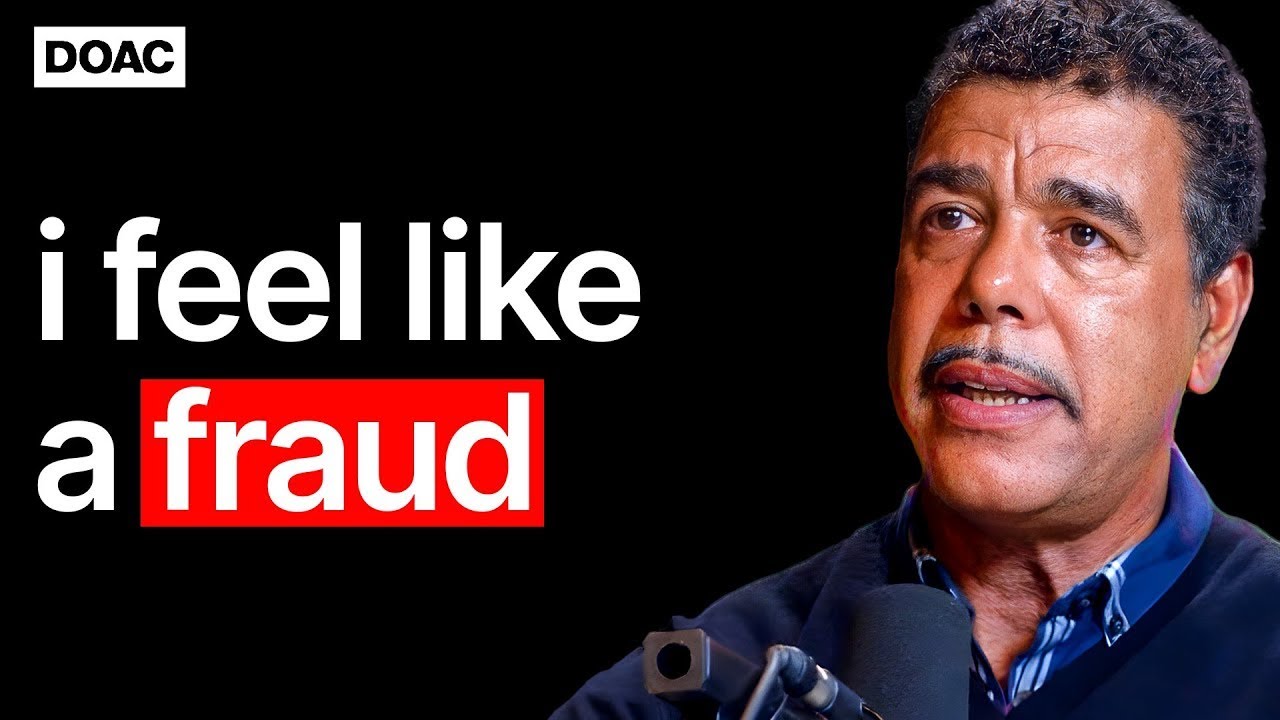
I feel a fraud now in terms of broadcasting.
You feel a fraud?
Yeah. I was going to quit everything.
Without further ado, I'm Stephen Bartlett, and this is The Diary Of A CEO. I hope nobody's listening, but if you are, then please keep this to yourself.
Chris, what do I need to know about your earliest years to understand the man that you are today?
Oh, I don't know really. My childhood is slightly clouded. I wouldn't change anything because you can't change the course of history, but life was difficult growing up, very difficult. So yeah, I wouldn't change anything to be honest.
When you say clouded?
Well, good days, bad days. We had terrible racism at the time when I was growing up. I was born in '57, so in the sixties, it wasn't good. We were the only Black family on our estate.
Anything happened, the police would come knocking on our door, take our dad away, and he'd have to get cleared and come home. The whole process would start again. It’s that Black family there causing all the problems.
Occasionally, not all the time, my dad liked to bet. So on a Thursday when he got paid in cash in brown envelopes, he would occasionally go to the bookies and so we’d end up struggling for food. It’s clouded in those ways. I’m looking through those clouds now, but thinking it didn't do me any harm. But it happened.
Your mother and your father’s relationship?
Mom was the most loyal wife you could ever have. Absolutely. Even if her and dad had arguments or fights or whatever, she would vehemently stick up for him when anybody called him the N-word. It was vibrant back in those days.
I hear these stories now that it's impossible to understand racism if you're not Black. It's not true. It's totally not true. My mom got called an N-lover throughout the sixties when I was aware of it, and she came through it. So she knew exactly what racism was about.
Your father was from Sierra Leone?
Yeah.
And your mother was from Middlesbrough?
Middlesbrough. Yeah.
People don't always think about that in that context. My mother’s from Nigeria and my dad’s from Coventry. What my dad went through as well because his wife was Black is often not spoken about, but often the partner carries the weight and the insults all the same.
I was reading through your story about how your mother would also on Thursday, she would walk up to 10 miles to go and get your dad's pay packet through fear that he might spend it.
Yeah, she had to. It became a ritual in the end. She would do it all the time. In the end, when we were older as kids, she didn't have to carry us to the workplace, which was 10 miles away round journey. She would walk to meet dad and they would go off into town together. That became the norm.
Did your dad ever show the impact or the consequences of the way he was being treated like an outsider in a country where people were telling him he didn't belong?
To us as kids?
Did you ever see the impact of him emotionally? Did it manifest itself in drinking or was there ever a sign that it was impacting him?
He told us often enough. He’d been involved in fights back then, fistfights. That was the norm. You had to stand up and be counted. But he was always the one arrested in those fighting situations.
He had this thing and he drove it into me and my brother: "Don’t ever react. I might be reacting, but whatever you do, don’t react. Take it on the chin and ride through it. You'll get through it that way. It’s been harder for me and I’m doing this for you, so you'll benefit."
And money... the other thing that I read that I found very difficult to read was the story of your mother when your dad's gambling problems were very difficult and you didn't have money. Your mother would go around to other houses in the street and knock on the doors and ask for bread or anything or money.
That’s what it had to be. If you've got Tuesday and Wednesday to come on a Monday and you haven't got food and milk until dad gets paid on Thursday, she’d go and borrow money or milk or bread from the neighbors. She had to. She got turned away more often than not, but she persevered. She had to look after her kids.
How did you feel amongst that time? What age are you at this point?
Well, yeah, it wasn't all the time. It was occasional. So, yeah, I would say from eight years old I became aware of it more.
I know it's eight because I had to light a coal fire at eight years of age. Can you imagine? I can imagine asking my boys to get wood and paper and matches and then light the paper and then once the wood gets going, put the coal on top. At eight years of age. Spooky.
You were asked to do that to heat the home?
Yeah. We didn't have central heating. You had a fire, a coal fire. That was all. You had the oven in the back of the house in the kitchen, so you'd put the gas on to heat the kitchen when it was really cold, but the main source of heat and the hot water was the fire.
Was there a lot of love in your home?
Yeah, I would say intermittently. Yeah. When I look back now, I wouldn't change anything, even though there are aspects that I'd like to change.
Aspects?
One or two things. The thing I don't want to do is destroy the person who my dad is for my grandkids. But it was difficult in those days. Men were physical towards women. So, yeah, difficult.
I sat here not so long ago with Alex Scott, the football presenter broadcaster.
Yeah, I work with Alex at Sky.
Her book comes out in 10 days' time. In the book, I was reading about how she’s never spoken about it before publicly, but she would come home and watch her father beating up her mother constantly. And the mark that left on her as a young child having to witness that kind of violence in the home.
It's not really talked about enough. The reason why I bring that up is because she’s also grappling with the same fear of tarnishing her father’s life.
Yeah. But it was done. I presume my dad grew up with it, and so he thought it was okay for him to do it. But like I say, my kids will probably listen to this and I don't want to say too much on it.
Is there a mixture of emotions? Because that's what I observed in Alex as well was there’s this look you have at someone in your life, whether it’s a parent or someone you love, and you say, "That behavior was wrong, but at the same time, I love you. You’re still my father." And it's that balancing act.
Yeah. I made the mistake of telling my dad on his deathbed that it was wrong. And he sort of wouldn't accept that he’d done what he’d done. So, you know...
Why does that make you emotional?
I should have kept it to myself.
Why?
Why wait until he's nearly dead to say something? I'm a grown man in this time.
Your mother?
Yeah.
That puts a smile on your face.
Yeah, of course.
What role has she played in making you the man you are today?
She was everything you could want in a mom. She would do anything for me. She did. My dad never saw my school report from the age of five until I left school at 16. She protected me that way. But not only that, she looked after the family as good as she possibly could and she was my world.
And at that age, what were your dreams? What did you want to be when you grew up?
Footballer. No danger. Play for Middlesbrough initially and then when I saw Leeds on Match of the Day around their mate’s house, Boro or Leeds. Ambition to play for Boro, dream to play for Leeds. So, footballer, nothing else. Tunnel vision.
Why football? What was it doing for you?
Oh, everything. I used to play on the field near our house with grown men from the age of 12. And I wasn't bad. They would try to kick lumps out of this little kid who was embarrassing them. So, it stood me in good stead when I played against men at 16. I could look after myself.
Eventually, you end up going and doing a couple of months in the Army?
The Navy, actually.
The Navy, sorry.
Dave Richardson, who was a coach at Middlesbrough boys, came around my house and said to my dad, "There's a chance, not guaranteed, that Chris will be taken on as an apprentice at Middlesbrough." And he went, "No, he's not going. If he stays in Middlesbrough, he'll be in trouble with the police, he'll end up drinking and stuff like that. He's not staying in Middlesbrough, he’s going in the Navy."
He made my brother join the Army and he made me join the Navy. Literally frogmarched me down to the recruitment office and signed on the dotted line. Can you imagine doing that to your kids?
And in a way, I think that worked against me with my kids because I never pressurized my kids to do anything at all. Let them do whatever they wanted, whereas I probably could have been a little bit more in terms of football, but I wanted whatever they wanted to do was my wish and I think that came from my dad.
When he marched you down there and you had a love for football at that time, and he wanted you to join the Navy, how did you feel?
Not good, I have to say. Not good. It was one of those things. I left Middlesbrough boys who were in a semi-final the week before I was going in the Navy. So I knew I had this final coming up when I signed for the Navy.
I was thinking hopefully the semi-final and final of the Middlesbrough boys will be over. But I played the semi-final and then I didn't get in touch with Dave Richardson to tell him I wouldn't be there for the final because I was off to Torpoint in Cornwall. It’s across the water from Plymouth.
That's where I'm from, Plymouth.
Yeah, Plymouth. So you know it's Cornwall and not Devon! But it's a stone's throw and that's where I got my lucky break.
Your lucky break?
Yeah, the Navy football team were training there. So I went down one day and I asked the coach if I could train with him and the team and he went, "No."
Three reasons. One, you're on a trial. You got to six weeks where whether you liked the Navy or they liked you, and if not, you could leave. So he said come back in six weeks if you want. And the other thing he said, number two, he said is "You’re Black and these lot will kick lumps out of you so to speak." And the third thing is "You’re too skinny, you're not going to be strong enough to play in the Navy football team."
So I said okay. Anyway, got to six weeks. Was fine, was okay. And then there's a six-month period then where you can decide if you want to stay in the Navy or not. So I went back to see him and he kept saying no, no, no.
And then one day I was running around the track while the Navy football team were training and he said, "Look, we're two players short. I'll play on one side, you play on the other. Just stay out on the wing and you'll be fine." I said okay. Anyway, I scored two goals from the wing and got drafted straight into the team straight away and the rest is history.
We played Portsmouth reserves and the Navy side. I scored another two goals against them. They asked how old I was and they bought me out for the magnificent sum of 200 pounds. And my dad... I phoned my dad and I told him what was happening and he wasn't happy.
So I spoke to the Navy and said, "Look, would you do me a favor? Would you give me a letter saying if it don't work out as a footballer, I can go back in the Navy?" And they said yeah, fine. So I got that letter, sent it to dad and it sort of made him a bit more settled.
And then it happens, your career at Portsmouth. A lot of people will never appreciate, especially in this modern era, even me as a guy that has a Black mother and a white father, what racism was like back in the fifties and sixties. The first time I experienced racism was maybe 1998, no, would have been later, would have been about 2000, roughly when I was maybe eight or nine or 10. But when I was reading through what you experienced in that time almost constantly...
Yeah.
It almost makes my experience feel like it was nothing. I remember like once or twice or three times, people being overtly racist. But when was the first time someone was racist to you?
I know exactly when it was because I'll never forget it. I was eight years old. Once again, that was the time where I could light the fire and go to the shops to get cigarettes. So you went with a note for the shopkeeper. It was 10 Woodbines for my mom and 20 Capstan Full Strength for my dad.
So I went to the shop, gave the note to the shopkeeper and he's getting them and this woman came in the shop. Anyway, she asked for a pint of milk or a loaf of bread, I'm not sure of those details. And he said, "I'm serving this young man here."
She said, "His lot should go back to where they came from." And I thought, "I live five doors away from you, I’m not from somewhere else!" And he stood his ground, the shopkeeper, and served me. I went out with a ringing in our ears about how "them Blacks shouldn't be here."
It says it all that you can remember that day with such detail.
I can, yeah.
And that’s something I don't think people realize is the first time someone called me the N-word at school, I remember everything about that day. I can't remember many other days, but for some reason, that was a very traumatic experience and the first sign that you're different or unwelcome. And that would go on to continue throughout your childhood, your football career. I read about the story when you were playing against Milwall, I believe it was, and someone had thrown a banana on the pitch at you.
Yeah. Milwall was horrific, but not just for me as a Black person, it was for any footballer that went there, basically. But even harder for me. I can always remember the first time I took a throw-in there. The ball went out and they kept the ball initially, wouldn't give it me.
And then eventually it got thrown onto the pitch and the fans are virtually there and you're taking a throw-in from there. So I'm taking this throw-in and all of a sudden spit is on the back of my head. I never took a throw-in ever there again! That lesson was truly learned.
And the other story which I found just sounded like something from a thousand years ago was when you went to the pub after a game with your team and the pub owner made a racist comment to you.
Yeah, that was in Wetherby. I'd played for Portsmouth at Sunderland in 1976, I think. Sunderland needed to win to get promotion to what is the Premier League now, the old First Division. We needed a win to stay up in the old Second Division, what is the Championship now.
Anyway, Sunderland won that day. I always remember that game for two reasons, not just the Wetherby incident. I drank champagne for the first time! Sunderland sent a case of champagne into the dressing room because they'd got promoted that day.
So we get on the coach. Virtually every team that played Sunderland or Newcastle would stop at Wetherby for fish and chips. So we stop. We all pile in the pub, most of the players and the barman says, "We don't serve his kind in here." And the lads were going... and I went, "No, no, no, it's fine." To be honest, I was underage anyway! I was 17.
But that didn't matter back then, I'd been going in the pubs since I was 14. So I went, "No, no, no, it's fine." Anyway, Micky Mellows, one of my teammates, said, "I'll bring you a pint out." But that was the first time that my teammates realized, "Do you get that often?" and stuff like that. And I said, "Yeah, occasionally, but it's part of life."
When your cat is acting weirder, or your dog is being louder, your turtle moves slower, your cat seems thirstier, or your puppy is acting clumsier. Day or night, if you don't know what's wrong, know where to go. Veg ER for pets. The better, kinder ER for pets.
Most people know American Express for our iconic personal cards. Some know us for our business cards to help entrepreneurs grow. But American Express also offers something built for companies at scale. The American Express Corporate Program. With the Corporate Program, you can apply for employee cards tailored to their needs, issue virtual cards to your team and suppliers, and even automate accounts payable with American Express 1AP.
Along the way, your company can earn rewards or cash back as a statement credit to reinvest where it matters most. And because it's all backed by American Express, you get the service, insights, and flexibility to help keep your business moving forward. The American Express Corporate Program, designed to help companies grow with confidence.
It's one thing to shrug it off and I feel like in that situation, there's a time and place to address some of these things or to confront them. Your father had taught you to kind of not react, as you say. But as you look back on that period of your life, how did that racial abuse shape and change you as a man?
It made you wary of other people. Obviously not happy, but I wouldn't say, "Oh God, it's traumatized me" or something like that. And then the Black Lives came out and people start telling their stories of racism and the way they’ve been treated and you think, "Yeah, why can't I tell my story now?" And I have done.
Has that helped you, telling your story, do you think?
To be honest, I wouldn't say it's helped me or not helped me. I think since I've had this... well, I've got two conditions: an underactive thyroid and apraxia. The underactive thyroid plays with your emotions. So I get a lot more emotional now, whereas stuff I wouldn't even bat an eyelid in the past, because of this little butterfly thyroid in my neck, it now makes me more emotional.
When did you discover the underactive thyroid?
Well, it's funny. Going through lockdown initially, the first lockdown in March, when the weather was great and everyone was quite... I think they were gutted about the lockdown, but the fact you were at home and the sun was shining, things were slightly different. I did loads and loads of shows from home.
All of a sudden, I began to not feel well. Too well, but I always shrugged it off. I’d take tablets and be fine the next day and all that sort of stuff. But it wasn't going away. And I thought, "What's going on?" But I ignored it. Ignored it, which is the worst thing you can possibly do.
So I would get away with it at home by hardly being the person I was, so not talking as much. When I’m broadcasting for Sky, I’m trying to keep minimalistic because some of the words are coming out slurred and stuff like that.
Eventually, I’ve got to go and see someone because I literally went a whole year, if not 20 months, before I actually got diagnosed with underactive thyroid. So it was all my prayers answered at once. You've got an underactive thyroid, take levothyroxine. Once you find your level of levothyroxine, you'll be fine.
Great. Doctors great, sorting it out. So eventually you take 25 grams or whatever it is of levothyroxine. Eventually, when you find your level, you're fine. So I get to 175 and my thyroid is stabilized. But my voice condition is still exactly the same. So what's going on?
My doctor then says, "Go for a brain scan." So I go for an MRI scan. Anyway, I go and see a brain specialist. He looks at the X-rays, the MRI scan. Fine, no problem. Nothing wrong with your brain. It’s got to be something else that's going on.
So I go back to my GP, tell him what's going on. He’s got the report from the brain scan. So he says... he won't give up, my GP. He says, "It's not obviously your thyroid, there’s something else going on. Would you go and see this Doctor Lily in Leeds? He's a specialist."
So I go and see Doctor Lily in Leeds and before I’ve only said hello to him, and before I can even chat to him, he says, "You’ve got apraxia of speech." Right, how do you know? "I can tell straight away. The difficulty between the brain and your mouth being able to speak."
It was probably slower than it is now at that time. So he said, "Look, I want you to go and have a DaTscan, which rules out Parkinson's or stroke and all that sort of stuff." I did, went back to see him with the results. He went, "The good news is you haven't got Parkinson's or anything like that. The bad news is we can't find anything else wrong with you, so the apraxia will probably get worse."
And that went on for quite a while. I went to see a therapist and he kept saying to me, "Look, you need to tell people. You can't continue on TV and people are saying 'Is he drunk?' and 'What's the matter with him? Has he had a stroke?' You need to come out and say something." I said, "I can't. I can't. I'd rather quit than actually say something."
Anyway, eventually I spoke to my mate Ben Shephard, told him what was going on. So he said, "Look, come on GMB, we'll chat about it and let the world know what's going on."
How were things for your family during this period?
My boys had been saying to my wife, "There’s something wrong with dad" for a while. And she sort of would broach it with me, but I'd be quite snappy, which I’m not anyway. And saying, "No, I’m fine, I’m fine, don’t worry about it, I’m fine." And I kept thinking, like I said, once I got the thyroid problem, the levothyroxine will take it away.
And then it’s still with me and yeah, it's harder for people close to you, I think. Because my two boys are saying, "Are you okay, dad?" "Oh yeah, I’m fine, I’ve just had a bad day, don’t worry, I’ll be fine." But they know. You can't pull the wool over their eyes for too long.
For someone that has never experienced what it's like to have apraxia, what does it feel like for you in your head?
It feels like someone is taking over my voice box. So the voice that used to come out would come out at 300 mile an hour. You've seen me on the results and Soccer Saturday, motor-mouth talking, not even waiting for a breath, just keep going and going.
Now, when I hear myself or see myself on TV, it's someone else. It's strange, it's really strange. Some days the message from the brain to the mouth is really slow. Yeah, makes it difficult. Or some days the words come out different than what you're trying to say, and that's even weirder.
And so that's been hard to accept. And still hard to accept, I have to say. I was going to quit everything. Literally every single bit of TV at the end of last season. Leave Sky, quit BBC, quit ITV, quit Channel 4 and 5, and all those companies.
BBC, I think it was the right time to leave Sky. I’d had a great innings. But BBC, ITV, Channel 4, Channel 5 said, "No, no, you're Kammy. It doesn't matter." I said, "Well, it's the quality of the program." "No, it doesn't matter. You're fine. We want you to do this." And would you believe I’m now doubly busy than what I was before.
That period of uncertainty... you get the diagnosis, the specialist says to you it's only going to get worse. Your career is at that point in speaking, it's in presenting, broadcasting. What was that period of uncertainty like on your mental health?
It was an acceptance, really. Because what I said to my wife is if I wasn't a broadcaster, it wouldn't matter, would it? And so she said yeah. So I said, "You know, now's the time. I've had a great time." Spoke to my agent Simon Denton, said, "Look, I'm getting out of all this."
And he said, "Yeah, you can. Yeah, don't worry. I'll leave it up to you." And yeah, I thought that's it, quit, I've done my time. And I'd like to thank all the people that have been persistent and said, "Look, a 25% Kammy is still better than some people!"
And Sky... saw you on that show forever presenting and bringing insights and wisdom and laughs and all of that to the show. I also watched the tribute that Jeff did when you left. What was that like having to speak to Jeff and the rest of the lads and tell them that you were departing and for the reason?
Well, Jeff’s a really close pal and he knew there’d been something going on for a while. He kept saying to me, "Are you all right?" And I said, "Yeah, I’m fine Jeff, don’t worry, I’m fine." He said, "Well, you know, what's going on?" So I said, "Oh, just had a couple of bad days and stuff but I’ll be fine on Saturday."
And then he’d send me a text and say, "You're not fine again." "Oh, I’ll be all right next week" or whatever. But you can't pull the wool over people's eyes who know you real well. And he was great. The tribute that Sky gave me, which like I said was the right time to leave there, I cried when he cried on the show.
I've never seen him cry before. It was a really beautiful, powerful moment. Since then, you've—in your own words—you've really thrown the kitchen sink at the apraxia. Can you talk to me about what you've done since to mitigate the impact of the condition on you and your life and your career?
Yeah, the day I went on GMB and spoke to Ben Shephard and Kate, I got a phone call immediately from a fellow that I knew ish, a fellow called Wynford Dore. And he said, "I can cure you. I know there's people out there that will help to get you right."
So he said, "I want you to come and meet a Professor Nicholson down at Sheffield University." So I met Wynford and the professor. Anyway, between them, they were saying, "You need to kickstart your cerebellum," which is in the back of the brain. What's happened is it's shut down. So we need to get the jump leads out, start it again, and get your brain going, get your speech going.
And there are various ways to do that. So I said, "Yeah, what are those? I'll do absolutely anything to try and get it right." So he got Zinc Performance, which is really exercises for stroke victims, but it's helped my balance.
Arc Performance, which is micro-currents going through my body. I still have a tag on my ankle now with those micro-currents going through.
All the time?
Yeah, all the time, yeah, for seven hours every day.
And it's helped?
Yeah, it's helped. I wouldn't say I'm more than 60% the old me, but I was 20%. So I've gone up 40%. A hyperbaric tent with the oxygen, he recommended I do that. And I see a therapist who helps with the speech and help my anxiety.
Working for Sky became very difficult. Before I even came out and said I've got it, my heart would beat like mad before they came to me at Sky. The anxiety was terrible because I was knowing I wasn't the old me.
So I went to see him and he said, "Look, I can cure that. The other problem, the apraxia, is a biological condition so I can't help with that, but we'll try and see if we can get you through things." So getting rid of the anxiety helped me finish work, or the work I had stacked up. UK Strongest Man, The Games (ITV), Cash in the Attic I present. They helped me do that.
All those treatments... I’m taking so many vitamins these days. I've just been introduced by Wynford to the best neurologist in America. And he said, because I have good days, there's no reason why I can't be cured. So I've sent off a load of blood tests and everything to America and I'm just waiting on the results.
How is life for you now? You've been through a journey. Where are you in that journey now?
Strange. Strange in terms of... I feel a fraud now in terms of broadcasting. I don't bring to the table what I used to. So that's hard. My life away from the screen couldn't be better. Grandkids, family... it’s perfect, unique.
You feel a fraud?
Yeah.
I feel I'm doing these programs and they're not getting the best of me, but they're tolerating me. That's how it feels.
I mean, who am I to say, but I think what they told you about... as you said, 25% of you is better than pretty much everyone else. You've brought so much joy to my life growing up. Made me love the game more, made me understand the game more, you've made it hilarious. You're loved more than anyone I've ever seen on the screen. And you've earned that. That's a skill. That's something I couldn't do. I wouldn't know how to do a slither of what you do. So I don't think that fear is as logical as you think it is, that you're a fraud.
I mean that as well! I could never do what you do. I couldn't do 10% of what you do.
It's like anything else, you take it for granted your old self. You do things... that tribute that Sky gave me, that's reserved for someone who passes away, isn't it? So I've had the tribute while I'm still alive that people don't get. When they go, you always look back and you read the obituaries and the comments and think, "Why didn't people say that?" So I think maybe I should have bowed out then and taken the accolade and said thank you. Am I tarnishing what I've got, what I had?
But I think my rebuttal to that, if I may, is that you're serving the world in a very important way now still. Even by having this conversation and being vulnerable and open, you are serving hundreds of thousands of people in an entirely different way that are suffering with various conditions. Whether it's post-stroke victims or apraxia, and they're struggling with the same self-doubt.
It’s funny how our missions just change over our lives. So your first mission was in football, then you became a manager, then you did broadcasting, and now this chapter of your life is just a different chapter. You're still a wondrous broadcaster, but you're serving people in a completely other way, maybe arguably even in a more important way. Do you see what I mean?
Yeah, I do. It’s funny, I did the ITV Games, and a YouTuber who was called Young Filly... I’d never met him before, but he’s on the first show. And he sees me before we go broadcasting and he comes up and he starts doing that. He went, "You're a God." I went, "What? Who? I'm Young Filly, pleased to meet you!" "Do you know what an icon you are for Black people?" And I went, "Nah, don't be daft." He went, "You are, you're a trailblazer. You did TV before diversity. How did you get into TV when on Sky Sports and there was no Black people around and all that sort of stuff? You're an icon." And I went, "Nah, don't see myself as that." And he went, "Well, you've been my inspiration." So, makes you feel good for a second.
That's worth it, right?
Yeah.
And that alone, that thought that you're inspiring people just by having this conversation and by sharing your story and being honest and not running into the shadows as you could have very easily done... is going to help that... and you'll probably never get to meet them like you got to meet Young Filly. But that's got to be worth it, right?
Yeah. It was... I didn't believe him, but yeah it was nice!
He's got no reason to lie though, has he? You know what I mean?
This next chapter... what do you want it to be full of?
My life has changed in terms of grandkids. Material things don't matter anymore. The love you have for your kids' kids is something else. So, I’m one of those now. Even though I’m still working, my main priority is spending time with them.
What advice would you give to me? I just turned 30 last week. What advice would you give me?
I say it to everyone: Work hard and you'll succeed. Don't ever turn down work. Don't ever say on a job, "Oh, this is hard, I don't like it anymore, I can't do this." Do it. Do it and do it to the best of your ability and see where it takes you.
TV is one of those jobs I think where if you work hard enough, you'll succeed. In football, that's not the case. I've grown up in football and you sometimes a lucky break is better than working hard, even if you've still got to work hard but you need breaks. And of course, you need breaks in TV, but if you work hard, I think you get them.
I started off at Sky and so people say, "How did you get into Sky in 1998?" Well, initially I was a pundit for them. I was lucky, fortunate. The first broadcast of the football league was Sunderland versus Sheffield United at Sheffield and they rang me. I was Manager of the Month with Bradford.
August, we won four games and drew one. And they called me and said, "Would you come and be the pundit?" So I said yeah. Sheffield down the road from me. They said, "No, you've got to come into Sky in West London." So I came all the way down. Marcus Buckland, the presenter who was his first day, and it was a double-header.
Six hours of TV, obviously ads in between and all that sort of stuff, halftime and that. And Jerry Francis was doing the second game. So that's where fate took a hand. I did the first game, Sunderland won at Sheffield, and Jerry Francis got stuck on the M4. So I did the double-header.
So from doing six hours of TV, I became the go-to guy then for Sky. So a live game, "Are you available?" "Yeah, I’ll come down and do it." And I did that. And then when I got the sack from Bradford, they asked would I like a contract and I said no, but I'd like to keep my face in the shop window.
So I did one broadcast and then Stoke came along and I got that job and then that job turned sour pretty quickly after three months. And then I just fell straight into Sky, the broadcasting.
So eventually the 1999 producer of Soccer Saturday said, "Would you like to come and join the team?" So I said yeah. So he went, "Would you like to do some features for us?" So I would actually go and train with teams, Premier League teams. Can you imagine in a million years that they'd let you in and train with the players these days? But I did that back in the day, 1999.
So I'd go and train, join in the training with them, interview the manager, the players, and then I went and edited those pieces. Because I didn't want someone saying, "Oh yeah, it's fine, but you know, the hard work is done by the editor." So I would sit myself in a studio and sometimes it took six, seven hours for a four-minute piece to edit it down. But I thought, "Right, I don't want anyone saying he's there by fraud." Hard work. And if you do that and people see that, it’ll help. Not in all cases, but in most cases.
That was the very start of what would go on to be a legendary career in the media. You've given me one reason there as to why you're successful which is just the hard work and saying yes. But the media business is also much more complex than that in the sense that hard work is like... you definitely need to do it. But what was it about you, do you think, that set you apart in the media industry as a broadcaster?
I don't know that. I'm still baffled by that. I went to Ian Condron's 40th anniversary with his wife. He was Ian, was the producer of Soccer Saturday who gave me the job. And I said, "Why?" you know. I'd seen you on doing other programs, punditry, and thought you'd be great for our show. He said, "Took a chance with you" and it worked.
But 20 years? You must have a suspicion.
No, no not at all. I was allowed to be just me. So I didn't have to work it like I had to work at editing those pieces together. The training, playing, interviewing the managers, all came naturally. Yeah, it was that hard work that I wanted to prove that I could do. But no, I was fortunate, it was just me.
Anne... when did you meet Anne?
We met when I was at Swindon. I got transferred from Portsmouth to Swindon, my first ever transfer. In 1978. Yeah, 1978. And we actually played Portsmouth, my first game for Swindon was at home to Portsmouth.
And yeah, I had to have a police escort to the game. The club had been informed by the intelligence that the National Front... because Portsmouth had 200 National Front supporters.
National Front is this racist organization from a couple of decades ago?
Yeah. So they'd got wind that they were going to do me in, you know. So, when I played for Pompey, there was a small section of fans that booed you onto the pitch because of your color, booed you off. But like I said, back in those days, it didn't care. Not one jot. And I didn't care when they said about this, you know, "you’re going to be done in." I said, "Oh, it's just a threat, don’t worry about it."
But the police intelligence said no, we need to pick you up and take you to the game and drop you back home. So I did.
You scored!
Went to the game and after 10 minutes, and not like today where people don't celebrate... of course, stupid me, you know, who had had this death threat goes straight to the Pompey fans and gave it all that! So yeah, no, so...
The police escort wanted to take me back to my digs, but I said no, leave it now, it's fine. And one of my teammates, Kenny Stroud, his wife Linda was with this girl called Anne and I asked her out. And 40 years later, or 43 years later, we're still together.
What a journey it's been with Anne.
A long journey, yeah.
What she mean to you?
Everything. You take wives for granted, or I did. I can't speak for everyone else. But it's only when you have a problem like this because I just live for today, you know, I'm fine, no problems, don't worry about me.
It's when you have a problem that you have to look at your closest one and see what they do for you and how they react to what you're going through. Which, you know, is difficult. And then you feel sad about not sharing things before and keeping things away from her.
How did she react to all of this?
She said she thought for a while. She didn't say anything. She said she thought for a while that there was something not quite right, but she couldn't put her finger on it. And she's been my rock now.
I don't hardly... this is the longest I've spoken to anybody for a long time. And you'll probably see when you edit this tape, sometimes it's slow, sometimes it's coming out okay. Now it's coming out okay and it feels fine, and that's all to do with the mind. Maybe I'm talking about a good thing now with Anne so it's fine and it's free.
So yeah, she's taken the weight, a heavy weight off my shoulders and allowed me to do what I do, to continue doing what I'm doing if I want to do it. But she does say from time to time, "You're allowed to say no to these jobs that Simon rings up and asks me to do." But I don't like to let anyone down.
You know, I think it's worth saying that I think this has been a really, really great conversation. And I'm actually quite surprised to hear that of how much you struggled previously based on the conversation we've had today. Because I don't... had I not known about the condition, this would have been a perfectly normal conversation on this podcast.
So it's really, really interesting and enlightening to learn more about it. And I can't imagine from a family perspective as well going through that journey with their father where you're trying to find answers, you find answers, and then there's that whole sort of therapy process to get you back to where you are. And the mental health journey that takes us on... which you’ve not really talked about in detail, but there's the curing the condition, but then there's living with the cost of the shift, the tectonic shift in your life.
It consumed your mind, or it has done mine. So every day I wake up, the first thing I think is, "Am I going to be able to talk today?" So immediately I wake up, I'll go in the bathroom and I'll look in the mirror and say a few words and it's fine, or I think it's fine. The perception is fine in my head.
And then I'll go downstairs and talk to Anne and all of a sudden that pathway is restricted and I thought, "Oh God, not again today." And that's been hard to get my head around. And my therapist Daniel, he says, "You exaggerate in your mind, that's the problem because you've never had to think about your speech. Now you're thinking and you're overthinking."
So even though like you said, it seems fine to you, in my head I know that it's slower than it would have been had we spoken three years ago.
§02Transcript — part 2
And the cognition part, the thoughts, they're still the same?
Oh, yeah. They're lightning quick. Yeah, they're fine. So they're there in terms of speech. But I have days where if you're out and about or even indoors, there's nothing in the brain area. So, you know, whereas I could normally go into a room, did it all the time, speak to everyone, have a laugh, that was the first thing on my mind. Now that part of it is hard work and it feels hard work and it feels the struggle and it doesn't feel natural. That's the worst thing.
So I tend not to do it very often unless I'm feeling good. I've spoken to someone else and I can tell it's fluid, the voice, then I'll go in a room and be myself again.
Chris, we have a closing tradition on this podcast where the last guest asks a question for the next guest. They don't know who they're writing it for and they'll never find out, although I have said their name earlier on so you might be able to figure it out! But the question they've written for you is: "What has been the most happiest moment of your life? Full stop. Brought you the most joy and why?"
Is that kids aside? Let’s say kids aside because that... yeah. Kids aside. Achieving my ambition and my dream. Yeah. I can... as a young Black kid playing on the fields round where I live, thinking that one day I'll play at Ayresome Park for Middlesbrough and Elland Road for Leeds... it blew my mind away. Ambition and dream achieved.
Chris, thank you. I have no doubt that your ambitions and dreams are just getting started because you have all of the core minerals that are required to achieve pretty much anything, and you've shown that your life has been a testament to that even in the face of great adversity.
Thank you. I thank you not just for myself and for giving me your time today, but I don't think you realize how many people you're going to help in a really important, profound way. How much pain you're going to alleviate from them, how you're going to make them feel seen and understood just by doing this today and just by not hiding in the shadows.
So thank you. And thank you for all the joy you've brought me. You've made football fun. You've made it... made me understand the game better over the course of pretty much my entire life. So I, for one, am so glad that I still get to see you on the screens and I hope to see you a lot more.
I know you’ve got a show Ninja Warrior UK Race for Glory, which is airing on ITV, which I’m very excited about watching as well.
Yeah, I'm so glad I did it. I tried to pull out when they rang me and said we've been commissioned for series seven. I went, "Oh no." And they were, "What do you mean oh no?" "Oh no, you're not getting the old Kammy." And they said, "Oh, don't worry about it." And I've watched a bit of the first episode and even though it don't sound like me, it's passable. So I hope people enjoy it.
Well, as you said, 25% of you is better than pretty much anyone else, so we'll take that. Thank you so much, Chris.
Thanks Stephen.
Paying extra for tire care is BS. You know, bad service. So at Midas, we're rolling out our BS-free tire guarantee. Included with paid installation and tax on every purchase, you'll pay nothing for flat replacements, nada for flat repairs, and zilch for tire rotations every 5,000 miles. That's zero dollars for all that. So with this limited lifetime tire guarantee, you'll pay a whole lot of nothing compared to what the other guys charge for tire care. That's the BS-free tire guarantee, only at Midas.
When your cat is acting weirder, or your dog is being louder, your turtle moves slower, your cat seems thirstier, or your puppy is acting clumsier. Day or night, if you don't know what's wrong, know where to go. Veg ER for pets. The better, kinder ER for pets.