
Louis Theroux: "The Thing That Makes Me Great At Work, Makes Me Bad At Life!"
全文文稿 · 按对话顺序保留完整内容,深入理解上下文。
§01Transcript — part 1
When your cat is acting weirder or your dog is being louder, your turtle moves slower. Hello Ted. Your cat seems thirstier. Whoa, slow down buddy. Or your puppy is acting clumsier. Day or night, if you don't know what's wrong, know where to go. VEG ER for Pets. This is Kate. VEG, the better, kinder ER for pets.
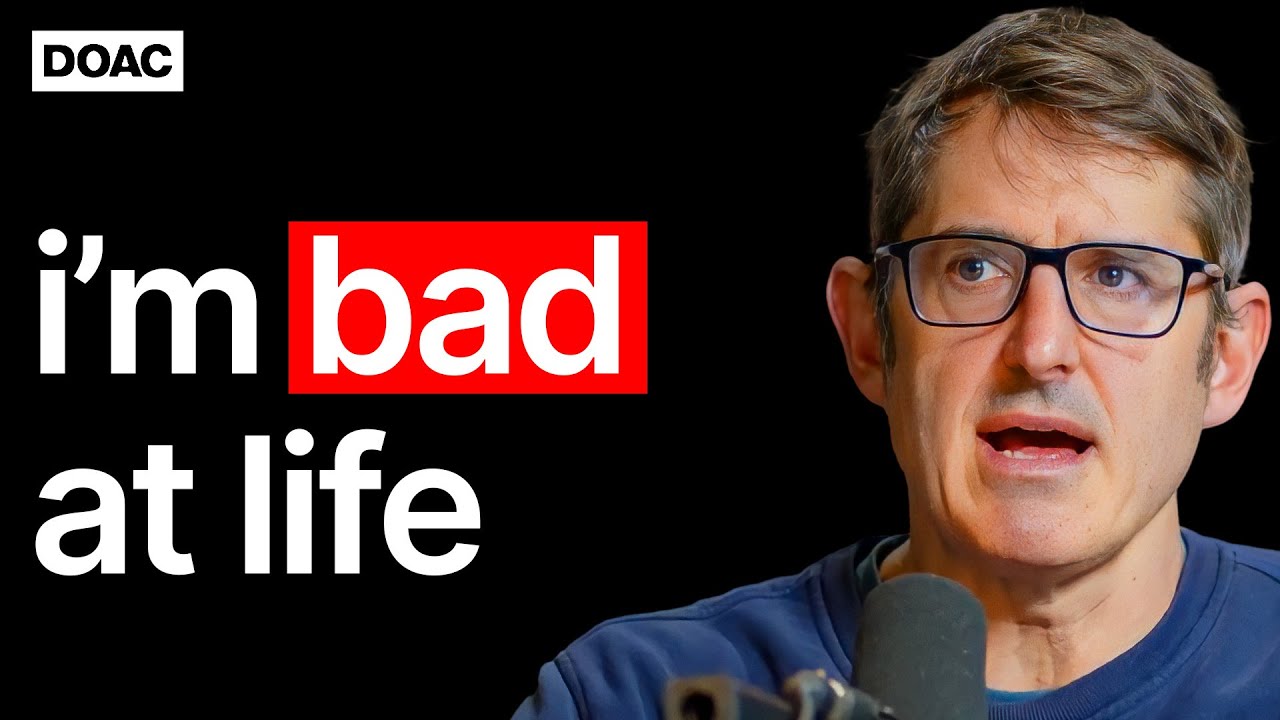
What makes me good at my job is also what makes me bad at life. This is maybe more than you bargained for.
My next guest has interviewed everyone.
Money doesn’t jiggle jiggle. It’s a cathedral of porn.
That’s a little offensive. You're a very fascinating person. How do you connect with people?
I'm just so curious about what takes someone to that place, why people do the things that they do.
The question I get asked most often is how do you not get angry with some of these people, especially the ones who are spewing hate?
If people see like you're attempting to wrestle intimacies from them, that's never going to go well. I think also there's some part of me that thinks maybe the other person's got it figured out and I haven't.
Your former wife said there's nothing real about you. Jimmy Savile, he also said something about insincerity being your specialty.
I'm glad you brought that up. I remember it vividly. First of all, I neglected my personal life to focus on achieving professional success. The price was paid by those nearest and dearest to me.
When did you get that feedback?
I saw my relationship as a life support system for my work self instead of the other way around. Saying to my wife, "Well, this is what I do." I did a lot of great segments just by being available at a moment's notice. I just think, oh, this isn't going well. So it became a bit of an impasse.
Is it something that comes with a cost and is it something you want to change?
Louis, you're a very fascinating person. And as I've read through your story, I read your autobiography as well, I was trying to understand what I needed to understand about your earliest experiences to really understand the man that you are today. The interesting personality you have and the trajectory you went into and took in your life. So please enlighten me. What are the most pertinent things that I need to know about your earliest years to understand you?
Oh goodness. We could spend two hours answering that question on its own. I don't know how interesting it would be. I'll try and give you a brief answer.
I like the long answers.
Oh, do you? Well, first of all, my parents are, my mom's British, my dad's American. They are both in different respects free thinkers. They grew up in the 60s and they embraced aspects of the counterculture. They regarded their own parents as being in certain respects limited and cloistered.
And so my mom joined VSO (Volunteer Service Overseas) to get experience of life in Africa. My dad joined the Peace Corps. He would have been probably enlisted to serve in Vietnam and he didn't want to do that. So he went to teach in Africa as well, and that's where they met.
So I was raised, I was born in Singapore where they were teaching. My brother was born in Uganda where they were teaching at that time, my older brother. But then we settled in London. And so growing up, I was conscious of them as people who really encouraged us to open our minds.
And maybe it was sort of 99% positive, like 1%. I think like a lot of people, people use this term "Social Justice Warrior," right? As a form of judgment about overly do-gooding. There's an element of, I don't tend to use that term because it's become weaponized, but I suppose in a sense my parents were kind of Social Justice Warriors.
Like they were very much encouraging me to challenge or us to challenge racism where we saw it, to challenge sexism, to be open to new experiences, not to fall into easy judgments about other cultures and other countries and other people.
And I only say the 1%, sometimes that could be inflected with a little bit of a sense of superiority. I talk a bit about that in my book, a slight feeling that we weren't really like other people. Other people were maybe not quite as smart or not quite as literary. And I strive not to endorse whatever is in me that remains in me of that, I try to unpack and eradicate.
Nevertheless, that's the way, looking back on it, that's something that I see and pick up on. My dad's a writer, a novelist. My mom is a, after teaching, my dad became a very successful literary novelist and travel writer. My mom went on to become a radio producer and worked for the BBC World Service, which for those who don't know, that's the service that broadcasts all over the world and it's a bit like Radio 4 but broadcast in dozens of languages.
It's an extraordinary institution. It sort of represents in some ways the best of the BBC. But so I was growing up sort of aware that we were a family that loved books and loved reading. And we watched TV and listened to pop music and did the normal things, but I think underneath it all was a feeling that to really count in life, you should be a literary writer.
That was without me fully maybe acknowledging it, that was underneath this thing that you should really, I think still my dad probably feels that. Like he's very supportive of me and my TV making, but he's like, "Lou, have you thought about writing another book? Lou, you've got time, you've got the talent, you can, I don't want to push you into this, but Lou, you should think about writing a book. That's a great idea for a book," that kind of thing.
Anyway, so all of that was underlying my attitude to life. Then they sent me off to school, primary school. I'm going to have to, I mean you wanted a long answer, this is maybe more than you bargained for. I suppose alongside that is the influence of friends and the countervailing impulses of growing up in the 70s and 80s in South London.
And being exposed to funny, creative people and my friendship group, which, some of them have gone on to work in sort of "civilian" lives as restaurateurs or music and other stuff. But saliently were Adam Buxton, Joe Cornish, and another friend Zack Sandler, who were super creative.
Adam and Joe went on to have their own TV show. And I was conscious of falling in with a little group, a milieu of like-minded kids who were very funny, really into movies, TV. And that was where I suppose I began to feel that there was, well, in hindsight it's tempting to sort of read back what I do now into that.
But I just know that that friendship group was very important to me and maybe counteracted some of the more, because I was academic. I was, I did really well at school. I feel like I could just go on and on.
Go, I just listen here.
Because the other part of it was that I was quite an anxious child. So I would worry about everything. And I would think about things that were on the horizon. Like when I was five or six years old, I remember fixating, there were various things that came and went that really worried me, but one was the idea of Maypole dancing.
Which was a big, I don't know if it's still in state primaries at that time, every May holiday, like you would do Maypole dancing.
What is that, sorry?
It's an old English or maybe British tradition where there's a big pole. I think it's like a fertility rite, you know, it's a touch Wicker Man about it. You know, it's an enormous kind of mast, a pole, like a totem pole almost, like sort of 20 feet high. And then there's ribbons around it.
And as children, you would skip around it and you would sort of braid the ribbons together to form nice patterns. And I remember seeing them doing it in primary school and thinking like, that looks really hard and I'm going to have to do that next year and I don't know how I'm going to do it.
And just I remember being preoccupied with how am I going to learn how to do that? I only mention that as an example. Like there were other things, just reading. Before I could read, I remember seeing my older brother reading and thinking like, I don't know how you do that, and just getting very worried about it.
So in general, I'm someone who is, I know everyone worries, but I just feel as though that feeling of worry and anxiety was quite a strong background note. And sometimes I would control my anxiety, not consciously but again looking back, by working hard. Like by sort of becoming almost like super focused on academic work.
And as a result, I did very well in school. And you know like those people who look back and say like, "Well, I was a fuck up in school," I was the opposite. Like I didn't always, I would get in trouble. Like sometimes I was regarded as, especially when I was younger, 12, 13, as a disruptive element because I was also quite cheeky and always tried to communicate and connect with people via teasing, right?
Which is I don't know, that's a common, that's quite a British thing in a way. It was certainly a big thing in my family was what's now called "bantz," right? And sometimes I'd try and do bantz with my teacher and then it wouldn't go well. And so but in general, which is confusing, like regarding being regarded as sort of black sheep in class or a disruptive person in class.
And then but then also getting in trouble. They said like, "It's fine for you to mess about and get in trouble and then you do the homework and you're fine, but you're a bad influence on the other kids." I used to get told that. You're a bad influence on your, I was like, that's not true at all.
If anything, my friends were just as naughty and were leading me astray. But nevertheless, because I could sort of go home and then become sort of organized and focused on my work, I got for a brief period I got labeled as the troublemaker. Anyway, going through school, I sort of, the sort of loadstars for my sort of sense of who I was and how I would progress in life, such as it is, I mean I was never that tactical.
But as I went through school, I thought, well I'm pretty good academically, I guess I'll just do well in exams and stuff and then see what happens. And meanwhile with my friends, we'd be seeing movies. I got into rap music in the late 80s and sort of would dress like a sort of hip hop nerd.
I was smoking quite a lot of weed but still studying. This was sort of again age 16, 17, but it never really interfered with my with my work. I went on to Oxford and then having done well at Oxford, left university and at that point was like, well what happens now?
That was when it felt like, okay, now I've no longer really got a clear path. Does that make sense?
Yeah.
You know, I think if you if you are if you're academic, if you find academic work not easy, but you find that you do well at it because it's not easy but you apply yourself and you do well at it, then sometimes life can be a weird bump in the road. Like real life, it's suddenly like, well where are the exams? Because I know I can do those.
You know, what do I do now? So for a while I thought maybe I would be like a professor or an academic or something. But then something in me told me that wasn't quite right. So then the rest of life is another story, but I hope that sort of answers your questions about all where those different sort of sources of of how I sort of, you know, my whatever it is personality and interests.
One of the things that really stood out to me in that answer was your early relationship with work. You said you used to work hard to kind of suppress or distract yourself from the anxiety of life. Is that accurate?
Well, what it is is, well I worried about things in general and you know, one of those worries was homework or doing well in school. Like another worry was getting on with my peer group. But in so far as I can I could control those sources of anxiety, work is actually relatively straightforward.
Like in terms of like, how do I get more, how do I attempt to relate to people better? Well that's that's kind of hard and slightly mysterious. But how do I do well at these assignments I'm being given? Then you just sit down and do them until you get it right. And a lot of these things are aren't subconscious.
Like I'm not thinking like, "Oh how can I control my anxiety?" But I would just find that I would, if exams were coming up, I'd get super anxious and and I don't mean to pathologize it, like I've never been diagnosed with an anxiety disorder. I'm just slightly worry prone. And as it happens, I've become less worry prone as I've grown up.
And it may be that there were other things going on, you know, in my family life, who knows. In you know my parents' marriage wasn't always happy. They subsequently divorced. There were other things probably that were going on that were stressful. But for whatever reason I found that, or without almost without meaning to, I I would I took my studies very seriously.
I have to sort of slightly check myself when I say this because I do I'm also aware that I've looked back at some of my reports, having kind of got quite attached to this narrative of myself as sort of super swat, right? Super studious. And I've looked back at some of my old report cards and some of them are especially when I'm six or seven sort of say, "Louis's a pleasure to have in class, but sometimes it would be nice if he would let other pupils speak. He he enjoys the sound of his own voice" kind of thing, which is very apropos for this podcast probably.
You know, and like so so I I had a sort of rambunctious side and almost in social settings. My mom tells a story, it's actually in my book, but of of how when I was about five or six I would come home and I'd be really sad. I'd be like, "I don't know, I don't think I don't like school anymore."
And she'd sort of think, well Louis's obviously not getting on well at school, I need to talk to his teacher. And she went into to class and and talked to the teachers and said, "Do you understand Louis's very sensitive, he's a very sensitive young man." As I say, I would have been maybe five or six, seven years old.
And the teachers were like, "Really?" "Yes, he's a very sensitive, like you just be mindful that you know things you can say might hurt his feelings" something like that. And they were like struggling to recognize her description of me. And then on the way out of class she passed the class and could see through one of the glass windows in the door and I was running along the desk tops or doing a dance on top of a desk.
In other words, like it was almost like in the setting itself, I was a wild child and and just running amok, but also I had this doubling, like then I'd go home and be kind of be worrying about small, which I think is probably still true of me in some ways, that I have a I have that sort of disruptive trickster impulse alongside a certain a certain sensitivity.
Is that a defense mechanism or a way to, I don't know, survive in a social setting? Or is that the true nature of you?
I think it's who I am. And I think, you know, I could say, "Oh well, I was a younger child and my parents found me funny and I wanted to perform and I and I wanted my dad to you know, I wanted to get the approval of my parents by being silly," but the fact is is who knows? Like I just know that you know things like your sense of humor or your inclination to to be cheeky, that's just always been in me.
You know, I you know I'm slightly wary of attempting to to sort of unpick where that comes from because I just know that that's that's always been in me.
The relationship with work, I I think even for myself I I learned my relationship with work at a very young age and I I think I developed quite an unhealthy relationship with work at the expense of other things that matter in life.
Yeah, me too. I think I can relate to that.
And that's what I was trying to understand is like when did where did your relationship with work come from? On one hand I was guessing maybe it's from his father who was very you know insistent on being an intellectual is a is success, Louis. Or is it from the distraction from anxiety and from the social thing where you could be successful at exams because you were good at that so you doubled down?
I think it was all of the above. Like my dad's got both my parents have work ethics that border on the sort of being over the top. My dad would you know he's a as I said he's a writer and at the weekends like he didn't really take weekends off. Like certainly Saturdays you would often be writing and Sunday mornings he was often writing and and he he's an extraor- I want to give both my parents a shout out.
See my my parents were basically first generation university educated, came from very much not at the high table of of life. And and so for my dad to to sort of become a wealthy literary writer is kind of an amazing thing that he did. You know in the world of it's one thing to be a popular novelist, that's hard anyway.
To be a a novelist or travel writer who's extremely successful, had you know sold hundreds of thousands or millions of books just without any leg up in life is an amazing thing. And I wonder if I've ever told him that. I hope I have. Anyway, he'll listen to this probably because he he follows my he follows my career with interest.
So some of that I would have taken on board just through osmosis of seeing that. Likewise my mom being super studious, going to Oxford, she grew up in Tooting, she you know and and her her sense of self-belief or her sense of her own destiny whatever it was.
And in her small you know peer group of kids who were educated at a state school and then through her own hard work and the support of her teachers going to Oxford, you know in the 60s as a woman, that was extremely unusual. So that that was in the air.
But in the end and my older brother who was very studious. And the other thing just to reflect on is that I saw my brother as the more brilliant child. Like he was to the way I saw it at the time was more effortlessly brilliant, like almost sort of child prodigy material, you know.
And I thought I was just kind of an sort of irrelevant bit of afterbirth that you know trailed around after him. And so when I noticed that I was getting fairly good results when I was sort of 11, 12, it didn't feel particularly impressive. Like it felt like, well I guess I I can do well if I work hard.
It's not like I'm kind of brilliant like my older brother. But I think when I you know again in hindsight I think mainly what I see is is a sense that I just felt like this was something I had to do. It wasn't a choice. And I even later on when I was at university, I sometimes used to worry that I wonder if I'm missing out.
You know people say it's the best years of your life and you should be hanging you should be just going wild having fun. I did a you know some of that, but I was also conscious of like maybe I'm missing out by working by studying too hard.
That's what I read in into your story of of university was that I wrote I actually wrote in my notes, "worked his ass off at Oxford." On the point of affection, this is also something I probably didn't learn from my parents if I'm honest. I still call my parents by their first names.
Did they encourage you to do that?
Yes. Yeah. I just didn't I didn't learn affection. And actually, you know even growing up at 10 years old, when one of my friends turned to me and went, "You're my best friend," my body like *shudder*.
Because the the idea that I was someone's best friend made me cringe. And I had this I think I had this like emotional intimacy affection issue growing up.
Although I think being a best friend is something you show but don't say. It's a bit creepy. "You're my best friend."
I remember feeling stressed when a friend said that to me and and thinking, because you then you feel as if to say, "Oh you're my best friend" and then it feels a bit inauthentic.
Yeah, yeah, yeah. Yes. Yeah like do it, don't say it.
Do you know what I mean? Yeah, yeah, yeah. I love you.
It didn't feel necessary to say. Steady on.
Yeah, exactly. But but but what is what did you learn about affection at a young age?
I I feel really lucky that my parents I feel as though they were you know they worked hard, like I had a working mom, my dad was as I say had a huge work drive to be successful, but I I always felt like the love that they had for me was just taken as red.
Like I never questioned it. Do you know what I mean? In a way that felt positive. And even though you know I think there's a tendency or a temptation nowadays to look back and be thinking about things that could have been otherwise and I think you know parts of that therapy culture are really valid but there's also a sense in which you can focus on negative stuff and I'm not sure at a certain point how healthy or helpful it is.
And so for me I I never kind of questioned like the love the love that they they had for me. And it was it was never the case that I felt I was kind of seeking their approval. Like I remember friends at school saying, "Well my my parents say if I do well in common entrance they're going to get me a watch."
And I remember thinking that's quite weird. You know, or my parents never I never felt like they needed to be I that I was in any sense doing like working hard for them. And if they took an interest, that was kind of a bonus, but I didn't rush to show them like I got all A's or you know I was I came first in all the exams or whatever.
I wouldn't really talk to them about it. Like that was just something that I did for me.
What about emotional expression? I think that's something that we learn. How to say like "I love you" and to hug and to be to touch and... because you said bantz.
Yeah. Like I my humor is really important. I can say it's so dead it's cringe. I'm always having my kids' voices in my head but you know humor is a very important way of communicating. You know humor's really I often think you know in terms of how I see life, that's why I worry I sound a bit humorless.
But anyway, how I see life is like humor is like the missing dimension in terms of what it's almost can't really be expressed. But my we we shared a sense of humor as a family and so we would make each other laugh. And so teasing was important. Not taking yourself too seriously.
My parents were I would say like I respected them. I would have I see how my kids behave towards me and I'm that classic thing of like, God if I did that to my parents that would not have gone well. It's not that I think of them as being especially strict. I didn't feel they were at the time, but I wouldn't have dared to I don't know like there was a sense of of them having boundaries that I would respect and observe.
Also they slightly cheated because we went to boarding school, me and my brother aged 13. So those difficult teenage years of sort of 13 to 18 or 13 to 17, they were part-timing it. And if Mom and Dad if you're listening, I'm sorry but that's what it is, right?
They I mean it was a weekly boarding and they got me in the holidays but other than that they were getting me half of Saturday and Sunday. So I've got kids who are teenagers and you know that's where like the a lot of the conflict kicks in. So when I look back at how I related to my parents there were there were times when it felt like they didn't get me or they were being too hard on me or there mixed messages because they were on one hand being free-spirited and saying like, "If you want to smoke some spliff Louis like that's fine, just be careful you don't get caught" kind of thing.
Or other times it'd be like, "How dare you! You're going out there you know what are you doing!" Like it was like, well which part of the are we being counter-cultural kind of dudes or you going to be like Victorian parents? Like which is it? But in general I I kind of I kind of got it.
I kind of got that um you know that it was about there was a foundation of love and approval that was un- it was unconditional. And and I think if I had anything to sort of and it's sort of ref- reflect on reproach them for not reproach but sort of reflect on things that in hindsight could have been different.
It's the feeling that because they were work focused and also because their relationship was complicated, sometimes it felt like that me and my brother and I were slightly a side effect. Like we weren't and I which again I could spin that as a positive actually. Like there was a sort of a level of us being autonomous.
You know our we had whatever the opposite of helicopter parents is, they we slightly had that. Like they were like, "Okay cool you you do you" and and and I think again that can be I kind of quite grateful in some ways for that. But um you know they had their own thing going on.
It reminds me of something Tim Grover said which I've repeated a few times. He says, he used to train Michael Jordan and Kobe Bryant and he was I spoke to him on this podcast when we did the LA run and he said that sometimes an event that happens in our life or something that happens can create our brilliance.
It can be responsible in the case of that kind of void of independence your parents created, create someone that works and that goes and gets stuff and that's able to travel and be an island. Um but it can also create our dark side. Like the same event creates our brilliance but also our dark side.
So my question to you is from that particular experience of having that independence and feeling a bit like you were a side thing in their lives, what was then the the dark side? I can see the upside. I can see the the upside for me it felt like the upside you were saying is the independence you had and the work.
Yeah, I think that's right. Yeah yeah the being space to grow and become your own person and not feel that you're especially kicking against anything but license to follow your own interests. I think that's all positive. I think um what is the the look I think in general what you know I've said this and probably someone else said it as well like that you what you think maybe your disability is also your superpower.
Exactly.
I think that I in I I think I've struggled with intimacy sometimes my you know and and I think I you know in terms of relationship building in in my private life. Like it's a running joke between me and my wife like that she's extremely sort of emotionally acute and that I'm kind of slightly the opposite.
Which is kind of weird when you think about my job which hinges on supposedly being sort of maybe emotionally or psychologically perceptive. But it's almost as though but I see it in my mom as well. Like my mom having worked at the BBC went into therapy and became a relationship counselor.
And it's funny because my mom also finds it difficult sometimes to fully inhabit her emotions. If that does sound an odd thing to say. I I don't I'm going to probably regret saying that but let's make it about me. And I think with me I think um yeah I don't always find intimacy easy.
Like it's it's so I I experience like a lot of the times my work is is a license to be intimate without consequences. Like to get to to talk a bit about what you're doing now. Like you talk to people someone in a prison you know has been sentenced to ten life sentences.
He's like, "Okay how does that feel? So what's life like?" And then kind of getting or whatever it happens to be, all the work I've done in some sense is about attempting to peel layers back and and see inside someone's psyche and then get on a plane and fly off and go home and live my normal life almost at a less intimate plane of existence.
And um so clearly you know and the other joke I've made over the years is like "what makes me good at my job is also what makes me bad at life." So for for me it's I think and I think if you ask my friends they might say you know it'd be like, "Oh yeah you know Louis's a good guy," I hope they would say that.
But they'd also might say like he's a little bit absent. Like he's a little bit um I don't feel I'm an especially attentive or present friend and and you know I'm not you know some people are really gifted at friendship. Like they they like really get they're there and they think about and they make arrangements and I don't make really I'm not very good at social arrangements.
All these sort of boring things that are the qualities that are really the stuff of life like um just getting together, reaching out, "Are you okay? How's it been? It's been a while since I saw you, I wanted to let's meet up, let's get" which in general this is a crass generalization but I think women are slightly better at than men.
And I think that's been one of the many gifts my wife has given me is actually involving me in life like in a just a normal sort of neurotypical way. Whereas I my tendency would be to sort of disappear into my slightly incel-like shell you know of of kind of in a metaphorical shed of kind of counting my the joke in my in my book is like you know separating my collection of screws and nails into their different jars.
You know what I mean? Like that for me it's like that you know a lot of guys would be like, "Yeah that sounds like heaven to have two hours to organize my shed" you know and not not realize that you're missing out on the tapestry of life. So I plead guilty to whatever that is.
Maybe that's just being a man.
I can I can relate to. It's funny I was having this conversation yesterday with my friends where they're all saying yeah Steve doesn't like to socialize. You know he I I would rather sit upstairs for seven days on my own working than like someone said to me, "This you meet all these wonderful people on this podcast and you and it's such a wasted opportunity that you don't text them, 'Hey let's go for a coffee.'"
And it's just outside of my nature. My nature is to sit alone on my laptop and work. And so again my girlfriend my partner is the opposite. So she's dragging me in so I relate to all of that.
I think it's quite a common dynamic. You know not bragging two nights ago I was a GQ Man of the Year.
I saw! Congratulations.
Thank you, applause, thank you. Um uh and I was one of the honorees and so there was a like there was a a banquet like a posh dinner catered by Heston Blumenthal. And you know Stormzy was going to be there, Mo Salah, Leah Williamson the footballer...
I didn't get an invite. I must have slipped past in the post.
It's not just men now it turns out. Uh extraordinary list of like Andrew Garfield an extraordinary list of incredible people. And it wasn't even an awards banquet, it wasn't even like the BAFTAs like where you sit and sit through the speeches and then at half past ten when you're starving hungry and quite tired you sit down and eat your food.
This was like a banquet-banquet where you just sit around have a delicious meal and then a few people pop up and say a few words between starter and the main course. So it was like and it wasn't even that it was like maybe a couple hundred people like quite small as these things go.
But the point is is before on the evening of I was like, "I don't want to go." And I said to I knew I had to go but I said to Nancy my wife I was like, "I am not feeling this." She's like, "What is it?" I said, "I just I can't I you know I don't know I just feel really anxious."
And she's like, "But you're not even giving a speech are you?" You know because sometimes it's that like what if we win and I have to give a speech or you're worrying about whether you're going to win. I knew I was an honoree and I knew I wasn't going to say any I wasn't going to have to give a speech.
And it was just the idea of of having to talk to people like or in a relatively high-wattage setting so you think like I don't want to be wandering around like a blithering idiot. So there's a sort of little stress that sits alongside that. But there was no real reason on paper why I shouldn't have been thinking wow this is going to be amazing, this is going to be a night I'll remember my whole life you know.
And I attempted to adjust my mindset you know using kind of Paul McKenna-like or Uri Geller-like you know just visualize think about what this is. This is going to be no one's expecting anything of you, this is a chance to sit down with some amazing people and have fun.
But nevertheless for the first kind of hour I was there just thinking I kept just sighing. *He sighs deeply.* And Nancy would be like, "What's the matter?" So I think that's just for whatever I think that's in me it's probably in a lot of a lot of people and um you just deal with it.
But that you know why why should that be the case? I don't really know why.
Is it something that comes with a cost and is it something you want to change? If you're being really honest.
Uh if I could dial down I think sometimes I think I have changed it actually is the first thing to say. Because there were times in my life where I said no to things just because I thought that's going to be a bit like the you know I did the Maypole dancing in the end and it went fine.
I did learn this will surprise you but I did learn how to read and you know despite all the anxiety I had about doing that. And so and then as life went on so I think there were times when I said no to things, opportunities which probably just because the idea I was asked to go on David Letterman's chat show um when it was on CBS.
This would have been in around 2001 and I said no because I thought that's just going to make me anxious and looking back on it I probably wish I'd done that.
Why would why would that make you anxious?
I find the chat show experience not especially I mean I've done it a few times and and as life goes on it seems you know the idea of public speaking or you know when I first got into TV it was like, "Why am I doing this? This is not me. Like this is not what I was cut out for, this is not something that I aspire to do and it sounds really you know the whole notion of it feels intimidating and and just a bad fit."
And nevertheless I knew you know just briefly like I was working in magazines as a um as a journalist in New York and um that's I I had I aspired to be a a TV writer. Partly as a way of sort of avoiding comparison with my dad. Not directly but I suppose that was in my mind was like I want to write and be creative but I know I'll never write books.
You know I didn't feel like I wrote when I wrote it didn't feel especially as though it came as easily as I as it should. You know it's hard when your dad like I relate to people with famous parents like you know people like you know Jacob Dylan who's Bob Dylan's son.
I don't know why I reach for that comparison but Jacob Dylan that track One Headlight do you remember that one?
No.
Okay for people who know they know. You know it's a great track it was a huge international hit but his dad's Bob Dylan. That's a painful maybe not painful but that's an extraordinary legacy to be born into and in a related way like I was conscious of my dad his name as a writer really meant something and that it was um that if I was to attempt to write something it was going to be a case of very likely kind of falling short at least in my own mind.
But the idea of writing in television was less I felt would set wouldn't invite the same comparisons. Plus I used to watch TV and I like TV and there was something about the democratic kind of nature of television, the fact that everyone watches TV.
I thought, well that's a way of working in a medium that will connect with people. And so it was in the mid 90s. TV was um in a kind of a mini Golden Age. The Simpsons was on, Seinfeld was on, Friends was just about to come on. There were all these amazing TV shows. Larry Sanders was another one.
Did you want to connect with people? You studied history at Oxford and as someone that appears to be a bit of an introvert by nature from what you've said about your experiences.
I sort of double- I have a duality where I'm partly shy and introverted and then partly outgoing and an extrovert.
So with your writing and with the TV writing and with the magazine writing, I know you did some a stint at *Spy* in was it *Metro* in San Jose?
San Jose California.
Was your was your objective and the thing that you found fulfillment in your work from was that connecting with people? Or was it just...
Uh I don't I think I connected with people not to sound um oxymoronic or whatever it is no tautologist by connecting with people. Like in other words like I always find I do my best connecting sounds a bit weird face to face.
I maybe at one level but in the end I think I was just trying to do good work and get approval. Like maybe more than connection, like just trying to sort of get an A at work. Do you know what I mean? Like so I would feel good and think like "Oh I got ten out of ten on my article" or on my piece of writing my my film review and then if people said to me "That was really good," that was like getting a you know like you got a good review or whatever you know people you people say like "You you did a good job," then it was maybe a way of um it's just a little uh a spurt of whatever that is like just kind of pleasure you know.
You feeling worth.
Worth feeling worth. You know I don't I think I've got a healthy relatively healthy sense of self-esteem but nevertheless I I think I do whether I require it, I enjoy you know getting I've got a series out at the moment. This isn't my attempt to segue into the promotional portion of this interview but nevertheless here we are.
I got a um I've got a series out at the moment on iPlayer called *Louis Theroux Interviews*. And we had one that went out a few days ago where I interviewed Bear Grylls an alumnus of this very podcast. I listened to your interview with him by the way in preparation.
And when it went out, for whatever reason, I think because I thought it was a good show and I hoped it would get a good reception, I was on um I thought I'm going to go on Twitter and see what people were saying and it was surprisingly quiet. And then I felt a bit like um okay now I'm going to I'll try @LouisTheroux I'll try #BearGrylls I tried a few different search terms.
And then I suddenly I had a vision of my you know you get a vision of yourself like "Oh I've become that grubby guy kind of like it's sort of sad isn't it like trying to fish for fish for approval in the vast swamp of the Twitterverse right?" Casting my line and nothing much is coming back.
And I thought well and then one that came back I looked at it and it said "Just watched Louis Theroux's interview with Bear Grylls, wow it was hella boring." And I was like I just caught a boot. And then I was like well that's what you get.
And by the way it isn't boring, it's a great show. And but the point I was trying to get to was um then a couple days later I got a review a great review in *The Times*. Just sort of pointing out all the things about it that I knew to be really really good. It was sort of the perfect review you know a rave saying like "This is fresh, it's new, it's different, it's fun, it's entertaining, it's revealing" and I felt really good.
And on one level it's like because before that the first three episodes I hadn't really checked Twitter. I thought I'm not that guy anymore. I don't really care like I make the shows and I know they're good. And the ones that aren't good I know. None of these is is a clunker, they're all solid.
And and then here and then I suddenly thought like "Oh I went back to I regressed into being the needy sort of the needy insecure person" which is you know and that guy is always there by the way. I think a lot of people could probably relate to that. Which doesn't doesn't mean you know which is which is fine by the way.
But I suppose to your point um all you in all the kind of work in the work I do it's not like is it an urge to connect? Like it's an urge to do good work and then it's nice for that to be recognized.
Most people know American Express for our iconic personal cards. Some know us for our business cards to help entrepreneurs grow. But American Express also offers something built for companies at scale: the American Express Corporate Program. With a Corporate Program, you can apply for employee cards tailored to their needs, issue virtual cards to your team and suppliers, and even automate accounts payable with American Express 1AP.
Along the way, your company can earn rewards or cash back as a statement credit to reinvest where it matters most. And because it's all backed by American Express, you get the service, insights, and flexibility to help keep your business moving forward. The American Express Corporate Program, designed to help companies grow with confidence. Terms apply. Enrollment required and fees may apply including an auto-renewing monthly platform access fee. Suppliers must be enrolled and located in the United States.
No two companies are alike. That's why the American Express Corporate Program can help you customize rewards, reporting, and billing options all designed for your business. Build your program with American Express at americanexpress.com/corporate. Terms apply.
As much as I would I'd like to pretend that I don't really care whether people like it or not, I do care actually.
Do you know what's funny is my team are very honest with me and we're in the car the other day and I believe it was Holly Holly in my team who might be upstairs now and I said um we were talking about your Louis's coming on the podcast I said, "Oh he's got the new series out where he interviews people." I turned to I think it was Holly, it might be someone else, sorry if it's someone else, um I turned to them and said "How is it?" because they'd seen it before me.
And they went, "It's actually really good."
Oh nice.
That's what they said to me and they would be and they would be so honest with me. They went, "It's actually really good." And then they explained why it was good.
But you know what's funny because to me here's my thing is like that "actually." Like isn't it interest- the "actually." Like when I hear...
They were like, "It's actually really good."
But see when I because I'm a very glass half empty kind of guy when it comes with respect to praise. So what I'm hearing there is it's "surprisingly" is. Yeah I'm hearing like because I'm hearing like "Is that a surprisingly?" in which case why would it be surprising?
I can I think I can assert why it might be surprising. Go on. Um I think that the generation Holly's in, they don't watch um shows like that on BBC One typically. BBC Two, sorry, bit on the BBC shall I say yeah um but that's what I got from it is her generation who are like 22, 23 who spend a lot of time on like TikTok and Instagram and these other platforms. I think um it was I was actually quite surprised.
Well that's fine and I think that's probably true. And also I think in my world, if I'm going to talk about stuff you know we're there's a troll in all of us right? And and in general it's more enjoyable to talk about stuff and dunk on stuff because it's shit right? Like I and that sounds horrible and I'm slightly oversimplifying.
I think you're right.
There's a little part especially in the in the journalistic or in the in sort of the media village is like, "Did you see it? Nah yeah that was rubbish wasn't it?" and there's a sort of reassuring feeling of like, "Yeah, let's all let's all give it a kicking." So so when you acknowledge that something's good you're almost saying like "I'm going to yeah grudgingly acknowledge that that was good."
I think you're correct. Yeah yeah. I think pretty much everything especially when because we probably consider ourselves working in the media industry. Sure. So for our the team to go "it's actually really good." Yeah. Um and then she went on to explain to me.
Most things aren't that good.
They're not. Um I mean most things are fine, yeah but most things are like slightly only about as good as they need to be. Do you know what I mean?
And especially in the interview format, like how many other ways can you can create an interview format that is original and inspiring? And that's also what I got from her was like she was talking to me about the way the format was constructed.
Yeah I think we pushed things forward a little bit. Like it's not a paradigm shift, like we haven't completely flipped the script as they used to say in hip hop circles, but it is you know we worked on the drama, we tried to do things a little differently so we created a for want of a better term format you know that allowed for elements of actuality just being silly, having fun or being in life settings where the unexpected could happen but also bits of um conversation that would be going to places that were quite deep. So yeah thank you for that and that that's that's thank you for passing that on.
TV. I read when you were 18, it's I think maybe 16, um if someone had said to you that you would end up in TV you would you would have been sort of perplexed at how that would have the steps that it would have taken to get you there.
That's definitely true.
You're in San Jose I believe at the time, um is that where *Spy* was?
The magazine? No. So let's re- just to rewind. And I also want to mention one other thing which is because we talked a little bit about studying and and I feel as though the whatever that is that work ethic has stood me in good stead but I don't feel that that's I often think there's a you know a very understandable sort of misconception about the level of importance of of academic work you know that whole stay in school kids and you know we were talking I think off off mic about MrBeast the YouTuber and you know the media landscape we're in now it it we're just it's just simply not correct to say that oh the path lies through academic work right?
And I was talking to my cousin Justin Theroux, oddly enough he says *Thoreau*, who's an actor he's a director a a writer he wrote *Tropic Thunder*, *Iron Man 2*, he's been he's also like high-profile Hollywood actor. I interviewed him for my podcast. I'm not trying to plug, that would be weird to plug one podcast on another podcast, but and he and he was like someone who struggled in the academic setting.
Like he he had ADHD he flunked out of a school he went to another school where they recognized his special needs but the point is that I sort of think so many aspects I think we under- we there's a tendency to undervalue those parts of of of life that that can lead to success that that exist. I mean maybe you maybe I'm sort of out of line here because it sounds like you are all over this but those parts of like the parts of life that help me become whoever I am, part of it's academic part of it was almost inimical to academic success.
It was the part that was free-spirited and naughty and that was bunking off school and seeing movies and and or or getting me in trouble and and and whatever that is and it's hard to really bottle it and know quite what it is. You know there there is something that I struggle sometimes with over-discipline right? And and a sense of like doing well in controlled settings but actually it's that you need the yin and the yang of both.
And when I went out and did stuff that was successful on TV like working doing my first segments at a show called *TV Nation* having been hired by Michael Moore when I was 23, partly like a work ethic you know doing preparation and being you know turning up on time as they say is like 90% of the battle but actually then being just sort of al- allowing those creative juices sort of to to you know whatever that mysterious quality of um humor and connectivity just being being silly and disruptive like those are really valuable.
They say don't they they say conformity's great to succeed in school but it's not great to succeed in life.
Maybe that's what it is.
You kind of need to be to un-conform once you get out.
You sort of do and I think and I want to come back to your question but but I do think that that's also you know three four years ago I started a company.
And there's a part of me that's overly um sort of overly conventional you know and and as a result seeks out unconventionality in my work and that's positive you know I can it means like I love spending time with people who feel like they give free rein to the darkest weirdest impulses that I think to an extent we all share but keep repressed you know whatever those happen to be.
People involved in sex work or or people involved in religious cults or or hate groups and and that's sort of my stock in trade is talking to those people because I feel as though I kind of get it like I understand that those that's part of the full compliment as horrible as it might sound to say like we all have like unacknowledged and secret um impulses that you know we have sort of civilized uh into you know and and kept and repressed into into you know we've inhibited them into ourselves so that we can function and not go to be sent to prison or whatever be canceled.
But um for for me like I I sort of I do it to a fault to the point where I worked at the BBC in-house in BBC Studios just because I sort of liked the idea of the structure. Like I'm a company man going to the factory and you know building my TV programs but not owning them and because I just thought you know and I like going to the can- I used to love working at TV Centre because it felt like going to the factory and then eating at the TV Centre canteen you know it just felt felt like comfortable.
You know my my granddad worked at the London Water Board his whole life he had one job that he started when he was 18 and finished when he was whatever 65 you know to some extent those were the times but that temperament is slightly in me. The whole time when he when he left they gave him um some a box of cutlery you know that was the high you know like you work here for 47 years here's your your silverware in a walnut case and it was on a it was in a pride of place like not pride of place it wasn't on the mantelpiece but you used to we used to look at it that's what Grandpa got when he'd worked at the metropolitan Water Board for 47 years.
You know you sort of reverence it and it was only used for special occasions. And there's a little bit of that in me and so when I finally moved outside the BBC and set up a company three or four years ago I'm sure most of your listeners probably have their own companies or will be fully cognizant of what it takes to make it in the sort of the world of of of free market and entrepreneurship but for me that was just absolutely not my lane.
And it was my wife who pushed me to do it. And so that was a case of me needing to break out of whatever I was doing and say you know what whatever you think that is risky or mysterious or um you know a bit a spivvy you know like just a little bit of judgment like oh I don't want to be one of those yuppie guys like oh we just had an IPO I'm driving I've just got my first Maserati like that kind of because I'm antagon- you know I'm complete that whole mindset I feel like I'm alienating maybe some of your listeners like that's not my mindset like I'm just like I almost valorize the opposite of that you know to an it's probably to an extent that's sort of faintly unhealthy like like I don't want to be the guy I don't want a flash car, I don't want flash clothes, I don't want anything, I want to be anti-flash right?
Like my watch, you can see this, my wife was saying to me last night um you know maybe time for a new watch. This is a Casio whatever that one is. Is it F91W? These cost like 10 pounds, 15 pounds you can get them at at Argos. Do you have you ever seen that watch before?
I have, that's a cult classic.
I was listening to a program about Andrew Tate on the way here, a podcast. You know who Andrew Tate is?
Yeah yeah.
What's your- anyway so Andrew Tate feels like he's that guy reduced to its quintessence where he's like you- have you one of his catchphrases was um people say why have you got a you know green Bugatti? Do you know this meme? And what does he say to them?
§02Transcript — part 2
He says um it- well he says "What color is your Bugatti?"
Right? That's him in a nutshell is like unapologetically troll-like ostentatious displays of wealth and arrogance right? So I'm the anti-Tate. You can put that on my you put that on my gravestone: "The Anti-Tate."
So I'm like I don't give a fuck about your Bugatti, I think it's embarrassing that you have one. No offense if you've got a...
No I don't, I don't have a car.
But you know and that's kind of a joke like that's I I my point really is that that's something I need to keep an eye on you know because actually ostentatious almost like ostentatious humility is its own poison. Like like why are you so wedded to the idea of having a shit watch? By the way it's not a shit watch, it's completely reliable and it's I've never had the only thing that goes on it is the strap. So you I've got one that's got a you can replace the strap.
After about five years the strap goes. I've got two of these. I'm not bragging. I've got one I've got my I've got my spare one in case I can't find this one. Anyway last time my wife said "might be time for a new watch." I've got to embrace I'm trying to lean into being the guy that isn't showing off about what a lack of what a non-show-off he is.
You you think I've lost the thread? I haven't. The point I'm getting to is that um so I needed to start a company and not because it's oddly infantilizing after a while. Like there's nothing fla- there's nothing cool about making like hundreds of hours of TV and not owning any of it right? That's just me being a little bit of a chump.
And partly that's you know there's a quid pro quo I suppose like well you don't get stressed, you turn up, you're making things for a public broadcaster, you're getting a decent salary for sure. But people would say like, "What you you know everyone else... so who do you work for?"
I'm like, "Well I'm BBC, I'm on contract, I I work from contract to contract three years at a time." "Like really? You don't have your own company?" "Like no." "Why not?" Like you know because everyone else does like Jamie Oliver or Hugh Fearnley-Whittingstall or or you know whoever you care to mention any presenter Bear Grylls of any longevity um would be making their own shows you know.
It's it is a no-brainer. And I was like, "Oh I guess I just I'm fine doing my I'm a creature of habit." You know that was sort of what I'm just sort of fine I don't want to mess around with it. And then having done it three or four years ago I go, "Yeah I probably should have should have done it a bit earlier."
But it so it's that thing of um the point which is I've now landing on the point sounds a bit banal was that you can sort of get in being a creature of habit being sort of embracing whatever that you know your own sense of self as um risk-averse and um conventional sometimes you know I needed to challenge myself in order to discover that there was a you know a world out there that was sort of more creative, more lucrative, more fun, more adventurous.
That's happened a few times in your life where you've kind of taken a leap into the unknown which is actually quite surprising having you know described yourself as a creature of comfort.
Habit.
Habit, sorry.
I don't mean to habit like try and like tell you off. I did say habit. I um maybe of comfort as well although you know but habit is really what I meant yeah.
Creature of habit. Because because I was reading about when you made that transition from being a writer to a TV presenter. And I I remember writing some quotes about how um how much like you there was one about feeling like an imposter a little bit to some degree and getting on that plane to go and interview these Christians once Michael Moore had sort of um put you front and center in the documentary and thinking "what the fuck am I doing here?"
Yeah that was I remember it vividly. It's extraordinary as you go through life so much disappears but there are times when you realize you're at this mo- sort of momentous moment. I suppose often it's high stress moments. Um which is really revealing isn't it? Because actually risk avoidance you know that that almost like God my mind's whizzing now but that Benthamite idea like the greatest happiness you know there's in philosophy there's a utilitarian ideal that's supposed to be the bench the metric for how you judge whether an action is good or not and it's like the greatest hap- will it cause the greatest happiness of the greatest number of people.
But then if you unpack that thing like well what does happiness like and what actually how do you measure it? And how do you measure is it happiness in the moment? Is it happiness as it's recollected over time? Is it um a happiness that you know um you can uh that will spread to other people or you know it will exist for a hundred years? Uh and so actually there's a sense of fear and discomfort that will subsequently lead to sense of of of triumph or self-satisfaction.
I you know is it happiness? Is it I don't know like that feels such a such a blunt instrument for attempting to mea- measure reality and and in general fear which you would equate with unhappiness can very often be what ends up creating the conditions for real achievement.
And I I I I remember sitting on this plane having been given a job by Michael Moore as a presenter on you know *TV Nation*. It was a network TV show on NBC, one of the well there were then three networks in America. I was 23. I was as I say awkward in every apparent way disqualified for being a a correspondent on a network TV show.
I was in the having to I was in the union like you probably still the case but definitely then um these TV shows were unionized to an extent in America further than they would be in the UK so I would be I was in the Writers Guild of America uh as a result of being hired. And so they were required to fly me business class. Like I don't think I'd ever been in business class.
And somehow that contributed to my imposter syndrome, my sense like I shouldn't really be here. I remember sitting there thinking like "this is all kinds of wrong, like I don't know what I'm doing here, I don't know why they think I'm qualified to do this and nevertheless this is what's happening."
And and I was going to it was a segment that uh was about you know *TV Nation* was a kind of satirical fact-based comedy show where you went out and slightly made fun of people with to prove a political point or to sort of make some sort of social point. So I was interviewing religious cults about when the end of the world was going to happen.
So it was sort of like slightly cheeky um irreverent take on religious fanaticism or religious weirdness. So my idea was like I wanted to know so when will the world end? Is it on a Tuesday? How can I get prepared? And I was sort of in a wide-eyed way "oh no like will there be" you know "and are the spaceships going to land and what will the aliens look like?"
But I was just incredibly conscious of of thinking like why have I been given this huge um it felt like a big slab of pressure and a sort of license to fail very publicly and very embarrassingly. And and I also knew I wasn't you know but I also wasn't so dis- connected from reality that I didn't think like well it's a huge opportunity.
My my and my girlfriend at the time was very supportive and she's like, "You know you should you can do this Louis, like you're really good with people and and and you you know don't don't worry like you you can you've got this, you can handle it."
Were you trying to talk yourself out of it?
I was um it wasn't like I ever thought I won't do it. Like it was no question of like I'm going to do it. Like I have to do it. But I sort of didn't want to do it. Does that make sense?
Has that been typical of your life where you know you've got to do it but it feels kind of painful and anxious as you approach the challenge? Even like with starting your own company.
Uh yeah I think so. Like there's times when I you know I suppose that's where the work ethic part fits in or whatever like that part of if if you commit to doing something like I'm very um I hate to let people down. Like if I commit to doing something um or turning up on time or I still struggle with that part like especially as you're in the when you're in the public eye or you're in demand and people write and ask for things.
I still you know will you come to our school and give a talk or I don't I I'm a very agreeable in that sort of technical sense. I'm I'm very inclined to agree to do things and that can get you in trouble because you find you're over- I find I over-agree and make unrealistic commitments.
Like "oh that'll be fine" and then I'll do that and then I'll do that and then you look at it and you're like there's just no way on earth I can do all of these things. So I try and ring fence my commitment levels but that's not easy. So but you know in a positive way um that sense of like feeling like I need to show up having agreed to do it having been offered a an op- an opportunity even though it might sound enormously stressful.
Like I would never I think there's maybe a world in which I never got into TV. I don't know quite what I did end up doing. The thing that it makes me reflect on is the extent to which we're conditioned and groomed into behaviors that can be healthy or unhealthy or positive or not positive.
And I think that's the part of the libertarian ethos that I have a huge well among others I have a huge issue with is like oh just let people be themselves. People need help to fulfill their potential right? That idea that oh you know you can pull yourself up by the bootstraps.
Like I with all the advantages I had of like a first-rate private education, supportive parents, even I like didn't see myself as someone who would have various kinds of success. I didn't feel that that was in me for whatever reason. But other along the way people among Michael Moore um people at the BBC who then commissioned me to do my own series off the back of *TV Nation* when I got commissioned to do *Weird Weekends*, my wife Nancy, other people along the way have sort of um seen things in me that I didn't see in myself.
Even this interview series going out at the moment. I I never it sounds awful I never aspired to have like a TV interview series. Like it was something that would be mentioned from time to time and I would say like that's not really me. You know I like going out like my my comfort like my happy place really is in terms of TV: like go and be in a prison for two weeks and film the inmates or go to a mental hospital or or go to a a brothel like I made a film about a brothel and just hang out there for two or three weeks and just be a fly- that to me is I it sounds awful but that's like pure bliss like work wise.
But the idea of oh we'll have a formal sit-down interview and you'll talk to someone famous who probably only has a couple of hours for you and then we'll piece it all together and do shoot- I never thought like that's really something I want to do. But Patrick Holland who was then in charge of BBC Two had listened to my podcast and said like "I really think this would work some- not this exactly but there's there's a TV format that takes aspects of this that could exist that would you know involve you talking to people."
And and I remember thin- you would think like oh that that must have been exciting. Like someone saying like "I want to do this TV format involves like partly chat show partly documentary." I just thought... I didn't think like that's not something I'll never do, I did think like I just felt very blank about it. And that's horrible. Like people are going to listen to this and throw up in their cars.
But I just thought that sounds sort of stressful. I'm not sure if I really want to do that. What I but I made myself, the point is I made myself do it because I had a team around me who I knew expected me to do it and at some level I had enough sense to recognize that it was an opportunity.
These people that have seen things in you that you maybe couldn't at the time have seen in yourself, Michael Moore, Nancy, and then people at the BBC that you mentioned, are you aware of what they're seeing in you now in hindsight? What they saw?
Uh yeah I think so and I think in with a bit of time I've been able to appreciate um that I know it sounds sort of glib and maybe even false modest but to appreciate that I have something to offer um.
What is that? It makes people feel uncomfortable when you ask them these questions.
No no I'm fine with it. Like because I feel as though I can analyze it um with the benefit of 25 years of doing it. I think it's something to do with like a little bit of intelligence, a little bit of humor, a little bit of un- sort of unsought awkwardness. Like I think that's part of it, like just being a little bit awkward.
A little bit of uh sort of authenticity or whatever that is. Like just sort of feeling like I think maybe that same thing of not really fully chasing it or fully sort of needing it oddly enough is almost the pre- you know it's like to go through the door you have to not want to go through the door too much.
I don't know if that's that's definitely not a saying and it doesn't actually make any sense. But whatever sense you can make of that contradictory statement. If you want it too much I think that there's then you need to step back and think about quite you're almost like then you're not ready um grasshopper. Is that the r- grasshopper is that what they say in Karate Kid?
I think gr- if I can if I can call you a grasshopper Steve. No um you know it's like that feeling of uh you know at the end of the day um there's more important things in life. And um I don't want to overdo it I sort of got lost in my metaphor a bit. But I think in the end it's like those different qualities of of of of it's that compliment of qualities and then just luck.
But I don't think luck really is a quality but that alongside I'm now at the the position where having done my job for long enough it's put me in a slight... I think there's loads of people who could be uh whoever I am. Like occupy that cultural place that I'm in but for you know through and and partly I've earned my place here and partly I've been really lucky.
But I think you know when you said something earlier it also made me think of another quality which is to do with which isn't a negative thing which is you know that idea like when you were told you know when I was told that oh you know Patrick mo- you know's quite keen to do some sort of talk format or some interview thing where you're on TV and I and I just think like well I'm not really sure.
I I think one of my because it goes back to what you were asking earlier about oh what is the downside of these various qualities: like I do think there's a term anhedonic. Have you ever heard that term? It just means I think it's a clinical term but it sort of means it sort of means averse to pleasure or lacking in pleasure. Like there's a part of me again that um I think my wife has helped me with is a a kind of sense that I'm not always connected to pleasure.
Does that sound weird? Like I you know sometimes I I sort of drift through life and and I have to sort of stop and remind myself I think because I sort of I tend to see downsides and and I'm working on that and I I really do like I sort of need to it's really odd like I've won three BAFTAs. Not bragging uh it just came up and I and I mention it's a fact.
And um and when you win a BAFTA, you've got a lot of awards up there. I'm not seeing a BAFTA. Oh maybe those are just... some of them are one's a camera, I'm not sure if that camera is an award or you can do a cutaway of that later. You know it's odd like I my main thing on winning each each time I've won a BAFTA, my first thought has been "oh shit now I have to give an acceptance speech," right?
And I have to get up there. And um you know in hindsight like the pleasure you get a little pleasure over the subsequent years when you can bring it up again and again as I like to do. But actually it's really odd like I most of the time when I get good news sometimes I don't even I can't notice the good news. Does that sound really weird?
No, it makes sense.
I don't know if that makes- you thank you for saying I think you're being polite. I'm not someone who I'm not someone who um is is who automatically feels connected to the good things that happen to them.
How does one remain happy if they have that kind of default "oh my god where am I going to put this third BAFTA that I've won" or "now I have to do a speech"?
Well I it's I felt awful but you just sort of follow your routine. You know and actually I am a happy person and um I um I you know I I take pleasure in the simple things in life. You know I I like um doing stuff with the f- stuff with the family or you know really I really am again sound terrible but I'm a man of simple plea- like I watch I like watching Match of the Day at the weekend.
Like you're saying like "yeah okay lots of people like doing that, what's that" but you know like that for me is one of the small things in the week where I'm like I know I'm going to be happy for the next 45 minutes or half an hour or hour. You know what I mean? Or on on a Saturday night I listen to Loose Ends on Radio 4 and often I'll be cooking and that's a small thing and I get a little a little bit of a tiny little boost out of I'm now going to enjoy I usually I enjoy listening to it.
There's little things I mean I'm not if someone says like you're going to go on holiday to the Bahamas, you know I'm trying to imagine what a really big happy thing would be. I I would normally experience that as as stress and anxiety. I think that's quite normal though holidays are stressful aren't they?
Maybe you've got your priorities in order in fact because you don't seem to be compelled or satis- um or derive your happiness from like the big wanky stuff. From like the Lamborghini, the Bugatti, the BAFTA, the GQ Man of the Year stuff. You simply seem to derive it from the the simple intrinsically fulfilling things like you know cooking, listening to a thing that's intellectually stimulating.
So maybe you're maybe we're all like maybe everyone else is a weirdo and you're actually incredibly normal.
Don't know. I I think there's more of us out there than you might think. But maybe not. We're all trapped in our own brains, there's no way of measuring. I do think that um you know I mentioned that when I saw that I got a nice review in *The Times*, that gave me like a as I said it gave me a buzz.
But you cared about your work there. You really cared.
Yeah well that wasn't even about I mean I do care about the work. I mean work is a big source of pleasure. Like in the sense of either being on location and um being aware of it going well and getting into an almost like a mindset in an interview of feeling like "yeah this is all good, like I feel connected, I feel" uh because it's a high stress in a way I'm sure you have a little bit of if you have an interview with someone you feel like you've been trying to book it for a while, the moment comes you're like the next two hours are really important, you want it to go smoothly, you want it to feel like a revealing encounter, you you want to be probing and insightful and attentive and immersed but not distracted but also thinking ahead and all of that's going on.
And then it starts and then you feel like oh it's going okay and then afterwards you're like "that was a good one." And then in the edit you're putting it together and you're piecing things in like that all those the simple pleasures of of craft you know like it's really it is and it is simple like it's it's no great mystery but that that's a big part of um of how I connect with well my own happiness.
How do you connect with people? It's actually I wanted to ask you this for my own sort of learning. You've done this for multiple decades, you've sat with people from every corner of the world, you have all of these different experiences and some of them are a little bit, you know in the nicer sense a little bit "out there." Um I'm glad I landed with a PC word. A little bit "out there."
I wonder what the non-PC word was.
But you have um it was funny when I asked you about the qualities you have, I think you absolutely nailed it. And all of those make you incredibly disarming. That almost like lack of intense seriousness makes you a really disarming individual. Um how do you connect with people? How intentional is your approach to connecting with them in your new interview series but also just generally?
Some of it is stuff that you know I didn't I just sort of came by by accident probably most of it which is a thing you know natural curiosity which I think you have. A feeling of um of just just wanting to know why people do the things that they do right? And and sort of getting out of your own way a bit you know in the sense because because the question I get asked most often is like "how do you not get angry with some of these people, especially the ones who are spewing hate or coming out with stuff that's really objectionable?"
And I find it a slightly confusing question because that's so it's so far from what's in my head most of the time. I'm genuinely thinking like why if if it is someone like say a neo-Nazi or someone involved in religious intolerance, I'm just so curious about what takes someone to that place, what what's in their mind, that to actually berate them, to give them a hard time or even be particularly journalistically confrontational, that's not that's not my default mode you know.
That's so interesting. Because I just think in general life generally those who like seek to even in our personal relationships and romantic relationships those that seek to understand tend to build bridges but if you seek to like as you say berate. I get told off on this podcast a lot on like Twitter and in the press like because I don't berate people. Like when I had Matt Hancock here, I asked him the questions I really wanted to know but I didn't I didn't come to berate him.
He would have gone *shoom*, yeah the wall would have gone up had I done that.
There's other ways of and some people use a confrontational approach and that's fine. And then I think in general um you know there's many ways of doing interviews and I think probably you know I haven't interviewed many politicians and it's probably related to that. The feeling that they they have their they tend to have their guard up, they tend to be following a strategy of of attempting to be as as risk-averse headline-averse as as possible and it's like those aren't the people.
I'm interested in people who are genuinely attempt who feel like they've got something figured out or or or are involved in a world or a lifestyle or just some situation that is is either self-sabotaging or or filled with angst. So in the end I see it as not I'm not trying to get one over on people, I'm not trying to I honestly see most interviews as a as a potential win-win.
You know what I mean? Like I sort of think like well there's no reason why you shouldn't tell me the truth and you're involved in something that you're relatively open about and and I'll just assume that that's probably the case. Now obviously you're briefed, you've done as much research as you can, but um I think if you feel as though you're coming from a position of um sort of shared inquiry, then that's contagious.
Um I think also I sort of tend to think I think there's some part of me that thinks maybe the other person's got it figured out and I haven't. Right? A level of humility so that when they say stuff I'm genuinely thinking like well I guess maybe or maybe or they say something bonkers and I'm like "well that isn't right" but I enjoy bumping up against that and I don't go in there thinking I'm going to I'm going to get this person, like I'm going to get one over on them.
I sort of feel as though you know you come in and you just sort of try and just see what's going on you know. If people see like you're you're attempting to wrestle intimacies from them, that's never going to go well. You just create the space and the sense of of of understanding and allow them to sort of walk through that.
Everything you've just described there, that creating the space to like understand them, the humility which is ultimately creates that safety which allows them to open up are the exact things that I know my partner wants from me in all of our interactions.
So because you've got that skill in your work, I'm here assuming that you also have that at home. Is that correct?
Uh I think I could work better on it. Like I'm very aware that the skill set I have in my work of being supposedly a good listener and an empathetic and present person, I I slightly fail at in in a kind of a very probably normal way in in my relationship. Like I I have a very happy marriage and and probably you should check that with Nancy uh because I'm aware that I'm slightly reviewing my own restaurant if I can use that metaphor.
Um and but yeah on GoodReads I gave my book a 5 out of 5 and you know I'm giving my marriage a 5 out of 5. Uh so I think I think I could I think I could improve.
In your autobiography on page 157.
Are you serious?
Yes.
Got to get through this, *My Life and Strange Times in Television*.
Do you know what I'm going to say?
On page 157. Get it on audiobook for an extra chapter about Jimmy Savile. That's true.
Speaking of page 157 and Jimmy Jimmy Savile, on that page your former wife, seeing as we're talking about relationships and reviewing them etc, she said "there's nothing real about you." And to the point of Jimmy Savile, he also said something which was to the same vein about insincerity being your specialty.
Yeah. I'm glad you brought that up. *He laughs.* It's quite a it's a a telling sort of ringing piece of um self-exposure where where yeah I my wife and Jimmy Savile both make the same critique of my interpersonal qualities: finding me lacking in basically authenticity, lacking in sincerity. "There's nothing real about you."
Well the first thing is when a relationship is ending um you seize whatever you can to hurt the other person. I think it's I think when you really love someone and you think really loves you, I mean I you know it was my girlfriend at the time although we were married and that's a whole other complicated but but yeah she when that relationship was ending I think there's a feeling of betrayal isn't there?
It's like "I thought we were we were together forever and I trusted that that would be the case and and here we are, clearly you don't feel the same way" and and so I'm in the position of in her eyes being a kind of traitor and inauthentic, someone who didn't deliver on um on what was promised, although it wasn't promised but what was promised what seemed to be implicit.
I think uh yeah in-insincer- I remember where we were like when the Jimmy Savile the first documentary I made about Jimmy Savile when he was alive, *When Louis Met Jimmy*, not available on the iPlayer. Um but it's on the internet you can find it. And um I remember when we promoted it um before I think it was when we promoted it and he he agreed to do an interview to promote it.
And part of that was a profile interview in *The Guardian*. And he was interviewed at the King's Cross in the hotel there in one of the in the hotel rooms and the guy from *The Guardian* came down and I don't even know why I don't even know why it came up um but I made a joke and he said, "Ah insincerity, your specialty."
Gosh, you asking me to get inside the mind of Jimmy Savile to think about what he meant when he criticized me? I think he thought that um I think that journalistic role where um well I think part- I think you know what it is is like the best construction I can put on that: one is just that in journalism you sort of required to inhabit this place of intimacy like "hey let's do this and let's do that" and then afterwards you sort of disconnect.
And sometimes that can feel jarring. I don't think actually that's what he meant though. Like I think I think in some cases there's a a part of journalism that can feel slightly in- sort of transactional where you're like "let's bro down on location and and have fun" and and yet if you looked at it dispassionately it's slightly cynical and calculating. It's like "well you're doing this for a TV program."
And and so there's a part of that slightly feel a little bit uncomfortable. I think really what he was talking about there was a sense of humor. Uh he was he was calling out my sense of humor which is sometimes an aspect of it which sometimes involves um almost self-parody. Like an element of where you say something uh um almost as a way of sort of parodying or satirizing your own... this isn't going to make any sense Steve, but you satirize your own worst impulses.
Like the best example I can give is when I said to um when I was with Neil and Christine Hamilton right? I did a program and they were accused of sexual assault and dur- and while I filmed with them and then I um and then it became a media circus. I carried on filming. And then they did a deal with *The Mail on Sunday* to sell their story. And I was interviewing them during all of this and I said to Christine, "How how much did *The Mail on Sunday* pay for you uh for the interview?"
I was just curious. Because I knew probably they got 10 or 15 or 20,000 pounds and I was just curious. And Christine said, "I'm not going to tell you." And I said to Christine, "Christine, this is me. I'm not a journalist, I'm a friend. Like you can tell me." And a lot of people gave me shit for it right? Like that what I said. But in my mind like that was a funny thing to say because quite obviously um I am a journalist. And whether I'm a friend or not is actually not established.
I'm not clearly not a friend but I'm not also clearly a friend right? So to that was kind of a funny remark because I was being nakedly insincere. Which is fun- like sometimes to me what's funny is saying like not saying like saying the wrong thing, saying the thing that's sort of brazen as a way of of just sort of identifying the hypocrisy and having fun with it.
So I tend to think that I think that's what Jimmy Savile meant was that sometimes I would say things that would kind of definitively either untrue or quite clearly being said because they were not clearly true. Anyway that's why you ask that question and and you ask that question about Jimmy Savile and I'm going to give you a long answer because it's easy to be misconstrued but I think that's what he meant.
I think I'm in general like fairly um a fairly straight up person. But I also think that the tendency to believe your own bullshit, to drink your own Kool-Aid is is almost universal. Almost a precondition of life right? You know Nietzsche the German philosopher um who I try not to quote too much because it makes me sound pretentious but he has a couple of really good quotes on this where one is um for the true deceiver you know for the most effective deceiver first he must believe his own deceptions.
I'm mangling that quotation but the idea that in order to con someone you sort of have to believe the most effective con artist is the one who believes their own con you know. Even and and you know like or a seducer. Like they say that about Casanova, you know one of the most um notorious womanizers um in human history and they say that he actually felt each time he seduced someone he fell in love with them.
You know and maybe it's true for sales in general. Like you really got to if you believe in that and and so I'm fully aware that for me to say like I'm an authentic human being and that my journal- journalism relies on a kind of true connection, I'm I you know there's a little part of me thinks like I think I believe that um I'm pretty sure I do believe it.
I I know I do believe that, but I'm not my own best reference on whether or not that's really the case.
"I neglected my personal life to focus on achieving some sort of professional success. The price of my lack of emotional mouse was paid by those nearest and dearest to me." When did you get that feedback? Because I remember the times in my life where I've got that feedback from friends, family, romantic partners and at first sometimes we sometimes argue against it. We go, "Oh fuck off" and then we walk away and we go "Mm there's some truth here."
I think I've had that feedback in my relationships more or less um consistently. Uh and and until maybe four or five years ago like I again I feel like I'm reviewing my own book like: "and now folks I am happy and healthy and well adjusted and I've arrived at a kind of a spiritual place of tranquility."
But I do I am conscious that I um all through my 20s and 30s I saw my relationships as a um oh I think I think the other phrase I used is like I saw my relationships as a life support system for my work self. Do you know what I mean?
Amen, I can relate.
Instead of the other way around. You know? And so I would take off when I went to work for Michael Moore it was even back in in the 90s it was a source of friction in the relationship that like without much warn- because I became the fill-in guy who when other seg- people couldn't do segments or because they they found it weren't available weren't stressed about it, I'd be like "let's get Louis to do it."
I I did a lot of great segments just by being available at a moment's notice to fly somewhere and and never thought really... which I don't know that that it was the wrong thing to do at that time we didn't have kids. Um and so I'd be like "okay I'm off for three or four days."
And um but as it went on and then as I had kids um and I was still doing the same thing sort of saying to my wife, "Well this is what I do." There's a chapter in my book called "This Is What I Do." You know "you knew when we married that we would be that I was a sort of globe-trotting TV documentary maker." And she um she'd say "yeah what did I do? When we when we met? I was a TV director too and I've changed what I do and you need to change what I you do."
Like I don't mean to sound like she was being horrible about it but her attitude was like people make a ju- you need to make an adjustment to accommodate the fact that we now have two small children. And how did you receive that? Um at first I think I received that as well not not well. Like it didn't make me angry but I I was somewhat inflexible because my attitude was look I was because I went you know I my parents had my dad traveled a lot for work, my mom was a full-time TV producer and we had people at home: au pairs who um who made sure that when we got home someone was there and would make us a meal and so I was like well we just need to get help.
She said "I don't want I don't want us to get help." I said "Well you" I said "You can do whatever you want to do. You you can carry on working five days a week six days you can travel as well if you want, we just need to get help." And she's like "I don't I want one of us to be here and I want for some of that I want it to be you."
You sound like me.
Really? Yeah. Yeah. And I was like "well I guess I don't see it that way." So it became a bit of an impasse for a while. And then? Well then we had another child. And um and she said "Well now we've got a baby and two small children and you've agreed to to make sure you only work in the UK." And I was like "did I agree to that?" She said "yes" and I couldn't remember it but I was like "well she's probably right."
Did you make rules? I read that you made some rules.
We had a rule that I wouldn't go away for more than two weeks and and actually for most of the time it was between sort of a week and 10 or 12 days.
Are you flexible now?
Well I don't want to make my wife sound like I know some people might hear that and go like "well you know Louis was obviously bringing back the bigger wage and and so he should have been..." I I honestly think my wife was right about most of that.
I feel the same way about my partner. And it's almost identical that it it took me to find the right person to compromise my inflexibility where they they made the case to me that quality time and this relationship was actually an equal priority let's say to the work. And with the right person I was finally willing to bend. And I was finally willing to you know... but I think it takes the right person. For me it does anyway.
Yeah the right person, the right relationship, the right life stage. Yeah. I also say that these interviews I'm doing, part of that is an agreement that we made well even an agreement I made with myself in lockdown and being around my kids are now 16, 14 and 8. You know it turns out older children in many respects need more management, need more sort of parental presence in their lives than young children.
And so I said well maybe a way for me to travel less and not be taking off for you know two or three months a year because you aggregate those two-week trips or 10 days and they add up to maybe a quarter or a third of the year. And now I I can my schedule is much more I said if I do these interviews and we make TV shows in the UK and this is a more controllable schedule and I can be around more.
Nancy helped me set up the company, she's working more, I'm home more. And so it's actually like it turns out conforming to those sort of expectations of family involvement is really positive. Like it can actually be a creative boon you know. It's not the enemy necessarily. It can it can make you a more rounded person that ends up being beneficial.
That's exactly what I used to think it was. I used to think it was the enemy of my professional success but I've come to learn that it's actually...
It may be the friend. It's the yeah it serves it.
Um you mentioned anxiety throughout this conversation. Now sometimes when people talk about anxiety they talk about it as in um like like an emotion. They kind of it's a flippant word to describe a situation where you're thinking a little bit too much. But then there's what people would describe as sort of real anxiety, that kind of crippling like "ooh" you know that we've all felt that's like insane and unshakable sort of deep nervousness about a situation and worry. Which one are you referring to?
Uh I think the first one. I I don't think I've ever had a panic attack for example. Uh I don't think I've ever had a feeling of in- being incapacitated. I mean I've had moments where I've had stage fright or mo- you know that that thing where due to you just get a even recently like there's been moments where you just get this sort of tremulous feeling of nerves and your voice starts to shake. Have you ever had that?
Where you've been in a situation where or sometimes it's just sometimes it's to do with your in- you get into an argument with someone and you get really upset and your voice goes a bit like this like it doesn't you know and it's just kind of horrible. Uh or sometimes it's just where you feel as though you're like I've been once or twice in in situations where um I just think oh this isn't going well and then your your confidence goes.
I mean I don't know if that's quite that's those are sort of nerves which are slightly different from anxiety. Anxiety like where I but the anxiety I mainly mean is just a kind of sense of foreboding, a pervasive feeling of of worry about something that's going to happen.
Because one of the themes we talk a lot on this podcast is about mental health and about how that affects people that are in high-profile high-stress positions. What's your you know mental health is a topic that kind of emerged in cultural relevance about maybe a decade ago now. But when I was a kid I didn't understand it, I didn't know what that was, and I to be honest I think the stigma was very much my belief. It was kind of like people are crazy some people are crazy.
Um what's your journey been like with your own mental health?
I feel really lucky to have um broadly speaking good mental health. I also think what you're saying is exactly right. And I think that there's a kind of there's a continuity a blurring that exists so that um you know I think mental health as opposed to mental illness is a good way of thinking about it.
Like that because actually uh we should all be striving towards being our best selves, we should all be managing our anxiety. I think a lot of men especially fail even to recognize when their mental health may not be as good as it could be. And at the extreme end you've got incapacitating mental illness that requires sort of set of interventions possibly medication even sort of residential rehab settings.
But for for the rest of us it's just a it's keeping an eye on on how you're doing and and you know sometimes I notice my emotions from the outside like I I notice that my voice is raised. I'm like "wow I'm angry" you know like or or and even when I'm sad uh I or grumpy or whatever it is, I'm not the first really to see it.
Or my wife will say like "are you in a bad place?" I think we've been guilty of failing to see mental health as a holistic condition. Like in other words that your support network needs to be in place, you need social inter- you know these are really basic but you need social interaction, you you need um exposure to things outside of work, you also need endorsement and approval in work, and all of these things need to be sort of pulling in the same direction.
And there may be people in your life who are undermining you and you may need support from people to nudge you in the right direction. But you know not to sound really bland about it, I feel as though I um you know through sort of my wife's sort of perceptiveness and her ability to sort of see how just involve me in life a bit more that that's kept me in a good place.
We have a closing tradition on this podcast where um which um the previous guest writes a question for the next guest.
Oh wow okay.
And the previous guest you don't get to know who the previous guest was but the previous guest has written a question um for you not knowing it was for you. And they said: "What is your opinion on hallucinogens?"
Hallucinogens. Um my opinion is I think uh you know if you're if you feel like you're if you're of age like 18 plus, I don't know how your younger listeners are. You know maybe even maybe slightly older um and you feel like you've got solid mental health, I think it's it's not a bad avenue to go down.
It's not something I've massively dabbled in. Um I've noticed I don't know about you like in my social settings um it seems to be mushroom oil is something that's increasingly being used. Uh and I think actually in a you know and I think we're all aware of the slight there's a sort of dissonance between our levels of acceptance of alcohol and then the sort of relative unacceptance of things like whether it's marijuana or mushrooms and mushroom oil.
Like I'd like to see that leveled out. Like I'd like to see as it is in California and elsewhere I'd like to see cannabis legalized and um I think mushroom oil, without giving too much away, could be really positive. From what I understand.
Louis thank you so much for your time today. I learned so much from you for for so many reasons um and your new documentary on the BBC BBC Two and on iPlayer *Louis Theroux Interviews* is incredible. Um the people you're interviewing...
There are six of them. Six of them out there, they're in enjoy.
Right now. Um they're incredible and you're interviewing some incredible people that are being very vulnerable and open with you. But thank you for the inspiration as well. You're someone that I've watched for for decades and that's given me a life full of enjoyment. And thank you for coming and doing this.
Thanks Steve. Pleasure.
*Bouncy, upbeat synth track plays for approximately 25 seconds until fade out.*