
Example: The Dark Side Of Money & Fame
嘉宾:Example
全文文稿 · 按对话顺序保留完整内容,深入理解上下文。
§01Transcript — part 1
One of the things I always try and do, again because I tend to believe that we are all a product of our significant childhood events, whatever they might be. When I look at your story, I was hazarding a guess as well. I was saying, well, this was obviously quite a key moment, this is a key moment. But in your own words, what were those catalyst key moments from your childhood that ultimately shaped you to become who you are today?
Oh, wow. I think in terms of work ethic, it's definitely from my mom and dad. I was very aware as a kid, even before as a teenager, how much time and effort my mom and dad put into work. They're both working class, and they both came from very humble beginnings. But I think the main thing I was aware of is that my dad was always away working as a kid. I was also aware that a lot of my friends' parents weren't together. A lot of them were raised by just single moms.
But then I also saw how much effort my mom put in. She didn't have a day job, but I could see how hard my mom worked, especially with my dad being away. So I think the work ethic thing has helped me a great deal in terms of where I've got to. Not so much anymore, but partly trying to impress them, or feeling like I lived up to their standards, maybe in my early 20s, mid-20s.
Apart from my parents' influence as a kid, I'd say the culture at school in terms of music culture. London—I grew up in Fulham. I went to school in Wandsworth. And even though it was a really nice school in terms of it being a modern school, a technology college, a majority of the kids I went to school with all lived on council estates. I didn't, but I spent a lot of time down there.
So I think that was really good in helping me not only understand the different cultures and therefore as a result where the music cultures came from, but just how other people lived and what people have to go through. Some of my best friends, their moms would have five jobs and they'd be living in two-bedroom council flats with seven siblings. So I think that, even though I didn't live that life, it was quite opening to see that at school.
Did you enjoy school?
Loved school. Loved drama, loved maths. Was really good at maths, but not very good at English, which is weird because I use the English language—I manipulate the English language for financial gain, really. But yeah, wasn't very good at English and wasn't very good at science because I wasn't interested in them. I wasn't really interested in religious studies because I always found there was the occasional squabble in the playground between different religions.
I kind of didn't like that religion could segregate people. But everything else that I was interested in—geography, maths, drama, art, music—I excelled at and loved because I loved going to school. My mom was always like, "You were an absolute nerd when it came to school." You couldn't wait to get there and you couldn't wait to tell me about everything you'd learned that day. You couldn't wait to get there the next day. And when it was coming to the end of school holidays, you couldn't wait to get back to school.
So I think I enjoyed structure. And I enjoyed either the attention from being a class clown at playtime, because I wasn't ever very good at sport. I was good at running in a straight line or swimming in a straight line, but I wasn't good at team sports. So I think I really felt like school was good for not only my brain, which was always a bit hyperactive, but also I got this outlet of making people laugh by doing impressions.
Why did you care about that? Making people laugh?
Because I just think I've always enjoyed being an attention seeker. My mom said that when I was very young, like five or six years old, she felt like I was misbehaving a lot at school. She made a decision to put me on stage in a local drama group. I definitely think my mom spotted something in me which was like, "This kid needs to perform and he needs attention and that's his outlet and that sort of levels him out a bit."
I'm surprised to hear that you were so keen to get back to school, because I also read that you were at some point bullied by the other kids?
Yeah, I was. But I think because my mom and dad did such a good job in—I can't even remember any specific lessons, but I just know that my mom always made me feel loved and understood. So if I'd go home and be like, "Yeah, they took the piss out of my teeth again today," or "They took the piss out of my ears again today," or whatever, she'd just be like, "Son, we are all built differently."
She'd be like, "Your dad had funny ears when I met him, and he's the most beautiful man in the world as far as I'm concerned." Just little lessons like that. So I just think there was so much love at home that whatever hit me in the outside world, whether it was down the local park with little kids in gangs or at school, I just felt like I was mentally prepared for it. And then I think that kind of helped—it gives you quite a thick skin in terms of when it comes to getting into the music business.
You have to deal with so much disappointment. When I think back, I've been doing this—I got my first record deal in 2006, but I was releasing music in 2004. I've played over a thousand gigs. Most of my peer group have disappeared now from say 2010, 2011. When I think of my peer group from around then, like Chase & Status and Sub Focus are still going, but most of the other artists that I came up with have kind of disappeared or semi-retired, whereas I'm still very much focused only on competing with myself. I used to worry so much about competing with them.
And you got a diagnosis at a fairly young age for having Asperger's?
Yeah, well, yeah. But I mean, my mom was quite good in—I think she, whether it was—I can't remember because I was so young, but it would have been either from her friends, other moms down the park going, "Elliot's a bit on the spectrum," and "What's up with him?" because I was such a hyperactive kid. I seemed to flip between different personalities all the time. But I also had these weird nervous twitches.
And I would—but I had a photographic memory for, even at a young age. I'd look at a list of, I don't know, the American states and just memorize them within two or three reads. Or I'd get the Trivial Pursuit box out and memorize every single question in a box of Trivial Pursuit just so when we came to play with neighbors or friends and family at a barbecue, I knew the answer to everything. I think my dad then clocked that I'd memorized them all, but instead of telling everyone that I'd memorized them all, he was like, "Yeah, my son's really sharp, he's really well-read." Things like that.
How does that sit with you now, that diagnosis? Do you still—?
Well, I just think there's no way of knowing who or what anyone is. I think everyone can be a little bit of everything. It's not clear-cut to just go, "This person is this diagnosis based on research by doctors and scientists and other patients." It's very hard because I think every human being has a little bit of something. You can't just say someone is 100% definitely got that thing.
So I prefer—I can see some things in my eldest already where he shows certain similarities to me as a kid. But then Erin says, "No, I used to do that as a kid as well." And she's a bit mad like me as well. But I think weird is good. I definitely think weird is good and I think it's special. I think my mom spotted that, so I'm kind of glad that I was never put onto any special programs or put into any special school or extracurricular activities or even on like medication. I'm quite thankful for that, because I've got friends my age who've been on meds since they were kids and are still on some form now. And they think they're bipolar or Asperger's or ADHD.
There was actually a really close friend of mine who I actually encouraged them to maybe have six months off. And he's better for it now and he doesn't take the meds anymore. He's better at dealing with his demons and these thoughts maybe that used to haunt him and scare him. He's stopped taking the meds and he doesn't take them anymore, and he's better for it.
Have you ever had any of those demons, especially at a young age, that you used to contend with?
I think the main thing that I still contend with now is sometimes I just have so many thoughts in my head. I'm not like a worrier; I've never been a worrier because I've always known how to compartmentalize stuff and I'm really good with admin, I'm really good at multitasking. But it's kind of been a gift and a curse. It's either been having a whole film script or scenario in my head going round and round that I can't seem to switch off. And that might be whilst I'm in a meeting—I'm not doing it now!
But it might be—when I say multitasking, I'm like, I can sometimes be in the studio writing a song but have a shopping list in my head that I just can't seem to get rid of. Which is why yoga can be really good for me, and breathwork, like Wim Hof style. That really levels me out. But for instance, when I'm freestyling—and I don't mean like pre-written raps that people go out and perform in a rap battle, I mean just like freestyling, like rhyming.
I can sometimes be at the gym and I'll be there for 45 minutes and the whole time I'm there I'm freestyling in my head. It could be about what that person is wearing, what exercise that person is doing, what music is playing. And it's kind of gift and a curse because it's great for when you're producing songs, just words being able to just fall out, flow out. But also just not being able to switch off sometimes. So I'll be in a room having a conversation with someone and they're like, "You're not listening, are you?" and I'm like, "I'm really sorry but I've got a shopping list."
"Swiss cheese! Light Swiss cheese! Not regular!"
I've just got a very overactive brain.
You talked about failure a second ago. You said, you know, going into the music industry, there's a lot—you're met with a lot of failure and ups and downs. After your first album, your first studio album, I was reading about your feelings and sentiments towards it. It sounded like you were going to quit?
Yeah, I think you have to be prepared for disappointment in this industry, especially because I'm about to release my eighth album. And I don't really have any expectations for it other than whoever hears it, I hope they really enjoy it. I don't really know how many streams it's going to do. You have to be quite robust in the sense that you may put so much time and effort into a song, and Radio 1 or Capital turn around and don't playlist it.
Or you make a song and think, "This is going to perform really well on Spotify because it should get on the workout playlist, it'll get on the UK House playlist, and maybe this could do well in Germany." Not that I make music like that, but once a song's finished, you can't help but have expectations for it. And then to think that that might come out and someone somewhere is like, "Nah, not actually into this."
When I was signed to Ministry of Sound, there was so much pressure. Constant meetings every week—I wouldn't go to them because after a while they'd get too intense. But it was like, "Radio 1 are discussing this in playlist this week, we're hopefully going to go on the C-list next week, and then two weeks later we'll hopefully move up to the B-list, and then the aim is week of release we'll be in the A-list and we should be getting 11 to 15 spins a week. Hopefully we'll go straight in at iTunes with the pre-orders into top ten and we'll climb to number one, and MTV are fully behind this and you're going to do a live lounge next week and Capital have just come on board with it."
It's great when you're flying, and obviously I was having number one singles and top tens, it's great. But you realize the pressure that artists are put under, and managers, and then the pressure that the record labels are putting on themselves to compete because they've got to bring in X amount of revenue. If you're in marketing or A&R, you're under pressure from your bosses, and then the artist is under pressure from the label, and then the manager's under pressure from what the artist expects. It's actually a losing formula.
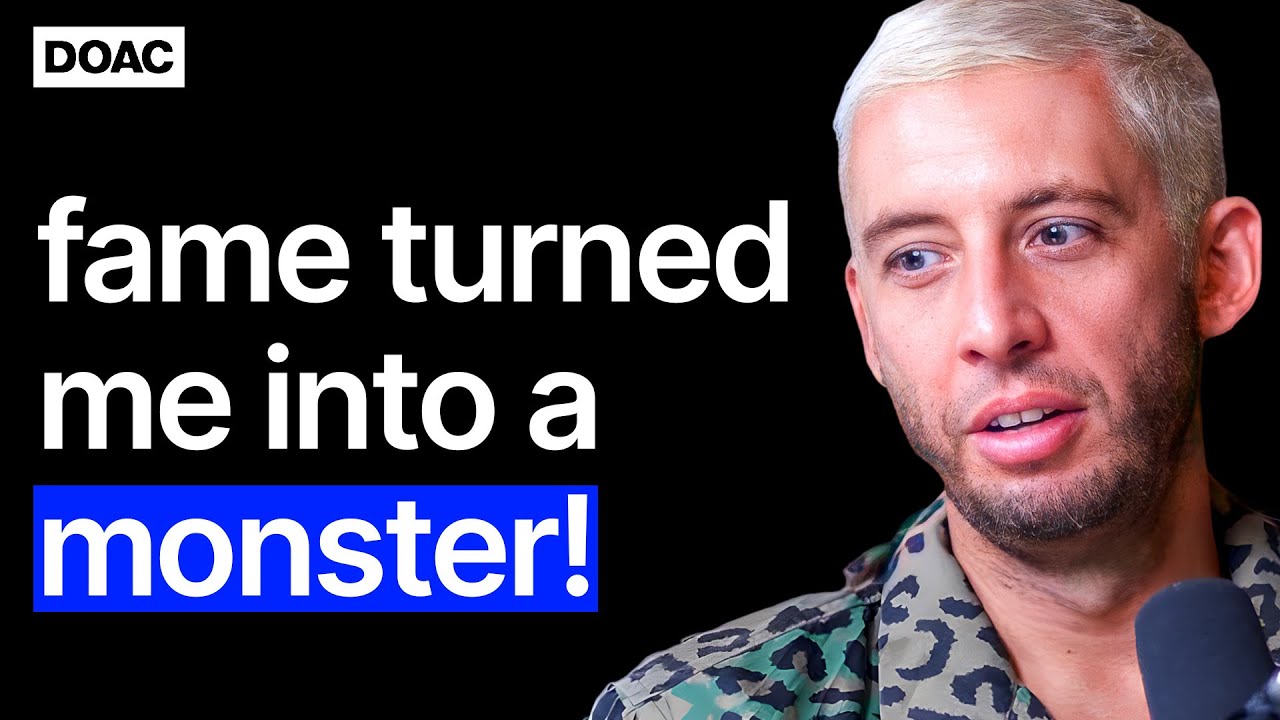
Money and fame, they often say, can show you who you are, or it can bring out the best and worst in you. And one of the things you said is, the person I was when I was 27 was a fucking monster compared to the person I was when I was 21. What did you mean by "fucking monster"?
I was just—so I hadn't tried Class A drugs until I was 23, which is mad because most of my friends and peer group in music and that I grew up with were probably doing it at 14. And then I just think when I became famous and came into money, I just went a bit off the rails with drugs and alcohol. But I was also in a relationship where I was lying to my girlfriend and cheating on her.
And I was just everywhere I was going, girls were throwing themselves at me and people wanted to party with me and people were doing everything they could to try and keep me awake all night with them. Whether it was girls or bad influences—other celebrities, you know—and then you get carried away because you're like, "Oh my God, I'm hanging out with such-and-such actor and such-and-such footballer and this model and this person and we've got access to this bar and this club and we've walked straight into this restaurant and got a table." So you just go off the rails a bit.
I feel like everybody kind of needs to when you get to that stage. Every artist, actor that I've spoken to—whether they've chipped away at it for years like I did or just had this sudden overnight fame—I feel like you kind of need to get it out of your system. I'm not saying everyone has to, but nearly everybody I know is just like, "Oh my God, how amazing does this feel? I'm getting free clothes and free trainers and I've just been given this free car and I'm getting upgraded on this flight and I've got this table at this restaurant that I couldn't get before. I've been invited to this premiere and I was just on that television show with that Hollywood actor and then I'm in this person's house and this person's giving me free drugs and this girl wants to sleep with me and these girls want a threesome and then all this shit."
Why would you not take it? Because you get to do something that is like a one-in-a-million thing. No one else gets to do this. You don't go, "I need to do this because no one else gets to do it." You're just like, "This is fucking fun. This is mad. My life is mad right now." And I just defy anyone not to do the same. I mean, I think sometimes like top-level athletes, because they have to—their focus is being an athlete, so it's all about the body and their fitness—they can't do drugs and alcohol in the same way. So I think that's why a lot of footballers just end up like, "I'm going to have 15 cars" or "I'm going to get a gambling addiction." Because everyone needs some kind of vice, I guess.
I mean all human beings need some kind of vice anyway. I think that's how we're built. We're not meant to just live squeaky clean constantly. I think life is boring like that. It doesn't have to be sex or drugs and alcohol, but someone—you need something. You need something to obsess over that feels a little bit naughty and a little bit edgy.
What was the cost? Because I mean, all that sounds great, but there's got to be—everything in life has a cost.
Well, the cost was that I broke a lovely girl's heart and it took her a while to deal with that, I'm sure, afterwards. And I probably upset quite a few people along the way. I know my parents weren't proud of me, even though I was doing really well career-wise. There was like a moment where there was a bit of an intervention. It was almost like, "What have you become? We're not proud of you. This is not cool."
What caused that?
I think there was just this one weekend at Glastonbury where I just kind of went down with my band and crew and my girlfriend and my sister and I just kind of just completely went off the radar and kind of disappeared for 48 hours. And then everyone was like, "Where is he?" And obviously Glastonbury is a crazy place to get lost in anyway, and then I just turned up 15 minutes before I went on stage. So I was still professional, but I was in an absolute state around 2010 to 2012. Wasn't great.
When your family staged an intervention, what does that look like in real terms? Is that a phone call or is that—?
No, it's like catching me off guard and sitting me down in a room and showing me how disappointed they are.
How did you take that?
Well, it's just not nice to see your parents cry, you know? It's quite—it still took me a few years after that to get my act together. But yeah, I don't feel like there's any real shame in it looking back. I'm not saying I'm proud of it, but I just feel like certain mistakes have to be made. In the same way that I don't really have any regrets about anything, I'm just like, everything I've ever done in life, however bad it is or whoever I've hurt or whatever, I've learned from it and I've tried to make amends for it.
In hindsight, is there information that you didn't have that caused you to choose that path? Is there something you now know that is stopping you from repeating that cycle?
It's just like, I mean my mom always said as a kid she was like, I was a liar as a kid. But she said they were like, not really lies that really hurt anyone. She said, "I just knew that you had this overly creative brain and this imagination so you would just take situations and just exaggerate them." And she was like, "It kind of makes sense that you're a songwriter and you're a storyteller and I get that."
Looking back now, there were certain times where I know it would have really upset my parents, and my mom in particular because she was spending more time with me probably day-to-day. You know, telling little white lies about scenarios that had happened just because I sort of enjoyed the fact maybe that I could attention seek and could manipulate a situation, that I could take a situation and my imagination run wild with it and create other scenarios.
And I think that was something that I don't do at all anymore. But like lying as a kid and then carrying that through, I then obviously realized at school you can't get away with certain things because there's structure and there's teachers, so it probably calmed me down a bit then. And then I'd had like four serious girlfriends and I'd never once cheated on them. Because it just wasn't on my radar, it wasn't the way I'd been brought up.
But it was just like, I guess—and I've spoken to other guys about this and girls—it's like you have that first time you do it, you feel bad, and then one becomes two and two becomes five and five becomes ten and then it just kind of spirals out of control and you kind of just like numb your brain to it. And I just don't think there's—no one signs a record deal or gets into the music industry and has a record label or a manager come up to them and go, "By the way, there's a good chance you're going to be really successful and famous in the next year or two, so read this book. Here's a pamphlet on how to not be a cunt."
People often say that if you are a late bloomer, late to lose your virginity, you kind of make up for lost time when you get into your adulthood?
Well, that was me. So all my friends were losing their virginity at 13 and 14 and I was 17 and a half. So I was probably one of the last at my school. Maybe it's just the part of South London that I grew up in! But yeah, so I used to hear stories from other guys at school about some of the stuff they were doing at 14 and that was just like absolutely mind-blowing. But I definitely feel that because I was a late bloomer, then by the time I was in my like early to late 20s, I just went crazy with it because you're almost doing it for your younger self, you know?
That was what I suspected because I was reading through and I remember thinking, yeah, if you're a bit of a late bloomer and then you get it full on in your early 20s because you become this star and it's thrown at you, it's almost like the forbidden fruit in a way?
Exactly! Because like some guys at school are like, you know, the guys who develop a bit faster than the other guys, they've got biceps and six-packs at 13, 14 and they're exceptional at football regardless of what their academic's like, or they're the fastest sprinter and then they're really good-looking. I went to school with guys who slept with like 15 girls by the time they were 16. So chances are they get to their mid to late 20s and they're not like, "Oh, I need to just go out there and go crazy," because they've already done it. Whereas not only did I not feel like I needed to go crazy, but given the opportunity and you're presented with like, you can—it's like a kid in a sweet shop, you know?
Exactly!
And then really you're just like, yeah, this isn't me. It just becomes a bit boring and mundane after a while.
Was there a point where you felt that? Where you thought, "You know what, I'm doing all this but I hate myself"?
Mm. 2011. And then luckily I met Erin.
Specifically, were there days where you were waking up thinking, "What the fuck is my life?"
Yeah. It's also like you'll come off stage at a gig at 11:00 PM in Manchester—I remember there was this one week which was just like, I look back as it being one of the worst weeks ever. Where I was just splitting up properly with my ex who I'd cheated on a lot, you know, moving out from hers. I was pretty lonely because I was living with my step-grandad in like an ex-council house in Fulham. And he was like 93. And the whole house was like, it smelled quite bad and it was falling apart. I mean, bless him, he was in great shape for 93, but obviously the house wasn't the cleanest, nicest place you could live.
I didn't really have much cash even though I was starting to become quite famous and successful. It's like the money tends to come six months later. You know, you have a number one single or "Kickstarts" was number three in the charts, your festival fees will go up tenfold, but probably not until the following summer. And so I was still living with him, so it was quite embarrassing bringing friends or even girls back to this place.
So I moved finally out from my ex, which had to happen—it was a long time coming. And then I was like—I did a gig in Manchester, came off stage at 11:00 PM, and then I had to be up at 4:30 AM the next day shooting a music video because we had to catch sunrise. And I was like, "Why can't we do sunset and pretend it's sunrise?" you know, so I can actually go home and have a sleep. They were like, "Oh, the director can't work that late" or something.
And I remember looking—I've never watched the music video since. It's for a video called "Two Lives," and the lyric is actually called, "It's like two lives, I live in two lives, don't know which side of me's where the truth lies." That's the chorus. So it was like a poignant moment recording a music video for a song on about three hours sleep. I looked awful in the video, like huge bags under my eyes.
And then went back from the video shoot to this house where my step-grandad was and just sort of sat in bed feeling quite lonely. And then the next day doing like a magazine cover shoot, and then going straight to Radio 1 to record a live lounge, and then going out for dinner that night for like a PR press junket or something. And then the next day was like another TV show and another radio show. And then I called this girl to come round just because I literally just wanted a cuddle, you know?
And then was up with her till like 4:00 AM, and then up at 8:00 AM and then sat in a taxi for like an hour and a half to go across to like Hackney or whatever. And I remember just getting to the end of the week just going like, "I can't do this. I can't do this." And I remember saying to my manager, I was just like, "We need to start cancelling these TV and radio." And he was just like, "You can't cancel going on Graham Norton. You can't cancel going on—" you could maybe cancel going on Sunday Brunch! Sorry Sunday Brunch.
You just got banned from Sunday Brunch!
And then you're almost like, "When's my next day off?" and it's in eight days. Stuff like that. It was like, "What we got this weekend again?" because I at this point wouldn't look at the diary because it would scare me. It was like, "Well you've got Ibiza Rocks Friday, and then you've got Global Gathering Saturday, and then you've got something in Finland on Sunday." And then I was like, "Oh, I've got Monday off." "No, no, no, we've got Mallorca and then you've got Ibiza again Tuesday."
And then you get to each thing and you're just so completely knackered that you're just like, "Okay, have a drink." You know, drinking on the plane, drink when we get there. And then you can't remember the gigs. I remember you look at the photos and the videos and you're like, "The crowd are having an amazing time, thank God that I can do this even when I'm at my lowest, when I've got no energy left, when I've had six, seven drinks." But I look back at that and that was one of the worst weeks ever. And then I think that was maybe like June 2011. Album came out—no, July. And then I went to Australia in October that year to do my first ever Australian tour, and that's when I met Erin.
When you're like self-medicating to deal with the pace of life or whatever, it tends to be the case—just from sitting here speaking to musicians—that you're not far away, especially when you use the word "lonely" like a lack of connection, you're not far away there from mental health issues like anxiety and depression and those kinds of things typically. When you find yourself without connection in your life, self-medicating, stressed by just looking at the thought of this hectic schedule, lack of sleep—I can't imagine the diet was phenomenal?
No, it wasn't. I mean like, I've always been into fitness and running and I would like, even when I was really, really knackered—I've got my apartment still in Fulham right next to Craven Cottage, and it's actually that—that was a big help because that whole period it's just like waking up every day, the river gave me so much calm.
Were you anxious?
Yeah, but you'd just get up and sit on the balcony and have like—I'd make fried eggs on toast or beans on toast and just look across the river and I live on the part of the river where there's no buildings opposite, it's like the Barnes Wetland Centre. So you feel like you're in the countryside, so that's a great escapism straight away from London as a general, so I feel like when I bought that, subconsciously I was probably thinking about this peace and tranquility escape from whenever I'm home I just close the door to my apartment and I've got the river there.
But it was—I think I was quite smart in that I'd whenever I could I would go for a swim or I'd go for a run. Because I remember my dad used to say to me when he was—so when my mom was pregnant with me, my dad was working as I said two hours up in Birmingham, so driving four hours a day because it was the only job he could get at the time. He was working for a computer services company, Nixdorf Siemens group. And he had alopecia as well from stress. His dad was dying, she was pregnant with my mom, and he was training for the marathon.
And I think that stress-related alopecia is quite clear why he lost his hair given everything—the aforementioned things. And but I think running is what saved him. From a very young age, like that time alone, whenever I go for a run to this day I don't listen to music. I—most people go for a run to listen to music for fitness or whatever, that is my brain escapism. And it's either swimming, yoga, or running. It's the only time when I can not think about anything else. And whenever I was anxious or stressed about things, those are the things that saved me. I actually think that living by the river and even if I did it twice a week during those stressful times, just being able to get up and just go for a four-mile jog.
I don't know where my head would have been like if I hadn't have got that—been able to go out and do that and run by the specifically by the river, not through a city with traffic lights and cars. Like on straight onto the towpath, over Hammersmith Bridge, along the river by fields, over Putney Bridge, back through Bishop's Park—pretty much the area I grew up in. And then also I got to the stage where I was like, I was calling girls up to come over and it was like, "Who's going to give the best cuddle and who's going to stroke me to sleep?"
That's where—again, no it didn't mean I make a conscious decision, but looking back now I'd be like, I don't just want to have like meaningless sex, I just want to actually be held. You know, bearing in mind my mom, dad, and sister all lived on the other side of the world by this point, they'd moved to Australia. You know, didn't have a girlfriend, like I had my mates in my band who would—in a way traveling with a band back then, so I travel with a DJ now but back then I traveled drums, guitar, bass, and then five or six crew, it was kind of like a little family on the road. So that was probably better than if I'd been with just a DJ, that would have been quite lonely.
But yeah, I kind of feel like my—there was an intelligent, emotionally intelligent part of me I wasn't actually in tune with, was inviting girls over who were going to give me the best cuddle and stroke me to sleep. So I just felt, you know, from like in that sort of fetal position and felt loved or felt safe.
Did you know you were lonely? Like at the time?
No, I didn't at all. That's what I'm saying. But in hindsight, yeah, there's so many things about that whole period where I was so ambitious and I was so resilient. And I was also, despite what I was putting into my body, all things considered pretty healthy or I had certainly had endurance in terms of what I was capable of, mental endurance and physical endurance. I had endurance and I had stamina.
And that was probably from, you know, starting the whole drug and alcohol thing way later than most other people, you know like say 23, 24. Had I started that at 18 like most of my friends, probably would have burnt out way sooner. But I was in, you know when I wasn't on tour and I wasn't doing promotions, I was at the gym nearly every day and I'd go to the gym and then for a run. So I was in pretty good shape to be able to do all these things and also performing for 90 minutes on stage can be like playing a football match. And you're, you know, sometimes you're playing five football matches a week. And I would always have a good physio after I got back, so every three or four days I'd have a full body massage, needles, cupping, so on. And then I would whenever I could I would spend a whole day, two or three days, on a complete detox.
What was it that made you go from being someone who was dishonest in your relationships and would cheat on your partner to being honest and committed? Was there a catalyst event? Was it Erin? Was it—?
I just think when I met Erin, we just sort of fell so head over heels with each other within pretty much the first night. And then she dropped me off at the airport and she was almost a bit tearful, she was like, "I don't think I'm ever going to see you again. I bet you've got a girlfriend in every city." I was like, "Not at all!" "I've got a few in London!" but no, I was like, you think too highly of me, I haven't got a girlfriend in every city. And then she called her mom, and her mom was like, "Oh I bet he's got a girlfriend in every city." She was like, "No, no," she goes, "Honestly I think we're going to get married" after we'd spent a night together.
But that was my moment. I was just like: reset. Go back to who you've always known you were meant to be. You know, be the person that your mom and dad raised, which is to be honest and faithful and...
And you were honest with her from the jump?
We basically, we had this, it was weird because we got to know each other a lot over FaceTime. And then she'd come to London for two weeks and then go back to Sydney, and then I'd go to Australia maybe for a week, and then we'd speak on the phone for three weeks and then she'd come to London again for maybe a month. And then I'd go spend Christmas in Australia, do some festivals, but also see my mom and dad and my sister and spend time—I lived with her in Bondi. But because that time becomes so precious, you tell each other absolutely everything.
So I think we'd been together six months and we knew everything about each other in terms of exes, worst fears, biggest achievements, biggest wants, desires, everything sexually, all the partners we've been with. Like you just—it was almost like speed dating crash course of like, you know, when people are together generally they'll be intimate with each other or they'll just laugh and giggle and go out for dinner, even meet each other's friends and so on. When you're chatting over FaceTime, it tends to be more like an interview. You know, so you end up oversharing.
What has Erin taught you about love? There'll be a lot of people that are listening to your story and they'll think, "Maybe I'm in the reckless phase where I'm sampling all the forbidden fruit." And then it seems quite clear from your story that you met this person and, as you said, you kind of both changed each other. But what advice can you impart on someone who is in that reckless phase?
I think if people are in the reckless phase, you either, you're like, "I need to do this now and I don't know how long you're going to do it for," but people if you're smart you can work it out. I've got guys I know now who are—because you know they work in high-intensity, high-pressured worlds of like finance and hedge funds. And I know a lot of guys who want to settle down but also on the side want to continue having these other experiences with women. And I think they feel that they have a right to do that. Now, I'm not sure if that's because of the mentality of a lot of the people that they work in that world with, you know like it's a boys' club sort of thing.
And that's that's you know that's just how it is, I feel like with some of them. You know, like there's a lot of guys who like seem to be happily married with kids, my age or a bit older, and seem to have all these other girlfriends and flings and bits on the side.
If you'd met Erin at another phase in your life though, do you think it would have worked out?
No, I think we met at the perfect time. She'd just split up with someone. Like timing is a key factor. She'd been single for maybe seven weeks and I'd been single for maybe three months.
If you'd met her at say 25?
I don't think so. If I'd have met her two or three years earlier, wouldn't have worked. We met at exactly like—it was almost like the stars aligned, the universe decided that we were going to collide at that moment.
You mentioned she was a Gemini and then you just mentioned the universe decided. Are you at all spiritual?
I wasn't, and I am now.
Did she have a role to play in that?
Yeah, I guess so. Because you know, I just—I used to just think I was in control of everything. And I know I was one who used to go, "I don't believe in luck, you make your own luck." Because that was sort of kind of what my dad would instill in me. And I've never been religious and I never used to believe in zodiacs, but then I did used to believe, you know, after I'd read some Stephen Hawking stuff. And then you start reading books on lateral thinking and the laws of attraction and so on.
You sort of go, "Oh, actually, yeah, we are all just atoms just bouncing off one another. Just like, because we've got brains and we can make our own decisions, but that doesn't still mean that we aren't in control of the energy around us and the energy around other people and how we collide and then what things come out of that." And so as soon as I got my head around that and then Erin started explaining the zodiac and when you were born and what time of day you were born and you know the distance between planets and so on and what moon it was that day, I used to—I guess I didn't have the patience for it before.
And then like she started explaining and you go, "Actually, yeah." And that's why certain people have certain traits and so on. I'm not like—I'm more into spirituality since, you know, I'd start doing yoga for instance, and meditation, you know like two or three times a week. We'll do a sauna and ice bath, put the kids to bed, we'll do like 10 minutes sauna, 2 minutes ice, 10 minutes sauna, 2 minutes ice, and then you just come out just feel like, you know? You feel so alive.
And then the moment you kind of have kids and you're like, "Oh my God, there's these other human beings that we made," you do get in touch a lot more with your spiritual side I think because you're just like, you know. Science and spirituality can go side by side. I think that the spiritual awareness of oneself actually comes from having a greater understanding of science and the way the universe works in general.
What impact has that had on your life, yoga, breathwork and all that stuff?
I think the breathwork's been incredible. Like, so if it doesn't involve like ice or meditation even, I listen to—there's a guy I know back in Brisbane, he's got something called The Breath Collective and he gets people in like groups of 20 round to his house, clears like all the sofas out the way and the TV, and they all sit on the floor on their backs with their eyes closed and it's like that Wim Hof style of you know like, short breath out, like deep breath in, short breath out, and then holding your breath. You know that moment and you feel all the physical changes in your body. Like I'll do it a couple of nights a week. I did it last night because I wanted to have a good night's sleep and there was a lot of stuff going on in my head.
But like it's hard—if you'd have tried to sell that to a younger me, I would have been like, "You're having a fucking laugh, mate. You want me to spend 10 minutes of my day breathing in and out in silence?" because I just didn't understand how to relax and how to be at peace with myself and how to actually deal with my inner thoughts and inner demons, you know?
How much credit does Erin deserve for this?
A huge amount, really. She'd—just watching someone grow a baby and give birth and then breastfeed them for a year is like one of the most sobering experiences ever. You know, it's like—it just blows your mind. I just think the moment, the rush of adrenaline and endorphins or whatever that I got when she gave birth to our first, standing up.
Standing up?
Yeah, she'd been training her whole way through her pregnancy as well. Like she found a form of pregnancy HIIT training, which had been approved by her midwife and her GP. Obviously not crazy jumping around, but you know, squats and lunges and so on and push-ups, obviously not much ab work. But she's reading lots of research saying, you know, the healthier the mother is, you know your—it's like if you eat nuts during pregnancy, child has no chance of having a nut allergy if the mother eats enough nuts during it. Likewise, if she gets her heart rate up to a safe level, that baby be born with a less likely to have a heart condition.
And there's other research shows that if the mother does X amount of training throughout—you know it even goes back to say the hunter-gatherer sort of period where a female might have to be on the move constantly, or on the run, whilst holding a baby, and what that instills in the baby's genetic makeup when they're born. You know zero—I'd have to find the research papers, but there's stuff that she was reading about your baby will have zero chance of asthma if you do X amount of exercise whilst you're growing that baby and it can all be passed on.
Like the science behind it is mental. It's like when a—like your baby has a way higher chance of starting life with a better immune system just from breastfeeding alone, if a mother can breastfeed, because the baby's saliva passes information to the nipple, and then the nipple tells the mother what to put more of into the milk. So it would be like, if the baby's lacking in iron or zinc or certain vitamins, the saliva from the baby's mouth will tell that to the nipple and then the mother will produce milk with more zinc, more magnesium, more vitamin D to to give the baby. So which is why a lot of babies have better immune systems when they're breastfed and not bottle-fed.
So just, you know, on formula. So crazy stuff like that. But then yeah, just seeing my wife, like when she had no gas, no epidural, no no assistance, no you know drugs as it were to help her through pain relief and she gave birth standing up. And like the midwife's like, "Catch your baby!"
Who caught it? You caught it?
No, she did! And then she just sort of collapsed into her legs and we just sat there and didn't even look to see if it was a boy or a girl for like the first 10 minutes, we were just so in awe. It's like this—the most alive I've ever felt. It's mental. And like, because apparently the tailbone actually blocks the baby's head from coming out, so human beings—women should give birth on all fours or standing up, they're not meant to give birth on their backs. Because where the tailbone curls up under, the baby's head is trying to come out. It's actually—yeah, women should be standing up, so that tailbone's like disengaged and the baby can basically just fall straight out. Mad, right?
Yeah, crazy!
I bet you weren't expecting this today!
No, I wasn't. But there you go. Every day's a school day.
You say you gave birth to your first, and one of the things that I read about was you tragically had a miscarriage on your second?
Yeah, the second one. I think we got so—I don't want to say cocky—so so excited and the first one seemed to go so well, everything from when she found out she was pregnant to giving birth. That you're not meant to tell people that early on, but then she found out she was pregnant with the second one that we lost, it had only been five weeks. And really you're meant to wait quite a bit longer and have your first scan and so on. We went around told everyone, and then she lost it a few weeks later just before, you know, like the safe date.
So that was pretty pretty tough. I remember I was invited onto Lorraine Kelly's show. And I was meant to go on and talk about a single on a tour, and then they kind of blindsided me and it was just before I went on they went, "We just found out you lost a second baby, do you want to make the whole interview about that?" And I was like, "For what reason?" they were just like, "Because we've never had a guy come on here and talk about it before." Certainly not like a celebrity. And I was like, "Okay, cool."
So the whole interview became about that, and it was actually—it was quite positive because I got so many messages from guys afterwards just going, "That's amazing you went on and spoke about that," because guys are just like—woman's just lost a baby, guys have just got to get on with it and deal with it by themselves, just do everything they can to support the mother.
What was it like for you?
Well, it's really tough because you just don't know how to—you're like, "Oh my God, this is actually something that was living inside of her that has now died and I've just got to be there for her and I'm just going to have to like suck it up and get on with it." Because no one ever really asks the dad how you're feeling. It's not in really in our in our society, it's not normal. Everyone just goes, "Oh my God, how is she?"
How were you feeling?
Just like, just helpless, really. It was awful. But yeah, Erin's dad was great and my dad was great as well in terms of, you know, how do you feel, how do you think you should feel, how do you want to feel, how what do you think you need to do to get through this? Especially when you've already got a baby and then you're just like how beautiful that whole experience was and you're like, "Oh, we could have had another one," and then you start—is this going to happen with the next one and the next one? Yeah, tough.
Yeah, men don't—I mean all of these, even like, men aren't really even taught how to deal with how they're feeling themselves, right?
No. I've actually, you know, doing stuff like this and doing interviews with either magazines or television shows, I've realized there's been sometimes there's been the first times I've spoken about things that I should have probably spoken about with friends or family a long time ago, you know? Because we're just—it's either the whole macho thing of "you don't talk about that," "just get on with it," like that's a woman's thing, you you know, women discuss things like that. Whether it's I'm not even talking about miscarriages, I'm talking about relationships or you know.
When you look forward at your future then, so you've got this eighth studio album coming out. What—what do you want the next five, ten years to look like in terms of your career?
I would love to accidentally somehow have a chart hit again, just to remember what it feels like.
Interesting!
Yeah. It's not key to me, but it'd be amazing to have like a number one album or a top ten single, you know? It'll probably be based on streams rather than sales in this day and age, but you know.
Why? You've forgotten?
Yeah, forgotten what it kind of feels like because it was 10 years ago. You know, I had—I had like 22 top 40 singles. Um, I think seven top tens, two number ones. But I haven't had anything for so long, but I'm still going—like my tour sells out in a way that you would assume that I was still having hits, but then you realize that hits aren't that important. What's important for me is just making songs that go off when you perform live.
So, you know, I did an hour on Saturday night, there were probably seven hits in there, the other nine songs weren't hits but they still go off like they're hits. People—majority of the crowd know them word for word. The energy's there, you know the build, the drop. I did the last sold-out tour in the UK of any artist before COVID, which was March 2020. I played Kentish Town Forum, sold out, March the 7th. I was back in Australia by the 9th. I think 10 days later we went into lockdown in Brisbane and the rest of the UK and the world followed pretty much like April that year.
So I played the last ever tour. And then I played the first festival anywhere in the world after COVID—I mean COVID was still—everyone was in lockdown in England, America, so on. I played up in Darwin in the Northern Territory in Australia. I played to 5,000 people. Crazy! They'd had 23 COVID cases. So as long as you go up there with a negative test. So I was at a festival in October 2020. Um, playing a gig in Darwin to 5,000 people, and then I came back in just did my January/February tour. So I did one of the first sold-out tours after COVID.
So I feel like live music and my performance is like my bread and butter. It's what I know best, it's what I do best. But it would be really nice to, you know, taste a little bit of success again with a with a song that maybe like—because don't forget this I'm still in a situation where I've got 40 gigs this summer. Anyone who follows me on Instagram is like, "Wow, amazing! You're having the best year for ever." But I still bump into people in the street and it's like a taxi driver on the way here today is like, "Oh Example, are ya?" Like yeah, you go, "What you been doing? You ain't released any music for years." I was like, well, I released an album in June and I released another album last year and...
How does that feel?
It's quite—it just makes you just goes to show you that there's some people think if you're not on Jonathan Ross or Graham Norton or on Capital FM or on Radio 1 and you're not playing Radio 1's Big Weekend or doing Capital Summertime Ball, then you've retired. And then there's another bunch of people who hear you in the clubs or listen to you on on Spotify playlists and have no idea what Radio 1 or Capital FM is. And then there's your die-hards who follow you and know every move you're doing from your Instagram.
But you know, that I don't tweet that much anymore because it's become quite a toxic place, but you know, the—you meet people and they're just like, "Oh I didn't even know you were playing. Like what—" you know, they'll be like, "Oh mate, what you doing in Newcastle?" You're like, "I'm playing Newcastle Academy tonight." They're like, "But I follows you on Twitter, I've not seen anything on your—" you know, because I used to be known for tweeting quite a lot back around 2011 and 12, I used to get into a lot of trouble and have arguments and such on there.
But you realize that everyone has their way of discovering and digesting and discovering—you know discovering music. Um, in the same way we do with films and so on or how you read about—some people just read BBC Sport, some people just follow a Twitter account that updates you on the Premier League. And there's some people who only find out about music from Spotify and there's some people who still only religiously listen to the Capital breakfast show every morning. And the thing that I find is I just have to know where my fans are and what they want.
There's always going to be that group of people though that if you're not in the charts, they think that you've either retired or fallen off or something?
Exactly! And they still think that that is the case for me. So I'll be like, even when I got a taxi to Brixton in February, because I'd I like to get black taxis mainly because one of the my cousin's a black cab driver and he's like, "You can't—you can't use Uber!" Um, I like the tube, but whilst I'm blonde, which is for the foreseeable future, the tube's not a safe place for me at the moment. Um, it's a selfie central, um and then obviously you have one or two and then that leads to 10 more and 20 more. And I don't mind meeting the general public, I love it, but it also it's nice to just sit on a tube and listen to music sometimes rather than having constant photos.
But this guy was like, "So what you doing? Are you go—is there a gig playing tonight?" I was like, "Yeah, it's my gig." He's like, "Oh what, I'm driving Example to his own gig?" I was like, "Yeah, yeah, I'm you're taking me to soundcheck now." He went, "Oh I could have sworn you retired. My my eldest used to come watch you."
Does that piss you off a bit?
Yeah! Because I'm like when they're like, "My eldest used to watch you," I'm like, well if you just followed me on Instagram you could still keep up to date with my song releases and he could still come and watch. Anyway, I ended up putting all three of his kids and their partners on the guest list.
Oh really?
And then I got a DM I think from one of his sons the next day, I think some was maybe 26. He was like, "Oh, time of my life, reminded me of..." and so you've just realized that because you're not on Capital FM anymore, that certain people, if like I don't know, they could be a painter-decorator, they could be an estate agent, they could be a you know a taxi driver, whatever, but everyone has their go-to places for music. And it might be like in the office where you work all day they have Radio 1 on. So whatever's on Radio 1 may dictate which festivals they go to or who they go and see on tour because it's advertised on there.
It's like, "Playing at V Festival, playing at Creamfields is blah blah blah blah blah." But if you're not—other people only discover music from their spinning class. Yeah, you know what music's played. So people message me and go, "Oh your new single was on in my spinning class today, I didn't even realize you were still releasing music." And you almost want to go, "Well, I've released three albums since then and you know, 11 singles." But you can't. It is quite frustrating.
You kind of left—you left the when you were with those labels and you were charting all the time with these these like big global hits, you leave that game. And then was there a moment where it was difficult to deal with the—what you've described there? Where people are going "Where are you? Like what's where's the music? Like why aren't you charting? Have you fallen off?" or something?
Well it is! You know what also is really frustrating is like so I've performed in 27 countries in Europe. Um, I'd say about 10 of those countries I've I've headlined festivals. So there was a period where I was really big in Finland, Hungary, Estonia, um Czech, um Slovenia, Slovakia, Latvia, Lithuania. I'd be doing one or two festivals in those countries every year for four or five years. Headlining or second on the bill, really really decent fees.
And then you I left Ministry of Sound, um 2013, signed to Sony. Didn't really have any—had no success at Sony. I think I had one top 10 single. Album bombed, they spent a fortune on it, didn't really know where to position me. And all of a sudden all the gigs dried up in these countries as well. And it we were going back to them like with Spotify numbers and you know saying, "Well he's still got you know 4% of his fans are in Hungary," which is massive considering my fanbase in the UK and Australia is my second biggest. Like 4% in Hungary. And then it would be like, you know, 1% of his listeners are Poland. That's a pretty big listenership still. And then it was like 2.8% of his listenership in Colombia.
And you go to these promoters and they just be like, "Look his last single, like 10% of his listeners came from your country," and they're almost like, "Yeah but he's not on radio." And you're like, "Radio fucking dead!" You know? Yeah. Or you know, I haven't been and done a chat show in Germany for a bit so I'm not getting—I played the biggest festival in Germany, it's called Rock am Ring and Rock im Park. So that's like their Reading and Leeds. I played that festival three times. Unbelievable massive crowds, they knew the words word for word, like half my set. I had three top 10 singles in Germany.
And then moment you're not on radio, they're like, "No we'd like to book him but let's wait until he gets back onto radio." And you're like, "Well they know my other hits and like and there's people streaming the new stuff." So this summer we got we've got Benicassim in Spain. Um, we've got a gig lined up in Portugal and I'm playing Amsterdam this Friday. Um, but it's been really tough like to actually go in and like almost having to present the figures.
I see this with artists that have that meteoric—I mean I sat here with Craig David and he's a an example of an artist at 18 years old, I think he had a number one album, something fucking staggering.
And then—see he's only like a year older than me, but in my mind Craig David's like five or six years older because he was in the charts at the same age as I was listening to so I was in clubs listening to garage music. Yeah, exactly. And he was on Top of the Pops. Whereas I didn't have any success until eight years after that, so I was 26, 27.
Yeah, and there's like a 22-year gap between when Craig David I think had his first one to his his most recent album. Is there a thing of like: you basically start competing with a former version of your success?
You have to. I only compete with myself. Like when I'm in the studio I'm only compete with myself.
But the former the the—
Yeah and my former person, which is why I say to you I'm over the moon that I've got my busiest summer in six years. Um, I'm I'm I'm so in love with this album. I'm still playing this album like even though it's been finished for months. Um, but that's why I'm like, I'd love to just taste that chart success again. Just once or twice. A) to shut up all the people who think I'm retired, and B) just to remember what it feels like. You know, it's almost like a little validation that my career's going to continue for the next five, six, seven, eight years as long as I stay fit and healthy and I keep producing music and people still want to come and they, you know, they choose one night a year they go out to a gig, 10 of their mates get absolute off their face and have the time of their life. If they I want them to pick me for that, then I've got a career. I don't need anything else. I don't need radio, I don't even really need streaming. Um, but it would just be nice to have that validation.
And I shouldn't be sat here going I need validation, but it would be really nice to feel that again. So every time I get in a taxi it's like, "Oh Example, alright yeah I heard you I saw you on Jonathan Ross the other day, I thought you'd given up!" you know? "How's Australia?" rather than just sitting there going, I have never stopped releasing music. I have never stopped touring. Like I've been touring for 16 years, I've been releasing music for 16 years. But... you know what I mean?
No, I do. I think this about myself when you're talking about having this kind of chasing the former version of yourself. I worry about that sometimes. I think I always think to myself, especially now that I'm on Dragon's Den on the BBC, I think when I come off that, the cabby who watches BBC One but doesn't have a clue about podcasts or Instagram is going to—that's what's happened. Well you get some people like "Oh you're the podcast guy" and there's other people like "Oh you're the dragon, you're the dragon!"
Yeah, it's an age thing for me. Someone's coming up to me in the street, I know exactly where they know me from by by their demographic and if if a 56-year-old male comes up to me: "Oh you're on Dragon's Den." Yeah. He has no idea that I do anything else or that I'm, you know.
So so in saying that, right? So on my last tour, we've at most nights I come off stage after soundstage before I get on the tour bus and you know, my tour manager will be out and they'll be like, "Look he'll be out in about an hour if you want to wait, I know it's cold, put a hoodie on," you know like he makes sure they're all they're all you know I say just go and give them a load of Monster Munch or whatever, you know so he goes out with a big whatever's left on our rider, Monster Munch, maybe a couple of beers, he checks their age and... so some you might have 200 people waiting after the gig and then by the time I come out 11:30, 12:00, there might only be 20.
But I'll always say to them, "Where where did you buy this ticket from and why did you buy this ticket?" Just as a little bit of market research. And all the young kids are like, "We saw it advertised on your Instagram." And pretty much anyone over 30, 40 years old, they saw a billboard. Yeah. On a at a bus stop or on a train station. Or their friend forwarded them a link from Gigs and Tours or Bands in Town on Facebook.
So even though I'm not on Bands in Town, I don't go on Facebook much, I don't really decide where my posters are put up, that's like the you know the touring company, promotions company decide that. As long as these people know where to find me, that's great. And then they come to the gig and then maybe there's like four or five songs they haven't heard that I've released in the last two years, but chances are two of them they'll fall in love with and go back and continue to stream those songs. Or they add it to their playlist.
But there's a need though to try to detach a little bit from the external validation driving your self-opinion I guess because as much as it can be like a good driver of ambition and competition and having something to aim for is great, you don't want to be dragged like because because I can see how an artist who is used to getting number ones all the time could get a number two and feel like shit because it's a number two. Whereas really, without all the number ones, a number two is unbelievable.
Well yeah, I was saying this earlier, these these are my chart top tens. Yeah. All of those those so my three number twos, that was actually "Unorthodox" with Wretch—
Yeah yeah.
That was "We'll Be Coming Back" with Calvin, and that was "Say Nothing" which came out just after that. And even looking back it was just like like to go from six to three and two to one. It would have been nice if those last two just went one one one. Like the difference, you know like the difference between that one and number one was about 267 downloads on iTunes and the difference between that one and that one was maybe like 400 and something. And it's like, I know, it's nice to say it's amazing to have had two number one singles and a number one album, um out of everything that I've done in my career. But it'd be extra nice to just go, "I've had four number ones." You know what I mean? But that's exactly what I mean, it's you're never going to be... but I don't I don't lose sleep over it.
What can you tell me about this album? Can I—when I like listen to something, I want I need some kind of flavor of this this eighth album.
Um, there's I've never done drum and bass before, and there's two drum and bass tracks on it.
Okay.
Um, I used to, when I started MCing at 15 it was mainly over UK garage or garage, garage. Um, and the 10 tracks on this are mainly garage. Um, and then there's three drill tracks, um with probably the best spitting I've ever done. There's like—I'll play you a song afterwards—but there's a track where I'm just spitting straight for three minutes. Um, we shot the first half of the video in a shipping container yard in Brisbane, which being Brisbane, we got to use for free. Like completely no regulations, just "Yeah mate, open the gate for you we'll be back at 8:00, just go where you want just don't don't break a leg or anything, don't do anything stupid."
So we shot this video which I directed in a container yard, then one of my mates who's in construction, we shot the second half of the video on the roof of his new apartment block where I'm standing on top of the lift shaft and then we've got drone footage going around me. Um, very cost-effective video and it's basically just me rapping solidly for three minutes. And I think it's probably the best rapping spitting I've ever done, I based it all on Busta Rhymes that I used to, you know from back when I was like 17.
So I'm just hoping—well I know that when people hear this album, they're going to go, "Fuck he sounds—he sounds good, he sounds comfortable, he sounds the most confident best like performances I've ever heard him do." I I truly believe that. Like and I can't wait for people to hear it. Because it's also like you associate drill music with with gangs and knife crime and selling drugs, and I've basically just taken inspiration from the beats and just done Elliot, you know? I'm being true to myself, I'm not which is what I've always done. It's just like, I used to feel like—I was saying to you just off air before—I used to feel like I was this uninvited guest to rap and hip hop because I felt that you needed certain credentials, you know, to do it. And then you slowly realize that no, it's just like an art form. As long as you're respectful of the culture, it's just like what are you doing with that that music? What story are you telling? And you've always just got to tell your own story I guess.
Having been through all of this, Elliot—if I may call you Elliot—having been through the fame, the, you know, the ups and downs of the music industry, the, you know, the sex, the drugs, the rock and roll, all of it, and also the family, the kids and all of that. If you were advising a younger Elliot, who might be listening to this, on what actually matters in terms of the components that make for a good life, what would you say, now in hindsight, having tasted it all?
Right now, I mean like, being a dad is so so important to me and so rewarding. Especially once—I mean the little one, Ennio, who's now four, he was a bit later with the speech. The fact he can now speak is like—my my eldest, Evander, he was speaking at like 18 months he was saying words. And then our our youngest didn't really start speaking till he was three. But now it's not only just being able to communicate with them, but then listen to them speak to each other. There's bonkers stuff that comes out their mouth. It's just like—it's the most rewarding thing of the day. Like I'll spend most of the day just writing down quotes they've said and sending them to my mom and dad and my sister or to Erin's family, just like "You won't believe" and like the stuff that comes out their mouth.
That's that's—for me it's like I love cooking, I love food, I love fine dining, I love eating out. Like food is so important to me. Training is so important to me. Sleep is so important to me. Sex is so important to me. Being a dad's important to me. And if I'm being totally honest, like I make music for a living, but I could right now—I love being on stage, but if it was someone was like, "You've got another year now, you're not going to write one song or do another gig," I'd be totally happy with that as long as I had all the other things.
Interesting.
We have a we have a closing tradition on this podcast where the last guest writes a question for the next guest.
Okay.
And I I read it now, so I haven't seen this before. Um, it says, "Of all the achievements in your life, which do you think made the biggest impact on another?"
On another? I'm going to guess they mean—oh so everything you've achieved on another person?
Yes. "Of all the achievements in your life, which do you think made the biggest impact on another person?"
That's interesting, it's a really good question. Achievements in your life, which do you mean someone else? That is a really interesting question. What I would say actually, and I could probably apply this to a few—I'll apply it to two people rather than just one person in particular—is there's a guy three three people in particular. So there was a guy called David Stewart, who was my guitarist for three and a half years. Um, very different to me, he's like a private school educated kid. Um, but and and you know grew up in in money if you like in near Westbourne Grove.
And we used to rib him quite a bit, he was like six seven years younger than all of us. But he was a great kid. Really good guitarist, really good keyboard player, great singer, good-looking. He always wanted to make it as a solo artist. And for whatever reason, this was around the same time Ed Sheeran started blowing up where it's like you could be the best looking kid in the world, but you know, no offense, Ed's a really good mate of mine but you know what I mean, Ed's not a model. Um, he's not like that Justin Timberlake cut. But David Stewart, fair play to him, like we spent a lot of time writing songs together, I would try and hone his lyrics. He was amazing with melody.
And he's now officially the most successful songwriter in the world in terms of streams. So he wrote the last three Jonas Brothers singles and he wrote "Dynamite" for BTS, which is I think the third or fourth most streamed song of all time, it was the most streamed song of the last year. Wow! I'm not saying he owes that to me, but what I am saying is I know for a fact that his years on the road with me and the time we writing songs with them was instrumental in his drive and ambition and his craft. I feel like he may have gone onto do this anyway, but he you know he he definitely I feel like success breeds more success and like I'm really proud of him. Like that he's now the most successful songwriter in the world.
Amazing. You know and then there's like my my guitarist who replaced him, another guy called Kai Kai, he's gone on to be very successful composer. He went left me to go and play guitar with Dua Lipa for a few years when she was blowing up. Then Mike my drummer, um he was playing with The Streets and Lily Allen and played with me for five years, he went on to help put together Ed Sheeran's live show and create the technology behind his loop pedals. Oh yeah, yeah. And then my playback guy, he's the guy who runs the laptops which run alongside the live musicians, he's gone on to put together huge shows for Kygo in Las Vegas.
So I feel like nearly everybody who's worked alongside with me, I've learned from them and then but they've all I guess what I'm saying is I'm glad that they've all gone on to do huge things. They haven't gone on to just be standard session musicians. You know, like most session musicians just go on to play for other bands on the road for eternity. You know, earning £300-£400 a gig and they're playing into their 50s or 60s just getting by, whereas all the guys who've been part of my band who are basically my brothers on tour, my family, all been made incredible successes of themselves.
That's dope, and I mean that that that says a lot about the environment that you guys have together when you're together and like—
Yeah I'm quite proud of that, you know?
Yeah, because I didn't try I didn't intend to do that. It was obviously was clearly a nice place to work and was inspirational and was very creative and ambitious. And they've parted company with me, all on good terms, and have gone, "I'm not just going to sit back, I'm going to go and do what Elliot's done in my own way." And in David Stewart's case, it's like stratospheric, you know? Like produced and wrote the biggest song in the world that year for a Korean pop band. Mental.
Mad. Elliot Gleave, Example, thank you.
Mate, thanks for having me, I've loved this, been awesome.
Yeah, I mean these these conversations all are all so unbelievably different, but I think your honesty and like—there's a real sort of overwhelming sense of inspiration I get from watching a man go on a journey and change in so many really fundamental ways in terms of their character, their craft, their art, and even like their emotional awareness and their ability to like be in touch with their emotions. Tends to be the case that women can be the catalyst, certainly for me it was, you meet the right woman and it's like a big turn—
You're very easy to speak to, I must say. You you give me a a real sense of safety and that I can talk about whatever I want and there's no agenda, which is good.
That's really interesting. Yeah, because you know it's funny because I write these questions down that—but I actually don't write any questions down but I write like bullet point things to remember and then I genuinely go in the direction that that I I'm interested in. But so many things you talk about, even from breathwork, my my girlfriend is a breathwork practitioner so I'm doing breathwork all the time in these days. You know, the Wim Hof thing, we've just booked a retreat to do Wim Hof's ice thing.
See I had no idea about any of this!
Yeah exactly, so that's why like when you're saying it I find it really intriguing to like probe in around there. Yeah. Um but it's all led by curiosity and there's so much in your story that is really really inspiring to me and I'm actually the most inspiring thing for me is what happens next. So the most inspiring thing to me is seeing how your eighth album plays out, how you continue to like move with the changing times and changing platforms and who that that creative and artist becomes. But yeah, thank you for your time today, I love these conversations and it's been super energizing for me and I know it will be for everybody that's listened. So thank you.
Thank you. Cheers, bro.
§02Transcript — part 2
When your cat is acting weirder, or your dog is being louder, your turtle moves slower. "Hello, Ted?" Your cat seems thirstier. "Whoa, slow down buddy." Or your puppy is acting clumsier. Day or night, if you don't know what's wrong, know where to go. VET ER for Pets. This is Kate. VET: the better, kinder ER for pets.