
The "Happy Life" Scientist: How To FINALLY Beat Stress, Worry & Uncertainty! Dacher Keltner
Guests: Dacher Keltner
Full transcript · Read the full conversation in order, with its original context.
§01Transcript — part 1
The thing I think about most, especially when I'm on the go but also when I’m sat here in the Diary of a CEO studio, is the Wi-Fi and internet that we have to work with. In fact, anytime I’m filming away from the studio, one of the first things I do when I arrive is open up an app and do a speed test to see how strong the signal is.
The number of screenshots I’ve sent to my team about Wi-Fi signals at different locations is actually pretty crazy. It matters that much to me because it’s such a competitive advantage to have fast Wi-Fi. On any given day, if I’m recording hours and hours of footage with a podcast guest, I then often have to have my team send that across to our London team who then do the edit.
Fast Wi-Fi and internet is not a "nice to have"; it is absolutely business mission-critical. So, when it came to finding the best provider who could supply internet and Wi-Fi to our new LA studio, which I’m sat in right now, we looked at every single option.
Of all the providers, the one that came back with the steadiest connection as well as being the cheapest was today's sponsor, Spectrum Business. Spectrum Business keeps businesses of all sizes connected with fast, reliable internet, advanced Wi-Fi, phone, TV, and mobile services.
Millions of business owners already rely on Spectrum to keep their operations connected. If you want to join them, head to spectrum.com/business to learn more. That’s spectrum.com/business. Restrictions apply. Service not available in all areas.
Life expectancy has been declining over the last few years. How do we reverse that trend?
These are the five safest things to do.
Dr. Dacher Keltner, a renowned expert in the science of human emotion, discovering ways on how we can improve our happiness. He’s also the author of several books, including *The Power Paradox*.
I read that just someone touching you can make you live longer and be less stressed. Is that true?
Yeah. There are all kinds of findings that speak to this. You have premature babies; they used to just put them in these little units that warm them, and they would die. And then they figured out they needed skin-to-skin contact like they need food. And they lived. They gained 47% weight. The deepest craving we have is to be appreciated by other people.
If you want to be happy, practice compassion. If you want others to be happy, practice compassion. If I am kind to you, my act of kindness makes you more kind downstream. And then that person you’ve helped actually is kinder to another person.
And they’ve proven that?
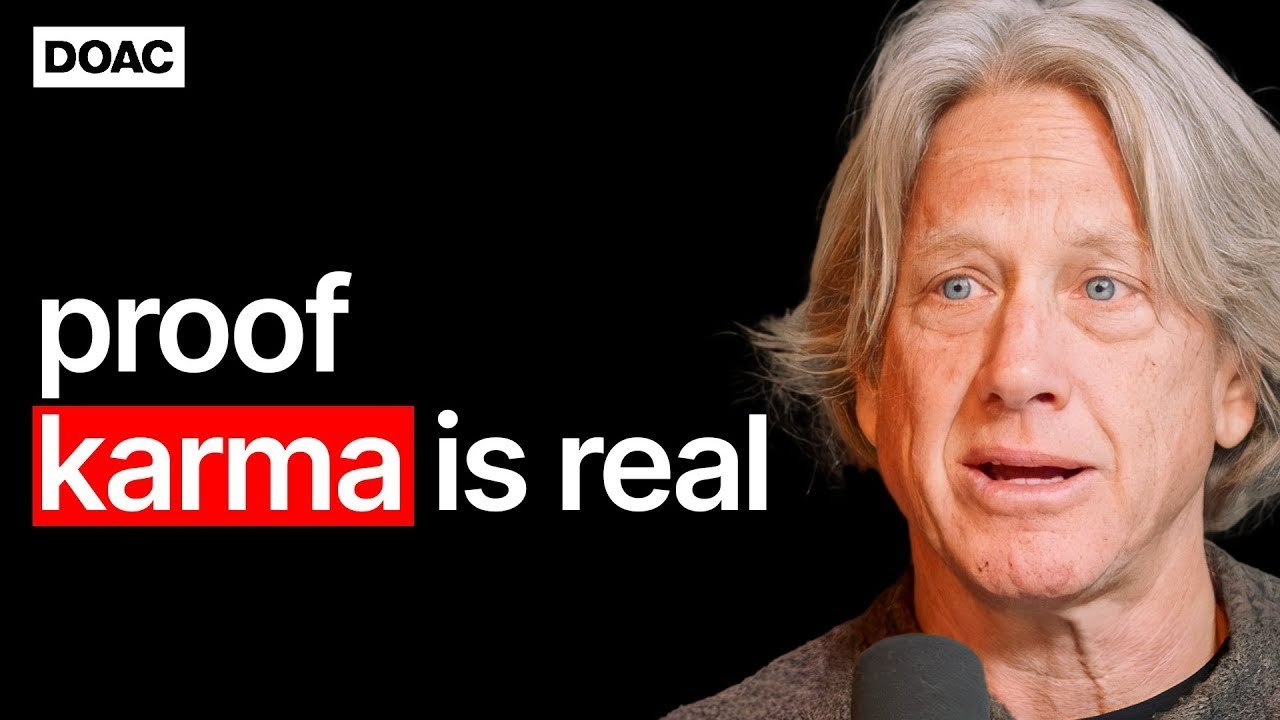
Yeah. Karma is a very real thing. It’s very real. That’ll save eight to ten years of life. You’ve got to find a few moments just to be kind.
Are we worse people the richer and more powerful we become?
Yeah. We’ve actually done experiments. A movie about a child who has cancer, and poor people show activation of the vagus nerve, which is part of compassion. Well-to-do people show less activation. The wealthier you are, the more you advocate for serious economic policies that hurt the poor.
Jesus.
This is where it gets really worrisome.
Dacher, could you start by giving me your professional and academic resume?
Well, it begins early with my parents, who were very important in my education and my formation. My dad’s a visual artist and my mom taught literature and poetry and romanticism and got me interested in all kinds of things about the human mind.
Then I was at UC Santa Barbara as an undergraduate and went to Stanford for a PhD. Subsequent to that, I worked with Paul Ekman as a postdoc, who’s a pioneer in the study of facial expression and inspiration for the show *Lie to Me*.
Then I became a professor at Wisconsin and then UC Berkeley for 27 years. I help run the Greater Good Science Center, which is about disseminating the new knowledge of meditation, compassion, and stress to a broad audience. I’ve taught at Berkeley, which I love, for 27 years.
You referenced the Greater Good Science Center. What’s the mission of the Greater Good Science Center?
Twenty years ago, post-9/11, we were in a world much like post-Trump and Boris Johnson and others. Are we fragmented? What happened to humanity? What happened to community? Why are life expectancies in the United States dropping the last few years? What is going on?
I saw that. I saw that.
Yeah, striking, right? Really disturbing. We had the conviction, and there was this new science of things like if you have strong social ties, it adds ten years of life expectancy to your life. If you practice kindness, it quiets down the threat regions of the brain.
We at Berkeley, in partnership with the journalism school, had the sense early that if we can get this knowledge out in actionable prose where you read it and you say, "Oh, I could teach breathing to my medical team," or "I could teach an 'awe walk' to my neighborhood friends," that would be good for the world.
I’m super compelled by that. Let’s talk about some of the things that you’ve given away in terms of knowledge and some of the discoveries that I think would surprise most people. You mentioned some of them in passing there about breathing and awe walks and how you can add ten years to your life. Give me some more detail on some of those top-line findings.
This really comes into focus for me, Steven, when I speak to medical audiences. I do a lot of work with healthcare providers, teaching medical doctors and residents, helping programmatically with the spirit of hospitals and the like.
I talk about awe—that the feeling of awe reduces activation in the inflammation system in your immune system. Your immune system is all these cells distributed throughout your body that help you protect against dangerous elements on the outside, like viruses and bacteria.
The feeling of awe reduces the activation of the cytokine system, which heats up your body. If your body is always hot, that is bad news for your heart, bad news for your diabetes, and awe helps moderate that.
I teach the work on compassion—that 65-year-olds who practice altruism and compassion have greater life expectancy. You can go on; each of these what used to be thought of as kind of "New Age" soft things like awe or compassion or breathing benefit us.
Simple breathing, if you breathe in and out counting to four as you breathe in and counting out to four, actually increases neural density in the prefrontal cortex, which helps you handle stress.
What is awe for someone?
Awe is just a feeling, an emotion you have when you encounter something big or vast that’s outside of your frame of reference of reality that you don’t understand. I like the word mystery. "Wow, I can’t figure this out." That emotion of awe stimulates wonder.
Like, "Why do rainbows exist?" or "How are they produced when light bends through water molecules?" So, it’s an emotion that drives wonder and creativity.
What is the positive net impact on humans of experiencing awe? When I think of awe, I think of going to Machu Picchu and seeing those big mountains and going, "What the hell is this? This is insane." I think of that as being like a memory. "Oh, that was fun. That was amazing. I’ll take the picture, put it on my Instagram, get the likes, go home." But there's something deeper going on in our physiology?
Way deeper. One of the fascinating things, Steven, when you study this complicated realm of emotion is we have these words that we all use to talk about an emotion. They are much as we have words about ethnic categories or class categories. "Oh, he’s lower class" or "He’s African American." Those are just words and concepts that may not capture reality at all.
Awe suffers from this. When people talk about awe or share it on Instagram, they share the big moments of like, "I was at the Grand Canyon" or "I was in the Lake District by this cathedral." But in point of fact, there are a lot of ways in which we feel awe all the time. Encountering somebody who’s really kind in the streets and you’re like, "Wow, that was really generous."
Yesterday on the train, the team were coming up to Manchester where I was speaking, and an elderly lady overheard them saying that they were going to climb a mountain for charity. The elderly lady got up, walked over, gave them five pounds, and said, "I climbed that once. Here’s five pounds. Put it towards the charity." For all of us, it went into our company chat that that had happened. It was a real moment of affirmation of what it is to be a human and kindness, I guess.
Yeah. And what’s stunning to me—and this is a digression—is your story just gave me the chills.
Exactly.
And that’s amazing.
It’s incredible, isn't it?
It is incredible that I wasn’t there, and I just got the chills.
I’ve just got the chills myself just you saying you had the chills.
It’s amazing! We don’t understand scientifically the contagious power of chills and awe. But awe is not this stereotype that we are led to understand or think about with words. It’s around us all the time. The generosity on the train, the beautiful clouds, a piece of music, a visual design, driving here to your studio—all the incredible design of London. It’s around us.
Every day. And you know, Steven, I don’t know why this happened to me, but I’ve taught happiness to hundreds of thousands of people online and in classes. I was a grouchy kid, stressed out most of my life, a terrible meditator, but I was forced into this job. Serving the science of happiness we’ve been talking about, man, two minutes of awe every other day is about as good for you as anything you can do.
It calms stress, calms stress regions of your brain. We talked about inflammation; it reduces inflammation, activates the vagus nerve—which is this bundle of nerves that wanders all throughout your body and calms your heart rate. It's good for digestion. It's good news for the human psyche.
When we talk about giving a little stressed-out 12-year-old some awe each moment in a classroom, we know that’s really good for health and creativity. So, it’s good news in terms of what it can bring to us.
Talk to me about some science, then, that supports that assertion where the science shows that everyday awe—like accessible awe that I could go get out in the street or that I could actively go practice after listening to this conversation—has proven to have a positive physiological impact on humans, or their emotions, or their behavior.
Yeah. This was one of the most exciting developments of the science of awe. When we started to get this picture of the health benefits of awe—of less stress, a sense of time, reduced loneliness—loneliness is a problem where 40% of people in globalized cultures feel lonely. That is hard on the body.
We started to think about awe interventions. One of my favorites that has compelling health data is that a lot of people go for regular walks. The UK is famous for its walking traditions; it's one of the great cultural strengths. Paths and walks and etcetera.
So, we just added one element to people’s regular walk and we called it the "awe walk," which is: when you go out, pause, take some deep breathing, get synced up with your footsteps. This is a classic walking meditation approach.
And then look for awe. Take a moment to look at small things, look at the reflection on this cool mug, then pan out and look at the vastness of where you are—city or nature, up at the sky. That was it. And that gets you into this awe mindset.
Our participants were 75 years old or older. At that age, a lot of data suggest you start getting more anxious and depressed. People you love are dying, your body’s falling apart, you are facing your mortality.
The awe walk over eight weeks, once a week compared to a really rigorous control condition, led our 75-year-old participants to feel less distress, less pain, and more awe and joy in their lives.
It’s just this simple addition to a daily walk. Listening to some music, do it more intentionally. A lot of the studies of awe are really simple. Just watch an awe video, share an awe story—which you shared with me that just gave me the goosebumps. That goosebumps is a register; it's these little muscles around hair follicles that are part of what are called your parasympathetic autonomic nervous system which calm you down. Share stories of awe. There’s a ton of ways in which you can build more everyday awe into your life.
What’s the evolutionary basis for this?
In 1978, I think, Richard Dawkins published *The Selfish Gene*. Massive book. If you read that, the argument, which is true, is that we have these genes that are replicating themselves through us. We are these machines that replicate genes.
And all of our characteristics are ways to do that. And it’s all—the language is very aggressive and adversarial. "These genes are competing with these genes, I’m competing with other people in the game of evolution."
And there’s been this massive shift in evolutionary thinking in the past 40 years where we’re just starting to discover around the world people share 40 to 50% of a resource with a stranger if asked. Just as a default, that’s our intuition.
We have neurophysiological systems like oxytocin, parts of the brain, and the vagus nerve which help us sacrifice and give. We readily are contagious in our feelings. Your story gave me the chills, and then my chills bounced back to you and you got the chills. So we’re united and connected.
And now the thinking is we’re very cooperative, alongside violent and rapacious and the like, and collective. We’re hyper-collective. We synchronize with each other physiologically, we mimic each other, we collaborate unlike any other primate.
That’s just who we are. It's probably our big strength. I think because in part, hyper-vulnerable offspring needed a lot of care to live. Food scarcity, warming in the face of cold. And we need emotions and social practices that make us feel like we’re collective. And awe is it.
It’s so striking. I don’t know if you’ve had an awe experience in nature recently?
Oh, yeah. I went to Bali in Indonesia to write my book in Ubud, and that’s one of the places where you’re in a vast jungle. But also, whenever you get to the top of a mountain, you look out across the jungle. I remember one particular moment looking out across the jungle, stood on this platform—that was awe-inspiring.
But also, it’s quite weird that my awe-inspiring experiences in that country are always just being on the moped and going through the countryside. Because there’s this—it feels like the essence of nature. There’s something about it, I don’t know what it is, there’s this realness to it that makes me feel like I’m at home. It’s hard to explain, but...
"Feel like you’re at home." And it’s striking; think about it conceptually. Here I am on a moped in nature with the ecosystems kind of moving into my body and my brain, and out of that comes the concept "I’m home."
And that’s what awe does; it says, "I’m part of this people." The other time was actually last week. I was at Soho Farmhouse, which is a sort of like a hotel village they’ve constructed where you can go on the weekend to be in nature. It was actually walking back to my cabin.
I looked up for the first time. And obviously, when you’re in the countryside, you get to see the stars. In London, you don’t have that luxury. And I looked up and I saw the stars and I started having a mental conversation about what that is, like what I’m looking at.
That one over there is bigger than Planet Earth, and I’m basically this tiny little seemingly insignificant piece of irrelevant dust. And that made me feel a sense of awe. The feeling is really, "Because I am so small, I am part of this bigger thing."
When you don’t look up and when you’re looking down, let’s say figuratively, there’s a sort of an individualism where it’s like, "It’s me. I’m the center of the universe." When you look up, you realize that you are irrelevant, but therefore also part of this greater thing, I guess.
Yeah, thank you for bringing that up. One of the simple actionable things that we’ve been teaching at Greater Good—we have a practice on this—is "look at the sky." Just look up, take a minute. If you ask the average citizen in a city like London, "When’s the last time you looked at the sky?" they're like, "Yeah, I don’t see it." And it’s powerful.
One of the paradoxical qualities of awe is this shift, this transformation in sense of self that you’re talking about. And it’s profound. In one of the early writing traditions around awe, which is spiritual journaling—a lot of people’s early accounts of awe in the *Bhagavad Gita* and Julian of Norwich and the great Christian writings, almost every spiritual tradition, the Buddha—it’s this like, "God, I’m having this ecstatic, awe-mystical experience. What’s it like?"
And they write about the self just vanishing. Psychedelics has a rich tradition of "ego death" in it. Carl Sagan has this great statement about space like yours: "When I think about the universe, look at me, I’m just this little speck of dust."
But the self is huge in our minds, and awe quiets it. It puts it into perspective. And what’s striking, Steven—which took us a long time to figure this out scientifically—is it actually feels liberating.
Oh, it’s the most... you know what, when I’m stressed, I remind myself of how insignificant I am. Because stress is often the fatal decision to overestimate the significance of your problems relative to whatever.
The other day, I was overthinking something a lot and I could feel myself getting a little bit stressed. I reminded myself of looking down on a plane over a country and just how irrelevant I am in the grand scheme of things. Because I became a Dragon on *Dragon’s Den* and the podcast became bigger, it’s easy sometimes to fall into the trap when there’s a lot of people talking about you or writing about you to think that this is the center of the universe.
I’m leading a movement of two million people. But whenever I go up on in a plane and I look down, I go, "Nothing that I do really matters" in a good way. It’s funny because it’s a paradox. It’s like, I want to be empowered and I want to think that I matter, but at the same time, I like to realize that I absolutely don’t matter in any respect.
I love saying this to people because you can see their ego square when you put in context that we, as an individual, we absolutely don’t matter. In the billions of years that the universe has existed, we are just this blink and I’m just this irrelevant speck of dust.
And once I’m gone, give it another million years, no one’s even going to remember. Probably a couple of years, but...
But that’s what’s great about awe in the human mind. We need the ego and the self and we need to maximize our interests and desires and reproductive possibilities, status, etcetera—all that obsessive stuff.
But we have this great realm of transcendence that awe is part of. In our studies, we literally took students up to this tower on the UC Berkeley campus. They got to look out at the bay, and they no longer felt stressed about things. We had students look up into trees and just admire these—we have a lot of tall trees on campus.
Redwood trees that are a thousand years old. "Oh, this little moment of consciousness that is so self-critical or stressed or ego-maniacal is just a moment in time of seven, nine billion people." For me personally, it was liberating to find this in awe. Like you’re saying, this is just one human’s effort.
Why did you write this book? Of all the things you could have written about—you’re a very smart individual, you’ve studied so many things relating to social sciences and how humans behave and why we do what we do—to commit your life to writing a book about this subject matter? Writing books is not easy, takes a long time, a lot of effort, then to promote them, etcetera. Why this book and why now?
Thank you for asking that. It is hard to write books, and we had done a lot of research on awe. One of the reasons I wrote the book was I’m now at an age where I’ve been following how we’re doing as cultures and a lot of the things that have surfaced here, Steven, are true.
People feel lonely, they feel adrift, they are searching for something more meaningful than elevating a paycheck. I felt that awe was part of that story—that awe gets us to what is meaningful to us as individuals at a moment in history.
And then my younger brother died. He was—he was born, I’m one year older. We had this wild childhood: born in Mexico and raised in the late sixties in Laurel Canyon, a very experimental place. Wandering the foothills of the Sierras.
He was my source of meaning in many ways in life. He got colon cancer and died. It was brutal and horrifying. At the moment of his dying, the last night, I was sitting by his bed. He was my moral compass in life. He really, he was very courageous, super kind. Only cared about—devoted his career to the least-resourced kids in the country, these four poor kids.
When I was watching him die, I had an awe experience. I was like, "What is going on?" He seems really calm. He’s heading into a space I don’t understand. I saw pulsating light that was uniting everyone around him in this sense of reverence and the sacredness of his life.
Afterward, I was knocked into a really profound state of grief. This was about five years ago. I couldn’t make sense of the world. I could do my work, but I was lost because he was a very important voice to me.
I was waking up, wasn’t sleeping, panicky. Like a lot of people in grief, I was hallucinating. I would see him, follow a guy in the street like, and it wasn’t him. I’d wake up thinking he was there. I felt his hand on my back a couple of times.
It was weird. I had this epiphany in this really bad state of mind—the worst I’ve ever felt—like, I’ve got to find awe again. My brother, he and I went dancing and did wild things and backpacking and just lived this life of awe. He was my source and he was gone.
And so I wrote the book. I dug in and just started writing about him. He features prominently in the book, what he meant to me and how I grieved his loss, and then worked up the science too.
In many ways, what we’re observing in our globalized culture is this—the problems of capitalism, the search for meaning, the reduced life expectancy in the US, rising anxiety, depression. I was kind of in that state suddenly like, "My career’s good, but..." and so knowing a little bit about the science, I was like, "I’ve got to do this myself and go get it."
Did you find that awe again?
I did. It took a lot of work. I was in a really tough place. I just started anew: "Where do I find meaning?" And I find meaning working with prisoners. I don’t know why, but just being in prisons, volunteering, helping with the formerly incarcerated.
I challenged myself to find awe in places I wouldn’t ordinarily find it. Just to open my mind. Like, "Whoa, I’m at a symphony." I love African music and Sona Jobarteh, and here I was in this symphony not understanding it but starting to feel it.
Nature is easy for me; I’ve always backpacked and gone into the mountains. I had a lot of spiritual conversations. I’m not a religious person and I was like, "What is this? Why mystical awe?"
And what it gave me, I think, with respect to my brother’s death, is an openness. Like, we don’t know what life is. We don’t know where it goes. We don’t. And it opened my mind to a lot of new sources of awe.
There’s almost an injustice I heard in that story because of the way you characterized your brother and his behavior. For him then to have passed early from cancer feels in many respects to me like the opposite of awe, or the universe being compassionate or fair.
It hit me hard. That’s well put. For the first year, you ask these questions: "Why would a guy who teaches speech therapy to the poorest kids in the United States go—and with a teenage daughter and a young family—come on, come on."
And Donald Trump is indestructible, and you’re like, "The world is messed up." I grappled with that very hard. And then I was, as you well put, I was in this antithesis state of awe. I was like, "Nothing meant anything. It was all pointless."
I could sense nothing bigger about life that mattered. And that’s why I said, "Alright, I have this career that allows me to do these investigations." And we’re all investigating. We’re all searching for these things in music or moral beauty or being in collectives or sports. I just threw myself into it. And frankly, the idea of everyday awe, which is very important in the book, we can find it anywhere. On the train with the act of generosity. That now it just feels a lot...
What’s kind of the throughline to gratitude? Because when you were talking about the awe walk and you picked up this mug, this silver mug we have in front of us, and you started admiring it, it almost sounded a bit more like gratitude to me. And even the study where you had the elderly participants do the walk and then sort of self-report on how they felt, it sounded like nature also gives us a sense of gratitude for our lives, for the world we live in. What’s the distinction or difference, if there is one?
There’s a deep philosophical tradition of David Hume, Scottish philosopher, Charles Darwin, Martha Nussbaum more recently, a Chicago philosopher, that really animates a lot of this conversation. The work I’ve done is like: we have these amazing emotions that are like deep intuitions about the world that are good for us and good for the world.
Compassion: take care of people who are vulnerable. Awe: connect to others to face vast mysteries. And gratitude. Adam Smith, the great economist, felt like this is the emotion that holds societies together—gratitude. The feeling of reverence for things—like, "Wow, this is really important and sacred"—of things that are given to you.
And that is key. "Oh, my friend helped me with my work. My work colleague brought me lunch. My child did the dishes tonight. Whoa, I feel grateful."
Gratitude is really close to awe, as you intuit, but it tends to be different in that awe tends to be about vaster things. Like, you almost get into a car crash—or you get into a car crash—you almost die and you’re like, "I feel awe-struck that I’m alive."
And awe has more mystery to it; you can’t understand it. Like music or art. Music rushes into you and you start crying. You're like, "Oh my God." So what’s a recent experience of that for you with music?
It would be where you just start sobbing. Sobbing! Chills! We do this live show; it's called *The Diary of a CEO Live*. We toured the country last year, we did three nights at the Palladium, then we took it to all these theaters. I’m stood and there’s a house gospel choir of about 40 people behind me for the whole two hours while I’m speaking.
And they sing a lot of religious songs as part of the message that I’m conveying. Every night I’m crying. It’s funny because I rehearsed it, I practiced it, but then with the people there—the audience of 2,500 people and the choir there—I would cry every night.
Isn’t it striking? It’s a sense of connectedness, maybe. I wonder why in the live show when there’s thousands of people there, then I feel the most intense emotions versus when we’re in rehearsals?
That’s a complicated question. But your examples tell us: the vastness of that experience of, "Wow, there are sound waves that I’m producing and that are moving bodies." I see this pattern of movement and I am part of that. As the poet Ross Gay says, "The boundaries between self and other become very porous."
"Whoa, we are one organism." That’s awe. Vast and I don’t understand why. Gratitude is more, you know, you’re at the show and somebody looks you in the eye and smiles and you feel like they’re grateful for you. It has this more readily understood economy to it almost.
In writing about awe, there are some things that are intuitive, like nature makes us feel awe, and people’s moral beauty and kindness—your story on the train. But how in the world music—sound waves—hits our ear, produces a neurochemistry in the brain, and the next thing you know you’re crying and feeling one? That’s amazing to me. And we still, I don’t know if science will ever answer it. It’s just the transcendent power of music, and you’re lucky to share it.
Do you have any insight into the positive impact that gratitude has on us based on any sort of studies that have been done?
It’s huge. Following and teaching the science of happiness literature for 25 years—at UC Berkeley I started teaching a happiness course, I think it was Harvard and us were the first—tracking: "What are the things you can count on?"
When I go out and teach happiness, it’s very humbling to have a parent come up to me and say, "My son is massively depressed and suicidal. What do I do?" Obviously you go see a therapist and you consider medication.
But the happiness literature can point to these as the five safest things to do: social connection, develop some way to use your body to calm down (breathing, yoga, sports, whatever), and gratitude is a winner.
I think awe is up there now too, but practicing gratitude benefits the cardiovascular system. It helps people who have heart vulnerabilities—patients—they do better. It is very good for your place in social networks.
I join a group, I’m worried, I’m socially anxious. What do I do? Practice some gratitude. Say thank you and show a little appreciation of people. You will have stronger social ties.
We did research showing it’s good for romantic bonds. If partners simply say on occasion, "Hey, thanks for doing the dishes," or "I appreciate how the jokes you tell or I love your music selection," it helps. So it’s a safe bet for a happier life.
There’s so many forces in our day-to-day lives that act against gratitude and stifle its presence. But in the context you’ve given there, whether it’s in a social group or at work or in a relationship or even with yourself, I’ve come to learn how important it is to not rely on gratitude just showing up, but to try and create a system for frequent gratitude.
One of the things that’s been a real unlock for me and my companies over the last couple of years is in every company that I run, we have a "gratitude chat." It’s just a channel, and it’s open. There’s really no instruction.
It’s funny that we created the channel first at Social Chain and then in my current companies, and when you just create the channel, what happens is gratitude pours in. Today there’ll be—I can guarantee at some point today there’ll be a message in there that says, "Thank you so much Ross for going and getting me that cup of coffee that I didn’t ask for but you knew that I needed," or "Thank you Jack for helping me lift that box upstairs."
It pours in and it’s such a simple thing to do, but it creates this insane amount of connectedness and appreciation. I imagine for the individual on the receiving end of the gratitude, a sense of worthiness or respect.
And it’s such a small thing to do that I think every company should consider, which is having a system to move gratitude friction-free across your organization to bind it together. But in your relationship, the same thing. Like you can rely on it being your partner helping you with the bags or helping you with your packing or whatever, but it’s great to also in a relationship have a system for gratitude.
And what I love about your system, Steven—and I’ve taught gratitude in a lot of organizational contexts—and sometimes people force it. "Okay, let’s say what we’re grateful for for each person in this meeting." It’s like, "Oh God," you know? That’s tricky. But to allow it to be spontaneous and intuitive like you did and let it flow—that’s the strong source and manifestation of gratitude.
It reminds us in Western European thinking—largely Western European male thinking—it has been so hostile to emotion. "Why would you ever say thank you? It makes you weak, it makes you vulnerable."
But there are a lot of great thinkers from David Hume, Adam Smith, Charles Darwin, early East Asian contemplative philosophies—our best human tendencies come out of emotions of gratitude and express them. I think that your example speaks to sort of a big shift culturally in what do we do with these emotions at work. They’re really vital to our sense of connectivity and community.
Makes me think a lot about relationships. And I know that this is something you’ve written about extensively—the role that a romantic relationship plays in health outcomes, etcetera. But then I also was pondering this idea of monogamy broadly.
My question is kind of twofold: Are we meant to be monogamous? And also, this—I’m thinking a lot about how the relationship dynamics and monogamy is changing, in some ways eroding. I was reading some stats around marriage and how people are getting married less and having less kids and all these kinds of things. So what’s your thoughts on all of that? Are we meant to be monogamous? You’ve done a lot of research on apes and you’ve talked a lot about them in your work. But are we meant to be monogamous? And if so, how does that relate to the fact that being in a relationship extends our life?
Anytime that you pose these questions, you have to remember—and I always approach things from an evolutionary framework—which is humans are many different kinds of individuals. There’s massive individual variation. And there’s cultural variation. So some cultures will be less monogamous, others more.
Yeah, I think that the safest answer we can offer—and it’s dispiriting and I teach it to my young students at Berkeley—is, "I hate to tell you this, but you’re in love right now but odds are very good that that’s not going to be the last relationship you’re in."
And so we tend to move from one semi-committed relationship to another. Serial monogamy is what many believe to be kind of our default orientation. There’s variation around that. Some are more polyamorous, others are really fiercely monogamous given genetic makeup and cultural makeup.
My belief is—and your generation is really bringing this to the fore—which is that the old model of a single monogamous relationship for 60 years probably is not working when you look at divorce rates (50%). Those people who stay together, half of those marriages are really pretty unhappy. So it’s not working.
You look at certain cultures. I was struck, Steven, recently, the Scandinavians always do really well in happiness measures. And I just Googled like, "What is the sort of living configuration, romantic relationship configuration in Sweden?" Sweden has really high rates of people co-parenting but not living with the partner.
And that may be a model to be—not living with the partner, sorry. And so I think that we have many kinds of love, one of them being a monogamous love. It puts a lot of pressure to, with this old kind of romantic, chivalrous Victorian ideal of "That’s the only person." I don’t think that works.
And so we’re moving towards more flexible arrangements where we express many kinds of love and it comes with a lot of complexity. When I teach love, I say there are all these kinds of love. Walt Whitman loved friendship. I mean friendship love—and in a lot of the data, friends give you more happiness than any kind of relationship.
I shouldn't say I agree. My girlfriend is somewhere upstairs.
You’re young, man, you get time! I understand. So I think this model of like, you know, singular, devoted, all-consuming romantic love has misled us. And we need varieties of romantic love, which your generation is creating, which is exciting. And then we need to remember the other forms to have the rich life.
And then you get at that, "I got the right social configuration to give me those ten years of life expectancy." I’ve always been going back and forth about marriage because I understand some people say marriage is a system that allows for the rearing of kids, it’s a form of commitment which changes things in the relationship.
But I’ve always wondered if there’s another way that’s more... I don’t know. Is there another way? Like I’m not even sure me and my partner would get married, but I’m sure we’d make some kind of commitment to each other. But involving the law and church and all these things in the process is not necessarily conducive with a productive outcome.
I know, and not only that, but just think about like, "Wait, I’m going to do everything—from physical exercise to streaming movies to cooking food—with one person." You know, it’s interesting, Steven. There’s this really striking literature.
One of the raw facts of our evolution is our offspring are very vulnerable. They’re the most vulnerable offspring of any mammal on the face of the Earth. They take seven to eight to twenty years just to—I even say like 55 years to even be semi-functioning as an individual.
But what that meant is love in our hominid evolution was distributed in communities. There’s this concept called "alloparenting," which is we all kind of take care of young ones even if they’re not our own. We’re all affectionately related to each other in that work.
There’s much more sexual fluidity in that dynamic that probably reflects the truth of today that we don’t face with this Victorian ideal of singular romantic love. And maybe your generation is moving us toward that sort of more communal approach to love. And it’s complicated; it involves different ideas about sexuality and different ideas of caregiving, but probably healthier. And I hope it happens.
Why won’t it work? And why doesn’t it work? Because when we think about polygamy or being polyamorous—I don’t know the difference to be honest, they sound similar.
Polygamy: multiple wives. Polyamorous: multiple people you love.
Okay. So when we think about those "poly" situations, it seems impossible in the modern world to execute a poly situation without jealousy and all the other bullshit.
Yeah. And you know, I grew up raised around hippies. My parents were counterculture, I grew up in Laurel Canyon in the late sixties, very wild place. And I saw a lot of this as a young kid and it was comical. It’s like, you’re fighting over the dishes and "I don’t get to sleep with my wife tonight, my roommate does, ah!"
It’s hard. And a lot of things get in the way. I think that—forgive me, but I think of the US and how much of United States culture is designed around the nuclear monogamous family of single homes, suburbs, driving in a car, really structured around that. And maybe that’s poor design; it doesn’t seem to fit our evolutionary past of being in these collectives that are sharing in the raising of offspring and sharing to a certain extent in romantic partnerships.
Are you married?
Yes.
You’ve been married for a long time?
Yeah, 33 years.
Wow. Important context! Some people might think that you were anti-marriage or anything like that, but you're clearly... I can see from the ring on your finger...
Yeah, but I grew up around a mom who taught women’s literature and feminism in the seventies. That early feminist critique of marriage is right. Early on, women did a lot of the work, it constrained them, it cost them in terms of job mobility. And so I’ve always questioned it.
And then I think the evolutionary literature we talked about is like: wait a minute, maybe love is more distributed, it comes in many varieties, and that’s how we get this love work done. So I’m glad you guys are questioning it, seriously.
We are really open to new things—as in we’re open to building new systems for our relationship in the modern world based on how we feel. We’re very good at being resistant to social pressure to follow a conventional path.
So even with Valentine’s Day and things like that, we have a conversation about like, "Does this make sense? Why would we do this? What’s more important?" which a lot of people don’t. I’ve been in relationships before where you don’t hit the perfect social cue to show up or give flowers or whatever and you get like an essay and you’re a bad guy for that day.
Going back to one of the points you said: you were talking about how men in particular struggle to express those emotions and stereotypically we’re not as affectionate and kind as our female counterparts. One of the things that you talk about is the difference in social class and how things change. Are we worse people the richer and more powerful we become? Because your research seems to show that.
I would say yes. And I’m sorry to say that. I got interested in social class actually living in England. I lived in England in 1978. The United States is very blind to social class; we’re now more aware of it, Bernie Sanders etcetera, 1% critique.
In the eighties and nineties, we were just blind to it as a more egalitarian time. And I lived in Nottingham, England—very working-class town—in a very tough time in England’s history of coal strikes and the like. It was tough.
And the English had this just much more sophisticated understanding of class and differentiations between "on the dole" and "working class" and "posh" and all these categories. I was like, "Wow, class is everywhere. It affects how people speak and dress and eat and so forth."
So we started to apply social class to what we’ve been talking about: the compassion, awe, gratitude, empathy, kindness, sharing, altruism. And just across studies—and largely in the United States, I think you could question whether this applies to Holland or UK or Japan where there’s less inequality—as you rise in wealth and privilege, you share less, you feel less compassion to images of suffering.
This was a striking study to me: a movie about a child who has cancer, and poorer people show activation of the vagus nerve, which is part of compassion, causes you to want to help. Well-to-do people: less activation.
They feel less awe as you rise in the social class hierarchy in the United States. Are more impolite. And so that was part of my *Power Paradox* book—was that story about class. I hesitate, I worry about "Am I a worse person?" and I’d rather use your earlier language of: what are the structural conditions that get in the way of this?
You think about rising in wealth and privilege and class as creating a life that makes it harder to be kind. People are assisting you with things, you don’t come into contact with suffering. You live in a neighborhood in the United States, probably UK, where it’s like, you don’t see it. And so you don’t train those tendencies.
And frankly, Steven, I think this is increasingly true in the UK, but in the United States with one in six people impoverished, life expectancy dropping, 600-700,000 unhoused people in the United States—everywhere you go you’re bumping into somebody who doesn’t have a home. I think it’s our central failure in the US: how privilege has short-circuited our better human tendencies.
How do we know that it’s the increase in wealth and social class that is causing us to become less kind, less empathetic, less compassionate, or it’s just assholes go further? Like, there’s a distinction there. Maybe these people were always assholes and that’s why they became successful or rich or wealthy or whatever, or in a higher social class.
And that’s a critical question. People have long championed this idea that well, maybe all of this—what it really tells us is you don’t rise in the ranks and you don’t gain wealth and the like if you practice awe or compassion.
And there are two rebuttals to that idea. The first, which I chart in *The Power Paradox*, which people still don’t believe too much, but on balance today, people who practice empathy, who listen and share resources, practice gratitude, rise in the ranks. They do better in social hierarchies.
And that replicates in a lot of contexts. And really what happens is—this is why I call it the power paradox—once I have everybody’s respect and wealth and the like, then I tend to misbehave in the ways we’ve talked about through a lot of different forms of unethical behavior.
The other rebuttal is we’ve actually done experiments. You can take a middle-class individual and you can get them into the mindset like, "Hey, you actually have a lot of advantage vis-à-vis most of society" through simple manipulations. Just think about how you compare to a lot of poor people. And they’re like, "Oh, I’m doing really well."
And that simple shift in mindset leads to reduced compassion, reduced empathy. So you can actually move people around where you give them the sense that they're privileged and it tends to undermine these tendencies.
Jesus.
I know. That’s fucking hell. Horrifying. It is, and I worry about it a lot—what the poor distribution of privilege in the United States and increasingly UK and other countries is doing to the social fabric. It’s problematic.
It’s interesting because there’s kind of a long-prevailing stereotype that rich people are bad—like less compassionate, less empathetic. And I always wondered whether that was just, I don’t know, was it true? Was it people being jealous? Was it just too much of a broad generalization? Was it based on the acts of maybe a few? But you’re telling me that the science supports the fact that generally the richer you are and the higher you are in terms of social class, the less compassionate, less empathetic you are as a human.
Yeah, and it is—I mean that’s the broad argument. I’ve given you a couple of findings here. There are all kinds of other findings that speak to this.
One of my favorites is—these epidemiologists who are studying broad trends in social behavior discovered this accidentally. They were interested in who shoplifts as a teenager in the United States. A basic unethical tendency, really costly for businesses in the United States. Is it the rich or the poor? Well, you know who I would assume it would be, but I feel like I’m wrong. It’s the rich. Rich high school kids in the United States are more likely to shoplift.
Striking! They’ve got their parents' credit card, they can buy whatever they want, and they violate that social rule. This is where it gets really worrisome: my former student Michael Kraus did really nice work on US senators and US policymakers. American politicians are rich, increasingly so.
And he was simply interested in: does your degree of privilege or wealth predict regressive policy preferences? Like, let’s not give resources to schools for the poor, let’s not fund Medicare, let’s really move wealth through taxation policies to the well-to-do.
And the wealthier you are, the more you preferred and advocated for serious economic policies that hurt the poor and benefit the well-to-do who already have, in the US, the 1%, they have enough. They have more than enough. Why not share a little?
So it’s deep. And then you look across history—European aristocracies and the popes and so forth—and it's... I think it’s one of the, frankly Steven, and I hate to say it, Lord Acton: "Power leads to abuse and absolute power, absolute corruption. Power is corrupting." It’s a pretty safe law in human behavior. I hate to say it because you’re rising in prominence and facing a new life and you better watch out!
I was thinking most of the time you’re talking, which is like: how do you avoid that? How do you avoid the scientifically supported tendency to become an asshole with the more wealth and power you accrue? I guess my assumption was just being conscious of the fact is the first thing. But also just probably active things you could do to remain aware of your own insignificance—maybe not the word—but like the fact that everybody is exactly the same is how I’d describe it.
Yeah, I think that there’s an awareness dimension to this that you’ve suggested. There’s an ethical practice of like: how do I create more gratitude in an organization if that’s what we care about, etcetera.
How do I counteract my own biases then as well? So how do I put people around me who represent—and we’re thinking here about governments—that represent the entirety of the population, not just the rich private school colleagues that I might surround myself with, which has often been the case in government.
And that is hard to work against. That is a deep sociological process that like, you appoint the cabinet member from Oxford or whatever and you’re in trouble. Yeah, it is a central challenge of the structure of our societies today—this increasingly unequal distribution of privilege and wealth and all that goes with it.
Do people that are wealthy and in higher social class live longer? Because I say that because the attributes of becoming less empathetic and rude and all these things seem to be the antithesis of social connectedness and all of these things. And you even said earlier that wealthier people experience less awe. And all of those things are associated with living longer. So one would assume that if you become rich and powerful, you’re then also at a risk to your life expectancy.
That’s a really striking question, and we don’t know. And I think your reasoning is right on the point, which is: "Wow, you have less friends, right? Privilege knocks out these important tendencies that help with inflammation and vagal tone and the like."
Rich people do live longer. That’s robust. Healthcare, food you eat, opportunity for health, yoga, all the things that benefit us. Rich people—this is interesting, surprised me—rich people are less likely to experience anxiety and depression in the United States.
Yeah, interesting, isn’t it? We think so lonely and anxiety-producing to be at the top. No. Mental health issues are really concentrated in the poor for obvious reasons: working two jobs, riding the bus, schools are under-resourced, etcetera.
But to your point, and it’s interesting, the effect of wealth on happiness is much smaller than people think. People think, in particular in a country like the UK or Great Britain or US, like, "Oh, once I make a lot of money, it’ll be bliss and happiness and contentment."
That turns out not to be true; it’s a weak relationship. And I think part of the reason is when you gain in resources, you don’t have these raw feelings of compassion as often or "God, I’m grateful for that gift that you gave me" or "This is awesome, this person’s courage or how they overcome obstacles." And so that diminishes how wealth could make you happier. So I think it’s at play in some of these phenomena and maybe in others.
You talked about how life expectancy has been declining for the last few years. Why?
Yeah, in the United States—and I don’t know the data in the UK—and it’s really related to inequality and opportunity and the poor distribution of opportunity and resources. There have been these amazing findings related to what’s called "death by despair."
Certain populations in the United States—very poor white people, large subculture in the United States—are often forgotten in the cultural discourse. They’re poor, I grew up around these people. Very poor, don’t eat good food, schools are not that good, work is uncertain, and they feel disrespected in some sense.
And that subculture in the US has been killing themselves, you know, with opiates and drinking and drug addiction and suicides and the like. And it’s a serious problem, and it’s part of that statistic.
§02Transcript — part 2
And then I think that, you know, if you think about the problems of contemporary culture concentrated in the United States of lack of civility, rage, self-focus, a lot of things that undermine our physical health through the mind—that probably is part of this story too.
Too much stress, too much loneliness, not enough music and joy and shared communal experience. We are struggling. And that’s part of probably that statistic too. And so that’s why, as I mentioned, the Surgeon General Vivek Murthy, very smart team, looking at these kind of processes and saying, "How do we build community?" and they’ve got a big program now. So it is alarming. That statistic is important for thinking about where we are.
I looked at the life expectancy on Google a couple of years ago and I could see that it was basically going up every single year. And then there was these two years—I think it might have been last year or the year before, this was I think before the pandemic—there was these two years where it had dropped both in the UK and the US in a row.
And I was trying to understand why that was. And I heard some social commentator say that there’s this epidemic of purposelessness and describe that as leading to the opioid crisis but also suicides and all these other behaviors. Is that a good way, in your view, to define it—like this epidemic of purposelessness?
Yeah, it is. Thanks for bringing that up. Purpose—a lot of people now call it "meaning." What vague term has many different definitions? But it’s: I as an individual, how do I connect to things that are larger than the self that don’t have to do with income or status directly?
Like, what’s my point here in my brief life on Earth? What am I going to serve? What’s the big cause that I’m part of? And this is really emerging in the science of happiness as a central focus.
We know well how to find income, we have good ideas about sensory pleasures, "What’s good to eat? How do I drink wine? What’s the great coffee?" and the like. But we’ve lost sight of meaning. Churches and religions used to give that to us.
And religious participation is on the decline in the West, dramatically so for people your age, where they gave us a big picture of life. And now young people are hungry for it. And they’re challenging a lot of the approaches to happiness that don’t give meaning: new conceptions of work (I don’t have to stay at one career if it isn’t meaningful), new conceptions of romantic relationship.
And so I think a lot of different perspectives are saying this is one of the crises of our times: meaning. What will be the big thing you’re devoted to?
How would you answer that question?
Which question?
What are you devoted to?
I’m devoted to so many things. I’m devoted to this podcast and the show for so many reasons, for very selfish reasons, but those selfish reasons happen to be selfless. Like doing the podcast I know helps some of the people that listen because they come up to me in the street and they tell me all the time wherever I go.
And the stories they tell me are like... I remember I was at Old Trafford two days ago, the Manchester United stadium, and a guy who was the—he said he was the nearest survivor to the Manchester terrorist attacks approached me in his wheelchair and told me of the impact this has had on him.
And I literally had to walk—I took the photo with him, walked like two meters out into this balcony, and I remember feeling just overwhelmed with emotion. And it was this wonderful reminder of why I do this, for both the listener but also for me.
So this is something that I’m increasingly devoted to because of those experiences. I’m devoted to my relationship with my partner, my dog, my family, my team. And I’m devoted to myself—my health of both my body and my mind. I think that’s what I’m devoted to.
And I think I’m devoted to the greater good of the collective. One of the reasons that I got really excited about awe as an emotion to study—a brief state that you go out and you see the moment of generosity that you saw, or look at the sky, or think about a big idea (the idea of space or infinity)—is it does move people away from transactional considerations.
In one of our studies: look up into the trees, you feel awe, you’re less interested in money. You’re less focused on the self and you’re really more focused on the greater good. "How do my actions promote healthier societies?"
And I think that a lot of young people are raising questions of meaning right now with climate crises, economic inequality, the state of democracy. What is the point?
When you think about conversations from the last century and the centuries before, people would use words like "the soul" and "spirit" and "this is what I’m really about in life." And we’ve lost sight of that. Hopefully with this book people, whatever language they want to use, they’re asking questions like: what am I devoted to? What’s sacred? What matters?
Why do people suddenly care? It seems like this younger generation—I’d say Millennials and Gen Z—they all want to change the world. They don’t necessarily know what they want to change, but they want to be involved in the process of... and this is literally a quote: "I want to change the world."
"How do you want to change it?" and they’re like, they don’t know. But they want to be involved in changing the world. Now I’ve always wondered if this is like "virtue signaling" because it’s good for social media—probably, right?—or there’s been some inherent change from my father’s generation to my future kids' generation and my generation where we suddenly are these great philanthropists and we want to change everything, make it better.
No, it’s exciting for me. When Thatcher and Reagan hit in 1980, and that’s when I was 18, we had this big return to materialism. And you think about the movie *Wall Street* being iconic: "Greed is good." And that truly was the idea—that the point of life is selfish genes and maximizing my wealth.
And we had this massive shift on Wall Street and that became our ideology. And that’s been documented sociologically: my generation suddenly, coming out of the sixties and all the social revolutions of those times, now young people were allowed to say, "I want to make a ton of money. I want to live in a big house. I want to drive whatever car."
And your generation is reacting against that big pendulum shift. Suddenly it’s like: "Hey, that didn’t work. Look at the Amazon. Look at economic inequality. Bernie Sanders, right? What about climate crises? Greta Thunberg." Suddenly it’s a new model, and it’s coming.
But isn’t that because of social media? It feels like social media and the internet have played a huge role in making us this like "one connected mind." And we know from our evolutionary past that we prefer members of the tribe that are "good," that are empathic and caring about others—is a good trait.
Now we’re all connected on these glass screens as if we’re one brain, and we’re rewarded with these likes and these retweets when we do good. So if I do something really, really good for society or whatever, then I’m rewarded with comments or likes or whatever and everyone claps and I feel part of the tribe. So is social media made us these philanthropic warriors that are seeking for ways to virtue signal our goodness?
Yeah, there’s one argument that in general any act of virtue and way of promoting the greater good becomes co-opted and exploited by people who have power. There’s a critique of a lot of nonprofits that they create these virtuous organizations and pay people good salaries and don’t do a lot in the world.
And that is a critique out there. And I think it could be even more robustly levied against the digital virtue: it’s meaningless. Black Lives Matter—everyone was told to post a black tile on their Instagram on a Tuesday. I did a post about how much that misses the point in many respects.
If we’re trying to deal with systemic racism, posting a black tile on a Tuesday really does nothing to address and evoke the conversation that needs to be had. But it was like an easy, quick, cool way to say "I’m a good person" and to do very little there afterwards.
If it’s not changing hiring practices or pay practices or school admissions, it is BS. And it probably works against social progress.
I had a call during that time from one of the biggest brands in the world who asked me on a conference call: "What should we do? Do we do a donation? What should we post on our Twitter channel? Like, what should we do and say?"
It was the five executives at this huge company. I said, "I think the most important thing is actually to get your home in order first. It’s startling that there are five white men on this phone call right now talking about race relations and inequality. I think it’s better to get your home in order first before you start..." and that’s not... I mean there... you can almost see the expression in their faces. It’s like, "Oh, that’s the hard thing."
We’ll get to work, man. Exactly. It’s much easier just to do a donation in those situations.
I want to talk about compassion. It’s a word I’ve struggled to understand, if I’m honest. What does it mean? Does it mean being nice to people? What is compassion?
Compassion is the feeling of concern about other people’s suffering and then taking action, right?
Empathy?
Empathy is: I feel the same thing as you, I understand your mental states. If you’re in pain, I feel pain. Compassion is: you’re in pain and I want to make your circumstances better. I want to lift up your well-being.
So, it’s interesting; compassion is a very dynamic emotion, it’s an empowered emotion. It isn’t "nice"—nice is great, it’s politeness and civility and being considerate. I think we need more niceness in the world, but compassion is powerful. It is the state of wanting to lift up the welfare of others who suffer.
What’s striking about it—and I love the neurophysiology of this—is I can see somebody suffering: dying, cancer, flesh wounds, crying in pain. When I lock into the compassion response, certain regions of the brain are activated that are different than empathy. The vagus nerve is activated, and it really just throws you into altruistic action.
That’s why when the Dalai Lama—who’s now one of the most prominent spiritual figures in the world—says, "If you want others to be happy, practice compassion. If you want to be happy, practice compassion." That gets to it. If you can stay close to compassion, you and other people and the greater good will do well. It’s a really dynamic emotion.
Is there scientific evidence that proves that you will become happier if you’re compassionate to others? And what does that scientific evidence show?
It’s amazing! It begins with a study by Liz Dunn—famous study replicated in many different cultures—which is: you give people some money and they can give it away to help somebody or spend it on themselves. Giving it away boosts happiness more than spending it on yourself.
There’s research—I love this work in "contagion" which has been part of our experience here—where if I am kind to you, Steven, that boosts my life expectancy, it shifts my physiology, it shifts my stress.
But I love this work where: if I’m kind to you and then the experimenter watches you in your next interaction, you’re kinder to that person. I’m not around. My act of kindness makes you more kind downstream. And then that person you’ve helped actually is kinder to another person in a subsequent interaction.
And they’ve proven that?
Really nice research on the contagiousness of altruism and compassion. It is like gratitude—it's one of these big winners. If I... there’s a "loving kindness" practice where it comes out of East Asian traditions where you just calm yourself, get into some deep breathing, find a quiet safe space, and orient kind phrases to other people: "May you be filled with loving kindness. May you be safe from inner out-of-danger. Well in body and mind. At ease and happy."
That simple practice—two minutes—just calms the amygdala, the threat-related region of the brain, activates reward circuitry. You talked about what are these structural conditions of our busy lives that get in the way of the good life—you’ve got to find a few moments just to be kind.
I was blown away when reading your work and watching videos that you’d produced about the power of touch. I read that if you pat a kid on the back in the classroom, that child is three to five times more likely to try hard problems on the blackboard. And that touch can make you live longer and be less stressed. Just someone touching you? Is that true?
Yeah, I mean it’s... touch in a lot of mammalian species, including humans, is just connection. It’s identity. It’s "I’m with you." You think early in life, we are constantly being held and in skin-to-skin contact with our caregivers. It’s foundational. It’s where my sense of me and you connection emerges.
The physiology of touch is mind-blowing. Our hands are incredible, spectacular evolutionary adaptations that can do all kinds of things including touch. Our skin—eight pounds, billions of cells—our immune system is in the skin.
It registers touch in many different ways: from the sexual to the friendly to the cooperative. Goes up into the brain and says, "Man, you’re being touched in this way." And that has direct effects on your immune system and your vagus nerve and your heart rate and the health of your body.
Early discoveries: you have premature babies, they’re going to die. They used to just put them in these little units that warm them and had them sort of be comfortable and fed, and they would die. And then they figured out you’ve got to hold the premature baby. They needed skin-to-skin contact like they need food. And they lived. They gained 47% weight gain.
And then there are just studies time and time again: nice hug, lower cortisol; nice embrace with somebody, elevated vagal tone. The studies that you referred to of patting kids on the back—they do better in school.
Parts of English culture—Victorian culture, Western European culture—they came up with the idea like: touch is sexual, you’ve got to get it... and it is! But only certain kinds of touch are sexual. There’s a lot of friendly touch we need. And it just shut it down. And now it’s coming back, thank goodness. It’s good for us.
We talked before we started filming about the study with the rhesus monkeys. I can’t remember who the researcher was, but I was saying to you that...
Harlow.
Harlow, that was it, yeah. How that was mind-blowing to me at 16 to learn that they put these monkeys in these cages. They had like a pretend wire mother—so a mother made out of metal—and then they had another one made out of like cloth, a mother made out of cloth which was essentially a teddy bear. And there was huge variance between the outcomes of those kids, right?
If you deprive those monkeys of the nice touch, they don’t learn how to behave socially effectively. If you give them a choice between a wire monkey mother that provides milk and then a terrycloth one, they always hang around the terrycloth one. They just love the social contact.
If you deprive non-human primates of touch, they are almost schizophrenic or psychopathic or just aggressive—they can’t handle social interaction. Orphans deprived of touch—famous orphan studies in humans—same thing: they just don’t become human in some way, or they are human but they have trouble with social contact.
Yeah, I mean part of the questioning that you’re engaging in of the literature is like: what can I do just to live a more meaningful life? From gratitude to kindness to find some awe. Man, if you’re not hugging people you love, if you don’t have a rich language of touch with your friends...
I learned it playing pickup basketball. Basketball—which is, I believe, the most fascinating sport in human history—it has this amazing language of touch. It’s unique to the court: you’re fist-bumping, chest-bumping, and the like. If you’re not doing that with your friends, you’re missing out on one of the great languages of humankind, which is to be in contact with each other.
Parents, when you have kids—it’s this mystery: "Should they take naps on my body? Should we hold them? How should I carry them in public? Am I indulging them?" I think the more friendly, kind touch the better. We’re moving back to where we began evolutionarily and I think it’ll be a good thing.
What if I’m touching a dog? Does it have the same effect?
Same thing! Dogs evolved because we love them and they love us. There’s all this new amazing "dog science" where—and touch releases oxytocin—which is this little chemical that floats in your brain and your blood and it helps you be kind to other people and cooperate.
And there are now studies from Japan showing—you may do this with your dog, Steven—where if you look into the eyes of your dog, your dog will have a surge of oxytocin and you will have a surge of oxytocin. So it’s like all of this social stuff that’s so simple—of eye contact and touch—brings us good things even with our dogs.
It makes me realize two things: the first is that men tend to be stereotypically much worse at that—much worse at touch. We don’t—we do the like, the macho hug where you like "gah" on the back, you pat them on the back like "get the fuck off me."
We’re less good at even things like eye contact and sort of emotional engagement. And then you look at the stats around male suicides and all of those, you know, drug addiction and all those things—significantly higher. I believe the stats say that the biggest killer of men under the age of 40 is themselves in this country, by suicide.
And there really feels like there needs to be a reversal of that. The adjacent point is just about loneliness. And now it kind of makes sense as to why if you are lonely, you have a significantly worse health outcome and a shorter life expectancy. Because you’re not getting the compassion, the touch, you’re probably experiencing less awe or gratitude, etcetera.
And I feel like we have to talk about how we fix that. Some of the saddest moments I can remember when I’ve had private conversations are men coming up to me after a talk on stage and whispering to me that the part I said about me being lonely when I was like 23-24 and I’d given everything just for this business (coming to the office every day, sacrificed friendships, family, relationships)...
I’ll have men come up to me and whisper to me that that was the part they needed to hear most. But then asking me what they can actionably do to fix that. As if they don’t want the group around me to hear that they are lonely. And they want to do something about it. They are sat on their computers, often playing video games or on the internet, struggling to attract, you know, maybe the opposite sex or the same sex or whatever they’re interested in. And it feels like it’s going in one negative direction generally. The stats kind of support the fact that we’re getting lonelier and lonelier.
Yeah, those are such deep insights and really worth thinking more concretely about what to do. I think that the gender complexities here are really striking. Men live significantly fewer years than women in most globalized cultures.
I think you’re onto a really interesting hypothesis, Steven, which is: if the gender stereotypes and these rigid concepts and then the lives we lead don’t allow us to hug and feel grateful and feel empathetic, it counteracts that. And those are gender stereotypes.
"Oh, if I practice compassion at work, I’ll be weak and I won’t rise." That’s not true; it’s a gender stereotype and it denies men disproportionately this opportunity for these emotions. And that, with new conceptions of gender, new ideas about work is changing dramatically. That will shift. And I think it’ll be good news for the health of men.
And then loneliness—loneliness in some sense is the deprivation of everything we’ve been talking about. It’s that you don’t get to hug somebody like you would like every day. And that you don’t hear the words of appreciation. William James: "The deepest craving we have is to be appreciated by other people."
You don’t hear it. You don’t hear the "thank you." You don’t get to go out and feel awe with somebody or feel kindness. I think we have to think very actively about building these emotions into those contexts.
In the United States, there are 35,000 long-term care facilities. The elderly in the United States, a lot of them live alone. If people from India see how we treat the elderly, or people from Mexico, it’s just like the unhoused: they’re like, "What are you guys doing? You’re taking the vulnerable and shunting them off alone."
But these emotions point to really direct actionable things to do with awe practices and compassion. It gives me hope. I think in part, historically, we took these pro-social emotions out of our lives, and now we gotta build them back in.
And if we do, it’s good for not just ourselves but it’s good for the recipients of those emotions. Hugging my dad or hugging my mom or hugging anybody is a mutually beneficial behavior in terms of all the life expectancy, happiness, reduction in stress.
And not only that, but I just heard: 50% of US healthcare expenses are on the last five years of life when a lot of those people are living alone and feeling lonely. And there are simple ways to address that, as we’ve been talking about. So there’s a bottom line that’s really relevant here too.
And then the really... the bit I imagine a lot of people will love, especially those that are much more spiritually inclined, is the idea of that karma—and how if I hug one person or if I’m kind to some person or express that gratitude or compassion, it has this sort of cascading knock-on effect in how they go through the day. So in that sense, karma is a very real thing.
It’s very real. Yeah, in every respect. Even in the concept of gossip, where how you treat someone will spread. I think you said in your book that when we treat someone badly, people on average gossip that bad treatment to 2.5 people? Something like that?
Which is, you know, slightly terrifying, but it makes sense.
Yeah, in part of our theme in our conversation is how we’re all connected and united in these "superorganisms," some people call them, through practicing gratitude and sharing resources that spreads through these social networks.
And then the complement is also true: as much as I don’t like gossip and I didn’t like being gossiped about, it’s a human universal. It can be horrifying, and we’ve got to worry about it—like online catfights and it escalates.
But we study these social groups and the thing people really gossip about is when you’re not kind. They’re like, "Look at what that person just said—those harsh things." That spreads through the network and it tries to keep those problematic tendencies in check.
I guess that’s a good thing. It’s like a community regulation tool.
Thank you so much. I’ve had a wonderful time over the last week learning more and more about all of your work and reading and watching your content in great detail. This book is absolutely fantastic. It’s very challenging, but this concept of awe was not one that I’d ever thought of before. You think about these other sort of emotions—gratitude, compassion—there’s a lot written about them.
But I’ve almost never heard someone talk about the topic of awe as a very accessible but very profound, powerful "human medicine," I would say. And the way that you do that throughout your book is incredibly important. And I as I say, I really never encountered a book quite like it. So I highly recommend everybody goes and gives it a try. The reviews on the back by people like Adam Grant and Steven Pinker speak for themselves.
So thank you for writing such a brilliant book and thank you for having such a brilliant eye-opening conversation with me today. We have a closing tradition on this podcast where the last guest asks a question for the next guest.
Funny. Okay, funny. The question that’s been left for you is: "Do you think obesity is a choice?"
I don’t. It’s a terrific question. And obesity is, I think in the US, I think the latest estimates are 56% of US citizens—probably pretty comparable here in the UK. And man, when I think about the food that we put in our bodies, the lack of activity, that are not chosen, right?
That depend on what kind of soft drink that’s readily available and cheap, and how fast food is so cheap and provides us a certain kind of "high"—to me, that says that it’s mainly not a choice of the people eating, but it is a choice of the policymakers. So I would make that argument.
And there is some sort of throughlines between the conversation we’ve had today about stress, connectedness, and all of those things as it relates to food and diet and eating, which is again, social constructs.
And access to awe. There is a movement—parks, living near parks—London is one of the greenest cities in the world. Living near parks boosts life expectancy, I think through awe. There’s a movement in California that everybody should be ten minutes public transport away from a park for free.
360 million people went to the National Parks in the United States last year. So there’s a lot of—with this stress profile that we’ve been talking about culturally—there are easy solutions, and one pathway is through being outdoors with awe.
I want to close then just on that point about a sort of an adjacent point to what you’ve just said, which is about—and you also talked about prisoners earlier. I read once upon a time when I was doing some research for one of my books that prisoners who had a exposure to nature were significantly less likely to become depressed than those that were basically looking out at concrete.
Which is mind-blowing to me. The thought that just seeing nature can have a massive impact on our chances of depression and anxiety. Do we need to put more of that stuff in prisons then?
We do. We do. And that, you know, you’ve been challenging me, Steven: "Alright, what do we do?" Just look at a hospital, put some nature in it. Look at a prison—prisons are horrifying in the United States. Norway has more open prisons with views and so forth—different recidivism rates.
So I take from this science—and I’m really grateful to you for profiling it in such a scholarly and thoughtful way—like, we gotta use this knowledge. And prisons is a nice application.
But even in our own homes. You know, we most of us are living in these white boxes in big cities, and those that live in social housing unfortunately are living in even worse conditions often. And nature is somewhat of a privilege, it seems. It shouldn’t be. Especially in the home environment, just having some plants.
I have zero in here. I’ve loads upstairs because I have a girlfriend and she’s just—she’s very in touch with those things. But she’s filled my house with plants. But that’s a simple thing we can all do to be happier every day is just have a bit more nature in our environment. Not a bad first step.
Dacher, thank you so much.
Thank you, Steven. It’s been an honor and a pleasure.
The thing I think about most, especially when I'm on the go but also when I’m sat here in the Diary of a CEO studio, is the Wi-Fi and internet that we have to work with. In fact, anytime I’m filming away from the studio, one of the first things I do when I arrive is open up an app and do a speed test to see how strong the signal is.
The number of screenshots I’ve sent to my team about Wi-Fi signals at different locations is actually pretty crazy. It matters that much to me because it’s such a competitive advantage to have fast Wi-Fi. On any given day, if I’m recording hours and hours of footage with a podcast guest, I then often have to have my team send that across to our London team who then do the edit.
Fast Wi-Fi and internet is not a "nice to have"; it is absolutely business mission-critical. So, when it came to finding the best provider who could supply internet and Wi-Fi to our new LA studio, which I’m sat in right now, we looked at every single option.
Of all the providers, the one that came back with the steadiest connection as well as being the cheapest was today's sponsor, Spectrum Business. Spectrum Business keeps businesses of all sizes connected with fast, reliable internet, advanced Wi-Fi, phone, TV, and mobile services.
Millions of business owners already rely on Spectrum to keep their operations connected. If you want to join them, head to spectrum.com/business to learn more. That’s spectrum.com/business. Restrictions apply. Service not available in all areas.
When your cat is acting weird-er, or your dog is being loud-er, your turtle moves slow-er. Hello, Ted! Your cat seems thirsti-er. Whoa, slow down buddy! Or your puppy is acting clumsi-er. Day or night, if you don’t know what’s wrong, know where to go. Veggie ER for pets. This is Kate. Veggie—the better, kinder ER for pets.
My Amex Blue Cash Everyday card is my go-to accessory. When I shop, I can earn 3% cash back on US online retail purchases. Try on the Blue Cash Everyday card. Learn more at americanexpress.com/explore-bce. Terms and cashback cap apply.
*(Audio Ends)*