
Michael Pollan: How To Change Your Mind
Guests: Michael
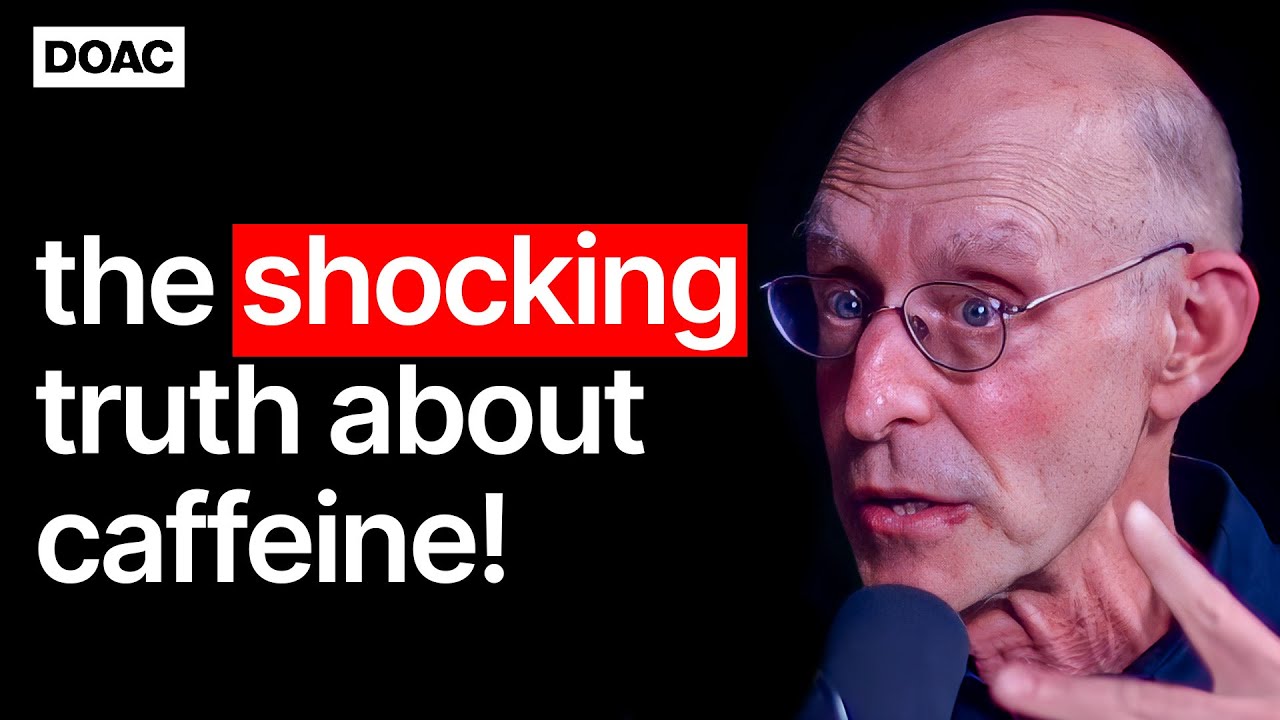
Full transcript · Read the full conversation in order, with its original context.
§01Transcript — part 1
The thing I think about most, especially when I'm on the go, but also when I'm sat here in The Diary of a CEO studio, is the Wi-Fi and internet that we have to work with.
In fact, anytime I'm filming away from the studio, one of the first things I do when I arrive is open up an app and do a speed test to see how strong the signal is.
The number of screenshots I've sent to my team about Wi-Fi signals at different locations is actually pretty crazy. It matters that much to me because it's such a competitive advantage to have fast Wi-Fi.
Because on any given day, if I'm recording, let's say hours and hours of footage with a podcast guest, I then often have to have my team send that across to our London team who then do the edit.
So fast Wi-Fi and internet is not a nice-to-have, it is absolutely business mission-critical. So when it came to finding the best provider who could supply internet and Wi-Fi to our new LA studio, we looked at every single option.
And of all the providers, the one that came back with the steadiest connection, as well as being the cheapest, was today's sponsor, Spectrum Business.
Spectrum Business keeps businesses of all sizes connected with fast, reliable internet, advanced Wi-Fi, phone, TV, and mobile services. Millions of business owners already rely on Spectrum to keep their operations connected.
So if you want to join them, head to spectrum.com/business to learn more. That's spectrum.com/business. Restrictions apply. Service not available in all areas.
Depression, anxiety, addiction—mental disorders that involve a rigidity of thought. What psychedelics appear to do is break those habits of thought.
What is the cost of this, though?
It's a great question.
One of the 100 most influential people in the world. Please welcome Michael Pollan.
You've written six New York Times bestsellers, and they're on such a diverse range of topics.
Two of the topics I've worked on have turned into movements. I was writing a piece on the meat industry and how messed up it is, and it led to this movement to try to reform agriculture. Then I got into psychedelics.
They're much better than the results for antidepressants when they came on the scene. And we're talking about potential cures, not simply symptoms. There are risks with this, and we don't talk about them nearly enough. People are going to get hurt.
One of the immersive journalistic pursuits you embarked on was this topic of caffeine.
It allows us to function better. It allows us to work harder, longer. You're feeling the clearing of the mental fog.
I can tell you the cost of doing heroin every day, but no one can seem to tell me the cost of having three cups of coffee a day.
If you really want to understand your relationship to this drug, you have to quit.
So without further ado, I'm Steven Bartlett, and this is The Diary of a CEO: USA Edition. I hope nobody's listening, but if you are, then please keep this to yourself.
Michael, I have to say it's a real huge honor to speak to you. When I departed from my company and I started investigating what I was interested in, one of the things, alongside DJing and this podcast and many others, was psychedelics.
I was so compelled by this apparent increase in mental health disorders in my country. In the UK, suicide is the single biggest killer of men under the age of 45.
And I thought the most fulfilling thing I could do with the next chapter of my life was start a company in that space. That's how I came to actually work in the psychedelics industry.
And when I arrived in that industry, people said your name over and over and over again. And they told me I had to read your book *How to Change Your Mind*. It was that much of a pivotal book for my colleagues at the time.
You've written six New York Times bestsellers, and they're on such a diverse range of topics. To be so successful in such a diverse range of topics in writing, my first question to you that I wanted to ask is, as you look back on your life and your career, why were you successful?
I think finding the right topics. I had a nose for topics that most people weren't paying attention to. I felt very lucky. I was writing in these uncompetitive spaces.
Nobody was writing about psychedelics except, the small handful of people within the psychedelic community who write these books for one another that nobody else reads.
So I remember thinking the whole time I was writing that book: where is everybody? Am I making a mistake here, investing so much in this? No one else was writing about it.
And the same was true with food. When I started writing about food and agriculture, there was very little being written. So, a willingness to go into places that other people weren't working in. I don't like writing in competitive environments. I'm not fast enough.
So that was one thing. I think there's something about the way I structure stories. So, I don't start on page one with all the answers. If you read the first page of anything I've written, I'm kind of an idiot on page one.
I've got questions; I don't have answers. And so my books are kind of detective stories, or I just tell about the process of me figuring things out. I think that readers don't like to be lectured at, and I don't do that. I take them along on the journey.
When I think about starting a business, one of the pieces of advice that I would give a young aspiring entrepreneur is to not pursue something that you're not genuinely interested in.
Oh yeah, well without question. I mean, I write about things that I'm passionate about. Curiosity is the driver.
And cultivating—curiosity doesn't necessarily come naturally to everybody. It's a muscle you have to cultivate, and you have to see the world in terms of questions rather than answers. Because questions are always more interesting than answers.
So I do cultivate that. When I see something happening, I remember when I first read a little article in the New York Times saying they were giving psilocybin to cancer patients to help them deal with their fear of death.
I'm like, "What's that about? Why would you do that? Why would you ever want to take a trip when you've got a terminal diagnosis? I don't think I would want to do that." I just had all these questions.
And the only way to answer them was to do reporting, to go interview the patients and interview the doctors and satisfy my curiosity. So without question, I can't write about things I'm not interested in.
Editors are always coming to me saying, "We'd like an article on this or a book on this," and I'm like, "I don't feel it." So yeah, you do have to care about it.
Writing a book is such a long journey with so many twists and turns. So if you don't have some deep-seated drive to understand something, to tell a story, good chance you're going to sink along the way.
And you really do go all the way. That's something that you're known for.
Well, immersion is a big part of my work. And I think that's been another key thing. I can trace the moment where I was first exposed to the kind of journalism that I think of myself as doing.
That was when I was 13. My parents gave me a book called *Paper Lion*. It was a book of sports writing about football by a writer named George Plimpton. He was a literary person but a sports writer too.
He was kind of bored with how sports writing was done then, which is that cynical, cigar-chomping guy on the sidelines with the hat who's just been there, done that, seen it all, and has no sense of wonder or excitement anymore.
And he thought there's a way to reinvent this form. And what he did was he persuaded the Detroit Lions, an American football team, to let him train with them over the summer camp and then start in an exhibition game at the beginning of the season as quarterback.
So this guy had never played professional sports at all, was not an athlete, and there he was facing this line of giant guys coming at him. And he could write about football in a way that no sports writer could, but neither could any football player.
Because they had been doing it since they were 10 or 6, and they no longer saw it freshly. It was a job. But he had this incredible sense of wonder and humor because he's a fish out of water, and it opened up all these funny narrative possibilities.
I realized that book just sat with me. I love that book. So when I started writing, I forget which book it was in—I think it was my second book—it was a book about architecture. And then I realized I couldn't write this book unless I built something myself.
So finding how to put myself in the story has been key for me. And with agriculture, I bought a cow and followed him through the food system.
Wait, you bought a cow?
I did. I was writing a piece that became a chapter in *The Omnivore's Dilemma* on the meat industry and how messed up it is, feedlots, and the drugs they give the animals.
That was my assignment from the New York Times. I was going to follow one animal through the whole system from insemination to slaughter. This was a piece called "Power Steer" that was published in the New York Times.
But along the way, one of the ranchers said, "If you really want to understand our business, you should buy one of these animals." And I thought immediately, "This is a great idea."
Because it's going to do two things: it's going to give me a character, even though it's an animal, and it's going to give me a different kind of access when I get to the feedlot and the slaughterhouse because I own this animal. I'm not just a journalist.
And so I picked out this animal, number 534, and I followed him. I met him on the ranch where he was born, and then I had a reunion with him in the feedlot where he ended up several months later.
I'm super intrigued by what happened to this cow and how you felt. Were you emotionally attached at all when it reached its end of days?
I was a little. Something happened, so I had to publish the piece before he was slaughtered. He was going to get slaughtered in June; they wanted to publish the piece in March.
I wanted to wait because I still had very good access because nobody knew I was writing an exposé on the meat industry. I was just some goofball following the life of this cow.
But when the piece came out, the slaughterhouse was like, "We're not doing business with Pollan anymore." So I was hoping to retrieve the steaks and eat them, or try to eat them, and see what I thought about it. But they wouldn't play anymore.
And it's interesting, when this piece came out, there was a whole explosion in the American media of people who wanted to save the cow because they knew he hadn't been killed yet.
I had a movie producer in Beverly Hills write and say, "I want to buy your 534." And I said, "What are you going to do with it?" He said, "I'm going to put it on my front lawn."
Saving one animal is not going to fix the food system. And everybody thought that way. There was even a telethon on a vegan radio station in New Jersey. They were raising money and they would pay me anything I wanted for this animal.
And I'm like, "This is not how you change the meat system by having this poster boy steer." And they actually likened it to the Underground Railroad, that saving one slave was worth it. I was like, "That's interesting." And so I did not sell it. And it went through the process and somebody ate it, but it wasn't me.
There's something telling about that about the human condition, where we believe that one surface-level act of apparent goodness is enough. We don't really care about the systemic resolution.
No, systems are hard to deal with. We evolved to deal with individuals and stories of individuals. And that's why this story was powerful, because it was about an individual cow. But what matters is the system.
I chose a cow because it was representative of the system. It was a very typical animal going through a typical situation. Start out on grass in South Dakota, move on to this horrible feedlot where they stand in their own manure all day and eat corn, which makes them sick and they have to take drugs.
And then they go through this slaughterhouse process, which I described even though I didn't get to witness it. But I think we have trouble dealing with systems. And so we always have the poster child. Look at all the nonprofits, how they advertise: there's one animal or there's one child that you're going to save with your donation.
That's what I was thinking of, a very recent example of that, which is the tragic death of George Floyd and how that sparked people around the world, specifically on Instagram, posting a black tile.
As a black male, I looked at that and thought, "This is like the easy thing to do." But it doesn't solve the systemic issues of race relations and discrimination. Again, the complexity of the system below it, that's might be the cause of some of these things. Does anybody really care to deal with that?
I think it's just overwhelming to people. And I don't mean it's virtue signaling—I mean, all over Berkeley where I live, people still have Black Lives Matter signs in their windows everywhere. When are they going to take them down? Are they ever going to take them down?
I understand the value of expressing that point of view, but there's so much more that needs to be done.
What does need to be done when we're thinking about rewiring systems? Is it education? Is it political?
I tend to think it's about law. I think you can't legislate morality, but you can change laws and make certain kinds of activity, like discrimination, illegal.
We're approaching it in America at the level of everyone's soul. We're trying to reform everyone's soul with anti-racism campaigns and things like that. We'll see if it works. I tend to think it doesn't work.
And one of the things that I've been very discouraged by is the collapse in support for Black Lives Matter, which had majority support after that George Floyd summer, and now it doesn't. It's been politicized.
It's been fought against by Republicans. But I also think shaming people is not the way to get them to change. And there was a lot of that. And I see a lot of this on college campuses; I see a lot of this throughout the culture.
I understand the instinct, but I think you invite a backlash. That's not the best way to get people to change, and I think in fact it can have the opposite effect.
I think from what I've observed, specifically around the issue of Black Lives Matter, that shame that I saw in the wake of George Floyd's death only resulted in this kind of apparent social compliance. Not change.
Like, "Okay, now I have to pretend to be this person." And that compliance, again, is not what we're looking for. I did a big tweet thread about how I felt white people were being shamed into either speaking out, saying something profound, or other, when really, for me, it was actually the least natural reaction to the scenes that I saw.
In that video of George Floyd's death, my reaction would be writing a tweet or posting. I even spent weeks processing it. And then I was being shamed. "Steve, why aren't you speaking up for black people?" and I just thought, you know, and all of that, again, it made me—it didn't bring me closer to waving the flags. It just made me feel kind of disillusioned by it all.
There was a lot of pressure to immediately express your solidarity with Black Lives Matter, and if you didn't, there was something wrong. I definitely saw a lot of that.
I don't know, I just think we need—our politics has to be organized around more positive emotions. I mean, make people feel really good about social change.
And I think, really concrete, I think the way we hire people needs to change, I think the way we promote people needs to change, I think there are still certain kinds of discrimination that have to be outlawed.
I mean, the biggest thing going on at the same time as Black Lives Matter is taking away the ability of African Americans to vote. Voter suppression. That is so concrete, and you need those votes in order to change things. And so while we're working on our souls, we're losing the franchise, which the civil rights movement has fought long and hard for. We're going backwards.
We started talking about the topic of immersive journalism. One of the immersive journalistic pursuits you embarked on was this topic of caffeine. Which I found really, really interesting because I believe there's a cost to everything in life, just generally, and the cost is always harder to see.
And with caffeine in the culture, specifically in business, and even I could see it taking hold in my own life, this topic of caffeine. I'm like, people never talk about the cost of it, as if it's this super drug we take, it just sends us up.
There's no free lunch.
Exactly, right? So I started thinking, with anxiety on the rise, is there a risk that this tampering with our emotional state is going to ruin the system that regulates us naturally and make us go up, okay, fine, when we take caffeine, but then the down, like every other drug like heroin and cocaine, is going to be equally destructive?
Yeah, I mean, you're talking about the law of compensation, I think is what Ralph Waldo Emerson called it. I love that. And that there's always some compensating thing. There is no free lunch.
And that was a real issue as people were trying to understand how caffeine worked, because it seemed to be a free lunch. Here was something with zero calories that gave you more energy.
Caffeine works by blocking the action of a neurotransmitter, a neuromodulator technically, called adenosine. It's a chemical that we all have in our bodies that over the course of the day, the levels rise.
And it plugs into a certain receptor in the brain that's all over the brain—I think it's other parts of the body too. And adenosine is your body's signal to slow down, get ready for sleep. It builds sleep pressure.
And what caffeine does is it fits exactly in the same receptor and hijacks it, basically blocks the adenosine from getting to that receptor. So the adenosine is still in your body, but it's not acting on your brain because it can't get into those receptors.
When the caffeine leaves your system, which takes a while to do, all that adenosine that's been building up—boom—comes in. And so you're more tired than you were before. So you have this kind of rebound exhaustion.
So you're really borrowing that energy from the future rather than creating new energy out of nothing. It's still very useful under certain circumstances. I'm not a critic of caffeine; it might be my favorite drug. And I've tried a whole bunch.
And it was immersive journalism in that, in this case, I had to stop doing something rather than doing something. So in *How to Change Your Mind*, I tried LSD and psilocybin and 5-MeO-DMT and all these things that were really scary and hard for me.
But this was harder. Giving up caffeine for three months really was a stretch. But it was a really interesting experiment and it taught me that there's a great value in giving things up temporarily just to understand your relationship to them, understand your dependence on them.
What was hardest about it?
Well, there was the withdrawal, which took a few days and was very unpleasant. I felt like kind of muzzy-headed; I felt like this veil had fallen between me and reality.
Things seemed less fresh, less immediate. I didn't have the headaches that some people report, and I didn't have the flu-like symptoms, but I didn't feel like myself.
And I was sluggish, I couldn't concentrate, I couldn't write for the first week. I just didn't have it. I said in the book, "I felt like an unsharpened pencil." I just didn't have it.
You know, it takes a certain amount of ego strength to launch into a writing project, or to launch into it every day, and I just didn't have it. And so I was like, "I don't know if I can do this for three months."
After the first week or so, I found my way back that I could work, but I still didn't feel myself. And it began to occur to me, how curious is that? Because what does that say if I feel more normal on this drug than off this drug?
Because I'm through the withdrawal period, but I came to see that my normal default consciousness was caffeinated consciousness. As it is for a great many of us. I mean, 90% of people on Earth have a daily relationship with caffeine. Whether it's in tea, coffee, soda, chocolate—it's in a lot of things.
You meet people who say, "I can't talk to you until I've had a cup of coffee. I'm not civil; I can only read the paper." People who just don't enter into social relations until they have a cup of coffee. The reason is they're going through withdrawal and they're cranky and they know it.
The amount of people, probably in this room now, there's probably 12 people in this building, and of them, I think probably 12 of them have had that drug today. With this society, as you've said, people saying "I can't function, I can't have a conversation until I've had a cup of..." What is the cost of this, though?
Because I can tell you the cost of doing heroin every day, or pretty much any other drug. Even sugar, I can tell you the cost of having huge amounts of sugar every day. But no one can seem to tell me the cost of having three cups of coffee a day.
Well, the costs—it depends on how it agrees with you. For some people on three cups a day, they get pretty jittery. And it passes over from this very positive feeling to this nervous feeling. And that's a cost.
I think the larger cost is to our identity as animals. We were designed, I think, to have rhythms as animals do, that you wake up when the sun comes up and you start going to sleep when it gets dark. And that we were tied into these natural cycles dictated by the light.
And it broke that connection. It broke that temporal connection. And so there may be some cost as a species. And we struggle with sleep. And sleep is a huge deal. You need sleep to be healthy and sane, you need it for your mental health. And coffee does damage your sleep.
Now, I put a little asterisk next to that because if you can stop drinking it after that morning cup, you're going to have very little in your system when you go to sleep. But a cup of coffee you drink at noon, a quarter of that caffeine will still be circulating at midnight. So it takes a while to get out of your system.
Most of the caffeine researchers I interviewed do not drink coffee or tea. These are people who understand sleep and the importance of sleep. And one of the benefits—I didn't mention one of the benefits of being off coffee—is I slept like a teenager. It was fantastic. I had some great sleeps.
My logical mind, when it understands how other drugs impact us and the withdrawals and how they impact our rhythms, our natural rhythms, even things like testosterone, if you take too much of it, your body stops producing it. If you take too many sleeping pills, your body struggles to sleep without them.
So I reflect on coffee and go, surely—and I'm an idiot, so don't take this as truth—surely if I have coffee every day, I'm going to struggle to self-regulate my ups and downs. And if I'm forcing my body to go up, then my body will come down even further than it would ordinarily.
Or you'll take something else to make it come down. People do get into these cycles of coffee and alcohol, or tea and alcohol. So yeah, I think there's always a cost. But I would say historically there have been—the benefits have outweighed the costs.
Compared to other drugs, I think that we've gained a lot. And there's the whole social aspect of coffee. The coffeehouse scene in London was just so vibrant, and the insurance industry at Lloyd's of London began in a coffeehouse, and the London Stock Exchange began in a coffeehouse.
English literature was changed by the rhythms of conversation in the coffeehouse. And it was this place where the classes could mix in a way they couldn't in the tavern or anywhere else.
And you can make a case, and I try to in the book, that the Enlightenment and the Age of Reason owed a lot to caffeine. So I think it had a really positive effect in that it got people who were inebriated on alcohol all the time to think clearly.
And that was a big deal. I don't think people realize how much alcohol people drank prior to 1650. It was the safest thing you could drink because the water was contaminated with disease, and people understood that. That's how you got plague, from using the wrong water pump and things like that.
Alcohol, the fermentation process and the alcohol itself, disinfected water to some extent. But not as effectively as boiling it. And coffee and tea, the first time we boiled water to drink.
So the countries that embraced coffee and tea, suddenly their public health was much improved. They had much lower rates of disease. So that was all to the good.
The American Express Corporate Program is more than a card; it’s a complete solution. Apply for the right card for your employees, from everyday spenders to frequent travelers. Issue virtual cards to suppliers or project teams for added security and flexibility. Simplify accounts payable with American Express 1AP, helping your company automate supplier payments. The American Express Corporate Card Program grows with you. Terms apply. Enrollment required and fees may apply, including an auto-renewing monthly platform access fee. Suppliers must be enrolled and located in the United States.
Paying extra for tire care is BS. You know, bad service. So at Midas, we’re rolling out our BS-Free Tire Guarantee, included with paid installation and tax on every purchase. You’ll pay nothing for flat replacements, nada for flat repairs, and zilch for tire rotations every 5,000 miles. That’s zero dollars for all that. So with this limited lifetime tire guarantee, you’ll pay a whole lot of nothing compared to what the other guys charge for tire care. That’s the BS-Free Tire Guarantee, only at Midas.
You talk about the reason why coffee is addictive anyway from a pollination perspective, which I found really—no one's ever said that before.
Yeah, so that was one of the interesting bits of research that I came across. So, like a lot of drugs that plants produce, it begins its life as a pesticide. Most of these alkaloids that we think are so great, whether it's cocaine or caffeine or—oh god, there are so many of them, they're not occurring to me right now.
Plants evolved these as chemicals that would kill insects or discourage insects from eating them. And then we found that they had interesting effects on our brains if you got the dose right.
So caffeine was designed—it kills insects at high doses. It also stops other plants from germinating nearby, so you get more habitat if your leaves contain caffeine and they drop.
But the cleverness of plants is such that some of them figured out that a really low dose of caffeine in their nectar would attract bees. And the citrus family does this reliably.
So they've repurposed this pesticide as an attractant, because you don't put pesticide in your nectar; that's where you attract insects. And it turns out bees really like caffeine. And they will go preferentially to flowers that offer them caffeine.
We don't know if they get a buzz, but they do prefer it. And it does for them what it does for us: it improves their memory. They're more likely to go back to the flower that gave them caffeine than any other flower and remember where it was.
They will also work harder, so they become better workers basically. So the plants are manipulating the bees to do their bidding. We knew that, but in a much deeper way than we understood, by essentially drugging them.
And then humans came along and just got addicted.
Yeah, yeah. But the curious thing is, why should a pesticide have these mental effects for us? And the theory I advance in the book is that if you're a plant and you're bothered by pests, the best strategy is not to kill the pest.
Because if you do that, if you just put out a lethal chemical, you're going to kill a bunch of the pests, but the resistant members—and there are always some mutations that give resistance—they're going to explode, their population will explode, and your tool will be gone. It won't work anymore.
But if you merely discombobulate your predator, your pest—confuse it, which psychedelics and other drugs do; make it lose its appetite, which most drugs do—you're much better off because it won't have this kind of selective pressure.
So I got this insight from my cat Frank, who had a real issue with catnip. I had a catnip plant in my garden and my garden was fenced. And every night when I was going out to the garden to pick something for dinner, Frank would follow me and look up at me.
And he wanted to be shown where the catnip was. And I would show him the catnip, and he would roll in it and get really stoned. And then forget where he had seen the catnip. And he had to be reminded every single day. This is an intelligent cat! "Where was that plant?" The plant had drugged him so that he would lose track of where it was.
Speaking of clever plants then, on the topic of psychedelics, which I referenced at the start: when I first heard about the concept of psychedelics, I, like you—because I've heard you talk about your initial perception of them—was terrified by the thought of losing my consciousness.
You talked about cancer anxiety in your writing and how patients with cancer—I think the last thing I'd want to do is trip if I had cancer. But also, another point that you made in a talk you gave was I saw myself as a very logical, scientific, physical person, and I thought that I couldn't be that and spiritual or whatever you want to describe it, or really anything I couldn't think or feel.
Tell me about your journey then, from going from that place to psychedelics. I know it's well-documented and the journey you've taken, but I really want to understand how your perception shifted and where it sits today as a spiritual individual.
So I did see myself as a very—materialist in my philosophy. I thought that the laws of nature we knew explained everything, and anything else was supernatural.
And I talked to a lot of people who'd done psychedelics and had this big spiritual experience. And so I was curious about it because I did say somewhere that I thought I was kind of spiritually retarded. It was a part of myself I hadn't developed.
But I did have this misconception that to be spiritual is to believe in supernatural things. And that's kind of a scientific view; scientists assume this about spiritual people.
I had a couple big experiences on psilocybin as I was researching the book—more immersive journalism. No, you know, I did—I was curious to try these things, but I also felt compelled. I think my readers expect me to do stuff that I'm writing about and not just be on the sidelines.
So I did feel some real pressure to do it. But these conversations with volunteers in these studies and individuals who'd had amazing experiences that completely changed their attitude toward death.
I mean, people who lost their fear of death after one four-hour experience on psilocybin. How does that happen? You have to be curious about that.
Psilocybin being the active ingredient in magic mushrooms.
In magic mushrooms, yeah. But in these trials, they get it in a pill form; it's kind of purified. But it's the same drug exactly. So I had a couple really interesting experiences that reset my understanding of what spiritual meant.
My experiences had to do with powerful connection to something bigger than me that I felt. Specifically for me, it was the plants in my garden.
I'm a gardener, I've been writing about plants one way or another for a long time. And I've always admired plants and I think, as we were talking about the citrus plants with the caffeine, I think they're really intelligent in a very different way than we are.
But that was kind of an intellectual conceit. I didn't feel them as conscious beings. And during this trip I did. I was in my garden and all the plants were talking to me. I mean, not literally talking to me, but they were returning my gaze, they were present, they had sentience.
And they were very benign; they liked me. I took care of them, I fertilized them. But it was a very powerful connection to nature that I hadn't felt before.
Most of us when we walk through the natural world, we sort of feel we're sort of part of nature, but we're sort of not part of nature. We're all alienated from nature. That's our human thing. And it's our human arrogance, actually.
But it's also a failure of imagination to see ourselves as animals. And but that's what we are. We're a little different, and in there are ways in which we have transcended nature, or think we have.
But anyway, I felt more one creature among many than I had ever felt in my life. I was just another creature in the garden. And it was kind of liberating. It was this wonderful feeling. It was a great moment.
So I had that experience, and then I had another experience of what people call ego death—total ego dissolution on a high-dose psilocybin, a guided psilocybin trip. It's not something you want to try on your own.
And I saw myself kind of explode in a cloud of post-it notes, blue post-it notes, and then they fell to the ground and there I was, this pool of paint on the ground. And that was me.
But I was observing it from this new perspective that was completely untroubled by what should have been a catastrophe. And it was fine, this is how things are. And then having no ego anymore, I had no walls and I just merged into this piece of music that the guide was playing, this Bach unaccompanied cello suite.
That was undescribably beautiful. But there was no subject-object relationship. I just became the music. I just joined it. It was the most profound experience of listening to music I'd ever had.
So I came out of these experiences rethinking what does spiritual mean? And I came to understand it means having a profound connection with something larger than you. It's a kind of love. It could be with the universe. I had it with the plants in my garden and this piece of music.
That sense of profound connection—that's what I think of as spiritual now. And there's nothing supernatural about it. You could say, "Well, your plants weren't really conscious." But they are sentient beings.
And we're the first culture in history that's forgotten that. Our scientific worldview has given us this incredible blind spot about the sentience all around us. Going back to Descartes, who thought that we were the only thinking creature and no other creature felt pain or had consciousness.
And most of us still sort of believe that, I think, even though we're learning that sentience goes way down. And that I just read a paper saying that insects may have consciousness. Wrap your head around that.
Jesus Christ. Well, there are a lot of ethical implications.
So my point is, though, the perception that you're surrounded by sentient beings is not supernatural. We are. And what the psychedelics are removing is this filter that's allowed us to see things in this very narrow materialist scientific worldview.
A paper was published just this week by the group at Johns Hopkins. Roland Griffiths was the author—he's the guy I was just telling you about who studies both caffeine and psilocybin.
And they did a big observational study of people who've had a psychedelic experience to see how their beliefs changed. And the thing they looked at was really interesting: they looked at attribution of consciousness to other beings.
And it went up dramatically. So people who—I think normally 13% of people think plants have some consciousness—it went up to like 58%. And that was the most dramatic gain, but everything did. People attributing consciousness to animals, to cats and dogs, to insects—it all went up.
Now you might think, "Okay, psychedelics increases your magical thinking." But they also checked: did you believe in the Loch Ness monster and a bunch of other kind of magical nature things? And they didn't. There was no change there.
But this attribution of consciousness went way up across the board. And so what does that tell us? Well, every traditional culture has believed that there are many species that are conscious, that are sentient.
And that this is something we've unlearned. And I think one way to interpret it is psychedelics unlearn the unlearning, basically, and allows us to see something that all children see and most traditional people see, which is the fact that we're not the only thinking being. So that's a spiritual question too.
I, my first real experience with a psychedelic was San Pedro, the cactus. Really interesting experience. I drank this drink with my partner and we were in Peru.
The first two, three hours, the shaman takes us to a cave because it's raining. And nothing. I'm sat there for three hours, nothing. I leave the cave and I go back out into the hills, these beautiful grassy hills with trees and everything.
And the minute I got outside, within two minutes, I was convinced—and I've said it to my team before—I was convinced that me and the plants were the same thing. And really that they were like looking at me.
I was looking at them and they were like looking at me. And it was the first time I felt like I had, as you describe it, an almost human relationship. It was like they were an audience now. They were just these tall plants and it felt like they were looking at me and trying to tell me something.
And you're right, the experience I had was I totally didn't matter in the same way that I'd mattered three hours ago. My whole sense of self-importance had gone and I was just as important as this little plant. And it was, as you described it, we were the same thing. And I was in awe of that feeling. Obviously, you don't forget the feeling, you don't forget the memory, but you almost—you lose the feeling a little bit.
You do. I think you do. I think you go back to baseline to some extent, not completely. I don't know, I find that I can return to some of those ways of thinking.
So my involvement with psychedelics led to a meditation practice. And I think psychedelics are very good for starting a meditation practice. I could never do it before that when I tried. I was just a very frustrated meditator.
But I'd had certain kind of paths of consciousness laid down during the psychedelic experience that I could get on again. Not so much the peak experience, the fireworks—that's what people end up talking about or writing about.
But a lot of the psychedelic experience is this long tail, this long denouement as you're coming down. You're regaining control over what you're thinking about, you can direct your attention here or there, yet you're not distractible. You are really in a zone.
That state is a meditative state. And having laid down those tracks, you can get back to them, I think, with work. And sometimes it's a matter of thinking about an image I saw on a psychedelic trip that helps me get there.
So I think that's one way you keep it alive. Because psychedelics aren't a practice. You just—you can't do it that often, you don't want to do it that often. It takes a toll. It's hard work.
And that's one of the reasons I think they're not habit-forming. After a big psychedelic trip, you're not saying, "When can I do it again?" You're saying, "Do I ever have to do it again?" because it's hard work and it can be overwhelming. But there is a residue that stays with you.
You talked there about people's lives turning around after a psychedelic experience. Obviously, the studies that are being done on psilocybin and many other psychedelic compounds are pretty profound when you read about them.
The impact of one dose, one trip in the right setting and setting on things like treatment-resistant depression are really like almost hard to believe.
Yeah. And I think we should take them with a grain of salt. I mean, they're very impressive results; they're much better than the results for antidepressants when they came on the scene.
Antidepressants were approved with marginal utility. I think they scored like two percentage points better than placebos. But it doesn't take a lot to get a drug approved.
Here, you're seeing substantial sustained changes in people, which is great. But it's important to understand: the early studies on any drug tend to be more positive than they are later.
Part of the reason is that the researchers are optimizing everything. They have very well-trained guides, they can exclude anyone who's too depressed or has some other problem. So they're not giving it to thousands of people; they're giving it to hundreds of people.
So I think we could expect as we get to Phase 3 and then introduction that the effects won't be quite as good as they've been. But so far, they've been like two-thirds of people in most of these trials, whether it's MDMA for trauma or psilocybin for depression or addiction, have lost their diagnosis. That's pretty extraordinary.
And we're talking about potential cures, not simply dealing with symptoms. So it's very exciting research. I think I'm a little concerned about the kind of irrational exuberance that's surrounding the space.
There's all this investment money; there's more capital than there are good ideas, I would say. That's my reading of the situation. And people are going to get hurt. So I just see a bubble here that concerns me. But there is something real here, and I just hope we can be careful about how we don't build up people's expectations, especially people with mental illness, that they think they've got a cure. It doesn't work for everybody. And some people have really hard experiences on psychedelics.
One of the questions I had—and I know that you've done a huge amount of research on this—is if psychedelics are effective even in some cases, what does that say about the causes of these mental illnesses?
It's a great question. The honest, complete answer is we don't know. But the best theory that I've come across is that if you look at the different disorders that psilocybin appears to be effective in treating—depression, anxiety, obsessive-compulsive disorder, addiction—all of these are mental disorders that involve a kind of rigidity of thought.
People stuck in loops of rumination, inflexible thinking. They have this narrative in their head that they're a bad person, that nothing is working in their life, or they have anxiety and they replay loops about what makes them anxious.
What psychedelics appear to do, what psilocybin appears to do, is break those habits of thought. It's a kind of solvent. And so that it shakes things up in a way that makes the brain more plastic, more able to learn new patterns.
Because this is essentially people stuck in old patterns. And so I think that this is probably its contribution. The most beautiful metaphor of this that I heard from a neuroscientist—he said, "Think of your mind as a hill covered in snow. And your thoughts are sleds going down the hill."
"After a while, your thoughts are going to keep getting drawn like attractors into the same grooves, and it's going to be very hard to get down the hill without falling into those grooves. Think of the psychedelic experience as a fresh snowfall, filling the grooves, allowing you to take any path you want down the hill."
So I think it has to do with habitual thinking. Rigid brains, stuck brains, brains that have too much order and need to be disordered a bit. So, you know, this all remains to be proven.
There's actually a group at Mass General at Harvard that is looking at the whole question of rumination and psychedelics and seeing if that is indeed the common denominator.
Because we think of all these diagnoses as actual real things, but they're really conventions of the psychiatry industry. And if you read the DSM, the whole encyclopedia of diagnoses, every five years they throw out a bunch, they add a bunch. They don't really know what they're doing.
§02Transcript — part 2
So I remember asking a psychiatrist, I said, "Isn't it a little weird that this same drug works on these five different things, you know, addiction and obsession?" And he said, "Well, how do you know they're different things? Maybe they're all different symptoms of the same kind of brain."
And so, I mean, if you think about it, anxiety is worry about the future, depression is really being a victim of the past, but it's a similar mental construct. And psychedelics appears to weaken it.
I had read that analogy of the hill and it really stayed with me, that hill with the snow. This idea that our trauma or whatever it might be, our past experiences, have created these grooves which we just slide down every single day over and over again. You talked previously about how that's why there might be a case for doing psychedelics later in life.
Yeah, exactly. I do feel, as life goes on, we become more creatures of habit. It's just a given. It's about learning. We learn what works. We learn the algorithms that get us through the day, get us through a fight with our spouse, get us through negotiating with our children. Whatever it is, we have these algorithms; they're handy, they work, they save us time.
And we are efficient creatures. But habits blind you to reality. You're one step removed from experience. You're saying, "Okay, that's this situation, I'm going to play this tape."
And you lose your sense of wonder. And that's so important. And awe—awe is one of the most important emotions. And as we get older, kids have this awe experience every day, every minute. It could be a cookie, it could be a walk down the street. It's just incredible.
And the reason is that it's all new to them and they haven't formed these habits. And as we get older, I think that's where the value of psychedelics is really important, because they are reliable awe inducers and they make you see things freshly.
I talk in the book about this very common psychedelic insight that love is the most important thing in the world. And we laugh and it sounds like a Hallmark card and such a cliché. But what is a cliché? It's just a truth that's been overused.
And we protect ourselves with this sense of irony and banality. But love is the most important thing in the world. So there's truth to that. And that the line between banality and profundity is very fine.
And so, you're always hearing people who have psychedelic experiences and they come to you with this revelation of the obvious. But we need to be reminded of the obvious.
Do you think there's another way to remain fresh in the mind other than needing to do a psychedelic trip? Because I even relate—I'm 29, but I relate to me getting stuck in the same patterns of thought which can divulge into like a bitterness or, you know, some of my patterns and habits result in happiness and fulfillment and feelings of contentment, and then others can result in like bitterness and resentment and other negative things. So I'd love to be able to do some fresh fall of snow on some of those without using psychedelics.
Yes, I know, I know. And without using psychedelics. I mean, learning something new, doing something new is incredibly revitalizing. Travel is. I mean, think of how when you travel somewhere, you're in a new country, you've never been there, all your algorithms fail.
The menu is full of unexpected things. Walking down the street, you don't see the same brand names you see everywhere. So your senses are really working hard because you're taking in lots of new information. That's why it's so exhausting, but it's so wonderful too.
So I think travel is one thing. I think learning a new skill. For me, that's really important. It's what I love about journalism. I get paid as an adult to learn whole new fields. I'm getting paid now to learn about neuroscience and consciousness.
It's so great. But some jobs don't allow you to do that. That is in the nature of journalism; it's in the nature of what you do—you get to talk to anybody you want.
Before I asked the question, I was thinking if I was to answer it myself, it's this. Because when I walk away from these conversations, it's almost like sometimes a psychedelic trip, or just a real shaking of what I thought to be true.
Oh, I get that after I do an interview. I came from an interview with this neuroscientist and it was like so exciting, like to think about things I hadn't thought about things that way.
So I think putting yourself in situations where there's a lot of new information and you're out of your comfort zone. The comfort zone is the problem, right? And if you can put yourself in a situation and learn and also—we tend to gravitate to what we do well. We get rewarded for that. But try working on something you don't do well.
I was just thinking then about how when people get older, they tend to go on holidays to the same places. When they're young, they go to somewhere new. They don't want to repeat themselves.
No, it's true. And so I found this, at this phase of life, the psychedelic experience was really valuable for that reason—that it did cause me to rethink things, have new perspectives, and have this wonderful feeling of awe.
And be reminded of these things: how much I love plants, how much I love love, relationships. I mean, the sense of gratitude that—this is a very common emotion for me in a psychedelic trip—is gratitude for my parents and my son and my wife.
We don't spend nearly enough time expressing gratitude for what we have. We take it for granted. And undermining the "taken for granted," I think, is the most important thing that they do.
Breathwork—something I've heard you talk about as well.
Yeah, so breathwork is a non-pharmacological mode of changing consciousness. It was developed by Stan Grof, a Czech psychiatrist who worked in the States for many years.
When LSD was banned in 1970, he was having such good luck with it and really believed that there were these new superhighways to the unconscious that he wanted to figure out another way to induce this state.
And so he studied yogic breathing and all these other traditional cultures that had these trance-induced trances. And it's a pattern of breathing that you do, accompanied by usually rhythmic drumming, that for I think about two-thirds of people will put you in a trance state that's very much like a psychedelic state.
It was really eerie how it works. You basically find yourself losing control of your limbs. It's very physical, yeah. You're on your back and you're dancing and you're breathing this very unnatural pattern of a strong exhalation, stronger exhalation than inhalation, very fast.
I think you're hyperventilating. I think that's what you're doing. And I think that that probably is—we don't know this yet—but that probably is reducing blood flow to the brain or oxygen to the brain.
And one of the curious things about psychedelics is not that they're increasing brain function, but they're decreasing it in certain important areas, including something called the default mode network.
Which is a center of the brain that's a very important control center of the brain that is involved with your sense of self, time travel into the past and into the future, the narrative self, the story you tell yourself about your life, how you fit everything into the story of who you are.
If the ego had an address, it would be the default mode network. It may be that starving that of oxygen gets a similar effect that psychedelics do. But psychedelics—that's one of the mysteries, is like we think of all this extra consciousness we get from psychedelics or expanded consciousness, but it may be that it's closing down certain things, which allow other things to happen.
I did breathwork with my partner, my girlfriend in Bali. She's training as a breathwork practitioner. Walked in super skeptical. This guy starts telling me a bunch of reasons why it's going to, you know, the sort of physiological reasons why it works. It was about 13 minutes, 20 minute session.
Ten minutes in, I didn't even notice—I only noticed on photos after—that I was laying on my back, but my hands were in the air. And I did not put my hands there. It's involuntary. And they were in the air for 15 minutes and it didn't hurt my muscles.
And the other thing was I went to this strange emotional place where I felt huge amounts of gratitude for certain people in my life. And I actually felt the need to apologize for recent behavior that I'd carried out. It just—it was a very emotional experience, as it is for I know a lot of people.
But it just really compelled me, the thought that doing something with my breathing could have such a profound impact. And then it got me thinking about my day-to-day breathing, which is part of the education about how we breathe so shallowly.
And especially when I'm anxious, if I'm ever anxious and I think about it, I'm breathing 20% of what I usually breathe. So one of my ways now of, if I do feel anxious, of counteracting that from that breathwork session is taking seven-second inhalation, holding it, and then seven-second out. And honestly, doing that for 20 seconds or 30 seconds completely seems to flush out any feelings of anxiousness.
There's a bunch of really interesting breathing exercises. There's one that Andrew Weil does called 4-3-7, 4-3-8, and it involves a certain amount of inhalation, hold your breath, and then exhale for longer than you inhaled.
And it's remarkable. I've done it before going on stage and things like that. It just lowers your stress level very quickly. I'm guessing it lowers your blood pressure. There's a lot we don't know about breath. I mean, breath is amazing, and I think you can do a lot to fiddle with your consciousness using breath.
It's genuinely of all the things that people have prescribed or told me, the simplest thing that I've implemented in my own life when in situations where I'm feeling stressed before going on stage as well, before my tour I used to do it in the green room, or when I'm feeling anxious or divulging into sort of overthinking, is just focusing on my breath.
My next question to you, my last question really, is about what's next for you. As a tremendously successful author that's written about such a diverse range of topics, I think the first question when you walked in the door was "What are you writing about next?"
I don't know what I'm going to do for this topic. So, I'm researching consciousness. The science and philosophy and literature of consciousness.
One of the things that psychedelics does is raise questions about consciousness. I talked to you at the beginning about how questions are more interesting than answers. It's kind of amazing that we're conscious.
We could do all this stuff automatically, but we're not. We have this space in our heads where we see things, we assume other people have consciousness too but we can't be sure. And how does three pounds of tofu between your ears produce an experience of subjectivity, of quality? It's one of the greatest mysteries left.
So I'm going to explore all of it and see where it takes me. Again, I don't know where I'm going, but that's the exciting part of writing.
You know you said at the start that your job is to answer questions. What is the question that you're trying to answer in your next project? Is it just what consciousness is?
Yeah, what consciousness is. There are a couple questions under that, though: why do we have it? What do we need it for? What does it allow us to do? Who else has it?
Do the insects have consciousness? Do the plants have consciousness? There are people who believe plants are conscious. Are they? How do you define consciousness? There are so many subsidiary questions you have to answer to get to the bottom of it.
And I think it has a lot of—this question of who else has consciousness—has a lot of political or environmental implications. I think that one of the reasons we got into such trouble with the environment is the scientific worldview, for all its power, has blinded us to the interests of other creatures.
One of the—you look at Native American culture and there's this sense that everything is alive, everything has a spirit to it. That keeps you from doing something to certain things to those others, right? That you're violating spirits.
We don't have that feeling. Our worldview allows us to see nature as something for us to exploit, rather than as our relatives, as Native Americans would describe it. So getting consciousness right means getting a lot of things right. Wish me good luck!
No idea, but I'm sure you're going to do an unbelievable job on that because you always have on your work and all the books you've written take a different approach. And I think that, yeah, you highlighted how that starts from a place of naivety and curiosity.
I'm definitely naive. I mean, because I have to learn neuroscience for this, a lot of it, and that's a struggle for me. And some of these theories are really mathematical, and that's really a struggle for me. But you know, that's the job—is finding the good explainers who can help me explain it and make it—I get a lot of satisfaction from taking a subject that people think might be very dry and difficult and helping people make sense of it.
You know that there's a tradition on this podcast where the previous guest writes a question for the next guest. They don't know who they're writing it for. The question is: as you've juggled your life-work relationships, friendships, and self-time, what things have been key to building your resilience?
Doing new things. Including taking psychedelics, which has definitely affected me and contributed to my resilience. But I think it's seeking out new projects and doing things that break you out of habitual ways of thinking and responding to things.
Habit is wonderful, it's very efficient, but it's deadening too. So I'm often thinking—and I am a creature of habit; I have like a whole routine every day to get myself to the desk to write—but breaking it is—I think breaking habits, I would say, would be an important one.
You've spoken to that throughout this conversation, so that's a beautiful ending, this idea of leaving your comfort zones as well. Thank you, thank you for all the work you're doing. It's really inspiring to me that an author could be so powerful and I hope we can have another conversation again once your book about consciousness is out because I'm sure it'll be equally inspired.
I'll look forward to that. It's been a great pleasure talking to you. Thank you, Steven.
Thank you, Michael. Thank you.