
David Gandy: Highest Paid Male Model Opens Up About Insecurities & Imposter Syndrome
Guests: David
Full transcript · Read the full conversation in order, with its original context.
§01Transcript — part 1
The thing I think about most, especially when I'm on the go but also when I'm sat here in The Diary of a CEO studio, is the Wi-Fi and internet that we have to work with. In fact, anytime I'm filming away from the studio, one of the first things I do when I arrive is open up an app and do a speed test to see how strong the signal is.
And the number of screenshots I've sent to my team about Wi-Fi signals at different locations is actually pretty crazy. It matters that much to me because it's such a competitive advantage to have fast Wi-Fi. Because on any given day, if I'm recording, let's say, hours and hours of footage with a podcast guest, I then often have to have my team send that across to our London team, who then do the edit.
So fast Wi-Fi and internet is not a "nice to have," it is absolutely business mission-critical. So when it came to finding the best provider who could supply internet and Wi-Fi to our new LA studio, which I'm sat in right now, we looked at every single option.
And of all the providers, the one that came back with the steadiest connection, as well as being the cheapest, was today's sponsor, Spectrum Business. Spectrum Business keeps businesses of all sizes connected with fast, reliable internet, advanced Wi-Fi, phone, TV, and mobile services.
Millions of business owners already rely on Spectrum to keep their operations connected. So if you want to join them, head to Spectrum.com/business to learn more. That's Spectrum.com/business. Restrictions apply. Service not available in all areas.
Everything that people said, "Well, you're lucky to work with Dolce & Gabbana," and I can say that wasn't luck. It was strategy.
What's that imposter voice saying is going to be found out?
Good question, I suppose.
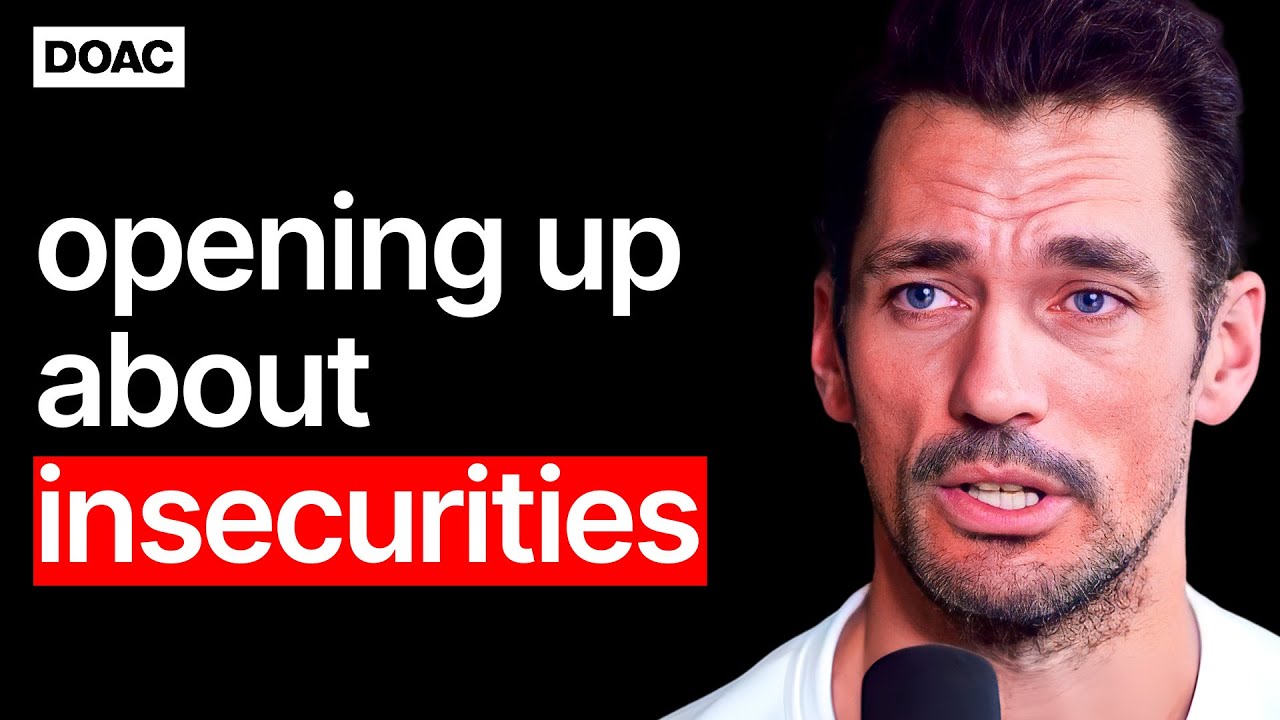
Do you have insecurities?
Yeah, of course I do.
Has that ever had an impact on you?
I never believed my own hype. It's very easy once you see yourself in articles and winning awards and everyone's telling you how amazing you are, but I suppose I never really did. I didn't fit in particularly well, and I've seen the extremities of mental health. Me, myself, going into dark periods where nothing would suffice, nothing would cheer you up. If you haven't got a thick skin, you shouldn't be in this game.
David Gandy. At one point, he was one of the highest-paid male models in the entire world. A beautiful, beautiful man. And so hearing that, and seeing how beautiful he is, would understandably make you assume a lot of things about him. But what you're going to hear today is that those things are wrong, and that you should never judge a book by its cover.
How is it possible that someone that looks like David Gandy can describe themselves as having imposter syndrome, being low in confidence, and waiting to be found out? He's now become an entrepreneur. He's focused on launching his brand new brand, David Gandy Wellwear, and he's taking on a completely different industry.
It's crazy because when you open people's diaries, you never know what you'll find. And what I found in David's today was truly fascinating, unexpected, vulnerable, and extremely, surprisingly relatable. So without further ado, I'm Steven Bartlett, and this is The Diary of a CEO. I hope nobody's listening, but if you are, then please keep this to yourself.
There's a lot of very beautiful people in the world, right? But they don't manage to achieve what you've achieved across multiple disciplines, whether it's within your modeling career, which is an incredibly competitive space to play in and one shrouded with huge amounts of uncertainty, or whether it's now in business with what you're doing with your brands there and your investments.
So my question is, what is it about you in your own self-diagnosis that has made you rise to the top in those pursuits? And also, where did it come from?
The easiest one to say is probably the modeling one to start off with. And that was, I questioned why men weren't in the same position as the female supermodels. And you had the equivalent of the male supermodels at the time, and you always have that, but they were never to that level of fame, of financial rewards, as the female supermodels.
And I questioned it. That was all. And thought, is there a possibility? Is there almost, I suppose, a gap in the market? The first five years, no one actually realizes that I really didn't do that much for the first five or six years. It was a lot of catalog work, earning really good money. It wasn't what I wanted to do.
But I got to work with the likes of Christy Turlington, Naomi Campbell, and those people. I literally just observed them and asked them questions and got the answers that I wanted. I realized that it was a business for them. They had great teams, they had great agencies, they had PRs and PAs. It was run as a business.
And then you had the guys who were at the top of the fashion at the time—it wasn't a business for them. It was a lovely way of making a living, and they felt very fortunate to be there. Some of the time, not even admitting that they were models—they were in advertising or marketing, as a lot of people used to say.
And I just used the female platform. I went to the head of my agency, Tandy Anderson, and said, "I don't want to do this commercial work anymore. It doesn't satisfy me." She said, "What do you want to do?" I said, "If I'm going to do this, I want to be the best at it."
She said, "Right, literally from tomorrow, you have to stop all that commercial work because we have to—you have to be perceived then in a total different light to get to where you want to be." So every bit of that work—and I said we were earning very good money—I just quit everything. We just said no to all the campaigns, no to all the catalogs.
And she said to me, like, in a position where you've got—that's what most models are dreaming of, earning what—not dreaming of, but they see yours as an enviable position. I said, "Tandy, it's just not what I want to do. I'm not happy doing it." So to me, I had nothing to lose because I wouldn't have carried on.
So we then started building up this other perception of me within the fashion industry. Not the catalog model, not the commercial model, but editorial, a bit more fashion-based. And that's when we instigated a meeting with Dolce & Gabbana. And that's how I did their campaign. The campaign led to Light Blue.
Light Blue is to me a tick in the box for then to achieve what I wanted to achieve. And it was a phenomenal success, and it still is. But that was the platform. Pretty much from there, then we could put the team together to say, where do we want to be in three years? What's the next three years after that?
I'm a big believer in having goals. Not always having to achieve them—things change—but I'm a big believer in having goals so you know roughly where you want to end up at something. And then life is like a game of chess, and you're moving pieces to get to that checkmate of where you want to be. And often it diverts and you have to have different tactics, but you have to have that ambition to know the exact point to where you want to be.
What role do you think luck has played? As you view your journey in hindsight, what role—and you know, especially very successful people will always have a kind of different relationship with luck—but what role do you think luck has played in your journey?
It annoys me if someone says, "Oh, you're very lucky." And I feel like I have to go on this statement and go, "Hang on, let me just tell you about the—you haven't seen the hard work that's gone in that." And I realize that sort of gets you nowhere. So listen, I was fortunate to be born like I am, 6'2" and with the frame I have, with the way I look.
And people perceive that the way they do, and you can make money from that. Hugely fortunate. But as you said before, there are a lot of good-looking people, there are a lot of beautiful people. I've admitted myself, I go into my agency, there are 25 better-looking guys on that board.
There are 50 better models. I've just cast 10 of them for my brand. They were better models than me; they're better spokespeople than me. I was fortunate to be in that position, but then you make your own luck. Everything that people said, "Well, you were lucky to work with Dolce & Gabbana," and I can say, "Well, let me tell you the story of how we went to meet Dolce & Gabbana, how we instigated that. That wasn't luck. It was strategy."
And it was not my idea at the time. Everyone's going, "You are Armani, you are Ralph Lauren," and it was Tandy Anderson who said, "You are Dolce & Gabbana, you are Dolce & Gabbana. Don't listen to anyone else, you are Dolce." And it was her genius that sort of instigated this meeting with them.
And then through that and working with Tandy and working with Select, everything we've achieved is strategy. What do you want to achieve? What's your goal? And it just doesn't just happen. Yes, there's certain opportunities that come around that people approach you. But we approach a lot of people with our ideas and we approach a lot of people—we would love to do this. M&S, it was us who wanted to do that collaboration.
And I wanted to do it with one of the biggest, British institutions everyone knows and everyone has a great thing. I wanted to do it with M&S. We had lots of different brands approach us. We didn't want to do that. We wanted to do it with M&S. And that, again, led—we didn't start off by just doing a collaboration and a huge deal.
It was, I had to model for two years with them. Prove that I could sell, prove that I could work with M&S. Then we talk about collaboration, then we would move on and they trusted me. But it's not a finger click.
It's because the way that luck—those moments, the amazing collaboration, that amazing email that comes out of nowhere—in hindsight, because it appears to have come out of nowhere, it always appears in hindsight like luck.
And I've got my own examples from my story where when I was 18, 19 years old, I went on LinkedIn and typed in "investor." The first person that came up, I emailed him and he invested in my company. So people think, you know, they say you got lucky, right? And I'm like, well, again, it's to what you said about the story. Well, look at the email. It was sent at 3:00 AM.
And I show on stage, I'm like, I then removed the timestamp and I'm like, I was up at 3:00 AM thinking about emailing people. So for me, action and what you described there is like that smart strategic work is just increasing probability that you might get what people call luck.
In that moment with Dolce & Gabbana, when you formed that partnership with them, how pivotal was that for you and the trajectory of your career in real terms?
Light Blue is the reason I'm here, the famous commercial. But again, you could look back to that when I came into modeling. The circle of the fashion world at that stage of what was perceived as fashionable was the small, androgynous, skinny guy. Now, I am over 6'2". I was quite skinny when I came in, but I built up and I just got bigger.
And everyone else said, "You need to get smaller. You need to fit in. You're too big. You're getting too big." But that's where I was happiest. I wasn't doing it for modeling. I was always playing sport. I wanted to continue. I couldn't play sport anymore, so I was in the gym. And it was to have a good physique and be healthy—was the way I was happiest in my head, in my wellbeing.
So that's what I did. And in a way, I just looked at the models like Tyson Beckford and Tyson Ballou and Paul Sculfor and all these different people that were the Levi's guys, the famous Levi's ads that we used to look at, and the Ralph Lauren guys. They were all big, muscular, classically handsome guys and they were the biggest in the industry.
So I just thought this has got to come round at one point. So when it actually came round to that creative for Light Blue, of course, there was a smaller pool because everyone had followed each other. And then there was me and we'd just done the campaign with Dolce & Gabbana and then we went to go and do Light Blue. But that, the day it came out, it just changed everything. I mean, literally changed everything.
It went from that campaign going out in the afternoon—phone not stopping. And I think I went to New York and my agency just called up and just said, we've got The Telegraph, The Times, The Mirror, they all want to speak to you, they all want to have an interview with you.
And we didn't have PRs at that point. This was, I was like, okay, how does this work? Very green about it all, but exciting. So that changed.
So you're talking there about lifestyle. How did your lifestyle change? And I want to know about like how people treated you, and friends, and you know, romantic potential partners. When that blows up for you and the phone doesn't stop ringing, how does your world shift from a very personal perspective?
Friends have never changed. Great. We're still all on WhatsApp groups and see each other. I don't see them as much; they all live closer together, and that's a shame really, but it's just never changed. I get the absolute roasting all the time. I'm just an easy target. You can just Google my name and there are so many pictures that get put up.
And that's it, it keeps you—and I love that. No one takes themselves too seriously. And I think hopefully that's what I didn't do too much as I always said to people, if models ever come up to me now and say, "What made you different?" or "What did you learn?" I said I never believed my own hype. It's very easy once you see yourself in articles and winning awards and everyone's telling you how amazing you are, to believe that. But I suppose I never really did.
Do you have imposter syndrome?
Yes. Yeah, yeah, of course. Absolutely.
And what does that mean in practical terms in your mind and your thoughts?
You're always waiting to be found out, I think at the end of the day. You're always waiting for people to go, "Okay, come on. You've had a really good innings."
You're 15 years in. You're still thinking about being found out.
Well, 20 years in, you're still thinking that today, to be found out. But you do that by putting yourself at risk at something as well. Like, I suppose there is the risk and reward. So everything I do, there has to be a slight risk. Otherwise, it's not sort of worth me doing it. So there's always got to be that risk of failure in many ways.
And I don't mind failure. I've learned more from failure than I have from success, to be honest. And that risk element of, you know, Vanity Fair asking me to write an article. I mean, I'm not a writer. To do that is scary. But I won't have anyone write it for me. I have to do it. We're going back to that integrity thing.
I have to do it. That goes for the fashion game too—collaborating with brands, to investing, as you know, it's a risk. There's an element of risk that I take into everything. And I suppose it makes life exciting.
What do you think when you say "be found out"? What's going to be found out? What's that imposter voice saying is going to be found out?
Good question, I suppose. Have you bitten off too much than you can chew? But no one can be as harsh a critic to me as I am myself. I will beat myself up if something fails; I will beat myself up if I don't do the best job. So no one can affect me like that by actually saying anything, because I'm my own worst critic.
Just a whisper of doubt, I guess. That maybe—the way that I typically think about imposter syndrome or at least I've seen it in my business, there's a couple of like top-level execs in my business that talk about imposter syndrome a lot. And it sounds like exactly what you've described there, like biting off more than you can chew. And are you really capable and experienced enough to be at this level doing this thing? Do you really have the skills? There's other people that are smarter and better and that have won more awards or are more experienced. Something like that.
There's also the side that, and it's not about money, it's about success. There's a lot of people that actually don't particularly want other people to do well.
Most people.
They will try to bring you down in many ways and put doubts in your mind. You know, it's like the backhanded complimentizer, as I always sort of call it. It's hard for someone. And I've learned that from other people's comments and what they've said to me, and I'd make sure I never ever do that. And always just encourage people and if I can help, I will help them.
And that's probably where my investments have come from in many ways. I've had this opportunity and I haven't borrowed a penny in my life to get to where I was. When I first went to New York for modeling, I used to go around and couldn't afford to eat in nice places. So every time I'd go on castings, I was walking around all day and going to shoots.
I would then go past a diner and they would have a special deal on—it would be like a burger, fries, and something else for $5.95. And I would write it down and go, "I've got to remember to come back here because it's $5.95 plus taxes." That's the way I used to have to think because I just didn't have anything.
Then I've always wanted to—then I think I never really had any help, but I would like to help people.
Talking about helping them, helping people and then other people tearing people down. With female models, I think we can all quite easily believe how nasty comments would affect them. But there's something in the public perception or within society where we think, oh, if you slag off a male model, if you criticize them, say nasty things about them, they'll be fine.
If you go on Twitter, for example, it's totally okay just to—people will tweet at Piers Morgan all day saying "you're a fat blah blah blah." But people would never do that to—well, they would, but it would be considered much differently if they were saying that to a woman. I believe that to be true. So I guess my ultimate question here is, have strangers criticizing, saying nasty things on the internet about you, how you look or whatever, has that ever had an impact on you?
In this business anyway, if you haven't got a thick skin, you shouldn't be in this game. You've got to have a thick skin. And it's what I understood—and I've probably only actually understood this from having to cast myself for people to represent my brand—is that you're not being horrible to someone; someone doesn't fit what you have perceived in your head.
And that could be for any reason whatsoever. The attitude you bring into it, the charisma you come into that day on that casting, the way you look—and it could be anything. That person's too skinny, that person's too tall, that person's not big enough. You know, anything.
And you have to realize that when you were casting, they weren't—it wasn't personal. It was almost business. No, you just don't fit the creative that we want at the moment. That changes when you have a name, that changes when you have a brand, because they're buying into your brand, they're buying into your engagement, your fans.
That's different, but when they first look at you at face value, and there's different people, you know, there's been castings where they're on the phone, they don't say anything to you, you put the book down, they go through two pages and they hand it back to you.
Really?
Now, that is a bit demoralizing. But hey, you know, like I've always made sure—I almost overcompensate that because I've been on the other side of casting, casting other people—is I probably keep them there for too long and just chat and everything else.
What about internet trolls though? Like someone on Instagram or in the DMs just, you post something and they just...
No. I'm very fortunate that my fanbase, which is a very organic fanbase actually on social, are massively kind and positive. And that's the way I've always pushed social. I'm not a big lover of social media. I've stated it before: I see the use of it, I see the brilliance of it. I also see the negativity from it, especially for young children. I've spoken out about that.
Yes, does thing affect? Yeah, of course. You'll probably know this is, you might see a hundred comments all positive, and then 101 comment, 102 comment is negative. And you'll remember it. You'll remember those two comments. You can't remember the other hundred that are positive. And it's a really weird thing. So it's a bit like dealing with people. You deal with the nice ones; you don't deal with the negativity. And that's what we've tried to do really.
And again, another sort of social, I guess, not maybe stereotype, but sort of misunderstanding would be that someone that makes their career out of modeling, someone that's very attractive like yourself, surely they can't have insecurities. Surely they realize that they are—surely they can't have self-doubts like us muggles who GQ are yet to call.
Doesn't everyone have insecurities? I can't believe that there's not a person that doesn't have insecurities.
Do you have insecurities?
Yeah, of course I do. Absolutely.
Physical insecurities?
Mm-hmm, of course they do. Mm-hmm. I heard you said something about your ears, your nose... My nose, my ears got any bigger—which they do, they're the only things that keep growing—I'll just look like the BFG soon. Also, I think something that going back to the trolling and Instagram that is this thing about age now.
Age is used as a weapon. "You're so old," "Look at all your wrinkles." It actually sort of makes me laugh when people say, "My god, you look..." And most people have positive comments, but they can say, "Oh, you're getting older." Yeah, everyone is.
I've been in this game for 20 years. If you're comparing an image from 20 years ago, I'm not going to look the same. But it's almost like it's a negative thing. You know, and that I've noticed that increasing over the last couple of years is this "aged" thing is used as a weapon as if it's a bad thing.
Does that bother you?
No. I always feel I've always been quite an old man in a young man's body anyway. So—well, I say mature. But no, you grow old at the end of the day. You grow a little bit wiser, you calm down a little bit more, and you accept yourself for who you are a little bit more as well.
20s and 30s—30s less, but 20s can be quite tricky for everyone. Don't quite know who you are, you're trying to be, trying to find out where you are in the world. You then, I think, you get a bit more confidence in your 30s. And that's where my 30s sort of came from. Why are you trying to be something else, or trying to fit in?
And I never fit in. I've never fitted in ever, anywhere, really particularly well. Or felt I haven't particularly fitted in. You know, in the fashion industry, I've never felt I fitted in. I was telling a model the other day actually we were working with, and we all used to go off to New York for these big casting two weeks.
Try to get the jobs for the big agencies. And you would go in a group of probably about 10 guys. And you'd have a list. Back in those days, you would have a fax, believe it or not. We didn't have mobile phones; it was a fax. So got your fax in the morning, you had all your appointments: 9:00, 10:00, 11:00, 12:00, blah blah, all the way through.
Everyone used to go down to the subway or walk and we'll go together. And there was this very pack mentality. And I was never into that pack mentality; I was always a much more individual, sort of loner. So I used to look at the fax and I used to let them go around the corner, and I would virtually turn it upside down and do the opposite way.
So those nine guys would go to the 9:00, and I would go to the 6:00. And I would just turn up at the office and go, "Hi, I know I was supposed to be here at 9:00, but is John someone in?" "Yeah, he's here." And I'd go, "Can I see him?"
You take the opportunity where you've got—imagine going through seeing nine guys, speaking to nine guys. By the third person, you're like, I'm they're going to be bored. And you take the opportunity. So I did that all the way around. And that's what I did kind of all the time. It was thinking constantly of, like, outside the box, of doing something different.
It's amazing how those small things can create such significant—like such a marginal thing can create such a big gain. And most people are obviously—they don't even try and think outside of the script. And so they end up, you know, competing in a very saturated way for a limited amount of rewards. But one slight innovation in the process, I think, can deliver such an exponential return.
When your cat is acting weirder, or your dog is being louder, your turtle moves slower. Hello, Ted! Your cat seems thirstier. Whoa, slow down, buddy! Or your puppy is acting clumsier. Day or night, if you don't know what's wrong, know where to go. Veg ER for pets, this is Kate. Veg, the better, kinder ER for pets.
When your cat is acting weirder, or your dog is being louder, your turtle moves slower. Hello, Ted! Your cat seems thirstier. Whoa, slow down, buddy! Or your puppy is acting clumsier. Day or night, if you don't know what's wrong, know where to go. Veg ER for pets, this is Kate. Veg, the better, kinder ER for pets.
In the industry of modeling, one thing that I think is probably—I don't have any data to support this claim—but I think is probably rife because of the nature of the business and what I know about the subject of mental health and mental wellbeing, is anxiety. And I just—I've just seen amongst my friends, the women that I know that model, high levels of anxiety for a variety of reasons. Have you ever suffered with anxiety yourself at any point in your career?
I'm naturally a shy person, but shyness is not anxiety. So I can't say—I mean, if I probably gave someone symptoms of stuff I've had or things that happened, they might say, "Well, that's anxiety."
My anxiety, if I still think of—now there's a weird thing of when I hear the music to the Antiques Roadshow on a Sunday night, I still have anxiety that I haven't done my homework. And I have to go to school next day. That's how much I hated—didn't hate, I hated school up to a certain point. Sixth form was great with my friends that I still have, but that was the point of—I still have that today when I hear that music. I literally stop and I'm like, oh, you know, oh, I don't have to go to school tomorrow.
What was so bad about school?
I mean, I was—I didn't fit in at school. That was basically it. It wasn't—I had all good friends from that school. But it was just a certain time before I kind of met those people, the group of guys I used to hang around with. And there was bullying, and I just didn't fit in. That was all it was.
So you were bullied in school? Primary school or secondary school?
Secondary school, yeah. Primary was—primary was quite fun. Enjoyed primary school. Secondary school was just something different. Maybe went to the wrong school, maybe made the wrong choices. It was me, it wasn't— I'm not blaming anyone, I'm not blaming anything.
It was just and I was quite steadfast on not fitting in. I didn't fit in particularly well, and I wasn't going to change my way of fitting into everyone else.
In what way didn't you fit in?
I just—a bit like the same now, I'm still like it. In the fashion industry, that example of not being in that group, not being that pack, not doing the same thing everyone does. Exactly the same thing. I didn't want to be in that, I saw things differently and wanted to do things my way. I mean, that's it.
At the end of the day, maybe it was doing something my way. And I've always looked at that. That goes on for—that can go into, if you look, go into styling. Well, no one's wearing suits, so I'm going to wear suits then. Well, no one's—you know, why don't you do this? It's like, you know, people still take the Mickey out of me because I do not own a pair of sneakers or trainers.
And people like now, everyone, that's all they're wearing. I have one pair and I go to the gym in them, and I have a running pair. But and everyone sort of looks at you as if—but I love that fact, you know, it's just me being a little bit different. But it can also lead to, you know, being a little bit stubborn that you take that to a little bit far of not ever relinquishing that. You want to be sort of different all the time.
Was that bullying because of physical things? They were saying that you were physically different, or the way you thought?
Maybe it was the way I thought, if you think about that now, yeah. It's just because in I do find this still now in the world that everyone likes to pigeonhole. Everyone likes to, you are put in a certain category, person.
And if you don't fit in, then you're strange. You're a strange person. Why don't you like the same stuff? Why don't you wear the same stuff as us? Why don't you think the same way that we think? And of course, it's now got to like very polarized where when you have different opinions, they attack each other now.
It's like you see the left or right. There's nowhere in the middle. And it was I think that element that I've always just I suppose I've been quite an individual thinker in some ways. And that's might have put me in good stead for the business we're in.
But yeah, the anxiety thing, maybe it's a confidence thing. Again, when I was confident in to going something, I was absolutely fine. I just wanted an opportunity. That was always what I want, to be able to—you know, people say, why have you not gone into acting? Why have you not— it's because I'm not confident.
If there's anxiety, give me a script to learn and try and put me, you know, in front of a camera and you'll see that's when I'll probably be anxiety. Although I've done that, and I achieved it, and I quite loved it. So it was a scary side of it, but it's not something I naturally good at.
Isn't it, you know, people would—people again talking about naivety, right? People would never guess that you would say you weren't confident. And it's almost like the conversation I had with Ben Fogle. You would just it's just not what you would expect based on like stereotypes. One would expect you to be an extrovert, you know, super confident, some kind of, you know, very loud, you know, braggadocious, boisterous guy, but you appear to be the opposite of that. And especially on the point of confidence.
Yeah, I mean, I wouldn't say I've got a lack of confidence. There's a lack of confidence where I think I know my limitations maybe. But I also like pushing those limitations to see where I can get to and see what I can achieve and learn.
But the confidence, I mean—GQ Awards we went to two weeks ago. And you turn up, you're on the red carpet, done it a million times before. There's still dread filled in me, like I'm filled with dread to getting on that red carpet and having the pictures taken, because it's just not a natural environment for me.
And I was thrilled that there was a, you know, hugely long queue because everyone wanted to be on the red carpet, everyone wanted their picture taken, everyone wanted to be in the papers and put it on their Instagrams. And I went too long, I'm not, you know, I'm going to swerve that one.
So I swerved it and went upstairs and went into an environment where I was much happier where actually I needed to speak to a few certain people for a few certain reasons and went to go and hunt them down and go and speak to them.
What was the sort of psychological discomfort you you feel when you think about going on the red carpet and doing that? Because you described going upstairs to a place where you were happier. So what's the unhappiness of the red carpet for you?
It's just an unnatural environment for me to be in. When you're on set, when you're employed by a brand to create what is in who is in their vision, you're playing a role.
Light Blue, I'm a Mediterranean guy in Italy in small white Speedos. It's not me. It is me, but it's it's there's a role you're playing. And I know there's actors as well. I've spoken to them where they love being in character. Behind those characters, they don't want the limelight, they don't want fame, they don't want to speak to anyone, they don't want to do press junkets, they they hate the red carpet.
Exactly the same. So when you're on set, you're almost playing someone else. And there's an element as well of there is this David Gandy. And I talk about it in the third person because that's the brand sometimes I have to talk about, that's the name. So you yes, you are walking onto a set almost being something else.
Not that I'm acting any bit different. But and then there is and the red carpet is just not that environment I can probably hide behind a character or hide behind a role or something, or what I'm playing on that day. That's me, it's just not something it's strangely weird. Draining.
My other half, Steph, loves to go out, loves to go to events. She gets, you know, such a, you know, a buzz, such gets enthusiasm for it actually and like, you know, she she she does it and she honestly probably thought that was me when we first met. I go to an event, I'm drained from people. I'm actually a naturally a loner.
I could you know, always sort joke with Steph when we first met and she would give me the silent treatment and I was just like, "Steph, I'm going to tell you now, I'll I'll win at this game." Because I can go off—I can go on for days just not talking. I'm used to it, you know, I've preferred it. I've traveled the, you know, I travel the world and don't speak to people for days.
So it was always kind of a joke between us. So yeah, I'm I'm and then when you're naturally the complete opposite of being alone, you know I love taking dogs for walk, I love walking for hours on end if I ever ever get sort of proper time to do it, with no one around me. The exact opposite of that is the red carpet to me.
And your life has put you there because of your success, right? And you must get asked to go to red carpets all the time and events like that all the time.
Yeah. And it's nothing it's nothing the actual event. I mean, again, like presenting, presenting an award, reading off an autocue to present it. I mean, I it's an honor to do it and I know it's an honor, I know I have to do it. But the whole night whenever you're presenting is me on that table, not enjoying that evening because I know there was one point that I've got to go up there and be in front of everyone and read.
And I've done it a million times now and it still doesn't get any easier. Very, very strange. But you know, there you go, it's easier to accept an award, of course.
That's very interesting. Again, it's just a real I think for most people it'd be a real surprise that someone who is very out there visually...
No, absolutely. It makes no sense. I I understand that myself. I tell people it makes no sense.
Have you ever spoken to like a therapist about that or anybody about that?
Probably should do. But no, it'd probably be quite interesting to know why I was and and actually might help me overcome some fears or overcome some anxiety. And it does sound very strange. Even when I say it, it makes no sense.
And it's probably why maybe I have, you know, there's been striving for not to be in front of the camera, especially with my own stuff, is to being being behind it. You know, I've been creative director to quite a few brands now and advisor and and I've gone and helped just been on so many shoots where I just say, oh, come on, let's create it as a creative director. I don't need to be paid.
I just want to I just love being that creative element to it. Gentle of the year asked me and the RAF and Breitling asked me to direct a RAF film. Loved it. Absolutely loved not I wasn't in front of it and it was they were like, no, no, we want you to be in front of it. I was like, absolutely not. I'll direct it and I'll cast someone else for it who I think is perfect for it. Because I'm not perfect, I'm not good enough for that, you know, not good enough, but I just don't suit that role.
So I need someone else in that. Again, people look at me and go, why would you not want to put yourself in that? Because I'm not—I wasn't the right part for it. Just because the concepts I've come up with in my head is not me for that role. I see someone else. It's it's casting, you know, it's think of the think of the greatest role in you you you you know if you think Top Gun, you think Tom Cruise. What if they had put someone else in that? Would that have been the success it would be? Probably argue no.
You got asked to do 50 Shades of Grey, right?
I got it's a room kind of a room I got I I met the the author and she said we would love to send you the script because we think— and I think it might have got got sent. And I'd never I admit I'd never read the books.
And yeah, I I mean they had I mean Jamie did, you know, Jamie Dornan is an awesome actor. You know, he was a model. I mean, he was one of, you know, he was one of the biggest models. But he wanted to go into acting and he's a great actor. You know, he's very very— and I there, you know, if I ever went to, you know, I won't go into acting but looking at that I was like, I'm not—I couldn't beat Jamie.
I couldn't be as good as that. He's very very good and then you look at the other levels of of other actors and you just think it's not something I was I could learn, I could, you know, sort of learn to be quite good in it, but I but I could never probably, you know, be the best at it.
What about Hercules, 300? You were offered...
Yeah, I mean of course I mean you're always going to be asked to do stuff like that just from the physical element of the way I look and you know, going to be a part in it. But it wasn't anything I was I've been you know, I got my bee in my bonnet about the industry I'm in and what I what I wanted to achieve in this.
So there's there's always I always said there's a couple of roles that I would play and I would drop everything to go and play it. And there's a couple of stories that I love that I've even Which ones? One of them is about Winston Churchill's bodyguard, Walter Thompson. I even found out who owns the rights to to it all. Just the most incredible story and he was originally from Epping in Essex and yeah, Winston Churchill asked him to come back in the Second World War. Used to be his bodyguard then he stopped and then he came back and just the most incredible diary.
Imagine the diaries of being Winston Churchill's bodyguard. It wasn't easy, of course. Fascinating because of course Winston Churchill, they called his episodes "The Black Dog" or whatever, which we now probably know as bipolar. And Walter Thompson was the person that protected everyone or protected him from everyone seeing that.
Just kept everyone away from seeing seeing those episodes and no one sort realized. Speaking of mental health disorders though, you you've you know you're an ambassador of a men's mental health charity.
We're working with, yeah, and we're also working with CALM and a few others for for the new brand, yeah.
Oh amazing. And your new brand has a big sort of theme around men's wellness and what does I guess the question is why? Why did that matter to you? And this is also why I ask the question around anxiety because for you to make it a kind of mental wellbeing let's say a central part of your brand and your mission, one would assume that you've had a experience with it close to home.
Because I think that's one way that people typically generate a ton of empathy towards the subject matter is feeling it, feeling the pain of it whether within themselves or within loved ones. So what was it for you that made you care so much about that?
I've never suffered from depression as and I'm very fortunate that from as badly as other people have. And I've witnessed it because I've dated people that were then diagnosed with bipolar. And I've seen the extremities of mental, you know, mental health. Me myself, and I admit it's it's not happened for a while, would go into dark periods knowing I would snap out of it eventually.
But they were dark but nothing would nothing would suffice, nothing would cheer you up. Just quite in a dark place wanting to be on my own, just not around anyone. Wasn't triggered by anything, but you just one day I just knew I'd wake up and it was gone. It was just a chemical a chemical reaction in your brain is basically what what it is. And yeah, so I I do understand and I can spot it in other people as well.
What what were the symptoms of it for you? Those dark periods?
The symptoms as I as I said was was just nothing would make you you couldn't snap out of it, was nothing could make you happy or cheerful. You not only you didn't like anyone you didn't want to be around anyone. It's hard to the feelings are hard to explain.
Then it was never got to any point of seriousness, I mean I've seen people with bipolar that will be in a room for hours on end, for days on end watching the same TV series because that their safety is watching that TV series. It makes them a little bit happier, you know because of just that safety for some reason. So I've seen I've seen the the real dark side of it.
And I've also from me dating someone like that of how hard it is to deal with it because you always want to try and make that person better. And you can't. In in many many ways. It's you can talk and you have to be you know it's about just being patient and listening to people and trying to get them, you know, help, professional help.
There is an element where you you know I can only talk about certain to a point and then it comes to an expert help that they have to talk and that's what CALM does, you know it's it's allowing people to talk to people. And there are people that are far better— people need to listen to people, that's that's the point of it. I think there's a lot of people who even if they are talking to people they're not listening. Fortunately, it's never been that bad, but I I do understand it.
Do you sleep well? I heard you hadn't slept well for almost two decades.
No, never slept well. I didn't sleep well when I was a child. But I did it the other way around. Went to bed early got up you know went to bed early and then my parents just left me in the end. I think they were just so sick of trying to get me to go to bed because I just didn't sleep. And I would be doing my homework at midnight, 1:00 in the morning.
I still work now. I was up till 2:00 in the morning working last night. And that you know that's another thing when people go it's about grafting or hard work. Most people are sitting down at half past 8:00, 9:00 in front of a TV ready to go to bed. Half past 8:00, I'm going to the gym. Get back at half past 9:00, do the shopping on the way home, cook myself some dinner. Go doesn't stop.
In between is working on the phone, carrying on. Then now you know half past 10:00 I'll open the laptop and get on with some more work.
If you're always grafting as you call it and and you said it doesn't stop, how does one become happy if they're always striving? If they're always in the future or looking...
It did stop during pandemic.
You so so?
It did stop during the pandemic during lockdown, yeah. Really? You couldn't my the half the businesses my business the modeling is traveling pretty much at the end of the day you have to be in locations.
And did that make you happier? It made you happier when it all stopped?
To financial you know it affected me financially. And we had already been affected quite heavily in this industry by I mean say the the blame of Brexit now. It was the uncertainty of Brexit. So a lot of brands were not spending money, lot marketing money not not having budgets, not working with the UK all these sorts different things.
Also, uncertainty in brands with social media now of old-school campaigns versus digital but it still hasn't quite fizzled out yet. They they brands don't quite know where they are within the marketing world and how to how to market, to be able to target people. So it's been affected by it.
And you know that all kind of Brexit got signed January, whole different world. It was sort of that December January of I don't know what 2020? I was off to Milan, I was then going to Spain, I was then going to Greece, I was then going to New York, I was then back to Milan had the schedule like it used to be going off up to Russia never been to Russia was really excited about going to Russia for the first time and the pandemic hit. Everything got canceled.
And you're saying you were happier during the pandemic.
Probably shouldn't have been. Listen, I'm unfortunate I'm very very fortunate. At the fact is that yes it affected me financially but I've invested well and I've you know it it there's reserves to to point this out. But nice car collection. Exactly, that's an expensive habit to be honest.
There's a time probably the only time I actually probably truly switch off and there's a week between Christmas and New Year. And that's when everyone and I mean everyone virtually everyone is not doing anything during that week. And that's a week where I probably switch off the most. And we always sort go away a week later after that because because it takes time for people to get back and and I suppose there is it's not fear of missing out, it's fear of other people working and I'm not working and I should always be working.
And during the pandemic, no one was working.
How how can you how can one be happy with with their brain saying those things? That that kind of constant nagging to be doing something or doing more or to be striving. How can that sounds like the the thief of happiness to me.
The thief of happiness, that's a good one, should be a book.
It probably is.
Listen, I I haven't got the answers to that. Would you consider yourself to be a happy person? A positive person. Why did you avoid the word happiness? I don't know. From totally honest. That's something probably have to ask a psychiatrist. I don't know. Happy person, I'm a positive person. And I suppose I am a happy person in many ways. Yes, that's right but I so it's just the definition of what's positive what's happy is it all the same thing?
You said "in many ways." In what ways do you think you you might not be a happy person?
Good question. I I mean I I am I'm happy I put myself listen when I'm in control of what I do now. It's why I always wanted it. I mean I'm a control freak, I don't know. The hard work that where we've got to has allowed me now to to be in complete control of what of my destiny of what I want to do.
If I want to renovating interiors, huge passion, love doing it. Looks like a nightmare hard work to for other people, but I strive on it. Renovating classic cars, the same thing. It's under as I you say to you earlier, you halfway through you think why am I doing this? Why didn't I just buy a new car or a you know a new build? But and then you got over but I but the accomplishment is worth it to me.
You know that sense of achievement, that's what I'm striving for.
Does that ever feel as good when you get that?
Yeah it does. Not for that long, but it does.
Couple of minutes. Couple of those seconds.
Yeah. It's the same feeling as you know what when we if we go and shoot Light Blue or something else and you have to work hard in the gym to get and I'm always in pretty decent shape but that's hard work to get in that shape and it's getting harder the older I get. And you dedicate a lot and you sacrifice a lot to look like that. And then there is that point of we've shot it, we've seen to those pictures it looks incredible, you achieved it.
And there is this evening of enjoying that. It's then onto the next thing, you know it's what are we working on not next but you know one of the other projects that I'm working on at the time.
Do have you found that in your career, dark episodes where you're where you feel down sometimes follow high episodes? Because there's this really fascinating thing that I was reading about about gold medal depression where up to 80% of Olympians regardless of outcome, regardless of whether they win or they don't, come back from the Olympics after all that training all that excruciating effort and they come back and 80% of them report sort of depressive symptoms.
I've read that I don't know where I was I don't know where I've read that. I've read the same thing and I could actually resonate with that in in many ways. Yeah, absolutely actually achieving what what you want is a bit it's sometimes the journey is the exciting bit. Which is a weird thing to say. We are on this journey of Wellwear, David Gandy the brand at the moment and it is so much hard work.
Tell me about that. That whole inspiration, the journey, why?
Why the brand? Yeah. Because it was what I've wanted to achieve for so long. Is have that to me to have your own brand I I didn't know what it was going to be. I am a brand, you know that's I say that and it makes me sound like a bit of a dick.
No but you are.
It is a brand. And that's what people have to realize you know when I say this as well. That and then I would probably say it's 10 years I've I've thought yes, that's where one day I'd like to not saying I'm always going to achieve it but yes. From the creative side to being in control of that brand.
I was always in control from by other brands even if I'm collaborating with a brand there is still an element of control that that brand has. And I always thought yeah, to be in complete control, complete creative control. And that's a risk. And everyone wanted the people to think because I have a name because I've been in the fashion industry for so long I could start a brand. Now people do now, you know they use it social media one of the one of those elements is you can start something you can sell it immediately, you've got fans followers buyers. It's made the marketplace a very different place.
So I went back to really what I did for modeling. Observation, putting myself in the situation where I could learn and that was M&S. The collaboration with M&S. David Gandy loungewear, no one was doing loungewear. This was what we talk about the concepts what six, seven, seven and a half years ago. Loungewear wasn't a big concept thing wasn't something that people thought about.
And of course we did sleepwear and t-shirts and everything else but it was loungewear that really took off and became third biggest loungewear in the country and was successful. It had you know 60% of me in that brand as in what I wanted to achieve on that brand. But of course you couldn't get that last 40% because that was M&S and I knew where I wanted to go I knew what needed to be done but I couldn't push it any further than I sort could.
So that ended and then the pandemic hit and lockdown. And one of my greatest friends Charlie T who has listened to me talk far too long about wanting to start my own thing and he started his own branding agency to do exactly what I wanted. And he said, "Well listen, I've started this now you can be our first client, but we're not talking about this anymore. We've got the time, I've got you here." As my best friend he knows I'm never really around, he says, "I've got you here in the country, we've got time let's start it."
What's your long-term vision then for Wellwear? What's the what's the long term? What's it going to become 5-10 years from now?
I never really tell people what I've got in my head where something is going to hopefully going to be. And there is small steps to you know to where we haven't even you know properly launched out of the first shipping goes out on 22nd of October.
But we wanted to do something different with Wellwear. We wanted to to the essence of me it was understanding and we calling it sort Wellwear wellbeing. Why clothing why does some clothing make you feel positive and confident, why do some not? And we looked at and the studies done by Amsterdam University and I think it was a scientific element of if we put students in comfortable confident clothing that they're confident that it's comfortable and soft their results are better than other people who are in uncomfortable clothing and they don't feel as confident or but it's going in the same with business.
It was now why the banks big banks are saying you don't have to wear suits anymore because actually a lot of people are more positive they're a lot more open to work with, they're a lot calmer. It's oxytocin it's the same thing as feeling the ridiculously you know soft pillow a puppy that softness that soft jumper you know that that thing you hold onto is oxytocin it's released into your brain it's a positive positive move.
And that's what we wanted to do with and we looked into this and you know there was a side to me that was fascinated by that element of it. But I've always wondered you know why do I why do I hold onto that pair of jeans until my ass is falling out the end of it and I will try and find that pair again when I can't find that pair and why am I wearing those sweatshirts? Because well it was one for comfort and that is an element of lots of things and the materials, the breathability, the style you still got to look stylish in it it makes you feel confident, the fit.
That's why at the end of the day. That's why it was never to me about being trendy it was being confident. And so many guys say to me "what do I wear here?" I say what are you confident in. And then we've thought about every element of the sweatshirts and the hoodies and the t-shirts of comfort level, of style, of fit, of quality, of Wellwear Breath, Wellwear Care, we've sort put these elements into the wash into the clothing that is aloe vera so pajamas are moisturizing you whilst you sleep, anti-inflammatory, we've got Wellwear Breath and you know sort anti-bacterial elements of it which is another element of we were looking at fast fashion.
§02Transcript — part 2
Fast fashion can be an addiction. And people don't realize it's an addiction that you get a buzz from a shopping but actually you can be hugely affected in knowing the impact of fast fashion on the environment and actually when that clothing lasts a week, two weeks. I'm exaggerating it lasts you know but it can do some some people wear it once and chuck it away is actually it took us negatively impact you.
Okay, so there's a new segment to this podcast we do. What we do is we ask our previous guest to leave a question for our next guest. And I've not read this question yet but I've just read it then as I said this. Um so I'm going to ask you this question asked by someone that was sat in this the chair before you.
Okay.
They told me to ask you: what do you promise to do to make our world a better place?
Okay, can I have an easier question? What was the weeks before? This yeah. Let's let's take this back to hopefully promise to do. Um there's a number of things I do for a number of charities but I won't talk about that and they're not promises the I suppose the promises from Wellwear to make people smile. Yeah. To bring to bring back some the positivity that I think is needed somewhere. But like I think we're in this polarized world that we are in is just to say, fuck it, we're just going to make people smile and and have a laugh with everything that we do. And and I think you you can't put a monetary value on that. So that's what I promise to try and do over the years of Wellwear.
Perfect, amazing. Thank you so much and you're going to have to write in the book now as well a question for someone else. But listen, David, thank you so much for your time. Um it's such a an incredibly inspiring and twisting story of yours and to see where you are now and taking on this this next adventure in business, I find incredibly exciting. The entrepreneur in me is is fascinated by by that and I understand the challenge of that. So good luck and congratulations on the success so far.
Well, thank you for having me, Steven, and I wish I could have— you brought out some good some good questions I probably might need to answer.
No, that's what I think I want to do. I just always want to pry but I pry because I'm curious and because I'm like fascinated by those topics myself. It's like there's nothing written down here that's telling me to speak on those terms. But yeah, so fascinating and you also your level of self-awareness I think is just really inspiring for a lot of people.
That's kind of you. I I think it's I mean it is just there's a therapeutic thing to talking of course I mean men don't do it. We're useless. Um that's mental health to one today you know is people asking you talking that's what I'm saying a lot of people don't actually listen. Um a lot of talking about yourself a lot of people talking about themselves at the moment so there's a therapeutic side to this for me as well you know.
Yeah exactly. That's why that's actually how it started it was like it was like therapy for me because I was doing it on my own going through my diary and just you know but um it's honestly amazing and thank you so much for giving us that story because it's um such an inspiring one. Thank you.
Thank you.
The thing I think about most, especially when I'm on the go but also when I'm sat here in The Diary of a CEO studio, is the Wi-Fi and internet that we have to work with. In fact, anytime I'm filming away from the studio, one of the first things I do when I arrive is open up an app and do a speed test to see how strong the signal is.
And the number of screenshots I've sent to my team about Wi-Fi signals at different locations is actually pretty crazy. It matters that much to me because it's such a competitive advantage to have fast Wi-Fi. Because on any given day, if I'm recording, let's say, hours and hours of footage with a podcast guest, I then often have to have my team send that across to our London team, who then do the edit.
So fast Wi-Fi and internet is not a "nice to have," it is absolutely business mission-critical. So when it came to finding the best provider who could supply internet and Wi-Fi to our new LA studio, which I'm sat in right now, we looked at every single option.
And of all the providers, the one that came back with the steadiest connection, as well as being the cheapest, was today's sponsor, Spectrum Business. Spectrum Business keeps businesses of all sizes connected with fast, reliable internet, advanced Wi-Fi, phone, TV, and mobile services.
Millions of business owners already rely on Spectrum to keep their operations connected. So if you want to join them, head to Spectrum.com/business to learn more. That's Spectrum.com/business. Restrictions apply. Service not available in all areas.
When your cat is acting weirder, or your dog is being louder, your turtle moves slower. Hello, Ted! Your cat seems thirstier. Whoa, slow down, buddy! Or your puppy is acting clumsier. Day or night, if you don't know what's wrong, know where to go. Veg ER for pets, this is Kate. Veg, the better, kinder ER for pets.