
World’s No.1 Matchmaker: How To FIND And KEEP Real Love!: Paul Brunson
Guests: Paul
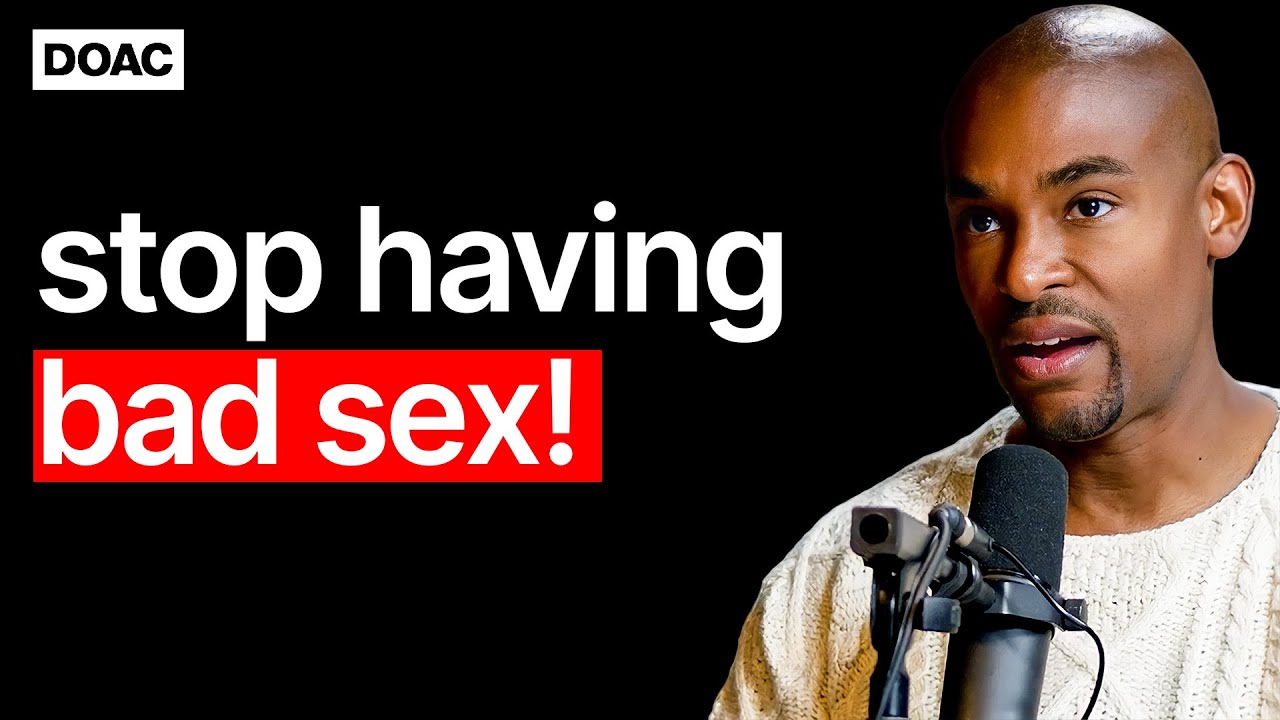
Full transcript · Read the full conversation in order, with its original context.
§01Transcript — part 1
When your cat is acting weirder, or your dog is being louder, your turtle moves slower, your cat seems thirstier, or your puppy is acting clumsier. Day or night, if you don’t know what’s wrong, know where to go. Vedge ER for Pets. This is Kate. Vedge, the better, kinder ER for pets.
I think most of us do the first date completely wrong. We set ourselves up to fail. The reason why is because... my expertise is relationship science. The beauty of science is that if you can change the formula, you change the result. So if you are someone who is in a relationship and you’re unsure how to communicate, there are certain things you can change. It seems so simple, but it literally changed my marriage.
We’re terrible when it comes to making any type of rational decision around our love life. If you can’t have emotional intimacy, you simply can’t have a relationship. You have acquaintances, you have situationships, but you don’t have relationships.
Let’s talk about sex. Can you be physically attracted to somebody, but then not have sexual attraction?
There are different languages, sexual languages. You have to understand how your partner, the language they speak sex in. Men, we need to know this. 70 to 80 percent of women need...
Without further ado, I’m Steven Bartlett, and this is the Diary of a CEO. I hope nobody is listening, but if you are, then please keep this to yourself.
Paul, give me your context. What do I need to know about you from your earliest years, from those first sort of 15, 16 years of your life, that would give me the context I need to understand the person you are today?
So I was born in Jamaica, Queens. Our claim to fame is Curtis Jackson, 50 Cent. Being shot nine times in our neighborhood, that’s our claim to fame. Everyone’s like, "Okay, I get it." That’s where it was. I grew up there; it was a heavy Caribbean, Jamaican, first and second-generation neighborhood.
But my father was the first in his family to go to college. He focused on computer science. So he hustled, and my mother hustled, and they were able to buy a home in Long Island. And that was like the "you’ve made it" moment. You move out of the city and move to Long Island.
We were the first black family to live in this neighborhood. I’m talking about a hundred homes; we were the first black family. Because of that, when I moved to that neighborhood, I was the underdog. I was the outsider and I was treated as such. I remember being on the bus and just being smashed up against the glass, punched, kicked. It was one of those where, for no reason other than the color of my skin, that was growing up.
And how has that manifested in your adult life?
I’m a fighter. I think that’s really what it is. Even now, I notice when I walk into a room, I seek out the underdog and I try to champion them. If I walk into a room, I’ll look for the person who’s hugging the wall, the person who’s in the corner by themselves, and I will intentionally walk over to them and try to befriend them. This has been this throughline of my life, trying to champion people who I feel were the ones who were like me, smashed up against the bus window.
And you eventually went off to university and college?
Yes.
What career did you go into immediately after college?
Investment banking. Ended up hating it with a passion.
Explain.
Oh my god, talk about an "eat you up, spit you out" culture. Here is how I reminisce about investment banking. My boss at the time was 33 years old, a multi-millionaire. He was considered one of the top investment bankers covering banks.
His wife was pregnant at the time that we were working on a huge deal. It was the largest secondary offering in history at that time. Major deal. His wife is pregnant with their first child. She starts to give birth. He decides to come into work and he sends her to the hospital.
He comes into work and I’ll never forget it. He’s walking down the aisle, and I’m in a cubicle. He has the office in front of me. He’s walking down the aisle, and people are standing up clapping. Like, "Yeah, that’s right, you come here. This is the most important thing. Let her go off and do that." That was the moment where I said, "This place is crazy." It was ridiculous. That was when I started thinking I need to get out of here.
And then you went and worked for Enver?
No, I didn’t go to Enver yet. I went off to do what everybody does; I went to business school. While I was at business school, I met Enver Yucel. I didn’t start working for him, but I met him.
He was at that time a multi-millionaire, and he owned a massive company in Turkey. He was trying to extend his business in the United States. When I met him, it was a professional relationship. It was more so, "Hey Paul, whenever I come to the United States, I’d love for you to help me schedule meetings or help me get booked in to see people."
Because I lived in Washington D.C. at the time, and Capitol Hill was there with lots of senators and congresspeople, it was easy for me to pick up the phone and work the network to get a meeting with someone like Senator Hillary Clinton. I was helping him at the time. Then I came up with a concept to start a non-profit organization and I wanted to raise funding for it. I decided that I would ask Enver to help me on this. That’s when I started working for Enver Yucel.
How old are you at that age?
I’m in the 30 zone.
In your early 30s, you start your matchmaking company. What was it about matchmaking that just connected with you inside? In order to get obsessed with anything, to study it and pursue it for all these years, it has to be connecting with you because of your experiences and your biases in a very particular way. I’m somewhat interested in it, but I wouldn’t dedicate that kind of attention to it. So what was it about you that resonated so much about bringing people together in such a way?
Fair. Thinking about this for the first time, I’m actually connecting it to what you asked me with regard to how I grew up. To me, nearly every person who comes to a matchmaker... keep in mind you’re probably spending 10 to 20 thousand dollars for matchmaking services. You’re probably allocating 6 to 12 months of your life to walk through that process. It is a lot. To me, the kernel of every client is a feeling of hopelessness.
There’s a feeling of, "This is my last shot." There’s a feeling of, "I am alone in this." And that’s where I resonated.
I always talk about "The Fifth Why" in business. The why that makes you cry. The why that, when you’re thinking about a customer, what are they thinking about at night? What’s keeping them up at night? If you as an entrepreneur or business owner can help to solve that problem that’s keeping them up at night, the why that’s making them cry, well, that’s the secret sauce.
But the key is that you have to be passionate about that because it’s going to take you a lot of innovation and a lot of time and energy to figure out what the formula is. For me, that was what it was. There was like this level of giving up hope.
Also, it was for a particular avatar, which I think is also important for a particular customer. What I’ve always learned in business is that you can’t serve everyone. So it’s important to find a particular customer, a specific demographic, a customer avatar, and look for the deepest pain point within that particular avatar.
When I got into the matchmaking space, I was the first full-time black matchmaker in the United States. In matchmaking, what a lot of people don’t like to talk about is that there was significant segregation happening in the matchmaking space. What was happening is that black women in particular were not being serviced by matchmakers for a variety of reasons. They were not being serviced at all.
So my first customer, my first avatar, were black women, in particular in the D.C., Maryland, and Virginia area. There was a very particular pain point within the avatar, and it was hopelessness. It wasn’t just hopelessness; this is someone who most likely is highly educated, making great money, and has a child. She is an incredible match for someone.
So she became my first client. I was passionate because she was my sister-in-law, she was my auntie, she was my cousin. I know her, I live with her, I’ve grown up with her. That was why I was so passionate about her.
What is the relationship your parents had and how has that influenced your work?
Great one. They have had an incredibly loving relationship. Not just my parents, but my grandparents.
No surprise, is it? Because then you’ve had this staggering long relationship with Jill. It’s funny how those generational cycles play out over and over again.
And that’s it. It’s like, let’s break the cycle. We can break the cycle. That was part of it playing out. With my wife Jill, her parents were incredibly strong. Her grandparents on both sides were incredibly strong and incredibly loving.
It’s an interesting question for anybody listening to this now, which is how much does your relationship currently, if you’re in one, mirror that of your parents? I think about even in my team here, the people that have the best relationships in my team, their parents have the best relationships. And their partner’s parents have the best relationships. Just that solid best friend type vibe, multi-decade best friend vibes in their parents.
I agree. I think if we did a longitudinal study around that, we would find that to be precise. Part of what I think is driving it is seeing what love looks like modeled before you.
Know that it’s not always what we consider to be lovey-dovey; it can be contentious. As a matter of fact, disagreements and arguments are important. They are critical because you need to almost break down the relationship in order to gain the skills to build it back up. That’s what makes it stronger. So I think the modeling is key.
It’s so true. It took me until I was 25 years old to figure this out, that modeling point. The first model you’ve been given of love is your parents. You believe that to be the truth about any person you then meet in your life. I can remember almost in high definition in my mind this image of looking over at my dad sat on the sofa and my mom just screaming at him and thinking, "I’d hate to be this guy." And then I go into life and I just avoid every... I’m obsessed with having control over my life.
Yes. I was going to say that is prototype avoidant attachment style. What’s so interesting to me about attachment style... Dr. Levine wrote a phenomenal book called *Attached* on this, which I recommend for everyone.
Primarily, there are three categories of attachment: you have secure, you have anxious, and then you have avoidant. When you think about this, it’s precisely what you just said, Steven. When you think of how you first saw love modeled and how it related to you, was it one which was secure in that you felt like if you were hurt, you could go to a place for safety? You would be caressed, you’d be cared for. That’s secure.
But then you move to the avoidant, where it was you almost having to self-soothe yourself, which then pushes you away from wanting to have anything to do with that. You become... the top entrepreneurs are avoidants. Because they’ve had to develop the skills to self-sustain themselves. They’ve had to rely on themselves.
People who are avoidant don’t trust easily, but you trust yourself. So you look at that and say, "My god, this came from me as a child." It’s incredible. Then with the anxious, the anxious is really interesting because typically a lot of parents, like my situation where your parents worked all the time. When they were home, they would be there to give you the love, but they couldn’t be home all the time because they had to work.
So then you had to self-soothe a little bit, and you became anxious about their love. Needy. This is the person who is texting you all the time. "Steven, where are you? Steven, where are you?" All of that shows up as adults.
But long story short, once we’ve recognized that, this is why being in a relationship with someone who is secure is so important. You can shift your style as an adult. You can be avoidant, be in a relationship with someone who is secure, and adapt to a secure attachment.
Do you notice that people who are avoidant tend to go for people that are more secure?
No, they go for the anxious. They go for needy people. Because it becomes a bit of a chase. They are chasing them, and they are pushing to be in your space.
Secure unfortunately becomes boring for so many people. Safe, vanilla. But secure is where it’s at. You want a secure and anyone else. A strong secure can help bring anyone over to secure. But also, an avoidant and anxious can also work. Ultimately, to me, it’s about that effort.
Is there such a way, say if I’m an avoidant or I’m an anxious, is there work I can do myself to become a secure without having to meet a secure and have them bring me over?
Yes, absolutely. One of the top things someone who is avoidant can work on is their emotional intimacy. That begins with simply recognizing your emotions and articulating them. It actually seems easy, but it’s incredibly challenging. So uncomfortable, especially for a man.
For example, I could say, "Steven, how do you truly feel right now in this moment?"
Now, in this moment, very inspired and very keen to learn more.
You did that effortlessly. But now the next challenge would be to do that with your romantic partner and do it in spaces where you feel vulnerable. It becomes very, very challenging to say how you feel, how someone makes you feel.
It makes perfect sense because there was a void in my childhood of parenting, which I’ve always said has made me an entrepreneur. In that void as well, there’s a void of learning affection. I still call my parents by their first names; I’ve never called them Mom and Dad. There was no "I love you" or hugging or stuff like that, especially in my childhood. So learning later in life to then be emotional, to express how I’m feeling... If a girlfriend says, "What’s wrong?" or "How do you feel about this?" I would often just lie about how I was feeling just to keep things nice and calm. But it’s definitely something I’ve had to learn.
But I can see that you are a life learner, a student of life. I can see that you have not even just begun; you’ve done the work. But for so many avoidants, that work has not yet begun. Being able to identify the emotion and the feeling too, and even distinguish between the emotion and the feeling, to be able to distinguish that and then be able to articulate that is so incredibly important. Without that, you cannot have the emotional intimacy. And if you can’t have emotional intimacy, you simply can’t have a relationship. You have acquaintances, you have co-workers, you have situationships, but you don’t have relationships.
So there’s gender differences here as well. Because of my friends, both women and men, I know for a fact that my male friends usually just push for an easy life. They just want, if their partner is expressing emotional feelings towards them, most of my male friends will see that as an attack. They just don’t want to go there.
It’s this energy that men just don’t like. I was watching this funny Twitter video before I came down here. It’s this woman; she’s cooked dinner for her husband and she’s proving that men just won’t tell you the truth. She puts loads of salt in it to make it taste awful, and she walks into the front room while he’s watching the game. She goes, "Try this hon, tell me what you think." And you see his face just wince; it’s disgusting. And he goes, "Yeah, it’s good. It’s good." And for me, that summed up men. It’s like we just want to avoid the heat.
Literally. I have a theory on this, and I’m testing this one out. I call it the feedback loop theory. My wife was in HR before she joined me in the matchmaking space. One of the things that they would do in their company, she worked in this law firm, is extensive feedback during the review period. How was your year? How did you perform? All of these KPIs. That feedback would translate into higher performance. Bottom line.
What I’ve noticed with women typically is that whenever there’s a romantic experience, that romantic experience is then shared with like ten of their friends. Go out on a date, the WhatsApp group knows everything that’s happened on the date. Then there’s a debrief of the date, an analysis of the date. "Here is what he did, here is what I wore," and this happens for three days. Constant feedback. That feedback ends up making women, I think on average, better daters, better equipped to deal and manage in relationships.
Now, Steven, when you were single, tell me this. If you were going on a date, who did you talk to about the date?
Nobody. It’s all in your head. I might tell one of my friends, I might say, "Oh, I saw this person the other night." I would have gone, "Yeah, I saw Ruby like three days ago and it was fun."
And he was like, "Alright, cool." And that’s it. And move on. There’s no feedback. Think about that not just happening on one date, but that happening month after month, year after year. 10, 15 years of no feedback. We’re all in our head; we have no idea how to perform, how to up our performance. And that impacts what happens when we eventually get into the relationship. So I think the feedback loop, there’s really something to it, and I’ve noticed it’s primarily a gender difference.
So are you saying also that because women have a community where they’re discussing stuff, they try and bring that same energy to a man who’s just not used to it? And he goes, "Fucking hell, I don’t know. I mean, you know what I mean?" And he’s just trying to avoid going there because he’s never really had to go there before.
Never had to. When you dig into the data, this is what I love about love. In particular, I always say that my expertise is relationship science. I like to look at the science of love and look at how that impacts how we show up and why we show up. The beauty of science is that if you can change the equation, you change the result. So if you are someone who is in a relationship and you’re unsure how to communicate, there are certain things you can change to make the communication stronger and make the relationship better.
What are those? What are the foundational things that have worked for you and your clients in terms of communication and conflict resolution?
Okay, great question. A couple of things, and even with not only with my clients but with my wife. This seems so basic, I think it’s talked about but not even talked about enough, is Gary Chapman’s *Five Love Languages*. It seems so simple, but it literally changed my marriage.
There’s something called the "five-year itch" and the "seven-year itch" typically in marriages where you literally see separation rates and divorce rates increase at that five and seven-year mark. You also see it happen when marriages become empty nesters. But right around that five and seven-year mark, I was sleeping on the couch at my house. It was not good in our household.
This was so small but so significant. I bought Dr. Gary Chapman’s *Five Love Languages*, which outlines five ways that we recognize and see love. But here was the power of it. The power of it was that my wife, I thought she was spoiled because all she wanted was gifts. She was like, "Buy me this, buy me that. It’s my birthday, buy me this. It’s Christmas, buy me this. It’s Monday, buy me this."
I thought to myself, "Jesus, she’s spoiled. This is crazy." So what do I do? I said, "I’m not going to buy you anything because you’re spoiled. I’m going to change this behavior." So what happens when it’s her birthday, it’s Christmas, it’s the anniversary, it’s Monday and I’m not buying her anything? Oh man, it becomes hell.
But it was Dr. Gary Chapman’s book that helped me understand that the way that my wife grew up, the way that she saw love through her parents, were through gifts. Her father spoiled her to death, and her father loved her and showered his love through gift-giving. So she as a little girl is growing up thinking, "Okay, I get the doll, I get this, I get this. This is love." Her love language is legitimately gifts.
I had to understand that fundamentally to understand that this is how she will see that I love her. It’s not just simply through maybe what’s known as acts of service, which is my love language. "Do something on my behalf." So I would do something on her behalf, but no, it was gifts. And then for her to know, okay, for me, it’s acts of service. So if she giving me gifts and I was like, "I don’t resonate with this. I don’t get this."
So truly understanding your partner’s love language and then giving them love in that language is a game-changer. A quick way to determine someone’s love language is just observe how they show love to the people they love. What do they do? That’s a quick way. So love languages, game-changer.
Secondly is to understand that you need to argue, but great relationships are bids. You’re putting in bids. It’s a constant tennis match. That’s a great relationship, a constant tennis match. So what that means is that you are showing through your action, through your love language, through your words, etc., but you’re showing that you love your partner and you’re doing that consistently over and over and over and over again.
Your partner is going to be doing is they’re going to hit that ball back to you. You’re going to hit that ball back to them. But you have to remember this one thing: sometimes you have to hit the ball five times over the net before they return the ball to you. Ultimately, what that means is that you have to consistently remind your partner.
I’m 21 years into my marriage. People think, "Alright, you’re 21, you’re good. You don’t have to do anything now. Smooth sailing." No. When I get home today, I am still showing up, recognizing that I have to continually put those bids in. I always say it’s like Janet Jackson, "What have you done for me lately?" That truly is what a relationship is. It’s constant.
And then part of that constant too, maybe this is just a third concept: intentional time. What I find really interesting is you look at how much time we spend with our partners or our spouse. It’s one to two hours a day on average. The average married couple spends one to two hours per day.
You’re probably spending more time with the bus driver than you are with your spouse. And then in the one to two hours, what are you actually doing? Like ships passing in the night. No real conversation, one’s watching TV, one’s on the computer. No real communication.
What ends up happening is you’re not able to exchange ideas. You’re not able to talk about dreams, hopes, your feelings. You’re not able to connect. Intentional time spent. I always say that effort always equals interest. Whatever is important to you in life, you have to be intentional about spending time on it, and that includes the relationship.
So that may mean every Friday we’re having dinner together. In my household, it’s every night we have dinner together as a family. I try to rearrange my schedule so that I’m at home with my family having dinner. If I get home too late to have dinner with my boys, my wife and I are having dinner at 11 p.m., midnight, but we are communing together. This is very important. Weekly dates. The whole bottom line is spending time. This Saturday my wife and I, we have a date. 21 years into our marriage, still planning dates, still excited about the dates. It’s intentional time spent.
So there are so many concepts, but I would say if you just do those basics: love language, understanding that relationships are always a bid back and forth, and then intentional time spent, you typically grow together opposed to growing apart.
You were on the couch five years in, right? The only way off that couch, with all of those things said, is communication. You have to at some point have a tough conversation about something. In business, in life, in everything, what I’ve noticed is most of the issues I have in my life have become big issues because I didn’t have an honest conversation about something sooner when I knew it was a problem.
The art of having a good healthy conversation with someone, with a partner, with someone you love, when there’s a lot of emotion and tension is something that I don’t think we’ve talked about enough in society. Men really struggle, I think, with that. How does one have a good conflict-resolution-oriented conversation without screaming or walking out or blame?
I hear you and I agree. I hear this term passed around a lot and I agree with it: the more challenging conversations you have in life, the higher quality your life is. Most of us try to run away, as you’re saying.
So I think there are a couple of things we could do. One is sometimes you won’t be equipped to have that conversation, or your partner won’t be equipped to have that conversation. That’s the importance of having a third party. This is the reason why therapy is so incredibly important. I really try to preach this because I feel like the UK is a little bit behind the US when it comes to that. Therapy is sexy. Having a counselor is sexy. Having a third party, a professional, that’s very important.
Secondly is context. Picking the right moments to have these challenging conversations, picking the right environments to have these conversations are incredibly important. We could decide that we can have this argument in the kitchen when we know that the boys have to be in bed in five minutes, and I know it’s been a long day for you and I haven’t slept last night. We could have this conversation right now if you want to. It’s probably not going to go in the direction we wanted to.
Or we could wait and hold on until Saturday when we’re both taking that walk back from dropping the boys off at their class and we have ten minutes to sit in the park and talk about this. To have the right context is incredibly important.
Third, I think if I’m giving top three, is to actually set rules and boundaries. This does not happen enough in relationships. If you don’t set boundaries, you will take even well-intentioned partners and turn them into bullies. You have to set your boundaries from the beginning of the relationship, but in particular when you’re having these tough conversations.
Boundaries could be as simple as, "We’re going to focus on one topic." When you’re having a discussion, the discussion should be about the topic at hand. Setting what those boundaries are ahead of time because typically what ends up happening is fights become unfair. It’s healthy to fight, but it’s unhealthy to fight in an unfair manner. I think those are three techniques that Jill and myself use when we are having our discussions.
At some point, you started a YouTube channel and Oprah got in touch. That’s crazy.
It’s crazy. When I decided to launch my matchmaking business, after I’d spent a year prepping, I didn’t know how to launch it. It was my wife and my best friend at the time who said, "You should focus on the marketing aspect of this. You should start a YouTube channel." Now this is 2009.
So YouTube isn’t as big a thing as it is right now. It’s not known as the go-to place to market your new company. But I decided to create a YouTube series called *The Modern Day Matchmaker*. What I decided is I would pump all of my money into this thing. I mean, when I look around the studio, this is an impressive studio. I had like one of ten of these cameras. I had one camera, but it was me spending $1,000 to $4,000 per production minute. We had a team. It was ridiculous.
But the reason why is because I thought I had a unique point of view and if I could just push that out into the marketplace, I could distinguish myself from the competitors. I would put out this video every week, man, and nobody would watch it. Every week it would get like 11 or 12 views, and my mother was watching nine of those.
No one was watching this thing, but I thought this was a way for me to at least create my brand within the space. Now, it turns out that one of those 11 views was Oprah. The reason why Oprah was able to find me is because a year prior I was doing pro-bono matchmaking services. Free work. One of my clients was a writer for *O Magazine*.
A year later, she’s on Oprah’s jet. Oprah says, "I have a concept for a new TV show. I’m looking for a fresh voice." My client in the jet says, "Have you heard of Paul Brunson?" Oprah says, "No, but let me see." YouTube search, "Paul Brunson," save, let me start watching.
So Oprah was watching this YouTube series. To me, it is a powerful story because she ends up offering me a job to co-host a television show with her on her brand new network off of this YouTube series that no one was watching but Oprah, my mother, and like two other people. It’s a powerful story about quality over quantity. In a day and age where vanity metrics are everything, ultimately the "who" that’s watching is more important. Working with Oprah changed my life.
There is this thing called lagging metrics in business where they are metrics that show up later once you’ve done the work. You were focusing on quality now; the lagging metric was that you were going to become an Oprah Winfrey show. But you were just planting the seeds of quality. Even with what we’ve done here, if I showed you the graph of the growth of *The Diary of a CEO*, it’s literally two years flat.
Now, what happens next is it goes like a vertical line up. You never know when or how, but those first two years when it was flat was when all of those seeds were being planted and where you’re learning your craft. The big metrics always lag behind. We can sometimes get super impatient. But you’re doing the work now to have that in that quiet period. If you just focus on quality, something you know you can control, you have nothing to worry about. You just need patience.
It’s a mind blow. To even add to what you’re saying, I think that’s the key of having the passion because that’s the reason why you keep on keeping on. Otherwise, the first hurdle you hit, you give up.
And you should, because 11 views, you’re stupid. Go get a job, Paul.
That’s what my father was saying. Can you imagine? He was like, "What are you doing? You just came from investment banking." The amount of people who thought I was crazy, like, "Commit this guy. He left investment banking and he’s doing YouTube videos out of his bedroom and he’s not paying for his mortgage." My wife liquidated her retirement fund. We had burned through our money, she liquidates her retirement fund and we start using that as capital for the business, and the capital is being used for a YouTube series that 11 people are watching. People thought I was nuts.
Steve Jobs said there’s going to come a day when any sane person would give up, and they should give up faced with the facts and numbers. But those that keep going are those that are doing it for that really deep internal reason. Resilience, purpose, those key indicators.
So Oprah. You end up working with Oprah on her show. What did you learn from Oprah, working so closely with her?
Well, the first thing I learned was not to call her Oprah. If you are working for her, she’s Miss Winfrey. That was the first thing I learned; someone corrected me very quickly. But she is everything you could imagine that she is, times a hundred.
What was interesting to me about Miss Winfrey, about Oprah, is that when she would speak, you never knew if she was talking about the event in the immediate or if she’s giving you some life advice. I remember the very first scene I shot with her was in Georgia. We shot a show called *Lovetown, USA*.
There’s 10,000 people in this audience, they’re all there to see Oprah. There’s this massive light kit on stage. It’s my first big event ever; I’ve never spoken in front of 10 people, let alone 10,000 people. The director comes over and he was like, "Alright Paul, get up on stage, hit your mark and introduce Oprah."
I was thinking, "Hit my mark? What is a mark?" I’m freaking out, I’m sweating. Oprah comes over to me real calm, cool, puts her hand on my shoulder. She’s like, "Alright baby, look, this is real simple. You just walk on that stage, keep walking until you feel the light hit you the brightest. That’s where you stay."
I was thinking to myself, "Is she talking about the stage? Is she talking about life? Because that’s deep." But that’s how she would speak. She’s just amazing.
Why is she successful in your assessment? What is it about her?
I studied her. I’m a people watcher. I worked for Oprah after I worked for Enver. The similarity to me is that when I started working for Enver, he went from multi-millionaire to billionaire. That to me was really interesting because of how few billionaires there are in the world. So I started to journal what I learned from Enver.
Then I start working for Oprah and I noticed similarities. Here are two people who are completely different: one woman, one man, one from the US, one Turkey, one married, one not, one Christian, one Muslim. Completely different, but yet they had these same characteristics.
For Oprah in particular, we used to go on these roadshows for the show to sell the show to advertisers. Before the roadshow, she would always host a dinner. And these dinners, there would be 20, 30 people at the dinner. You’d have all types of athletes and politicians, she would bring some of her girls from her school in South Africa. It would be this potpourri, this eclectic buffet of various people.
She would sit and she would conduct these amazing dinners and I realized that at these dinners, that was her education. She was being educated on what was happening in the world, what’s going to happen tomorrow, because she had a lot of the playmakers at the table. She was learning about different perspectives, she was teasing out her own ideas and debating them before she would take them on screen. Enver would do the same thing. Massive dinners, 20, 30 people every night. They both had the concept "never eat alone."
I think I’m quite bad at socializing. I’m wondering if there’s like a digital equivalent or if I’m doing it right now.
See, I think this is your extension. Mark Granovetter, who was a Stanford professor, came up with this theory of weak ties. If you take Robin Dunbar, who has the Dunbar rule, we have roughly 150 friends essentially. If you think about your 150th friend, the weakest friends, acquaintance... those are where our biggest opportunities in life come. That’s where deals come for our business, that’s where we get introduced to spouses, that’s where tickets to the football game come. It comes from the weakest ties as opposed to our nearest and dearest.
Which you think, is that even logical? But it is. Our weakest ties drive the most opportunity in our life. But what do we do, most of us? We spend all of our time with the people closest to us. But what Oprah and Enver do, and what Mark Granovetter talks about with this theory, is that the key is to constantly be strengthening our weak ties, investing in those weak ties, adding new people into our weak ties, kicking others out. Those people at that table, those were not her besties. Those were her 120th, 130th, and that’s where enormous opportunity comes in.
Who of all the avatars do you find struggles with being alone the most?
Men. Really. And I would even say financially successful men. So those who were the investment bankers who, at 45 years old, retired from investment banking, thinking about their next career, divorced twice, sitting at home alone. That’s where the struggle, that’s where it hits you. When you realize, "Oh my god, I’m 45. I’ve only lived half my life and here I am alone, and I’m a dick on top of it." That was the demo that was a struggle.
When I asked you that question about which group of people would struggle the most with loneliness, I thought you were going to say potentially younger men because of this whole incel thing. Scott Galloway talked about how 90 percent of the female attention on things like Bumble goes to the top 5 to 10 percent of men. Then I thought you’re going to say 30-plus women because of things like biological clocks and this sort of social pressure to hurry up and be married. So to hear you say a completely different group was quite surprising.
I hear you and what you just said, that’s a logical breakout. But for me, this is my experience dealing with those who are seeking matchmaking. The thought is, "My time is over. The heyday is gone." It’s kind of like the athlete that is now retired but still desires to play but realizes that they don’t have it anymore.
A rich 45-year-old man has options, but we’re talking about loneliness. There’s an emptiness that does come over you when you realize... a large part of loneliness unfortunately is through comparison. When we compare, we despair upon ourselves. You look across your peers and you say, "Look at this now, Steven is married, he has two children," and "Yeah, I’m out here, I have my Ferrari, but I come home to myself in my massive house and there’s no one here with me."
And you’re astute enough to know that all of those people who you thought were loyal to you were actually not loyal to you, but they were just loyal to their circumstances with you. The job, exactly. So you begin to understand, "Oh my god, they are not my friends. I have no one." Typically they have reached the end of their line when it comes to their hope. From my peers who are of that age, it’s incredibly sad.
I think what women do tremendously well, or should I say better than men of that age, is they understand how to build community. And that goes back to what we were talking about before. We talked about the feedback loop, we talked about challenges around being emotionally available, especially at an early age understanding how to build emotional intimacy.
These things all play themselves out not only in our romantic relationships but in our platonic relationships. And what we have to understand is that the stronger platonic relationships we have, the more health we have, the longer we live, the more money we make.
I have my wife’s aunt; she is 111 years old. She’s one of the oldest human beings right now on the planet, 111, incredibly astute. When I sit down, I just sit down and I’m just absorbed by everything that she says. And what I realize is she still has friends. At 111, she has friends that she talks to every day. That’s how you stay alive. We focus, and I get it, gut health is so important and low cholesterol is so important, exercise is so important, but I would argue that our social connections are even more important. We have to understand how to build the skills early on.
Yesterday someone said to me that resilience comes from being surrounded by a supportive community. When I think about that investment banker that’s 45 years old and alone, he doesn’t have a community to help keep his psychological resilience in place.
Scientists have seen that the brain literally goes into a state called self-preservation when people are lonely. Your sleep changes. If you left your tribe and you’re out on the Serengeti tens of thousands of years ago, everything changes in terms of your keeping yourself alive. You can’t sleep the same. So they observed the brain of someone who’s lonely and they struggle with sleep because we’ve been programmed to stay up because the lion might be coming.
I started learning about this thing called chronotypes where all of us, in a group of 20, 30 people, what you’ll find is they all have completely different sleeping rhythms, when they get hungry, when they’re most creative. The reason we have these different chronotypes goes back to the tribal days where we didn’t all want to sleep at the same time or be alert at the same time. So we created a community where we’re basically one shield of the tribe to survive.
Thinking about that guy who’s 45 years old, he’s got the bag but he’s lonely as fuck, he’s in self-preservation. Physiologically your brain is completely different when you fall into a state of loneliness and because your body’s trying to help you survive in this potentially dangerous world from the lions out there.
The other thing they noticed when someone was lonely is their levels of resentment, like the snappiness, the anger, all that went up as well and that links to what you said about they don’t learn the skills to form connections because they’ve got so used to self-defense, like psychological self-defense.
I can see that if you’re in that state, then you just delve deeper into that as each year goes by. You become a recluse. That to me is sad because you have someone who you perceive them to have it all but they really have nothing.
And it makes sense because if I got used to being alone and I see someone else or a tribe, I’m not going to run up and be like, "Hey!" I’m going to think these fuckers are going to kill me. Trust goes down, you’re apprehensive.
What do you do though? In that case of that investment banker, what is step one to get them from that point where they’re on the couch, they’ve got all that money and that mansion, they’re alone, how to get them out there and find someone to love them?
Therapy. With matchmaking, one of the things that we introduced, we were pioneers in many ways, one way is that you would come to us and we wouldn’t just simply find dates for you. We would assign you to a therapist that you’d work with for three to six months before you went on your date.
So there’s this rehabilitation that takes place. It’s not you go to a therapist and you’re fixed; it’s you begin to build the muscle and you continue that. Secondly is to begin friendships. It’s not like, "Okay, how can I place you in a community of 10 people?" But "How can I find one person that you could begin to build a relationship with?" Build rapport, very basic, very slow.
What I found with men of that particular vintage in the dating scene is that a lot of the body movements were odd, there was a social ineptness. Body language, we say more with our body than we do with our words. There was an uncomfortableness that took months to tease out.
This is especially if you are coming from a career where you are the authority, you are the boss. No one is critiquing your body language. But now you move to a social situation where your entire interaction is largely based on your body language; it’s a different situation.
I’m like slowly developing a theory on awkward huggers. Those people that are like, "Uh," they look away when they come in to hug you, they kind of give you a tap on the back.
Can we talk about hugging for a second? 100 percent. I have a buddy named Tom Reed Wilson who’s on one of the shows with me and he taught me something that I now pay close attention to. Most men, I notice, hug and tap the back. "Get the fuck off me." Right? But what Tom taught me is the hold and embrace.
Hold and embrace for 30 seconds, which is a long freaking time to embrace someone. And what he taught me was that in that embrace to notice how uncomfortable the person is with you. There’s a "Okay, are you going to let me go? This is odd." Now this is not to a stranger, but this is someone who you would hug.
Here’s another wild one that men do. I learned this from Robin Dunbar also in his book *Friendship*. If you see two men talking to each other at a party, out on the street, they normally stand at like a 120-degree angle. Rarely do they stand like this, never would they stare at like this, because going back to us on the Serengeti, this is very confrontational. This means we’re about to kill each other.
But like this, we’re safe if we cheat our bodies like this, the 120-degree angle. And if you notice that, men do that all the time. Now ladies walk right up, "Hey! How you doing girl!" But men it’s like, "Okay, I’m going to talk to you." "Yeah, don’t hug me." These are all things that we laugh and we joke about but it suggests why we could have challenges in our intimate relationships.
One of the things I’ve been curious about is this idea of compatibility and who we’re compatible with. Are we just... because when we think about dating, we often think about it like we’re trying to find this perfect individual that we could kind of draw on a piece of paper that has all these particular qualities. We think we know who we’re looking for. Is that true? What do I need to know about what truly makes someone compatible? Because I think once upon a time I would have said I want my partner to be probably like me. Run a huge business so we can talk about it at bedtime. I don’t think that’s the case anymore.
My joke is that most men who came to us, they want themselves with a vagina. That’s pretty much what they’re looking for.
This is a topic that I’ve been studying forever. There’s a lot of different thoughts around it. Like if you just think about dating apps, they spend an enormous amount of money trying to perfect the matching algorithm. If you look at the success rate, so the percentage of people who are using dating apps and then end up in a committed relationship or marriage and stay in that for a fixed amount of time like 10 years, it’s like less than 2 percent. So you think, okay, so they haven’t gotten it right.
Over time there are certain areas that I firmly believe determine whether or not you have strong compatibility. One, we’ve already talked about attachment style. I think attachment style, incredibly important. We’ve talked about values, values incredibly important. That’s the rulebook to life.
Another part of it is your ability to communicate. So there’s this theory called "decide vs. slide." It’s a theory that people like John Gottman are behind. When you’re with your partner, can you make a decision together on anything? Can you actually make collaborative decisions? That is "deciding" versus "sliding." What a lot of relationships, a lot of couples do is they say, "Okay, no, you decide that. You pick where we’re going to go, I’ll decide what we’re going to do." It’s a slide. It’s not a collaborative.
So when you are dating, when you’re engaged, it’s very important to begin to look at are you making decisions together? Another one that’s touchy for a lot of people, but it is what it is: do you have physical attraction? There’s a massive debate over this. Every bit of science suggests to us that if you have zero, I’m talking about zero physical attraction, it’s going nowhere.
But if you have minimal physical attraction, it doesn’t mean "rip the clothes off" energy, but if you have minimal physical attraction, then that could build. Attraction can definitely grow, but it needs to start somewhere. So you think about physical attraction, you think about the ability to make decisions, compatibility in values, also attachment style. These become, I think, the foundational pieces to having a compatible relationship.
But then there’s this small little piece I want to throw out. In the US, the divorce rate hovers between 35 and 50 percent depending on who you’re talking to. Now, if you were to just take out couples who have been engaged for two years, what do you think that does to the divorce rate? They’ve been engaged for two years and then they get married.
I think the divorce rate goes down.
Exactly. It goes down dramatically. Some people say it goes down to 20 or 22 percent. Now why would that be? The reason why is because you’re able to test out all of these theories. You’re able to see your partner in the most adverse circumstance and see do they still show up. Can they still make a decision with me? Or do they emotionally shut down and they go away?
When you look at couples where you see divorce being prevalent, it’s in couples in one of two categories: one, they’ve known each other for a year or less; or they’ve been in a committed relationship for like 10 years and it was basically an ultimatum. So the two years of engagement I think is incredibly important because it allows you to test out these compatibility metrics.
Can you be physically attracted to somebody, but then not have sexual attraction? I say this because I remember in a past relationship I was physically attracted to her, but sexually it just didn’t work. She was this beautiful girl, her mind, her intellect, she was super smart, super funny. I think there was a point before we went to have sex that I thought this is it, this is the one. We then went to have sex and I remember getting up and going over to my phone and like afterwards saying to one of my best mates, "I don’t think I can ever see her again."
See, I wonder how much of this though plays into "erotic blueprint." I buy into that theory which is that we all become sexually stimulated in different ways. And the thought is that men are just ready all the time. But that’s not the case. For some of us it’s about contextual, some of us it’s romantic, some is something that people would call bizarre, kink, BDSM.
So that’s why I wonder how much of that was about sexual stimulation in that situation versus you not being sexually attracted to the person.
What I came to learn a couple years later was that I had this one-dimensional view of what sex was. And then when I started viewing sex as potentially a different set of languages, and I thought "fuck, I’m speaking English, maybe she’s speaking Spanish," and I need to learn a new language in order to have an effective sexual conversation, everything changed.
It changed for one of my best friends too, because he was having a similar issue with his sex life. And I said what if you just saw it as like your girlfriend speaks a different sex language? You’re speaking one and you’re like "ugh I’m unsatisfied because she’s speaking Spanish and she’s going ugh I’m unsatisfied." She wants touch, the 30-minute non-penetrative build-up. You want to tie her up, you want to gag her and whip her and all that kind of kinky BDSM stuff. You need to talk and learn another language.
Another language. And then also too, because you dropped penetration in there, this is something that most men, I mean men we need to know this, is that the vast majority, 70 to 80 percent of women need clitoral stimulation, not just penetrative.
See this is where the feedback... we have no feedback loop. Porn! That is our teacher! And what we have to understand is no, there are different languages, sexual languages. You have to understand how your partner, the language that they speak sex in, and you have to deliver it. And that’s also why communication is the bedrock of all relationships, it really is.
Yeah, that’s so true. I totally dismissed it and I didn’t do any work. That was very much characteristic of my younger self which was if something isn’t perfect now, go. Just run. Don’t do any work to have the conversation, to fix it, to have empathy for someone else might have a different opinion or a different bias or a different attachment style. If it’s not perfect, I would dash. I’ll go in search of perfect, which doesn’t exist.
But this is all of us. This is immaturity, and that’s the beauty of learning as you grow older.
Do we know what we’re looking for? Are people good at saying "this is what I want"?
Hell no. We are terrible. We’re all biased when it comes to love. When it comes to love, it’s like we’re wearing the foggiest glasses known to human beings. We’re terrible when it comes to making any type of rational decision around our love life. Normally we are looking for ourselves. Like we literally are looking for ourselves. It’s funny to me when you ask someone "well what is your type," which I hate that phrase, but you’ll say "well what is your type." And typically people will describe someone who’s very much like themselves.
And so we are horrendously bad at not only identifying what works well with us, but then making the selection. And on top of that, most women don’t make the selection. It’s typically the man who makes the selection. And this is where I say that what I like when I’m seeing now is more women are consciously choosing who and what they want in their relationship, opposed to being the ones who are always selected.
Why is that happening? Why are women not choosing?
It’s because of the craziness of the world and how we’ve evolved. It was the pill that was one of the first liberation points for women when it came to dating. We’re talking about the 60s, the 70s really when the pill became in vogue, if you will. And what that allowed was for women to finally have a little bit of choice when it came to dating. Before that, it was men making the selection, making the choice. "You’re mine" or "You’re pregnant so you’re definitely mine."
Dating apps get a lot of stick for whatever reasons and yes, we should always hold dating apps accountable. But what’s beautiful is that you do have dating apps where you have given women a lot more choice and control in the dating experience, which is important. And even when you look at the studies and you look at the dating app ecosystems that are led by women, they’re safer, they’re less crude.
So are you saying that contrast tends to be better for compatibility than finding someone who’s a replication of yourself?
A bit of contrast. It’s almost like going back to the weak tie theory. You want someone... well let me say this, the best matches I’ve seen are based on that blueprint I outlined from attachment style all the way down to physical attraction. But then context also plays a large role. If I were to place you on a desolate island with someone, I guarantee that person will be the love of your life after a while. Context plays a large role.
Which is why it’s interesting to see how politics plays a role in dating. Just 20 years ago, politics was insignificant in dating. It was not a topic that was brought up on a first date. If your partner has an opposing political view, it’s completely fine. Today, it’s one of the top metrics behind whether or not you want to match with someone, is politics. There have been some really interesting studies that showed even how sexually obsessed men are, we still would turn down... a significant percentage of men but a vast majority of women who would not have sex with someone that they find physically attractive but yet have opposing political beliefs. That’s the context, that’s the day and age that we live in.
Do we have to work hard to find someone? Because I think there’s kind of a prevailing narrative that serendipity will solve it for us. The world has changed tremendously. We don’t go to church like we used to, we don’t have these pubs or that sort of institutions of community in our lives. So we’re predominantly more lonely than ever. Do we have to work hard to find that person? Do we have to put in work?
I think we should. I think that we should put effort towards anything that we have interest in. So if a romantic interest is something that you want to have, you should put the work in. But I don’t necessarily think it’s about putting the work into someone else; it’s about putting the work into you. And just elevating you, optimizing you, making you the best you can be.
Every generation believes their generation had it the hardest when it comes to finding a spouse. This is throughout time. Talked to my grandfather, my grandfather "Oh man, you won’t believe how hard I had it." And my grandfather had three options. Small village in Jamaica, three options, three people.
There’s a book *Paradox of Choice* by Barry Schwartz and he’s the "less is more," right? And what’s interesting is that we have more options today than say my grandfather had in his day, but we have less satisfaction in the choices we make because we believe we have endless choice. That’s the real problem that we have. You go onto a dating app, how many people can you swipe through on a dating app? Endless. You could literally 10,000 if you want to. And the thought is that you have an option; all 10,000 are options. So because you have 10,000 options and you pick one, there’s less value that you have in the one.
But if I flipped it around, dating app, but you only get three options a week. What you think? What you think? Because here is my thought: the thought is that you place more value in the option you choose. And that’s ultimately I think what the challenge is in this day and age. It’s about we think we’re placing less value because we believe that we have endless option.
So true. The issue with the idea is in a world where there are other apps, if that app existed and it was the only app, then it would be the conversion rate from first date to marriage I think would be considerably higher. However, in a world where I can also use Tinder or Hinge where they’re going to give me 10,000 options, I think people will always choose option. I think we’d have a problem getting users. But your point is so spot on that a lack of options means we care, we’ll invest and work harder on the ones we do have to make them work. Whereas if I meet you on a date and I don’t feel like it’s perfection, I’ll go "fuck this, I got 37 men in my Tinder DMs that wanted to meet me as well."
Another question I had was about honesty from the jump. You go on a first date, you meet someone. How honest should I be? Should I tell them about my childhood trauma on the first date? Is that being authentic or is that offloading?
Well, Chris Rock said it best: when you meet someone, especially on a date, you’re not meeting them, you’re meeting their representative. So from that standpoint, we have to understand that there is a boundary negotiation that happens especially on these first dates.
I think most of us do the first date completely wrong. Entirely wrong. We set ourselves up from the jump to fail miserably and be disappointed. And the reason why is because the first date is too intricate, it’s too big. It’s dinner, but to prepare for dinner I’m going to buy a new whatever, I’m going to get my hair done, I’m going to get this, I’m going to buy this new thing, I’m going to get the car wash. We’ve invested so much that we’ve set ourselves up for failure. Also, a first date quite honestly over dinner is an interview. It always turns into an interview.
And then the culture I’ve noticed in the UK is fascinating: typically I noticed is we’re going to get completely pissed before the date so we can talk to each other. So we’re just going to drink drink drink drink drink. Okay, now let’s talk to each other. And so it becomes... we set ourselves up for having a very costly date in time, effort, all resources.
Instead, I like meetups. Let’s not even take the pressure off of the date situation. Let’s call it a meetup, 30 minutes, let’s have coffee. The reason why I love that or a walk, a walk for 30 minutes, let’s just go walk at lunch, let’s go take a walk. The reason why I love that is because the expectation is so much lower in that situation. So much lower. The cost so much lower. So the investment, right, so much lower. So therefore that return on investment potentially so much higher.
But then also psychologically what I love is happening is if it’s coffee, caffeine, if it’s a walk, it’s endorphins going. Those help us to bond opposed to alcohol; that’s a depressant. It’s doing the opposite. So in terms of elucidating ourselves for great conversation and preparing ourselves for success, a walk or coffee is great.
The other part of that is I’ve had thousands of clients who I’ve said okay, in particular this is for ladies telling men: tell the guy that you want to meet him for coffee in the day. A lot of guys are like "pshh I’m not doing that." Right away! It’s a great filter! It’s an easy filter for you. And then if it works well, and when I say if it works well, is you just need two things on that meetup: are you physically attracted to them minimally, and then did they listen to you? So if you have the ability to communicate, they listened critically, you listened critically, and you’re physically attracted, that is chemistry. Because we have a hard time defining what is chemistry. You say what is chemistry? What’s the buzz? What does that mean? It is I think one part mutual physical attraction, another part critical listening, listening. If you have that, you have enough to move forward and then see each other in another environment.
So true. Just reflecting on how many of my friends, both men and women, will come back from a date that didn’t work out and just resentfully talk about how much they’ve spent and how long it cost them and how much money it cost them and the preparation and the facial and the hair and the nails. Bringing that level of expectation to a first encounter... you’re almost setting yourself up to fail by doing such a huge initial upfront investment.
Yes. And you know what? You were making I think a brilliant, brilliant point there is that when you’ve made that investment, what you end up doing is you’re looking for reasons to weed them out. Because you’re like "oh man I did all this." "Yeah and his trainers! Oh my god did you see those trainers? Those are last year’s trainers. I bought new shoes for this shit and he..."
Yeah. Crazy. Crazy crazy crazy. What are you struggling with in your relationship?
Oh man, you know what, it is time. Really. Quality time? It is I would say time but quality time because I am, right now, predominantly doing television work. And I’ve been in TV now since Oprah, so 12, 13 years.
One thing I’ve noticed about the television space is that there are moments when you’re hot and there are moments when you’re not. And when you’re hot, that’s the time to leverage, and so you better work your ass off even more. And so I’m in that zone right now. I mean I’m blessed; I’m co-hosting two shows, I’m contributing to three shows, one in the States, two here in the UK. So it’s one of these where I’m constantly working every day. Every day I’m working. So that time with my wife, that time with my children, that’s the time that I wish I can get some back.
How are you negotiating that? How are you serving the ball over the net in terms of the tennis analogy to make sure she still feels like a priority and your family still feels like a priority?
Finding those moments and making sure that we’re intentional about the moments that we do have. So this morning, for example, before I came over here, we had breakfast together. Went out, had breakfast together, sat, talked with the dog. Those moments are immeasurable, those moments, to have those moments together.
I dropped my boys off at school, walked them 10 minutes to school, 10 minutes the other to the bus. Those moments, immeasurable. Helping them dress, tying their ties. Those moments, and making sure that I’m fully in those moments. Not I’m in that moment but I’m on my phone at the same time. No, phone goes away. And so making sure that the moments that we have, that I’m fully, I’m fully in them.
And then also I think gratitude is something that is very important and I’ve been practicing this for I don’t know six, seven years. But being appreciative of those moments and then reflecting upon those. Every morning, the first thing I do in the morning is I consciously think about the moments yesterday that I’m appreciative of. And what I find myself doing is I’m rarely thinking about "oh I’m so happy this happened at work" or "oh I’m so happy about the ratings of this." It’s always "man I’m so happy that my son who is 11 held my hand walking to the bus." He’s 11 but he still held my hand. "I’m so happy that my son came over and he asked me to tie his tie and he gave me a kiss on the cheek and said thank you Dad." Those are the moments that really get to me. And that’s what I wake up thinking about and I’m able to think about it because I was in the moment fully.
And what’s in the near term then? What are you working on in the near term? I know you’ve got multiple revenue streams all over the place, you’re an entrepreneur, you’ve got two or three TV shows that you’re working on simultaneously, which is absurd. What is your full professional portfolio per se?
So there are a lot of things happening and they’re all in different categories. So on the television side, I am co-hosting *Married at First Sight UK* and I’m also co-hosting *Celebs Go Dating*. We’re in our 11th series of *Celebs Go Dating* and our 7th of *Married at First Sight*. So those are big entities. I contribute to the *Lorraine* show and also to *Steph's Packed Lunch*. And then in the United States, I’m a contributor to *Good Morning America*. So that by itself are those are couple full-times.
Do you have a podcast?
I don’t. I did years ago I did, but I mean quite honestly looking at this... you are incredibly inspiring. And part of that inspiration is man like this is a great space to get into. So that’s something that is in the back of my mind, but I’m not actively pursuing it.
§02Transcript — part 2
That’s very kind, it makes me feel really uncomfortable. That’s why I cracked that billion joke, I didn’t know what to do with my face the whole time you were saying that. It’s a huge compliment and I receive the compliment and I believe every word you said. I know that we are I think the reason why our team will be successful in pretty much anything we do is because of what you said. So it’s because I think we care more about the small stuff.
Excellence begins... we can all make the big decisions to start a podcast is a big decision, it doesn’t guarantee success. It’s all the tiny things that people that are easy to do but also easy not to do that end up defining your trajectory. Over the last I think two years in particular, actually because of this podcast and because it’s so data-centric and I look at lines and charts and how one decision that the team and I make can just tilt the direction of the line. And it’s been this reinforcer to me that in fact the most important things and the biggest opportunity is the smallest things everyone else nobody else cares about.
No, no, definitely. And you just I think destroyed a myth that exists as well and that is that we should be sweating the small stuff. Yeah, the whole "oh don’t sweat," no, sweat the small stuff because that’s where greatest change comes. The same thing with your romantic relationships. "Oh don’t sweat the small stuff," no! That one missed hug, that one missed "I love you," let’s correct it now.
So powerful. We have a closing tradition on this podcast where the last guest leaves a question for the next guest; they don’t know who they’re leaving it for. So it’s kind of a throughline, all the guests having a conversation with each other. And I don’t get to read the question until I open the book. When was the last time you cried of happiness?
Oh my gosh, cried of happiness. Oh my god, I’ve cried tears of sadness recently.
You’ve cried tears of sadness recently?
Yeah man, I mean my sister-in-law passed away two weeks ago. I’ve had a string of passings in my family that is just devastating. Devastating. First funeral I had to plan. Just yeah, one of those. So I think of tears of sadness.
What did that teach you about life? Someone young and...
It’s short. It goes like this. I’ve been at two deathbeds: one of someone who I would call incredibly young and another one someone who’s lived a full life. They both said the same thing and it haunts me. They both said, "Pshh, this thing goes by quick. Life goes by quick."
That’s all we get. And it gives me chills because I think about them looking at me and that’s part of why I think I have lived the life or live life the way I live it and why I focus so much in the moment and why I try to express how I feel about people in the moment because we may never get the moment again.
To have to write a eulogy for someone so young, it did, I will say some practical things it taught me. It taught me we all need wills. Everyone needs a will. I think that we all should be consciously aware of how we want to be laid to rest. It’s a major debate that happens in the family and to have that consciously thought out so that your loved ones can honor you in the way that you want to be honored, I think is incredibly important. So to have a will and to have pre-thought some of this, it’s not morbid; I think we have to understand this is part of our humanity is that we will not be here forever. So those are thoughts that are practical thoughts that I’ve taken and now I have a will, now I’ve written you know where I want to be buried, how I want to be buried. These are incredibly important.
I cried like... I cried for could be 30, 40 minutes straight at my wedding. I was just... I just cried. I cried the entire wedding. I just cried and cried and cried and cried. All the pictures of me crying. So those are probably that’s the last tears of happiness. But I’m incredibly happy. But more than that, I’m appreciative. I’m appreciative of life and it’s actually the tears of sadness that’s allowed me to be appreciative.
Well Paul, thank you. My team met you a couple weeks ago and they are obsessed with you. And it’s funny because it’s not necessarily it’s because of who you were as a person to all of them, how you treated them, how wonderful you were. It’s all the small stuff; it’s kind of the stuff you said at the start about that underdog and reaching out to the person that might be stood up against the wall. It’s all that stuff where everyone in this building... I wasn’t here, I think I was out of the country if I remember correctly, but when you came to this building, they were just you converted them into raving fans.
And your whole philosophy... you said something to someone, I’m not entirely sure who it was, you know because we’d asked we’d essentially asked you to come and help us with something, with a project we’re working on which I’m very excited about. And you said something almost about like karma where you just you do things for people because you kind of believe in planting that seed. You don’t know when it will flourish or when it will you know come to fruition, but you just do good with the belief that like karma... such an important way to live.
You actually helped me to realize that because the impact you had on all these people here, you turned all of them into disciples. And they’re like fairly influential people, they’re you know they’re well-connected. Amazing. And then today having had a chance to sit with you and ask you some questions that really a lot of the questions I asked for my own selfish pursuit of trying to figure shit out, you’ve changed a lot in me and you’re going to change a lot in my relationships. I’m partly sat here winding up this podcast so I can go fix some shit. And I think a lot of people that have listened to this conversation will be feeling the same way. Tremendous value, tremendously kind man. Even when the cameras are off, you’re just a class act and I have no doubt that you’re going to get everything you deserve. We talked about that sort of like long tail lagging in value; your future is going to be immense.
I’m honored, I’m appreciative, I love you, I love your team, I really do. And it’s an honor to be here. So thank you so much for having me.
I and all of my team love you too. I can speak on behalf of all of them. Thank you, Paul.
Thank you. Thank you.
Paying extra for tire care is BS. You know, bad service. So at Midas, we’re rolling out our BS-free tire guarantee. Included with paid installation and tax on every purchase, you’ll pay nothing for flat replacements, nada for flat repairs, and zilch for tire rotations every 5,000 miles. That’s zero dollars for all that. So with this limited lifetime tire guarantee, you’ll pay a whole lot of nothing compared to what the other guys charge for tire care. That’s the BS-free tire guarantee, only at Midas.