
Trinny Woodall: How She Went From Drug Addict To Building A $300m Business Empire!
Guests: Trinny
Full transcript · Read the full conversation in order, with its original context.
§01Transcript — part 1
Hello, I'm here during the lunch rush with Janice, who owns her own food truck.
Best cheese steaks in town.
Janice traded up to Geico Commercial Auto Insurance for her food truck business.
We're here where she needs us most.
They sure are.
We make it so easy for her to save, with customised coverage that grows with her business.
Sorry, I just get so emotional talking about saving folks money.
Not this onion I'm chopping.
It's just so beautiful.
Oh, yeah, nice to meet you.
Get a commercial auto insurance quote today at Geico.com and see how much you could save.
It feels good to Geico.
I look at your skin and I'm going to come over now.
Oh, no.
Oh, f***.
Then I go around here.
Trinny Woodall, beauty queen of the screen, founder and CEO of Trinny London.
From 10 to 134 employees in just three years.
Have a great day.
I went through phases in my early 20s of not knowing who I was and turning to drugs.
I went to rehab.
I heard that you'd been kicked out the first time for playing a porn video.
Yeah.
It backfired.
Rehab was a huge beginning of the change in my life.
And I went into a whole new world.
Following a 20-year career in media, the train took a left turn in the makeup industry.
Here we are, $250 million later.
Welcome to Trinny London.
A lot of people have this stigma that you can't start a business at 53.
Crap.
Age is just a...
Number but you need energy passion perseverance i sold my house hardly earning any money but i thought i'm never going to give up ask yourself how much do you want to be successful what are you prepared to give up you strike me as someone that's incredibly driven what's the cost very big question
probably
Oddly.
You had a partner who was unwell.
Yeah.
And the thing you think will never happen, happens.
He died by suicide.
Yeah.
Where do you get to in your brain when you are so worried about your children that you can convince yourself that the best thing is that you're not in their life anymore?
How does that change things in your life?
Trinny, you've got a very distinct personality.
Yeah.
And you know that.
You're well aware of that, right?
I know who I am.
But your personality is very, you're very straightforward.
Yeah.
And all of these sort of defining traits of your personality.
And I'm wondering if that was when that personality was formed or when it started to emerge.
Things happen in your life that...
That begin to, you know, fine tune and define who you're going to be.
And I went definitely through phases, you know, I went through phases in my late teens, early 20s of turning to drugs just to not being happy with who I was, not feeling, not knowing who I was.
Sometimes people turn to drugs because they just don't know who they are and they want to...
You know, they have an inner lack of confidence.
And I definitely had an inner lack of confidence.
And outwardly, when I talk to people and I look back at the time, they might say, you just were this very mesmerizing person.
And I just remember that internal sense of feeling so lost, so profoundly lost.
So when I got clean at 26, 27, that was a huge beginning of the change in my life.
I was so relieved that my 20s were over.
So relieved.
Because it, you know, it was like that was the beginning of that.
Wash that away.
And that was a big moment for me to begin to.
Work out who I was.
That was the first moment, probably.
You're using drugs at 16, I presume, was quite a recreational thing.
Yeah.
I think we all dabbled at that age.
When did you realise that it wasn't a recreational thing anymore and that it was an addiction?
I think I was about 22 and
I felt my life didn't have direction and my family were very frustrated with me.
They felt I'd changed.
And like any family where they have a child who has addiction, they can, if they don't know, they just see change and they think, why is my child changing?
You know, so I think they saw that and.
It was a relief to say, you know, I use drugs.
And I remember my dad said, well, now you've told me, you can stop.
And I remember my brother saying, I think it might be harder than that.
So I went to rehab and I then left the rehab after a period of time.
You left the rehab while you were...
No, I was kicked out of the first rehab, but I then went to meetings.
And there's one thing about recovery is that when you first get in recovery, you need to let go of your old friends who you've been with, who you're using.
And you're about to make new friends.
So that moment is...
Loneliness can take you back to old habit.
After about, I don't know, maybe six months, I missed my old friends and I hadn't made enough new ones and I saw them and then, you know, I relapsed.
And then I went back to meetings and then you're in this horrible little in-between place.
When you know about recovery and you continue to use, it's not so, there's something about an ignorance of recovery.
You know, there's a kind of sense that you don't know there's another way, so you don't feel guilty every time you do.
And so what it brings is it brings guilt every single time.
I had three really, really good friends and we were all using one night.
And I said, let's all make a pact.
We'll go to rehab tomorrow.
And two of them had been and one of them had never been.
But we made this pact.
Late night, you know that thing.
We're going to do this.
We're going to conquer the world and we're going to go to rehab.
So then the next morning.
I woke up and I still had that feeling.
Which is rare.
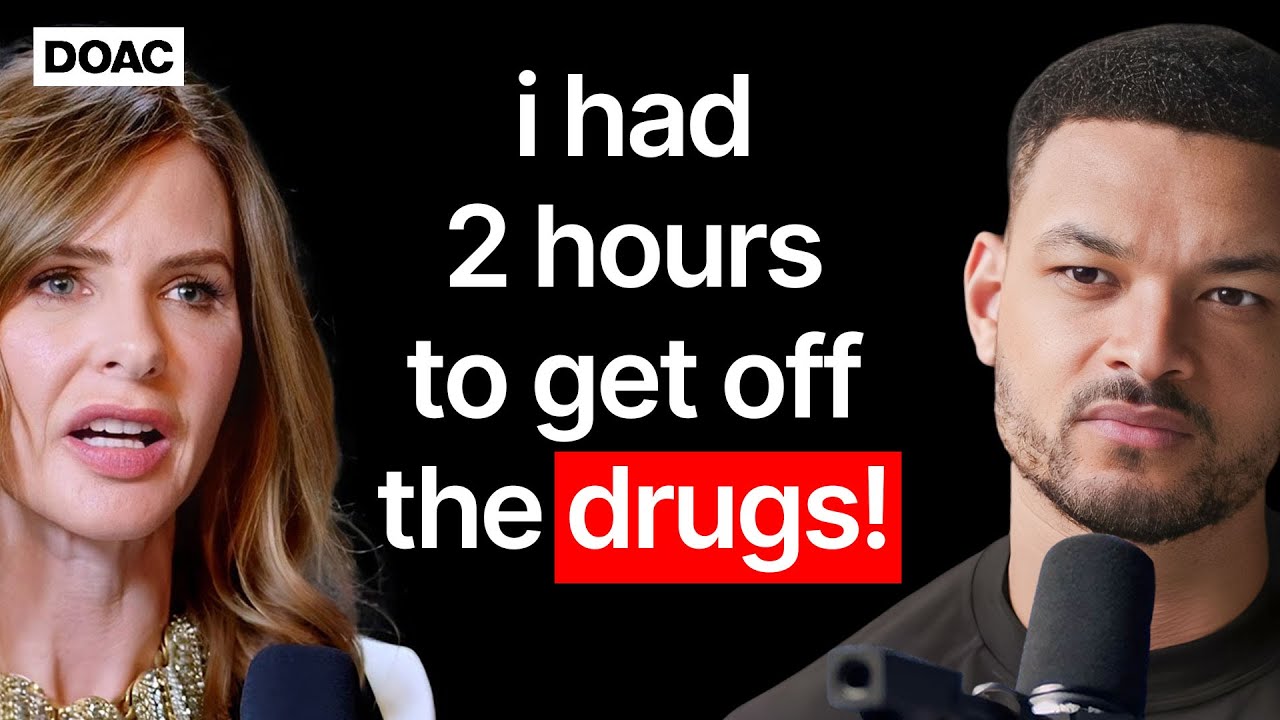
So I called a therapist that I knew and I said, I need to go, but I have a window of opportunity, which is so small.
I need to go literally in the next two hours because I am scared for myself that I'll change my mind.
So he got me in somewhere and stayed there for five months and I sold.
What I had to pay for it.
Some very tragic thing happens in that time.
And one of the people died.
And then...
One of the people that said they're going to go to rehab with you.
Yeah.
And then I went to a halfway house in Western Supermare for seven months where you kind of live off...
Eight to ten pounds a week, which pays for your fags.
And I worked at an old people's home.
And then I came back to London, a very different person.
And then in that following year,
Another one of them died.
And then by the end of two years, they'd all died.
I think I always had this feeling, whatever I might do, you know, I might do many things again, but I will not take drugs again.
And you do that in recovery, you do it a day at a time.
And since that day, I have never taken a drug again.
That's probably the biggest shift I had at that age to really think, now I have this second chance.
What do I actually want to do with my life?
You know, not what I feel other people expect me to do.
To do.
If I was a fly on the wall in your life, when the addiction had you the most, what would I have seen?
You wouldn't have seen anything that I was feeling inside.
Because that's what I was very good at.
So outwardly, you would kind of think, you know, I worked in the city, I was trading commodities, I was...
I held down a job.
You know, you would see this person who seemed to be running around doing a lot of stuff.
You would see that.
Yeah.
So mine wasn't jacking up in the street, not being able to function on a daily basis.
But it was one where...
Appearances were so important compared to, you know, so that matching your inside to your outside is probably my biggest journey, you know, of how can I, what I feel inside is how I share with you now.
And, you know, I am 59 and that's where I've got to.
I have a lot more to do, but I, it took me a journey to get to a place where I
feel very comfortable in that feeling and in that belief.
Matching the inside with the outside.
So the outside, I would have seen someone who was very busy and apparently, you know, professionally successful in the city.
Not feeling it, but sort of acting it.
You know that.
I mean, my God, we know that one.
Fake the CV, act it.
You know, be kind of big up the job that was actually smaller than it was, all of that shit.
And then on the inside.
Feeling.
Feeling.
You know, I hate to say the word because I hate, I hate labels.
Imposter syndrome is the worst.
Can I just say it's the worst label?
It's the worst label ever because what it denotes is that you are an imposter for how it's used for now.
So to me, imposter syndrome is more that you haven't yet learned enough.
And if you learn something, you won't feel so much of an imposter.
This.
Is what imposter syndrome is, what I'm referring to.
It's that feeling where you are so different on the inside from what you project on the outside that you are an imposter inside your own body.
And that to me is what I think imposter syndrome is.
What's the cost of that?
That at some stage, you can't keep doing it and something has to give.
And something always has to give.
And it's which path you're going to take, you know.
Because there'll be a lot of people listening now that are in a job or a situation where they have that feeling, that niggling feeling that they're in the wrong place.
Yeah.
They might be held there by social groups or...
Expectation from their parents or whatever it might be, but something's holding them there.
Yeah.
Maybe fear of uncertainty.
I would say if somebody is listening to this and they're thinking, do I have little bits?
Just ask yourself, you know, do you love what you do?
The job you're in, if we're talking about work, do you love what you do?
Do you like this environment of where you work?
Do you feel people make a better contribution than you?
You know, is that what's making you feel insecure?
If so, what do you feel when people have meetings that you don't know?
Go and fucking learn it.
Go and learn it.
Go and listen to some podcasts.
Go and read some books.
Just learn it because knowledge is powerful.
And when you have knowledge and you walk in a room, you automatically think I have so much more to contribute.
If I answer one of those, I challenge myself and I go, I don't like where I'm working and I don't like it.
Yeah.
And I'm, you know, a commodities trader in the city, for example, and I just, I hate it.
Yeah.
Leave it, but have a plan.
But leave it.
Like, if you hate what you do, we spend 16 hours a day between commuting or if you're in a higher position thinking about the company, working.
We spend much more of a day working than sleeping.
So you've got to love it.
You've got to love it.
You know, I was like, in my early 20s, I was one woman, 64 men on a trading floor.
And I hated it.
And I dressed in men's clothing.
And I went to Rosetti and got the men's shoes.
And I got the tailor to make me a suit.
All the men would drop their trousers on the trading floor.
But I'd go in the ladies'drum and get, you know, I'd pretend to have a deep voice.
I was on the phone selling Anglo-American funds.
§02Transcript — part 2
So my clients thought I was a man.
I mean, you know, I did all this stuff.
I hate it so much, Stephen.
And I would go, I would take the tube to Tower Hill, the World Trade Center.
In London.
I'd have the Financial Times on the outside and the Daily Mail on the inside.
That was my full extent of who I was.
And, you know, I left it.
Were you an attention seeker, more generally, in life?
Because when I heard that you'd been kicked out of rehab the first time for playing a porn video,
Yeah.
I thought.
That was a funny one, but not funny in the end.
It was a terrible rehab.
I was with somebody last night in New York.
And we were going to this funeral of this friend of mine who was like 43 years sober.
And I discovered I'd been to the same place with her.
Rehab, same rehab.
Yeah, but at different times.
And she just said, you know,
It was the most fundamentally shaming place ever.
You know, rehab now are very different, but it was a very, very shaming place.
It will be closed down now.
It wasn't, it didn't have a good way of dealing with things.
So in that whole scenario,
There was definitely that feeling that you're thrown in with people you don't know and you reveal your life.
And it was a time when...
You would write down your life story.
And then in rehabs nowadays, because I visit friends in them or whatever, you would kind of, people help you navigate why you did things in your life.
But in this one, they did the stuff where they would get 20 people to critique how bad your life had been in a room.
And judge you for it.
And it was, I mean, just like looking back on it now, at the time, that was the only way recovery worked in rehabs in the UK.
But it was just, it was kind of fucking appalling.
And she reminded me last night.
So when you bring up this thing of that, of that,
porno film and I think it was that sense of let me just do something that people will find funny because we're having such a shitty time here and it backfired and it was just you know I was chucked out what I haven't been able to pinpoint is the because
at least from the outside looking in your life was you know you had a great job
you had this addiction which didn't seem to interfere with your work.
So, you know, when I sit here with someone like Macklemore or Russell Brand, or even I remember speaking to Steve-O, they talk about their addictions.
And, you know, he was on a, I don't know, four or five day heroin binge.
drove a car, he said he was going to, he drove a car through a house and then was threatening to jump out the window when, you know, he ultimately ended up in rehab.
But it didn't seem, I can't identify the symptoms that drove you to go, I can't do this anymore.
I think we have, everyone has a different story.
Externally of I did this and I did this and there's a bit of I did even more than you you know there's this whole thing in that you know addicts maximize their using and alcoholics minimize their drinking
right and that's why
Alcoholics can take longer to get into sobriety and addicts can take shorter because also drugs can kill you quicker.
So there's that kind of, you know, and I think also,
I don't know.
It's different.
Maybe I don't talk so much about the crazy things I do.
Oh, okay.
Yeah.
Because I think we all do crazy things.
Yeah.
We all do crazy things.
And, but I...
I feel that I have a daughter who's 19.
Sure.
And I wouldn't talk about crazy things I did.
Yeah.
Okay, so we move on from that.
And then the next sort of 10, 15 years of your life, you have this media career.
How aligned were you at this chapter of your life?
So when I did TV and writing, I really loved that.
I think what was very nice is we developed these women who found us a breath of fresh air.
I love the fact that people would say, you know,
I read your book and it's changed how I think about myself.
And at the time when we look back at What Not To Wear, it's a very divisive show.
At the time, it made a lot of women and women that I meet now who watch the show at the time tell me the impact it had on them.
To think about themselves differently.
But I enjoyed it.
I enjoyed traveling around England and making over women and having that journey.
And over, you know, over a week, you saw the metamorphosis of a person you work with.
And you saw them at the beginning and at the end.
And then we kept in touch with many of the women.
And then you would hear about their marriages and their babies and their life changing.
And you knew there was a tiny contribution you'd made to that switch in them.
Turning the switch on to feel different.
Why did it end at the show?
We'd gone from doing a series of that ICU.
with ITV a year and writing a book a year to doing three or four shows.
I took on average about 55 flights a year.
I left London on a Sunday night.
I came back on a Friday.
I had a seven-year-old daughter and I had a partner who wasn't always well.
So
It was just at a stage where I thought I need to readjust how my personal life is.
And I need to think, what can I do now?
Because this doesn't work.
I had a partner that wasn't always well.
I remember reading a line in your book where you said 99% of the things we worry about don't happen, but that 1% happened to us.
And he said it to me.
Is that what he said to you?
Yeah.
He would always say it.
I mean, I always remind Lila what did Ada say when she's worried about stuff.
And he said, he's the one that said the 99% of things we worry about don't actually happen.
Yeah.
I had a partner who was unwell.
Unwell in what way?
Addiction.
He was addicted to...
Yeah.
And you met him when you were 35, right?
No, no, I met him when I got clean.
I met him when I was 27.
Oh, you got married when you were 35.
Yeah.
And he was in recovery.
Oh, okay.
So, okay, when you were younger, you...
Went through recovery.
He went through recovery as well, but then relapsed.
He had a motorbike accident and he was very badly hurt and he took painkillers.
And got addicted to the painkillers.
What is that like?
Because people think of painkillers that don't know addiction to painkillers.
They think of paracetamol or something.
My only experience with painkillers is taking a paracetamol maybe four years ago.
I think when you're in a relationship with somebody who has a form of addiction, there's an unpredictability and an inconsistency in how they turn up every day.
And I think in any...
Times when it's not great.
You end up to an extent having the crumbs off the table.
It's like you're so holding on to those moments when everything's good that you try and ignore what isn't working.
And at the same time, I was thinking about, well, you got married in the year that you were starting your business, your tech company.
It's a lot to deal with.
If you've got a partner at home that you're married to that is struggling with addiction, you're starting a business.
Yeah, but they were well at that time.
Okay.
Yeah, they were well at that time.
They had periods definitely through our marriage where they were well, really well.
The relationship breaks down.
Yeah.
You get divorced.
Yeah.
You go your separate ways.
You remain close.
Yeah.
And then Johnny ultimately passes away around the time when you finish, before you start Trinny London, but around the time when you finish What Not To Wear.
And you separate from Susan.
Yeah, I separate from Susanna.
And I started working on...
I'd started working on Trinny London.
Yeah, but I was still filming abroad.
I was still doing telly shows abroad, but I was also working on the business.
And you were close to him still, even though you'd separated.
Yeah.
We spoke every day on the phone.
Every day.
Yeah.
He passes away when you're 50.
Yeah.
How does that change things in your life?
Biggest change is you become a single parent.
The thing you think whenever happen happens.
So it's a wake-up call just for...
Life and how you see life.
It took me a long time to grieve because he left a mess when he died, which I had to kind of deal with a little, yeah.
Financial mess.
Just, yeah, just a mess.
And so it preoccupies you to not then actually just think about what you miss in somebody.
You know, it just, you focus on what you've got to do.
You go on to autopilot.
You think of the kind of things you've got to deal with.
Probably oddly.
I moved in March, and that was the first time I remember.
Lila went away.
And it was the first time in 35 years I'd been on my own in a house.
And I grieved for Johnny.
All these years later.
Did something trigger that?
No, I think it's just you need...
Sometimes you need space.
You need to...
I knew he died.
There was a mess.
I then, starting the business, I was living in a house I couldn't afford to live in.
I had to sell it for lots of reasons.
One of them,
you know, for that reason.
And...
There was so much I was, so many sort of fires I was dealing with.
And then I was, you know, trying to start the business, trying to guide Lila to, you know, be okay.
So there was a lot of years of that.
And then another life change of just deciding I want to live on my own.
Then brought up in a way.
To be able to just feel some things that I hadn't really let myself feel.
And I think sometimes in life, we know we're not in that part of that strong enough to feel that feeling and move forward.
And we have to be in the right situation and give ourselves that right breathing space to be able to feel the fullness of that feeling.
Without judgment or guilt or remorse, you know, because all the other ones are so connected to situations externally.
And it's very difficult to get to a situation where you're not bringing all the external factors in and you're just feeling how you feel about somebody.
What was the fullness of that feeling in that moment?
I think, um,
There was nothing, there's nothing better.
In anyone else than the bestness of Johnny.
If that makes sense.
And I missed it.
The circumstances of his death are particularly complicated because he didn't die by natural causes.
He died by suicide.
And having sat here and spoken to people who've lost a partner or an ex in such a way,
§03Transcript — part 3
the feelings from what I've seen are much more complicated.
I think anyone dying, who dies unexpectedly, whether from illness or anything, it's...
Somebody is gone.
You know, that's the biggest fundamental of anything.
The circumstances.
Drive how differently people deal with death.
So, you know, some members of his family wanted to believe there was a conspiracy theory.
Some, you know, you suddenly have 101 kind of
views on things and stuff that really confuses and complicates the fact that somebody has gone.
You know, they've gone.
Nothing is going to bring them back.
They have gone.
but it leaves more questions.
And then you look at,
your part in something, you know, and that's,
Every person who has had somebody commit suicide at some stage will say, was there anything I could have done to stop it?
You know, that's the first thing.
For sure.
If you love somebody.
And the more I have learned about suicide, the more that you know that when people talk about wanting to kill themselves,
I'm not saying it happens less frequently than people who don't.
But once somebody makes a decision that that's what they're going to do, they don't talk about it.
And you'd like to feel you'd pick up on it.
But I think it's the harshest lesson to learn.
But when you then come across people where you feel,
that you now pick up on those not saying things, that there's a lot of internalizing going on and should you be reaching out and just,
talking, getting them to talk because
People get themselves to a stage where they feel it's the only solution.
And what's staggering is Johnny had hypervigilance around his children because he'd been in the Israeli army and he was a paramedic.
And he had a really, it was a really tough situation.
And he had from it post-traumatic stress disorder, which wasn't acknowledged.
You know, it wasn't diagnosed until about 20 years later.
But one of the things was his hypervigilance around his children.
So he was always so, you know, worried for their welfare.
So you kind of have this thing of...
Where do you get to in your brain?
When you are so worried about your children.
That you can convince yourself the best thing for your children, who you love profoundly, is that you're not in their life anymore.
And that...
Is something that...
It's so important that we can help people who get to that situation, that they don't get to that final part of that situation.
And it's understanding what to recognize.
It's understanding, you know.
And it's very hard to recognize.
You know, I didn't recognize.
And there were lots of...
Could have really upset me, you know, of things that...
Were done wrong.
Just were just like police stuff that was done.
You know, lots of things which you could hold on.
You can hold on to lots of things.
But you kind of have to let go.
When I see people who have family who have died and they want to hold on to things or get this thing, you know, and it's like,
All those things you might hold on to will prevent you to go through the process of grieving.
Because it will hold you in this place and time and you will just be sitting with that.
You know, and you won't be able to work through.
And, you know, when somebody dies, you need to work through these stages and acknowledge these stages, but not get stuck in something which eats you up.
So even though there were all these things,
That kind of could have eaten me up.
I sort of knew, and I had a very good...
There's a wonderful one called Julia Samuel, and she wrote This Too Shall Pass, and another book called Grief Works.
I don't know if you've ever had her on your podcast.
She's an incredible grief counsellor.
And I saw her straight away.
She came to my house when...
When I knew, and I hadn't yet told Lina.
Because the first thing is you need to find the words of what to say.
She was a friend of my sister and she gave me words.
It's like you just feel so...
Like this.
I'm at a good place with it now.
And I think that final thing was,
The moment I had by myself when Lila went off for a week and I just, I thought, okay, I'm very, I'm totally, you know, this is eight years later.
Paying extra for tire care is BS.
You know, bad service.
So at Midas, we're rolling out our BS-free tire guarantee, included with paid installation and tax on every purchase.
You'll pay nothing for flat replacements, nada for flat repairs, and zilch for tire rotations every 5,000 miles.
That's $0 for all that.
So with this limited lifetime tire guarantee, you'll pay a whole lot of nothing compared to what the other guys charge for tire care.
That's the BS-free tire guarantee.
Only at Midas.
When your cat is acting weirder, or your dog is being louder, your turtle moves slower.
Hello, Ted.
Your cat seems thirstier.
Whoa, slow down, buddy.
Or your puppy is acting clumsy-er.
Day or night, if you don't know what's wrong, know where to go.
Veg ER for Pets.
This is Kate.
Veg.
The better, kinder ER for pets.
But things take time.
So interesting with how the process of grief, those first sort of eight years where you kind of compartmentalize or it's not the right time to address it yet because there's other things going on.
And then eight years later, how it can show up in a moment of solitude and in a moment of space and come out.
It's interesting because I think there's so many of us, whether it's the grief of losing someone or the grief of some other form of trauma that we have it compartmentalized and it might be impacting our lives in ways we don't understand.
I hear this a lot when I speak to people about, you know, their mood or, you know, they were a slightly different person through that period.
But until they were able to kind of sit down and confront it and go through the process of grief, they didn't realize that it changed them in some way.
Eight years later, you have your moment.
53 years old, you start.
Trinny.
Yeah.
Big smile on your face.
Mm-hmm.
You know, starting a business like that at 53, a lot of people have a like a stigma or a stereotype that you can't start a business in midlife.
You know, you shouldn't be doing that at that point or that, you know, you won't be able to raise, you know, all of those kind of stigmas around starting a business in midlife.
Crap.
Crap, yeah.
Total crap.
I started a business at 16 called, what was my first business?
Bows Unlimited.
When I was at school, I sold hair bows.
I know.
And then I started business at 53.
So it's like, there's no other way to put it, that age is a number.
It is just a fucking number.
And you can either mention that number endlessly, or you can look at...
What energy do you have at that moment in time to execute on your dream?
That's all you need.
Energy.
All you need.
Well, you need a lot, but you know, you need to feel that.
You need energy, passion, drive, relentlessness, perseverance, resilience.
Pick yourself up and just get fucking on with it.
You need all of those things.
But you need the energy so that you jump out of bed in the morning and you are on it.
Did it take time for you to cultivate that in the passing after Johnny had passed?
Was there like a, do you know what I mean?
Because I did, I did already two before.
And for that, I was, you know, I did 18 hour days for.
Two and a half years.
It's like, you know, it's in me that.
I've been
You know, grafted for quite a long time.
You'd been mulling this idea for many, many, many years.
Yeah.
And then you finally put it into action.
I heard you say, I started pitching in 2014 and it took me three years to launch.
Yeah.
I started pitching in 2013, I think.
And what were you pitching?
I was pitching.
What was the elevator pitch?
The elevator pitch was to create portable.
cream-based, personalized makeup for women, 35 plus.
And how was that pitch received?
I did 48 pitches before one person bit.
I must have sent 300 emails.
What kind of negative feedback did you get?
Oh, I had lots.
I had...
I had, you don't have enough followers.
Fine.
I had like, I think, 50,000 followers then.
I had your two old startup business.
I had who's going to really run the business.
Classic.
Oh, that's a nice little backhanded.
I love that one.
You live in this Neverland.
It's not like it's never going to happen, but it's never going to happen.
But you don't put words to either.
You sit like this place.
And I had that feeling.
I thought...
Are people ever going to get it?
But I thought, I'm never going to give up.
So they both sat side by side, really struggling.
Why didn't you give up?
Because I knew it was a fucking good idea and I knew it would work.
I just had to find the right people who would get it.
But everyone's telling you no, everyone's telling you to...
I don't care if everyone's telling me no, I know.
And I know enough and I believe in my...
myself enough to know, I know it's a good idea.
I just know it.
I just got to find somebody who has the vision to understand it.
How do you know it though?
Because I know women, because I've made over 5,000 women in my life, because I know what women miss.
I know the frustration they feel at the beauty counter.
I know that some of them don't want to admit they don't know how to do a smoky eye.
I know that some women feel stuck, but they don't know how to articulate, how do I do it again?
Because I don't want to seem silly in front of my friends.
I know that some women feel just...
They could never do that.
Was it expensive to start the business?
Yes.
What were the personal sacrifices?
There are financial ones and there are friendship ones.
Did you have to sell any tables?
Let's start with the financial.
No, but I sold my house.
You sold your house?
Yeah, I sold my house.
And I kind of...
Why?
Because I couldn't afford to stay in it.
I had debt.
I had a big mortgage.
I had kind of, when I'd separated with Johnny, I'd wanted to get this house that I bought that would enable me to walk my daughter to school.
I just wanted this thing, okay, like desperately.
§04Transcript — part 4
So I bought this house with a really big mortgage and I did a loan and I did it from scratch.
And it was my dream, every single little element of this house I built.
Did that make you sad, that realisation?
Because it seems like...
The idea that I would have to leave the house was something I thought about every single day for six months and thought, what can I do to prevent it?
Because I've worked this hard for so long to have this house.
I've always wanted to own a house, you know.
But once you let go of it, it's just a fucking house.
And you think there's a bigger picture.
And the bigger picture, maybe you could buy me five houses, but the bigger picture is that there is a bigger picture.
Not even to look to the stage where you might be able to buy a nicer house, but it's like, I was on a mission, Stephen.
I was on a mission.
I thought...
I've got to make it happen.
I can't not do this.
There was no turning back.
I couldn't not start the business.
So then it was, what did I have to do to start the business?
Because first of all, I sold all my clothes.
I did the sale and I went on to Emily's List and I...
Emily's list is this.
And I was renting out the house, so I didn't care who came to my house.
I had like a thousand people coming in my house buying clothes.
So I raised in two sales 60 grand.
Because I used to follow Gary Vaynerchuk.
And Gary was always like, what the fuck can you sell in your house?
You know, you can sell your trainers.
You went and spent a fortune on those people who were saying, oh, whinging to Gary.
And Gary's saying, sell something.
Everyone has something they can sell.
Well, how much do you want the business?
How much do you want to be successful and start the business?
What are you prepared to give up?
Look at the long-term gain.
Was there any doubt, even a whisper of doubt?
I say this in part because I look back on when I started my business, I was keeping diary entries.
Yeah.
And I was, I felt, I felt.
You're the same as you.
There was no going back.
There was definitely not a plan B.
My parents weren't speaking to me.
There's no plan B.
Yeah.
I'm shoplifting pizzas at this point to feed myself.
I'm like, I can only go forward, right?
Yeah.
I haven't paid my rent in three months.
My rent is only £150 in Rush Home.
Yeah.
But then I, so I recount that moment of my life as I zoom in on the tenacity and the certainty and this conviction.
Yeah.
But then I look at these diary entries and on this day.
I'm like doubting myself a little bit.
It didn't last.
Yeah.
But there was a day where it was like a rocky...
For sure.
You know, and that's...
For sure.
It's not all like...
The thing is, the overarching theme is, I can't go back.
Yeah.
It shouldn't negate the fact you're going to have doubt.
You're going to question...
You know, it's like...
There's the thing, somebody will believe in it, but there was like...
Another 10 meetings and nobody has.
You know, you think...
Yeah, yeah, yeah.
And also at the end of an investor present, when you present to investors, the real questioning of your integrity over your idea is how much you decide what was...
The last meeting they had in the room, which they brought that advice to your meeting on a totally different business to kind of talk about the market.
I mean, the amount of times I've talked about like, you know, it's about growth.
It's not about retention.
It's about 70% new customers, 30% retention.
And I was always saying, no, it's 60% retention, 40% growth.
But saying this when Casper Mattresses was going high fly was like, nobody want to listen.
I know now then why they didn't invest because their whole thing.
Was growth, retention, fuck it.
You know, and it's like retention is everything.
You've got to down or grow.
You've got to have new customers.
But if you don't have the bedrock of retention, the kind of classic, you know, like companies that don't do any publicity, like Five Guys or some companies that haven't done much.
publicity, they're relying on the customer loving it.
They're relying on getting new customers from their customers.
You know, they're relying on the most classic word of mouth moment.
But you've got to build a company on cement.
And I felt at the time, these guys looking around, they're building it on quicksand.
You've got to then leave that investor meeting and think,
What do I take away that's good advice?
So the advice I took away to myself was, if I'm in a room of predominantly men, I want to go in and a female trait to me is you want to paint the entire picture.
You want to bring somebody into your universe and you want to show them everything.
So they don't have one thing they can hone in on to make.
Sense of your business and join the dots.
You don't give them the dot joiner.
So therefore, the thing I learned was to go in and say, look, we're starting with this.
And from this, I'm going to give you this.
And then we'll get to that.
And they're like, okay.
And it's not men are slow and women are faster.
It's like,
There is a fundamental difference in how people need information delivered to them so they can absorb it, go, yeah, that ticks my box.
then be ready to listen to the next bit of information.
And that I didn't know.
I didn't know into the 10th pitch.
And then in the 10th pitch or whatever, halfway through my pitching, I kind of thought, actually, what am I not doing right here to convey?
Because if I believe this is a good idea, if I believe it has legs, what am I not getting through to them that I need to?
And that's the vision of the future, kind of.
It's a bit of a vision of the future.
It's like there's a real classic that if you are a woman,
Generally, men, if it's predominantly males, they will ask, how do you protect your downside?
And if I'm a man sitting here, they will say, how do you maximize your upside?
It's a classic, all right?
So when...
So just to explain for people that don't understand, downside is basically like...
How do you negate your risk?
Yeah.
So, you know, how do you protect your risk?
You know, what happens if you have a problem with the product?
What happens if you can't find the customer?
What happens if blah, blah, blah?
And maximizing the upside is how you're going to scale, how you're going to make that business bigger.
So...
I thought to myself, okay, all right.
So then when they would start to get to that little thing, I would say, you know what?
These three ways, like any business, is what I'll be doing.
Now, let us focus on how I'm going to maximize the upside.
And just kind of gently, not insultingly, sometimes I was a little bit, you know,
So you became aware of their prejudice and would counteract it before they kind of had a chance to use that as a way to kind of declare themselves.
Yeah, you kind of want to bring in a conversation.
Well, it took me a while, Stephen.
It took me a while.
Me, because I had never gone to, you know, when I did investor presentations in 99, I did five and I got it, you know, in those two of them invested.
It was a very different time and pitching a concept.
How did you counteract the prejudice that you knew was existing in those pitch boardrooms?
Or did you?
How did you deal with it?
Because there's a part of me that thought, like I went to one and he said, I love the idea, but it will only be successful if you do it for millennials or Gen Z.
Because they're the only people who are going to buy like that because women of your age don't know how to buy makeup online.
Okay.
And at the time, 26% of people bought beauty online, all right?
And of that 26%, maybe 15% were in the demographic that I said.
But I said, I'm providing personalization that will make a woman, and I will talk to women in a way of a language they understand.
To think, actually, maybe if I went online, I'd be better diagnosed than if I went in store because she has this personalization.
And then when it launched and those very first few people who had never shopped for makeup online did it and thought, this is better than me going to Peace Jones, it was like...
Spread the word, spread the word.
And it built on itself.
But at that time when the man from this VC was saying that, and I was like, I left the room and I thought, I actually would not want this person to invest in my business.
My business anyway.
So there is that maturity you can get of thinking, because you've got to also, you know, when you're going for money, you very much feel the powers in their hands.
And there's got to be something you bring into the room where you think, do I want these people to invest in my business?
And to get to a stage where you're the one in a way on the back foot because you're wanting the cash.
How can you then say to yourself,
Turn it around.
You know, do I want these people in the business?
Have they got something to contribute?
And asking them questions like, what will you contribute?
What do you do for your other VCs?
I've spoken to a few.
You know, you have this big thing saying that you get the CMOs together and whatever.
But do you actually do that?
And how does that happen to you?
How much is this business worth in your perspective?
Don't give out valuations.
I read 180 million online.
It's doing well, though.
Yeah.
What can you tell me about the scale of the business, just to give us an inclination?
We've, you know, grown.
Over 100% a year.
How many years?
Over five years.
Five years.
Yeah.
We did 50-something million last year.
We sell in 180 countries.
We started skincare a year and a half ago.
It's now 38% of my revenue.
So it's growing quite quickly.
It has the highest retention.
So when I look at the business and I look at retention of products, for me, the value...
you're the business and look at what product bases there are.
So that to me is an exciting place the business is going to.
We're localizing in different countries.
So there's one thing to be sold internationally, but then when you localize, it takes a lot of,
personalization across different countries.
Yeah, it does.
And so we did it when we're about 50% in the UK and then we're about 23% in Australia with 10% in America.
That is a fantastic business.
Yeah.
And I would like to invest.
When you think about your character traits and what you bring to the business,
What is that and how has that led the business to become successful?
Because I think in founders, we talked earlier about focusing on the thing you're good at.
Yeah.
What is the thing that Trinny is good at in this business?
I think I'm good at understanding how women react to things and what they want and how you speak to somebody so they can hear it.
I think.
That's probably what I know better than anyone else in the company.
How do you speak to someone so that they hear it?
§05Transcript — part 5
Well, years ago I did Oprah, and Oprah taught me a lot.
And she is an amazing woman.
But when I used to do her shows,
We would tell her stuff because we'd just done a book and it had become a number one times bestseller in America.
And it was like she helped us do that.
But she would tell them stuff, I'd said, and then she would repeat it three times within that half an hour.
She'd just repeat it, repeat it.
And I said,
After it was over, you always repeat.
She said, because it registers, they get reminded, they remember.
So that sense of you say something and you say it three times in maybe three different ways.
So that by the end of that conversation, somebody walks away with a new thought in their head.
So there is that.
And I don't consciously do that anymore.
I think at the beginning I probably did because I remember what she said and then it got into a habit.
And it's also remembering who you speak to.
Because when you speak, when I do...
My contribution to Trinny London of On Social.
I could be speaking to many different women.
I could be speaking to a nurse on 18 grand a year who saves up every month to buy one thing.
And I could be speaking to somebody who could buy 10 things and choose to spy us.
Okay.
So it's quite a broad remit.
But they all...
Realize because of what I was talking about, the importance of actually buying things that really work for your skin and not wasting your money and not putting things on that are bad for your skin.
I don't mean bad like green.
I mean like don't do anything for your skin or just understanding what you should use is not what your best friend should use.
And because I had very bad acne.
I mean, like when you talked about your turning off the light.
Okay.
I used to decide what restaurant do I go into.
Like if I was going out as an 18-year-old.
And I have this lighting.
I would literally say, can we go to another restaurant?
Because you would see my acne pustules coming down.
And I would go like, I'd be like this for dinner.
So that obsession with my skin and the effect it gave on my confidence and...
Was a lot of what I put into when we look at what ingredients are we going to use and how are we going to use them.
And we have a lab in England.
I'm proud of the fact we have a lab.
We make things from scratch.
We're not like, hey, let's put a label on here and say Trinny London.
Are you proud of the business?
Very.
Are you proud of yourself?
Yes, I am when I remember to be.
I mean, I get...
When I remember to be.
No, like...
You've crossed your arms.
Look at the body language.
No, I...
I am.
I don't...
It's very easy to...
Well, I never get to a place of conceit.
Many people are proud for me.
And I sometimes find that challenging.
It's like I want to move the conversation on.
Why?
I don't know.
I can't answer it.
And it's just a thing.
But I'll have good friends of mine who've known me a long time who will...
Just say, you know, very lovely things about having grown the business.
I often, I'm going to have to.
How do you feel on this one?
Because we got to discuss it together because we must go through the same stuff.
I'm asking questions, but I can relate.
Okay, so give me your feedback first.
Well, when someone gives me a big compliment, at the same time, they're also reminding me of everything I could lose.
And so I think my natural way of dealing with things is to, as you've kind of described, is that forward motion.
That forward motion makes me feel stable.
So whenever someone comes to me and gives me a compliment about something I've achieved, it's, I always say like,
Chaos is stability and stability is chaos.
It's a moment of stability that I don't like.
Like just the idea of accomplishment creates a stability that I don't like.
I want chaos.
I need that forward motion to feel stable.
It's a weird one because it's like a lot of people would disagree with what you're saying in terms of, you know, sort of a self-worth.
guru who's saying you've got to, you've got to, you know, take a step to, a lot of friends who say, Trinny, you need to take a moment to acknowledge how far you've come.
And I think what you're saying is, I'm just trying to grasp exactly your thing of the chaos and stability.
And I think...
I can explain it better.
Yeah.
So when Olympians go to the Olympics, they come back, even if they've won a gold medal and they fall into a depression, I think they call it gold medal depression.
The stats around it are alarming.
I read one article where it said up to 80% of Olympians post the Olympics feel that way.
I think that humans, most of us anyway,
maybe that's why we're in these buildings with these amazing technology, have it within us to need to, it goes back to what I said before we started recording about progress.
We need a sense of forward motion.
We don't, the opposite of, what we don't want is completed goals, abundant resources and nothing to strive for.
So maybe because I'm particularly, I was particularly insecure as a child, I need, I get my worth from the sense of forward motion and accomplishment.
The thought of stopping and being done is a form of psychological chaos.
It's a form of purposelessness.
And so I think stability is actually the forward motion, the chaos, the uncompleted goals, the striving.
That's when I feel most stable.
Okay.
And when you remove that, something to strive for, I feel, I feel, which people would call stability, I feel chaos.
Yeah.
But also, I think for me and you,
There is something where our work is, I know it for me anyway,
Is inherently linked at deep, deep level to our sense of self-worth.
Yeah.
And so, um,
Yeah, it's quite, I feel deeply uncomfortable when I get a compliment about the work we do or when people say that to me, oh, you need to pause for a second and just think about how far you've come.
Yeah.
It's robbing me of something.
Yeah, it's like, it is.
When will enough be enough?
I don't know if enough should never, ever be enough.
I don't know if you should always have a little bit.
I don't know.
Because you see, you live in chaos.
So I ask you that question, when will enough be enough?
When will enough be enough for you?
There's that Hamilton song, I will never be satisfied.
I always think about that.
Well, I go back to what I said.
I hope there's no such thing as enough in my mind.
Yeah, so when will enough, answer your question, when will enough be enough?
It will never be because enough is always going to mean forward motion.
So, and progress.
Enough.
Yeah.
It's going to be enough.
Success to me is forward motion and progress.
So success can't therefore possibly be any destination.
It is the forward motion and progress.
It is forward motion.
It is challenge.
It is autonomy.
It is a meaningful goal to strive towards and it's doing it with people I love.
Yeah.
That's success for me.
Okay.
And so I need challenge.
I need forward motion with people I love.
High degree of self-control.
Yeah.
It's your life breath.
Yeah.
And then I'll die someday as I'm doing it.
Yeah.
It is life breath.
Yeah, it really is.
What is success to you these days?
Like, what is, what does success mean for you?
People ask me that all the time as well.
But I mean, it's such a, when you hear that question, you're thinking, oh, fuck.
So make it specific.
It's too generalistic.
So what's, if I, let's look at the next decade of your life.
Okay.
If I say, if we meet again in 10 years time and you say to me, that was a successful decade.
All right.
That's a good way.
Okay.
Next 10 years, successful decade.
The one thing, this is the only thing where I will bring age into it, right, is I am...
59.
So when I'm 69, do I want to be working so hard that I sort of miss friends'birthdays and don't get to, you know, take part in life of things outside my work?
Because that's a big one.
Like when you're in your 20s and 30s, you can kind of like, all your friends are doing that too, you know, and in that same space.
So it doesn't matter if you say, look, in a month we'll get together or go for a weekend somewhere because you're all doing it.
So it's like you're on this thing together.
But when you're me, probably of my friends, maybe 80% of them, their life is slightly different from what I'm doing right now.
So, and that element of that friendship and this connection with people is fundamentally crucial to our feeding our soul, you know, and there's...
always that, you know, guy who, not the head of American Express, but he's like, you know, will I be remembered for how hard I worked, you know, on the gravestone?
There's that classic corny thing of like, well, they remember how hard I, you know, it's like, they won't.
But whenever I read that, I think, but they just had a nine to five job and this is a passion.
You know, I always say that.
I think this is so different because this is,
Because if I, if it was just a job, I'd probably say, you know, I should slow down a bit, whatever.
But I travel the world.
I help a lot of people around the world.
I meet a lot of people.
I was in Birmingham.
What about work-life balance training?
Yes, but this is the thing.
It's like...
I don't see my job as job and then there's work-life balance because there's areas of my job which should be sociable things.
I meet people, I have conversations with women every day.
You know, on this, you know, social media thing, which is now a few million people, I have...
These women who know me really well, it's so interesting how you think, oh, but I haven't seen, you know, I have my friends who have known me since I've been in my teens, but I have these women who are part of the Trinny tribe.
They could be anywhere in the world, but they know me so well that like I might do a little live and they'll DM me, say, Trinny.
I sensed this this morning.
Are you okay?
Do you need to take a breath?
And then when I shared this, you know, that John had died.
And so, you know, they sent thousands of messages.
And I read everything people send because if people make the effort to write a message, and on my Instagram, I respond to everything.
You know, we have a team of 11 people.
We have like 12,000 comments a week for Trinity London stuff.
But I do all my Instagram because that's the beating heart of the women in my life.
And the feeling people are feeling.
You know, whenever you have a business, you need to understand what is the feeling people are feeling.
So in England, we have a big cost of living crisis.
I still want to give people quality products that are premium.
So with all these things going on, how do I...
§06Transcript — part 6
Sense check this thing?
How do I adapt the conversation so that it still is relevant to their life?
They're just...
So going back to this work-life balance, like, they helped me to sit for a second and, like, one of them sent this message three days and said, Trinny,
you have to remember to feel what you're going through right now because you don't usually.
You just...
Russia it.
And you need to do it.
It's one I've never met before, ever.
Okay.
But they're just incredible women.
And so my, when you, when you talk about a business, right.
And you talk about starting a business.
My business is this passion for these women to feel.
Great.
And are sort of, you know, you always have these, what's your vision board and what's your mission as a company?
But it's literally to leave a woman feeling better about herself.
Than before she came into contact with me, with Fearless, with the podcast, with Trinny London, with whatever.
So that's my mission.
I am here for a mission.
I know that sounds like whatever, but I am.
I know I am.
You know, I know I am.
I know that when, like, I know that during COVID, when there were people feeling in a full...
Family of people fundamentally so alone as women.
I knew how important it was that we should get out and we should chat to each other.
I knew it was just to like really chat, really like share the shit, share the feeling so they could go, me too, me too, you know.
So at 69 then, you're saying that you're going to slow down and retire and have pina coladas on the beach?
No, I didn't say that at all.
Did I ever say that?
So 69.
No, so you just said to me in the next 10 years, and what success looked like, it's that this community grows because the more women who feel like this would tell more women.
And I would like, at the moment, maybe we have a million women.
And I would like that to be in the next 10 years, 15 million women, actually.
So that I'm going to put that number out there.
I'm going to now remember it.
I'd like that many women, because if you can get to that many women.
But then how are you going to...
I said that because you talked about changing the balance a little bit so you could be there for your social connections a bit more.
Yeah.
Your friends.
Yeah.
If you've got a goal of 15 million women.
So how my girl.
growing this business where I have people in place who can do things that I can do better than me.
So that you can go and do...
So I can do even more of what only I can do.
Yeah, in the business.
In the business.
In a personal context.
Because at the moment, I did this thing the other day and I...
Did this thing with my CEO and a board member and I did like 365 days a year all right and we divided up because we need to like see because people it's very difficult to get meetings in with so he's like okay
there are six full days a year I do board meetings there are 12 days a year I do investor stuff so we added a little laugh or whatever and
it ended up to more more than the days of the year okay because I haven't taken that much holiday so Jane says to me lovely Jane she goes Trinny this we have to change
So she said, okay, what do you not have to do?
You know, how could we move to a place slowly where you don't do this, you do this, and you do this so much better?
It's like, you must talk to tons of people about when you have your best ideas.
All right.
We have our best ideas when we are...
Not far from the chaos because you love this chaos, but we're removed enough that things have the room to bubble to the top.
So I do Michael's car map every morning.
And I just started doing this other one on the one with the half bowl in a something.
You know that really good one.
And there's this guy, David G.
And it was discussed at Massachusetts State Hospital.
They did some research that you listen to his.
meditation for 59 days and it changes your neural pathways like ketamine might.
Okay.
It's really, I'm anyway, I'm day 43.
Okay.
Quite into it.
But when I give myself that little space, the really good ideas for the business come up.
And the more I'm just doing running the business, running the business,
the less we're going to have of those.
And I need to give the business the best of me.
So at 69, do you think you're going to be working less?
Differently.
Differently.
More space for more creativity.
Yeah, and, you know, just saying, yeah, I'll take a Friday off and go and go for a weekend somewhere and things like that.
Yeah, because, you know...
And would you be able to go for a weekend without thinking about the business?
Yeah, I did actually.
Can I just tell you, for the first time in five years, I went away for five days, two weeks ago, and I only did like eight emails, which was just great.
You wrote this wonderful book, Fearless.
It's really, really surprising.
It's surprising.
Did you read any of it yet?
Yes, I went through it.
Oh, you did?
And I read the entire section on life.
The other sections about beauty and style are a little bit more tricky.
But I read everything in the life section about, that's where I got some of those quotes from and the stuff about imposter syndrome and self-belief and all of those things.
It is a...
A life advice book.
It is a beauty advice book.
It is a style advice book.
And it's just a gorgeous coffee table style book.
Have you seen?
The thing is, this is me, okay?
You want me to pass it to you?
Yeah, because I...
I hate looking at pictures of myself.
So the whole point of doing this book was to say...
You hate looking at pictures of yourself.
I hate fucking looking at pictures of myself.
Why?
Is, I just do.
So this is the book you'll have on your coffee table.
Ah.
You see?
So nice.
Like, just, it will make you pick it up more.
Because it's biased to have my face on the front.
This is not biased.
Ah, no, that is beautiful.
And it's a nice little message as well.
Yeah, exactly.
To have a statement about yourself.
Yeah.
You know what?
It's funny.
When people come on the show and they have a product, I often try and spend some time talking about their products and stuff.
But the thing in this case is having got to understand you,
and what drives you and having felt how authentic and deep your passion is, there is no need that the products is just a byproduct of exactly that, what we've just experienced.
So it's funny because I hear how deeply passionate and obsessed you are about your mission, as you call it.
And I just believe the product.
Because I know where it's coming from.
And that's the most important thing.
It's coming from a deep sense of mission that is so unbelievably authentic.
That starts, sounds like in your childhood with a battle with your own skin issues and acne.
And the byproduct of that authentic mission is these wonderful products which are taking the world by storm.
What have I got in front of me here?
Okay, so...
Every part.
I'm just giving you, I'm going to give you the quick headline so you can go back to your girlfriend and you can have knowledge.
Let's just close off on this.
The book is available in September.
Yes.
Fab.
So everyone can go pre-order that now?
Yeah.
Wonderful.
Great.
So.
Highly recommend everybody goes and pre-orders it because it's a beautiful book.
Thank you very much.
So, fundamental skincare, whatever age you are or skin color you are or anything, is you should clean your skin properly.
Okay.
You should wear SPF every day, whatever your melanin levels.
Yeah.
Cancer being the primary cause, but other aesthetics as well.
You should do something that regenerates your skin and retinoids can do that.
And exfoliants can exfoliate your skin.
And you should keep your skin even, so vitamin C.
So those kind of me are the showstoppers in a routine.
What if I don't?
Because I'm guilty as charged on all above counts.
If you don't, genes might make you think...
I don't need to.
I'm fine.
But I look at your skin and I'm going to come over now.
Oh, no, don't call me.
Oh, fuck.
Because what I'm going to do is I do this, look at me, and I close my eyes because I need to feel your skin without judging you by looking at you.
Okay.
So what I do is I just have a feel.
And I feel, so the first thing I feel immediately is the congestion you have here, right in the centre.
A lot of people, like women, will have congestion here because they don't like to get their hair wet when they wash their face.
You have congestion here.
Sure, it's not muscle or something?
It's not muscle at all.
I know the difference, darling.
Okay.
And this is not like that's beard, you see, but this...
Is congestion under the skin because you have an oily
So you have a sebaceous gland that can sometimes get blocked under the skin.
It doesn't become a spot, but it's congested.
So that's there.
All right.
So exfoliant, you're going to use.
I do get a lot of spots there.
Okay, well, then you're going to use Find Your Balance.
In fact, we've got to get you Find Your Balance.
Then I go around here.
And I feel your lymph.
Whenever you're feeling blocked, doing this tiny movement here releases your lymph nodes and you go around the back.
She's massaging my face for anyone that's listening on audio.
It feels really good.
I'm not massaging your face.
I'm going round your ears.
I agree to disagree.
Okay.
And then you go down.
And you want to kind of go down to your clavicle and release.
This is all like a channel for all your limbs.
So if you ever get a blocked face or you get dark circles, you do this kind of getting it down.
Ah, that's why women always do that thing on Instagram with the stone.
So you're oilier here.
Thank you.
§07Transcript — part 7
You've got a slight dark circle.
Yeah, it's unslept, yeah.
And you've got hydrated skin but blocked skin.
So for me, the best thing you would do for your skin is you would exfoliate your skin because you need to slosh off dead skin cells and you need to clarify your skin.
You need to get your pores, get the congestion out.
So that means drinking water.
It means having an exfoliant, a liquid exfoliant.
Do you sell an exfoliant?
We sell Tiptoe in there.
You don't have sensitive skin.
So you would use one called Find Your Balance, which I'm going to give you.
Okay, thank you so much.
And then afterwards, use a moisturizer called niacinamide.
It's called...
Energize me.
It has something called succinic acid in it.
Succinic acid is like, it's an ingredient that goes into your cell and goes like this.
So when you put that on, your skin will wake up.
You'll feel an alertness to your skin.
And then you'll feel, you get off a flight and you'd feel, I don't look tired because you haven't learned.
You need to touch your face.
A lot of people just don't touch their face enough.
You need to get the oxygen to your face.
You know, you go to the gym and the oxygen goes around your body and your lymph system works and you get this feeling of aliveness.
But we just leave our face alone.
So you do this.
You go and do it with me.
Just do it with me.
Get your fingers like this.
Yeah.
Like that.
So it's like you've got a scissor.
And do friction like this.
Up, down, up, down.
Then go left and right.
Up, down like that.
Okay?
And then you want to get your hands here.
Yeah.
And you want to lift your cheekbones like this.
Fast.
One, two, three, four, five, six, seven.
Feel the energy.
11, 12, 13.
Okay?
Just let go.
Now, do you feel this movement, a rush in your face?
Yeah.
That's your lymph.
Your lymph is like your hose pipe around your face.
And if you put a sort of foot on the hose pipe, it stops.
You need this to move around.
If it's moving around, it's releasing the toxins, taking them down here at the moment.
It's leaving them on your skin, under your skin.
So it's cleaning out my face.
Yes, you want it to be moving.
If there was just three things then, so tell me this.
So if you had three things you would use.
Yeah, three products I would use and then sort of three.
principles towards good skincare.
Okay, you use Better Off, which is a client's own one.
You go in the shower and you put this on your face.
Yeah, done.
It's AHA and PHA.
It's got gentle exfoliating acids.
Okay.
Okay.
Then find your balance, which is an exfoliant, which is not there, but we're going to get for you.
I don't know what we're going to get for you.
And energize me, which you don't have.
Those three things is what you're going to use.
Okay.
Your girlfriend...
We use a longer routine.
I don't know what she looks like or her skin tone, but she'll probably have the retinols and she'll have the vitamin Cs and a few other things.
But you just need three things.
So that's the products.
And then in terms of the personal routines, you said drink water, sleep.
Sleep.
And then like massage my face.
Yeah.
Got it.
Okay.
I'm looking forward to it.
I've always kind of procrastinated on like skincare routines and stuff.
I know, but if it's easy, if it's really easy, you'll do it.
If it's by the sink, I'll pick it up.
Yeah, okay.
We'll just like, we'll cement it down with Blu-Tack.
Cool.
Okay.
So we have a tradition where the last guest leaves a question for the next guest and not knowing who they're going to be leaving it for.
Yeah.
The question left for you is,
What's the one thing that gives you the most healthy pleasure in life and how can you commit to
Harness more of it.
Going down a ski slope at 83 kilometres an hour.
But the thing is, I just feel a responsibility now that I can't do that anymore.
Why?
Because it's very dangerous, you know?
It's like I...
But it is, it's a guilty pleasure because I love it.
I love the speed.
I love the like, I'm just in control.
Went through my hair.
You know, it's the only sport I know how to do.
I'm shit at every other sport.
Sounds like the way you live life.
Yeah, probably.
In control, high speed.
Yeah.
Win through your heart.
Probably.
Good man.
So I can't leave one for somebody else now.
Yeah.
Thank you.
Thank you so much.
Thank you for the inspiration.
You truly are an inspiration.
Tremendously, tremendously so.
And I'm going to make you feel uncomfortable.
You should be so proud of how far you've come.
You must be so proud.
Take some time to just breathe it in and enjoy it, Trinny, because you're going to regret it.
Shut up now.
I appreciate you so much.
Thank you for being here.
Thank you for coming and doing this.
And thank you for creating a real business that's inspiring so many people just through its existence, but also inspiring them to be better and to feel better about themselves through the wonderful products that you've made.
And I highly recommend that everyone goes and gets this book.
It's more of Trinny, the Trinny that I'm sure you've loved in this conversation.
And these products, I mean, they speak for themselves because as I said, you know exactly where they've come from.
So thank you.
Corporate credit cards, cash flow management, centralizing spend, help with catching fraud.
A powerful corporate card program needs to do a lot, so it should be designed to help work with your business.
That's why with the American Express Corporate Program, you can customize key elements to match your company's needs.
Explore and apply from a variety of card types based on employee roles.
Select liability and billing options that fit your needs.
Add spending controls to support compliance.
And decide whether earning rewards or cash back in the form of a statement credit delivers more value for your business.
Learn more and start customizing your corporate program at americanexpress.com slash corporate.
Terms apply.