
The Number One Reason This Generation Is Struggling: Scott Galloway
Guests: Scott
Full transcript · Read the full conversation in order, with its original context.
§01Transcript — part 1
When your cat is acting weirder, or your dog is being louder, your turtle moves slower, your cat seems thirstier, or your puppy is acting clumsier—day or night, if you don't know what's wrong, know where to go. Veg ER for Pets. This is Kate. Veg, the better, kinder ER for pets.
If you could do something that would make you less depressed, to be successful, wouldn't you want to take that drug every day?
You've got to tell me what it is.
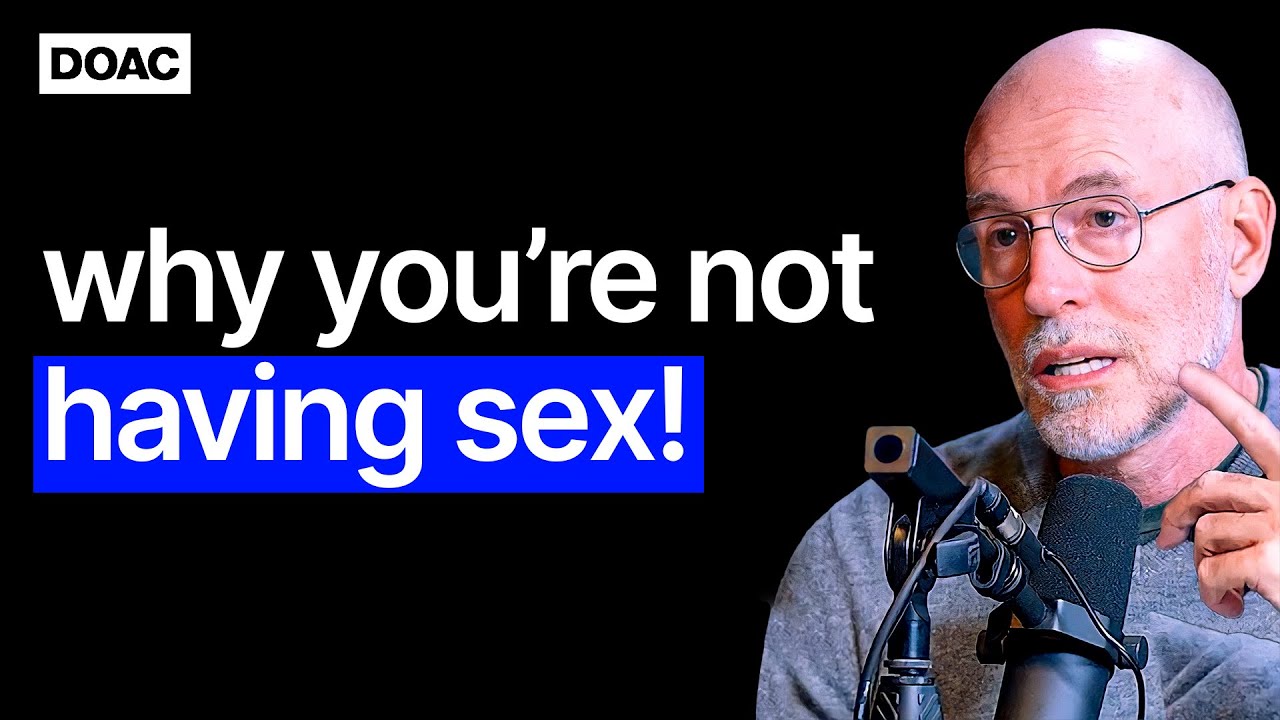
So it is… The number of kids who see their friends every day has been cut in half in the last 10 years. The knock-on effect here is that we’re producing too many of what is the most dangerous person in the world: a young, broken, and alone man. They get this illusion that they have worth, and when they say angry, misogynistic content on social media, they become just really shitty citizens.
Andrew Tate is a self-described misogynist. He says if a woman is going out with a man, she belongs to that man. Is Andrew Tate’s message a symptom of what you’ve described?
100%. They're out of control. Life gets very hard, very fast, from 25 to 45. Generally speaking, these are the least happy years. And then something wonderful happens: you find joy in the mundane as you get older and you get happier. So I think it's helpful just to know that. When you say something stupid at a party or something unkind and you’re just beating yourself up, you need to forgive yourself and realize what feels important in the moment isn’t that important. Happiness waits for you.
What are you still working on?
I’m trying to slow time down. Time is falling off a cliff for me.
But how does one practically slow time down so that 30 years doesn’t fly past?
I find that you can slow time down by…
Without further ado, I’m Steven Bartlett, and this is The Diary of a CEO. I hope nobody is listening, but if you are, then please keep this to yourself.
Scott, give me your context. What is the necessary context that I’d have to understand about you and your earliest years to make sense of the person that you went on to be in your life?
Wow, that’s a thoughtful question. Raised by a single immigrant mother who lived and died a secretary. A lot of my life—I think the most important thing in anyone’s life is to have someone who is irrationally passionate about your well-being, and I had that.
The second thing is I was born in California in the 60s. A white heterosexual male, which was like hitting the lottery. I got access to amazing free education. I went to UCLA and Berkeley for graduate and undergraduate degrees. Total tuition was $7,000. Not only was it accessible financially, it was accessible period. The admission rate at UCLA when I applied was 76%. It’s now 6%.
I mention my sexuality because my freshman roommate in college was born a white homosexual male and was dead of AIDS at the age of 33. A lot of my success, whether it was free education or coming of age during the internet age, was incredible wind in my economic sails. A lot of my success is not my fault. The two things I try and remember that defined my start were someone who was irrationally passionate about my well-being and being born in America and just being exceptionally fortunate.
You mentioned your mother there. What about your father?
My dad—not a bad man—he left us, for lack of a better term, when I was eight. It was the 70s. He started his third marriage while he was still married to my mom. Neither of my parents were very sophisticated; they were both pulled out of school at the age of 13.
My dad was a handsome Scott living in LA, which means he not only thought with his dick, he could listen to it. He just really enjoyed himself, for lack of a better term, which didn’t foot well to a family life. So he wasn’t very involved in my life growing up. But I feel compelled to say, now that he’s 92, every person’s obligation from a species level is to be a better father or mother than their father or mother was to them, and he was definitely that. He grew up in terrible circumstances and he always tried to do the right thing. But it was me and my mom.
Was it a happy childhood in your view?
It was entirely—you were talking a little bit about your childhood—it was entirely unremarkable. I feel like on a scale of one to 100, 100 being the best childhood in the world and one being the worst, in America at least, I was like a 50. It wasn’t bad. We were upper-lower-middle class, but it wasn’t a sob story.
In America in the 70s, you could survive on a secretary’s salary. We took vacations. I didn’t go to good schools, but they weren’t bad schools. I had friends, but not a lot of friends. My high school reunion was recently; no one would remember me. My childhood was remarkably unremarkable. It wasn’t bad, it’s not a sob story, but it wasn’t what I would call great with a lot of support and accoutrements. But again, the context of it is being at the median in California in the 70s was like hitting the lottery. It was the highest median in the world.
What was your relationship like with money? I remember reading that your family's relationship with money was quite formative.
Money very early had a big impact on me because at the time, having a divorced mom felt like a bit of a scarlet letter. But the thing that was harder was we didn’t have any money. We weren’t poor, but if you applied to college and didn’t get into UCLA, there were no options. We didn’t have the confidence, the contacts, or the money for me to apply to college outside of school.
It was stressful, but it was also, in some ways, very motivating. My mom got sick when I was a young adult. Me being the only child, some of those instincts a son feels for his mother take over. When my mom got sick, I decided—I remember coming home one weekend, she was very ill, and I remember thinking I’m not doing my job as a man because I don’t have the money to take care of her.
That was really emasculating. That’s when I kind of got my shit together. I remember the moment; it was when I was in graduate school, I was 26. I decided very early—and I think people who have achieved some level of wealth aren’t entirely forthcoming or honest—I think about money a lot. I was very focused on it. I decided very early that I was going to have economic security. I did nothing but pretty much work for 20 years. I don’t remember much else but work. It cost me my hair, it cost me my first marriage, and it was worth it.
Is there a risk in that? When we become so oriented by money, are we really driven or are we being dragged? How do we make sure we're not being dragged so we can be intentional about living lives in line with our values?
I’m not proposing this is what the world should be; I’m proposing what it is in a capitalist society. I just moved here, so I don’t know if society is different here. I have noticed here people ask you where you’re from; in America, they ask you what you do.
But America becomes more like itself every day. It is a kind, generous place if you have money. It’s a rapacious, violent place if you don’t have money. I figured that out very soon. The way I saw it was that poor people have an entirely different experience with the U.S. healthcare system than rich people.
I just saw it as, if I want to have a life of opportunity, of prosperity, selection set of mates, even love—to be wealthy in America is to be loved. People find you interesting, they want to know you, you have a broader selection set of mates. It is the idolatry of the dollar. The impact that wealth has on your life in America is unfortunate and 100% true, and it gets more true every day.
One of the things I coach young people around is you just have to figure out a way to become economically viable. I’m not saying you need to do what I did and work all the time and have a binocular focus on money, which I did. I think there’s a lot of people who decide they’re not going to live to work, they’re going to work to live. They move to a lower-cost region, they live within their means, and they have really good lives. I think that’s a nice way to live your life.
The majority of young people I’m around, by virtue of the fact I teach at a business school, expect to not only be in the top 10%, they expect to be in the top 1% economically. What I encourage young people to do is have a sober conversation: where do you expect to be economically?
The majority of young people you talk to expect to be in the top 1%. I don’t know anyone who’s gotten there who didn’t inherit money or who didn’t sacrifice a lot. What I tell young people is you can have it all, you just can’t have it all at once. In this competitive environment, to be great at anything, you not only need talent and luck, you just need a tremendous amount of grit and a tremendous commitment.
Some people are so talented that they can have balance in their lives at a young age and get economic security. I think you should assume you’re not one of those people. Assume that, like most of us who have achieved some level of economic security, it’s required a significant trade-off. It came at a cost of relationships and stress. It takes a toll. The reason I have balance in my life right now is because I didn’t have very much when I was your age.
You’re an entrepreneur. It’s hard to phone it in as an entrepreneur. People think we’re extraordinarily talented, blessed with some special skill. I would argue that you have more of a risk appetite and you’re willing to endure public failure. There’s no blaming anyone else when your business crashes. It’s very public failure. More than anything, you have a natural instinct to be thinking about the business all the time and working at it most of the time. There is a relationship between intelligence and success, but it tops out at about 110-120 IQ. It’s better to be smart, but the difference between being smart and being a genius has no correlation with success. That’s where grit, perseverance, and resilience take over.
One of the things you said was about your mother getting sick. You remember the day you realized she was depressed. How did that shape your views on happiness, fulfillment, and depression?
My mom wasn’t severely depressed, but I remember—and that’s one of the wonderful things about a liberal arts education—I took psychology, and they started talking about clinical depression and what it meant. I realized that’s what my mom was suffering from.
Depression is sort of the cancer of our generation in that it used to be closeted and now people are openly talking about it. It’s really helpful. I wish I’d known what my mom was going through earlier. We’re a narcissistic species; you immediately think it's something you’ve done. It’s not about you usually; it’s about them.
Life isn’t about what happens to you; it’s about how you respond to what happens to you. I think it’s very helpful when you recognize depression and understand it in other people because you then realize when you’re feeling really down, a lot of times it’s not your fault. You may have substantial reason to be depressed, but you may not. A lot of it is about your chemistry that day.
Also, recognize that "this too shall pass." A saying that’s been really important to me is "nothing is ever as good or as bad as it seems." When you feel like you’re killing it, on top of the world, that’s absolutely the time to bring in your horns and be humble and grateful. realize a lot of your success isn’t your fault; you just got lucky. At the same time, when you’re upset, when you’re angry at yourself, when you’re depressed, when you feel like everything is just black—it’s not. That’s temporary. It’s comforting to know that will pass.
Understanding what my mom was going through was external—that it wasn't because things were so bad for us or so bad for her, but that this was a chemical thing like catching a cold—that was really liberating and helpful. Not only to manage the situation in our household but to recognize when I was down. I realized I was probably going to be more prone or vulnerable to that type of depression. When I was a kid, we didn’t talk about depression. We used to call it a "nervous breakdown." It was a sign of weakness and it only happened to women. They were the weaker gender and they had something called a nervous breakdown. That was what mental health was called back then. Slowly but surely, people started to acknowledge it was a thing.
One of the things you talk about in your new book, *Adrift*, is this decay of community in our lives. Community seems like such a human thing. I thought maybe that’s in part part of the cause or factor of why we’re seeing a lot of unhappiness and depression. What’s your take on that?
100%. Do you have dogs? I know you don’t have kids.
I do. I have a dog upstairs.
Dogs just want to be around other beings. Mammals are very social. From a young age, we suckle. My dogs lie on top of each other. We’re meant to be around each other. Whether it’s in the U.S., enrollment in Boy and Girl Scouts is off by like 40%. Church attendance is way down. The percentage of people who speak to their neighbors is off by 40%.
If you think about COVID, we don’t go to the mall, we don’t go to movie theaters. We’re becoming more and more segregated by income class. The number of kids who see their friends every day has been cut in half in the last 10 years. We’re just not touching, smelling, and feeling each other nearly as much. I think that’s directly correlated to happiness.
My youngest really struggled with COVID. We always said it's because he’s not in school, because the schools were closed for a while. I thought, more than school, what my kid needs is other kids. You need guardrails, you need people around you. I think of those Japanese soldiers who retreated into the hills of the Philippines with orders to not give up the island. When the Japanese retreated from the Philippine Islands in the South Pacific, they left behind some of these soldiers. Some of them were there for 20 or 30 years. They refused to give up their commission until they would have to find the commanding officer, take him to the island, and tell them, "Come down, the war's been over for 25 years." These individuals accomplished nothing. They didn't grow spiritually, physically; they didn’t learn anything. They had nothing to share with anyone after their 25 years.
Being alone is one of the worst things on an extended basis that can happen to a human. Every day, one of the worst things that can happen to a human is happening more and more to all of us in Western society. It’s especially prevalent among kids. The lack of socialization, and then this hyper-socialization that takes place on their phone, which is really brutal and has huge externalities, is one of the biggest causes for the massive uptick in depression among young people.
Again, I like to coach younger people: put yourself in a position where you have to be around other people every day building something in the agency of something else. Whether it’s a job, a non-profit, church, or a sports league, be in the agency of others building something bigger than all of you. It’s a great way to make friends, mentors; it’s a great way to learn how to read the room.
I joined a fraternity when I went to UCLA when I was 17. People make a cartoon of fraternities, like we’re all these terrible people. It was the best thing I could have done. I had no male role models until the age of 17. My dad wasn’t around, I didn’t have many friends. Being in a place that shrunk a 30,000-person campus down to a smaller thing—I wouldn’t have graduated without it. It was hard for me. These fraternity brothers gave me a hard time. But it was really good for me. You get in better shape. I remember my roommates telling me to stop smoking so much pot and go to class more. You have people watching you 24/7. I needed that socialization. I think one of the worst things that can happen to a young adult is for them to be isolated, and we’re increasingly isolated.
Are you optimistic about that changing? Because the direction of travel is in one direction. When you hear things about metaverses...
I’m not. I think technology is nihilistic. I think the most successful person in the world, at least monetarily, wants to figure out a way to inhabit another planet rather than focus his genius and his resources on making this planet more habitable. I find that nihilistic.
I just find it strange that the most talented, wealthiest people in the world want to get us off the planet. Then you think about social media, just the trends among young people. There’s an uptick in travel, but that’s pent-up demand by a class of people who have the money to travel. Our socialization appears to have taken a dramatic structural step change down. I even see it in my kids. They are thinking about getting home to their phones. They’re social on their phones, but it’s not a replacement for person-to-person contact.
There are some good things to it: teen drunk driving accidents are down, teen pregnancy is way down. But the number of kids socializing is way off. I think it’s a terrible thing and I don’t see—there will be some uptick because COVID’s over—but it feels like there’s been a structural step change down. People now want the dopa they get trading on Robinhood, watching porn, watching Netflix, getting some sort of socialization or need for affirmation by the number of likes they get on Twitter, rather than leaving their house to get that same type of dopa hit. The number of people playing organized sports is way down.
I think it’s a real problem. I don’t see it turning around unless there’s recognition of it and external investment, whether it’s youth clubs, after-school programs, or some sort of conscription or national service, which I’m a big fan of. I don’t see structured means for young people to serve in the agency of something bigger than themselves.
Do you think there’s a decline in grit among young people, this Gen Z generation? You talked about how important grit is to achieving economic viability. I was talking to Simon Sinek a couple of weeks ago about whether Gen Z are less resilient and hardworking than generations that have come before them. I opened up TikTok the other day and it’s showing a day in the life of a Gen Z working in tech. It’s like, "Wake up, get the Frappachaca latte, take the dog for a walk, pottery class." Five minutes on the laptop.
I worry about this a lot with my kids. Generally speaking, what happens is the children of—I always say if I had what my kids have, I wouldn’t have what I have. Because I wasn’t that motivated. If I’d grown up in the household my kids are growing up in now, the only two things I know I would have had in my life as a young man are a Range Rover and a cocaine habit. I just wasn’t—an absence of money really motivated me.
My kids don’t have that. My kids have access to everything they need. Trying to figure out a way to instill grit in your kids, whether it’s chores or some level of discipline, I think is our biggest challenge as parents. But in terms of the kids I work with—granted it’s selection bias—the kids I work with, I can’t get over how extraordinarily talented they are.
The meme of "quiet quitting," again it may be proximity bias because of the kids I draw or I know at my firm, but I find that every year—and I teach between 300 and 500 kids a year at NYU—every year I find that the young adults are more talented, harder working, and more socially conscious. Sure, they’re a little expectant. Some of it I roll my eyes at. Occasionally someone will say they need to leave and go do a Pilates class, and I kind of laugh like, I can’t even imagine saying that to my boss when I started out. But in general, I find them just remarkable. I don’t buy this notion that they’re somehow entitled. I haven’t seen that.
When you’re teaching these young people and preparing them with skills for the world that’s to come, what is a key indicator that that young person will become a successful adult, professional, entrepreneur, or business owner?
I can’t speak to entrepreneurship specifically. We’re very data-driven. I started and ran a company called L2, which was a business intelligence firm. We grew it to about 120 people and then we sold it. We used to evaluate everybody every year and then we would try and look for correlations.
While it’s dangerous to do and no one wrote it down, the correlations we found that were the best predictors of success at our firm were a few things. One, they went to a great school—which you don't like to say, but most of our kids who are really strong had gone to what you would consider elite universities. Two, they were athletes. We found that a background in sports, especially individual sports like gymnastics or diving, meant these people just brought a certain level of discipline and grit that some of the others didn’t have. And the third is female.
Because we had such a young firm, a disproportionate amount of our really successful people were women. There’s a lot of studies showing now that women just mature at an earlier age. The net of it for us was—and you were scared to write it down, and I’ve sold the firm so I can say it now—if a woman from the Yale gymnastics team showed up, she was an automatic hire.
I don’t think that’s anything unusual or groundbreaking. I graduated from UCLA with a 2.27 GPA. Basically, I barely graduated. I got a job at Morgan Stanley right out of UCLA, which was considered a pretty prestigious firm. It’s because the guy who ran the department had rowed crew, and I was an oarsman at UCLA. He said anyone who rows crew gets an automatic hire because you’re willing to kill yourself. You can push yourself harder than anyone. A lot of these firms recognize that sports are a forward-looking indicator.
Some of the other indicators you can’t control. Getting into an elite university now is a function of being the son or daughter of someone rich, or being freakishly remarkable. Obviously, you can’t control your sex. But I have several women in their early 20s working for me who could be the junior senator, could be the next ambassador to France. A lot of the young men have a lot of potential, but you can just see they just don’t mature as fast.
At NYU, what else are you teaching these kids?
Mostly principles of brand strategy and digital marketing. But I have a session that’s the most popular session, which I call the "Algebra of Happiness." I just go through basic best practices for success. Realizing balance is a myth is one.
I think the most important decision you’ll make in your 20s and 30s—I survey the class, "What’s the most important decision you’ll make?" and they usually say the industry you'll go into, or where you decide to live. The most important decision you’ll make is who you decide to partner with, specifically who you have kids with. Because you’re in that person’s life for 20 years.
I have a lot of friends who are successful on most exterior metrics but don’t have a real partner in their spouse. They have what I would call a life full of stress and disappointment on a regular basis. Whereas I have friends who, on an external basis, may not look as successful, but they have a real partner and everything just burns brighter for them. The most important decision you’ll make is who you’re fortunate or not fortunate enough to partner with.
So what I suggest is that they be as aggressive as possible about creating as many opportunities for serendipity and contact with people. Your ability to punch above your weight class and find someone of great character that you’re attracted to, that you fit with, is a function of liquidity. Always accept invitations to dinner parties.
I think young men should be more aggressive. I think young men have been told in this environment that they should be very careful about who they approach and express interest in. I think there is a huge difference between expressing interest in a thoughtful way and harassing someone. If you don’t know the difference, you’ve got much bigger problems. But I encourage young men as general cognitive or behavioral therapy to force themselves, when they’re in a line of coffee, to talk to the guy or gal in front of them and behind them. If you’re interested in someone, there’s nothing wrong with asking them out to coffee. There’s nothing wrong with expressing interest.
I see a lot of young men are not creating those types of opportunities to meet people and eventually find good friends, find good mentors, and most importantly find a good mate. Unfortunately, marriage and relationships are becoming another luxury item. Marriage and pairing off with a mate is plummeting. It’s correlated to your wealth because middle-income and poor people, especially men, are no longer seen as viable mates because of online dating. They also don’t have as many opportunities to meet people in person, where there are things like smell and vibe and humor that are some of the magic and mystery of why we’re attracted to each other.
What I tell them is create as many opportunities as possible to establish relationships. Give up balance if and when you can. Invest all of your remaining energy in having as many random contacts with people as possible. Be aggressive. Talk to people. Introduce yourself. Express interest. If they’re not interested in you, both of you are going to be fine. You can handle the rejection or the small rejection. They can handle someone expressing interest. I think in our age, we’ve in a weird way implicitly told young people, especially men, they’re not supposed to express that interest.
What do you make of dating apps?
My advice to young people would be to do it all. It’s how people meet. It used to be a third work, a third friends, and a third school. Now it’s well above 50% online. The majority of relationships are beginning online for people your age. It’s very efficient.
But what happens when technology comes into any sector is it consolidates it. It becomes a winner-take-most market. Whether it’s e-commerce, social media, or search engines, once technology comes into it, you have one company that owns 50% of all online retail, two-thirds of all social, and 93% of search. Technology has come into mating with dating apps, and it’s created a winner-take-all or winner-take-most dynamic, which is somewhat unhealthy.
It plays out like this: women are interested in men based on three criteria. The first is their ability to signal resources. The second is intelligence. The third is kindness. It doesn’t matter how rich or how smart you are; if you’re an asshole or you’re not kind, people eventually don’t want you as a mate. Unfortunately, online, it’s very difficult to signal two and three. You can signal one.
When everyone has access to everyone, women—who have a much finer filter for mating because the downside of sex is so much greater for them if they get pregnant—end up all being drawn or expressing interest to a much smaller group of individuals. So the dynamic is you have 50 men on Tinder, 50 women on Tinder. 46 of the women will express all of their interest to just four men, which leaves 46 men vying for the attention of just four women.
If you apply the Gini coefficient to online dating, it’s got the same Gini coefficient as income inequality in Venezuela. Mating inequality is greater than income inequality in Venezuela. It leads to what I call "Porsche polygamy." The men who are the top 10% in terms of attractiveness online get 90% of the interest. That does not lead to good behavior or establishing long-term relationships.
The 50th to 90th percentile do okay, but the bottom half of attractiveness of men based on online attractiveness are totally shut out of the market. As a result, in America, one in three males under the age of 30 has not had sex in the last 12 months. People hear the term "sex" and their minds go different places. I think of it as the key step to an elemental foundation of any society, and that is relationship. In the U.S., what’s happened with online dating is it’s amazing for the top 10% of attractiveness of men. It’s okay for the top half. It is a disaster for the bottom half.
When I say attractiveness, I mean by very crude metrics. If your Tinder profile says "I went to MIT, I just started at KKR," and my Rolex accidentally is visible in my profile picture, and I’m geolocated living in Manhattan or Beverly Hills, you’re going to get a massive amount of attention. The bottom half, who are not able to express anything other than wealth which they may not have, are totally shut out of the market.
The knock-on effect here is that we’re producing too many of what is the most dangerous person in the world: a young, broken, and alone man. The guy who attacked Salman Rushdie recently in the U.S.—that wasn’t about the fatwa. That was about a young man living in his mother’s basement. When you hear about mass shooters in the U.S., you know who they are before you know who they are.
We are producing an enormous cohort of economically and emotionally non-viable men. I think it’s bad for society. I think it creates an existential risk for us. I think women as a result find there just aren't as many economically or emotionally viable men as they would like. Women are graduating at double the rates of college as men now. For every one male graduate in the next five years of college, there’s going to be two women.
You think, okay, it’s time women leveled up, they’re finally getting their due. Okay, but this has huge societal impacts because women mate socioeconomically horizontally and up; men mate horizontally and down. In sum, women with college degrees typically aren’t interested in men without college degrees. So we’re seeing less household formation, lower birth rates, and these things usually stunt an economy.
I think it’s a big issue. Again, I think it comes down to providing more opportunity for young people in general. I think if you had gender-specific affirmative action towards men, it would just become so politicized and heated that it wouldn’t be worth it. I think you need a massive leveling up of all young people that I think will disproportionately help young men.
How do we get those bottom 50% of young men laid?
I think you need to make them, first and foremost, more economically viable. More job opportunities build confidence. You need to get them out of the house. Vocational programs, opportunities to go to college or get some sort of certification. Things as basic as social service or more opportunities for them to get together. Community.
I think it's a certain amount of education that embraces some of the things that are wonderful about being a man. Being aggressive is fine. Be physically fit and strong. I’m a big fan—I believe the forward-looking indicator of your success is the amount of time you spend sweating versus watching other people sweat. Any person under the age of 30, man or woman, should be able to walk into any room and think if shit got real, I could kill and eat everybody or outrun them. One or the other.
It’s not about being ripped, it’s not about being skinny; it’s about being a stronger version of yourself. You’ll be happier, less prone to depression, more attractive to other mates. You’ll be kinder because you feel more confident.
Embracing physical fitness—young people have one thing that’s terrible about young people, they’ve gotten unhealthier consistently the last 50 years. Social service and figuring out institutions and means, whether it’s school or social service, so they can meet each other, develop friendships, fall in love, have more opportunities to not only make relationships but have guardrails. Young men need guardrails. They need a girlfriend, a job to tell them, "No, you need to put on a shirt and get into work. No, you can’t get high and drunk every night. No, if you want to continue to have sex with me, you need to get your shit together."
I think that’s really important for a young man, especially young men. Young women need it as well, but just not as much. What you have is a generation of young men that have no motivation, no guardrails. They get their dopa hit of addiction on Robinhood. They don’t have the mojo to get out there and meet women as much because they’re watching so much porn. They get this illusion that they have some sort of worth or affirmation when they say angry things on social media that they get rewarded for. They start blaming other people, specifically they start blaming women, and they become much more prone to misogynistic content. They start believing in conspiracy theory, they’re less likely to believe in climate change. In sum, they become just really shitty citizens.
We’re producing just a massive amount of these individuals. The scary part is we’ll just ignore the weirdo and put them in the corner. The problem is the government doesn’t ignore them because we’re very misogynistic when it comes to our elected leaders. In the U.S., we’ve been producing more female college graduates than male college graduates for the last 40 years, but still, only 28% of our elected representatives are female. Societies, men and women, conflate leadership quality with height and depth of voice. So we will always, at least in the U.S. for a long time, elect more men. And who do these men appeal to? How do they get elected? They appeal to this cohort of conspiracy-driven, misogynistic, anti-government young men. These young men will always have overrepresentation in government, which leads to elected leaders saying that they believe the elections are rigged, that stoke nationalist fears, that blame immigrants. Really hateful stuff.
Not only are these individuals dangerous and unproductive, but what’s even more unproductive is they will have a disproportionate voice in our politics because the easiest way to get elected is to tap into the tribal instincts or motives of this cohort.
You said misogynistic content there, and one of the things that came to mind when you said that was Andrew Tate. Are you familiar with this person?
Yeah.
Is Andrew Tate’s message a symptom of what you’ve described?
100%. It’s easy to credit your grit and your character for your successes and blame the market for your failures. So when you have a young man who is failing, he’s looking for culprits. Then you have someone come along and say, "It’s not your fault," and they start saying that the reason you can’t find a date is women’s fault. It’s their fault, it’s not yours. It’s not that you haven’t developed the skills or demonstrated the discipline to develop the attributes that others find attractive; it’s their fault.
I think it’s very dangerous. Most of it’s a grift. The individual you represented claims it’s not your fault and then, "Buy my $49.95 learn-how-to-be-successful program." It really is a grift. Trump is sort of a version of that. If you think about what’s happening in America, the Democratic Party is basically becoming the party of educated women and the Republican Party is becoming the party of uneducated men.
Yeah, I think those types of individuals are perfect examples of falling into this really ugly "blame others" gestalt in our society. I think it’s very unfortunate. I think also on the—I have no idea what your politics are, Steven—I consider myself a progressive. I think progressives have to take back masculinity. We have to define what masculinity means and show a vision. Why are all the dudes these conservatives?
I’m a profane and vulgar person. On the left, they immediately conflate—I’ve cursed several times on this show, I talk about sex very openly and very crudely. That doesn’t mean I’m not a feminist. It doesn’t mean I don’t have progressive values. So I think the left needs to take back profanity and vulgarity, and I think we need to take back masculinity.
I see masculinity as a man-made societal construct, but we need to identify it and then ask young men to foot to those skills. I see it in a very basic way: acquiring the skills and strength so you can advocate for and protect others. Whether it’s physical strength, mental strength, financial strength, kindness, intelligence.
I think saying, "Okay, it’s great to be a man, express your masculinity." By the way, masculinity isn’t just the domain of people who were born men; women can demonstrate masculine features just as men can demonstrate feminine features. But I think the left, or progressives, need to take back this notion of masculinity. We’ve sort of emasculated men on the left because to be pro-man, to even acknowledge masculinity, is somehow to be anti-female on the left. That’s not true at all. You know who wants more men? Women. Or that’s what I find.
So I think that a key to restoring balance and not having our party split across gender lines and pull this generation of failing young men out of this hole is to redefine masculinity as something more evolved, more thoughtful, that involves intelligence, that involves kindness, that involves strength. But also on the left to say, "It’s okay to be a man. We can acknowledge our differences. It’s okay to be aggressive." When Russians pour over the border in Ukraine, you want some of that big dick energy. There are some features distinct to a man that are really important to our society and should be celebrated. All of it has been, in my opinion—a lot of it has been on the left conflated with toxicity. There are some of those attributes that can lead to terrible behavior, but most of it is a good thing in our society. Most of it is needed.
When your cat is acting weirder, or your dog is being louder, your turtle moves slower, your cat seems thirstier, or your puppy is acting clumsier—day or night, if you don't know what's wrong, know where to go. Veg ER for Pets. This is Kate. Veg, the better, kinder ER for pets.
There was a big smile on the front of your book. Part of the reason why you put that what looks like a smiley face on it is because of this arc of happiness that you describe. That was quite surprising to me. What do you mean by an arc of happiness?
Across almost every culture, the correlation between age and happiness is a smile. Zero to kind of 25 is beer, Star Wars, making out, prom, college football, or Premier League football. Zero to 25 is usually pretty happy.
25 to 45 is what I call the "shit gets real" years. You realize that, distinct to what your parents or your uni told you, you’re not going to have a fragrance named after you or be a member of Parliament. You have kids, you have economic stress. Someone you love a great deal gets sick and dies—your parents, right? Life gets very hard, very fast, from 25 to 45. Generally speaking, these are the least happy years.
And then something wonderful happens, usually in your late 40s or early 50s, and that is you start recognizing the finite nature of life. Maybe you have some economic security, maybe you’ve established relationships, maybe you have these really wonderful things that look, smell, and feel like you called kids. You realize that life is short.
Do you remember going out with your parents or your mom, and your mom would—a salad would come and she’d stop the table and say, "Look at how beautiful this salad is," or just admire the flowers. You used to think as a kid, like, "What the fuck? Like, what?" And when you realize it’s so weird, when you turn into your—I stopped outside my house, there’s a garden, and I just couldn’t stop marveling at the garden. The garden's here, I've never seen anything like it. We have this garden across from us in the park and I’m like, who are the gnomes that come out at night and manicure this thing so perfectly? I’m not into botany or horticulture and I can’t stop marveling.
I wouldn’t have done that in my 27-year-old self. But I do it at my 57. I find you find joy in new things. You find joy in the mundane as you get older and you get happier. The happiest generation, the happiest age cohort, the cohort that should be the least happy because they’re not healthy, is old people.
So the learning here is that if you wake up at 35 and you have a couple of kids and you have a spouse or you have a job and you think, "Shit, this is hard, I’m not that happy," recognize that’s part of the journey. Just keep on keeping on. Happiness waits for you in most instances. Happiness is absolutely a smile.
So I think it’s helpful just to know that, that as you move into your income-earning years, as you move into your mating and child-rearing years, and the depth of work, and your parents start aging—it’s stressful and it’s hard. If you’re unhappy or feel unhappy at times, that is normal. That’s part of the journey. For me, it was helpful to read that because I’m looking forward to all the happiness that’s coming my way and I can feel it as you get older. You just start finding joy in weird places.
When was the pit of your arc in your life? When were your hardest years as it relates to happiness?
Well, losing my mom was tough for me. But I think the pit for me—you’re an entrepreneur—the highs are really high and the lows are really low. The closest I can equate it to is having a business like having a kid. You conceive the thing, it looks, smells, and feels like you. When it does well, it’s just like when your kid scores a goal or is doing great or seems happy. There’s just no joy like that.
You have your world of work, you have your world of friends, and you have kids—you'll find this out, Steven—when something goes wrong with one of your kids, the whole universe shrinks to what is wrong with your kid. I mean, nothing else matters. You just can’t sleep, you’re stressed, you’re upset, you feel failure on a cosmic level because this instinct that pours over us is if your kid is failing, you have failed on a more cosmic level because you haven’t been able to protect that kid. It’s the same way with a business.
So when your business fails, you just—it’s impossible to remove yourself from that failure. My lowest moment probably professionally was in the Great Financial Recession of 2008. In '99, I was a young man and was wealthy on paper. I’d started several e-commerce companies. I didn’t realize most of it was not my fault, that it was the market. By the end of 2000, I was broke. I lost everything through the dot-com crash. Clawed my way back to some level of economic security in 2007. Smacked again in 2008, lost almost everything. Then my young son, or my oldest, had the poor judgment to come marching out of my girlfriend. So I was broke and I had a son, a newborn.
A combination of the disappointment professionally where I was now 40 years old and wasn’t economically where I thought I would be was really upsetting and disappointing. And then the stress—when you’re a dude with no spouse or kids, you can kind of dance between the raindrops. If you need to, you can sleep on a couch. I always knew I could make a living; I could support myself. But living in New York, having what felt like economic failure, business failure, and a kid—it’s like, "Okay, my failures are now this kid’s failures." That was really stressful.
It was also very motivating. I had made some money, so I had made enough money to live kind of a fake wealthy life. I had nice clothes, a nice apartment, I could go to St. Barts. I had just enough money to give the illusion of success. But there’s no faking it when you have kids. This person is dependent upon you. I was living in New York; it’s impossible not to make a good living in New York with kids. That was wildly stressful. It was no longer about me. When I fail economically, I’m failing as a species, I’m failing as a dad. That was a rough time. 2008-2009 was rough. But it was also very motivating because I got very serious and started working very hard. Again, I didn’t see my kids—we had another kid two and a half years later—I didn’t see much of my kids until the age of five. I tried to get home for bath time, but I was very focused on getting my household back on economic firm footing again. But that was very stressful.
That’s your biggest professional failure. What about your biggest personal pit? And what did it teach you?
I don’t know. I think—are both your parents still alive?
Yeah.
Okay, so one of them will get sick and die. That is the hard—the two things I found that kind of turn you into an adult are when you lose one of your parents. Just the harshness of it is so unthinkable. As a species, we have an inability to wrap our head around death for good reason, otherwise we’d all just be freaked out and not willing to take risks and not hunt animals because they might kill us and never go outside. So we purposely can’t understand it. We can’t imagine it. You can’t imagine that this person is going to be gone and it is over.
That is devastating. It also just brings this harshness of life really present in front of you. But at the same time, it creates tremendous perspective that the mortality rate is 100%. My kids are going to have the same tragedy when I die. I think it can liberate you and realize that if I feel embarrassed, if I feel scared about risk, if I’m beating myself up over a mistake I made—you know what? It really doesn’t matter that much. You should be kinder to yourself, you should be more forgiving.
There’s great work by my colleague at NYU, Adam Alter, on palliative care where he surveys people who are weeks from the end. They have a lot of regrets. They wish they'd lived the life they wanted to live, whether it was being more open about their sexuality, being who they wanted to be with, going to the career they wanted to go with. They were living their lives for other people—that's a huge regret—or for society. They wish they'd stayed in better contact with friends.
But more than anything, their number one regret is they wish they'd been less harsh on themselves. Again, life isn’t about what happens to you; it’s about how you respond to what happens to you. When someone dies and you realize the finite nature of life and that we all have the same end coming, I think it’s liberating. What you realize is when you say something stupid in a board meeting, even when you have a business failure, when you pick a stock and it gets cut in half in two weeks and you’re just hating on yourself, when you say something stupid at a party, when you say something unkind unwittingly and you’re just like, "Jesus, what was I thinking?" and you’re just beating yourself up—realize the person you’re worried about what they think of you, your situation, it’s going to go really fast and it’s going to be over.
All you’re going to have is the people that miss you. So you need to forgive yourself and you need to realize what feels important in the moment isn’t that important. I found it very liberating. I was devastated losing a parent, and was really my only parent, but at the same time, it just gave me a lot of perspective.
Then I think the second moment in your life where you start to grow up is when you have a kid. Because up until that moment—and I’m naturally a selfish person, it comes very easily to me—it’s the first time in your life you’re more concerned with someone else’s well-being. It’s a strange sense to want someone else to be—to be more concerned with someone else’s well-being than yours. Truly more concerned.
It’s somewhat liberating. When I was your age, on Friday I’d start getting stressed like, "What fabulous people am I hanging out with? What amazing thing am I doing? How can I hang around more interesting and hotter people? How can I have better experiences? More sex with hotter people? Make more money? Make more money?" Now it’s like, "Okay, we got soccer practice Saturday morning, we got a playdate Saturday afternoon." It’s all of a sudden just about them. It literally is just about them. For the first few years, that takes some adapting, but what you find is I find it relaxing now to be more focused on someone else. I find it relaxing and rewarding instead of just all you all the time, right?
Losing someone and gaining someone I think are the kind of key moments where you sort of grow up. Losing your parent is something that happens to everybody. The economic strain I have, most people would pray for, but personal troughs—I’ve been really blessed so far.
You talked a little bit there about self-doubt. Do you struggle with self-doubt?
Oh, yeah. I have a huge imposter syndrome, but I think it’s healthy and I think most people have it. I think. Sure. Every time I’ve raised money, I’ve thought I was fooling them and committing fraud. Like, "Oh god, I just raised $37 million for my edtech startup. What were they thinking?"
Weird things—I get, I’m sure you get fan mail or people who listen to my podcast or want to meet me or have dinner with me. I don’t like to do it because I always find they’re going to be disappointed that the person they think I am, I’m just not that interesting or that cool. I always worry that at the end of the day, my natural state will be to be broke and alone. That that’s kind of like what my personality traits or where they’ll lead me. I have those fears every day. I have huge imposter syndrome. But again, it’s motivating. It’s like, "Well, okay, prove yourself and them wrong." So I wouldn’t describe myself—I’m confident on certain levels, but I always feel like a little bit like every time I have an achievement that I’ve like kind of fooled everybody.
Do you know where that comes from? Because I sit here with a lot of people so I see a variance.
I don’t know. I really don’t know where it comes from. But yeah, I definitely have something whispering in my ear like, "Who the fuck are you kidding?" Like, "You fooled them temporarily, but it’s all going to come crashing down." Yeah, I have that.
When I was reading through a lot of things you'd said about yourself, you also had called yourself an "asshole" a few times. What do you mean by that, and why were you an asshole?
Someone who wasn’t kind. Someone who put their own needs ahead of other people. I wasn’t very kind to my first wife. As an early manager, I should have been kinder to my employees. Yeah, an asshole.
Why or how?
I don’t know. I guess because I could. I like to think that I’ve gotten better as I’ve gotten older. I think in America, there’s this—at least in its changing in the world I grew up in—I think it kind of started with Steve Jobs. Here’s a guy who—I think there’s this unfortunate gestalt in American business that if you’re talented and super nice, you’re talented. If you’re talented and a bit of an asshole, you’re a genius. It was seen as leadership to be in a room and get angry or point out the problems or dress somebody down.
I think that’s changed for the better in the last 10 years, but everybody was trying to be Steve Jobs. And there’s no getting around it: he was cruel at work. He denied his own blood under oath to avoid child support payments while he was worth a quarter of a billion dollars, and that’s the Jesus Christ of our information age economy. This was not a kind man.
And so in the tech community in the 90s, it was kind of rewarded to be—you were a fighter, right? To be harsh. I think a lot of that has changed for the better. You realize, not only just as you get older, you’re just younger and you’re selfish, and I think I’d gotten some early success so I don’t think I realized the extent to which luck played a role in that. But I’ve gotten better. I’m less of an asshole.
What has allowed you to increase your self-awareness?
You just get older. You realize—I remember I had one moment. I was in a meeting—I’ve always run my own companies before I joined NYU—I remember just nothing that big a deal, but this guy was presenting and he was having some slides and I’m like, "Go back. Your slides make no fucking sense. Just don’t get us all in a room and present this garbage." Just kind of said it like that, those exact words.
He finished the presentation and then we were all after towards—I went to the men’s room and he was in the men’s room. He was next to me at the urinal and I saw his hand shaking. He was so rattled by the thing that he had like a small palsy or whatever you call it. I remember thinking, "I was finally getting to an age where I could start to be a little bit more self-aware," and kind of like, "What’s the point of all this fucking success if you just make other people feel like shit?"
And I thought, "Why did I do that?" Some of it was to communicate that this was unacceptable—and it was, the data that this person was presenting was unacceptable. But it would have been just—but part of it was for me to take the opportunity to elevate my own stature by diminishing someone else’s. That’s entirely wrong.
What you realize as you get older is that you don’t need to diminish other people’s status to get to the same point. I should have taken him aside and said, "Come on, man, that data was—you can do better than that. This is what was wrong with it. This is how I think you should present the data. Realize that you’re presenting to a group of people who are going to notice that data contradicts the data on the next slide." Instead, my need to feel important or whatever, put my own needs ahead of theirs. I think there’s a lot of that. I don’t think it’s a unique attribute, but I’d like to think that I’ve starched most of that out of my professional life. You just get older, hopefully you get kinder, you get more self-aware. But oh yeah, I look back on my career, there’s a lot I’m not proud of.
What are you still working on personally?
Being present. Regret and upset about the past, anxiety about the future, take you so out of the present. Trying to enjoy—my son’s at boarding school. The most difficult thing about moving here is I come home, my boy’s not there, my 15-year-old. That’s real strange for me. You’ll see when your kids are around, they become a limb. When you’re not around your kids, you feel as if something’s wrong.
The first day away from them is amazing, and then it gets awful. You’re like, "Oh god, this is wonderful, I can sleep in." I used to like business travel, especially when they’re babies; babies are tough. But now you feel as if you’re walking around without a limb. It’s just weird.
My son’s in boarding school here, and so coming home and not having him home is just very strange. So when he was home yesterday and he’s only home for a day and a half on the weekends, trying to be very in the moment, trying to be present. I have a tough time. One of my talents as an entrepreneur, I think, is that I’m always thinking about work and focused on shit. So when I show up Monday morning, I’ve kind of got a head start because I’m thinking about problems, I’m thinking about stuff.
But the problem is you’re not that present. It’s very hard to balance those two because it’s so competitive. I would imagine you’re constantly thinking about work, thinking about new ways to improve things, people you can reach out to, emails you should send to encourage people—just constantly thinking about it.
Once you have kids, it’s very hard to manage that balance because you want to be present. So I’m trying to be present, also I’m trying to slow time down. Time is falling off a cliff for me. I have a chat group with my college friends. It was yesterday when we were in college; it’s just flown by the last 30 years. Which means it’s going to go even faster and I’m going to be 87. Trying to slow time down, trying to be more present. That’s what I’m working on. And just trying to be kinder. I think everyone should from day one just think, "Okay, how can I be more kind?"
How do we slow time down? My friend asked me the other day what my superpower would be, and that’s what I said. I said, "I wish I could pause time." So then I could get my work done and continue with my life. But how does one practically slow time down so that 30 years doesn’t fly past?
When you’re a dad, one of the things you realize is you have this belief that your kids are going to be into World War II history and CrossFit. Those are the things I’m interested in. What you find out is kids have their own interests, and if you want to be a good dad, you have to lean into their interests, otherwise you’re just not going to have a very strong relationship with them. Because they’re selfish. Kids are inherently selfish and they’re not like, "Oh well, Dad’s really into World War II history, so I’ll go to the British War Museum and I’ll find it fascinating." That doesn’t happen.
My kids—so yesterday I ended up at Life-Sized Monopoly, which is this life-sized Monopoly game somewhere. For me, that’s the seventh ring of hell. That’s just—but what you try to do to slow time down is my immediate—I immediately go into like, "Okay, just ignore the thing, check your email, be a good dad, just get through it." I find that you can slow time down by getting into stuff. Really trying to get into Life-Sized Monopoly and engage with my child and be a little bit over the top about it and when they do cheers, scream loud. Try and get really into things. Because if you want time to pass, it will. It’ll cooperate. But when you get really into stuff, even though you think it’s stupid and cheesy and you can’t help but think, "God, this is like Chinese water torture," I find that slows it down.
Also find leaning into your emotions slows time down because it makes you more present. I didn’t cry or laugh out loud from the ages of 30 to 44. For 14 years I didn’t cry once and I didn’t laugh out loud. I lost the capacity to uncontrollably laugh and to cry. I just kind of forgot how to do either of those things. Emotions are things you have to practice. I remember the first time I started crying and the first time I really laughed out loud with friends. I thought, "God, both these things feel great," and I started getting really into those things and feeling guilt when I do something stupid, trying to really embrace my emotions. Because that indicates what’s important to you—what moves you and inspires you, what upsets you, what pisses you off. I find emotions—real raw emotions—when you register them and absorb them and lean into the messy part of yourself, I find that slows time down.
So getting into stuff and registering your emotions. As a business person, you’re taught to be a little bit stoic. You have this weird sense also as a man of masculinity that men don’t feel their emotions, but you start forgetting what’s important to you. You start forgetting what things you’re into—what you find hilarious, what makes you well up with tears because you find it so moving. Without doing that stuff, you kind of lose your individualism. Anyway, those are my two tricks.
In your book *The Algebra of Happiness*, the third section is about health. You spoke earlier about the importance of it. I’ve really recently over the last two years learned the importance of health and make sure I work out pretty much every day. Why is health so important? One of the things you said was that the most common trait among CEOs is that they exercise regularly. You even made comments about alcohol being bad for us. Did you take time to learn that? The overarching role of our health in everything—what have you learned about that?
It’s kind of where it all starts. This is not a rental. This is not a dress rehearsal. Your body is it. You look like an athlete. What do you do every day?
Thank you, I’ll clip that. I do a mixture—I train for an hour every day. Jemima is in my fitness group, so about 90% of days a year we train. Yesterday was CrossFit.
Look, if you could do something that would make you less depressed, make you more likely to be successful, broaden your selection set of mates—wouldn’t you want to take that drug every day? It’s called exercise. We’re happiest as a species in motion surrounded by others. We’ve been hunting and gathering. The things you’re going to remember in your life are usually not the CrossFit class, but walking around Rome with your family and your kids complaining, but being outside in some form of exercise with people you care about.
And exercise and feeling strong—it’s been my antidepressant. If I don’t—I got here three, four days ago, I’ve only worked out once—I can feel myself: I’m angrier, I’m not as nice, I don’t feel as good about myself. For a lot of people, it is the easiest means to an antidepressant. It’s the closest thing we have to a youth serum.
You have this basically 24/7 security camera on in your brain trying to figure out if you’re adding value. That’s the bad news. The good news is it’s got terrible resolution and you can fool it. If you’re caring for other people—caregivers generally live longer—because your brain will sense that you’re caring for other people, you’re social, you’re touching people, you’re concerned, and it releases a hormone that lets you stay alive. New mothers typically do not die.
If you’re exercising intensely, it fools the camera into believing that you’re hunting prey or building housing, and it says "let's keep this person around longer." So it is a great antidepressant, it’s a great youth serum. I find you’re just kinder, you’re nicer, you’re more confident. Again, the thing that the Fortune 500 CEOs have most in common—it’s not the schools they went to, it’s not even their ethnicity, it is gender (only 483 of them are men)—but more than any practice or attribute, it’s that they work out four to five times plus a week. Physical fitness—it’s one of my algorithms: you should not watch other people sweat for any longer than you sweat. If you’re watching other people sweat four hours a week and you’re sweating one hour a week, you’re in trouble. You have to sweat more than you watch other people sweat.
The other thing we have in common is our background in advertising and brand. You speak a lot about branding and advertising. I sat here with Rory Sutherland and that was one of our best-performing episodes. I didn't realize there was such a demand from our audience in terms of practical advertising knowledge. He talked a lot about Apple and Tesla and the secrets there. How has the landscape of advertising and a brand-building reputation changed in your lifetime? And what is the most important thing for brands to understand now if they are to be successful?
My first job in business school, I started a company called Prophet Brand Strategy that’s now about 500 people. The basic notion was it was based on the principles of my professor in my second year, David Aaker, who’s considered the father of modern branding. It was that the intangible associations with a brand or set of products or services are the only sustainable advantage. If you can wrap a set of products and services with these brand codes of masculinity, European elegance, youth, and then pound away at those associations using this incredibly cheap, efficient medium called broadcast advertising, you can take a marginal shoe, salty snack, marginal car, and get amazing margins on it.
That’s been the—from the end of World War II to the introduction of Google in the 90s, the algorithm for creating massive shareholder wealth was: find a mediocre product, wrap it in amazing brand codes that make people feel more patriotic or younger, stuff the channel with it, and print money. The P&Gs, the PepsiCos of the world, the Coca-Colas—these are the economic titans of yesteryear.
The sun has passed midday on that because our weapons of diligence—whether it’s Google or TripAdvisor, Amazon reviews—now get us to the best product without the benefit of this weapon of diligence called brand. When I came to London, I used to stay at the Four Seasons or the Mandarin Oriental. Why? Because someone else was paying, and they’re always an eight. And then I went on TripAdvisor and I went on my social graph and I found out people love the Connaught Hotel, or people love the Firmdale Hotels. I started staying at the Haymarket. Why? I like a place with a nice gym and I want to hang out with people who are younger and cooler than me. So I started staying at boutique hotels.
All of a sudden, product became the bomb again. Then your ability to embrace these new mediums around social became more important than broadcast advertising. The traditional metrics of branding, the traditional vehicles for branding—a brand identity and broadcast advertising that I’ve been preaching in brand strategy—the sun has passed midday. If you look at my curriculum and the majority of curriculums in marketing departments, you could argue that we’re just training people to go to work at Unilever or General Mills and be laid off 24 months later.
Branding has become much more about innovation and actual product quality. Now that extends into how you discover the product, how you absorb the product, the community around it. Tesla is a better product. Apple used to be an underpowered product with a great brand; now it’s a great brand with a superior product. Airbnb is a much better product. Google is 10x better than what was there before it. Supply chain, design, the way you absorb the product, its ease of use—it’s moved from kind of a brand economy to an innovation economy.
Rather than taking classes on advertising, I’d say take classes on supply chain or analytics or really understand industrial design. There was a general feeling that all product quality had maxed out, and then the internet came along and unlocked all this product innovation. Cars—they felt they'd hit kind of a peak in terms of product quality, and then all of a sudden with the internet and GPS, you could tune a car up wirelessly. You could unlock the doors. There were all kinds of crazy things you could do with it in addition to EV. There’s just been so much actual innovation around the product. What do the most valuable companies in the world have in common? They either spend no money on advertising or they’re spending less.
Apple is the strongest brand in the world, at least a consumer brand (I would argue the strongest brand in the world is a university), but it’s reallocated $6 or $7 billion out of broadcast advertising into its channel, into stores. They built 550 temples to the brand. My 12-year-old and I were bored yesterday, so we went to the Apple Store. So that’s kind of consuming the product, and I end up buying screensavers and new cases that I’m sure are 90 points of gross margin that I could find at Fnac or Best Buy or someone for less money, but we want to be in that store and in that environment. So it’s moving out of pre-purchase broadcast advertising into the distribution channel and into innovation. But the traditional norms of marketing or branding as I taught it—that shit’s over. Don Draper has been drawn and quartered. If you’re watching a lot of advertising, it means your life hasn’t worked out. The majority of people who are technically literate or wealthy can avoid 80-90% of advertising now. They watch Netflix, they subscribe to Spotify, they live in cities where they have local officials that demand you can’t see a billboard from a park. Advertising is a tax on the poor and the technologically illiterate. So it’s moved to more distribution and innovation. But for God’s sakes, don’t avoid the—don’t fall into the trap of thinking that the masters of the universe are branders or advertisers.
If they are innovators then, how does one make themselves or their team more innovative? This is the question I get asked all the time when I speak at conferences or to businesses. "How do we make our 500 people in our company innovate?" Because you’ll see the CEO standing in front of the board meeting or the all-hands and say, "We need to be more innovative."
Yeah, what does that mean, right?
Does fuck all. We all know that. But by design, how do we create an innovative mindset ourselves or innovative teams?
That’s a tough one. I don’t consider myself an expert on culture, although it’s clearly out there. I think of HBO. If there’s a show that people are talking about—I don't know if the same is true here—but in the U.S., people talk about the show at the water cooler, it’s *Euphoria*, it’s *Succession*. It’s generally an HBO show, and they have about a third of the budget of some of the other streaming networks. So there’s something about that culture where they’re able to come up with kind of breakthrough creative.
Some companies just seem to do that time and time again.
Agreed. So it’s a culture thing at the heart of it. Even Apple, you know—especially under the era of Steve Jobs—they seemed to take some unbelievably scary bets that paid off. Obviously, some of them didn’t, but Amazon’s the same—AWS, the Kindle.
100%. So you know there are some basics: it’s a willingness to fail, to take big bets, to reward people for taking risks. I think an external viewpoint that’s constantly benchmarking other companies. My last firm L2, essentially what we did was we went out and benchmarked the best practices of every company in social, e-commerce, payments, and then came in and said, "Okay, Unilever, okay Nike, what can you learn from everyone from Adidas to Tata Motors?" What are they doing that’s really interesting? Having an external viewpoint, a willingness to take big bets, and also holding people accountable.
Founder-led businesses seem to be much more innovative. Obviously, I think they often fail quicker as well, but they seem to have a higher risk appetite than non-founder-led businesses.
Agreed.
We have a closing tradition on this podcast where the last guest leaves a question for the next guest. They don’t know who they’re leaving it for. I don’t get to read it until I open the book. The question that’s been left for you…
Okay. Do I get to know who left it?
You don’t. "What is your biggest regret personally? And if you could go back, what would you do differently?"
That’s a—it’s funny, it’s the questions that are obvious that are the hardest. My biggest regret personally… I wish I had been kinder from an earlier age. I think it’s good for the world, I think it makes me feel more masculine, it makes me feel more successful to be kind. And I didn’t stumble upon that—I wish I’d come to that realization sooner. That to be generous, to be loving, to be…
Cindy Gallop, a friend of mine, says the most wasted resource is good intentions. I wish my good intentions had been—I was more ready, more confident to articulate the kind thoughts I had about others and to articulate them with more ease. I’ve thought good things about other people, I’ve wanted to do good things for a long time, but I didn’t have the confidence or the discipline to either say them or do them. I wish I’d had that confidence earlier. The majority of us are good people, the majority of us admire other people, the majority of us love other people, and we don’t articulate it.
I think especially men because we’re worried that saying "I admire you" or—"You’re just such a handsome, young, buff man who’s acquired so much success at a young age, I’m kind of trying to figure out, I’d love to know, how did you do all this at such a young age?"—saying that is embarrassing for a man. There’s this feeling among men that me saying that makes me less successful and masculine. Like it’s a zero-sum game. And what you realize as you get older is that that is how you feel strong and how you feel kind. I wish I’d figured that out earlier. I wish I’d been more forthcoming with my positive emotions.
Does that end up making us miserable personally? If I held that kind of—it’s almost a form of resentment, isn’t it? I think we all have it. I think when Justin Bieber came onto the scene and I looked over and there was this like 14-year-old that had all the women and he was beautiful and he was selling out these arenas—I’m thinking, "Fuck this guy."
Well, Schadenfreude. Resentment of other people’s success. I think that’s different. I think Justin Bieber warrants some hate. But my sense is you seem pretty self-actualized at your age. I was at the age of 30 as an entrepreneur—if my team was doing a great job and there was a great shot, I rewarded them at the end of the year with a bonus. As you get older, what you realize is young people need watering. It doesn’t matter how successful they are, how much money they’re making.
I sent a text this morning—my Prof G has this new thing called a Markets podcast which is focused on the markets. The team did such an amazing job with the sound edits today, and it’s a 24-year-old doing this shit. And she has such a feel for how to integrate sound and music and knows when to fade it in and fade it out. I immediately register that and I think, "Oh, me registering that is really good for her because I’m the boss." Well, why wouldn’t you pull out your phone and say, "Your integration of sound here is so striking and your talent is so ahead of where you are"? And I did that. And I know when she wakes up this morning and gets that text message, it’s just going to make her morning. 20 years ago, I didn’t think to do that.
Why?
I don’t know, I just didn’t do it. Just didn’t, I don't know, selfish. Didn’t want to give up that facade as somewhat of a lazy, not kind—I don’t know.
Is there an element of thinking that if you give the compliment then someone can become complacent or they might not strive as hard?
Maybe. I don’t know. I saw my job as a CEO back then as all over everybody all of the time. I mean, just all the time. And I’m still like that, maybe not as bad.
I am a little bit as well, to be fair.
Look, that’s—you can do that and still be kind. I was on a panel with other CEOs and they asked, "What is your management philosophy?" This one woman who runs a very successful startup said, "It’s putting people in the role to succeed." The other person said, "It’s helping people find their true self, finding what they’re really passionate about." And then it came to me and I'm like, "I’m all fucking over everybody all of the fucking time." And everyone just went dark. I'm like, "I don’t know how else to do it. I’m just all over every..." And I realized maybe that’s why I’ve never been able to grow a billion-dollar business, because I’m just too in the weeds. I do give people a decent amount of latitude, but I don’t know how else to do it, to just kind of be all over everything all of the time. I don’t—maybe that’s why again I’m not running a multi-billion dollar franchise. I can relate.
Thank you, Scott, for your time and your wisdom. I’ve followed you for some time and I remember going out to Bali a couple of years ago, grabbing the book in the airport when I was off to write my own book. Your book was a source of inspiration for me. I remember reading it on my desk there in Ubud. Your bullshit-free approach to sharing yourself and your ideas is incredibly important. I think we’ve seen a sort of a decline in a willingness to be both vulnerable and brutally honest about our perspectives. It doesn’t mean our perspectives are always correct, but the collision of two ideas that are honest I think is how we ultimately lead to progress. So I love that. And that’s why we ultimately have this podcast. Your new book, *Adrift: America in 100 Charts*, is out now. Why did you write that book?
I’m fascinated with the idea of a nation and connective tissue. I feel very patriotic. As I get older, I’m more grateful for my blessings, and one of my blessings I talked about was being born in America. I love charts. We’ve been communicating with words since the alphabet for 1,500 years, but we’ve been communicating with images, whether it was reading them off the cave walls or looking at the height of the sun in the sky, for tens of thousands. So I’ve always been really drawn to charts; we can process information 60 to 60 times faster when it’s visual. So I thought, how can I create a narrative around what ails America and what are some of the solutions with charts? So it’s a chart and then a narrative, second chart and a narrative, all grouped into themes. Also, I just want to write a book every 12 to 15 months. I feel like it’s the hardest thing I do, but I feel like it keeps me sort of young.
And some of those narratives are conversations we’ve had today but explained in more context. All of your books have been important. For me, it’s because of the way that you write. It’s not just the content itself, but it’s writing in such an accessible way, which can make a very complicated theme be accessible to someone like me who is not—I don’t consider myself to be an intellectual in any capacity. Thank you for your time today. It’s a real stroke of luck that you now live in London and you’re able to be here and do this, and I feel very honored that you came. So thank you.
I appreciate that. Congratulations on all your success.
Thank you so much, Scott. It’s a pleasure.
[Outro Music / Credits]
§02Transcript — part 2
When your cat is acting weirder, or your dog is being louder, your turtle moves slower, your cat seems thirstier, or your puppy is acting clumsier—day or night, if you don't know what's wrong, know where to go. Veg ER for Pets. This is Kate. Veg, the better, kinder ER for pets.