
Soho House Founder: How I Built The World’s Most Exclusive Club: Nick Jones
Guests: Nick Jones
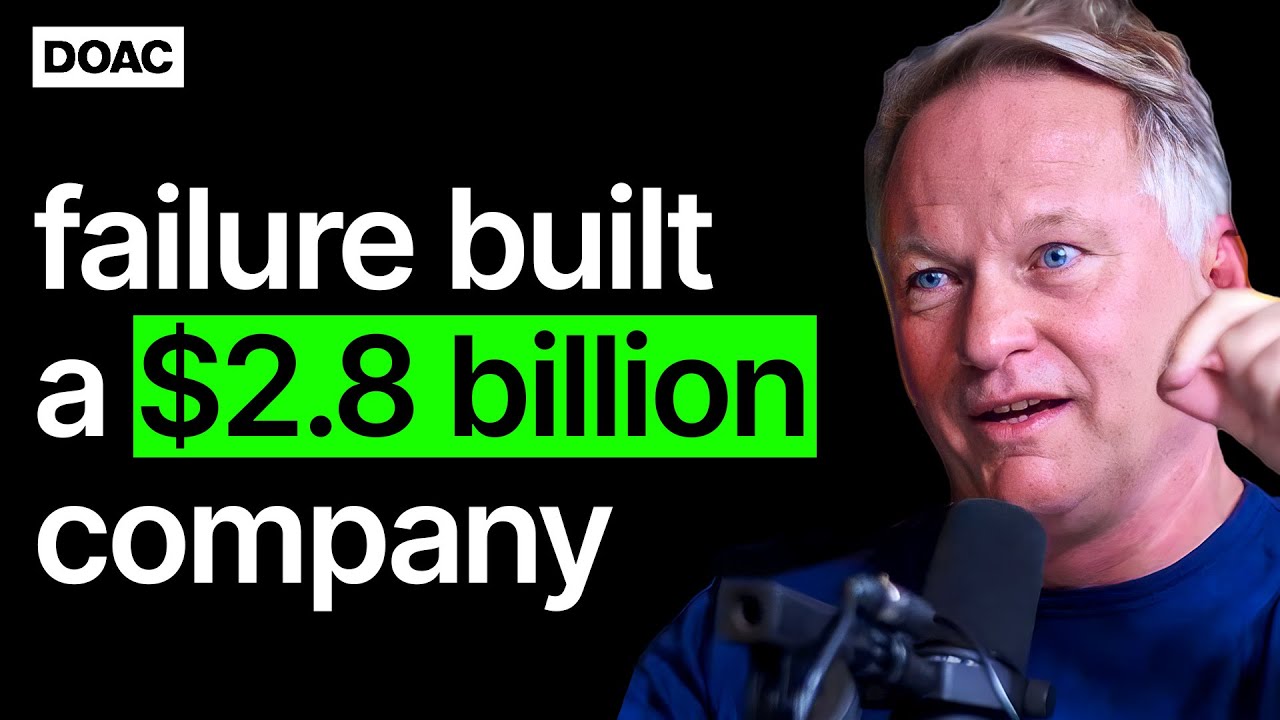
Full transcript · Read the full conversation in order, with its original context.
Contents1 chapter
§01Transcript — part 1§01Transcript — part 1
The thing I think about most, especially when I'm on the go but also when I'm sat here in The Diary Of A CEO studio, is the Wi-Fi and internet that we have to work with. In fact, anytime I'm filming away from the studio, one of the first things I do when I arrive is open up an app and do a speed test to see how strong the signal is.
The number of screenshots I've sent to my team about Wi-Fi signals at different locations is actually pretty crazy. It matters that much to me because it's such a competitive advantage to have fast Wi-Fi. On any given day, if I'm recording hours and hours of footage with a podcast guest, I then often have to have my team send that across to our London team who then do the edit.
Fast Wi-Fi and internet is not a "nice to have," it is absolutely business-mission critical. So, when it came to finding the best provider who could supply internet and Wi-Fi to our new LA studio, which I'm sat in right now, we looked at every single option.
Of all the providers, the one that came back with the steadiest connection, as well as being the cheapest, was today's sponsor, Spectrum Business. Spectrum Business keeps businesses of all sizes connected with fast, reliable internet, advanced Wi-Fi, phone, TV, and mobile services.
Millions of business owners already rely on Spectrum to keep their operations connected. So, if you want to join them, head to spectrum.com/business to learn more. Restrictions apply. Service not available in all areas.
I wasn't experienced enough. I was too young. You were just branded thick. I wanted to prove that hospitality could be done differently. I can't think of a time when I was thinking about making an aspirational brand.
I've always been obsessed about the member. If you don't make mistakes, you're not pushing yourself. You're not taking yourself out of your comfort zone. Maybe I was trying to prove to my family that I could do this. I think that's an invaluable lesson.
At what point does that desire to prove something need to be contained because it might come at the expense of life balance?
A very good question. Without further ado, I'm Stephen Bartlett, and this is The Diary Of A CEO. I hope nobody's listening, but if you are, then please keep this to yourself.
Nick, thank you for being here. I have to say I'm a big fan of the business you've created and the brand you've built for many reasons. Maybe because I'm a marketer, but also because I'm a customer—someone who loves the Soho House brand. Where I wanted to start with you is your origin story. Your upbringing is particularly compelling because, by many accounts, even your own, you were somewhat counted out. Is that true?
Well, my childhood was—I don't think I'd say I was counted out. I was in a nice middle-class family where I had two older brothers, a younger sister, mom, and dad. But my two older brothers were the stars. They were great at school, they were good at sport, and I was not so good at sport and not so good at school. It was a different childhood than the one they had, and I think it probably put me in good stead, but at the time, it was probably quite tricky.
When you say "not so good at school," what do you mean specifically?
Just really bad at exams. I'm hugely dyslexic. I find spelling really difficult, I find pronunciation difficult, and I found all sorts of things difficult at school. I've since learned that dyslexia is the greatest thing to have, but at school, it isn't. I was lucky enough that my mom was all over it. It was discovered that I was dyslexic at the age of 12, which is very young for a lot of people.
Contemporaries of mine are still discovering they're dyslexic right now at my age, which is 58. I was lucky; I got support and I got through school by weird things, like they'd give you extra hours on your exam. I didn't need that; I only needed half the amount of time anyway to fill up the paper because I didn't have enough information. To get another hour was just another hour of fiddling around with your pencil.
The perception towards dyslexia today is that it's quite a common thing and people understand it better. But back then, I'm assuming people didn't really understand what it was. Was there more of a stigma?
Yeah, I think so. You were just branded thick because if you couldn't read or couldn't write properly—and my handwriting is still very bad, I try to avoid handwriting at every possibility—it was tough. People didn't understand it then, but people understand it now and they talk about it. To me, if you have dyslexia, you look at things very differently because you have to. You have to simplify things, and by simplifying things, I think that gives you a different perspective.
When I say "counted out," I mean more in the sense that you didn't believe you would be a success when you were older because, at that young age, you assume those getting the best grades are going to be rich and successful, and then there's everyone else. At that young age, you didn't envisage you would be a success?
I didn't think either way. I was just thinking of getting through school. I wasn't really planning whether I was going to be a success or not. I think it's interesting how you define success. I don't think success is just running a business or creating a business; it touches all sorts of things.
I was reading about your parents' dinner parties. That seemed to be the first inspiration for what you would later do in hospitality and restaurants. Was that the first spark of inspiration for you?
Yeah. While my brothers were on the sports field, I weirdly liked doing the supermarket shop with my mom. I found supermarkets fascinating, I found food fascinating. I then found the whole preparation of how to give people a good time fascinating. I loved watching how you could create an environment where people had a laugh and fun.
And was that what your parents were doing?
Occasionally they did it, and when they did, I loved to be part of them trying to create a fun evening. I think that's probably where I suddenly realized that hospitality was the route for me. We're going back a long time; I was about 13 at the time. I used to go to the local sports club and work behind the bar, cleaning glasses. Weirdly, I enjoyed that—the interaction with people and seeing people just have a nice time. Back then, people were not going into hospitality; it was really at the bottom of the ladder of industries that people went into. So, I thought that was an opportunity.
It's funny because I've sat here with Jimmy Carr and lots of comedians. When I hear about their inspiration for becoming a comedian, it tends to root back to them being younger and it being the thing that they would see create the most joy in their home. In the case of Jimmy Carr and Russell Howard, they tell me the story that the thing that would make their parents the happiest was when they would tell jokes. That was this psychological reinforcement. When I was reading about those dinner parties, and also the fact that you didn't feel there were a lot of conventional avenues available to you because of your dyslexia, that was the combination of factors.
When I was at school, because I wasn't good at getting exams, I had to rule university out. There was not much choice for me—a person with very few O-levels, as they were called then. I think I got an E in an A-level in Economics. With that, there was really not a lot of choice. My careers master at school said, "I think it's catering, Nick." When he said that, I thought there was real opportunity in this. My dad owned a small insurance broking company, and my brothers went to work there. I think my dad was keen for me to go and work there, but I didn't find insurance very exciting. I still don't.
As you started your journey into hospitality and catering, did you start to at any point figure out that you had some kind of area of brilliance?
No. I remember clearly my first day working for Trusthouse Forte. I was a management trainee, and it was a five-year course. I applied to the Savoy management training course to start with. I remember the interview I had to this day, and I just froze. I couldn't speak. I was so nervous. I was a pretty shy kid, and I was shy at 17 when I was going for these interviews. I got stage fright; no words came out of my mouth. I didn't get into the Savoy course, but then I applied for Trusthouse Forte, and luckily, I was able to talk.
I got onto a five-year course, and my first part of the course was a year in the kitchens. It was at St. George's Hotel in Langham Place, off Oxford Street. I arrived, and the chef looked me up and down. He called me a nickname—which I'm not going to say on this—beginning with a C. He threw a sack of potatoes at me, which landed in my belly, and he said, "Peel them." So, I went off to the area where you peel the potatoes. I hadn't really ever used a knife before. The first potato, I cut my finger. I thought, "Oh God, how do I hide this?" The water I was putting the potatoes in was getting redder and redder. I thought, "Oh no, this is my first day."
The nickname stuck, and I was really learning on the job, which I think is a great way to learn anything. I kept making mistakes, but I was determined to fit into the kitchen because it was an environment—coming from a cotton-wool middle-class background—entering the kitchen in the early '80s where it was long hours and someone coming in with a slightly posh accent was a target. But it was a good moment for me.
What was it about that? Because that sounds pretty horrific. I worked in a kitchen at a very young age—I started working there at seven. It's super high stress, people always complaining, it's hot in there. What in that context tickled your fancy?
Do you know what it was? I was coming out of my shyness. I was learning how to get on with people. I went to a private school; I was surrounded by people who went to private school, which is 7% of the population. By going into the kitchen, you really learned to get on with everyone. I think that's an invaluable lesson. I really became friendly with a lot of the chefs and would go out with them at night. I just enjoyed the environment, I enjoyed creating food, I enjoyed the buzz. I didn't mind the heat; I didn't mind the long hours.
If I had spoken to a colleague or a line manager at that time and said, "What is Nick good at?" what would they have said?
I'd like to think not peeling potatoes or making porridge, but getting on with people, being part of a team, and getting stuck in.
You said earlier that dyslexia was actually a great gift. Can you explain why you've now come to believe that is a real superpower for you?
I wouldn't say it's a superpower, but I talk a lot about dyslexia because I really want people to feel that if they get the tests and they're dyslexic, I don't want them to ever feel bad. I want them to feel good and go, "Well, this is a huge opportunity." I think when you look at things differently, you have to simplify everything all the time. I want something on one sheet of paper, not on four sheets of paper. I want everything to be scaled down and simplified. I think we live in a world where everyone's over-complicating things always.
It doesn't matter what area of the business I work in now—whether it's the designers, the chefs, the tech people—it's all over-complicated. I spend a lot of my time just editing down and simplifying it. I think being dyslexic has made me do that because it's the easy route. Complication panics me and confuses me. So, I spend a lot of time simplifying, and I think when you do simplify things, people understand it, they get it, and they like it.
It's so true. Someone once said a phrase I always remember: someone's ability to simplify something also correlates to their ability to truly understand it. Typically, when you meet these salesmen trying to blag you in some way, they purposefully over-complicate something because they don't actually understand what they're saying. But distilling it to simplicity gets it closer to truth. By 22, you started your own restaurant chain?
Well, I went through lots of departments within Trusthouse Forte—from front desk to bar to housekeeping. I was a housekeeper at the Westbury Hotel in Conduit Street, cleaning the rooms. I was a barman at Brown's Hotel in Albemarle Street. I remember clearly making cocktails for George Best; that was a highlight, he was such a nice guy. I think at that time, I always had the determination to open something, to open my own restaurant.
I ended up doing marketing at Trusthouse Forte, and then I was marketing manager at Grosvenor House in Park Lane. It wasn't because I was brilliant at it; I was cheap. I always was working on a plan to not work for Trusthouse Forte, which was a big hotel company. I was thinking I want to get out of this at some stage. Then I went and tried working in fast-food restaurants or casual restaurants. I went to work at Maxwell's in Covent Garden as a night manager. I then went to work at Pasta Mania as a junior manager, and during that time, I was building my plan to open my first restaurant, which was called Over the Top.
That opened in 1988. I was too young, I wasn't experienced enough, and it was terrible. The design, which is something I'm obsessed with now, was my first design outing and it really was terrible. The food was really bad. My friends had to come to show support, so I really knew who my friends were. But it was a good experience of getting something really wrong.
It's not cheap to open a restaurant. How did you fund that at 22?
My dad put a bit of money in, family friends put a bit of money in, and I got the bank to put some money in. So, I was lucky. I was given that chance to be able to open my first restaurant. It's something we do a lot now; I love people doing that. When anyone comes to me and wants to be an entrepreneur and start something up, I really make time to see them and help them. I learned a lot.
That increase in pressure, I guess, would happen if you've got family betting on you.
Yeah, I think so. But they never made me feel like that. My dad was proud that I was trying to do something on my own because he had his own small business. The other shareholders probably knew when they first came and tried the restaurant that it wasn't going to lead anywhere. But actually, the company is still the same company as it is today. It never went bust. We hung on in there and eventually opened Cafe Boheme in '92, which was really all the experience of getting Over the Top so wrong.
Let me explain what Over the Top was. You either chose a burger, a piece of chicken, a bit of lamb, or a steak, and "over the top" of it, you could choose one of ten sauces. But the sauces were terrible. It was just bad. It taught me how to manage a business with little cash and then with no cash. How to pay the staff every week, how to use initiatives to try and get more customers in. I think it taught me at a very early age that marketing restaurants is not the way to fill a restaurant. You just have to make the restaurant good because the customer is so clever. They know what good is and they know what bad is. You can't fool a customer.
You could walk into Over the Top and you could sense that it wasn't good enough. But what I learned at that time was I didn't feel it was a failure; I just thought I was on a journey of learning. I really, even now, encourage all our people that making a mistake is not a problem. If you don't make mistakes, you're not pushing yourself, you're not trying, you're not taking yourself out of your comfort zone. I really encourage people to think that failure is just part of the journey.
What did that process teach you about feedback? I ask because in my first tech business, I was very romantic about this hypothesis about the way I thought my customers would behave and about the solution I thought they would care about. I spent too long not listening to their feedback, and ultimately, that was fatal. I wish earlier I'd been less romantic and stubborn about what *I* thought the customer would want.
I think feedback is key. It's funny, being a Brit, people are funny about complaining, aren't they? In restaurants, they think it will offend you. They think, "I'm not going to complain to Nick about having a bad meal last night because he might be upset." But to me, you can only get better by getting really honest feedback. I'm lucky now because I have members who all have my email address and if they're not happy, they email me. I think listening to feedback is super, super important.
Did you listen to it at Over the Top?
Well, I could just see it because there weren't many people to give feedback. I wish there were more customers in there giving me feedback! But people did give feedback. I didn't have the tools to be able to get it better. At the end, it was just me in the kitchen serving, and we even set up a delivery service to try and boost sales, but that didn't work.
I was really inspired by you saying that the customer is smart and that the best marketing is word of mouth. That really is at the heart of what you do today—a belief in the customer's own network.
I'm very lucky that we have fantastic members who are loyal. If anyone says that we've done okay, or I've done okay, it's thanks to our members. Our members are the people who pushed me from doing the original Soho House on Greek Street. It worked, though there were hairy moments when I thought it really wasn't going to work—it would go quiet. I remember the first year we opened, in May, it had suddenly gone quiet. We'd opened in January. A member turned around to me and said, "Well, Nick, they're all down at the Cannes Film Festival. That's where your members are."
So I suddenly thought, "Well, next year I'm going to go down and create a pop-up down there." This was pre-pop-ups! This was in '96. So we rented a boat in the harbor. I remember clearly because there was a lady who still works for us to this day, Veronique. Her and I had to fill up this lorry full of stuff in London to drive down to the South of France—I didn't drive the lorry because I couldn't drive a lorry—to go to the Cannes Film Festival. We opened this boat, and it was like a temporary club for the ten days of the festival. Members, if they weren't in London, they could come to the boat.
We did that for lots of years, and I think our members really enjoyed that. That taught me again: wherever the member is going, go. I didn't understand the film business or the media business; I was in catering and hospitality. I was new to this. When I first created the first-ever committee at Soho House, I was really knocking on doors and phoning people, cold-calling them saying, "Do you mind?" and you had to explain what you were trying to do to get them to come on the committee. That was where our first 500 members came from.
I've always just listened to the member. They kept saying, "Nick, it's great, why don't you do one in the country?" And I go, "Okay, let's do one in the country then." So off I go, I phone Savills up and say, "Any hotels for sale?" I didn't have any money, but I thought, "Well, I'm going to go on that route and see how I could get somewhere in the country." I remember stumbling across Babington House. I remember it was on the market for a million or a million and a half pounds—this was back a long time ago. As soon as you drive up the drive at Babington, you sort of fall in love with the place.
I fell in love with the place and I thought, "Oh my God, how am I going to get planning permission to turn this into a hotel, and how am I going to have enough money to buy it?" I had just a small amount of money just to put the deposit down. Luckily, the people who were selling it said, "We want to stay here for the summer. We want to exchange, and then we will complete in nine months' time." Yes! That gave me nine months to find the money, get the planning permission, and raise the money with our members to pay for the completion and also to pay for the refurbishment.
I remember even before we exchanged, the agent phoned me up and said, "A higher offer's gone in." So, I was being gazumped. I thought, "Well, I don't have the money anyway, so I can put another couple hundred grand on it!" I increased my offer, I got Babington House, and I was able to raise the money through our members. Lots of members put five grand in, and that's how I was able to get the money to open Babington House. It was led by the members; they helped invest in it. Luckily, they've all got their money back plus plus. That was the second thing we opened.
That first Soho House on Greek Street—why did it work?
I was running the restaurant downstairs, Cafe Boheme. That was my survival. Cafe Boheme was me doing everything totally different from what Over the Top was. The food was edible and nice, the service was good, the atmosphere—I was in there last night and it made me very happy because it was packed and it was fun. When the building became available above Cafe Boheme, the landlord phoned me up and said, "Do you fancy taking the space above?" I said, "What on earth for?" There was no plan to do a private members' club. My plan was just to survive and make Cafe Boheme work after four years of attempting Over the Top.
I always look at everything. When people phone me and say there's an idea, I always go and have a look. So, I wandered around the offices—it was a small door on Greek Street, 40 Greek Street—and I thought, "Hmm." I hadn't been to a private members' club. I wasn't part of the Groucho Club. I wasn't part of those clubs down in Pall Mall. Maybe that's a good thing. I looked around here and thought, "God, this is like a home away from home."
This could work. I went to see my landlord, Paul Raymond, and he said, "Do you want to take it?" I said, "I'd love to take it, but would you invest?" Because the family investment from Over the Top, they had had totally enough. They were out. The banks were trying to pull out and get their loan back. So I thought, "How am I going to raise the money for this?" because it was going to be separate to Cafe Boheme.
Paul Raymond said, "I'm not investing, I don't invest in other people's businesses." Then as I was leaving, he said, "Well, what happens if I put the money in but just add it to your rent?" So you ended up with a higher rent, but he put the money in to do the fit-out. I thought, "Well, that sounds like it can work." So I set up Soho House. It was simple to come up with a name; it was a house in Soho. The logo was pretty simple; it was three buildings, three floors. I owned 100% of it because the Cafe Boheme lot didn't want anything to do with it. I thought, "When Soho House works, I'm going to transfer everything back to the same percentages as it was when it was Over the Top." So I merged the two companies. I didn't want to be a success on one hand in Soho and they were suffering on Cafe Boheme and Over the Top.
A lot of the people who opened Soho House in '95 still are part of Soho House. Pierre, who was the server in the Blue Room, now runs North America for us. Marcus Anderson, who runs our membership team, was a server in one of the dining rooms. Marcus Barwell was a barman in the Circle Bar, and now he's Managing Director of Soho House Design. It's lovely seeing people who were right there at the beginning still be part of the company now.
Was Cafe Boheme successful when you embarked on the Soho House journey upstairs?
Yes. It gave me the confidence to do something else. It worked because—this was 30 years ago—there weren't many places which were open at 8:00 in the morning and closed at 3:00 in the morning where you could go in there and eat whatever you wanted or just have a coffee or just have a drink. The kitchen was always open. You could drink jugs of beer, have a steak frites, and we had jazz in the afternoons. It really created a real regular following within Soho.
When you look back on that Soho House, I'm trying to figure out why Soho House went on to become what it is today. You talked about customer feedback shaping everything, but I would give that accolade to your members.
It was the members who pushed me. When we opened in New York, we'd opened the Electric House, we were about three houses then, and someone said, "Well, you should open in New York, they'd love this." I thought, "Ooh, yes, maybe." So off I go to New York, determined to open a Soho House in New York. First of all, I looked in the district of Soho and couldn't find something. It was difficult learning permitting; it was just difficult.
We found the warehouse—it was an old electrical warehouse in Meatpacking. Meatpacking was a very different place to what it is now; it was run-down, it was full of really interesting life. I thought, "Okay, I'm going to get the warehouse," and again, we had to raise the money to do it. It was a sort of bad time in the UK—there might have been a recession going on—so the banks were saying, "We're not lending you money in New York." So I thought, "Okay, I've got to start raising money again from our members and from people in New York to put money into the Soho House in New York."
Everything was nerve-wracking. The week I was flying out there to try and get the permit to be allowed to open a club in a warehouse was 9/11. I arrived on a Monday evening, and I was nervous because I had this big meeting on the Thursday in front of a local community board to see whether we'd get permission to be able to open a club and have a license in these premises.
I was having breakfast on the Tuesday morning, the 11th of September. I was having a boiled egg, I remember it, and as I was hitting my boiled egg, I heard this big bang. I ran out on the street, looked up, and I could see one of the Twin Towers with smoke coming out of it. I asked a guy sweeping the street what happened. He said, "A plane went into the side of it." I said, "Was it just a—what did it look like?" He said it was an airliner, so it wasn't like a private plane.
The first thing I did was phone Kirsty, my wife, because she was in news then—she was a news presenter on ITN. I said, "I think you maybe should get into work, there's something going on here." And then I was still out on the street and I saw the second plane go in. You could see the impact coming in. That day made me really fall in love with New York—the resilience of the people, how they cope with it. It was amazing.
Weirdly, the community board still happened on the Thursday. I went up and did my presentation and I said, "I don't know why I'm doing this, it seems irrelevant, it seems not something we should be doing." But they were running the meeting; there were a lot of other points on the agenda, so I was just one of them and we got our permission.
That's how New York started, but it was a big race to find the finance. I was calling everyone, I did more show-rounds of that warehouse building, running up and down the stairs, trying to be enthusiastic. Then I put together this "hard hat dinner." I don't know how it happened or why it happened, but really well-known people turned up to this dinner. We just had a six-burner on the sixth floor, we cooked some chicken, and we laid up the table in the building site with a white tablecloth. It was real grit and glamour. These people just turned up. I remember David Bowie being there.
I remember being so nervous. I started talking to him and he said, "This is a great idea, can I buy it?" And I said, "Well, there's nothing to buy at the moment, but can you invest in it? Yes." So he was one of the investors of Soho House New York, which was fantastic. Then momentum came and we raised the money. Everyone before that was saying a private members' club wouldn't work in New York, people wouldn't pay a membership fee, the velvet rope was the big thing in New York. I wobbled so often about whether we should charge for membership. I was so nervous opening Soho House New York.
I remember the opening party; it was raining and they hadn't finished putting the roof on. People were staying in the hotel and there was no water, so we had to borrow the showers at the local gym. It was just this rollercoaster of an experience opening in New York where we didn't quite have enough money. The team were carrying plasterboard up to the floors to try and finish them. But eventually, we opened, and it worked. People took to it.
Why bother? You had a great business here in London, things are going well. Why put yourself through all that pain?
A very good question. I could have just carried on doing things in London, but there was an ambition in me. There was this thing about being a Brit and going to New York and trying to take the thing which I loved in London and see if it worked in New York. At points, it nearly took the whole thing down. But I really felt at the time that if it did bring the whole thing down, at least I tried. I wasn't going to be sitting in a rocking chair thinking I didn't give it a go. There was a sort of inner something in me which wanted to see—and maybe it was going back to my childhood where my brothers were so good—I was trying to prove a point.
I sense that a lot. For you to take the risk of taking upstairs with an unknown idea just because someone said it's available... some people stay within the zone of comfort, but you have this hunting predisposition even when things are going well.
There's something inside me. Maybe I was trying to prove to my brothers and my family that I could do this. I do always look at things in a positive light. I wanted to prove that hospitality could be done differently. With Cafe Boheme, where we opened it all day, it just kept changing to the time of day it was. Putting jazz on in the afternoon, making it much more customer-focused. Forty years ago, kitchens would close at 2:00 PM and you couldn't eat in the afternoon. I felt I was onto something to be able to make it better for the customer. I loved laughter, I loved people connecting with each other, I loved people enjoying themselves.
At what point does that desire to prove something need to be contained because it might come at the expense of life balance? When you are successful in one thing, you have more opportunities to go and do more things, and then you might end up being pulled so much by your ambition or your insecurities that you compromise on friendships and other things that make life fulfilling.
It's a balance I've never quite got right. I'm super lucky; I have an incredibly supportive wife, Kirsty. She went on the journey with me, and I know without her, you wouldn't be asking me onto this podcast. She's been a great support. My kids were part of it—they had to come to work when I was doing the rounds on a Saturday morning or during weekends. I'd have pushchairs and toddlers; they were just part of what was going on. It had to merge into one thing. What I've successfully done recently is try and de-merge it—when I'm at work, I'm at work, and when I'm with family, I'm with family. But that's taken a long time. The balance is something all entrepreneurs suffer with.
When you say it's a balance you've not got right, what was the indicator? How did you know you didn't get it right?
I was always knackered. I was always pretending not to be! I was internally coping with all the pressure where I could, but I wasn't doing that very well. It was all-consuming. I was very lucky that I had great friends who are still my friends from when I was a kid, and I didn't see them enough. In our business, hospitality, it is weekends, it's nights, it's days—it's all the time. When you take it to a different country, the days just got five hours longer.
What is that toll? You spoke about coping with pressure.
I sit here today and I think I'm lucky because I have a great relationship with my kids; that's my favorite thing is being with the family and being with them all together. But at times when you're trying to prove yourself—I was trying to prove I could work in New York and America, that we could open Soho Houses in other parts of the world—it was hard. You suddenly then do realize that you have to balance it.
Was there a point in your journey that the pressure became so much that you almost felt it within your being, whether your health gives out or you get anxious, where you think, "This is not sustainable"?
I never thought it wasn't sustainable because I'm always such a positive person. But Kirsty was great; she kept saying, "We don't need any more. This is enough. The world doesn't need another house, Nick. You don't need to be on a plane all the time. Who are you trying to prove?" There was a stage where I was buzzing around everywhere, thinking it was all making a big difference.
Really, and I think the pandemic taught me that, was that there's better ways of using your time. Instead of buzzing around on a plane all the time and spending 12 hours in a city and then going to another city, where the teams are clever enough to put on a bit of a show for that period of time so you're not actually seeing really what's going on, there were smarter ways of doing it. Also, having a lot more trust in the senior leadership team and letting them get on with it. Actually, often it worked much better when I wasn't around because they were able to just get on with it and not worry about what I was thinking all the time.
What else would you say, in hindsight, you wish you had known about how to get to where you are now in a more effective way, whether that relates to health or finance?
I've always been obsessed about the member and the people who work for us; they were my two obsessions. The advice I'd give to a young Nick would be: let them take more. Don't think you have to do everything yourself. There's a point when you can prove yourself that these things can work globally, and then you have to really properly delegate.
One of the things Soho House is known for is this "brand." I know you don't like that word, but it's an aspirational brand. People want to be a Soho House person. How much intentionality has gone into making that brand aspirational?
I can't think of a time when we had a time where I was thinking about making an aspirational brand. If that's people's perception, great. All I concentrated on was what our members wanted, and they've created that. They have created the fact that there's a desirability to be part of Soho House. We've got a brilliant membership team globally, we've got people who really care and have been on the journey for a very long time. With every house, we have a determination to make it better than the last house. We always start with a fresh piece of paper; we don't think, "Let's just keep repeat, repeat." We go "new, new, new."
What has hospitality taught you about life?
Everything. I sort of think it should be the national service; people should go and do a year in hospitality because I think it teaches you so much. It teaches you to be part of a team—the customer, your people in the kitchen, the person cleaning the dishes or the rooms—you all have to work together to make it happen. It takes the shyness out of you and gives you an ability to get on with people, which I think is a better tool than a master's degree.
You learn just useful practical things—making a bed, keeping a place tidy, clearing a table. When you've got a family gathering, you can suddenly clear the plates and stack them up. You can make a cocktail! Even if you're not in hospitality anymore, you can still do those things. You have to become quite organized in your mind, and I think hospitality is a very rewarding industry for that.
Hospitality is quite a broad term, but at the crux of it, what do you think it is you're actually selling to people?
I think what we want our member to do is flourish—flourish socially and at work. I think creating memberships and that word "community" of people who are like-minded and have a creative soul... you put them in one house, they bump into each other, they talk. I've seen businesses created, relationships, friendships, ideas created. To see that happen in different countries and different cities, to see members wandering into the house on their own and they'll bump into someone... you're part of that membership.
People do it a lot now—you can do it digitally and they use algorithms—but being part of Soho House, those 500 members I talked to you about earlier, they're still part of us. They still pay their membership, they don't give it up. You have the original founder members of 28 years ago, and then you've got a huge under-27 membership going into our houses. It accounts for 22% or 23% of our overall membership. Seeing in a room the most successful scriptwriter in one corner and in another corner there might be the struggling scriptwriter who's still trying to write their first script... taking that and trying to think, "How can the person who's done it help the person who wants to do it?"
That's why I'm so passionate about our mentoring scheme. There is so much creativity in the world, and creativity is not owned by the middle class; it's everywhere. To be able to offer mentoring to people who are less fortunate, who might not be able to afford a membership or might not know what door to knock to get that opportunity, is one of my favorite things we're doing at the moment. It goes back to creating people in a room who all help each other and feel like they're looking out for each other.
Are you naturally a shy person?
I think so.
Once in a while, I meet an entrepreneur and a founder that's created a really great business but is unassuming. They're not very self-promoting; they tend to defer to others. It's kind of unconventional to meet an entrepreneur who doesn't have a huge ego. You've created such an amazing business, and I can't seem to get you to tell me why *you* out of everyone that was trying to do this was successful. I've got the ambition piece and the persistence, but I know there's more.
I can only tell you what I think. I love what I do. I'm lucky; I get up every morning and I have a skip in my step. I have a fantastic team around me, and I care deeply. If that all adds up to it working, that's the reason why. It was never for me a money play; it was more a thing that I wanted to try and make hospitality an area where you can change it.
When we opened Babington House, it was the first country house hotel where you could get breakfast when you wanted, where there were no rules. Your bedroom at Babington was probably nicer than your bedroom at home. People would come down and go, "Nick, where'd you get that TV?" I'm not trying to avoid your question, but I'm just trying to answer how I feel and why I do it.
I did get something more from that, which is just your care—how much you care. Passion and care have a relationship together. A lot of people would be launching it for money, and therefore they'd care about something else, whereas you really seem centrally focused on the customer experience.
I always say to our team: if our people are happy and the members are happy, then sort of everything else will look after itself. Your places will be busy, and if you're smart on your cost control, everything else should be fine.
Do you think you're a success?
I think I said earlier, you can judge success in lots of ways. I'd much rather be judged as a father than as someone who runs a business. Professionally? People tell me a lot, and I suppose I have to listen to them. In their eyes, I've done all right. I'm still there, we're still growing, sales go up... it's a good business. If I were to be honest, I couldn't sit here and look you in the eyes and say no, I don't see what I've done as something which is successful. Because it works, and when things work, I presume that's a success.
So what's next? Tremendous business all around the world, it's becoming so much more than just houses. What is the big next mental challenge?
We're recently public, and we went public during a pandemic. I'm enjoying that challenge! I'm enjoying dealing with the analysts and I think it's making us a better business. People are understanding that it's a subscription, recurring income. A third of our revenues come from membership, and our hotels are always nicely full. We don't have to use what other hotels have to use, like booking engines.
I think that is an interesting future on how to be properly successful as a public company. And there's so many more places we can open houses. We haven't even touched Africa; we've only dipped our toe into Asia. We're going to Latin America later this year to open in Mexico. So, there's a lot of exciting new houses opening and just trying to get better every day.
We have a closing tradition on this podcast where the previous guest leaves a question for the next guest. If you could go back in time and change one specific moment in your life, what would that be and why?
Ooh. I would definitely still have done Over the Top! I would have done that. One specific thing... I think I would have tried to get the balance between life and family a bit better.
Why?
Because running at 100 miles an hour all the time doesn't always achieve everything. I talk on behalf of many entrepreneurs and CEOs who just get a bit obsessed about their world and their business. You're slightly better at it if you have a more balanced view.
I was actually talking to one of my friends about this last night. We were having the same conversation about just trying to remember amongst all of this ambition that the most important question is: are you happy? That's one that I've definitely lost sight of for many years of my life in the pursuit of building more and more and more.
But it's a great subject now, isn't it? I think people come out of the pandemic and they think we want our lives to be slightly more balanced. That wasn't the case 25 years ago or 15 years ago, or when you started your business—it was that mission. I think balance is good.
Well, thank you, Nick. Thank you so much for your time and the generosity with your time. Thank you for creating a business that I love and that I'm probably at every week.
Well, thank you for being a member.
Most of our team as well; I bought memberships for them too. You've created a business which brings a lot of people joy. But the thing I actually love the most about your business, which I think is a bit of a dying human need, is community. Everything, whether it's social media or remote working, seems to be taking community away from us, which seems so integral to being a human. Soho House is bringing that back, and I think that's why I would personally bet on that because regardless of how the world changes and technology, we're still going to always love and have a desire for community.
I agree. The human connection and people getting together in laughter and ideas—not doing it digitally, doing it in a physical space—is great to see. Thank you.
The thing I think about most, especially when I'm on the go but also when I'm sat here in The Diary Of A CEO studio, is the Wi-Fi and internet that we have to work with. In fact, anytime I'm filming away from the studio, one of the first things I do when I arrive is open up an app and do a speed test to see how strong the signal is.
The number of screenshots I've sent to my team about Wi-Fi signals at different locations is actually pretty crazy. It matters that much to me because it's such a competitive advantage to have fast Wi-Fi. On any given day, if I'm recording hours and hours of footage with a podcast guest, I then often have to have my team send that across to our London team who then do the edit.
Fast Wi-Fi and internet is not a "nice to have," it is absolutely business-mission critical. So, when it came to finding the best provider who could supply internet and Wi-Fi to our new LA studio, which I'm sat in right now, we looked at every single option.
Of all the providers, the one that came back with the steadiest connection, as well as being the cheapest, was today's sponsor, Spectrum Business. Spectrum Business keeps businesses of all sizes connected with fast, reliable internet, advanced Wi-Fi, phone, TV, and mobile services.
Millions of business owners already rely on Spectrum to keep their operations connected. So, if you want to join them, head to spectrum.com/business to learn more. That's spectrum.com/business. Restrictions apply. Service not available in all areas.