
Rio Ferdinand Reveals The Training Ground & Dressing Room Secrets That Made United Unbeatable.
Guests: Rio
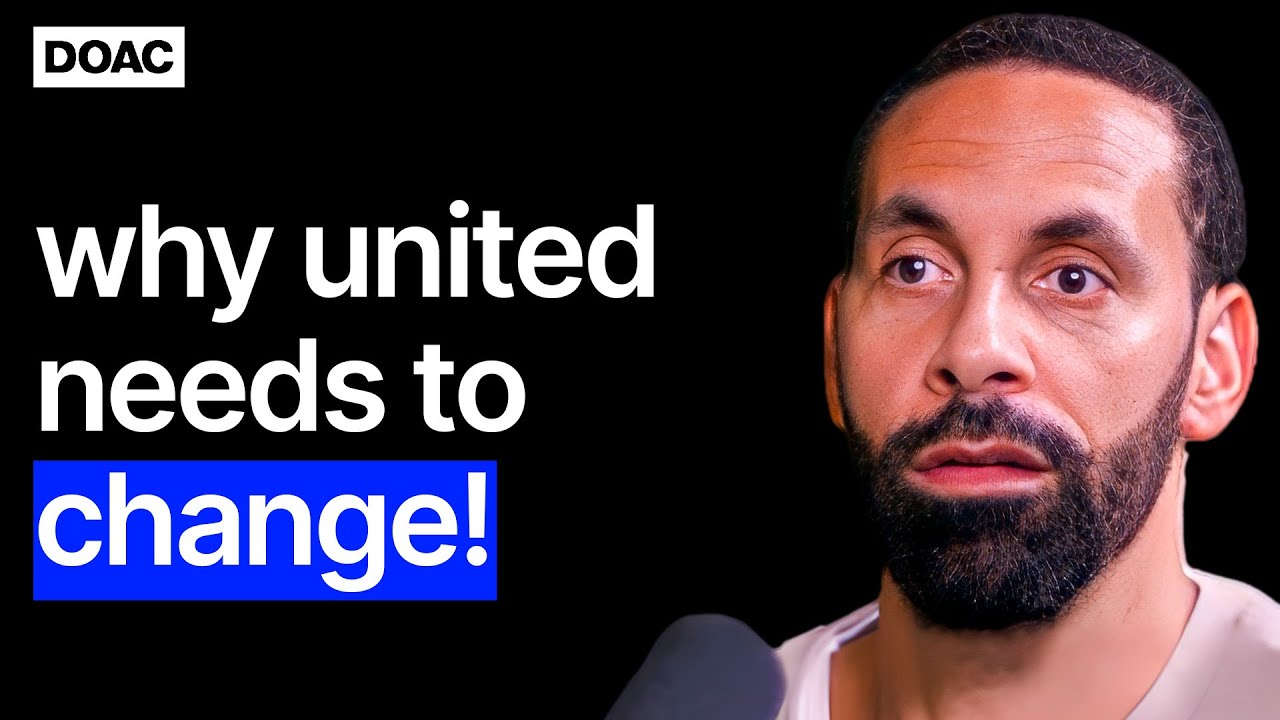
Full transcript · Read the full conversation in order, with its original context.
§01Transcript — part 1
The thing I think about most, especially when I'm on the go, but also when I'm sat here in The Diary Of A CEO studio, is the Wi-Fi and internet that we have to work with. In fact, anytime I'm filming away from the studio, one of the first things I do when I arrive is open up an app and do a speed test to see how strong the signal is.
The number of screenshots I've sent to my team about Wi-Fi signals at different locations is actually pretty crazy. It matters that much to me because it's such a competitive advantage to have fast Wi-Fi. On any given day, if I'm recording hours and hours of footage with a podcast guest, I then often have to have my team send that across to our London team, who then do the edit.
So, fast Wi-Fi and internet is not a "nice to have." It is absolutely business-mission critical. When it came to finding the best provider who could supply internet and Wi-Fi to our new LA studio, which I'm sat in right now, we looked at every single option. Of all the providers, the one that came back with the steadiest connection, as well as being the cheapest, was today's sponsor, Spectrum Business.
Spectrum Business keeps businesses of all sizes connected with fast, reliable internet, advanced Wi-Fi, phone, TV, and mobile services. Millions of business owners already rely on Spectrum to keep their operations connected. If you want to join them, head to spectrum.com/business to learn more. That's spectrum.com/business. Restrictions apply. Service not available in all areas.
How did they create high standards at Old Trafford? Because I want to create high standards in my team and within my life. You must now know that there are certain fundamental things that matter and a lot of shit that doesn't. What are the things that matter?
If people were in 10 or 20 years to say, "That's Rio who played for Man United," I haven't really done what I'm here to do.
Do I even need to introduce my next guest? Rio Ferdinand. Former football player, one of the most decorated English footballers of all time and, as a Man United fan, probably one of my favorite players of all time ever. He's played alongside some of the greatest players ever, but he's also been managed by the best manager ever.
I grew up as a Manchester United fan watching him, idolizing him, and now he's my mate. This is going to be a fairly interesting conversation. After retiring, he's become a sports commentator for BT Sport, an author, an entrepreneur, the founder of a charity foundation, and a non-executive director, which he'll talk about today.
As you'll hear, he's also so much more. Something that you probably wouldn't expect: he's also a husband and a dad, one that's experienced tremendous, unthinkable tragedy—tragedy I pray that most of us will never know. Rio is a special guy, not least for what he's achieved on the field, but for who he is.
Today, you're going to find out who he actually is. The philosophy to life that he swears by and the culture required to win in an ambitious career, but also the culture required to win in your personal life. Without further ado, I'm Steven Bartlett, and this is The Diary Of A CEO. I hope nobody's listening, but if you are, then please keep this to yourself.
I'm trying to find the right words to ask this question because it's one that I haven't seen been asked in previous interviews of you. What are the key things that happened when you were very, very young that made you choose football as your future or enabled you to take that path? A lot of kids grow up in London and do a lot of things, they have a lot of passions, but for some reason, as I read through your story, football was the path that you chose to take above all other things.
It's a good question. When I was young, I was into everything. I was running around on the estate, I was doing gymnastics a couple of times a week, I was doing ballet, I was obviously playing football, I was doing athletics, and I was doing a drama class.
Why were you doing all those things, though?
Because I just was interested in it all. I liked it. I enjoyed it. My mom and dad were really, my mom especially, were like, "If you like something, go and do it. Try it." They were always like that. "Go and do it. What's the worst that could happen? You don't enjoy it." I used to do karate sometimes as well.
I got to a point, I think I was 13 or 14 years old, and obviously my dad was having to drive from South London to East London, drive home, pick me up from school, take me to West London to play football, back to dropping friends off on the way—it was hard graft. In the end, I got to 13 or 14 years old and my dad said, "Listen, you're doing a lot at the moment. You're going to burn yourself out. So, let's just pick something that you really enjoy and you want to do, and let's go for it."
It was an easy conversation, but it was difficult in that I had to let down, I thought, and disappoint Central School of Ballet where I was doing it, which is a top school in London in Farringdon. I made good friends there. The other stuff I wasn't too concerned about it, but for three or four years I was at the Central School of Ballet, so I'd got good relationships there. Told them I couldn't do it and then went full throttle and full steam ahead with football. It was the best decision I ever made in my life in that sense, but I knew that that was my passion.
I liked the other stuff, I enjoyed doing the other stuff; they were good distractions from what was probably going on on my estate as well. My parents thought like that as well. But football was the thing that I got up every day for, knocked on my friend's house, and borrowed a ball to go and play.
Ballet is an interesting one. A lot of people don't know that you did ballet, and by the sounds of it, you did it at a pretty good level.
I'd done gymnastics at the London Olympic Games, and they obviously—I didn't know this—there were scouts there from ballet schools. Someone was watching, or a family friend was there, and they said, "He looks like he has the posture" or something like that, "that looks good to be a ballet dancer." So I went there. I wasn't really one for saying no to stuff. I was like, "I'll try it. I'll try anything." One of the reasons was I was going to be able to get off my estate, meet new people, new girls maybe, as a young kid. It was in a different part of London, traveling, so I done it.
It's funny, I read a tweet the other day which linked to something you said there. It said, "On the way up, say yes to everything. When you get to the top, start saying no to everything."
Yeah, yeah. Try it. I always think this: what's the worst really that can happen, as long as it's not a health issue? I might fail. I might not be good at it. I might fail. Who cares? It's like with the boxing—I wanted to try to go from a professional footballer to a professional boxer. Crazy? Yeah. But what's the worst that could really happen? I lose a fight, my life goes on. That's it.
Some people can't allow their ego to be squashed maybe at a certain point, or their pride. They're sitting there as this macho person and they can't feel vulnerable at any point. When you try things, there is an element of vulnerability that comes with it because you're opening yourself up. You're leaving yourself a bit wide open for criticism and for failure. But I'm not scared of failure. I never have been. I'm not fearful of it, and that's what I try and put in my kids. If you fail, what? Get up and go again.
People trap themselves in their career and their sense of self-identity. We were talking before we started chatting about me trying to resist my labels now I've left Social Chain. They think they are an "X." From a very young age, and I'm connecting the dots now through the rest of your life, you were a kid on the estate in Peckham, and that is an identity. That's not one that's also conducive with ballet.
No, they are such different ends of the spectrum. You just wouldn't associate one with the other. One of the things that my mom used to say to me is, "Don't let anyone tell you what you are. Don't be pigeonholed. You go and find out and explore and find out who you are." You've got to have experiences to get to that point. It's not going to happen overnight. It's not going to happen in your childhood, not in your teens. When you get to become an adult, you'll start working your way and finding out who you are and what you are.
Going to a ballet school, I could have been ridiculed. My mates—I was one of the boys on the estate—but at the same time, I was confident enough that, "Oh, Rio, you're going to ballet," laughing? I don't care. What? I know I'm good at football. I know I'm the fastest runner on the estate in my age group. I can keep up with the older boys. What? Just because I go to ballet, there's nothing wrong.
Who are you? Your mom's telling you to go out and find out who you are. Did you ever answer that question?
Not really. I think that question you don't really answer it in the end. I think you're always evolving. Like, for instance, something you said earlier really pricked my ears. You said almost the same thing, just in a different way, probably a more eloquent way, about not wanting to be pigeonholed.
My aim in my life now... people think you've played football and you've done all these amazing things as a footballer. I done really well at football, I acknowledge that. But that's not enough for me. My success in my next phase of life is when someone sees me and they mention something that I'm doing or have done around that time, not that "Rio is a footballer." If people in 10 or 20 years say, "That's Rio who played for Man United," I ain't really kicked on. I haven't really done what I set out to do, which is to evolve and become something different and make something of myself somewhere else.
My family were a lot like that. Whether my mom and dad were successful or not, they were always saying to us, "Make something of yourself. Be something." There are no barriers to that. That's the way I've always thought about things.
How would you feel if I said you couldn't ever do anything else, and that the football thing was it?
I would laugh. It would make me laugh because I just don't see no—I don't see barriers. And I'm fortunate, by the way, I understand that. I've got to a position where there are a lot of boundaries that have been kind of put down for me to skip over because of my career as a footballer. And you're getting that now as someone who's been really successful in your field.
You see that color and age, etc., get put to the side because we acknowledge what you've done. We do sometimes have an easier—there's not as big a barrier to entry for certain things for us. But then you've still got to go in and produce. You've still got to go and prove yourself. Even things like, I've gone on the board now for a company, The Gym Group, as a NED (Non-Executive Director).
Oh, really?
Yeah, which is out of my comfort zone. Because I like fitness, but I don't understand the business behind that and what goes into having 125, 180 sites and managing that. There's a property arm, there's a commercial arm, there's a marketing arm—and that all coming together under one umbrella and having to manage all that and to be a part of those conversations. That stuff is what I am super interested in—the workings behind the mechanics of all these types of businesses in different industries.
Do you not feel out of your depth?
Yeah, but I always find something that I can cling on to that I just try and find something within a conversation that would allow me to gain confidence through talking in that conversation. I might not understand everything, and when the conversation's finished and the laptop's closed, I'll be somewhere looking and finding out what I didn't understand. I'll call that person back or I'll call someone on that call just to clear up a few things I haven't quite grasped. But there'll be something within that conversation where I can add some sort of value.
I think all of that is again very synonymous as to why you're even sat here today. A lot of people in that situation would A, just avoid it from the jump, and then B, if they encounter something they don't understand on the call, they'd probably bounce then, or they definitely wouldn't inquire because by inquiring, you're actually making yourself vulnerable. A lot of people don't want to avoid vulnerability and being exposed. It's so funny that the people that achieve the most success are the ones that are at some point willing to look stupid.
You've got to. No one gets to where they're going to get on the cleanest without a bump on the road. You have to have bumps in the road to be able to get there, to experience them vulnerable moments, so that when you are there, you know what it's like. And then you can drag people up with you. You become stronger with more people. I think there are a lot of people who want to get to the top and stay on the top of the mountain on their own and don't want to bring anyone up. I don't agree with that. I'm always like, I want to share and help because that is the foundations of me being stronger for a longer period of time and sustaining success.
An important thing for me as well, which I'm never scared to do, is to ask questions. It's the same thing with football. You don't understand something your manager's telling you or the coach's telling you? Don't go away and have a bit of a blurred idea of what it is, because then you're going to be judged on that not understanding and not executing. You want good habits, but you've got to understand what it is before you can create the habit. So, I'll definitely ask questions.
In your group chat with your friends from your estate, you talked about how there's a growing culture of softness and avoiding discomfort. There's this crazy thing on Instagram at the moment which is like demonizing hard work, as if it's because of the mental health revolution we've had, which is a great thing. Everyone's aware of the impact on this thing called mental health. There's this other thing which is like, "Well, you can overwork and you can burn yourself out," and hard work is now seen as toxic. Success and hard work are seen as toxic.
Yeah, and it's like you're looking down on people almost. I don't agree with none of that, I've got to be honest. Work hard, man. That should be just an absolute normal ask of any person. I always keep talking about my kids because they're a big part of my life. That's all I talk about with my kids: school, football, washing up, your chores. One of the great things to come out of the COVID situation in this country was staying at home and homeschooling. One of the great things for us as a family was these kids know their chores and they're doing them properly.
Do your chores right because them habits there will lead on to other things in your life going forward. Your football stuff? You won't take shortcuts. If you're taking shortcuts there with your work, shortcuts with your football, shortcuts making your bed, shortcuts with your schoolwork, homework, etc., it will all be the same. I need high standards everywhere.
But are you scared that because they've grown up in a different circumstance to what you had, you're trying to instill that in them? How do you do that when they're living in a really nice house?
That is—the guy who comes up with the answers for that is the main man. It's so difficult. I was doing a podcast yesterday with Eddie Hearn. He's like the generation my children are. His father was well-off, successful, and he was where my children are now. He was saying one of the things that he was scared of was being that "rich kid." He done everything to not go out and work and to have a hardworking mentality and to be a success himself. Our friend Umar was the same. All three of them, by the way, the Kamani kids, they're exactly the same in terms of they've gone out... they never had to work. Their parents would spoil them. They've all buckled down and said, "Yeah, we've been given an opportunity, now you've got to go and execute." And they've gone and executed beyond belief.
I see Mahmoud, who is the owner of Boohoo, who is the father of Umar and the guys, and that's all I say to him, "Man, you must be so happy. Your kids, what they're doing, how hard they work. They've created these wicked businesses." He said, "No, man. For me to sit here and just see them doing what they're doing—that's where I want to be."
It doesn't matter how much money you make or how big the business. My success as a parent is that my kids get up every day, they've got a work ethic, and they do stuff to the best of their ability. If they can do that, whatever job they're in, they do that, then I think you've laid the foundations for a good life for your kids.
You talk about having high standards being one of the really important things for your kids. This is something that clearly was demonstrated when you got to Old Trafford and you joined Manchester United for that record transfer. But how did they create high standards at Old Trafford versus the other clubs you'd played at? West Ham and Leeds, etc. What was it they were doing that kept those standards so high? You then also talk about going to QPR and seeing low standards and a certain type of negativity in the changing room.
Good habits. Every day good habits. Whether it's punctuality, work ethic, attention to detail, intensity when you're training on the training pitch, respecting each other—all those things just they come together and it creates a culture at the club.
I'd been at West Ham, I'd been at Leeds—two very good clubs, great clubs. But they didn't have that culture which meant there was an ability to win. But it starts from somewhere. Sir Alex Ferguson had already won at Aberdeen, so he knew how to create that culture. He went to Man United, didn't have that winning mentality at the time when he went there; he created that. It all stems—I always think great leadership is definitely what gives you an opportunity to be successful.
When you've set the foundations and you've created that culture, you don't as a leader have to be there every day in that sense. He was at the training ground every day. How many times do you think he came into our changing room? Not even one a month.
Really?
Never came in the changing room in the training ground where we are every day. Because he knew that the culture was set and then he had lieutenants like me, Giggsy, Gary Neville, etc., who were then filtering that down to any of the younger players or the new signings who didn't know the culture yet. And then those players became the culture leaders.
Even, for instance, if he wasn't at the training ground watching training, the training intensity might drop that little 1%, 2%, but you'd notice it because the manager's not there. You didn't feel him, that aura, that—he could be on his phone making bets, which he normally would be, not interested in training, but his presence alone was enough. It just made—when you look back and you think leadership is just key.
Isn't it funny as well with culture? Because what you said there is basically like something I used to think at Social Chain: if the culture's strong enough, new people become like the culture. If the culture's weak, the culture becomes like the new people.
100%. You couldn't have put it any better. I'll give you an example. Berbatov came to Man United. Wicked player, beautiful touch, sexy looking footballer, wicked. Before a big Champions League game—I think it was Barcelona—he just wasn't working hard enough for the team. I had the ball on this side of the pitch and I needed him to come over and help. He was just walking. I ended up just kicking the ball off and going crazy. "What are you doing? Get over!" "Wait, when I get over, then we'll do it."
That's not our culture. At Barcelona, they play, they wait—that's their culture. That's not our culture. You want to play the Barcelona way? Go Barcelona. Here, it's not the same. And if you don't buy into our culture, you won't be here long. That's the way it was at United. If you came and you weren't in the culture, you didn't buy into the culture and immerse yourself in it and become part of the fabric of the place, you weren't there more than a year or two. You definitely wasn't an integral member of that squad.
I feel like the perspective you've got from being in that changing room and understanding this—it's the same principles in business. Did you drive that?
100%. It got to the point where people would understand who we were without us having to say. You would have your disciples basically introducing new people to the company and going, "That's not a Social Chain thing to do." We'd get that all the time.
When the culture's that strong, it's so easy to see when someone doesn't fit or they don't stand out. We had someone start on their first day at Social Chain and they were doing their initiation, and then at the end of the initiation, they did two middle fingers and then walked back to their desk. I said, "Go get him. We fired him. He's gone." First day at Social Chain.
And it sends a message to the team. I instinctively knew that's not a Social Chain person, get him out. There was another instance where we had a girl join who someone had hired, and they told me that she used to like bully people at her last place and she had like a really bad attitude and stuff. Actually, one of the guys in our team said, "Oh yeah, we used to work with her, and she was a bit of a bully."
I remember having the conversation and I said, "She can't be here tomorrow. Because that's not who we are here." My team were like, "But we need her for this client. We need her for this project." I was uncompromising. I said, "No, we're not having her here. I don't care if we lose the job. I cannot have my name attached to a culture where we have people in it who are like that." So she's gone today.
It wasn't until years later that you hear the team come back to you and they say, "That moment where you weren't willing to let that person we needed in the team because they weren't right for the culture," the team said that to me. It's exactly what I hear from you. It wasn't intentional; I just wanted to enjoy my life and the company to be a really, really clear, certain way. In hindsight, being uncompromising, right?
Yeah, and that's what Sir Alex Ferguson was great at. If he saw something that was going to be detrimental to the culture of the club, it was out. That was a non-negotiable. Even if you needed them. So you look at Roy Keane, who was the captain, was the leader. Rules have been broken? You're gone. David Beckham, peak of his powers, going out with a Spice Girl, bringing all sorts of eyeballs to the football club, making it an international play? See you later. Jaap Stam, best center-half in the world at the time, said something about some of the players in a book or something? Goodbye. Ruud van Nistelrooy, the best number nine in the world at the time? Goodbye.
If you don't fit the culture and you don't adhere to the rules that are there, good night. And we'll move on, and we'll build around other people. At the time you sit there and you think, "Becks? You can't sell Becks, man! Jesus, who's going to come in? Number seven, sells all the shirts? Everyone loves him wherever we go. Becks is like a Beetle! Crazy." Same with Ruud van Nistelrooy. You're thinking, "How are we going to score goals now, man? Who's going to score us the goals? Rooney and Ronaldo are really young, still inexperienced." But he had that belief and that vision just to—it was the culture over everything.
No one was bigger than the club. That reverberates around the changing room. You better stay in line. You better just live by the rules that are here already and stay part of that culture.
The hard work, the intensity, the respect. He would dig out the most experienced player who hasn't even done anything, and you'd sit there and go, "What? Why's he shouting at me for?" But he was doing that to you because he knew you could take it, but the effect that it would have on the young ones or the other ones. Playing the mind games, man, I love it. It's good.
When you sit back and you're outside and you look back in that bubble, you think, "Shit, man, yeah, that's why I done it." And he was right now, or I'm wrong, whatever it is. That's how we think about like certain things that Fergie done. You think, actually, he weren't just lucky, man. He actually obviously was plotting and planning that type of stuff.
I wonder how much of that stuff was intentional with him, though. In terms of like, I'm sure he wasn't going in the back room and planning it. It's just like, surely it's just like who he was.
Yeah, I think it was instinct. He was a natural leader, and don't forget his experience as well would have played a big part in that. He was at the club for like 26 or so years, 27 years. So that's—there's a valuable amount of experience gained in that time. But I always look at it like when I went into the Man United changing room, I sat there and just looked around and thought, "Who's good at what? And let me just take elements of these people and add it to my game and my preparation and my recovery."
And that's what I done. Ryan Giggs was great at recovery and preparation, done yoga and stuff like that—took that out of his book. Roy Keane, leadership, the way he demanded standards on a daily basis. Scholesy, best levels in training every day. All them things—I was just trying to be like little parts of different people. And then that allows, hopefully, for you to grow into a better person, a better player, etc.
I think that's the same with other industries and business since I retired. It's like you go in and try and be like someone else, you're going to fail. Because you can't be like the original. But if you're taking bits from elsewhere, you might be able to get beyond what you see as the best because you're getting more—you're taking more good things from that person, but then from various other people to build maybe past that.
And that's the way I try and work with stuff now in my life. There's no one person going to make the best at what I want to be, but a group and taking from everywhere, I've got a better chance.
People never talk about the things that Fergie was bad at—well, Roy Keane does—but other than that, I never hear people saying, "I actually think he would have been more successful if he didn't do that thing."
It's weird. When people die or when people retire, you only remember the good stuff really. You only think about what they—their existence before becomes magnified and you build up even bigger sometimes. And Fergie, I think that's with him as well because you just don't think—I can think of instances or tactics he got wrong. That's easy to find. But he'd always make stuff right. It was weird.
Even, for instance, the anti-racism stuff and the situation—I saw the documentary my brother done, he won a couple of awards actually yesterday. The situation happened with him and John Terry, and I decided not to wear the T-shirt during that period once a year all the teams are given T-shirts "Show Racism the Red Card" or "Kick Racism Out" one of the campaigns. I wasn't willing to wear it because I didn't believe that they supported enough during that time. So I said, "I'm not wearing it."
He went crazy. Fined me. I was like—we end up winning the game which was okay, we're lucky—but the next day I went into his office just to try and explain to him why I hadn't worn the T-shirt. And to be fair, he said, "You know what? I understand. And I'm sorry for the way I reacted." Stuff like that, he might make a mistake or he done that wrong, but he'd always rectify it. He'd always come back round, you'd get back round somehow.
Because he was just like a—I don't know—he just he knew how to deal with people. He knew how to treat people to get the best out of them for what his main goal was.
How do you teach that?
I don't know, man. That's just—I think that's something that's inside. Being able to deal with people, read people, treat your team, so that they're running through brick walls for you. Because he'd come in a room and he'd say to you, "You're not playing," and I'd be—you'd want to scream and you'd be like, blood would be boiling. But he'd leave the room and you'd go into a changing room and you're sitting in there geeing everyone up, "Come on boys!" Not sulking. Because he's told you, "Tuesday you're playing. I need you for that game. You've missed this one, this is a big game, but you're going to play on Tuesday."
Normally you miss a game, you want to go home and cry about it, but he's managed to build you back up. And that's management, and in any industry, that's like a massive part of again the culture, but maintaining and sustaining a successful company or a successful football club. You need to be able to build people, pick them up, knock them down sometimes but be able to keep them on that track with you.
The contradiction I hear within the story you recount of Sir Alex versus the one I see in the newspapers is you hear about the kicking the football boot at Beckham and this guy who on the sidelines looks like he's out of control. But what you're describing is super self-aware and calculated.
Calculated. Everything. He was a deep guy. Loves talking about deep stuff, gets deep into stuff. We used to talk about the manager, and like anything he done, everything he done was like calculated. The way he spoke on the TV, blaming the ref—very rarely did he come on TV and ever hammer none of the players individually. We could lose a game and the referee would be the back page the next day.
But he's taking the heat off us. He's making us think about "It's not us, we're not down in the doldrums; it's because of the referee." That's dangerous sometimes; you've got to have your self-accountability. But he makes—there's enough self-accountability in the building, but also the focus is over there now, not on us as a team. So we go again without that pressure of "Oh, they've lost, they're not as good anymore." The referee was the reason. That's just like calculated. "This is what I'm doing for the goodness of my team and the betterment of my team." It's good, man.
People think anger, and like you were a player that wasn't afraid to shout at someone. I heard you talking about some of the players you gave a hard time, like Anderson, etc. What role does anger play in leadership? Because you see it in football, but if I were to start screaming at people in the same way that you did to Berbatov or whatever, imagine if I just kicked this table and said to the team, "What the fuck? The camera's not working!" I would be cancelled, everyone would walk out.
I talk about this with my Mrs. quite a lot now, and we like—some of the stuff that we talk about memories and what not and how we spoke to so-and-so or what's happened in the changing room—would never happen in the office. Because it's like you say, it's like that relationship's over. It's gone too far. Whereas you could have a fight at football and then you're shaking hands and having a laugh in the shower after.
It's so different. It's just a different way of working. But I think it's understanding people. I don't think you treat any two people the same in that sense. Like the blanket treatment, I don't think is the best way to treat your team. Because everyone's different. Everyone takes advice differently, everyone takes criticism differently. So you've got to be able to pick the right people to be able to shout at, pick the right people you've got to get an arm round.
And that's about again a manager, a captain, knowing that team, knowing that the players individually. All this coming into work and ghosting everybody is—I don't get it. I don't think you can create that environment for success if you're going to come in and not know nobody. And that was another one of Sir Alex's great traits—is that he knew everything about everyone. Like my granddad was in hospital once. Met my granddad probably twice in the players' lounge after a game. Knew my granddad's favorite drink—brandy. A flowers turned up at my mom's house.
Them people are coming to work for you every day after stuff like that. It's little things, little details, not any time out of your diary really. His PA's probably done it all, but his name's at the bottom. It's big—it's little percentages like that are just a key.
It's funny because those little gestures help you know that he does care about you, regardless of what happens on the training ground or in the match. Fundamentally he cares about you and wants you to do well. You're not enemies. I think by him setting that as the foundation, it's clear that having that as a foundation allows him to put pressure on in the right places, it seems.
Yeah, and you're not his mate. Speak to him more now than I did when I played. Because there was that line, and that he felt was always needed to be there—that we can have a little laugh here and there, but in the end of the day, I'm the manager. You guys do your thing there and have a laugh, etc., but then there's that line you don't go past. But he just got it right. And I think that's down to experience as well. He would have learned that. And a lot of the guys who used to say he was even crazier before you guys came when he was younger.
When your cat is acting weird-er, or your dog is being loud-er, your turtle moves slow-er. Hello, Ted. Your cat seems thirst-er. Whoa, slow down, buddy. Or your puppy is acting clumsy-er. Day or night, if you don't know what's wrong, know where to go. Veg ER for pets. This is Kate. Veg: the better, kind-er ER for pets.
Get that Amex Gold Card ready. I'm too tired to cook. Are we feeling Five Guys or The Cheesecake Factory? Both. Earn up to $120 a year in statement credits at participating partners, up to $10 dollars each month when you pay with the Amex Gold Card. Learn more at americanexpress.com/explore-gold. Enrollment required. Terms apply.
What was the angriest you ever saw him?
Too many times, man. Too many times. The time when he kicked the boot at Becks' head was a crazy one.
You were in there?
Yeah, that was crazy. It was mad. It was funny, man. It was actually funny, I got to be honest. I can't lie. But the manager was—he kicked the boot in anger because he asked Becks to do something tactically that he didn't carry out, and he booted the—and listen, anybody, I don't care what Ronaldo is playing today or Messi, wouldn't have hit the target the way he hit the target. It was so clean. And the ball went in slow motion like *shooo, shooo, bang*. And it hit him in the head.
Then obviously Becks was upset, got up, and I just remember the gaffer was devastated. You could tell, you could see when he looked at him. He sat down and he was just slumped almost like "Oof." That's not what he'd done—he kicked the boot in anger and it accidentally hit Becks in the head. So he looked devastated with it. But that was one that was...
I had a few scrapes with him in terms of I didn't agree with things that he'd done a couple of times and I was screaming and he didn't take too well to it and he lost it and he just would go purple over the top of you and just spray you, screaming in front of you like that. Like crazy. But he was—it was never personal, which is why you respected it and you kind of it always was washed away. Because you knew that deep down he wants you to do well. It wasn't vindictive, it wasn't personal. "Just do what I'm telling you to do, and you will—we'll win."
I heard you say that that culture isn't there now.
It's all friendly now, isn't it? Everyone's mates. Everyone's—like for instance, everyone's mates and commenting on each other's posts on social media. So you're more attached to someone. You're more involved with someone. Whereas before, I would only see certain players twice a year, home and away. So I've got no attachment to you, so for me to have a bit of venom or to go at you a little bit was normal. And I've got no qualms about doing that because I ain't going to see you again. Don't care. I might see you at England camp or something like that, but that's like three or four times a year. So we're colleagues.
Exactly, we're not really matey. Whereas now, they're in the tunnel, they're all shaking, cuddling, "Yeah, man, commented on your post the other day." It's very different. I'm not saying it's bad, but it's just different. Going into battle, into a game, I've got no emotional ties or no social media ties to anybody. So I can—there seemed to be that bit more—I don't know if there was more passion before to now, but it seemed to be like there was.
Because I think all of this stuff with social media makes it a bit more fluffy and people are hugging and shaking hands and what not now because they've spoken or had a message or liked a post. Very different. Me and my Manchester United chat, one of the observations that we have all the time is like "Why is everyone being so nice to each other?"
I remember last week there was a tweet went out from one of the United press people and it was just a quote of something Harry Maguire had said on the field. He'd basically screamed at I don't know, Rash or someone else, and he'd said like, "Get fucking back in line" or whatever. It's like trending on Twitter.
Because you don't see it anymore.
And then also, love him or whatever, but watching Ole fist-bump the managers with a smile on his face... we've been grown up as United fans with a certain—Fergie would look fucking furious to even have to look at the opposing manager. It just feels different now. And then we look at where we are and how we're performing in the big games and we're not winning like we used to.
Everyone always clings onto the history, isn't it, and the past. That's the problem as a football fan. I'm the same. You just want it to be like it was before, please. But it's never going to be the same. It may be a success or even more successful one day, but it will never be the same. So our expectation then will sometimes just have to change a little bit.
But yeah, I mean, it was coming in anyway because for instance I remember Gerard Piqué hugging and fist-pumping etc. in the tunnel with Fàbregas. We had mad rivalries with Arsenal at that point—Pizzagate and all that stuff. And he got hammered after that. "Piqué, in our changing room, what are you doing? Before a game you're sitting there chatting?" Or we would make fun of him a little bit. There are two different ways you ridicule and get someone in line: either humor or being firm. And he probably got both. But it was—that was a change you could sense was coming. It was coming and obviously social media I think has accelerated that definitely.
Ed Woodward, as well. There's a lot of controversy surrounding him at the moment, again for better or for worse.
Have you had him on?
No, not yet. No. When the travel opens up more, I think he will come on. But I remember hearing the story about the exit treatment that you had with him. And I wondered if you were still somewhat bitter about that. I heard one of your last games at the club and he comes into the training room and tells you that you're not going to be playing for the club anymore. You didn't get your send-off.
Yeah, of course. I think there's nothing anyone could tell me that wouldn't make me feel that was the wrong way.
Would Fergie have done that?
No, not in a million years. No. He'd have told me before the end of the season. Because he knows what it means. But the difference is that Fergie was a footballer. And he knows what it means. He knows what it is to be able to say thank you for your support, etc., just have that little runway to a send-off.
Now listen, I understand that not everybody can have it that way, but if you've got—if you know and you've got the opportunity to give someone the best possible route out of a situation, you give it to them. And in my situation, I think you could see down the line from a month, two months before that, you knew what was going to happen with me. So give me the opportunity to have the best possible send-off given the time, given the relationship that I'd built with the club.
So that was my only discrepancy with the whole way it worked out, because it wasn't like, actually, a knee-jerk situation, knee-jerk decision. So, but I think listen, Ed knows how I feel about it. But we've moved on past that. I speak to him on the phone about various different things anyway and we meet up sometimes, so it's cool.
But those small moments—that's an isolated incident, but that's attached to a wider philosophy. In the same way that Fergie had this wider philosophy of sending your granddad the flowers. So although that's just one instance, I think the risk that I would see when I hear things like that is, "Well, that same philosophy of not really caring, being that empathetic, has got to be popping up in other places, right?"
100%. And that again—we've said "culture" about ten times already in this conversation—but that's part of a culture. There has to be, like you say, compassion, empathy, respect. It's a family, right? That's what the club was. And that was the way I used to explain Man United. I left Leeds, which was like a family, a small version without obviously the success, but a small version in terms of the people here being here for 30 years, 40 years, 20 years. "My dad used to work here, my mom used to work here"—it's a family club.
Man United was that when I was there. My fear is that it becomes something else. Some of the waiting staff—I had a box at Man United, and it's funny, this is a staggering thing for me because you don't think "Oh, the waiting staff in the box are going to notice a cultural shift at the club." Right? But they would tell me, they said to me, "When Fergie and David Gill were here, it was different."
"How did it touch the waiting staff that serve me a steak?"
Because they know all their names. Yes, that's what they said to me. They know all their names. They had a relationship. David Gill had a relationship with the person giving me a steak. And I just thought that was staggering, how strong the culture must be and how important it must be for the waiter giving me some chips to be like, "It's different now."
The dinner lady at the training ground actually—I spoke to her on the way here, funny enough, just through a voice note—but the dinner lady Carol, she could have banter with the manager or David Gill. First-name terms. Banter that had been spread over a number of years, so they could go back and have a proper back-and-forth. He knew the name of the groundsman. And if I'm at Man United now, that is part where I'm going. That has to be recreated. Bring that back.
Because that's a strength, like I said before, strength in numbers. That's the foundation of the football club. People come in that place and think, "Oh my God, they're all Man United here. They're all—feel part of it." That creates... every fan thinks it's the first eleven, the team, the squad, the first team that play—that's Man United. It's not. It's the fans and it's all the people that work behind the scenes to enable that first eleven, that team, that squad to go out there and perform. If them people around that aren't working—that's what the manager used to say—all these people: the kit man, the physio, nutritionist, the dinner lady, etc., these lot help enable you to be successful. So don't forget that.
And all those people have an expectation of the performance and they all become winners. As a United fan growing up, I was like, "We win." 100%. As a fan, I was like, "Yeah, we come and we win." And then at some point when Fergie left, I'm like, "I'm not so sure really what will happen sometimes." And you know that crazy thing Fergie had in the last couple of minutes of every game where you thought, "We're going to win this. There's only two minutes left, but somehow..."
But you know, all the things I just mentioned there about the club as well—that does—that is a byproduct of success as well. That becomes easier. It's like a self-fulfilling cycle, right? Exactly. When you're winning, like everything, when you're successful and you're winning, everything kind of runs smoothly, doesn't it? And then obviously when things start to go a little bit wrong, you see so many more bumps in the road, so many more splinter groups come out and start pointing the finger, etc. So I just think that keeping it, getting that culture right and getting the people who feel part of the club, and then you win with that as well—there's no better kind of—
Then you've got to defend it, right? You've got to defend the culture again because the culture is the thing that made you win. You might get some big people getting too big for their boots or whatever, or distracted. And Fergie's just got this great reputation of defending that culture as the most important thing. People say, "Why did he win? How did he win for 20-odd years?" No one else has managed to do that in the modern era.
But it's—I always put it down to as well things like dedication, desire. He was always the first in the training ground. I used to try and beat him to get in the training ground sometimes. Take my kids to school and get there like... we used to start at like half-nine; you'd have to be in at half-nine. I used to get in sometimes at 8:00, and his car's there already. Last to leave most of the time.
That again goes back to the point about showing your kids rather than telling them. Be early, be at—just be there. They know he's always there. You can't be late. "Why are you late? The manager's here, he's been 26 years and you're—and he's early every day and you're not. He's obviously prepping. Like you don't do your prep work in the gym? Why?"
I remember Roy Keane pulled a meeting, called a meeting because he thought that the young players weren't doing the extras. "Why are you going home before that experienced player there? When you're the start of the ladder?" Called an actual meeting? Yeah, so he just said to the lads, "Listen, go after training or before training, all come in the changing room." And everyone sat down and he's like, "Listen, I've got to say it because I'm seeing it every day and it ain't good for the club. Some of you young boys, I'm seeing you, and some of even the older players that are a little bit older than that, but how can you be going home before him? He's doing extras, working outside, or he goes in the gym, or before training I see so-and-so doing that and you're just messing about in the canteen or something like that. Valuable time—don't miss it. Short career." Things like that. But that's again the manager allowing people to manage a changing room. And that's how it was there: you had people that managed the changing room and you had the manager that oversaw it all.
What was the difference between some players that arrived at Manchester United and ultimately end up reaching their potential, and then some that don't? There's been a lot of well-written about players that never reach their potential. Was there a commonality that you saw? Because I'm like Gary Neville—he wasn't the most naturally talented player.
Hard work. Dedication, attention to detail, application on a daily basis. This is the thing: a lot of people think, "I've worked hard for two weeks and I haven't got any rewards out of it. The manager's still not playing me; I give up." No, that's got to be a lifestyle. Hard work every day is a lifestyle.
That should be like the standard. That's the standard that is here and you've got to be at that every day. There's none of this taking your foot off the pedal. Because it's difficult. Carlos Queiroz said to me, "You can't just switch it on and off." Like that mentality, that intensity, that dedication, the hard work on a daily basis. You can't just go, "I'll work hard on Monday to Wednesday, Thursday-Friday I'll just chill, and then Saturday switch it on again." No. Habits, lifestyle all the time like that, so that when it comes to match time, it's not a big shift. Because your body can't do all that, your mind can't do all that. If it's normalized, this is normal on a Saturday 3:00, 60,000 people screaming, 100 million people around the world—that's not pressure. Do this every day.
One of the alienating things when people might hear you talk, and they think it's almost intimidating, is like "Well, Rio's mentality is just so fucking disciplined and you know he's got it now."
I weren't perfect. This is what I was going to ask. It took me a long time to start understanding like your body, understanding your mindset and your state of mind had to be at top-top condition both mentally and physically on a game day. And at West Ham I didn't have it. Leeds I didn't have it. Because I was inconsistent. I'd train hard, but then I'd be going out every other night. I'd go out four or five times a week—parties, pissed.
Like West Ham, I don't remember a lot of results or certain things. When people say, "Oh, what about that game when you..." I actually can't remember. I used to be going out and getting pissed so often. And then I got to Man United and I just was surrounded by people that had won and I was desperate to win. So what do you do to win? "I'm going to copy off him, him, him," like we spoke about before. And then you become part of that. And then you realize that none of these lot are going out all the time.
So if I'm going to go out and continue that lifestyle I had before, my levels are obviously going to be always a bit below these guys because you can't sustain that. You're always working from a lower standpoint. So I changed that. And listen, I still made mistakes, but my intentions and my desire was to always be as good as I could be. I wanted to be better than Vidić, John Terry, Sol Campbell. I need to be the best. When people talk about the best center-back, I need to be the first name on their lips. So what can I do? I was like obsessed with it.
Why? Why did that matter?
Because I just—pride, ego. We all got egos. You want to be the best. And I was never ashamed in myself to feel like that. I'll say that. I didn't say it at the time because it's etiquette; it's not the thing to do. In American sports they do it—they talk like that. Which I wish we was more, because naturally I'm that type of person. I would say it, "I think I'm the best, isn't it?" So I don't care. I'd say now, I thought I was the best center-back. But I was always... I just wanted to be the best. Whether I was or not is for other people to decide, but that was my always my intention.
You and Vidić partnership. A lot of my friends at the moment swear have been... I'm a big fan of Harry Maguire and what he does, mainly because from what I hear he's one of the only leaders in the backline, like always shouting. What was it that made you and Vidić so successful as a partnership? Because you're known as, in my opinion, the best center-back partnership we've ever had.
That's why I'm here, because I knew you'd say that. I appreciate that, man. No, I don't know, man. He had attributes that just complemented mine and vice versa. He wanted to go and attack every ball. When the ball got kicked in the skies, he just saw one thing and that was the ball. And he was better at that than me. But I read stuff and would clean up around all of that and was more of a—I don't know—I read the game probably a little bit differently to him.
But at the same time, I was capable of going up and winning the ball, and then he'd do that with me. Whether he was as good at me at cleaning up or not, people to decide. But like, I was—I don't know, we just complemented each other. And what it was was there was a pride about our defending, us two. So you see a lot of people, it's like "me, I'm the best, I want to be the best," which is true. But the overriding factor of me wanting to be the best is that we don't concede and we're a partnership. "I'm going to be—I've got your back."
And that's what we always say before a game: "Vida, you go up, I'm behind you, don't worry. When I go up, you're behind me, yeah?" That's all it was all the time. "You challenge, I'm behind you, don't worry. Just go for the ball, go for the man, take the man and the ball, I'm here if it goes wrong." And it's that having that sense of security for each other.
There was a chant, Vidić's chant, about him being a bit of a murderer. How did he feel about that?
Yeah, he's quite an unassuming guy. He's really like not really taken on or by anything. "They say that about me? Oh, cool, it's good, not bad." And then carries on with life. Like he's really just chilled, man. He's so different to what he's like on the pitch. Just a chilled guy—too intense guy, to be fair, intense. Some players may have found him at times quite moody at times and just really in with what he's doing because he's so intense. And he would really like think about a lot of stuff and probably overthink certain situations. But I got on really well with him. He's one of my closest guys at Man United when I was there.
One of the things that has happened since your playing days is there's been a huge rise in the conversation around mental health. It wasn't a conversation back then, really. Even for me growing up, I didn't know what it meant. I'll be completely honest, I thought mental health was someone goes crazy—a psychiatrist, yeah, just in a straightjacket or something. That's what we always thought it was. That's always the depiction of someone that's lost their mind.
We've come to learn about it in a much different way now. We view it as a sort of intrinsic part of health, but everyone has mental health and it can sit on some kind of spectrum, right, based on what happens. I was wondering back then, the players in that dressing room, they had mental health then, they had mental health issues and stuff then, but I'm guessing it was never addressed. It was never talked about or...
I done a documentary on BBC about like grief and bereavement and stuff, and obviously mental health is a huge part of that. And I got to understand mental health through that journey of making a documentary and understanding that when I played, mental health was not a thing at all and it was never considered, there was no compassion. And if you acknowledged your mental health and started to talk about it as "I have problems or an issue," you were then seen as a weak link.
Whether it was spoken about or not, it was there. That would be the case, that would be how you'd see that whole situation. And so no one then talks about it for fear of being called the weak link. And I look back now and think, yeah, definitely, if we would have been more open or if we would have had today's thought process about mental health, we'd have got more out of certain players, definitely. Louis Saha, for instance. What a player. Unbelievable footballer. Had injuries, but along with the injuries, that brought a mental health problem for him.
A bit depressed and down and what not because he felt he was letting everyone down. That's what you feel when you're injured—you feel you're letting your teammates down. And it's hard to deal with sometimes, especially if you just keep getting little injuries and you come back, you go again, you come back, you go again, and people start "Oh, he's always injured, mentally not strong, is he? Don't fancy it." And you as a player know them conversations are going on, so you start thinking about that and when people see you, they think he's always injured, he doubts me anyway.
And so that mental warfare that goes on, it could be sorted out through conversation, acknowledging certain things. But you're taught in a macho dressing room that talking is seen as a weakness back then. I think there's big changes now, like you say, the narrative now is very different. So you'd like to think it's changing and clubs are more aware of that.
I remember watching that documentary. I remember where I was when I watched it because it really, really hit me. It's quite hard to make something impact me, but because you were so vulnerable, as someone that I grew up watching as a kid, and you were able to be emotional, it yeah, it really hit me in a completely different way. Tell me about your thought process why you wanted to do that, because I'm betting it wasn't easy, right?
No, it was crazy. It was hard, man. But it was mainly for my kids, if I'm honest, and for everyone else. Because I wanted my—obviously my kids lost their mom. So again, it's like goes back to that same point—you can't just keep telling them sometimes, it'd be nice to have something you can just show them and that speaks for itself and is visual as well. And so they get a clear idea of where we're all at, where we was at and how we've got to this point of hopefully a little bit of healing.
And on that journey, we realized actually we're going to help a lot of people here. So many more than just selfishly our own family. So it became like a real positive journey for us in that sense of working out what it means to talk, to communicate your feelings, how much benefit that is to you as an individual but also other people. It working on relationships and how it can change a relationship when you are talking. And so again, it was a difficult journey because you've got to open up like you say, show that vulnerable side to you.
And again, it goes back to again how we started the conversation: I wasn't scared to do that. It was a difficult situation, but I weren't scared of doing that because I knew at the end of the day my kids are going to benefit from this. And whatever how however this journey goes, I'm willing to be a part of it for that one reason.
And then when it was finished, and we won a BAFTA in the end with it, the great part of it is that you walk down the street or you go down the aisle in Sainsbury's or wherever, Tesco's or whatever it is, and an old age lady or a man come up to you, "You know what? A tear in the eye" or something like that and "The throat's all croaky" and "I watched your program, I've never spoken before really, it helped me." That's the reward that you get from something like that, that I didn't anticipate.
And one of the things you said when I was hearing you talk about mental health and really the crux of the documentary is that the healing comes from opening up and communicating. And in fact, you might never get over what happened, and you don't necessarily need to, but it's like when you take it out from the closet in the back part of your mind—because you were talking about compartmentalizing it a lot. And that was how you were handling it at first. I think a lot of the data shows that when you try and compartmentalize grief or trauma...
It comes at you in other ways, right? It jumps up, yeah. You get bad habits, you fall into holes that you never knew were even possible to go down. And then to get back out of them is it becomes it's like almost an impossible journey. So it was... and that's how I probably would have been with a lot of stuff in my life before. You just compartmentalize it, you put it over there, you don't think about it, but you've never dealt with it. You've never actually got that situation out and unpacked it and then used it to bring some sort of positivity to your life.
People don't want to open it, though.
No, because it's scary. Vulnerable. And today I'd rather just get through today than unpack that stuff and have to go through that stuff, feel them feelings, them emotions, have to have that hurt a little bit again. But I've—we said it to the kids all the time—like sometimes crying is such a relief sometimes. And the weight off that goes off your shoulder sometimes when you do release that emotion is like it's crazy. You can't really put into words what it feels like at times. That you've had them moments where you felt really down or you're missing someone and then you have a little bit of emotional time on your own or with friends or with family, whatever it is, and then there's a smile immediately comes sometimes out of the back of it because you feel actually "I actually feel better now." And you move on, you carry on with your day.
But it is a—that type of situation that we've kind of been through it's never gone, but you learn how to deal with things that bit better all the time.
What are some of the sort of techniques you use when you do feel down or you feel like there's something bugging playing on your mind and stuff and you might be getting a bit anxious about something? Is there anything that you've learned from your experiences that helps you in those moments outside of talking or strategies? One of the things that I've started doing, this might sound really strange, is when—so what will happen with me is something will be playing on my mind and I try and tell myself "Oh you can deal with that, you're fine, whatever." And then three hours later in the shower and you're still thinking about it. And I know that it's going to harm me if I don't address it, so I will literally—this sounds like fucking bonkers, first time I've ever said this—I'll literally say it out loud.
And I have this like weird conversation with myself where I say, "Steve, like you're feeling..." I'll go, literally, "You're feeling like this because of this and this. And yeah, it's making you feel a bit bad at the moment or whatever, but then I try and reason with myself as if I'm talking to someone else." And it has really helped me. But it makes me feel like a nutter.
I understand 100% what you're saying. But you know I'm fortunate I've got an unbelievable wife who I can talk to. Communication is a massive part and where I've improved in my life 100%. So that conversation you're having there, I'll have with my wife. And I'm lucky.
How's she helped you with that?
Oh, massively. I don't probably tell her enough, but like what she's brought to my life in terms of being able to open up, to communicate, not only with her, but with my kids now. I speak to my kids in a different way now because I know communicating and letting them show their feelings, trying to just always if there's a situation that's... for instance Mother's Day's just gone. Obviously in my house it's quite it's my mom passed away and the babies their mom passed away as well. So Mother's Day is and then Kate's a new mom.
So there's so many dynamics in the house on that one day, the emotional kind of energy in the house on that day is like through the roof. And so to manage that and to make it a day where everybody is enjoying it and happy and celebrating Mother's Day, that's a task in itself. But talking to the kids, we had a conversation on Mother's Day at the table while we were eating food and stuff and it was like... my little boy, he was like, I said to him like, "You don't post anything on Mother's Day, do you?" And he's not an emotional poster anyway, he just posts about what he likes, like football and stuff and whatever.
So he's like, "Yeah, I was actually thinking of doing it this Mother's Day, but obviously because like I wasn't sure what to do with Kate and mom, so I didn't know what to do." And it was like Kate almost like I think she started crying really because "I don't want you to feel like that. Post what you feel, don't worry about no one else, just post what you feel because no one can tell you what you feel and you're not going to disappoint anybody. Do what you feel."
Those conversations I would never have had with my kids before, because I just wasn't in that zone. I was always very like again compartmentalized, very closed, closed emotionally, zero coming out really. But that was conditioned because my dad was like that. My dad was very, very he wasn't open with his feelings really and very old school West Indian man. So that follows through generations. So yeah, the talking is and communicating with the kids and Kate, and she's the one who's really brought that since I've met her in that sense and I'd never be able to thank her enough for that, just that one element, let alone the other stuff that she's brought to the table.
You just said you don't talk to her and you think you might not talk to her enough, though.
I don't tell her enough, maybe. How—I tell everyone else. Like all my mates know like she's been unbelievable for us, she's like—oh you don't tell her, but I probably don't tell her enough sometimes. And sometimes I'll have conversations and she'll and I'll go, "Yeah, but I told so-and-so that you was like you done this" and she'll go, "Oh, you told them before me." Which is crazy really, isn't it? I should really just tell that person.
Why don't you?
I don't know, it's the old me still about, probably, yeah. Probably the old me still about. I don't know, and sometimes a bit like shy, not shy but embarrassed maybe, I don't know. But it's yeah I should, I will. I will.
I'll send you the clip, you can just let the clip do the talking. She'll see this one, she's going to go "Why didn't you just tell me?"
That's incredible. As a guy that's single—me—and has struggled for various reasons to get into a relationship because I've been busy... what is it, commitment issues?
Well, my parents... so there's a slight issue from my childhood where like my mom and dad used to scream at each other all the time, so I just learned that relationships were like prison because my dad would sit there passively, my mom screaming in his face, and I just learned that as a man, when you get in a relationship, you're in prison and your freedom's gone. And I'm so I'm someone that now like really doesn't want to give up my freedom. And whenever I get close to that commitment, I feel the fear, which comes clearly comes from my childhood.
But what are the things that you... as a guy that's super successful over the last couple of decades and now is running businesses and chasing a bunch of other ambitions that you have, what are some of the things you've learned about how to have a successful relationship as a busy guy? One of them's communication I guess, but...
Communication, but I think time management is massive as well. And Kate's helped with that as well—managing your diary. Like I'm busy, I've got a lot stuff on and I that I enjoy and I want to and I'm passionate about, which is key, but I'm as passionate if not more about my family as well. So managing that diary to make sure you've got quality time and you've got enough time with your family but also you know you're going to work is so key.
But also the time when you're there, be there. I speak to a lot of guys who are managers, a lot of my friends are managers now, and that's why I'll never go into management I don't think. Because as a football manager you have to be... you have to live it, breathe it every minute. That's the same in business, but I don't know, with football I just find there's a different it's quite different and there's elements that are probably different as manager I feel.
But as a football manager, you're at home, you're having Sunday dinner with your family, but you're not there. You're thinking about the logistics, you're thinking about the nutritionist, has he sorted things out with the players? That player, is he going to be fit this week or not? I need him fit. That player just got injured at the weekend, I can't believe it. Thinking about how am I going to replace him? What formation am I going to play? The other team have got a formation, they played different at the weekend, I need to watch that video, I need to watch that for that 90 minutes. They played two games last week different, I've got to watch them games as well. That's without thinking about like doing your team talk and doing your tactics on a training pitch and setting up your training sessions for the week.
So when you're at home, you're not home, you're not there really. You're physically there but mentally you're not there. You might as well not be there. So I never wanted to get in that position, especially given what we've been through, so I definitely I just kind of wrote that off as being something I'll do because of that reason.
And we were talking, again before we started recording, about your real deep desire to make sure that football isn't the thing that you're you become known for. I find that fascinating but it's a big mountain to climb, right? To get known for some of the things you're doing now—you're heavily involved in business, you're investing, you've got FIVE. What is it now? What's your focus?
That situation is almost replicating itself now. I'm in that space right now. So when my dad said to me, "Rio, what do you want to do? Make a choice," I've retired and the last four or five years I've been working out what I'm going to do. I'm trying this, I'm trying that. I'm not scared to try this, I'm not scared to try that. If it doesn't work, it doesn't work, but then I know that's not for me.
And I'm kind of getting to a place now where I'm starting to drill down and focus on a couple of different spheres to go down. So FIVE, the YouTube channel, and creating that football hub, that football place to be. My foundation, which goes into communities and gets kids from disadvantaged backgrounds, gives them the opportunity to get an education and then the opportunity to get into work through the relationships with a few of the commercial companies that I've built relationships with over the years.
The football management company—so we've got managers and players past and present that we manage, probably about 85, 95 players. That's one of my passions, and I get to mentor players within that, which is the best bit for me. Where so for instance England player Michael Keane, Ben Godfrey, Mason Holgate, the Murphy twins, even Chris Wilder I speak to as well. But I get to mentor these players who I can have some sort of effect given the experience that I've gained over the years. So to have played that little role in a lot of these guys... and I do that with the Premier League players, internationals, to players that are from lower leagues or just starting on the journey who haven't made it yet, who are 17 and 18 years old. I get great kicks out of stuff like that as well.
Do you know which path you're going to take?
I don't know. I'd love to be able to do all, but I know it's not possible to be super successful spreading yourself thin like that. So I will eventually go, "This is me."
It's funny because when I speak to you and I've spoken to you last time and we met a couple of, I don't know, a year or two ago—we were standing in the sea for about an hour I think talking in Dubai—every single time when I speak, you look at me in a certain way and I can feel it. When I start talking, you go like this: very, very curious. I've noticed this, I feel it when I start talking, you look at me like this.
Because you do a lot. You're doing this, you've got a book coming out, you're investing, you've been a part of a company that was valued at 200 plus million pounds, you're doing so much stuff, there's a theater show you're doing or whatever you mentioned before. So there's so much stuff that you're doing, you're spinning plates. I find that exciting. "How the fuck you doing that?" I want to know. Not even about *what* you're doing for me—it's *how* you're doing it. Even the podcast equipment—I'm looking at your equipment. I'm just like all little things like that, I love it. I've just got a curious mind in that sense, definitely.
When I was young, I was curious to find out what nightclubs looked like inside. That's all I wanted to do was find out, get in nightclubs. That's what I done at West Ham. A young player just coming up in the Premier League, getting invited to everything. I was curious, but for the wrong reasons.
You've lived this crazy life, right? A life that me as a young kid growing up in Devon in Plymouth watching my little tiny little one-foot TV with my three brothers sat there... that was the life that I wanted to lead. And you've gone through that journey, you've now come out the other end and you're doing all this other crazy stuff. As you look back on the span of your career, you must now know that there's certain fundamental things that matter and a lot of shit that doesn't. What are the things that matter?
Health, man. Health is the biggest thing. Because when you're healthy, you're so happy. We spoke about it before: confidence, it breeds how happy you are and it energizes you. But if you're not healthy, it can be devastating. So health is a massive thing, which I probably didn't consider for many years, probably till we hit that bad patch in our lives. I took it for granted.
What does that mean for you in terms of staying healthy now?
Passing it onto the next generation of kids—my own kids first and foremost—but then for kids to understand that going to the gym and just like in and out, health kicks here and there isn't a lifestyle. And we've got friends that we both know who are like that as well, and it's not healthy for starters, but up here it just leaves you... you're always chasing something. Whereas when you get consistency with your lifestyle and your healthy lifestyle, there's like almost like an exhale, "Actually, I get it now." And it becomes not a drain on your life; it becomes something that adds value to your life in the end.
I think that's something to try and transfer over to this next generation of kids. I'm on the board at The Gym Group now, and trying to get people to understand and get back into coming into gyms is a massive push. It's a key part because it's not only the importance of a spreadsheet, it's actually you're doing something that's going to help people now and prevent illnesses from being healthy a lot of the time.
And help their mental health, which people—it's not just physical. It's not. That hour in the gym is unbelievable three or four times a week. Because you're on your own, or with a partner or a PT or whatever it is, and some of your best ideas or best flushing of things is there. All my ideas! You're having that time alone and you get to sit and not think about anything else but your reps or whatever it is and then actually, bang, something hits you.
"I'll go back to that later." It's unbelievable. It unlocks so much.
Every day at 9:00 PM, every single day without fail, I go to the gym. Regardless of how busy I am here, which is always too busy, every day the team say they know that at a certain time I get up and I go to the gym. And you see it as "Okay, well I'm trying to get muscles." It's like no, that's where I think of ideas.
So health—and I'm really happy that you said that because I've had that revelation in the last year and I think making health cool again would help more parts of society than we realize. Especially guys that are looking for a sense of purpose in their life.
Definitely, I think. Again, this pandemic as well has maybe created a lot more health-conscious people. And it's just the ways in which they're going to work out now is going to be key. And even my kids are the same: I say to them, "I don't want to have to come home and tell you to work out. You should want to work out. Just do it." And then now sometimes I might be driving somewhere and all of a sudden one of the boys or my little girl, they're running somewhere. That's for me a success. That's what I want to see because I'm not forcing them to do it. If they're doing it off their own back now, this could be like their lifestyle for the rest of their life—that they're healthy, living healthy, understand what it means. And my two boys want to be footballers as well, so it's important for them to be physically active.
As a dad that was a football legend, what do you do to help a son that wants to be a football player get there?
Pray! I pray every night and just say, "Please, man, let my kids be players," like every other parent. Oh, I'd give everything for them to be players and be like top players. Seriously, man. But if they don't, I always say to them, "There ain't pressure. If you don't make it, I don't care." It's life. I would love you to be, but if you don't make it, fine. You do something else.
§02Transcript — part 2
One unfortunately is a center-back like me at the moment. Because then he'll be judged against me more. If he played a different position like my other one's a goalkeeper, so no one's going to say, "Oh, he's not as good as Rio," because he's a goalkeeper. But yeah, they're both playing now, they're both at clubs, so they're happy. The biggest thing: they're enjoying it, which is great. It's a basic answer but it's so true. They're doing something that they enjoy, that they want to get up out of bed every day for, and that's all you want.
And it goes back to the same thing: when you're there, you better be working. Don't want this like if a manager comes to me and they're doing the appraisal of your performance the last two months, or they do it every quarter, and they come back and tell me that you don't work hard enough... you ain't going. Because it's embarrassing for yourself to hear that.
But is there anything that you can do? Can you call someone and be like, "Give my kid a chance"?
Every footballer's kids would have been players then. It's like saying that your child is going to be able to build a 200 million pound company because you have. It just doesn't happen because there's so many variables that can affect that. I guess all you can do is just try and give them some lessons.
Your kids don't want to hear it from you. You're their dad. They'd rather hear it from the Sunday League coach who's got no qualifications and listen to him. And I'm sitting there looking at my son like, "Do you realize what I have done?" "Why I did what I did? Why you're here?" And you're not listening to me, you're not taking my advice—it used to kill me. But then I realize it's more about just giving them the tools from a mental perspective to how to think and live like a professional.
Do they know who you are?
They do. It's weird, my son said this to me the other day, "Dad, until I got FIFA, I didn't really know how good you was, you know." He says because you're a legend on FIFA, the game. So now I know. Obviously I see your stats—they're sick, dad, they're sick. He's 14 now, but it took him probably until about two years ago when he started playing FIFA that he realized.
Before that, they were just looking at me like I was just any man, like any guy. And I'd say to them like, "Yeah, but..." And one of my sons used to go, "Yeah, but Dad, do *you* really know that though, seriously?" I'd go, "What's this guy saying? What are you talking about? I made you, bro!" But that's how they were because they were just oblivious to it. And a lot of players I've spoken to and asked them, "Did your kid know that you was like a top player?" "Not really, they don't." They've got to go and find it. And that's what they've done now: they go on YouTube and look at stuff and they go, "Dad, you actually... not bad."
"People are saying like it's you or Virgil van Dijk. Who's better?" And I'd say, "Me, isn't it?" Plus he's Liverpool, so I can't support that.
Who is the best defender in the world in your view right now?
Van Dijk. Ramos. Ramos, his age is obviously it works against him, but Ramos in terms of influence in the last seven or eight years has been the standout because he's just he's been a monster. Scores goals—scored over 100 goals, you know, center-back in his career. Crazy. But Van Dijk the last two years has been the best, yeah.
Liverpool aren't having a good time at the moment, so it's been fun.
I'm not gutted! I tell you what, I've made the most of this. It's a beautiful thing. Every day I'm like watching the games now, I didn't care before, I'm like sat there watching the games like I'm watching a United final. Oh, and then I'll text someone, "Oh, you've just conceded! What's the excuse today? Oh, no fans, all that nonsense. No players, we got an injury." Yeah, heard it all.
Lastly, you said that you're happy now. Happiest you've felt in a long time.
Yeah, definitely. I'm just... my face didn't actually say it, did it? No, I am the happiest I've been, man. It's just because I don't know, got three healthy children—four healthy children now, got a newborn just come. A wife who does everything, who's brilliant. Family, friends. Yeah, man. It's just... and and business is going well as well. And I can see stuff happening and evolving and I can almost you can feel stuff happen, you know what I mean? You get onto something and you think the momentum starts coming, you can see it building. So I'm in a good place, man. I'm really happy.
What do you want?
What do I want? I just want to be part of something that people go, "Whoa. That was—that's the shit. Like, that's how they've done that. Fair play, well played." That's what I want.
Why?
Because I that's how I've always been. You play football—first and foremost I want it to be a success for that, but that recognition... I think we all have a little bit in us that you want that recognition, whether it's from your friends, your closest network of people, family, or outside that. Why as a football player did you buy the paper or do you go online? What number's beside your name? If you got a four out of ten, that paper's getting thrown away. Get a nine out of ten, eight out of ten—you're looking for that recognition. And I think we've all got a little bit in that. Why do you say well done to your team, one of your members of your team? Because you know that person will feed off that recognition. So I'm not ashamed to say that I'm definitely like that as well.
Well, thank you so much for coming today. It means a lot and you're an incredibly inspiring guy. And I have no doubt that you're going to find that thing and it's going to become just as successful as everything else you've done in your life because you've got all the philosophical attributes that are conducive with success. Like you're not someone that got lucky; you've clearly got a mindset that is conducive with success.
Especially when you talk about how curious you are with things. I mean it—the way you look at me when I talk about something that's maybe a little bit outside of your realm of experience, you might as well have pen and paper in the hand because that's the facial expression, right?
I've got notepads at home—it's going in. Umar who I referenced earlier, who's the CEO of PrettyLittleThing, he was always the same. He said to me, he was like, "I'd get 16-year-olds in this office and I'd be like 'Tell me about TikTok.'" And he'd just sit there and studies them. He doesn't know about it, he knows about business, but he will know through them. And he'll learn and he's like a sponge. Mahmoud and Umar would invite me to the office sometimes four days a week and I'd just sit in the office and they'd just ask me questions. And then you'd see them just sort of changing their strategy a little bit on social media etc. Their record speaks for itself.
But yeah, you've been a huge inspiration for me for many, many years as a leader, as a guy. You're a good guy and you're incredibly inspiring as well. So thank you for making the time today and thank you for having me.
You inspire me now as well, so it's a kind of it works both ways. So I appreciate you. Good vibes. Thank you. Cool, man. Thanks.
(Fast-paced outro music) [01:31:38] **Woman** Are you really buying a car online on Autotrader right now? **Man** Really? **Woman** At a playground? **Man** Yeah, really. Look at these listings from dealers. **Woman** Wow. Your search can really get that specific. **Man** Really? **Woman** And you just put in your info and boom—car's in your budget. **Woman 2** Mom needs a second, honey. **Man** You can really have it delivered? **Man 2** Really? **Woman** Or I can pick it up at the dealership. **Woman 2** One sec, sweetie. Mommy's buying a car. **Woman 3** Mommy? **Woman 2** Uh, I think your kid is walking up the slide. **Man** Kyle, again? Really? **Woman** Autotrader. Buy your car online. Really?
Corporate credit cards, cash flow management, centralized spend, help with catching fraud—a powerful corporate card program needs to do a lot. So it should be designed to help work with your business. That's why with the American Express Corporate Program, you can customize key elements to match your company's needs. Explore and apply from a variety of card types based on employee roles, select liability and billing options that fit your needs, add spending controls to support compliance, and decide whether earning rewards or cash back in the form of a statement credit delivers more value for your business. Learn more and start customizing your corporate program at americanexpress.com/corporate. Terms apply.