
Lucy Hale Opens Up For The First Time About Eating Disorders, Relationships & Addiction
Guests: Lucy
Full transcript · Read the full conversation in order, with its original context.
§01Transcript — part 1
This message is brought to you by Apple Card. It's a great time to apply for an Apple Card. You'll love earning unlimited daily cash on every purchase. That includes 3% daily cash when you buy the latest iPhone, AirPods, or Apple Watch from Apple. Through this special referral offer, when you get a new Apple Card, you can earn bonus daily cash. To qualify, you must apply at apple.co/getdailycash. Apple Card issued by Goldman Sachs Bank USA, Salt Lake City branch. Offer may not be available elsewhere. Terms and limitations apply.
We are so excited to have Lucy Hale. She's been in the spotlight since she was just a kid, starring on the hit show Pretty Little Liars and now becoming a movie star. Not what you were expecting? You might be the first real deep conversation I've had. It's dark, disgusting, and scary. I wish I could go back and tell my 16-year-old self, "Buckle up, girl, we're going to go through some things." Lucy Hale! Lucy Hale, everybody! When we have those successes in life, we have an assumption that it'll fix a bunch of stuff. What didn't it fix?
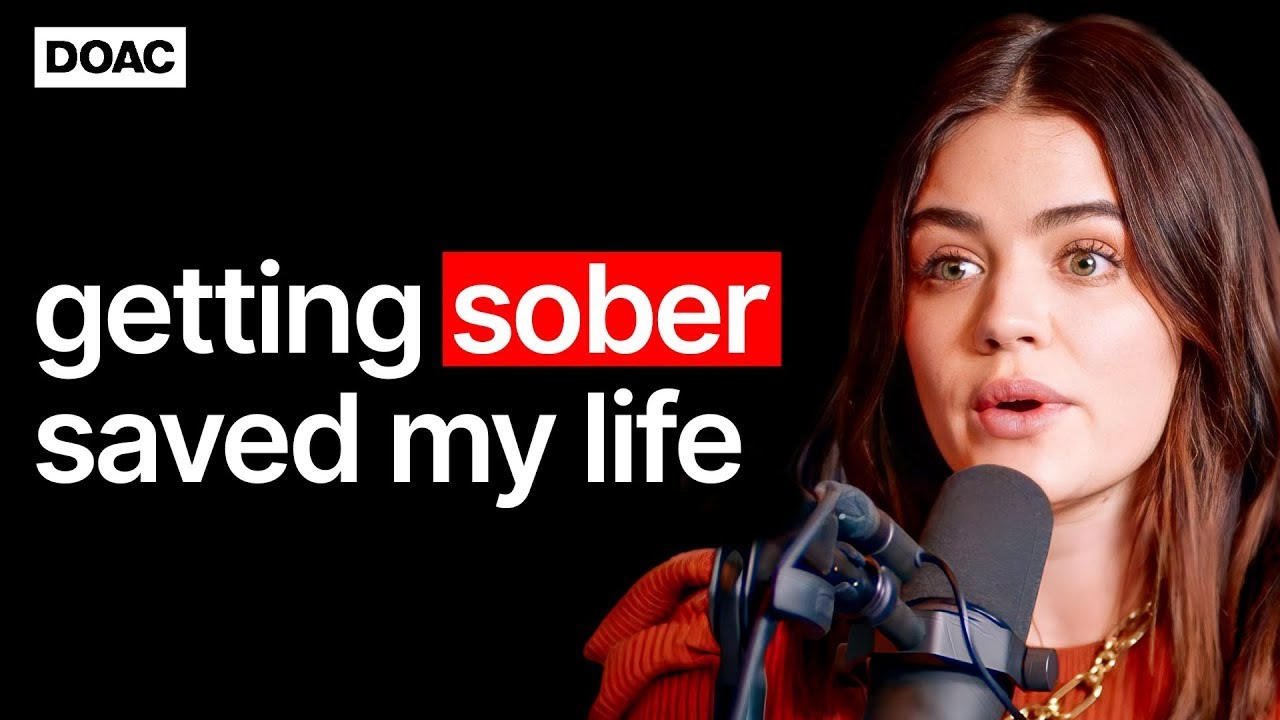
I struggled with an eating disorder because society makes it really freaking hard to like the way you look. I hated myself so much that I couldn't even give it basic needs like food. I did not feel worthy of the success, or the career, or the people in my life. And then the coping mechanisms were like incredibly self-destructive. I've been working on getting sober since I was 20. I just held onto that belief that "Real Lucy" came out when she was drinking. I tried to change for my mom. I tried to change for my career. One of my best friends died of alcoholism, and that still didn't make me want to get sober. None of that worked. Alcohol isn't the problem; the problem is this feeling inside of me. I have to try it a different way.
Was there a darkest day?
Oh boy. You have to go to a dark place sometimes to get to that point.
Lucy?
Hey.
I tend to start these podcasts in a very similar way, and I think in your case, it's never been more pertinent to start in that way, which is to understand your context. I’ve got to be honest, I read a lot about you online, but I couldn't really get to the very crux of who you are and why you are that way. It was really surprising to me because it almost appeared that you hadn't done a proper, slightly deeper interview before.
No, I think it's so interesting you word it that way because I actually didn't know who I was until very recently. And I think that's why—and yes, you might be the first real deep conversation I've had publicly. That's part of the reason why I wanted to do this, because I just think you're so amazing. You're obviously very intelligent, but you lead with your heart. I was like, "Oh, I feel like this would be a good match for us to talk."
I think because I moved to LA when I was 15 and started working pretty young, my identity became what I did for a living, my accomplishments, and my successes or failures within my career space. So it took me a long time to figure out who I was or who I wanted to be. To the point where people would ask me, "What kind of person are you?" and I actually couldn't answer it. I had no idea.
Through a series of speed bumps—we all have our own personal journey—I’m slowly peeling away that onion of who I am. It turns out that person has always been here; I just forgot she was there or put her in the basement, if you will. But yeah, it's been a really powerful last year for me. I will give you a heads up: I cry all the time, so just getting you ready. I also have big eyes and they get really glassy. I get emotional when I speak about these things because I just love where I've landed in my life. It's been a really powerful, painful, insightful, joyous, and horrible journey. I love that I can sit across from you now and be my most authentic self. So, that's a long way of saying I'm glad to be here.
And it makes you emotional because you're happy where you are now?
I've always kind of felt like an open wound, if that makes sense. Even as a kid, I just felt things in a really deep way. You could call that codependency or taking on problems that weren't mine. But now I get emotional because of the perspective and just having pride in the choices I've made. It's not emotional tears in a sad way; it's more just joy. I've been happy at different points in my life, but I had never experienced joy. To me, the difference between happiness and being joyous is that joy is long-term and sustainable, and it doesn't come from anything external. It comes from here. I had always heard people say that true happiness comes from yourself, and I was like, "Shut up, I don’t know what you’re talking about." But it really does, and it's been a slow grind.
So let's start from the beginning then. Your context before the age of 10 years old, growing up in Memphis. Bring me into that world. What do I need to know about that chapter in your life to understand the journey and the direction that journey took?
Yeah, so from Memphis. Family's also in Tennessee. I have an older sister who I adore and admire so much. I mainly lived with my mom growing up. My dad's still in the picture, but they were divorced really young. What was I like as a child? I think as long as I can remember, I've always felt kind of like—and I don't mean this in a sad way or in a victim way—I've always felt like I was on the outside looking in. I never had a lot of friends, I never felt the need to be social. After school, I wouldn't want to go to a friend's house; I would rush to get home to go be alone with myself. I've kind of always craved this feeling of needing solitude because that's when I could sort of be myself. I felt that as early as 10 years old.
My love of entertaining came from my mom being married to this man who heard me singing in my room when I was probably like six or seven. I loved Aladdin, I loved Disney movies, and I vividly remember pretending to be Jasmine on the magic carpet and I would just sing with my little tapes. He told my mom, "Lucy's got a good voice." Up until that point, I had never—I was too young to even know what being a singer meant. That led to taking singing lessons, which led to performing around Memphis.
Mind you, I hated performing live. For someone who is an introvert and someone who loves solitude, being on stage—I ended up doing music as an adult and I still had that same feeling—I just felt so exposed. It was really scary and I run a little anxious. But anyway, I grew up performing in that way. Then I found out what it meant to be an actor. This was probably around age 13 or 14. We found this small agent who was like, "Lucy should audition for this show that Disney's doing called Hannah Montana." This was years before they cast Miley Cyrus. It was then, it was that moment and that audition where I was thinking, "Oh, I can act and sing at the same time. This is my dream. This is my way out."
Way out?
I'll get to that. You're so smart. Yes. So I now as an adult—I'll circle back around to it because you know how I said it was hard for me to say what kind of person am I? It was also hard for me until recently to know why I wanted to be an actor. I didn't know why until recently.
So it was this Hannah Montana audition, which led to knowing what a pilot season was. Pilot season is when a network pays money for one episode to see if they want to invest in doing a series. I talked my mom into moving out to California. I didn't talk her into it; I think it was perfect timing for her and for me. We packed up our Prius and all of our stuff, which wasn't a lot. I come from a very simple upbringing. My mom was a travel nurse; she cashed in her retirement for us to move out here. I always ask her now, "How did you do that? That's kind of insane." She's like, "I kind of just had this feeling it was going to work out for you."
That also makes me cry and I also think it's really funny, because if it hadn't worked out, I'd be screwed because I didn't graduate high school. I wouldn't know where I belonged. I thank my lucky stars that it did work out because life would look a lot different, I'm sure. So we moved to LA planning to stay for three months at 15, and I never left. I’ve been here almost 20 years. Now I guess it's a good segue into what I meant by "a way out."
What I mean by that is I never felt—I knew that life there wasn't—it didn't feel like home. I never knew where I fit in. I love my family so much, but I always felt like the black sheep of the family. I just felt different, even as a little kid. It's no wonder that I got into acting because that was—I was always in my imagination. My coping mechanism was like dreamland in my head, fantasizing about what my future would look like. If you believe in the power of manifestation, my future looked like this. Little Lucy kind of created this whole life for myself, and I just knew I wanted something different.
You used the word "coping mechanism." I’m really compelled by that because I sat with Maisie Williams—that was another reason why I really wanted to do this because I thought that episode in particular was so powerful, really moving. As you were speaking, there were a lot of through-lines and similarities. Maisie really kind of lost her identity because she was a very young actress and she became—but also she was, in her own words, using acting as a way to escape. Which is almost what I heard from you there.
Yes. I didn't realize it; I realize now that my job completely was and has been at times a huge band-aid for a lot of issues in my life. I have very addictive tendencies and a very addictive personality, and work, like a lot of people, can be such an amazing distraction. We get away with it because you're productive, you make money, people like you; it's not like a negative addictive behavior. But it's so easy to not heal or not focus on what's going on when you're constantly busy.
That's why after an experience like Pretty Little Liars, why everything kind of just went "poof." Because for eight years—we did that show for 170-something episodes—it was like eight years of my life in between 20 and 28 years old. I don't feel like I emotionally developed in—I don't know what normal is, but I feel like I missed out on some normal experiences. So it wasn't until that period of my life afterwards where I realized how I was contributing to my own suffering, and I didn't even realize the magnitude of it until I was outside of something like that show.
In hindsight, when you look back on your younger years, you talked about your parents separating. What impact did that have on you in hindsight, in your view?
You know, I often think about this because I think it was 100% the best decision for everyone. You hear about so many people staying together for the kids. Oh my fucking no. I'm so glad that my parents separated because it was the best thing for everyone.
Why?
It wasn't a happy marriage. I don't think—and I want to respect both of my parents and not speak up really on that—but I do think that it may have been a little toxic at times. I was four, my sister was six, and it allowed for a little more peace and calmness. Both of my parents are now remarried to wonderful people and it all worked out. But I think I was raised by a single mom for a lot of my childhood. She was remarried for a little bit, but my dad is now back in my life and he's given me so many lessons. I think that anything that's traumatic or painful, I sort of just use that as ammunition to move forward. Like, what is this trying to teach me? What has this given me? Because we can look at any experience and say—and play victim. You can, I think it's okay to be the victim when you're younger, like your teenage years, your 20s. It's kind of okay to do that and part of life, but I think at some point you have to take ownership of your life. That's why I feel like so many people are miserable, because it's—you're in victim mode. I don't ever want to be a victim of my life or my circumstances. Ever. I want to be the happiest I can be and learn the most I can possibly learn about myself. And sometimes that means you have to go to a dark place sometimes to get to that point.
Jesus Christ, sorry.
Thank you.
I'm a crybaby. Yeah, that's fine. I didn't even remember. These remind me of like McDonald's napkins, which makes me happy. I love McDonald's.
It's expensive building this set, we've run out of budget.
I love it. I love it. I don't even know what I was saying, but...
Sometimes you have to go to a dark place.
What was I saying before? Sometimes I go in a trance and I just talk and I don't even remember what I was talking about. Oh, just talking about my parents' divorce. Yeah, I think it's so easy to look at these experiences and feel sorry for yourself. But life is so much more interesting and freeing and liberating when you look at something—when you look at things that have happened to you when you're a child and say, "What beautiful lesson did I get out of that?"
If we're just taking my parents' divorce as an example, the biggest lesson I learned from that is what kind of love do I want in my life? What am I going to stand for or not stand for? Something I always stand by in my life is like, I'm not settling. I am not settling. And that can mean—that just means people gotta meet me where I'm at. I've worked too hard to feel how I feel today for jobs, experiences, people, relationships, lovers, friends, whatever it is. Gotta meet me here. And it doesn't mean you can't compromise with people; that's different. But I just allow a certain kind of thing in my life and, yeah.
Your grandmother?
My grandmother. You got a tattoo on your left wrist. Oh wow, yes. I love you, it says. Right. Yes. Perfect.
So what role did she play in this picture?
So her name was Karen and she was my dad's mom. And my grandmother, rest in peace, you amazing soul, she was the coolest badass woman I've ever met. She taught me about things that maybe I shouldn't have learned at such a young age. She would put on Oprah when Oprah would be talking about really heavy topics. She put on the movie Grease when I was a kid and that was the movie where I'm like, "Poof, I want to do that."
I don't know where you land within the medium/psychic space, but I've talked to—I do practice Reiki with this woman named Katie who always senses my grandmother's energy. And every kind of experience like that, my grandmother's energy has shown up. So I truly believe that she is here with me. But she was just smart and she thought differently than anyone in my family. As an adult, I can look back and think, "I'm so much like her." I just miss her. She died really young. She died of emphysema, and it's shocking I never picked up smoking because I told you I'm like an extremist, but I've never been a smoker because of her. She died in her mid-60s, but she was so funny. She had breathing tubes on and she smoked until the day she died still. But that just showed you who she was; she just was a powerhouse and so funny. I miss her all the time.
It's kind of sad because I don't have that many pictures of her because it was before I had a cell phone and she died when I was 15. So I maybe had just gotten one of those Sidekicks or Nokia phones and I just don't have that much tangible memories of her.
You're named after her, though, right?
Yeah, Karen Lucille. And so she definitely lives on in me in that way and, yeah, it's nice to chat about her. Thank you for bringing her up.
I was really inspired by the love your mother must have had for you, but also really the belief she must have had in you to move to LA with you when you were 15, I'm assuming purely so you could pursue a career in Hollywood at 15 years old.
Yeah, it's totally bizarre. When I tell people that, I just have to set the tone. My mom was not a stage mom at all, and by that I mean she wasn't—it was never forced upon me. She just always encouraged me to follow this dream, which is so incredible because you hear of so many people where it's the opposite, where the parents are forcing a dream you don't really want onto you. She just instilled a lot of willpower. My mom is such a hard worker; I do believe I have my—I get my drive and work ethic from her. She's so selfless, like she would give her last penny to anyone and just loves with her entire heart. My mom and I have definitely had our rough moments over the course of our lives, but we're in such a beautiful place now where we really can show up exactly how we are without getting triggered or defensive. Because we're really similar in the way we approach our emotions, I guess, and so we kind of have butted heads at times. But she's always been my just biggest fan. I have no idea how—because I often think if I had a daughter who wanted to do what I want to do, would I do that? I don't know. How do you know? It's kind of insane, isn't it?
It is insane.
Thanks, Mom, for being insane. I love you for it. Like, thank God. But it was a risk for sure.
And she came and worked as a nurse?
Yeah, so the only way we could afford to live out here—because as you know, cost of living is insane—she was a travel nurse, which is kind of an agency for nurses that live across the world and they could place her at a hospital and they would pay for our rent and she would make a little extra money. But I mean, we were kind of barely getting by. Barely getting by. And yeah, I feel like there was always kind of financial worry there, but we always—she always made it work. We always figured it out.
And by sort of 16, you start working in TV shows and stuff out here in LA?
Yeah, so this is a really cool story to tell you because I just got back from Vancouver. But the first show I ever did, the first series, was called Bionic Woman. It was a remake of a really popular show from the '70s, '80s on NBC. I got cast as the little sister and we lived in Vancouver in this building right by the sea line. And then I now, 19 years later, just was working up there again and I look out the window of the building I was living in; it's the exact same building my mom lived in. I'm like, that is just the universe full circle. It was the coolest full circle moment of being 16 there with my mom on my first job to everything that's transpired to me being 33 working there now. It was just like this really incredible moment. But yeah, I started kind of working, supporting myself since 17. And then I think my mom saw that I somewhat had a good head on my shoulders by 18, and then she moved back to Tennessee.
That period between you being 16 and 19 when you're living out in LA predominantly, before you get cast for Pretty Little Liars, how do you feel about that chapter of your life? When you reflect on that 16 to 19-year-old chapter, what do you think?
It's so interesting because I actually haven't—seeing this building in Vancouver was the first time I had thought about that time in my life in 10 years. I actually haven't sat and thought about it. I also feel like so many of my memories are kind of blurry from that time. I—it's so weird, like I can't even answer that question. I think I was very grateful to be in LA and pursuing this dream, but that was kind of the beginning of it all, of what was to come. Like I wish I could go back and tell my 16-year-old self, "Buckle up, girl, we're going to get through this, but we're going to go through some shit," you know?
I've been open about this before. I struggled with an eating disorder most of my teenage years up until like mid-20s. It was around that time that it had kind of—that was like turned up to a 10. It’s all in direct correlation with moving to a new city, throwing myself into the world of acting. I think my life kind of felt out of control in a way, and my emotions felt out of control, and body stuff, food stuff is all needing control. And so, yeah, I guess I look back on that time and—I have compassion now. I don't want to say I feel sorry for myself, but I do believe in all of the inner child work where you just kind of see that image of you, young you, and really hold space for that and really speak kindly to yourself. But honestly, I don't really remember a lot more. And I don't know if that's weird, but I also feel that similarly about my childhood. I have certain memories, but I don't know, maybe I was disassociating a lot. I told you I lived in my head a ton, so I don't know. It seems like so long ago.
Hello, I'm here during the lunch rush with Janice, who owns her own food truck. **Janice**: Best cheesesteaks in town! **Geico Narrator**: Janice traded up to GEICO commercial auto insurance for her food truck business. We're here where she needs us most. **Janice**: They sure are. **Geico Narrator**: We make it so easy for her to save, with customized coverage that grows with her business. Sorry, I just get so emotional talking about saving folks money. **Janice**: Not this onion I'm chopping? **Geico Narrator**: It's just so beautiful. Oh yeah, nice onion. Get a commercial auto insurance quote today at geico.com and see how much you could save. It feels good to GEICO.
Support for this podcast is brought to you by Walden University. Ever catch yourself thinking, "What if I could go after what I actually want and really make a difference?" You're not alone. And that's exactly why I want to tell you about Walden University. For over 50 years, Walden has helped working adults like you get the 'W' with the knowledge and skills to build the future you want and make a difference where it matters most. If you've been waiting for the right moment, this is it. Head to waldenu.edu and take that first step. Walden University: Set a course for change. Certified to operate by SHEV.
Eating disorders. How do I understand that as someone that's never experienced an eating disorder? How do I understand that? Is there a moment where you realize that there's a problem or you notice behavior patterns that you think are unhealthy, to say the least?
Yeah, I think for anything that disrupts your life, or your happiness, or your relationships, or your career—that can be described as a problem. I think for me, it was all I thought about from the moment I woke up until I went to bed at night. How much did I eat? How much did I work out? I would step on a scale 30 times a day. I was eating so little that it was shocking. And it wasn't really ever about—that's a lie. It was about the way I looked at one point, because I thought if I could just be this number or this goal weight, then I'll be enough. Because it all rooted back to "I don't feel enough. I don't feel like enough."
Why?
And that's still a question I'm figuring out, because self-worth and knowing I'm enough—where did the thought of "I'm not enough" come from? Did I hear it when I was a kid? I don't know. Did I hear something that resonated as "you're not enough"? Maybe.
You know Gabor Maté? Do you know who that is? He came on my podcast. He's maybe the leading therapist, psychologist in the world on childhood trauma. Much of the crux of what he talks about is where we learn this idea that we're not enough as kids. One of the things he said to me, which still has sat with me, is he says, "Children are narcissists." He goes, "When the parents are arguing, the child thinks it's about them." And when he said that to me, I go, "Oh my God." It explains so much because children are sponges. So we interpret that situation, like that home life situation or whatever, as like, "This is about me."
Yeah. And so now I can look back and say, maybe as a kid I thought my parents got divorced because of me. Maybe I—there's a million different scenarios. So I'm certain I learned it at a young age. And as kids, none of us come out unscathed, right? Like we all take on some sort of pain and trauma from somewhere or someone. But mine manifested as an eating disorder initially, which then led to other issues. But it all started—because I always try to think, when did it begin? When did this obsession begin? And I want to say it was maybe around like 13 or 14 when I had—no, no, no, like 14-15 was starting homeschooling and I had to start logging my exercise hours.
Why?
It was for PE and you had to say, "I did PE today for X amount of time." And that's the only thing I can think of that started this obsession with movement. And then I saw my body kind of change, and then I started restricting eating. And then it became, like I said, just it slowly just grew and grew to something that I could not enjoy life. I could not have a conversation. I could not focus on anything. It's a miracle that I even started working and could focus on acting, because it was—when I mean it was a constant loop, I don't know how I got out of it.
And I mean, the thing with eating disorders is it can always creep back up on you, and there are days when I don't feel like my best self. But I love myself enough now to nourish my body. And it's so sad to think that I hated myself so much that I couldn't even give it basic needs like food. Are you kidding me? Like, that is so tragic. And so many people don't understand the space of an eating disorder because there's a spectrum. I can only speak from my point of view, which—I mean, I really don't know any woman that has a normal relationship to their body or to food, you know? Because society makes it really freaking hard to like the way you look. Social media can be a really beautiful place, and you're doing such an amazing thing with the work you do and changing lives. But social media can be poison. I have to really limit who I look at, what I look at. And I'm a grown adult, and it feels silly, but you have to curate your life to keep your mind and soul and spirit feeling good.
I always feel a little uncomfortable talking about an eating disorder because I'm sensitive and I know that it can be triggering and hard for people to talk about food and bodies. People don't understand how someone who objectively is thin could think they were overweight. And I can't explain it, but that's just what I saw and what I felt. And now I can look back and see photos and think, "Oh my God, I was so—I wasn't seeing reality." You just create this narrative in your head that's scary and dark. And it ultimately wasn't about the way I looked; it was about so much more, which is—I had no self-worth. Incredibly low self-worth.
I really owe it to getting out of that—I dated a guy for a long time who was Italian. It sounds so silly, it's like, how did you get help? It wasn't through therapy. I didn't start doing therapy until my early 20s for a different reason. But people always ask, "How did you survive those horrible years of your eating disorder?" It was my Italian boyfriend who loved and appreciated food, and he would make us go to dinner and I learned to enjoy food again. It was like each year that went by, I started to feel better and better. And then I booked Pretty Little Liars and it got a little dodgy again and scary, but I learned other coping mechanisms that worked for a while until they didn't. But now my relationship—I never thought I could call myself a foodie. Because today, like, I love food! That's how I experience a new city or a culture. Like, I just appreciate it and I know that we need food to survive. And I like and love and respect my body too. If I'm tired, I rest. If I want to work out, I work out. I can just sort of navigate feeling uncomfortable so much better these days.
Were you ever given a diagnosis for that disorder? Was there ever medical intervention?
Yeah, I did. My mom, shortly before she moved to Tennessee, she recognized it was a problem. She helped in the best way she knew how, but I'm sure as a parent she felt helpless and felt like it was her fault maybe. I went to a therapist only a handful of times where that was the first time I had heard "You're anorexic." And that word just sounds so daunting and scary. But I mean, I've never been in denial, though. I've always known it wasn't normal behavior. Like, I knew that my hair shouldn't be falling out and then I knew that I shouldn't be able to see every bone in my body. But you get like addicted to this feeling of controlling your own body. So I kind of knew it was a problem, but I didn't know what anorexia meant until this therapist had told me. That was probably like age 17. Yeah, I haven't thought about all that in a long time too because I'm so on the other side of it and it's nice. It's so nice to not have that hamster wheel in your head about that all the time.
Being in LA, being in the entertainment industry is a—I imagine—a tricky place to be when you're contending with issues of eating disorders because of the influence of advertising and movies, especially back then, social media, etc. I just can't—having never experienced an eating disorder before, but then thinking about being in this environment...
Well, what was interesting is that it started before I even moved to LA. The eating disorder was when I was like 13, before I had even thought about finding success. So I'm certain the things I've dealt with in my life I would've dealt with anyway; it might just be on the opposite end of the spectrum because I think that the reasonings behind all of these things are old feelings. That's old stuff that has been ruminating for a while.
But yeah, I mean, this industry is at a different point now where so many people are accepted—different types of people, different bodies, everything. It’s such a beautiful place I think the industry is heading, especially for a woman. But when I was starting out, it wasn't really that way. And then I book a show that's called Pretty Little Liars. What? So I'm like, okay, well we gotta be pretty and we gotta be little. Okay, well we got this. And you're also 20 years old where everyone wants to look a certain way. At that age, you all want to look the same and you want to—it just all flared up again. And it was all I thought about again, you know? Because I thought I had overcome it and then...
But then it became a thing of control. It wasn't—and then it ultimately it wasn't about wanting to be pretty or little; it was about "This is scary. My life has completely shifted overnight. Millions of people are seeing my face." Instagram had just started, you know, it was just sort of beginning. My first post ever on Instagram was me in season one of Pretty Little Liars. And it was like my life was now under a magnifying glass. I felt out of control. "Uh-oh, guess we gotta control the way I look again and then I'll be enough and then people will like me."
My MO for so much of my life was "How can I get people to like me?" Even though I hated myself. And real confidence is—I read my whole Instagram now is just like silly affirmations, but it helps. But I read something the other day that true confidence is not "I hope they like me"—I'm paraphrasing—but not "I hope they like me," it's "I'm okay and know who I am even if they don't." And yes, that's exactly what it is. And that confidence is what I've been searching for my whole life. And to know that and to show up anywhere I go with anyone, with new people, and say, "I'm accepted because I accept myself. I have value because I value myself." I—you can put me in any situation, anything—I truly mean this—and I have the confidence that I'll get through it. Sober and happy. And it's been one hell of a journey. I wouldn't have changed anything. I literally would not have changed any dark moment or situation because the perspective and empathy I've gained from that, I would not have otherwise.
You said "I hated myself."
I know, it's such a strong word. And it makes me sad that I felt that way. Maybe "hate" is a strong word. I do this sometimes too; I'll say something then I'll backtrack and try to paint it prettier.
That's fine, everything's good. But things are ugly sometimes, right?
Yeah. I—maybe it's more that I just didn't feel worthy of the things I had in my life. I didn't feel deserving. Because a lot of my life post-success, I did not feel worthy of the success, or the career, or the people in my life. It was like this limiting belief that "You're a fraud. If people really knew who you were, they wouldn't like you. You're worthless. You don't deserve this." And even though I wasn't actually saying those things, like subconsciously that's what was happening, I think. Because I would keep making the same mistakes and be like, "Why is this happening?" It’s because I had this belief that I didn't deserve any of it.
When you live with that lack of self-worth, it manifests itself in a variety of ways. One of them you talked about already, which is trying to gain control over something because then if I can control this, maybe I'll garner a bit of self-worth from the scales or the mirror, whatever it might be. What are the other ways that that lack of self-worth manifested itself in your life? I've heard you talk about people-pleasing. But you said something curious a second ago: you said that the eating disorder was the start of it. And then you said you were going to go on to say something else, but you paused.
Yeah, I mean, it all kind of ties in together, I think. The people-pleasing is such a big thing I've been working through in my life. Because what people-pleasing does is you're doing things that aren't authentic. You're doing things you don't want to do. What does that do? Well, it builds anger and resentment. Well then if you repress that anger and resentment, then what happens? Well, it's going to come out some way. And for me, my—like for such a small human, I have so much rage in that I have now sorted through. But for so much, I just bottled up that rage. And for me, the coping mechanisms I discovered worked for me were incredibly self-destructive and self-sabotaging.
I am not sure when this podcast comes out, and I had never talked publicly until yesterday about being sober. I have a little over a year of sobriety, which—the people in my life, my friends, my family, who are just the greatest people in the world and have stood by my side... I've been working on getting sober since I was 20. I'm 33. It takes time. It took time and it took patience with myself.
This is a topic I could talk about until the end of time. But basically what alcohol did for me—it did a couple of things. It was like this feeling of, "Oh my God, this is what I've been searching for my whole life. I'm my truest self," right? Like, "I'm so much funnier and cooler and people like me." That's all bullshit. Guess what? Not true. I was not myself, not my truest self. But it started with, "Wow, I can be free and funny and boys will like me." This is when I'm younger, right?
And I just held onto that belief that "Real Lucy" came out when she was drinking. Guess what? Real Lucy did come out, but it was that rage and pain that I had been holding onto for so long. But it also quieted my mind. I feel like—and I'm not the only person on the planet that deals with this—but my brain just goes, doesn't shut off. It's exhausting. But when I drink—because I was like textbook binge drinker. Like, blackout. Wouldn't remember what I did, what I said. Which is scary. And it's also hard to explain that type of drinking to someone because people who haven't experienced it or dealt with it personally... addiction is such a topic that is still so taboo because people would just tell me, "Well, Lucy, don't drink." Oh, thank you. Oh, okay. Thank you so much! I'll try that. Thanks!
But now it is that. Now it's like, okay, I just don't pick up the first drink and I'm fine. Because what would happen for me is I'd pick up the first drink, I'd like the feeling, I'd have another drink, I'd really like the feeling. And then it was past drink two—don't remember. I wouldn't remember the rest of the night.
Through what period of your life was this? Since you were young?
I've had an issue—I know from my very first experience drinking, which was like age 14, up until a year ago, I have had a problem. I have never had a period of my life where I was a normal, moderate drinker. It was always, "Let's go. Let's just..." I was willing to just go to this crazy dark place every time. And, of course, I tried to be a moderate drinker, just having two. I have an allergy to alcohol. I cannot drink. I view it as an allergy to alcohol. My brain doesn't work the same way as someone who can just have a glass of wine. It always wants more; it's like craving that feeling.
My best friend has just actually finished a documentary on this subject matter. He was my best friend but also my business partner for many years. The point where he realized he had a problem, we kind of had a bit of a face-to-face because he had done so much damage. And there was one particular instance where he did so much damage to himself, our company, our team members, that we met on a Sunday and it was that ultimatum moment, which is, "You're going to have to leave." You can do a lot of damage when you have that relationship with alcohol and you have an addiction to alcohol and it brings out that side of you. Did you ever have moments like that where people close to you said...?
Yeah, many times. It's one of those things. I remember the point in my life where I woke up a morning after drinking and it was when I wanted to keep drinking. I was like, "Oh, my reaction to alcohol is different than my friends. Like, this is different." And I've known I had a problem this whole time. There was never a moment where I thought I was normal. There have been moments where I didn't want to change because I'm like, "I'm not giving this up. Are you kidding me? Like, who would I be if I can't have fun and let loose and drink?"
But I had many times... my manager of 19 years, who is an angel, truly an Earth angel... I believe has saved my life at times. This woman has been there for me; she's had hard conversations with me. I've had friends who've tough-loved me. I've had friends who say, "We can't until you do XYZ." I've always been shown love and support, but the thing about addiction—or just life in general—you gotta want something for yourself.
I had so many things happen where you would have thought I would change. I tried to change for boyfriends, I tried to change for my mom, I tried to change for my career, I tried to change for vain reasons. I'm like, "Well, I'll look younger and be skinnier if I stop drinking for that." None of that shit works. I had to and wanted to get sober January 2nd, 2022, because I said, "I deserve more. I deserve more out of this life. I have to try it a different way. And I have to be willing to just commit to it."
You know, because binge drinking, I would be sober for three months, then relapse. Be sober for a week, relapse. And I never—the really crazy thing is I never let it get in the way of my job because my career has always been so important. But when I'd go home at night, it would just be like so dark and I'd be so in my head about it. It would be so dark.
I was thinking then because my business partner described it as there was a pain he was trying to escape, which we just never realized. He had a pain in his life, in his mind. I would find him downstairs at 3:00 AM in the laundry room with the lights off, drinking. I thought, "This guy's just—he just loves alcohol, right?" That's what you think. But I came to learn that there was a pain he was escaping that he hadn't addressed. Is that the same in your situation where there was an unaddressed pain or issue that you think you were using alcohol as an escape mechanism for?
Yes, definitely. I mean, alcohol isn't the problem; the problem is this feeling inside of me. Alcohol was the solution, for a while it was my solution. I'm like, "Oh, I don't have to think about being good enough or whatever the problem was." It worked for a really long time until it just left me feeling depressed, anxious, lonely, just worthless.
But there is a big misconception about people who struggle in this way is that "Oh, they're weak, they just can't not do it," or "They like to party," or "They just like booze." It’s so much more than that. And for me, it was definitely old stuff. Old feelings, pain. I do think that, like I said, I would have struggled with this no matter what I did for a living, but I think finding success at an early age and the people-pleasing and trying to be what people wanted me to be made me feel like a fraud, right? Because now I can show up exactly who I am and share my story, and to actually be able to talk about this is so freeing because it doesn't—it's not like I'm—it's chaining me down anymore. It takes the power away from it. I can be Lucy, which is not always cute at times, you know? Like, it's dark and disgusting and scary and that's what makes us all complex, amazing, beautiful human beings. We've all got this shadow self.
Were you happy in that chapter, that 16 to 19 chapter?
I thought I was. I'm like, "Oh, I'm getting a big paycheck, I'm happy." No. That's not real happiness. You know, I had told myself the lies of "you're happy," or I felt guilty for not being happy. Because how could I not be happy? I had XY and Z. And nobody wants to hear about someone in my position being unhappy, right? Like, let's just be real. Nobody wants to really hear about that. But at the end of the day, I've had to allow—and I believed that too. I ran with that: "Lucy, you don't deserve to be unhappy. How dare you feel these things." But now I know I'm a human being and everything's relative and it's okay for me to have these very human experiences. I've found the people in my life that I can talk to about it. Was I happy? I had moments of being very happy. But not like this. Not like this. Wherever I'm at in life right now, it feels peaceful, which I used to call boredom. I have moments where I'm bored. I'm like, "Ooh, what kind of fire can I start today?" but then I rein that back in.
Pretty Little Liars.
Yeah.
20 years old. You were doing another show, right? Called Privileged?
Yes.
And they canceled that show, and that led to you being cast for Pretty Little Liars, which is pretty amazing because rejection can lead to redirection.
That is—there's a really cool story there. So I did this show called Privileged. They canceled it. I was devastated. And the same producer said, "Hey, we have this script, it’s based off of a book, we think you'd be great for it." And they said, "It's called Pretty Little Liars." And I'm like, "I was such a huge fan of those books!" I read the script and it was the first time I had ever been offered something.
So at this point, it's just a pilot and no one knew the success of it would be. But at the same time I got that offer, I got the offer for something else, which was like a really—I don't even remember what it was called, but it was a really shitty TV movie that I don't even think—did it get made? Yes, it did get made. And I at one point was thinking I want to take this movie because there was a really cute guy attached to it. You can see where my head was at was "Let's choose a part because of a cute guy." And then it was almost overnight where I just woke up the next morning and said, "You know what? No." Because I would have had to choose between the two. I said, "I think I should choose this show." Well, thank God. Thank God. But it is such a great example of how one door closes, another one opens. Nothing is by coincidence in this life. I firmly believe that. I think that everything happens exactly how it should. Having an open mind and seeing the lesson in everything makes for a happier life, too.
And that, I mean, Pretty Little Liars became, in your own words, the biggest show in the world at one point.
I mean, I think so?
If it was one, two, or three, I mean, the outcome is still the same: that your life irrevocably changes from that moment onwards. For better and for worse, one might guess? If that's true, tell me why on both ends of that spectrum.
Yeah, okay. I mean, it was a dream job. Like, I could—I now had the success I had wanted and the notoriety. I felt valued and appreciated and...
Did you?
On a superficial way, for bits and moments. There were times when I thought my acting—there were times when I didn't feel like I was being utilized in the right way. I'm like, "I have so much more to offer, please let me do..." You know, there were other characters in the show that I wanted to be doing the things they were doing. But there were times when I felt like I could really show off my talents, I guess.
It was the launching pad for my whole career. And it's taken a while outside of that show to get people to see me in a different light. And I knew that when you're a part of something that's that big, people are seeing you every week—like people still call me Aria on the street, you know? I knew that it was going to be strategic moves for years to get people to see me in a different light. And I feel like I'm at this point now where people are giving me those opportunities. But I've worked really hard for that. I have taken a bunch of different types of roles and different types of characters post-that to show myself, but also to show everyone like, I'm not a one-trick pony and I want to be doing this. And if I'm lucky enough to get to do—I hope I can do this the rest of my life. But it helped me hone my craft. The fact that that show went for that long is almost unheard of. Like that just doesn't happen anymore.
And I always laughed because there's a couple of people on the show where it was their first job ever or their first audition ever and the show went for that long. I'm like, "This is not normal, by the way." But it also post-that show—because I've had some—I don't want to view anything as a failure, but I've had things that were maybe viewed as failures post-that, and it kind of—which I'm also grateful for because it gave me perspective of, you know, life is full of ups and downs. And it will always be that way no matter where I'm at in my career. Like people aren't always going to like me or like my work. Every job I do is not going to be the one that changes my life. And I've also realized that's not where my happiness comes from anymore. My happiness is not going to come from—I love what I do and I find so much joy in it, and I love creating, and I love acting in a really new cool way the last couple of years. But it's always going to be a roller coaster.
When we have those successes in life, when the dream we have is realized, we I think before that have an assumption that it'll fix a bunch of stuff, right? So that's what we aim for, we strive for it, we get there, and then in some way it fails.
It makes you feel worse. Yeah.
So what didn't it fix that you thought it might?
Everything! It fixed literally nothing. If anything, there were more problems. It expedited the all of it, right? Because my life was under a microscope and it definitely cranked up those dials to 10 when it came to my body dysmorphia. My self-worth was at an all-time low. I just didn't have the tools. How does anyone navigate that experience? I don't know how you navigate that in a healthy way. And I look back now and I'm like, okay, I guess I handled it in the best way I knew how. I don't look back and shame myself over it all. It’s kind of just like I was a kid and I was struggling, but I was struggling publicly but no one knew about it. So that was almost harder because I was dealing with all these big things but I never wanted to talk about it because I was so ashamed. And now I'm not ashamed of it, which is why I can talk about it.
Did you talk about it to anybody behind the scenes what you were struggling with?
No, it was pretty private because I didn't want to be different. I wanted to blend in. And if I talked about having issues, that made me a target. I think people maybe knew I was struggling.
Was there a darkest day?
A darkest day? I'm like, where do we begin? Interesting. I had many, many what I thought were my emotional rock bottoms. Dozens. And so that was why it was so hard; it was because I'm like, "Well, I thought we went to the depths of hell. Like, how do we possibly—how could it be worse?" And from the outside, that was what was crazy. No one would have known. So it was like everything externally didn't match what was happening internally. So then I just felt like a fraud. I was like, "This isn't adding up and it's not real and it's not right. I want things to match up and look the same." I just felt totally undeserving of everything that was happening. A darkest day... yeah, I mean I had many, but I'd always pull myself out of it. Like if I have one thing, I'm resilient. Like I don't really give myself a lot—that's not true. I do positive affirmations for myself all day these days, but I know that my resilience is what's slingshot me the other way.
Did you ever think about quitting?
Acting?
During that period of between 16 and 28 when you left...?
Oh yeah. Oh yeah. Yeah, yeah, yeah.
Seriously?
Well, not maybe seriously because I didn't know what else I was good at. I didn't think I was interesting, I didn't think I was smart, I didn't—all of these things. And I truly was like, "What would I do?" And so I at times had the thought, "Could I do something else? Could I go home after this?" But I never packed my bags or made a call to someone and told them. But there were times in my 20s where I was just thinking, "Is this what I want to do?" But then it became about—it wasn't because I disliked acting. I loved it. And I always knew I was good at it, but it was just "How do I manage my emotions and do what I love?" I was like, "I don't know how to do that." Now I know how to do it—I mean, I still have bad days, but I know how to handle it better. It's hard. It's hard. I don't know, it's a constant... starting a new job, I really have to make sure I have my plan in place for what helps me feel safe.
Do you ever ponder if you would have been overall happier for the last 33 years had you not been an actress?
Yeah, I think about that all the time.
What do you think the answer is?
No. You think you wouldn't have been happier? No. I think, I mean, maybe I would have had longer periods of happiness, but I do believe that where I'm at now, what I've gone through to get the happiness I have now... this is where I'm supposed to be and this is how I'm supposed to feel. And I don't think I would have gotten through that without the job I have or the things I've been through. I know it sounds crazy to say I'm happy that I struggled with addiction or whatever it is, but I am. I just think that in order for me to feel whole and survive is to be creative. And I actually crave creating and acting.
I was—there have been moments in my life where I was scared that, "Oh my God, I'm going to have to keep doing this and not know if I love it." And it was—I did this show, and the moment where it all happened for me was the show I did called Katy Keene. Short-lived, another short-lived CW series I did. I've had three shows on CW that only went one season. It's kind of a running joke now. Anyway, whatever. Katy Keene, New York. It was the show that made me fall in love with acting. And I don't even know what happened. I mean, it was a great show, great people, it was so much fun living in New York. But maybe I stepped into my confidence more? I don't know. I just feel grateful that I can say, "Oh God, I like what I do," because that would be a bummer to like do all these things and then say—and I could, and that's the reality. Like today I could say, "You know what? I don't want to act anymore." And I know that that's an option. And I know that I'm lucky to know that I have options; I have perspective on that too. But I also feel lucky that I do want to wake up and say, "I want to go act today. I want to go work with these people and collaborate."
Did you have a life throughout that Pretty Little Liars stint? Was there a life outside of the show? Was there relationships and socializing, etc.?
No. Oh yeah, tons of failed relationships. No, I had a social life. It was a lot of work. We were doing that nine months out of the year for eight years. But yeah, I dated and I traveled.
Failed relationships. Why did they fail?
I think, well, some of them were just young and they're not supposed to work out. But I do think I—and I'm very careful to not talk poorly about people ever. I do also realize my part of the equation. I'm not—I would never point the finger and say "this person." Like I fully realize why some of those crash and burn because it was, you know, hurt people hurt people. That's like a classic thing. I just think I was maybe attracting people that were a perfect storm for my low self-worth, chaos. I was attracting either people that had similar issues as me, and so it felt comfortable, or it felt like "Oh, I can focus on this issue or your issue" and try and fix them. And try and fix them because it gave me a one-up.
Or, you know, have you—I'm sure you've read about like love addiction, love avoidant? Yeah, like attachment styles. And I always thought I was a love addict because I just wanted people to like me. I wanted this guy to like me and everything would be fine. But the truth is I actually think I have fallen more under love avoidant because when people get too close, "Ooh, they're going to see me, they're going to know who I really am and they're going to leave, so I'm going to blow this thing up before they leave me." But I can tend to fall into love addiction behavior if they like out-avoid me. Does that make sense? So if someone is more avoidant than I am... anyway. So yes, failed relationships.
But the first model of love we learn is our parents.
No, I totally get it. I grew up thinking love wasn't safe. Or if love is this, I don't want that, are you kidding me? So I never really had a model of what a relationship should be. And maybe because my parents got divorced and I spent more time with my mom that I was drawing in more people who were similar to my dad. You know, there's that element.
Where are you now with your relationships? On that journey of understanding love and how to form an attachment with someone in a healthy way with the right person?
I think if I—you know, I'm single now—but in order for me to want to be in a relationship, it goes back to like meeting me where I'm at. And by that I mean like I think the type of relationship I'm seeking out is with another person who is whole and doesn't need me, and doesn't need this relationship to give them an identity. And I think that that is where people thrive: when people have really gone inward and know their strengths and weaknesses and know what they have to offer and are willing to grow and heal and evolve. And I've never had that. I've never had a relationship that felt safe, or like I could really show up as myself.
I do think that, you know, being sober is really important to me and that's my number one priority because I know that when I do that, everything else is fine. So I'd love to find someone who has an understanding of that element of my life too. I mean, I'm so open to it and ready, but I also am not desperate for it. Like I'm not needing, because I like many people used men and relationships to fill a void. It's easy to get addicted to people too. And that's actually the easiest. It's like, "Oh, I have a really cool new boyfriend. Like I can focus on this for a year and not focus on what I should be focusing on." And now I just—yeah, I just feel open and whatever is coming my way, I'm ready for it. I really believe that.
Life after Pretty Little Liars. You referenced this earlier. I can't imagine the situation where something is everything—it's nine months a year working, when you're not working you're doing interviews about the thing, everyone stops you everywhere you go to talk about it, it's all-consuming—and then it ends.
Yeah, it was weird. It was weird and bizarre and scary. Because that level of notoriety and fame, success, whatever you want to call it... like that is not really sustainable. And will I ever reach that again in my career? Maybe, who knows. I don't know, but if I don't, it's okay. But because it was here for so long and for most of my 20s, and then when the show stopped and things did shift... like I wasn't getting certain calls, like I wasn't being invited to certain things. People move on quickly, right? Like people just love content; like they will move on to a new show. And it was so scary to be like, "Well, where do I fit in? Will people remember me?" And it's like chasing this high of whatever that experience was.
And then I came to realize that's so exhausting. Like, I feel like I'm okay now if I were to just do jobs under the radar for the rest of my life, you know? Like I mentioned earlier, having a couple of failed experiences post-Pretty Little Liars really gave me perspective of, you know, life is full of ups and downs and it will always be that way no matter where I'm at in my career. Like people aren't always going to like me or like my work, every job I do is not going to be the one that changes my life.
was you described it as a dark time that the post PLL preload lines yeah phase of your life yeah and that's because you've got like I guess maybe you've got a I'm assuming here but you've got to find out who you are
again outside of the show it was that it was like am I going to work yet you know I think we not we all I've had some conversations with people in this a similar position where I wanted to work,
but you didn't, because people only wanna see you as that one thing.
And I'm also grateful for that period
because then that was when I got to discover who I am outside of that, who am I outside of my job? Who are you? I can say that I, I've always wanted to lead authentically and to show up however I am at any given moment, whatever that looks like. And I have not been able to do that until recently. I feel like I am confident in what I have to offer. I'm comfortable with who I am. I'm a good friend. I'm loyal. I'm honest to a fault. If you're in my circle, I'll have your back, no matter the situation. I talk about the hardship. I lead with my heart. I believe in justice more than anything, even if it's like I see someone cutting someone
in line, like that's not right. I'm passionate as hell. And I do believe my intentions with people are good.
And at the end of the day, I can sleep at night really well because I like who I am. And it's just as simple as that.
I like my choices.
But as you say, that's been a journey, right? Yeah. You used the word earlier. Used to wear compassion to describe, you know, you talk about that, like, in a child work that you've done. Yeah. How do you feel about that person that you, that went through that journey? What would you say to that person if they were sat on a chair that were on a third chair on this table? Yeah. What would you try and... I've actually done that exercise where you write a letter to your younger self. And I feel so badly now that I shunned her and I'm going to talk about myself as a her and me. This is me, younger me as her. I didn't give her a chance to speak up.
Like whereas now I'm like, what was hurting you so bad that you needed to do that?
Like, I kind of give her the stage to talk about her feelings.
And I really, truly believe that I was handling it in the best way I knew how at the time.
Now I would handle it differently because I have the tools. I have this like spiritual, emotional tool belt that if I'm feeling sad or whatever, I'm like, okay, we'll do this. But I didn't know. I didn't know any better. And I was doing the best I could. and I am proud of that of my younger self because we went through a lot like more things than I could ever possibly say in a podcast and so many people don't even know about that part of me but it was hard and dark and maybe I shouldn't have even gotten out of it and I did and that's so cool and I feel brave and courageous and and I know that I went through those things to talk about it. Why else you go through shit? Like you're you're supposed to share your experiences because it will
reach someone and I just compassion is the perfect word for my younger self. When we talk in hindsight we often create the impression that when I do this a lot that everything
everything is great now. And that's just like not the nature of life, right?
Life continues to be a roller coaster.
What are the things now that you're still, you still work on? Oh boy, I'm so emotionally impulsive and responsive. Like because I'm so, I guess the word is passionate, but I, I really, sometimes it's hard for me to see all sides of the coin and like see someone else's perspective. I, and I work on that a lot. I don't have all the patience in the world, but I struggle with what people think of me a lot.
I struggle with, what am I doing? Why are you here? What are you talking about? Like those that that inner critic is loud sometimes.
It's really—what have you done in terms of practical steps to protect yourself? You've got like a shitload of followers, you know? You've got a lot of people that are giving their opinion on you at all times. What have you done in terms of practical steps to protect yourself? I read somewhere that you went, you did like a rehab, like a digital rehab at some point in your life.
I mean, I do my own version of digital detoxing, which is simply it's not the first thing I look at in the morning. I don't grab for my phone, and I turn my phone on "Do Not Disturb" at like 7:00 and I don't look at it until the morning. Unless it's to text Katie every day. But I...
Were you addicted to your phone?
I'm still addicted to my phone! It's nuts! I'm like, "Yeah, I can go without getting Wi-Fi on this two-hour flight," cut to me putting in my credit card info. It's so—and it's this need, it's not to know what people are thinking of me, but I am addicted to being available all the time. And that—and I feel we're all guilty of that, like just being glued to this phone and texting back immediately or... I don't feel the pressure to—like socially on social media, I don't feel that pressure to need to always be present anymore. A lot of times in my career, I have felt like it's expected and that can feel a little draining because unless something feels authentic, I don't want to do it. Like I don't want to have to do it. I feel like I'm at this point now in my career where I don't need to, so I kind of just do what I want, which is nice and freeing. But I do think it's important to disconnect and that looks different for everyone.
30s.
Yay.
I'm in my 30s as well. It's nice, isn't it?
Congratulations. It's nice, isn't it? Yeah, it's really nice. For me, 20s was always a bit of a mess. Trying to figure yourself out and you know, dealing with all these emotions and trying to whatever. But in this next chapter of your life, what are you manifesting for Lucy?
Ooh. I mean, here's something I've been working on recently because I am truly a believer in creating the life you want. I believe our thoughts are powerful, our thoughts create everything. But I think where I've gotten stuck or in trouble, or where a lot of people might be stuck, is that we manifest a person, a job, whatever, but then we hold on too tightly to the expectation of what that is. So it's like now I'm at this point where I want to manifest specific things but be okay if it doesn't work out exactly how I think. And kind of looking at it as being kind of neutral with life. It's just like living freely, like going with the flow. I don't typically go with the flow; I'm not a go-with-the-flow kind of gal.
But you know, my priorities are a little different now. Like I do want a family. I think recently I decided I do want kids. I have two lovely dogs. My goal now—I want a farm with goats and chickens and so many dogs. And I just want to keep... you know, I can say so many things about my career and if I'm lucky enough to work and create and do all the roles I want to do, like that's freaking amazing. But mainly, I love discovering more about myself and why I am the way I am and why people are the way they are. Like I think this whole journey of self-discovery and self-healing is one that's constant. There is no end goal and I'm just going to keep... it's a marathon, not a sprint. So I just want to keep on this really beautiful path that I'm on.
You proud of yourself?
Yeah. Yeah. And it's not for the reasons you might think. I mean, I'm proud of my work ethic and the things I've accomplished, but I'm proud that I've faced what I thought were my worst fears about myself. I am proud of how I show up every day. I'm proud of how I treat people. I'm proud of having this conversation with you. I just knew I was like, "Okay, well I'm not going to have any expectations about what this is going to be. I'm just going to follow his lead." And you present such a safe space and I'm grateful that you allowed me to be myself.
I'm going to ask you a really interesting question. I don't think I've ever...
I'm not going to cry again. What is wrong with me? Okay, go ahead.
Why does that make you emotional?
Because I don't really have—I feel like I—I think it's because I am proud of myself. I think it's because I don't always have these conversations, or I haven't always shown up how I want to show up. I cry because this is just who I am today. I'm a weepy, emotional version of myself and...
You spent a long time acting, right? Literally.
Yeah.
It's so—I've come to learn so much from doing this show about the negative effect of prolonged periods of living outside of yourself. And what I mean by that is like the authenticity. Like the damage that does to one of escaping yourself for whatever reason, whether it's for success or work or whether it's trying to escape some trauma or some other thing that's living deep within inside of you. But either way, the attempt to escape yourself through creating an identity or alcohol or whatever, it always seems to just be such an unsustainable, painful process that causes more harm and even more reason to escape yourself, paradoxically.
Exactly.
And that's really transparent in your story because of many reasons obviously, but also because of your—you know, that's the job. The job is to be someone else.
Someone else. Yeah, quite literally. But you know, also no wonder I got into my line of work because "Oh, I don't have to figure out who I am? I can do all these things and be all these people people want me to be." That's why I got away with it so long. And then I was like, "Oh, the jig is up. We gotta discover who I am." And it's going to be hard and scary. But yeah.
We have a closing tradition on this podcast where the last guest asks a question for the next guest. Do you speak to yourself the way you speak to those that you love?
That's a really beautiful question. I'd say about half of the time now I do. I really feel like I show up for my friends and I'm a words of affirmation gal, like I always let people know I'm grateful for them and I'm just like a lover, you know? Like I want people in my life to know I love them and... but I can also have like a venomous tongue sometimes. Like I'm not—to myself? To others sometimes. Like I can emotionally respond to people in an unkind way, but I always hold myself accountable. So to answer that question, I can be very kind and at times unkind to the people I love the most. And it's similar to myself. The cruel inner critic, self-critic, I only do to myself. And you know, I'm still finding ways to quiet that voice. But I have made it a habit to say nice things about myself. And it feels silly sometimes and a little—not egotistical, but like saying kind affirmations to yourself feels really bizarre at the beginning because we almost think it's unhumble. Does that make sense? But I, yeah, I take time out of my day to say cool things to myself, kind things to myself as well. But I'm still working on the voice that's not so nice.
Speaking of kind things... also never asked anybody this question before, but it seems quite relevant in your story because I was just reflecting on that story you told about your mother upending her life to come to LA with her teenage daughter to pursue her dreams. When you look back on the journey you've had so far, who, if there were like a couple of people that you wanted to say thank you to, even though thank you would never really be enough to explain the gratitude you have for them? Who are those individuals? You can include yourself if that's relevant at all.
I mean, definitely my mom, but I tell her this all the time, thank you. My manager, who I also tell all the time, thank you. I would not be where I am personally or professionally without her. And she's gone well beyond being a manager; she has been the most human, kind, patient, gracious, selfless woman to me when she didn't have to be. It's hard for me to choose this because I'm such a—I tell people all the time, because that's how I receive love, is like I want to hear it, so I always make it a point to tell people. I've been so lucky along the way of having people that have been very good to me.
But there's one woman in particular who is still a friend, but her name is Joanna Garcia. She's an actress and she was number one on the call sheet, lead of the show Privileged I did on the CW. And I remember how she—so for people that don't know, number one on the call sheet kind of goes in from biggest role, like lead to—there are no small parts, but you know what I'm saying. She was the lead of the show and she treated everyone with such kindness and grace. And I remember and she was so good to me. And I was like, "I want to be like that. That's the kind of number one on a show I want to be." Not even more than that, that's the kind of person I want to be. She knew everyone's name. And she had such an impact on me, and I don't know if I've ever actually told her that, that she is still someone I think about. It's almost like "What would Joanna do?" I could wear the "What would Jesus do" bracelet, "What would Joanna do?" And it's people like that I've been really fortunate with the people I've worked with in my life that have inspired me. So thanks, Joanna.
Looping back to the start of this conversation, it was really startling to me that you hadn't had many conversations like this before. It like really baffled me. It's actually the thing I was saying before you arrived because I go on YouTube, I go on whatever, and I look...
It's so superficial. I'm so tired of talking about my beauty routine, I could just die. Like, I can't do it anymore.
But it was so—like I was literally over there watching a video where it was like "When's the first time you had a cup of coffee?" Do you remember the one?
I mean, it's so—I just—yeah, I mean no, I don't, because they all kind of blend into the same... I mean it was like a BuzzFeed thing where they're asking you these questions. I just found it so surprising that you'd never really—never really got to know who Lucy was. And I think and I'm grateful no one's asked a lot of these questions before because I don't think I was ready. I don't think I knew how to answer them. So I feel similarly like I feel like there's so much more to me than people might realize, or that I have to talk about. But I do believe in the timing of life and I just maybe I wasn't quite ready to answer those big questions.
Lucy, thank you so much. It’s been an honor.
Oh my God, you're amazing. Thank you so much for this.
Thank you.
*(Closing music theme plays)*
This message is brought to you by Apple Card. It's a great time to apply for an Apple Card. You'll love earning unlimited daily cash on every purchase. That includes 3% daily cash when you buy the latest iPhone, AirPods, or Apple Watch from Apple. Through this special referral offer, when you get a new Apple Card, you can earn bonus daily cash. To qualify, you must apply at apple.co/getdailycash. Apple Card issued by Goldman Sachs Bank USA, Salt Lake City branch. Offer may not be available elsewhere. Terms and limitations apply.
This episode is sponsored by Morgan Stanley's Thoughts on the Market. Today's financial markets move fast. Morgan Stanley moves faster with their daily podcast Thoughts on the Market. Thoughts on the Market covers daily trends across the global investment landscape with actionable insights from Morgan Stanley's leading economists and strategists. And with most episodes under five minutes long, staying informed has never been easier. Listen and subscribe to Thoughts on the Market wherever you get your podcasts.
§02Transcript — part 2
This year, most business owners have had one thing top of mind, which is how to make AI work for them. Because its potential is limitless. But if you don't know what you're doing, then you're guessing, which can be incredibly risky. Our sponsor NetSuite by Oracle helps businesses to get AI embedded throughout their organization, whether they're earning millions or hundreds of millions. NetSuite is the number one AI cloud financial system, and through their platform, you get all of your accounting, financial management, inventory, and HR in one place. Their AI connector also lets you pick the AI of your choice. Connect it with your business data, then you can ask it questions. Like "How much cash on hand have we got in the company?" or "Who are our key customers?" And because all of that data is connected, it makes your AI smarter, so it can automate routine tasks, deliver specific actionable insights, and help you cut the cost. Already over 43,000 businesses have chosen to future-proof their business with NetSuite. So if you'd like to learn more about how you can help your business, just get their business guide, which is called "Demystifying AI," and you can get that free at netsuite.com/bartlett. That's netsuite.com/bartlett.