
Joe Wicks on Addiction, Childhood Trauma, Depression And World Domination
Guests: Joe Wicks
Full transcript · Read the full conversation in order, with its original context.
§01Transcript — part 1
This is the first podcast I've done this year where we had tears, and not just once. And I don't really know how to introduce this conversation. I guess the thing I want you to know is that things aren't always what they seem. And really that humans all feel the same. We all feel the same emotions, the same peaks, the same troughs. And no matter what it looks like on the outside, things aren't always what they seem. I'm Stephen Bartlett and this is The Diver CEO.
I hope nobody's listening. But if you are, then please keep this to yourself. Thank you. Visualisation. That's a very relevant word, I think, to start this conversation, because in our last conversation last year, when I asked you what you wanted to be remembered for, what you wanted to do next in your career, you told me that you wanted to have a legacy for getting kids all across this country up to... exercising and really into exercise, sort of similar to how Jamie Oliver completely changed the way we view like school dinners and things.
And I remember Jamie Oliver was the reason I was eating apples instead of Mars bars when I was younger. And then just like a couple of months later, the pandemic happens and you're getting millions and millions of kids in this country up dancing and into exercise. Only a couple of months later, it like boggles my mind. I've never seen someone say something so big, such a big ambition. And then only like a couple of months later, do it on a scale which nobody has ever done it before.
That's what happened. And I remember when we met and we talked about that moonshot thing, the idea of like having a goal so big and so out of reach that you feel you can never, you know, almost never attain it. And that was my vision. It was to have that legacy of making an impact, you know. And I do think about Jamie Oliver. He's had amazing success as a chef, as a, you know, an author. But I think about the Jamie school dinners, the man who went into the schools all over the UK and said, look, this isn't this isn't enough.
our kids can eat healthier. And I feel the same about school fitness and exercise and PE, not just about obesity and the diabetes thing, but I think about our children's mental health. And I said to you that I want to have a legacy where I can create absolute national change and national, create awareness around fitness. And lockdown happened and within 18 weeks that happened. So it was almost like a 10 year dream happened in 18 weeks. And I'm so proud of that, that I've reached that many people.
take me to the start. So lockdown happens. Where does this idea come from? Like what happens? And then I want to hear like when you saw the numbers, the amount of people tuning in every day and the impact it was having, how did all of that feel? It was an intense moment in time, but it was also something I did visualize and I did, I had been working on. So I'd been visiting schools and on the UK tour, I went to Ireland, Northern Ireland, I'd visited schools, I'd worked out with hundreds of kids in these schools.
And That Monday I was supposed to go on another tour. Me and Nicky were going to take the camera, you know, it's my brother Nicky. And like I've always said, there was no TV show. There was no money. There was no budget. It was just me and Nicky going and doing what we love, which is connecting. And I suppose reconnect with the mission and purpose that I have, because when it's all digital, I do sometimes feel like it's just numbers. And is it real people?
So I have to go and visit the schools and actually meet the kids and do it. So on the Monday I was supposed to go out on the road. We had about 15 schools chosen and Boris announced, you know, there's going to be this lockdown. So it was 12.15 a.m. I was laying in bed on the Thursday night and I text Nikki because I looked at my WhatsApp the next day and I text Nikki saying I've got this idea. And honestly, I saw everything. I saw a hashtag. I saw a logo.
I saw the name. I said it's going to be called P with Joe every day next week. Let's just try it for a week. 9 a.m. Monday to Friday, I announced it and loads of PR, you know, loads of school newsletters, you know, school newsletters were tweeting it and I was doing ESPN, CNN, like global PR and I thought this is going to be really big but still had no idea how many people were tuning in on the Monday. And on the Monday we went live, I stepped in front of that camera and I was really nervous and 850,000, I think it was, live streams.
And I thought, wow, if you think about how many kids that could possibly be. And then day two was the biggest one. So day two was 954,000 live streams, which is a world record. Concurrent. Yeah, concurrent. It was almost a million people watching at the same time. Yeah, it blew my mind. And I realized there and then that that was like families, that was kids, it was schools, it wasn't like individual people. So really, it was probably 10s of millions of people a day.
And I felt this amazing sense of purpose. Like I was there for people when they needed me the most, because everyone was locked in, you know, whether you had children or not, you were like confined, you felt restricted, your mental health was going to suffer that day. And I was there to be there and just have fun. And I never once, one thing I was really cautious of, never mentioned lockdown, never mentioned COVID or anything to do with that. It was a safe 30 minutes where we could forget about things.
I put the music on. We were dancing around being really silly. And that was a gift. That was my gift to the world. It was just a bit of laughter, some feel-good energy, and a real boost in their mood when that finished. I know that they were happier. And you must have got a lot of calls from the big sort of production companies and TV companies wanting to like buy it or, or to bring it to TV, right? Within a few days. So you remember I told you the story about the Channel 4 thing.
I was trying my hardest to make the UK tour thing in a documentary around schools fitness, but they never had the budget that no one could do it. Well, within a few days, the head of Channel 4, like the top guy, I can't think of his name, called me up personally and said, Joe, what you're doing is amazing. We'd love you to stream the workouts on Channel 4. And I, I was like, Dude, I'm doing this on YouTube. I've got kids in Sri Lanka and South America and India and even Madagascar and the Maldives taking part in these workouts.
I can't do this on Channel 4. I need to be global. And I'm so glad I stuck with that because that really allowed it to go global. It allowed everyone all over the world to take part. And don't forget, I was getting a million live streams, but by the end of the 24 hours, there was seven, eight million views. So total 80 million views on the 18 weeks. So 80 million individual views, but how many families or schools are doing that? So it's tens of millions of kids.
And that was my dream. So I just can't believe it happened, but I'd built up that trust over eight years, you know, as the body coach, as Joe Wicks, as this mission driven person, I'm going to, Anyone could have had the same idea, but maybe they wouldn't have had the same reaction because like I said, I put out so much love and energy and positivity and visiting these schools that those teachers knew I was going to deliver a really fun and safe session for their kids.
18 million people is, you know, when you sat down with me last year and we had this conversation, you said you wanted to do this nationally, right? You said you want to get kids exercising nationally. There's only about 60 million people in the UK. You managed to do 80 million people all around the world on a global level. But also at a time when people really needed that kind of energy the most, at a time when the country was, you know, fearful, people were trapped indoors and not exercising as much as they could have been.
So, you know, we can talk about the P with Joe thing for a long time, but the thing that actually fascinates me more is what happens afterwards. So you've just, that goal you set out to achieve, you achieved it quick. Yeah. How does it feel after? Well, you talk about that gold medal syndrome, you know, of people having this, like, coming off tour or coming back from the Olympics, and they have this kind of feeling of, like, feeling flat or not depressed maybe, but confused and lost.
And that's what happened. I moved into this new house, and I thought, I've got this lovely house. Why am I feeling flat? And for the first two weeks I was there... I was missing my old house in Richmond because my children were born there. Pee with Joe was in that living room that you interviewed me in. It was like I left this energy behind and moved into this new life. And I was like, why am I feeling like this? And I realised it was because I'd lost my purpose.
I'd been disconnected from that audience every day. So when I felt that, the first thing I do, I jump on my Instagram. Like I said to you, I used to do DMs and voice notes and I reconnect with the messages. I read the YouTube comments so that I know two million people a month for doing YouTube workouts before the lockdown. I'm now getting six to seven million views a month. So that's real people that have changed their habits, that are still doing it.
And it reminded me why I did it. And also I had wonderful letters. I had two or three videos. I'm going to say it's probably nearly 2,000 or 3,000 letters and cards and things. That seems mad. But I had this stack of things to go through. So I sat in my office for two days, laughing, crying, feeling this love. It was like this wave of love when I realized what I'd actually done during that time. It wasn't just about me getting kids exercise. And it was like widows.
It was single parents. It was people with anxiety and depression living on their own. And in all the different places in the world, it was really emotional. So I did feel lost. But I've reconnected with that because now I'm still doing my YouTube workouts. I'm still delivering free content. And although there's this new product and this app coming out, I'm so passionate and committed to doing that one workout a week that I will never neglect that free content and that audience that are there that still may never buy my app or my books.
You talked about buying a new house, probably a bit of a dream come true in many senses. But again, you speak about it being kind of anticlimactical, like not feeling like that expectation that when you've got that big house, because I've seen the house, it's a nice house. You should have felt like confetti should have come down and you should have felt amazing. And but you kind of describe it like you didn't feel that like that. Yeah, I kind of thought, you know, I was going to move anyway, but it was like the lockdown accelerated because we had paparazzi outside and I wasn't used to that, you know.
I wasn't used to having photos taken of me and India when we walked to the park. And we lived on a main road, so it's quite public, and people would knock and sort of say hello, and it was fine. But sometimes you just want a little bit of privacy, like when you switch off. So we found this lovely house, and it's got a nice driveway. It's got a beautiful back garden. And when I was in there, I just kind of thought, why aren't I double as happy? I've got more space.
I've got more garden. that part of me behind in that house that was so purpose-driven it was all about pee with joe it's where my kids were born so i suppose it's a lesson and i really talked about that when boris announced the lockdown number two and i'm sitting there in my kitchen i've got all this space i'm thinking it doesn't matter if you've got a massive house we live in a one-bedroom flat we all feel the same right now we all feel very disconnected very lonely you know we miss our friends and family we need to socialize we need events we need live music we need dinners So it's just a really important message that it doesn't matter what situation you're in, we're all feeling the same.
And I really wanted to share that message. And it definitely helped people open up the conversation because we're all struggling, you know, mentally with this, with what's going on. And yeah, you know, you've talked about it before, you know, ordering the car and the house. And I think we're driven by these things and consumerism that we were always wanting the next thing. But what I've realized during this lockdown is I'm happy exactly where I am with just what I've got.
And that's a nice feeling. It's really nice when you realize that another Rolex, another car, even another motorbike or another holiday, it doesn't give you what you really think. And I think people listening that are desperate for that life, I think we all will come to the same conclusion eventually, whether you're 30 or 60, we will all level out and realize that what's important is our friends and our connection and our love to the people around us.
As you say, it took me a long time to learn that lesson. And I, the phrase that I was... You're only 27, aren't you? Something like that. Yeah, you ain't taking that long. You've got, I think you're very, when I listen to your podcast, I think you've got a lot of wisdom. I think you've spoken to a lot of people and you've absorbed a lot. And I think you've really taken that into your own life and philosophies, I think. I think, do you know what I think it is?
I've also been really like self-analytical, as in I will have a thought and I'll have a feeling and I'll try and grab onto it and hold it out in front of me and go, why are you feeling like that? So the day, as you kind of alluded to there, where I realised I was going to be very wealthy and I start looking at cars and houses, I get this feeling of like, the feeling you described with your old house, which is, I think if I get this, I'll actually feel poorer in some way.
I'll lose something. And then I thought to myself, well, if I get this one, what's next? If you get a Lamborghini Aventador, the best fucking sports guy, what's next? And then I was like, I'm going to just keep going. And then me realizing that if I always start to believe that my happiness was somewhere else, in a promotion, in a new car, in a big house, it will never be here. If I believe that I can't possibly be happy because I don't have X, I will never be happy.
Because once I get X, it's like a mirage or a rainbow. It just moves out further in front of you. Yeah. And you see that with a lot of celebrities, a lot of musicians, like talented people that get everything so young, you know, they get to that point where they start, you know, they go into depression and anxiety and it can manifest in drug addiction or, you know, all kinds of things. But yes, if you're constantly looking for the next thing or almost living in the past of old memories and what you used to have, like you talk about down contrasting and up contrasting, like that thing you said changed my life.
Just thinking... Stop thinking about what you did last year, how you went to America and you went to Coachella. Think about what you're doing today and not worrying about that. And it really just brings you to it. It's like a meditation. It's like a thought, a simple thought where you can actually start to bring yourself back to the moment. And like I said, it could be a quote. It could be a podcast. It could be an interview. Little things. Just sometimes it opens up a whole new thought process, isn't it?
And you start to think, actually, do you know what? That's amazing. And also, I interviewed Fern Cotton and she said, one of these lovely quotes is, nothing in nature blooms all year round. You know, where we're constantly, I need number one podcast. I need the number one app. I need to have, you know, the best book. I need everything's got to be number one. I need to be doing everything every month for the year. But I've realized that in nature, like nothing blooms all year round.
And that, again, made me realize it's okay to have quiet months and not be in the media. Chill out, relax. Because something good will come later on in the year, you'll bloom again during summer. And I think so little things like that really open up my mind. And I'm evolving quickly, I think, since I've become a parent as well. You start to be much more empathetic and you start to understand and you feel a lot more when you've got kids. I don't know where it comes from, but I think a lot more about other people's feelings now more than I ever used to.
I actually wrote down when I was watching your video that you did during the lockdown where you start discussing your own mental health and you're saying, I've just watched Boris's announcement and I'm feeling really shit. But in that video, you also say, I'm feeling shit at the thought that there's loads of families out here that are going to lose their jobs and stuff. And I wrote in my notes, I want to write. like incredibly empathetic, like you are incredibly empathetic.
And it kind of, it made me question like, where, where does he get that from? Cause that is a trait I noticed in you last time as well. Most people in the middle of a lockdown, when they've just found out that we're going into our second lockdown, don't think, oh my God, all these other people that are going to lose their jobs. And you, I could see it in your face and I know you're a genuine guy. Cause I've been with you, we've gone for dinner, you know, outside of the podcast, I know who you are.
I'm like, he genuinely, genuinely cares. I think it's grown in me. I think that feeling has grown in me. But where I used to be like, you know, when you're a teenager, you're a young adult, it's all about you. It's like me, me, me. And then, you know, you find a partner and you start to realize it's about your partner and it's about your kids. But I think, yeah, like the more I realize that we're all connected, it's that thing of connection. You know, it comes from sometimes a meditation or a feeling of like we're all we're all in the same experience.
And, you know. I've been very lucky, like the Body Coach brand has grown, you know, my YouTube audience has grown, like the sign-ups of the plan, it's all gone insane. And so I think about other people and small businesses, I genuinely care about, I think about families that have run like restaurants for 30 years or had, you know, properties or had like amazing nightclubs or, you know, amazing restaurants that are suddenly going under like that.
it affects me and that really when I stop and think about all the pain and suffering in the world it really brings me down it really kind of brings my energy down and then I have to kind of exercise or do something positive because I start to feel a bit sad because that is the world right now you know there's billions of people that are going for a really difficult time and so my reaction to that is trying to inspire them to move to eat well to exercise because I know that it can counteract any kind of you know financial pressures or stress that's going on if you exercise and you lift your energy and you and you put good food in your body You know, even temporarily, you're going to feel better and it's going to change your mind.
So that's my gift. You know, I try and inspire people to exercise and feel good for, you know, even if it's once a day or once a week, it's enough to change the way you feel about yourself and your life. We went for a little dinner a couple of months back. I don't know. I think just after the first lockdown, before the second one. And I came home really inspired on one end, but just I couldn't shake this thought. And I hate to go back to it, but I couldn't shake this idea that you just had the biggest achievement of your life with this P, outside of your kids, in my opinion.
um out with this pp with joe format that would just shuck it just spread across the world right and the joe i met at that dinner was somewhat despondent as you say like confused and um as you say like really unsure about why you weren't feeling on top of the world and also really unsure about what you do next to to kind of like top that i guess and it really stayed with me it stayed with me for like a couple of weeks what did you think do you think i was gonna be more like energetic and and and proud and like ambitious or what every every person on planet earth would have thought okay so joe sat out to achieve something and he smashed it out the park he is on all of the tv stations congratulations on the mbe by the way that's a whole nother conversation we'll get to that mad um he smashed everything out the park he's got to be just absolutely buzzing.
We were sat at the dinner and there's people coming up to us asking you for pictures halfway through the dinner as well. But you weren't like that. And even though I've written about this in my book at great length about gold medal syndrome and gold medal depression and my own experiences, I still, when I saw that in you, I was like, fuck, people need to hear about this. Because you were, I'll be honest, right? that was the lowest I've ever seen you.
Really? Yeah. I suppose. I was concerned. No, I mean, I was, I was really looking forward to seeing you and I was, it was, I was, you know, we hadn't been out for a while, but I think coming off the back of that P with Joe, I was emotionally drained. I think, you know, physically I can do workouts all day. I've done it. Dude, I've done a 24 hour workout. Like I can move my body, but I think the energy of performing, like going on stage, stepping in front of the camera when I wasn't in the mood for it, when I had to like pick up every, I was literally carrying everyone's emotion and energy and trying to, And I do believe in energy, that we carry it and we push it and we sometimes hold negative energy, we sometimes hold things locked up from years ago.
And I was just, I suppose, fatigued, emotionally fatigued at that point. But I've bounced back, you know, I'm back in the zone, I'm filming workouts again and I'm refocused, like I said, on the purpose and the mission, which is like... fitness for all and i've got the app is one option i've got the books as one option but then also instagram youtube you know there's so much free content because i don't want anyone to feel like the body coach is this premium brand and i can only get to him through that paid subscription no i'm still going to give you one workout a week on youtube and i'm still going to do my instagram recipes i'm still going to share my daily stories and motivate you um and every now and again i might mention the app but it really is just like for people that want to give it that extra push you know and try something a bit different so as we park pee with joe You know, last time you sat down here, you put out into the world your goal, your ambition, and it came true.
So I think, you know, let's tempt fate again. What is your goal and ambition now going forward in terms of your purpose? Well, I think what happened I achieved was a short term thing. You know, it changed behaviours, but they had to. They had to do it because they were locked in. Parents had to keep their kids moving. You know, schools weren't providing PE. Everything was closed. So it was a temporary thing. It was the start of a movement, but the legacy is still continuing that movement, you know, continuing to visit schools, continuing to speak to heads.
And I don't see it as a government thing because I've realised that you can actually just speak to local schools and they have the ability to change their curriculum. Well, they have to follow the curriculum, but they can change their timetable. So if they want to fit... 15 minute workout in once a day with their children or do it um you know at the end of the day they have the ability so again it's about continuing to grow that mission to create content maybe as a separate platform which schools can use but it isn't over because like anything motivation drops it might it drops for me it drops for you um different times of the year and with young people they're very engaged at the early ages in primary school but when they start hitting their teens they're in the devices they become more resistant to exercise so the challenge becomes tougher as So my mission now is to continue the school's work when I can go on the road, start visiting schools again, creating content, you know, hopefully creating a TV show around that.
You know, like Jamie Oliver School Dinners was only six episodes. In my head, it felt like it was weeks and months and months of content. So, you know, I want to do the same thing. I want to create a really amazing series, whether it's, you know, Netflix or BBC or Channel 4, where I can continue that conversation to get one teacher or one dinner lady or one head of a school to believe in the power of exercise for their children. So I really feel like I've just started.
There's so much more to go. I think you have as well. And you know, so like we, what one thing I've learned from doing this podcast and speaking to guests like you is that, and even Eddie Hearn, who we had on last week, is how pivotal and how defining our early years are. And you are like a really fascinating guy in so many ways. We talked about your empathy, your achievements, all of these things suggest that you're, because they're such extraordinary things, you're, you or out of the ordinary things, suggest that you probably had quite an out of ordinary childhood.
Whenever I meet someone who is achieved out of ordinary things, I always think, okay, tell me about your childhood. So how was your childhood, Joe? Oh, so you don't think it was a stable childhood? You think they were saying a bit more that motivated me on to... Yeah, I think, and it doesn't necessarily mean it was like a really bad childhood or a good childhood. I always, you know, and I actually did childhood psychology for two years, which people don't know about.
This is why I'm so fascinated by like all the Freudian psychology and how one thing that happened. I've got a friend who told me that one thing that happened when he was a kid, he still remembers to this day. And he holds that one comment that someone in his family made to him as the reason for his, probably his single biggest flaw. in his personality. And it was just one comment on one day from a parent. Yeah, that's amazing. And it's the power of, yeah, the power of a negative thought.
Like if someone says, your teeth are a bit crooked or you've got skinny legs. Someone could say you've got lovely teeth your whole life, but you still think your teeth are crooked. And that's happened to me in the past. I got Invisalign because a girlfriend said to me, your teeth are a bit wonky. Really? You know, and someone said about, you know, this is a true story. When I was 16, I had glasses, but I was really embarrassed. I was really shy about it.
And the girl I was going out of said, I said something like, I wonder if I'd look good in glasses. And she, she said, Oh no, you'd look silly in glasses. So I never wore them for two or three years. I used to hide them in my car, drive to her house, take them out. And you know, it's that thing of, we really take on these, these thoughts and it can really affect our confidence. Um, definitely, definitely happened to me as a kid. But I suppose my childhood was very chaotic.
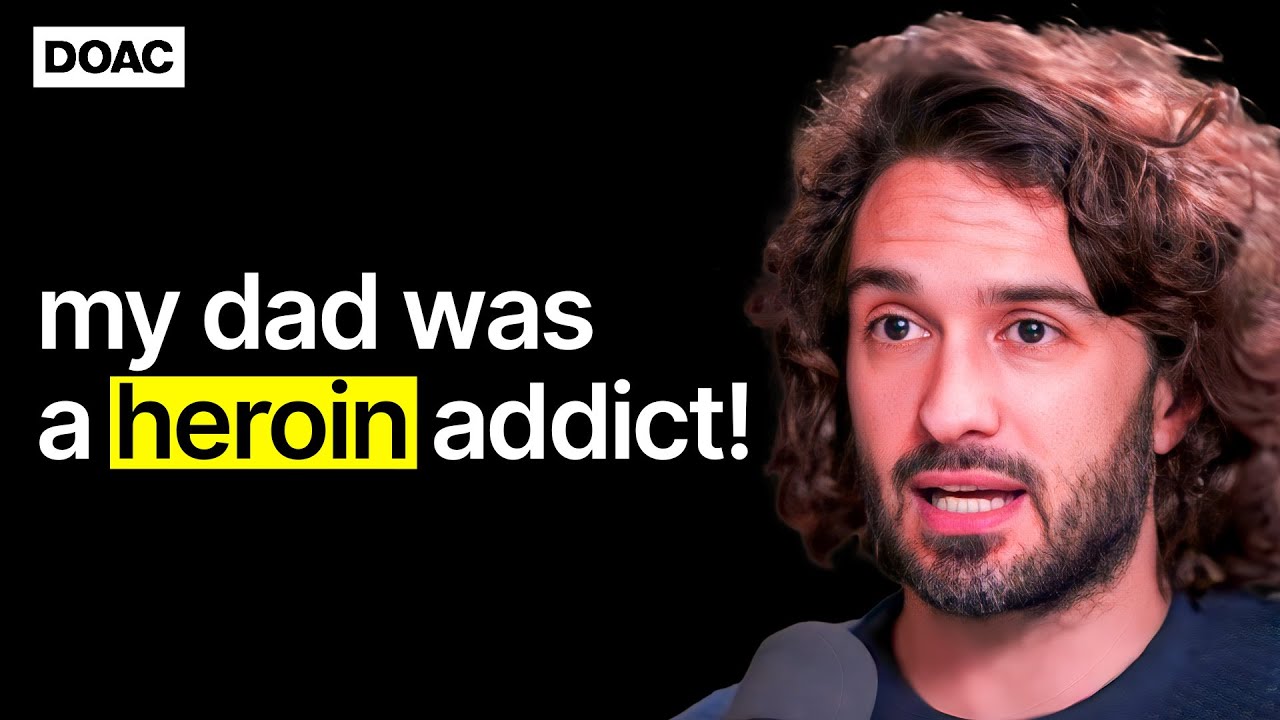
You know, it was very unstable. My dad was a drug addict from a very young age. So, you know, that was it was a bit like, you know, he was there one minute. Next minute he was in rehab. Next minute he was he was back on the gear, you know, and my mum would take him back and it was all good. And then they'd be arguing. And, you know, I lived in a council flat with really thin doors. So... It was like plywood. And so there used to be holes in the door.
Because I remember I used to think, why are there holes in the door? And I look back now, and it's because my mum and dad used to fight and argue. And it would be like it was a symbol of aggression and impatience and intolerance. And then it'd be gone. And so I didn't have a positive role model in terms of a male. And also when it comes to marriage, my mum and dad never got married. If they were married, they would have been divorced 100 times. So I had similar beliefs around marriage and commitment to you.
I want to hear you talking about it. I suppose I had the same feelings when I was 25. I didn't believe that people stay together, people are committed, that marriage is going to work, that people get through a tough time because it was always like when it got shit and tough, my dad would piss off and we'd be back on our own again. So again, it was a tough childhood, but also I had a happy childhood. I don't feel like resentment. I don't look back and be like, I wish it was different.
I wish my dad was there because we got a great relationship today. But it definitely affected me. You know, the destruction of drugs in my household and what came with it, all the chaos, really put me off ever wanting to smoke weed or drink alcohol. You know, I was so scared that I was going to enjoy it and I was going to become an addict. I thought it was a genetic thing. I thought, I don't want to be a drug addict, so I wouldn't go near it. So it definitely...
It definitely shaped me, you know, and when I look at where my love and generosity and empathy comes from, it's my mum. Like my mum is, she's so kind and loving and she's so always putting other people first. And I think that definitely shaped me as an adult. I didn't actually know this stuff about you before. I didn't know that you'd been through such a traumatic early childhood. And as you were saying that, I was thinking, fucking hell, it's remarkable that you are who you are and that you have such feelings of empathy and you're just such a kind human being having gone through such a, you know, violent and traumatic childhood.
And I guess that is credit to your mum. I suppose, yeah, I look back when I get asked in interviews now, like where did your generosity and your kindness come from and your kind of desire to want to help others? It's about help. You know, I'm happiest when I'm helping others. So if I know I'm helping someone or I'm helping millions, I'm really happy. And so when it when it stopped, I felt I'm not I'm not I'm not I haven't got my purpose. I'm not valuable, but I've realized I am still valuable.
I'm still helping people. But yeah, my mum, you know, she left school at 15, no qualifications. She met my dad in a squat. She had my brother when she was 17. Then she had me when she was 19. She's like a kid. And when we used to go places, like people used to say, is that your sister? She looked so young. You can't imagine. But somewhere along the line, she taught me value, she taught me respect. You know, if I had to be home at 10 o'clock on a Friday night, I was home at 10 o'clock.
My mates were down the park till 1, 2, 3, because their parents let them run loose. And they were the ones graffiti and they were the ones smoking weed. They were the ones that got in trouble for crimes and whatnot. So my mum was really... Considering she wasn't parented, her dad left her when she was a kid. She was a banner when she was a baby. So... I don't know where her love comes from, but she's got this ability to just love and be so generous.
And when she went to university, she went back, she said, I want to study. She went to become a social worker. So the first thing she'd done with her life was go and help people that, you know, young offenders, people that had been through abuse and all this stuff. So it has to come from her. It is emotional because my mum, so I took my mum for dinner the night before it was going to be announced. And I said to her, like... we're celebrating my birthday tonight, aren't we?
§02Transcript — part 2
Because we were having a late birthday now, but it's something else. Your MB? Yeah, my MB. And I said, mum, I've got an MB. We're in the middle of Lucky Cat restaurant in London, and she burst into tears. Really? And I'm, like, in the middle of the restaurant crying with her. And she's, like, when she was younger, like, all her friends used to say, you're a fucking shit parent. Imagine the pride. And it is. She raised me. Like, I have to put it down to her.
You talked about your dad there, and so you said that you've... after all that you'd been through and all you'd observed and his addiction and his battles with addiction, you've got a good relationship with him now. Yeah, we do because, you know, addiction never goes away. Like he's, you know, he does his NA meetings. It's a part of his life, but he needs that. He needs to have a fellowship and a network of people to talk to. Like, I don't understand addiction.
I've never been addicted to anything. So for me, it's like he needs that network of people he can talk to. And that's obviously at the moment mostly through Zoom. But usually it's like NA meetings, you know, you go and have a talk and you... you feel better and he's had you know he's had therapy but you know he's learned he's he's became he's evolved like again like his dad left him and i understand my mom and dad because they went through so much trauma my mom was abandoned when she was two years old was living in a she was in a um you know an orphanage and then My dad, same thing, his dad left him.
He didn't have... I don't think my dad's dad told him he loved him until he was on his deathbed when he had cancer. So I understand where that addiction, why my dad chose to do that with his life, and I understand why my mum... had OCD, like, because I know what she went through as a kid. I know what she went through as a young teenager. And so you start to understand it, and then you start to really love your parents even more because they protect you.
When you're a kid, they just protect you. They can't tell you what they went through. They can't tell you this stuff. So it really, like, makes you realize how much... trauma they've had and where that's manifested. And so now, like, my relationship with my dad is, I understand him. I understand that he has seasonal depression. During the winter, he's really low, and he'll have a holiday, and he feels great, and he comes back, and he's up and down.
And that's him, and I just have to kind of love him. And although I'm quite consistent with my emotions, and you want everyone around, you should be happy all the time, didn't you think? I buy him a motorbike. I send him to the Maldives. You can go and stay at my house in America. It's all temporary. It doesn't do a lot. So real connection comes from communicating, reaching out, spending time with him. He's happy when he comes around and we go for a walk or we go out on our skateboards together.
We've got electric skateboards. So it's about reconnecting and being with him. And he needs that. My dad needs to see the grandkids. He needs to see my brothers. He needs to see me. And yeah, I've just learned that, Like I said, that really nice quote that the antidote to addiction is connection, not push them away. I hate you. I can't stand it. Why are you relapsing again? Why are you going into depression? You know, the mind's really complex and you have to understand that people aren't going to always be how you want them to be.
And you have to love them unconditionally. But if you asked me as a teenager, I would be too angry. I would be like, fuck that. No, I can't deal with it. I don't have a dad, but that's a drug. I don't speak to him. I wouldn't have had the emotional ability to deal with that. But now as an adult, I'm 35 and I can understand it a bit more. So crazy. Cause I love that quote by the way. And I think Johanna Hari is a real sort of, yeah, I think I've got his book on the shelf behind me about lost connection.
That's where it's from. Yeah. That's yeah. I think Russell Brand mentioned it to me and I thought, wow, it's such a nice thought. And that's what the book is about. It's about the real reasons for depression and anxiety fundamentally stem back to a loss of connection of some sort. And it was telling when you were telling your story about the generational sort of cycle that's going on there. Your mother's, you know, your dad and her upbringing and then your father's dad and how like, it was a lack of connection, it seems, that put them into the situations they were in.
And then that lack of connection made them a certain way which then nearly made you treat them with a lack of connection as well. And I think it seems like much of the reason you're able to break the cycle is because you've realized that. And you're like, as you say, bringing him close, despite, you know, I talk about this a lot with my friends that have an estranged parent or have lost a parent. And I always try to tell them I was doing it this week.
are saying you've got to forgive them for their own faults because their faults have come from some kind of trauma and Tony Robbins says it as well he says you've got sometimes we've got to forgive our parents for being imperfect not being the parents we hope they were yeah it's so true and like you said you know memories memories can form like your literally change your characteristics in your personality your belief system and i had really negative beliefs around commitment around um you know people being faithful people sticking together like when things got tough to people and even i'd be affected if like celebrities that i really loved like they'd break up i'd think see that even they can't stay together i just thought no one stays together no one's loyal no one's No one's ever actually happily married and stays together.
But now as a married man with two kids who I love, I'm really, really like I don't believe that. I believe that you can be happy. I believe that when I see an old couple on the bench, a 78 year old couple, I love that. I think how amazing they spent their life together. I want to be like that. I want to be a couple that are stuck together. So it's, you know, my child has affected my my my love and commitment as a as a relate in a relationship to her.
to Rosie, but also as a parent, like I don't want to be impatient and intolerant and snappy and swear and shout. But that is my default setting. That's what my head's trying to do. When India and Marley are screaming at me, I want to slam the door and walk out the house or I want to scream and shout back at him because that's what I, that's what I had as a kid. So I have to actively work against that. So although I might be screaming in my head, I just take a breath and I like almost just sort of, yeah, just take a moment to just sort of calm myself and then I can react very differently.
But that's a muscle, you have to train it. Because otherwise I'd just be screaming and shouting all day long. So that's definitely, it's hard to do that when you've had it all your life and you just got screamed at, shouted at. It's just, it's like what you know, isn't it? It's your default. It's your default. Yeah, like it truly is. It's like a computer program and you have to sort of try and undo that code. And I read a book called... Calm parents, happy kids.
And it's that thing. You can either fight, flight, or pause and have a breath. You can fight them and swear and shout and scream and slam the door. You can run out of the house and just deal with it and let them deal with it and just not even deal with any emotion and show no emotional control. Or you can pause and have a breath. And that's the secret. It's just having that... Right, Indy's two years old. Her brain's not rational. She can't understand why I really want to just clean the side and put her down on the floor right now.
And so, like, you've got to literally remind yourself every time and then you can start to really respond differently to your kids. I guess we're all human. You have days where you get it wrong. Oh, yeah, I have days. I mean, of course, I have days where I shout and I lose the plot and I feel terrible, but also I know that... She won't hold it against me. Like, the amount of times I was shouted at, I love my mum to death. So it's not like, she shouted at me, I think she's terrible and I don't love her for today.
Like, I think it's okay to not be perfect, not be a perfect parent. And the other day I had a row with Rosie and I said, look, I'm sorry I'm not perfect every day. I'm sorry that some days I'm so... Rose is your... Rose is my wife. Your wife. I said, I'm sorry that I'm not perfect. I love you so much. I'm so affectionate and sensitive. But if I'm stressed and I've got something going, sometimes I'm snappy. Sometimes I'm impatient. And I don't shout at the kids and I shout at you and I'm sorry.
And it's nice to say that out loud and have a bit of a chat about it because then you kind of move on and you can just, you know, get on with it and you learn from it. You're getting busier, right? With the app stuff you're doing, you're getting more requests than ever before, surely. Dude, I'm so, this has been the year, like, I've, I mean, I've worked hard, really, I've over the last years, you know, during the growing stage, like with social media, you know, it's hard building an audience, and then I kind of had great success with the books, and now, like, you know, this year, since Pee with Joe, the 24-hour challenge, I then done Wake Up with Joe, which was three workouts a week for lockdown too, because I thought they need to exercise, people need to move.
I've now had the book PR, I've been doing radio interviews, I've done the channel four, so the BBC children need 24 hour channels. I've not stopped. I don't know how I'm still going, but I now at this moment need more energy than ever because this is the busy time. This is like leading up to Christmas. I'm also doing a January bootcamp, five days a week, I'm doing live workouts through the app, which is great because it means people are gonna go, I wanna give it a go.
And it's a really amazing way of marketing the product, but I'm gonna be exhausted. If you think about your state and your mood and how you feel within yourself, in the midst of all this like chaos and then we've got the pandemic rattling on outside as well what impact has it had on you um all of this busyness and now you've got two kids you know that are you're growing up and screaming at you and don't want to be put down have you felt a change I deal with it in different ways.
Like usually I have these like blocks where I work for like two, three months and then I go, right, I'm going to go to Santa Monica for a few weeks or let's go have a nice week in Dubai just to unwind and leave the phones and stuff. And I've missed that. I've missed that, just that reset button because I've had a couple of days away just when lockdown was over, but it wasn't enough because I actually spent my time filming workouts because I said I was going to do three workouts a week.
So although I was there relaxing, I'm still there. What I do is so physical. You know, being physical and doing exercise, but also doing it with such an amazing energy through the camera is so draining. But last week has been the most emotionally draining. I was doing like radio interviews with like Jamie Oliver and Ricky Gervais and doing all these things. It's out of my comfort zone completely. And then I had phone calls every hour on the hour to promote the new book.
So that is a different type of emotion. And when we talk about the body coach, so, you know, I am the physical body, like the energy, and Nikki is like... the CTO, he's the brains, he takes all the things I can't, the process stuff. Nicky's on a laptop doing Zoom calls nine hours a day, like managing this agency and all the other marketing stuff. So together, we have this perfect kind of relationship where we are working as equally as hard, but we're doing what we can do.
So I don't feel like burning out, but I do think at the end of January, I need to block a month out. So I've taken the month off, hoping to go, you know, somewhere nice. I love Costa Rica. I'd love to go with the kids. Oh, that's amazing. You know, just unwind. And basically, when I have that time down offline and I'm not filming, it really re-energizes me. When I come back, I'm like resetting, like body coach volume two, ready to go again sort of thing.
You talked a little bit there about marriage earlier, and you've also heard me on this podcast talking about marriage, right? I want you to tell me where I'm getting it wrong. Yeah. And also why you think I'm getting it wrong. So I listened to two episodes of your podcast, and I really hear... I hear myself in you when I was like 25 and I was lost and I feel like a part of you is lost because you've got everything on the surface you could possibly want.
You've smashed it in business. Like you've got an amazing story and you've got, you know, incredible success, which is wonderful. But there's maybe you're missing that deeper connection with one person. You know, you've got amazing friends and you've got a great network of people you work with. But, I do feel like the love between one person, you know, it's different. It's a different kind of relationship where you can always lean on them. So when I was 25, I was in a relationship from 19 and I really, I was running away.
I couldn't commit to it. I didn't, I used to say like... exactly what you were like, this marriage, it's like this religious thing, it's a contract, and why should that person get half of what I've got, and it's not going to work, all my other friends are unhappy, they're all divorced, you know, one in three marriages, so the more you tell yourself that, the more it becomes true, and the truth is, how you feel now is how you feel, and what you believe now is what you believe, but, you know, When you meet someone and you realise them, when you do fall in love, in whatever sense that could be, it was almost like with Rosie.
I was telling her every day I loved her and it wasn't enough. I needed to tell her more. I needed to have something stronger between us. So I said, can we have a baby? Then she fell pregnant and we had Indy. So for me, in my head, the ultimate bond between two humans is another child. And then when she was pregnant, I never thought I would get excited about the idea of like... proposing and getting married but it was just it just changed my mind has changed as I started to think do you know I love this girl I don't want to be waking up you know every other week with a different girl in a different hotel I'm like that's not who I have been and it's never who I'll be so I love being with I love being close to one person I think I'm quite emotional like that and then I asked her to marry me and we had this amazing wedding day and I do love being married and I just think when you have kids and you start seeing your children grow and you see how wonderful that can be and how much joy they bring you I just think your perspective will change over time and you're just not there yet you might not get that until you're 35 you could be 45 I was 30, I met Rosie at 30 and I've been the happiest since I turned 30
Honestly, I've just been, I'm committed because being, being honest and being committed is two of the most wonderful things. Being sneaky, being deceitful, not being honest or being jealous and insecure, they're feelings you do not want to go through your life with. So when you find someone, you know, be committed and be loyal. It's a really, it really takes your love to another level. Do you believe in that, you know, there's a bunch of words people use in this realm of like love and marriage.
They say, you know, you've got to find your soulmate. I don't know if it's soulmate, but everyone says, oh, you know, love's hard work. Marriage is hard work. It doesn't have to be hard work. Not if you're the right person. Of course, you could get with someone too young, marry the wrong person. It all goes wrong. And, you know, that's a bad experience. But it doesn't mean that the next relationship won't be better and you can't improve and learn from it.
But, you know, I do feel like Rosie is is the kind of female version of me that when we met, you know, we were just having so much fun and she's she's a wonderful parent. I watch her and I see how patient she is. I think I learn a lot from her because I I've got like a two or three minute kind of tolerance of Marley screaming and screaming in my face where I just have to walk out the room. I just can't handle it. Whereas she can be in there like 20 minutes all through the night.
And I'm like, yeah. Yeah, with Indie crying or Marley teething. I think it's amazing. She's just got this natural, innate, motherly patience and love and tolerance. So I watch that and I literally go, I need a bit more of that. And I sort of learn from it. But yeah, I mean, you know, maybe you might have one relationship the last five years. But I do believe that when you are in a relationship, like give it all. Don't be thinking this is going to end soon.
My last one didn't work out. I know now... it's going to break down and we're going to end up breaking apart. We're going to end up leaving each other. She'll, she'll have an affair. I'll, I'll leave her. It won't work. That just, it's hard to be happy in that situation. So I think take every relationship and just maximize it to, to the best of your ability. Like you would with someone that you were of a business partner. If we went into business together, you try and, you try and make that partnership so like awesome and so effective and efficient.
And it's the same with a relationship. You've got to, you know, keep, keep, keep doing the things that make you happy. And, and yeah, I think with Rosie, like just having a night out, going for dinner. And the, you know, the secret is if you stop kissing, you're fucked. If you don't kiss your girlfriend and you stop kissing, you just bypass each other and you don't, because everything starts from a kiss. Do you know what I mean? It could become a massage.
It could become, you know, you might do a bit of hanky panky, but if you stop kissing that one thing, that intimacy, I feel like, I feel like everything breaks down. Seriously, keep kissing. It's one of the, it's probably the only thing that I've thought about going and seeing a therapist about is like, I have a fairly negative, pessimistic, let's say, perception on romantic relationships. And I think I've identified that on one hand, I'm, my expectations are probably like somewhat unmeetable.
And then on the other hand, I kind of see relationships as being like a bird in a cage is the best way. Where does that come from? So I know your mom and dad and they're arguing. Screaming at each other. My parents. So that's the only, that's the only marriage role modeling you're, you're basing your opinion on. Yeah, so I have these, but when I say my parents screamed at each other, I'm like, my mum, I've never seen since a human able to perform this screaming match she did.
Nigerian woman, and if you don't know Nigerian women- I can picture it, I visualise it like around the kitchen table. The sound is like you've never seen. My dad actually said one day, he said, your mum was screaming at me. This is, I think, when we lived in Manchester, probably before I was born. Your mum was screaming at me and I went out, like went shopping, did all that. She had no idea. I came back and she's still screaming. She had no idea that I'd left the house.
And the sound of it, I have this like mental image of my dad sat passively, just this like passive white guy just sat there watching TV, just looking at the screen. And my African mother like kind of stood above him, just bellowing into his face at full volume for like... six hours. She didn't lose energy. We talked about like exhausting yourself. She didn't lose her energy and she would follow him around the house. And so I looked at my dad and thought, he's trapped.
And this is what my- You know that experience of seeing your mum shout, has that affected your, you know, your ability? Are you calm and- You know when you argue, are you confrontational? Are you like- Because me and Rosie are more like silent dream. We sulk and we're so stubborn and we'll like go two days about talking. We don't scream and shout at each other. Are you quite a shouting person? I will never shout. Oh, so you're calm? Never. I will not do it.
I will the minute- So I will try and explain myself in a very calm way and then I'm like, okay, I'm going. Right, and you walk away. I will like- Do you ever say sorry? Do you ever admit you're wrong? Or do you find it hard to admit you're wrong? It takes me- So if you'd asked me that question two years ago, the answer would have been like, no, I never say sorry. Like, because I always kind of think I'm right. And it's like my way or the highway.
In the last year, and when I was, I got with this certain person who I won't name, and she kind of taught me to like grow up a little bit. And I started to apologize for things. And- And I started to learn to apologise a little bit more. But I've got to be honest, I'm not going to lie. It's like the whole point of this podcast is not to fucking lie. Like, I'm still not that good at it. It is hard. I'm the same. I find it hard to say sorry in the moment.
But I do, if I go away for a little half an hour, an hour, have a walk or do a workout, I do come back and go, I was a bit disrespectful there. I do apologise. But yeah, it's an ego thing. It's like, you've just got to let your guard down. One thing I'll say about relationships, which I really think is valuable. I can't remember why I heard it or read it, but it was about... you can be in a relationship with someone and this expectation thing where you want them to do everything perfect and be everything in one and be like this amazing, like just like unicorn, right?
But you might find them really attractive and really funny, but intellectually, they just don't challenge you. You can't have conversations about what they don't understand you, but you can ring me or Nikki and we, you can get that, that, that, that part of a relationship from someone else. So there's no pressure on that person you're with to like be really intelligent and really understand business and really understand social media. Like, That's something I've learned that sometimes you have to love the person for what they've got, you know, love that they're really affectionate, love that they're really caring, considerate, but maybe other elements of their personality you have to get from someone else because the chance that you find in the unicorn is so rare, isn't it?
You're going to find that. And also you, you might be amazing at certain things, but you might not be good at one thing. I'm not a unicorn. This is the problem. Who is it? No one's a unicorn, really. No one's completely perfect. Because when you're in a relationship, you want the other person to like, you know, do everything like you and it'd be interesting, the same things you like. Rosie's not into, you know, motorbikes, but I got my brother and my little brother, George and my dad.
So I kind of get, I scratch that itch and I come back and then I spend time with Rosie and the kids. So it's really about finding the needs that you need as a human being in, in maybe in multiple people. And then you can really just focus on what you love about your partner. I talked a little bit about there about going to therapy. Have you ever gone to therapy? I call it the gym, but yeah, I think my therapy from a kid and I look back like for sure, like I was stressed.
I didn't want to go home. I would be always out the house, always playing sport. I think it was my therapy and I dealt with things through sport and maybe that's why I became the body coach. But I think I had one therapy session with a counselor once because I was basically in a relationship I didn't want to be in and I needed to talk to someone about it. And I had that session and I just spoke and verbalized everything I was going through. And it was almost like just by saying I was like, I know I need to walk away from this now.
And I went home and that was it. So it was an investment. It was like an hour of my time. I spoke to someone because it wasn't my mom who's invested, my dad who's invested. It wasn't her parents and my friends who really cared about her. It was like a completely neutral person. And it really helped because it changed the direction of my life. Because I left a relationship I wasn't happy in. I met Rosie. I got married and I had kids. And this is the situation.
I was 19 when I met that girl. I was backpacking. I was in a bar in Australia. You're very different 10 years later. So maybe there can be such a thing as a relationship that's really great at a certain time in your life. But then when it's not right and it isn't working, having a child and marrying that person is definitely the wrong thing to do. And I didn't really realize that until I met Rosie just how unhappy I probably was in that last relationship.
so yeah i've had it once and i think if i if i feel like i need it i'd be open to it i've got a lot of friends that do it it's like i see it as like personal training for the mind isn't it's like why not why not take care of your brain and your heart and your mind and that can be done through therapy so i'm open to it um i just haven't felt i haven't had the calling i'm more interested in um i really like the idea of doing an ios or ios can we do it together Do you know why I'm just I listen to your podcast.
I listen to like certain people that do it. And I I'm drawn to it because of that gateway and open up that that even more love and more connection when you realize we're all so interconnected. And obviously you can meditate for 10 years or you can go and do an irasco serum and apparently you get it's like a fast track. to that feeling but yeah you've talked about it have you have i mean i was in mexico and tulum and they they were doing like pot ceremonies out there and i i just couldn't quite convince myself to do it but i would love to do ayahuasca one day like go proper into the amazon do it properly with a shaman and like you know feel feel that mother nature they talk about that feeling of like the earth and that are connected to the human race it must be a wonderful feeling have you ever done mushrooms I've never done mushrooms.
No, I've never, I've never done drugs. So I couldn't really, um, I've never done anything like that. I've never done mushrooms or ayahuasca, but I, the more, so I've just, I've just invested almost a million dollars into a psychedelics company that's using it to cure mental health disorders. We talked about this, didn't we? Yeah, for the psilocybin. So my dad's involved in the trials at the Imperial College London. He's involved. He was basically one of the, not the guinea pigs, but yeah, it was a trial between psilocybin, a placebo and an antidepressant drugs.
And obviously the studies come back that like this can really help and it's a natural product from the earth. So yeah, I can see that growing in the next few years for sure when it gets approved. Has it been approved in the US for like depression and stuff? um don't quote me on this but it's an it's in the final stage of fda approval psilocybin so it's very very close and there's a company called compass pathways which has just gone public and is as of right now worth about two billion which is really developed it's sort of leading the pack in developing psilocybin but it's crazy that i've not tried it but i've looked at all the research and development videos and studies and data and it like blow blew my mind Are you tempted to try it yourself?
Are you scared and nervous about it? No, because I know the numbers. I've been through, I've looked at every drug and I've seen where mushrooms and psilocybin rank in terms of the harm they could possibly do to you and the harm they can do to others when you're on them. It's below alcohol. It's below like every, it's at the bottom. It's the bottom thing on the list. Yeah, it's been shown to really help with addiction and depression and trauma from that.
So, yeah, I suppose I wonder what the experience was like for us who maybe we're not depressed and we're not anxious. I wonder what that experience would be like. But, yeah, you know, I listen to a lot of podcasts. You know, Tim Ferriss is big on it. Rogan. Rogan, you know. Yeah, it's just kind of... It feels like this scary thing, but I suppose because it's been going on for thousands of years, you know, with kind of tribes, and it's not some dirty chemical drug that's been manufactured in a lab.
I think it... It's non-addictive. It opens up... So what they say is it opens up, like, neurological pathways that maybe all these memories lock. Did you hear the Tim Ferriss podcast? He said, like, he'd done an ayahuasca ceremony, or maybe it was psilocybin, and he had this vision of trauma that came through that he completely blocked out. Really? Yeah, so he got... He experienced child abuse. Like, he literally... didn't remember it and he had this vision and all these memories of being abused and it like completely like opened up his mind he's now obviously sharing about it but that was like something so it's quite in a way you don't know what you're unlocking you can unlock really beautiful memories and amazing things but it can also show you like quite traumatic upsetting things but either way like you can learn from it i think Do you know what I did this morning is the founder, one of the founders of the company, Atai, which is leading the charge in terms of psychedelics.
They're really developing about 10 different compounds in the space. I said to him, I need to get you on this podcast. Would you come on? And so he's, as far as I know, he's an incredibly successful biotech guy. He's been doing it for decades. And he's going to come on onto the podcast and really talk through all of these things. So like Ibogaine and psilocybin and all of that. So that'll be fascinating. I'll be listening to that one. So mushrooms, psilocybin, if you want to do it, then I've been saying to all these people in this room now, I would say, let's go and do a retreat with like a shaman.
And they've told me what the best way to do it is like the best retreat, the best shaman, the best place. I'd love to do something like that. Yeah, I would be up for it. I mean, it's a real personal, it's like personal growth. Like you read a lot of books. I'm not well read. I wish I had more patience and more time. Well, I wish I had more commitment and discipline to reading. But I do, I do, I'm drawn to it. And it always, it almost, they say like, it will call you.
Like my dad's done an ayahuasca sermon in Wales. And he said, it just calls you like the plant, mother nature, like you'll have a calling one day and it'll be like, I'm ready. At the moment, we're just sort of experimenting with the idea of it. And your dad did the psilocybin trial with Imperial. So what was his feedback to you after he did it? Yeah, I mean, it sometimes takes a little bit longer to integrate. You know, you have the experience and, you know, it was in a very controlled room.
Like it's in a proper like clinical setting. So you're like in a hospital room and they're holding your hand and talking through it. And I'm not sure the exact dosage, but he got blasted with a decent dose of psilocybin. And yeah, he saw some things and it unlocked a little bit of trauma and some visual stuff that he saw. But again, it's just about moving forward. It's about taking what you see and integrating into your life and saying, I've had these experiences, but how can I be present today?
How can I enjoy my life today? And with depression, I don't think it's going to be cured. I don't think you can cure it like that because of the way the brain works, but you're going to learn to deal with it and spot the signs and kind of counteract it quicker. But yeah, he had a positive experience for sure. And he's really proud that he took part because he genuinely wants to help people. Like he said, if people can come off chemical antidepressants and be given a really beautiful natural product that can actually help them feel happier, especially for post-traumatic stress disorder, people are dealing with some really, really hard stuff and they're getting blasted with antidepressants, which are very addictive.
§03Transcript — part 3
And it's like morphine, isn't it? It's not even... it's not even like good for you. They're very addictive as well. I don't think you're going to get the same thing. Yeah, the side effects are really, really, you know, crazy sometimes. I think they're opioids. I think opioids, yeah, antidepressants. I think antidepressants are like opioids or amphetamines. It's one of them. It's like it's basically the drug that, you know, you do not want to be taking in a very small dose, but over time it can generate real addiction.
And you see it in America, like the prescription drug addiction over there is really destroying people's lives over there. My next question, you would have heard this on the podcast if you listened to the Eddie Hearn one. It's kind of a new question I'm asking, and it's a question I really, really love because I think it gives a unique sense of perspective. You're an incredibly busy guy. You're running around at the moment doing this, that and the other, you know, all over the place.
If you found out, God forbid, touch glass, that this week was your last week for whatever reason, God forbid, or you walked out here and you got hit by a truck, what would you regret? having not done or not doing more of? I really wish I had like this long list of bucket things that I wish I'd done. But I've always, even when I was at university, like I would go traveling in my half term, my summer holidays. I've always maximized life at that moment in time.
And I've never kind of, I've never regretted or missed out on things. I've always traveled with my friends. I've always, you know, done the things I want. So if I had a week left on earth, I wouldn't really regret anything. I'd be proud. I'm proud of what I've achieved in this short time. I'm 35. I feel like I've been good. I've done some good things. I'd probably bring everyone together and throw my wedding party again because my wedding day was wicked.
I had all your best friends and all your mates and we had a fun fair and we had all the food and we were dancing. I think I'd try and recreate that. If I knew I had seven days, I'd get everyone together and say, look, it's my last week, come down, let's have another blowout and have a party. But I wouldn't regret. Yeah, I just really wouldn't. I think it's a shame to live your life like that, you know, regretting and wishing your childhood was different, wishing, you know, and I've got friends that kind of live in that mindset of always looking back and almost thinking about a moment in time that if they'd just done it differently, they were like, life would have been different today.
But you can't think like that. You can't get stuck between the future and the past, can you? Because that's really, really depressing. Whereas if you actually just think, look, I've done what I've done, even the bad things and the times I wasn't nice or disrespectful, like I learned from it and today I'm a better person for it. A lot of people, when you ask them that question, they reflect on like a lack of balance in their life. They'll say, oh God, I work too much.
I didn't see the kids enough and those kinds of things. That's typically what you hear. It's like, oh, do you know, I really wish I'd spent more time with this person or that person. I think if I was to answer that question, I'd probably feel, I'd probably say that. I'd say, why didn't I spend enough time with my family? I think the reason is because most traditional businesses, like if you're a grafter like Eddie Hearn, always on the road, always around the world, footballers, again, away every weekend.
They're training their travelling world musicians away from their family, and it's hard for stability. And so they do sacrifice a lot for that fame and success, whereas my fame and success has come through an iPhone in my kitchen. So I've really, even before lockdown, I filmed all my workouts at home. So I have a great balance where I can... do what I'm doing and be successful, but also leave my phone for two weeks and go away and not, not worry about it.
Or I can, you know, put my phone down. Like I, I, I spend quality time, my kids every day. I'm, I'm adamant about that. So I do, you know, breakfast, I make them breakfast every day. I have two and a half hours. So between like five and seven 30 where I don't have my phone and I do dinner time, bath time, but story time. Like I love it. It's like my routine. And I know get once they're down, I can go back to work or, you know, watch a film and, But it's having little moments like that, just having that structure so that you don't feel like you've missed out.
And you ask them how their day has been. And Indy's favorite thing is like she loves cooking and she loves doing her handwriting. So even just running in there and doing 10 minutes of handwriting with her. I mean, she's two years old and she's doing the alphabet. She's got like these dots. You follow the dots. And just seeing her with a shaky hand to like now a month later, she's banging out the A to Z and it's like immaculate. That's fantastic.
that's fun it's amazing so i'm not missing out on these moments although i'm really busy i'm also optimizing my time with them as well if you know what i mean when you said that india's really into cooking i thought oh god she's going to be the next body coach and then i thought oh god i wonder if joe would want her to be on social media I don't know. I had this dilemma with Rosie. When I was bringing out my cookbook, my Wean in 15 book, so I got a book deal and I was genuinely enjoying that journey.
I was learning to wean indie for the first time. I didn't know what to do. I was working with a nutritionist and I shared so much. We got 50,000 pre-orders and I worked hard for them pre-orders because I shared everything. I shared... The dinner, it was camera at breakfast. It was camera at lunch. It was, Indy, do you like that, darling? Do another one of them. So I shared so much in order to have that success. But now I've kind of, I've just gone a little, I just don't want the phone out during dinner time.
So I'm producing less content. I'm not producing as much recipe stuff because I want to have that time just with us. And I used to just film every gusto recipe. Every recipe was on Instagram. So yeah, I've had to sort of step back a little bit. And there's no way you're going to keep your kids on social media. It's just... whether they're 10 or 15, they're going to eventually get it. Would you like to though? If you could, there's two buttons in front of you.
One of them was, she won't join social media until she's 21. And the other one was, she'll join at 10. Oh, 100% no. If I could have my life without social media, like I have an unhealthy relationship with it. And I, you know, I watched The Social Dilemma on Netflix and I was like, I cannot believe how addicted we are, how these devices are so well designed. I wish me, Rosie, and the kids weren't on social media, but I know... I wouldn't have been the body coach.
P.U. Joe wouldn't have happened. So it's almost this like... Trade-off. It's like a trade-off, isn't it? It's like if you want to have this success and have this amazing life and also reach millions of people, the only way you can do that is social media. It's not TV. It's not radio. It's social media. So it has its pros and cons. But I hope that we kind of... we can somehow learn to control this mental health epidemic that we've got going on with social media and the narcissism of Instagram.
I just hope that we kind of go, actually, you know what? That was cool in 2010 and 2020, but maybe now let's be more humble. Let's just be kinder and let's like share useful content. Do you know what I'm trying to say? Yeah, because it could be... you know, India, she's going to get, she's going to get her phone. She's going to open it on that first day when she's 10 years old. And she's going to see Kylie Jenner in a bikini on a yacht, in a Louis Vuitton bikini on a massive yacht, looking back at it with her ass looking perfect and perfect boobs and a perfect face and perfect hair.
And India is going to stare down into that Yeah, watch my life. Yeah. And it is. And it's that comparative thing. And it happens to me. I follow a lot of Instagram accounts. And, you know, my explore page is basically like motorbikes or it's, you know, fitness models. And it's like, because I'm in that in that in that kind of atmosphere in that world. And it does you think, oh, these guys are in such good shape. You know, I'm looking a bit skinny.
I'm a little bit podgy. Whoever you are, you still start to compare yourself. It affects your confidence, whether you know it subconsciously or not. And, you know, I wish I was more tanned. I wish I was unhollowed. I wish I had a bit more muscle. I wish I wasn't so skinny or I wish I didn't have a little bit of body fat on my tummy this year because you're just bombarded with these visual representations. So, yeah, I think that in that effect, it almost like you can't really stop that.
If you're looking at it all the time, you can't. It's almost like you have to just unfollow some of those accounts. You said, didn't you? You said unfollow the accounts that don't serve you. And I've started doing that. If I get to one, I go, why did I follow that bang, unfollow? Do you know what it is as well? So I was, when I wrote my, I started writing my, well, I finished my book now. But when I started writing the book, people are quite crazy.
The title's Happy, Sexy Millionaire. And in this one chapter, I really focus in on comparison. And this is a bit of an exclusive. And I go through all of the studies on why we compare ourselves to other people and why we compare ourselves. our you know our car to someone else's car and the conclusion i came to is we're not actually going to ever be able to stop comparing because our brains are wired that way for survival they like that's how our brain works it's very very lazy if you show someone three tvs in a shop an expensive one a middle one and a cheap one statistically people will pick the middle one Oh, really?
Because they think that one's going to break and it's shit, the cheap one. And they think the expensive one is maybe too flashy. So if you show them three steaks on a menu, statistically, people will pick the one below the most expensive one. Yeah, do you know what? Even I actually, when you come to say that, I sort of feel the same. Like, I'll be like, I don't need that, you know, the waggy one because I'm happy with the £20 one in the middle or whatever.
Yeah, you're right. It extends across everything. If I said to you, Joe, would you rather drive 10 minutes to save £10 on a £200 jacket or... drive 10 minutes to save 10 pounds on a 20 pound jacket, people go, well, I'll save the 10 pounds on the 10 pound jacket. And you go, why? It's 10 minutes it's going to cost you to drive and you're going to save 10 pounds. But your brain is just, assume, it's like very... The conclusion here is... Yeah, what's the sum of what's the conclusion?
I'm interested in that because I'd like to know what you're sharing about that. The conclusion is that our brains are so, so lazy. They make such lazy snap decisions and conclusions because those snap decisions helped us to survive when we were 10,000 years ago. A lion's running towards you. You can't fucking like, right, okay. You've got to just... So our brain does it at super speed. And in the context of social media, it's like, I loved my Nokia phone.
yeah until until the new one the iphone comes out right i was the proudest kid in school showing everyone my oh look snake i can do snake on here but then but then the minute that same thing which hasn't changed in value exists in a world of iphones which is what social media is it's like me looking at kylie jenner immediately even though i haven't changed in value i am less than Our brain tells you. No, I agree. I agree with that. And I feel that myself sometimes when I watch that show, the Netflix documentary, The Social Dilemma, it did say all of the guys that created the products, that created the like buttons, all those people said, my kids aren't on social media.
And that's the alarm bell. It's like saying, you know, it's like that joke of, you know, I wouldn't trust an eye surgeon who's wearing glasses. Like I'm getting my eyes laced on Saturday, by the way. But like they say, you know, don't, you know, if that person that created it and it does it every day is saying to you, like, get your kids off social media, it's not good for their mental health. Yeah. And that is what it is. It's not about... I don't think it kills ambition.
I think it just really affects people's mental health. And their self-esteem. Their self-esteem, yeah. And sometimes that's irreversible. And you could be like a young teenager that has an eating disorder, you know, all through your life or is binging or under eating or, you know, not respecting your body. And that can really stem from like how you feel about yourself, right? I try and use my social media to obviously promote healthy food and fitness.
That's a positive part of social media. And I think your content is positive. I think some of the quotes that you share, like the 10 things and all these little, sometimes I really want to go, bang, wow, it's just a nice little light bulb moment. So you're using it for positive. And we have to just always focus on that, focus on the people that are bringing the good stuff out of it. I think you've probably heard me say before that the way I use my Instagram, I genuinely believe has like saved my life a little bit because I would have before.
If you scroll down my Instagram right now, you'll see what I was like. Oh, picture of a Lamborghini, picture of a Louis Vuitton bag. And then at some point when I became a CEO of a company and I felt a sense of responsibility not to be that guy, I thought, OK, so how can I use this? I'll post quotes. And because I've done that for the last, like, I don't know, two, three years, it's meant that when I do have... It means that I don't buy stuff to post it.
Yeah. And if I'm in a helicopter going over Sri Lanka, sat next to my girlfriend, which I was, no one will know because I actually don't have a place to put it. So I'm now making decisions. Unless you're on your close friends list. That's really, yeah. I'm so glad I'm on that. That's why I get through on Ice Villas. Yeah. Yeah, yeah, there's only 100 people on there. But like, I don't have a place to put it. And so when I'm making the decision, it's not based on social media, because I know I'm not going to be able to tell really anybody other than like a couple of my close friends.
My question, though, which is kind of attached to that, is about money. Something that a lot of people probably won't talk to you about. Now, listen, it's always uncomfortable. It's uncomfortable. It's just awkward. Even when articles come out like Joe buys this much, you know, this million pound house. It's like, why is that important? But I just know that people are obsessed, aren't they? So ask what you want to ask and I'll be honest. Yeah. So an unavoidable consequence of success.
Like the thing is, the reason why I'm actually not uncomfortable about asking you this question is because if there's anyone on planet Earth on off camera that I know has the most genuine, sincere intentions, it is you. Probably of all the people I've met, I'm like, I can't think of a guest I've met who is more sincere about their intentions. More. Thank you, Stephen. Your maximum sincerity, right? So some people are as well, but your maximum. So I've got no problem asking you this question, which is an unavoidable consequence of your success over the last year previously is money, right?
It's what allows you to have a camera to do PE with Joe, right? Yeah, of course. Yeah, definitely. So this year, I mean, you've made a lot of money, right? Like every year. What role does money play in your life? Just be honest with me. It's that thing of, you know, we talk about, you know, freedom of time and like, you know, owning. I've always been about time and being with friends and family. So for me, it's like it's removed a lot of stress because when I was a kid, I remember money was a stressor.
Like, you know, we had... We never had food in the house, so my mum would have to go to my nan's and we'd have to get like, borrow a pint of milk and like run in next door. You know, when you're in a council estate, it was quite common, you'd go and ask for a pint of milk or a couple of, I remember asking for like a bag of sugar for our cereal and stuff. So I didn't have any money growing up. And, you know, I was on school dinners, you know, I was, my mum was on benefits.
So it was, it was all like Iceland two for one, buy and get them free. It was crap food and that affects, that affects things as well, you know, the food you're eating. But I suppose for me, when I started to make money, it was a gradual thing. I didn't win the lottery and wake up with a million pounds. You know, I released my online plan and one person signed up and then it was 10 and it grew and it was gradual. And so it was a nice way of, but like with my followers, it was a nice gradual thing.
I didn't just jump off of them. Love Island with 2 million followers. and have money thrown at me. And I think that does affect your ego differently. And I think anyone that's young that gets thrown into the media with money and fame, it would affect you in a certain way. So it definitely allowed me to have more freedom and to take care of my family. I think I'm not someone who has been successful and left people behind. That would make me seriously unhappy.
I've helped my brother out. I've helped my dad. You know, I got my mum at a house. We've done amazing holidays together, like all the boys. You know, they know I'm there if they need me. And that's a nice feeling. But yeah, the question is around motivation around money as well. I feel like as time's gone on, I've become less motivated by it. And I remember that story said about you're up here and you could have run down a sense of an email and got 20 grand.
I have days that too where I think I could go and do another Gusto post and 10,000 people might sign up. Or I could go and film another workout and it could get 2 million views. And when I feel like that... I have to remind myself of why I do what I do and that mission thing about, there's someone at the end of that YouTube video just waiting for a new workout and they live in Scunford and they've got no money in their proper skin and they're waiting for the workout.
And I remind myself of that. So yeah, money allows, it just allows freedom. It's less stress. And money was always something we always argue about. I think maybe my marriage, I'll be honest, is easier because we don't argue about money. And maybe your mum and dad used to argue about money. like school uniform, the new trainers you wanted, the school trip you wanted. I remember like going on a school trip was really hard for my mum and dad. We couldn't afford to do the school trip sometimes.
And, you know, they would always work really hard and it would, you know, sometimes I did, sometimes I didn't. So I think having a bit more money in the bank means there's less pressure on you as a person. And therefore you can sort of, you can go through life a bit easier, but... I had to overcome, as we talked about kind of earlier, I had to overcome that feeling, though, like that, oh, shit, if more money isn't going to have an impact, then what the hell are we doing, Steve?
Like, what are we doing here? Because, you know, 16-year-old Steve told me money was the whole game. You get more of it, you get more and more happy. It's just like that. Your happiness goes up with your bank balance. It's your ego inflate. Because I can imagine when you said about, you know, I used to go to, like, China White and Punk and, like, you know, shoot over Albon and that. Oh, yeah, yeah. And I never had money. I was skint. I was a university kid.
I had like 20 quid in my pocket. I'd be in there on a freebie. But I imagine if you had money at that time, you'd be the one with the bottles spraying it about and all the lights and all the girls coming with the big flares. Is that what you were like? Did it inflate your egos? Do you know what? You could spend more money. And I've got to be as self-aware as I possibly can be here. I don't think it's ever had an impact on my perception of myself.
However, I genuinely feel the same... opinion of myself as i always have since i was three like i've it's never changed i bet people around you changing like because they knew steve had the dough and you and all the girls would come over i was rolling into clubs and spending i remember this one club in manchester called neighborhood they had this little star next to my name because i was like the number one spender And I'd walk in there and get five bottles of Dom Perignon.
I didn't think I was anything else, but I was still doing it. Like, that's a really important point to make. Like, you hear about these rich assholes and these young kids that, like, they get all this money, then they start treating people like shit and they change. All of my friends say to me, you haven't changed at all. I was still doing it. I suppose you were like the facilitator. You were the fun. Exactly. You brought people together and you could have the fun.
I think, you know, maybe if I had a bit of money at that time, maybe I would have done those things. Because I do... I mean, my thing now is going to nice restaurants. I love going to like Zuma or Nobu and having a meal with my friends. I didn't have that kind of flashy kind of nightclub vibe. But, you know, at the time, the thing is, at that time, that was what you wanted to do at that time. You don't do it now. And I think if you had fun, like, it's good.
It's all good. But, yeah, money... I got out of my system. Yeah, get out of your system. And it's weird because I'd looked at those people in the clubs and I'd looked at rich people and thought, oh God, like, yeah, when I become one of them, then I'll be super happy. So then you go and do it. I went and got this massive fucking mansion in the countryside and I'm sat there like, nope. Yeah. Spray the bottles for a year and you get in all the bottles for you and you're like, OK, no.
So when you when you like when you you exit and, you know, or even before that, you've been financially secure for a long time. Has your motivation dropped or increased? Because I at the moment, I'm feeling quite demotivated, but I'm more excited by the legacy and the potential of like building the body coach to a point that in 20 years time, I can look back when I'm a bit older and go, I started that. I created that company. You know, that's still going.
Did you find a good question? lost motivation because you were like, you know what, I can chill now. I ain't got the hustle in me anymore. Mate, it's a really good question. And again, I've been writing a lot about motivation lately, so I think I've got a pretty good answer to this. You know, one of the best thought of easiest answer to this question is just referring to my gym routine. I think you might have heard on the podcast, I said in one of the episodes that every February and March, I'm the most motivated person on planet Earth to work out.
And I say to myself, I'm going to have a great body for summer. And then summer comes, I dropped the photo on social media, summer ends, and I literally can't bring myself to the gym because my motivation, my why was anchored to a timeline, which is summer and looking good. And so the minute I post and everyone likes it, it was like, I genuinely couldn't get myself to the gym. And I was going like two times a day before. And this relates to our other motivations and other parts of our life.
Like when you lose the anchor with your why, which is what you described after P with Joe, you've got to fucking find it again. It's like the gold medalist. You've got to go and find it again. And you've got to re-anchor yourself to something that hopefully doesn't have a short term timeline against it. Gary Vaynerchuk says the same thing. He says the worst day of my life will be when I buy the Jets. It's been his. Yeah, that's his thing, isn't it?
It's forever. Because this is moonshot. And you talk... I didn't hear that before. That term moonshot is nice because it's like, Joe, don't just do something you know you can do in six months. Do something you think will take you 20 years. This is more the conversation we had, right? Yeah, that's what you said. And I went home and I was thinking the same. I said, it's Nicky. I said... I love that. I love the idea of a moonshot. What's our moonshot?
And he's like, well, our moonshot is that we build the body coach and we have an exit so that someone comes along and buys it. And it continues to flourish for years to come, because otherwise I was it's like Mr. Motivator smashed it in the 80s or 90s, whatever it was. And I would have just been the body coach, the Mr. Motivator of this time, unless I build it to sell and I build it to sustain itself and grow and continue to help people. And that's really where my head's in.
I think I've had a shift in my mentality towards that. But I did lose motivation at several parts of my life. And it was always, as I described with the 20k and the email downstairs, it was when I was doing things without that real intrinsic deep sense. Why? So before social change started, I had no motivation to do any marketing for anybody or to send emails to anybody. And then social change starts, and I'm going to the fucking Ukraine at 3am in the morning.
I spend... fit at all. What was it? I spent 11 of the 12 months last year in hotel rooms, happy, driving for this mission of building this company with super key thing, with people I loved. Yeah. Right. Because it didn't have to be social media. We had a purpose. We had a worthwhile goal. I was working with people I loved towards that worthwhile goal. And I felt competent in doing so. And if you have those three things, like competence, a worthwhile goal, and you're a sense of control, like autonomy, because a lot of people don't, we have that in our lives.
A lot of people working in factories and other industries don't have that sense, feeling of autonomy over their time. Have you got the hustle now? Could you like go back and do the 11 months on the road suitcase? No, no, no. Because I remember you always being in the airport, always rolling that little wheelie thing around. It must be like, no matter how much money you're making, no matter how much money and how much you're building, there must be an element of loneliness and that exhaustion where you think I just need to be settled in one place.
And now you're in London. Do you think you're sticking about or are you going to hit the road again? Great question. And it's something I've reflected on. If you told me now to fly to the Ukraine and do a talk, I'd be like, fuck off. I've said this to my assistant the other day. I said, I can't understand where the motivation came from. And it's because I've lost it. I've lost the anchor. I've quit social chain. So even with this mindset, I think, go to the fucking Ukraine and do a talk at 9am to a bunch of people for an hour.
Yeah, you lost it. I've lost it because I've quit. So my anchor's gone and I can't even get myself back into the mindset. However, I will get my anchor back at some point and I'll find something else that... And I'm not trying to find it at the moment. Yeah, it's nice to slow things. I think the lockdown's helped us just think we don't need to be on this hamster all the time. Like I saw a few months of the year, like you said, you know, nothing in nature blooms all your own.
Like you can have a couple of quiet months because you know, you know, your event didn't happen. I really wanted to be at that event in Manchester, but I'm hoping that happens. I need to come. It's going to be huge. Yeah, I know. I mean, like, mate, you showed me the music. Me and Nicky got mad, like, goosebumps just listening to the music you're going to play. But yeah, you've got loads ahead of you. I think it's important to just have these months where you go, I'm not everywhere at the moment, but I know in six months I've got this great project and there's your moment to bloom.
And that's kind of where my head's at now, rather than like... come on, what should we do now? Let's do another this. Let's do more of this. I'm like, it's okay to be not busy and not be successful for a few months. And to create a void in your life is what my mentor said to me. He's one of, I think he was one of the first investor ever in Spotify. He said, Steve, I met him after I resigned. And he said, Steve, listen, it's so tempting to just sort of grab the bull again and just go in, run and run and run and run.
He said, but the reason you were successful before is because you were really hungry. So he said, create a void in your life, resist the temptations just to run back into something and just let it be. A concept that's probably not easy for me or you to understand. I'm getting it now though. I'm getting it now because like I said, I've always had like two books a year. I've had a DVD out. I've had merchandise, pots and pans, you know. protein stuff.
I've always had something, but actually now I know I need to just chill out and take some time off because I can't... I don't want to be hammered. I don't want to be selling stuff to people all the time. I want to just get back to my free content, what I'm good at, what I start... You know, the organic stuff that I genuinely started doing in the beginning because that's when I'm happiest. When I'm getting millions of views on my YouTube channel, I love that.
§04Transcript — part 4
I love that people are actually like... doing those workouts. It's 15 minutes of my time, but it's helping someone really transform their day. And so I'll continue to, you know, push that mission, which is to get people moving. And if it's one person a day, like it's enough sometimes. I just reflected then when you said that, I think of one of the conversations we had in that restaurant, which was, you were saying, you know, I've done the pee with Joe and what's next?
And I was saying, I remember saying to you like, Joe, this is a false peak. Because like, did I say this to you? I said, I don't think I'm going to achieve anything in my life that's going to have more impact. Because there may never be another lockdown and there may never be like 80 million people in their living room doing my workouts again. But you were like, Joe, don't be silly. There's something else. There's something that has to be. Like, if you don't, you're going to lose it.
You're going to lose motivation. So, yeah, you said the thing about... the moonshot like imagine eradicating you know whatever it may be like going for that real like still as steve steve jobs or bill gates like vision of like changing the world it's exciting it might never happen but at least have a crack but you have that you this is why i refer to it as a false peak because mountaineers when they're climbing they look up the mountain and they see these peaks and it because of the perspective when you're climbing a mountain it looks like the top And so they climb up and they stop and they go, oh fuck, that was, but it's a false peak.
And I think for you, this is going to be a false peak because now you have more power than you've ever had. So you have this, I, in my view, again, not telling how you live your life, you have a responsibility to it. You're a fucking MBE, you know, everyone knows your name now and you've got a power. to do things on a global level that even I'm not sure yet you realize you're capable of doing. And I think when you realize what you're capable of, then you're going to find a why, because listen, you can't waste the power you've got.
You just simply can't. And there's a lot of pain out there. There's a lot of people getting fat. There's a lot of people not eating right. And they need someone that has your power. It's like, it's like, you know, life has given you this, this responsibility and gone, Joe, listen, we need you. And I think that's, I mean, that's enough to get out of bed for every day. That is the goal, mate. And it's so lovely to hear you say that. And I do believe that we have a purpose and we have an energy inside us.
And I bumped into this guy once on the street in London and he was really, I think he was a shaman of some sort. And he basically put his hand on my shoulder. He does my workouts and he's like, there's something about you. Like you've got an energy. There's something pushing you forward, isn't there? Like, It's more than views and fame and numbers, that there's something inside. I said, yeah, there is. It's this energy that is constantly like, just go and film the workout.
I know you're tired, but do it. And it's that thing of giving. I'm my happiest when I'm giving and sharing. And the minute I stop that, even if I sell the body coach, you know, I know that that moment will come where I feel like, you know, I still need to be doing what I'm good at and still need to be reconnecting. And that is my energy. That's that. And I didn't have that. I was really lost and confused until 25. I came back from this trip to America.
I started to become a personal trainer. And it was like I just knew in that moment this is what I was going to do. And I've just put all my energy and love into it since. So, yeah, let's see what we can do in 2021. Yeah. Thank you so much for your time, Joe. It's been an absolute pleasure. And I'm super excited to bring you back on for a third time once you've conquered the world. Thank you, mate. And we'll be like, we were sat here and you said this.
And then... I know. It's been a pleasure, Matt. And I really do enjoy your podcast. I take little nuggets from it. I think you're always sharing a positive message. So keep doing it. It's good to see that you're growing and building. And I hope this episode does really well for you. Thank you, mate. Appreciate you. Always. Nice one. Good luck, mate. Thank you for sharing all of your wisdom and learnings. I'm continuing to be inspired by you. I can't wait to see what you achieve in the next few years.
Now go and get your moon shot. Go and build a rocket. Go and build a rocket.