
Israel Adesanya: Becoming World Champion Was The Lowest Day Of My Life
Guests: Israel
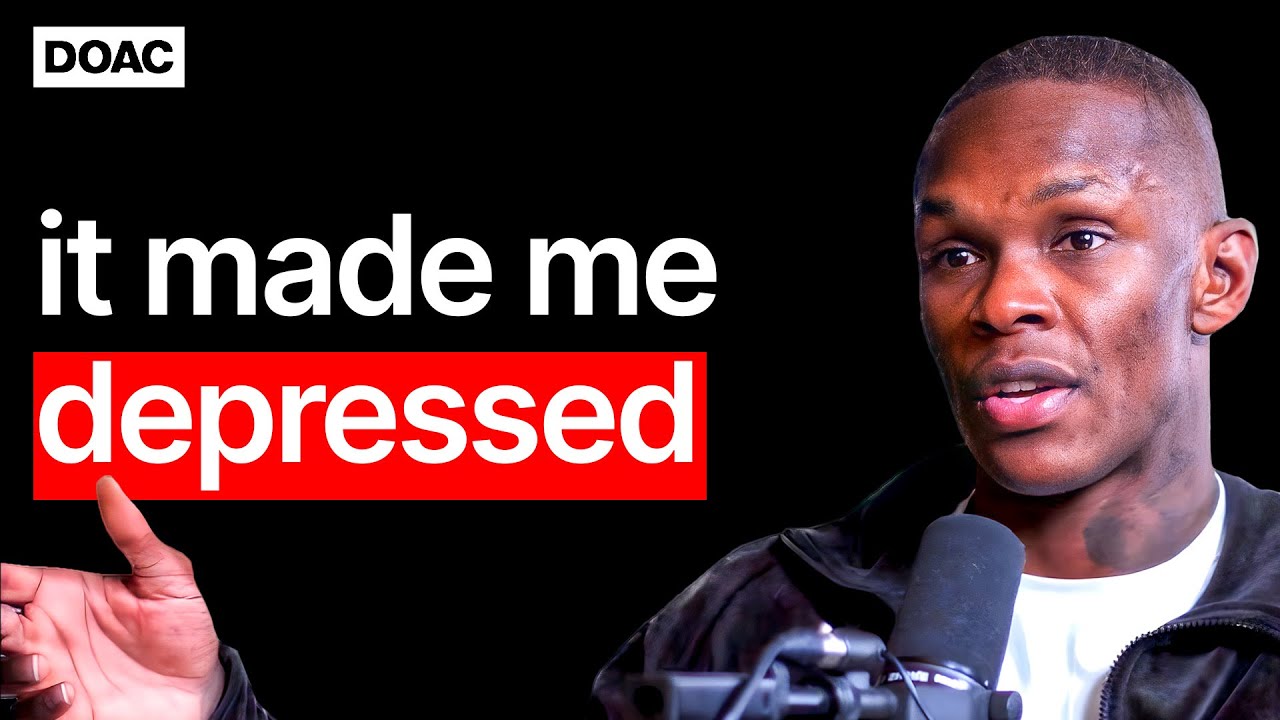
Full transcript · Read the full conversation in order, with its original context.
§01Transcript — part 1
The thing I think about most, especially when I’m on the go, but also when I’m sat here in the Diary of a CEO studio, is the Wi-Fi and internet that we have to work with. In fact, anytime I’m filming away from the studio, one of the first things I do when I arrive is open up an app and do a speed test to see how strong the signal is.
The number of screenshots I’ve sent to my team about Wi-Fi signals at different locations is actually pretty crazy. It matters that much to me because it’s such a competitive advantage to have fast Wi-Fi. Because on any given day, if I’m recording, let's say, hours and hours of footage with a podcast guest, I then often have to have my team send that across to our London team who then do the edit.
So fast Wi-Fi and internet is not a nice-to-have; it is absolutely business-mission-critical. So, when it came to finding the best provider who could supply internet and Wi-Fi to our new LA studio, which I’m sat in right now, we looked at every single option.
And of all the providers, the one that came back with the steadiest connection, as well as being the cheapest, was today’s sponsor, Spectrum Business. Spectrum Business keeps businesses of all sizes connected with fast, reliable internet, advanced Wi-Fi, phone, TV, and mobile services. Millions of business owners already rely on Spectrum to keep their operations connected.
So if you want to join them, head to spectrum.com/business to learn more. That’s spectrum.com/business. Restrictions apply. Service not available in all areas.
Introducing the challenger, the interim UFC Middleweight Champion, Israel Adesanya!
I know when it's all said and done, when I'm dead, my name will be remembered in history.
Why does that matter?
Guys like us, we're not meant to fit in, we're meant to stand out. I've felt it, it's addictive. I need to do something that's going to just tame the beast. If not, it's going to seep in other ways that I wouldn't want it to in my life.
Are you happy?
I think 2013 was my great depression. I wasn't able to fight and then I just felt like I don't deserve this. This world, one thing I've seen, they'll build you up and then tear you down. People naturally just want to see you fail. I had to take a hard look at myself and I put that pressure on myself like, "Watch this." I don't feel like I have anything to hide. I put things out there that I probably shouldn't sometimes, but that's my world being vulnerable, where I'm just like, "This is me."
So, without further ado, I'm Steven Bartlett and this is The Diary of a CEO. I hope nobody's listening, but if you are, then please keep this to yourself.
Israel.
Yes.
Thank you for being here. Massive inspiration for me in so many ways. And I've watched your rise over the years with inspiration and admiration for so many reasons. Reason number one, we have a shared heritage in the fact that we're both half-Nigerian—you’re Nigerian as well.
Yes, sir. Omo Naija.
And your story, as I read it, sounded so bizarrely like my story in so many ways. And then the other—I mean, there's an exhaustive list of reasons why you've inspired me personally. But then seeing what you've done with yourself as a brand, as a marketer, again inspired me in a completely different way. I’ll never forget—and I played it for my girlfriend last night—your entrance against Robert Whittaker the first time.
The first time. Yeah.
And I'm like, this guy is breaking the rules.
Yeah, the entrance. For me, that was my way of staying away from the fight in a way. Because I know that night Robert was just stewing over the fight. He wasn't sleeping—I'm sure he wasn't sleeping. He was just worried about the fight, thinking about the fight, just thinking about it.
But for me, I was literally—I fell asleep with my phone in my hand watching my rehearsals for that entrance like, "This is going to look sick." Replay. Probably replayed it like 60 times the night before. I fell asleep with my phone in my hand watching that, just the rehearsals. So there was no paralysis over analysis. I was just focused on how sick that was going to look.
And it was fun for me. It was my way of authentically expressing myself with my roots in dancing and just being creative. So when it was time to show out, I showed out. And it was my show this time. Like, you know when Robert and Kelvin Gastelum's fight fell out the morning of the fight before UFC 234?
That was in Melbourne, Rod Laver Arena. I wanted to do an entrance then and Dana White was like, "Uh-uh. Not allowed. Nah, can't have it." So when it was UFC 243, I was like, "Look, this is my show. I’m doing this entrance. I don’t give a f*ck what you think." And yeah, I made sure I did it. And look how it turned out. It was iconic.
And you realize, though, because I remember—it must have been 3 AM here and I was watching that—I'm thinking, this guy's put more pressure on himself than he did need to put on himself. He has to win now.
Exactly. I love that. I like to gamble. But I like to gamble at the highest level. I like to gamble with the biggest stakes. Because I feel like whenever I get that win over that, it just feels that much better. It's a feeling I don't know how to describe, but it's just—because people are watching that and just like, "F*ck." Especially those who don't like me, like, "F*cking hope this c*nt gets dropped. Hope this guy gets knocked the f*ck out. He thinks he's the man walking out, dancing, all that sh*t."
People naturally just want to see you fail. They're like, "This guy thinks he's that good?" There were 57,127 people in attendance and I put that pressure on myself like, "Watch this." And yeah, for me, there's something special about just overcoming that, that just gives me that rush.
Speaking of entrances then, you were born in Nigeria. As I said, I'm half-Nigerian. And then you moved to New Zealand. What was the reason why your parents decided to take you out of Nigeria and move you to another country?
I think it was initially better-recognized tertiary education. Because, I mean, when I'm in New Zealand, I sometimes will be talking to a cab driver and you find out that he was a medical doctor back in Sri Lanka or back in India. And then moved over to NZ or the Western world for a "better life."
Their qualifications aren't recognized in the Western world, but they're a surgeon or something crazy back home. So then they're forced to take these menial jobs or start up a new business. And yeah, they wanted us to have better-recognized tertiary education. Worked out all right for me.
But you were really smart anyway in Nigeria. When you got to New Zealand, you were smarter than the class. I remember you saying that they thought you were gifted.
Oh yeah. But that was like—I was in Form 1 and I remember we were doing two times tables and I was just like, "Yeah." I knew the song in my head. Finished. And I remember when I finished, everyone was like, "Whoa!" And I'm the runt of our people, trust me. I'm not the smartest kid in the class back in Nigeria. So when that happened, I was just like, "What's up with these kids? This is easy. This is light work."
I did Form 1 actually three times. So I did it the first time when I was 10 years old in Nigeria, Bells Boarding School. And then when I moved to Ghana for about a year and a bit, I had to do Primary 6 and then Form 1 again. And then when I moved to New Zealand, I had to do Form 1 again. Then I skipped Form 2 and went straight to Form 3 because they were like, "Oh, he's too young." In each country, it was just like, "Oh, he's too young to be in Form 1." So, yeah. But I wasn't the most academically gifted kid. I'm smart, but I'm smart in different ways.
When I was reading about your story, the other part that really resonated with me was we came from Botswana and we moved to a place called Plymouth in Devon, which is like a farmland. It's like if you go four hours into the end of the country that way where it's all cows and fields and all white people.
That's where we moved and we were the only black family. My mom's Nigerian. And that process of trying to figure out why I was different to my classmates and why we were poorer and all these kinds of things.
I always said, I never realized I was black until I left Nigeria. And it's not that I didn't know my skin tone, it's just I never knew it was a problem. I never knew like people would discriminate against me because of my skin tone. And it was weird for me. It was really weird for me, almost like another type of culture shock.
The one I use as an example was this kid who kept on riding by my house in the weekend from school. And he would just hurl insults at me at my house, in my house, in the weekend. He took time out of his f*cking day on a Saturday and was like, "Go back to your country, Blackanese." And then drive by again and say, "You black this, you black that."
You're joking.
I literally was just like, "Did I do something to this kid?" I know his name even. I remember his name, not his last name, but still. I was just like, "What did I do to this kid to like—did I do something?" And then that Monday—was it that Monday or Tuesday the following week—he pulls up to me and says, "What up, black boy?"
And I was having a bad day already. This is after lunch time when it was about to end. And he pushed me. And I remember just whaling on him. Just threw him to S Block, beat his ass. Threw him to B Block, beat his ass. And I was crying the whole time just beating him up. I wasn't a fighter back then, but I was just fed up and pissed off like, "Who the f*ck is this kid?" First of all, you harass me all weekend and then at school you're harassing me. Yeah, he never did that again after that.
What was your relationship like with your race at that point? Because I’ve got to be honest, I started relaxing my hair and I was trying—I was trying to be white.
I was trying to fit in. There was a point even like I started to try and talk like the Kiwi kids. I tried to use the same slang. I still do, but just because I’m part of the culture, but I really tried to fit in, fit in. I don't know what you mean by relaxed—I was relaxing my hair because I thought it was cool. It wasn't because I was trying to fit in, but there were bits and pieces where I was just like, man, because everyone just wants to belong.
Especially as kids, you just want to be part of a tribe or fit in. But then, yeah, when it took me a while to realize that I wasn't meant to fit in. Like guys like us, we’re not meant to fit in, we’re meant to stand out. So eventually I had to kind of learn how to stand ten toes deep in my own light. But yeah, I was there at one point trying to fit in and trying to make sure—almost like during lunchtime, if I wanted to go to the tuck shop, right? I would take the long way.
Like a rat or mouse, I would scurry along the edges of the school so I don't get f*cked with. And it would take longer, twice as long, three times as long, but at least I didn't have to just walk through and get f*cked with on the way to the tuck shop or something. I spent most of my time in the library during lunchtimes in Form 3. Yeah, just because it was safe in the library.
What do you mean by "get f*cked with"? What would happen if you walked directly to the tuck shop?
I don't know. Someone might throw an apple at you or something stupid. Like someone might run up behind you in town, down-trou you, or trip you, or just chase you, try and beat you up for fun. Kids are stupid. I was in a boy's school as well, so you know it's all these boys with pent-up emotions and unresolved trauma and don't know what to do with their newfound hormones. And it's just like *monkey noises* like little chimps.
Definitely. So it's like, yeah. For me, it was just—as an adult now I look at it and I'm just like, man, we didn't know what the f*ck we were doing. Like who let us outside? But it's all part of the learning experience, I feel. It's all part of growing pains. Like I know when I have kids, I know exactly what I'm going to tell them and how to handle themselves, if you know what I mean.
What are you going to tell them?
Well, one of the things is hit hard, hit first. To be honest. I don't care—this whole thing, I remember people used to say like, "Oh, don't hit them first. If they touch you, then you..." I'm like, nah, f*ck all that. Because the first punch matters. The first punch matters. So if someone is talking to me and pushing me around, pushing me around, smack 'em. They'll learn first-hand like, okay, don't f*ck with that kid. Even if you might win, at least it's not going to be easy for them to f*ck with you. You know what I mean? So that's one thing I’m definitely going to teach my kids. Just make sure you're un-f*ckable-with.
When I look back at my early years—and having studied a bit of childhood psychology—I realized how formative and important those early years are. And we’re basically as adults living out the stories we told ourselves as kids and seeking validation from all the things that invalidated us.
Childhood traumas and what not. Exactly. Yeah.
What was left behind as you became an adult?
A lot. Talk to me about one thing. Definitely being a kid that moved from Nigeria to New Zealand and trying to fit in, I ended up being a people pleaser as a kid. I didn't realize that, but because I’m trying to fit in, I’m trying to please everyone. And then you don't realize how that follows you into adult life.
So there were times—and it still once in a while, you'd be surprised, it rears its ugly head, but I’m able to identify that monster now and I’m just like, "Bro, I know what that is." Boom, and I kill it straight away. So I've learned that over years though, but then that people pleaser is still a part of me. Because it was a way of surviving. I'll just make sure these guys are cool, don't f*ck with me, "Alright, cool," and I just kind of appease them.
That's one thing definitely that was the result of just trying to fit in. It's just people pleasing. And it's not the best way to live because you can't make everyone happy. Someone's always going to find something wrong with what you're doing or how you're living or whatever. So yeah, it took me a long time, but eventually I got to the point where I just don't really care what anyone else thinks. Apart from those who I give a f*ck about. I care what they think. But anyone else who is not really—I guess I don't have any emotional attachment to—f*ck 'em. Like Bernie Mac said, "F*ck 'em."
And when you say people pleasing, to be specific in the examples of you being a people pleaser, do you mean on social media or to the public?
No, before social media. This is when I was a kid in high school. People pleasing in the sense of like, someone asks you to do something you might not want to do, but you'll do it just because you want to fit in. Because that guy, he's one of the first 15 jocks who played rugby or whatever and you're just like, "Oh, you know, I'll do what he says just because you want to get that..." It's almost like clout or social currency. You know what I mean?
So things like that. But it took me a long time to learn and realize those things. This is a lot of self-reflection. Years of self-reflection and realizing, because a lot of people don't even realize they're running on old childhood trauma, like everyone is. So you have to find a way to sit down and access that with yourself. Through therapy is one of the best ways. And then you just work—it's like reverse engineering. Like where does that come from? Why am I like that? Why do I have that attitude? Why do I think like that? And then you and your therapist kind of work that back and realize where that comes from.
As I was reading through your story—and you sit here as this unbelievable UFC champion—and then as I read through your story, there's all these little subtle hints of what almost sounds a bit like imposter syndrome at certain times. Like this guy not believing that he's deserving of what he's achieved. And it really sits in contradiction to the guy that did that backflip coming out against Robert Whittaker. So I'm like, where did that come from? Tell me about that.
Same thing. Trauma. Childhood trauma. Some of that stuff. I've dealt with it very well now to the point where it's like, there were times—I use an example when I was speaking to Forbes not long ago and we dived into this a little bit. So when I beat Rob the first time, one of my gifts to myself, I bought myself a McLaren 720S.
Nice.
And the first day I got it, I remember I drove to the gym. This is at peak gym time, maybe 6:00 PM. And I didn't park it at the front of the gym. I parked it at the back of the gym. And I showed some of my teammates, like my actual close teammates, not the people that just go to the gym. Because sometimes a lot of people like to be like, "Oh, I'm Israel's teammate." It's like, no, you just go to the same gym as me.
So I parked it at the back of the gym and then after my teammates finished working out, I was like, "Yo, come check this out." And I showed them and I was like, "F*ck, look at this sh*t." Because they know the work I put in. I work hard. But then I'm like, man, I'm not the best student in the gym. So imagine if I can do this, imagine what they can do. So I kind of just wanted to share my joy.
And then, unfortunately, especially in New Zealand, there's this Tall Poppy syndrome and there's that green-eyed monster. And I've been that kid, so it's easy for me to recognize it in other people when you've had it with yourself. So someone said something—"Must be nice"—and then I started to hear rumblings of other people deserving it more.
What? There's more deserving people?
Yeah, at the gym, because they work harder than me, blah blah blah. And like I said, if I wanted to flex, I would have parked it in the front of the gym like, "Look at my new whip." Just to flex and show off. But no, I parked it in the back of the gym where only like seven people saw it, and those seven people that I really give a f*ck about. And I wanted them to see like, look at this sh*t. F*ck, if I can do this, imagine what you can do.
So when I heard that, I didn't drive it for a week. I just felt sh*t driving it. I remember driving it home and I just felt like sh*t. I just parked it in the garage and I just left it there for a week. I didn't drive it because I felt—I let those words from that person I gave a f*ck about seep into me. And then it sat with me and then I just felt like, "Oh yeah, I don't deserve it, you know? Other people work harder than me at the gym."
But then it took, like I said, about a week. Over that week—because I mean it was a f*cking sick car—I realized during that week towards the end like, well, that's subjective. If they don't think I deserve it, that's their own opinion. That's subjective. That's what they believe. I don't have to believe that.
And like you said, that imposter syndrome thing started to creep in. But I was like, you know what? Maybe they don't think I deserve it, but one thing no one can ever take away from me is that I earned it. Every f*cking thing I have, I earned it. And I earned this f*cking whip. And I have a right to drive this thing and flex. And once I got over that hurdle in my head, boom, I was in that b*tch and I was whipping it around.
But yeah, that imposter syndrome thing crept in when I heard that through the grapevine. And it was from someone I really like—I was like, "Man, why would he say that?" I just didn't—and people learn. This is over now, this is a long time ago, you know, Whittaker fight. But it's something—it said more about them than it does about me. You know what I mean? It says more about them than it does about me. So I shouldn't have let that affect me at all. But I did because I gave a f*ck what that person thought because they're a close person to me. And unfortunately, sometimes it's the ones close to you that will hurt you with that.
There's something really remarkably liberating and amazing to hear a UFC champion talking about imposter syndrome. Because it really does feel like—and I know this is an obvious misconception—it really doesn't feel like someone with your swag and confidence could feel those things. You talked there about therapy as well. And when you spoke to Joe Rogan about therapy and about after your UFC debut, that swell you went through.
I wrote about this in my book because I got really compelled by this really bizarre thing that happened in my life when my company joined the stock market. I'm sat in my room in Manchester and it's worth 300 million and I'm figuring out how much money that means I've got and it feeling like the worst day of my life. And then when I heard you talking a little bit about how you felt after your UFC fight, hiding in the toilet when people are pestering you to ask you questions and that annoying dude sitting down next to you when you've tried to hide.
Oh yeah, bro. After my UFC debut, the after party—it was always—after the fight, it's always, like I said, I get pulled in so many different directions and it's just like—that was my first time in the UFC, so I was experiencing all that. And it's like coffee. It's a stimulant. Coffee is a stimulant. So after your UFC debut and you show out the way I did, I stole the show. I came in there and I stole the show and it was just like cameras this, "Oh we need you to interview this person," "Oh come talk to this person."
And then I didn't get time to myself until I got back home. And when I was back home and I was in my own house and finally away from all the noise and it's just like, "Whew." And then I remember—it's like coffee. You drink coffee, you've got the coffee high and then you crash. So it was literally that. Just lack of the stimulant and I just crashed.
And I was like, "Why am I sad?" I just find myself being really sad. And I remember—it's probably on my old phone—me documenting my recovery. Because I was just like—video diaries that is. I was like, "Why am I sad? Like I made six figures in my UFC debut. That's including the bonuses as well." Yeah. And I'm just like, there's no need to be sad. I f*cking killed that sh*t. And that's when I started to kind of take therapy seriously because I was like, okay, this is—I’m not going to be one of these bad statistics that you hear about in entertainment.
So yeah, I had to take a hard look at myself. But then therapy helped with that because then you find the right person who can kind of help you figure you out. And all they do is just ask the right questions and then show you yourself.
Can you—because I heard you say that you picked up tools from therapy that helped you navigate all of that attention in this new position you were in. What were the tools?
Oh so, it wasn't until I fought Brunson that I was able to go back home and just kind of like—I keep saying it's like I came back from prison—weave back into society, regular life normally. You know? That was until my fourth UFC fight. But then each fight after that, same thing. I go back home and I just like have this crash.
And I had to realize, okay, this is something that I can't have happen constantly because it's not healthy. A tool I can say that helped me—one of the ones that helped was Charlamagne’s book at the time, *Shook Ones: Anxiety Playing Tricks on Me*. I read that during the—I finished reading that actually during the Brunson fight. That fight week I finished reading that and I got a lot of gems from that book.
But from therapy—not even from therapy, from my own experience—is talking to myself. The self-talk. Because you have—we all have negative self-talk. But looking in the mirror and talking to yourself. Speaking to yourself like you would to someone you're giving advice to, because when you look in the mirror you humanize yourself. And I start to just have a conversation with myself. Even like "G" myself up, if I want to big myself up, things like that. So that's a tool that I feel like is really underrated. It looks crazy, standing in front of the mirror and talking to yourself, but it's a really powerful tool if you know how to use it right.
Fighters don't talk much about their mental health. I think Whittaker did the other day and you kind of thanked him and applauded him for doing that, for being vulnerable.
Yeah, I mean I put him in a dark place after that first fight. And I understand because guess what? He was trying to do the same thing to me. A guy I respect is Tyson Fury because he's spoken about that to ends. Like and how dark he went. He went to like the depths of hell in his own head and then he's risen above it. And he says like he battles with it every day.
I feel like, look, there's your spectrum of physical health. It's like super healthy, super ill. If you do not look after yourself in your physical health, you're going to get physically ill. Same way if you don't look after your mental health, you're going to get mentally ill. So I feel like if you’re—it's like someone saying like, "Oh, I don't go to therapy, f*ck all that sh*t." It's like, well, do you take vitamins? Do you go to the hospital? It's not something to be shied away from. I feel like you should look after your mental health the same way you look after your physical health. So once I learned how powerful that was, I'm always on top of it. I slip up obviously because I'm human. And I get ill, but yeah, I always make sure I'm on point though.
Was that your hardest moment with your mental health, after that UFC debut in your recollection?
Not my hardest. I think 2013 was my great depression. There was a time in 2013 that life was just like *spiraling down sounds*. Early 2013, I remember at the time my girl left me, the business I was working with was failing, work was sh*t. I had my jaw broken in 2012 and I wasn't able to fight. So I really had no purpose but like something that I was looking forward to, you know?
There was a time during that 2013, there was a time where I was walking home one time and I remember—this is when I was really broke—and I remember just looking in this dairy or like this corner store and I was just like, "I wish I could just go in there and be like, 'Look, just give me the money you have. I don't want to hurt you, but just give me...'"
And I remember it was a fleeting thought and I was like, man, and that made me empathize with people. I was like, this is why some of them do it. They just have no other choice. Obviously I'm not going to do it because I'm not an idiot, but I realized like this is why some people do what they do because they have no choice. They just want to eat. I was lucky enough that no matter how bad it got, I always had my parents supporting me. If I hit my dad—"Dad, can you please just loan me 100 bucks? Can you just give me 200 bucks?"—they would always support me. And I never went to them often, but whenever I needed to, they were always there for me. So I never had to go to that point where I was at—and I would have never anyway because I'm not stupid.
You refer to that moment as your "Great Depression." What got you out of that great depression?
To be honest, once I had my fight. So then I fought in June, I believe, that year. Finally after six or seven months because I had to take time off after the surgery. Fighting. And then I realized my purpose again like, "Okay, I know what I want to do." So I didn't fight for a long time because it was—yeah, it was just really dark times. Something you're passionate about, something I moved to Auckland to do and it got taken away from me. So then I wasn't able to do what I wanted to do and then once I got it back, it just kind of reinstated to myself like, I know who I am. I know who the f*ck I am. So yeah.
There's something really telling about that, that your lowest moment was when you'd lost connection in terms of your girlfriend and you'd lost orientation and purpose and something to aim for in your life. And you see that in young men—the single biggest killer of men in this country under 45 is themselves. Suicide. Yeah. It's mad. And it's like, how do we get young men to have a sense of purpose and meaning in their lives in the modern world?
How do we get that back into them? And I, funnily enough, I go to the gym around the corner—I could go to some posh gym—I go to a gym like down there in the ends that's like 15 pounds a month and it's all black and Asian young men. And when I'm in the gym, I'm looking around and I'm sat there thinking like—because now I'm on the Dragon's Den they know they come up to me sometimes, but before that I was thinking like the probably best thing I could do to help with suicide rates in this country, other than having these kind of conversations, is like put loads of f*cking gyms in this country.
Oh yeah. 100%. I feel like we were talking earlier about young men, kids, especially when they become adolescents and they don't know what to do with all these new hormones. They're just filling up their bodies and stuff like that. They need an outlet. Even for me, I've said after this game's done, after I'm done with this fighting sh*t, when I have a family, at least a couple of times a year I need to do something that's going to feel like I'm about to die.
I feel like I just need to do something that's just going to—I'm a bit of an adrenaline junkie. So I need to do something that's going to just like tame the beast. If not, I just feel like it's going to seep in other ways that I wouldn't want it to in my life. You know? So I need to find a way to tame the beast and I feel like this does. Martial arts—what was it? There’s a quote: "Make savage of the body and civilize the mind." Something like that. You know what I mean?
Especially as young men, honestly, like they want to—sometimes people want to kind of discredit athleticism or working out. "Oh, you're just a jock." I hate jocks. I was never a jock in school. So I have a really, really special place in my heart for them. But for me, I just feel like just being able to own your masculinity in a way that's not toxic. I’m not talking toxic masculinity, but just being able to just like work out and a place where you can be a man and just like throw weights around.
Like I love rolling with my boys. Like there's some—I love lifting, even during lockdown I was lifting a lot, but there's something to be said when I have a guy like my teammate Brad Riddell or Carlos or Blood Diamond on my back trying to choke me out. And then you know, 3-2-1, go, and I have to fight the choke. Something primal about that that just activates this part of my brain that I'm just like, "F*ck."
Do you worry about that, when—when all is said and done—like your—you're going to have these crazy moments of having 60,000 people in this arena and coming out doing these like...
I'm ready for it.
Yeah. And then the high of that, the adrenaline high of that. When that's all, when you're done with this game, you said when you lose the love of the game or whatever it is. Do you ponder what that moment would be like for you?
A little bit, but I’m ready for it in the sense that I’m not attached to this. I've already—I know I’m more than fighting. Fighting—there's more to life than fighting. So I'm not like one of these guys who is attached. Like, you know, I don't even know where my belt is right now to be honest. I really don't know. I'm not attached to it.
I know I’m the f*cking champ, I know who I am. I know who I am and I’m a champ without the belt. It's just a fancy tiara. I've said that from the jump. But I’m not attached to it to the sense that it's my identity, that this is all I am. So when it's all said and done and I'm not the UFC Middleweight Champion anymore, I'm retired, I'm not going to be like, "Who am I?" I know who I am without the belt.
So that's the blessing in that. But a lot of people don't. A lot of people, like you see them walk around with the belt constantly and they just stay attached to that like that's who they are. So when it's gone and it's said and done, a lot—that's why a lot of people who are supposed to be retired still end up talking to the media and finding their way to get their name in the spotlight because they're addicted to that. It's addictive, trust me. I've been there, I've felt it. It's addictive. Attention.
That's the social currency now, attention. Even at the highest level—fame, clout—these are tangible things. I've seen it, I've seen what it does to people, man. Funny story, I saw this when I was in New York, I fought Brunson, right? That week I saw this YouTube video of a guy in Times Square in New York. He was there regular, easy, didn't—you know—just walking around, didn't get bothered.
And then he went there at nighttime, hired entourage, hired camera people, hired the part. I saw that clip. People were starting to like, "Who is this guy?"
Fake famous dude.
Exactly. Fake famous guy. And they're like—and then the camera guy will ask him, "So how do you know David?" and someone will be like, "Oh, I heard his last album. It was pretty good. Or I heard a single on the radio. Or I saw him in Spider-Man." People just lie through their teeth and just say whatever they think he is. And it's like, you obviously don't know the guy. You can just say, "Oh, I don't know who he is."
And I've had that. So when that day—I'm sorry, that week in New York, I was doing a shoot for my brand Engage in Times Square. I had Jeff and like three other cameras on me, so there's like four cameras on me. And you see people starting to gather around like, "Who is this guy?" And then some people recognize me, they start taking pictures. And then before I knew it, I start finding people who didn't even know me and they're just like, "I just want to take a picture."
Have you ever had someone come up to you—I had this when we were at the podcast awards yesterday—and they go, "Hi, who are you?" And I go, "Oh, Steven from Dragon's Den." They go, "Brave... okay." And they want to take a photo.
The worst one, I remember—I’ve used this story a few times, but I was at this bar in Auckland. And there was a table of like four dudes and two chicks. And I could tell one of the chicks was like the center of attention. So when I came in, the guys were just like, "No f*cking way! Stopping the—what the f*ck!" They were showing me love and all that.
And I could see her energy and I could see her from the corner of my eye just like *eye roll*. And then she came up. She's like, "Excuse me, but who are you?" I was just like, "Ah, don't worry baby, it's all good." And I was talking to one of the guys taking photos and then she came back again trying to talk to me. I was just like *ignored*. And then she came forcefully this time like, "Excuse me, why is everyone giving a f*ck? Who are you? I don't know who you are." And I was like, "Baby, I don't know who you are."
And I just pied her off. I was like, "I don't care you don't know who I am." You know? But like the fact that she wanted to let me know that she didn't know who I was like it was going to hurt my feelings. And I remember her face just like *stunned*.
She's not used to being treated like that.
Exactly. So I'm like, "I don't care. I forget who I am all the time." You know? But the fact that she thought like it would actually hurt my feelings for her not knowing who I am—"Who the f*ck are you?" you know?
How have you made sense with all this noise? When you walk through places and people...
F*ck the noise, as I said.
But the fame, what's your relationship with it? I was thinking about this the other night and I was talking to one of my friends and I was thinking for me it's kind of just this thing that's happening outside of me and I'm observing it like a spectator.
I like that. I like that perspective. There's no book on this sh*t. So I've always said like f*ck the fame, but I love the perks. I love the perks of fame, but I just—I don't like being famous. You know what I mean? Have you seen *Free Britney*?
Yeah, yeah.
Brother, there was a bit in that—that was one of my—I was getting anxiety watching the first half of that. There was a bit she was driving and then she ran through these red lights and the guys were like, "Look at her, she's crazy." I'm like, yeah, because you're f*cking chasing her. You're chasing her. She's trying to get the f*ck away from you and you're calling her crazy. Man, that whole thing, just the way when she was trying to buy gas and everyone was just on her. Oh, I even cringe thinking about it because I'm just like, I would hate—I would hate to be in that position, man. Especially like to be with your family. Like your family doing that to you, that's crazy.
But yeah, fame. It's not—no one's supposed to be famous. It's not a thing, especially with all these gadgets now. We're not supposed to have these. We're not supposed to have people who don't do sh*t with their lives have such a loud voice in droves being able to tell us. Because back in the day I saw this quote on Instagram—maybe last week or this week—about like, you know, back in the day before social media, you only heard from doers.
You heard from people who were actually doing sh*t. You rarely heard from complainers. But now complainers are the ones you hear from the most because they finally have a voice and they can be anonymous and hide behind their anonymity. So yeah, they're the ones who have the big voice now and the doers are just doing. So people start to eventually believe the complainers. It's a weird paradox shift now in this day and age. So like I said, you have to be able to sift through the noise. And I have my ways of doing that.
And I guess you'd also only hear if you go back even further from people in your tribe.
Exactly. We're only supposed—what was that? We're only supposed to have like a certain amount of people we associate with as the human animal. But then social media and the connectivity we have now has just made us connected to the whole world. Made the world a small place that you can just—even confirmation bias. That's another thing we have to be careful about. And I make sure because I follow certain people on Instagram that I don't necessarily agree with. But I follow them just to hear the other side.
Amen.
Just to like—because I don't want to be surrounded by yes men or people like, "Oh I only follow this because this tells me what I need to know or what I want to hear." Exactly. Yeah. So now I follow certain people just because I'm like, "Ugh, they make me feel a certain way," but I'm like, "They're not wrong though." You know? And it's just different ideas. It's not wrong or right, it's just different ideologies. But I'm just like, "You know what? I'll tap into that just so I can at least be aware of the other side, what they're thinking." Yeah.
And that kind of brings me to what I heard you say about Rogan when you defended him because Rogan's one of those people for me as well. Like I can listen to his shows and his podcasts and stuff and I don't have to agree with everything.
Of course. Diversity of opinion. Exactly. I don't have to agree with his guests. Exactly.
But there's a diversity of opinion so I can—and I feel like people these days, as we've all observed, they don't want to hear anything outside of their own. It's either left or right and the other side is wrong and if there's nothing in the middle. And if you say one thing that represents the other side, they just throw you in a box straight away.
This whole situation we have with Covid now and what we're doing in society is strange times, man. Because people are just—the human animal's weird. It's a weird f*cking species. Because individually we can be smart, but when we’re in droves, just a bunch of dummies in droves sometimes.
I'm like, how can a smart person have this idea about this when you know what's really happening? You really—it's like if you really step away from it like you said, just remove yourself from the situation and look at it from a third person as an observer. You just watch it and just be like, "I know what that is."
But then somehow the smartest people I know sometimes just have the weirdest way of looking at the world. And I try not to hold it against them because I'm like, "I know you, you're a smart person, but maybe the way you were brought up or your own childhood trauma again can kind of skew the way you look at the world." So I never hold it against them. I just kind of like—it's all personal. It's not about me, it's about them. So just observe. But yeah, it's weird, man. Very weird, very strange.
And they're just I guess trying to fit in too. They're trying to be part of a tribe.
Oh yeah. Exactly. Tribe. Yeah. So it's like mob mentality. Even with—I remember when Andrew Schulz said recently on one of his podcasts, he said he regrets getting the vaccine. And yeah, he said he wishes he never did. But it's like people—I find this really strange that people—people don't want to get duped. People hate feeling like they got had.
And if people—if someone felt like, you know they got duped, they kind of want to get people into their tribe so they can feel like, "We've got you on our side." I'm like, I don't care what side you're on. I literally don't care whether you want to do this or you do that. All I care about is how you treat people. How you treat the people around you, the people you interact with. But no, this day and age like I find people asking me the strangest questions and then they'll base their—how they treat you based on that response. Like, "Are you vaccinated?" That was one of the weirdest ones. I was like, "Why do you care? What does that do for you, first of all?"
Well we need to decide who you are from that one decision.
Exactly. We want to know what box to put you in. I'm just like, why? So I like to f*ck with people and just like, "Nah, maybe I am, maybe I'm not. We'll find out." But then they're just like, "No, but we need to know. But are you?" "Yeah, you want to know whose side are you on?" Exactly. I'm like, "Why do you care?"
And this is a thing with division as well. I've said like they divide and conquer. That's the easiest way to break a nation or a group of people. Just divide them and separate them. Make them think that one is on the other side and this and that and make them fight amongst each other. This is how they've done it for years, for centuries. The oligarchs or the Illuminati or whatever you want to call them. They divide and conquer. This is how they get it done. So why do you think they're not doing that right now in so many different ways? So many different ways.
I consider myself to be someone that sits in the middle. So like sometimes I agree...
I don't even—I don't f*ck with politics at all. So you know, Nigerian parents, my dad used to have CNN or BBC on the telly all the f*cking time. Constantly, just on repeat. But I just don't watch the news. I literally don't listen to it. In New Zealand we used to have like an update with this whole Covid sh*t on Monday I believe, around 5:00 PM. I never once was like on a Monday like, "Ooh, I’ve got to go listen to the update." But everyone else is just like, "Oh has he—have they made the announcement?" I'm just like, "Mmm, who cares."
I get the news secondhand. I'm like, "What'd they say?" "Oh cool. Are we allowed to..." because I just—the rules don't apply to me. That's how I feel. I just really—and that's my ego talking. I'm not talking the rules of the law, I'm just talking like no matter what they say I can do or I can't do—like for example we were in lockdown for three months last year in August. During that time there were things we weren't allowed to do, like train. I trained... allegedly.
Yeah. But I found ways. I just felt like the rules didn't apply to me. Because I mean, in the beginning of the pandemic, trust me, I was scared. I didn't know what this f*cking sh*t was, felt like *The Purge*. But then eventually after all the bullshit, after a year and two years, I kind of like—okay, like everyone else, we just knew what was going on. There's some kind of other agenda behind it that we have no f*cking idea about. I'm not going to act like I f*cking know. But I just know like this doesn't make sense to me. It does not make sense to me that—I don't want to get too deep into all that sh*t, but it literally didn't make sense to me. The common sense was just not commoning. It was not common enough. So I was like, "Okay, this is—there's something going on here that I'm not f*cking with. But I'm going to live my life the best way I know how. In the lines of what I can, allegedly."
When you said at the start about the cartwheel, you said you just wanted to be authentically yourself. And this kind of links to what we're saying now. When I joined BBC One as a Dragon, I started thinking about how I defend myself from the inevitability of being canceled. Either for the people that I speak to here...
Try me.
Yeah. And one of the ways that I kind of concluded with my team was: well if I am always myself and I don't ever try to convince the press that I'm a good guy...
Bro, this is where the trap a guy like Jon Jones fell into. Because he was always like the pastor's son and he was always just like, "You know, after a fight I want to thank Jesus," "I want to be sponsored by Nike," and "Oh kids, you know, I want to be someone kids look up to, I want to be a good role model." F*ck them kids.
F*ck all that sh*t. You know what I mean? I'm like, bro, people trying to say like, "Oh you know my kid looks up to you," I'm like, "Raise your own damn kids." Raise your own damn kids. One thing, after my UFC debut, some guy—so at my after party I had this shirt, right? Said "Good C*nt" from Engage. Classic. Solus. Still a big seller.
Straight up.
It was a beautiful shirt. And it was like a play on a famous designer brand, GC. So we sold those, we still sell them heaps. But this guy came up to me and he was interviewing me at my own after party and I could see he was trying to set me up. So then he's like, "Oh, so what do you think a t-shirt like that sends—what kind of message does it send?" I'm like, "What do you mean?" and he thought he f*cked with the wrong one this time.
So he's like, "What do you think that kind of shirt sends as a message to, say for example, a young kid who looks up to you?" And I was just like, "Oh really? Oh, so what does that kid look up to me for?" He's like, "Well for being in your position as a what? A fighter, right? Yes." "So that kid just saw what I did about few hours ago when I beat the f*ck out of that guy."
And he saw where I was taking him. He's just like, "No no no no..." I was like, "Stay there." And I could see him trying to find a way out of the "No no no." "So that kid just watched me beat this f*cking guy to a pulp in his own blood as he spat blood at me and I beat him in his own blood till the referee dragged me off him. Yeah. Oh really? So what do you think is doing more damage to the kid? Is it me doing that as—and the kid looking up to me for that, or me wearing a shirt that just says 'Good C*nt'?"
It's this whole f*cking culture of like stupid language games—"You can't say that word, that's a bad word," and this and that. So and then I can't remember how I flamed him, but I flamed him bad. There was a bit of an audience as well. I flamed him badly. He never released the interview obviously because he had no leg to stand on. But he thought he had me, but he didn't realize he f*cked with the wrong one. And I just told him, I think me doing my job does more damage to the kid for watching than me wearing a shirt that says "Good C*nt."
You know what I mean? And I hate that, the fact that we're playing these language games. Because even when I do—I don't do New Zealand media anymore because they're too f*cking stupid for me and too—like I did this morning show one time and I was talking and I said "blah blah blah," something, he said, "Ah, that's a swear jar! Swear jar!" I'm like, "What the f*ck, is this high school?" I'm like, I'm an adult. I know you. I've seen you at f*cking Ponsonby Social Club drunk off your face. I know what you do in the bathroom. You know what I mean? So I'm just like, don't try and act like you're holier than thou now and like, "Oh, you put that in the swear jar, ha ha ha." It's like this—what game are we playing?
You're playing this stupid game and it's like, "Oh, we can say these words, but can't say these words." Like you're an adult. When the cameras go off, I know how you f*cking speak. I know how you talk. You know? And it's like, why are we pretending we don't speak the way we do because of what? Because we're on TV. It just—it boggles me sometimes and I start to like—what game are we playing? It's so stupid as adults. We're adults. We talk. This is how—this is language. We curse, we swear. But then when the TV comes on, "Oh you want to be proper and you must be prestigious and speak..." I'm like, nah, f*ck all that sh*t man. Let's speak the way we normally speak and be authentically ourselves.
So that's like Charlamagne said something—he said, "Speak your truth so no one can use your truth against you." Amen, bro. Like trust me, I'm able to get away with a lot of things I get away with because I never said I'm a saint. I know myself. I am a f*cking demon sometimes. Trust. There's no good people, there's no bad people. People are just capable of great good and great evil. You know what I mean?
But I just try and do more good than bad. But I have done some bad things in my time, because I'm a human being. You know what I mean? So when people try and put you in a box like, "Oh he's a good guy," or "He's this," I'm like, there's no good people, there's no bad people. We're just people and we're capable of great good and great evil. That's it. Amen.
I—in my head when you were saying that and you looked me in the eye and said, "I've been a demon sometimes," I just had this image of...
Well you’re Nigerian so I already know that side is *laughs*.
No, that's the thing! So when I started this podcast, I knew I was going to be on BBC One at 9 PM on this very prestigious show. I was like, "By the way, I used to shoplift pizzas to feed myself when I was broke. I did this, I did this, I did this."
Put it out there.
Exactly, right? And you could almost—in my head when you said that, I could imagine the press here just packing up their suitcases and f*cking off and being like, "We can't use him."
Bro, trust me.
"We can't use this guy because he's not tried to tell us that he's some—he's not built this big hill of moral perfection." So we've got to go find—we've got to go find someone else.
They can't f*ck with me. Because you know why? If—like there's a reason I've stayed off TMZ. I've never been on TMZ, knock on wood, never will for the wrong reasons. But I mean one day if something happens and I just happen to be on TMZ for the wrong reason, I'd be like, "Whoopsie, my bad. I made a mistake. But guess what? I never told you I was perfect." I'm normal. I'm a human being. And so I'm just like, that's my power, being vulnerable with my faults. You know? I'm not going to say I've done this, I've done that, but I just know I'm not perfect. I'm a human being. I make mistakes. And it's okay to make mistakes. The difference between me and some people is that I actually learn from my mistakes and I don't make the same mistakes over and over and over again in the public eye. Like some people.
Jon Jones.
That's one. That's a classic example obviously. The same f*cking mistake.
We had a guest come on this podcast in December and she said that she was making the point about everyone having the same 24 hours in the day. This was kind of the quote she used. And it became the number one story in this country for three days. It trended number one on Twitter. It was on hundreds of newspaper articles written about it because I think maybe her brand is one that is trying to be a role model. So she was attacked. It was the number one trending topic in our country for three days.
What was the story?
That she said everyone has the same 24 hours in the day. Oh. Exactly, right? So I came out and said, "By the way, loads of my guests say that all the time, why are you attacking her?" And then my next press event, right, I wore a shirt that said "24 Hours" on it. Everyone clapped. I didn't get canceled. And I said, "Am I canceled?" I wore a shirt and all the paps are there, "24 Hours" on the shirt. And this is what I'm—that was my attempt again to say, "By the way, I'm not perfect and if you want to cancel me, please do it now so I can get on with my life."
Yeah. I'm still waiting. They've tried. They keep trying me. I'm just like, look, it's hard to cancel someone when they actually don't give a f*ck. And they're being themselves. I'm like, I fight people for money. That's what I do for a job. I beat people up for a sh*tload of money. If you really want to take my political views or my moral views into consideration and say this and that, blah blah blah, that's on you. I'm like, this is—I never said I'm a saint, I'm not a f*cking politician. I don't—everyone—I don't feel like I have anything to hide. Like I said, I put everything—not everything, but like I put things out there that I probably shouldn't sometimes, but that's my way of being vulnerable to the point where I'm just like, this is me. Take it or leave it. But I feel like me doing that attracts the people who can relate, who can resonate. And I feel like they gravitate towards me.
You don't talk about your relationships, your romantic relationships.
Never. I keep that away. Nah.
Is it because of protecting the person or...
Look, this world, one thing I've seen is they'll build you up, right? They'll build you up and then tear you down. Like Britney Spears, Miley Cyrus, Justin Bieber, all these people I've seen it happen to so many times. So and also this world just takes. They just take, take, take. When I have kids, you'll never—the world will never know their face. I don't—I'm even contemplating if I still give them my last name because I don't want to put that pressure on them.
Because even my siblings, sometimes they hate it as well where it's like, "Oh oh, this is—this is David, this is Israel's brother. Oh this is Deborah, this is Israel's sister." Or Star, being the sister, and they're like, "Oh my name's Deborah," you know? Like I don't want to put that on them. Same with my relationships, that's certain things I protect. Because I value them, so I keep them safe. Because the world will just try and take, take, take.
And that's one thing everyone wants to like know—what's he doing? Who's he with? Apparently I'm gay as well because of my nails and my pearl necklaces and all that stuff. So I'm just like, "Ah, let them talk." It's fun.
But have you found it difficult because of the success and the meteoric rise and the money and the increased attention to navigate being good in that department and also your obsession with becoming the man you are today? Which did feel like an obsession when I was reading about your story—sleeping in the gym...
Yeah. How does one do that and also balance out having a personal life? It's regular. I'm a human being and I have feelings, you know? So I'm an empath as well.
Are you?
Yeah. I'm born on the cusp, so I'm like, I say I'm a Cancer-Leo. I'm hard and soft like a semi-chub. You know?
Introvert-extrovert?
Exactly. My guy. So a lot of people don't realize that about myself. Like when it's time to like go in my—in my crab hole, I just find my way. I'm like, "Right, leave me alone." This is when—I love my friends because my close friends, I can be—we can do this for hours, just yarn and talk sh*t and make fun of each other and just show each other love. But then we can spend the next three hours just sitting in the same room, being on my phone or watching TV or listening to a podcast and not say a damn word and just enjoy each other's space.
I love that. I love that feeling. But um, yeah, I'm a person who feels a lot. So I like to protect that. I like to keep that really guarded because like I said, the world will take that away from you, man. And I feel like people ruin things. People, especially like this—this is not supposed to happen. The world—I'm being under a microscope and everyone's watching what I'm doing. So certain things I just have—I feel like I just have to really protect because yeah, I don't want the world to take that away from me because they just take, take.
My cat died maybe two years ago. The morning she died, right, I was I think filling gas up in the afternoon and some guy came up while I'm filling gas and goes, "Brother, bro, can you talk to my cousin real quick? He's a big fan." I'm just like, "Man, bro, my cat just died this morning, man. I'm not really in the mood." And I remember the look on his face just like *disappointed*. "Oh yeah all good, all good, whatever." And I was just like, "Ugh, give me the phone." I said, "Hello." And this is as I'm filling gas actively. And I was like, "Wait, hold up, bro. No phones! Like what if I spontaneously combust?" But they don't care, they just want to have their moment. They want to take, they want to take, they want to take.
So that's why if I'm having dinner with my family, if I'm on a date, if I'm in an intimate moment and people start to like—"Bro, I don't want to be that guy, but..." I'm like, "But you're being that guy. You're being that guy."
It's like when people say, "I'm not a racist, but..."
Oh yeah, bro, it's the worst, man. It's like, "I hate to be that guy, but can I have..." I'm like, "But you're being that guy! You hate to be that guy, but you're doing it right now!" And it's like, I'll be having lunch with you and within 10 minutes we'll get stopped probably like six times. With you, I'm probably—if we were at lunch in London, we would probably not even have a chance to talk. But they don't care. They just want to get their picture and put it on their f*cking social media with f*cking 20 followers so they can be like, "Oh look, I met the champ," or whatever. I'm just like, "No, let me have my moment."
And I've learned this. Okay, my experience with this and I always bring this up whenever I see him on TV or hear his raps: Mos Def. I see Mos Def and Common in Auckland Airport and they're having a conversation by the baggage carousel. And I just won a fight in Adelaide and I'm coming back home, I had my trophy and I was like, "Yo, I want to get a picture." And I pull up to him, I'm like, "Hey, what's up Mos Def? Big fan." He's like, "Hey brother, just no photos today, man." I was just like, "Yeah, all good, no worries, easy."
And I remember I was a bit sad, but I understood. I understood because they were in a bit—in the middle of a conversation, actively talking. I should have had the etiquette to realize like they're talking, leave them alone. But this is the thing, no one—I feel like it's learned behavior as well. That's one thing because everyone thinks they're your biggest fan. It's the same rhetoric, I know the lines they're going to say each time. But it's learned behavior. I don't know, I think it's maybe from TV or Disney or whatever. People feel like when you meet someone you really—you're a fan of, you yell at them to let them know how much of a fan you are and you show them by just shaking and... I honestly think it's learned behavior.
Because sometimes I'm at like a three, I'm chilling at a two or three at a park and someone: "NO F*CKING WAY! OH MY GOD! AAAHH!" And I'm just like... *exhales*. Okay. After the Whittaker fight, the first one, I remember after that whole—the fight, after the after party on the way back to New Zealand, I remember at the airport I put out a story just saying like, "Look, if you see me at the airport or traveling, just approach me lightly because if you come at me with all this energy, I'll walk away." I put that on my story just because I was like, "I'll walk away because my capacity to deal with high energy right now is just... m-m."
How were you feeling?
I was just drained. I was drained, so I just want to go home and chill. So I remember at the airport I just—before at the hotel I put it out—before I went to the airport I just put that out there on the story just to be like, "Look, don't come at me with all this sh*t because it's too much for me to deal with right now." So if you come at me just like, "Hey, what's up bro? Big fan, can I take a photo?" that's cool. And I remember that fight week, the week before the fight week I realized I had an epiphany. I realized I don't have to match everyone's energy.
Because that was a problem I used to have, like if you're a fan you meet me, then I feel—"Hey, even if I'm at a—like I said my cat just died, then I'd have to like raise my level up, 'Hey what's up bro? Hey!' do a whole song and dance and all that sh*t." But I'm like, nah, I don't have to match everyone's energy. Because guess what? Hard pill to swallow: I'm not excited to meet you as much as you are to meet me. It's just a hard pill to swallow and it's just my everyday life. I'm not excited to meet you as you are to meet me. And that's okay, because this is my life. This is how I deal with things. So once I kind of got over that hump I was like, "Oh, I don't have to match everyone's energy." So if someone comes at me at a 10, I don't have to raise my level up, I can just—I'm just chilling. I'm listening to a podcast, I can just pause and be like, "Hey, what's up man? How you doing?" And if they feel like that's a sh*t interaction, cool. That's their prerogative, I don't care.
But if I'm—if you met me last night, like I'm in the f*cking—I'm in the streets in London last night. I'm showing love to everyone, I'm dancing, I'm talking to people, I'm Mr. Area Boy. But that's a time and place. I'm taking pictures and all that kind of stuff. There's a time and place. And if you catch me at the right time and place, f*ck yeah, I'll show you love. But I hate when people get entitled and think they can just—I want to take, I want to take. So that's why I keep... yeah.
And you keep your boys and your—the people you came up with close, right? Tell me about the importance of—how much you realized the importance of that as you've risen to this place, you know, to keep the "day ones" around you and stuff like that.
I mean you'll know this, it's lonely at the top. You know? But it's not if you bring the right people with you. The people that came up with you, the people that, you know, love you for you. You know? The people that know you from before you had money. Before you were famous. You know? So um, I like to have them around to keep me grounded. To keep me grounded and just make sure I’m solid. Because they knew me before any of this sh*t happened.
And, you know, it's hard because sometimes you—I have fallen to the trap of having people who just agree with me. "Yes men." You know? And even my boy Chance, I'm glad like I have him around because sometimes I'm crazy. I don't always have the best ideas and I'll have an idea and he'll be like, "Nah." I'm like, "Okay cool, I just need someone to tell me no." But I'll put it out there, but if he's like, "Nah we're not doing that," I'm like, "Okay cool."
Because then it just helps me. But if I have people around who just like, "Oh okay, sure," then eventually it just makes me more powerful and I just start to think like, "Oh yeah, you know, I'm the sh*t. I can say whatever I want." And that's not—that's not healthy, man. I don't think that's healthy for the ego. You know? Yeah. But I just like having people like that around me because I feel like, yeah, they keep me grounded and just remind me where I come from. You know? They're—and there's so many stories, man. Each of my friends in my group chat, I've known each of them over 10 years. But well over 10 years, man. And we all have stories we can kind of share from back in the day that just—just remind me where I come from. Yeah.
And the other thing that happens is when you reach what the heights you've reached in your profession is—and we talked about it then—you have this other attention which is from women that might want you for the wrong reasons. My mom always warns me about this. "Have a baby by me, baby by me." My mom's trying to be like, "Why don't you settle down? Why don't you find a nice Naija girl and settle down?" She wants me to be with a Nigerian woman and she doesn't like...
I don't settle. I don't settle. So for me, that's something I guess you just—you just have to take it by case-by-case basis. Yeah, case-by-case basis because you do find people who just—some people play the long game, put it that way. I've had people play the long game with me, even recently. It's just like, yeah, you know, there's love there and all that kind of stuff, but they play the long game because they see the value and it's not just what you—it's what you bring to the table. And they get entitled. You know?
And I feel like that's—that's not the way you want to be when you have someone, you know, that you're—that you're romantically in love with or involved with. It's like you don't want to be competing with them or have them feel entitled to what you have. I'm like, "Yo, you just got here. I've been made it. The f*ck you talking about? What do you bring to the table? I bought the f*cking table."
What values are you looking for in that kind of person?
Kind. I just like someone who's caring. Who gives a f*ck, who really cares. Like and who wants nothing from me. That's the thing, it's hard to find. But someone who needs nothing. I mean even for me, I don't even celebrate my birthday and I'm hard to buy gifts for because I'm not really a material—I love material things obviously. Nice watch. Yeah, thank you, I'm sure you know, we work. Yeah *laughs*.
§02Transcript — part 2
Nah but yeah, like I'm not a material person, but I do like material things, but it's hard to buy gifts for me because I've found this as well with my rich friends when I was coming up. It was hard to buy gifts for them when someone—you're able to buy whatever you want. So in that—in that, I just look for someone who's—who's caring. Someone who really gives a f*ck. That's the main thing. Do you give a f*ck about me? Yeah.
And you're going to have a family one day.
Of course. No, that's my—that's definitely one of my main goals. After this, I don't want to be that dad that's like, you know, I wake up, see my kids for like 30 minutes before I go to work, and then when I finish work I see them like for hour, hour and a half maybe while I'm tired. No. I'm going to make sure I'm there. From the ages of zero to five or six, I'm going to be like, "What do you want to do today?" Like literally, "What do you want to..."
And I feel honestly, f*ck school. I don't know why we still even have this whole f*cking outdated concept of school to just build workers. Because we know what the f*ck school was made for. Why are we pretending we know school was created to create workers? Do you still know I don't know what the f*ck is X?
No f*cking idea.
I’ve been looking for X still. I don't—I'm like, when have I in my life as an adult known what the f*ck X is? No f*cking idea. A lot of useless information got passed on to me in school. And I sucked at school because I was sh*t at memorizing.
Same.
I didn't really learn anything. Dropouts, as we do. Drop out my man. *Cheers*. Cheers. Because school doesn't teach you much, honestly. Teaches you the basics. I understand math, yes, English comprehension, all that kind of stuff. But when it come to like social studies and algebra and calculus, I'm like, "Are you going to use those in the real world?"
So f*ck school. My plan is, right, when I have kids, I'm going to have a tutor that's going to teach them from the age—at home, from the time like say maybe 9 AM to midday or 1 PM. And they'll have an hour of homework and the rest of the day we'll just go on adventures doing sh*t. But then they're going to do gymnastics compulsory. Because I want to make sure they know their body, the foundation of athleticism, gymnastics. And Jiu-Jitsu, so that way they're involved with other kids and not socially awkward. Because you don't want to raise some f*cking bumpkins who, you know, don't have any social skills.
But yeah, I want to make sure that they have those kind of skills by interacting with other kids through gymnastics or through Jiu-Jitsu or other like activities. And they'll do that every day or every whatever days of the week it is. But school, going there, clocking in, sitting down, watching a teacher write some sh*t on the board and blah blah blah. No one's teaching. They just literally—some of these people just there to catch a paycheck. And I've seen it. I was in school. You just see them there "Oh write this sh*t on the board whatever."
"Copy this."
Exactly. "Copy this." I didn't even know what because we're doing these—when I was in high school, NCEA credits. And I remember just towards the end of the year, what's all this credits credits? I had to repeat the whole year. But I didn't know what it was. I was like, "Credit what? NCEA credits? What's all this credit sh*t?" Credit, credit, credit, credit. I did not care. I didn't understand. I just didn't fathom it, but then eventually when I got a grasp of it I was like, "Oh, this sucks." It's a sh*t system.
And then they'll give you the D and then you'll feel like you're a D as a human. You identify with the D, "Okay, I'm stupid, I'm b-..."
One of the worst ones I remember was in boarding school in Nigeria. I was—I was bottom three in the class. And of course they'd have to announce it. The bottom three. And you have to stand in front of the school.
Announce it?
Stand and just like, "These are the bottom three."
Savage.
Stand and just like *head down*. Yep, that's us. Yeah we're the ones. I was the lowest, yes thank you. Okay, now go and take your seat. Okay yes, thank you. Oh the worst, man. And it's just humiliating, but it's like—I don't know if it's meant to motivate you or what, but it didn't do sh*t.
And like I said, you start to—I see that now even like young people, they start to tie their self-worth. I have a friend in med school who literally like when it gets crunch time, they just like, "I need to get these grades, I need to get my grades up." And they just identify themselves, "If I don't get this I'm useless, that's it, I failed." I'm like, "You're 23. Calm the f*ck down." It's not that deep. It is obviously, it's your career, but I'm like, "There's more to life. There's way more to life than—than just this idea of who you think you are." Because when I was f*cking 18, I thought I was going to be married and have kids at 23. Damn! Was I wrong! I'm like, "Who—who let me buy a house now?" I'm like, "Why? I don't know how—who let me do that? I shouldn't—should never given these n*ggas money, first of all."
I don't think they gave it to you, I think you took it.
I took all that sh*t *laughs*. But yeah, like yeah. I don't know what I was thinking back then. I thought I knew what I wanted. When I was 18, I was like, "I'm going to have kids when I'm 23, 24." F*cking hell!
What—when you look forward at your—you've reached the top of your game. Um, how do you keep yourself, you know, what is it the thing that's driving you now? What is the thing you're aiming for now? What's that North Star that's getting you out of bed? Is it legacy? People talk about legacy.
Legacy, yeah, big thing. Legacy is what it is. It's for me, it's definitely the legacy I want to leave.
Why does that matter?
I think I want to be immortal. I don't know if it's my ego or I'm selfish or what it is, but I just know—look, Adesanya. The prefix "Ade" is royalty where we're from. You know "Ade" from the Yoruba tribe, you know that's—it has some royal blood tied to it. Adesanya. But now worldwide, the name Adesanya is synonymous with greatness. Forever synonymous with greatness.
And I'm going to make sure that is. I'm going to make sure if you have that name Adesanya, you're proud to be like, "Yep, I'm tied to that bloodline. I understand." Because I don't know. I don't know what it is. Is it my ego? Why is it that f*cking King Tut wanted to be buried in his tomb with all his gold?
Even though he's not going to be there to...
Exactly, to enjoy it. I don't know. I don't know. But I know when it's all said and done, when I'm dead, my name will be remembered in history. Was that Troy line? "And that's why no one will remember your name," or whatever it was. But like I want to make sure that my name will be remembered and revered throughout history as one of the—one of the best in this game. But also just as a person, I just—just a GC. Just a good c*nt. Just a happy dude who was—who was enjoying life and just, I don't know, making sh*t happen.
But it's more about the feeling though. I want people to remember my name and just remember the feeling I gave them. You know what I mean? Like those who were alive to watch—or not alive, but around to watch Jordan's reign in the NBA. I mean sure when they hear Jordan, they can just remember, "I remember that time I was at that game," or "I remember that time I watched that—that game live." And they remember the feeling. I want those—like when they remember my name to be like, "I was there at 243. I remember how I was in the—in the arena when he won." That feeling. I want—it's people forget what you say or what you do, but they never forget how you make them feel. So it's the feeling I want to make sure they remember. Yeah.
When people reach the top of their game, they start becoming philanthropists. We see this when people get billions, they figure—because they can't seem to get the buzz or the feeling anymore from business or success or money or Lamborghinis or yachts, so they start helping other people, right? You're getting to the point where you're starting to feel that the greatest service you can do is like for others? Because when you're talking about your legacy there, it's actually sounds like the feeling—that's philanthropy. It's like, "I want to leave this feeling with other people so that they feel, you know, inspired" or whatever.
Yeah. I'm doing the same thing as well. I'm setting my people up, the people in my circle. I'm not handing anything out to them, but just with opportunities. And also experiences. I'm giving them experiences to inspire them. But yeah, there's things that I do behind the scenes that I don't necessarily—I don't know, like I'm not one of these guys, I don't do it for the likes, I do it for love. And I feel like there's a bar from Jay-Z: "The best form of giving is anonymous to anonymous." So there's ways I just—I drop gems here.
Like Shaq. I love the way Shaq does it, but he does it quite overtly. Like, "You want a bike? Ask your mom if you can have a bike. You got these shoes? How many you want?" You know? Like he does that, just drop gems everywhere and it makes people happy because it feels good to make people feel good. Even though that is selfish in its sense because I'm getting something—I'm getting good feels out of it. But still, I'm making someone feel good. I'd rather that. But I'm not doing it to be like, "Hey man, you know I know you're hungry and I just bought you this meal because I really want to show love to you man," and upload it to the Gram and then...
Yeah, exactly.
F*ck yeah, I don't do that. Like I—there's things I've done. Even Tim will tell you after this—I mean even for this fight, there was someone that I—I think last year he went through some stuff that I heard about on—on the media. And I was just like, "F*ck, I went through that sh*t as well." And then this fight, I brought him out and I—I showed him a good time. Yeah, him and his mom, and I—I put them up, got them tickets and just made sure they... yeah, they were looked after. And I met him backstage and just gave him a few words of encouragement. And I don't need to bring it up because... yeah. He went through some sh*t. But yeah, but Tim will tell you about it.
When you walked in, the song playing—do you remember the song playing?
"Victory Lap"? Oh no, that was Nipsey... Yeah. "Double Up." "Double Up." Yeah. Oh every time, that song gets me every time. When it gets to that chorus... Oh it gets me, man. Every single time. I don't know why, but something about that track, it just gets me in my feels. Even thinking about it now I get goosebumps. Yeah. "Double Up" is the track, man.
When I saw you pre-fight, playing that song in that hotel room crying, and then I saw you in the stands another time crying. I guess that was the evidence that you are a bit of an empath. You do feel and you let it out.
I feel. The last one was—that was when I watched my boy Blood Diamond jump on the scale to weigh in. And I get really emotional. Fight week is like my wedding week. I feel. This is why I dread getting married because I don't—the guest list, I'm just like, I don't even f*cking know who I want to like invite because people are going to be like, "Oh you didn't invite me to your wedding!" And I just—I don't like—this is why I don't celebrate my birthday. Because it's like a few times a year, there's a whole week that everything's about me. So I don't need another special day that it's about me.
So that's why I'm also dreading like my wedding day or my birthday. Forced fun. Exactly. So I don't even—I really don't celebrate my birthday to be honest. Like everyday's my birthday. I can do whatever the f*ck I want. You know? I don't even—I don't buy gifts for people on their birthday, I just buy them if I see something I say, "Oh I think she'll like that" or "I think he'll value that," and I'll just buy it. Just because I'm like, "Oh give them the experience just because I feel like they'll value that."
I know you're not missing Valentine's Day though.
Oh no, not Valentine's Day. I have a special tradition on Valentine's Day that I used to do, but I can't—I don't really play around with it anymore. I just used to like post mad memes on my page and just—just—it was funny. It was just a way—first time I did it was in 2014 Valentine's Day. I was fighting and throughout the day I was waiting for the fight, I was just bored. This is before Stories on Instagram. So I just put up like 80 posts that day just like, yeah, I know people going to be mad at me, people were really entertained, but I didn't care. I was just—I was just in that fight mode so I was just like, "F*ck it, put up posts about Valentine's Day," just memes and just making fun of Valentine's Day. But f*ck, good times. Good times before I was I guess super famous.
You said you're going up to Manchester on the weekend. One of our guests, Patrice Evra, is a Manchester United football legend. Do you know the guy?
No. I see—I don't—football and the bug didn't catch me. Sports didn't catch me as a kid because I was unathletic, funny enough. Yeah, I know. I was never an athletic kid. Yeah.
Mad. Um, Patrice when he came here, he he's from—his family are from Africa originally, moved to France, played for the French football team. He became this legend, maybe the greatest Manchester United wing-back in our history. He wrote a question in the diary—we always get our guests to write questions in the diary.
That's right. Yeah. I heard about this.
And all I knew about this podcast was I was like, "Okay, apparently there's a question at the end." In fact, I'm going to read you the question that's been left for you. I don't actually read it until I look at it, but Patrice asked a question which I thought was really profound because I remember being asked this question one day and it really puzzled me and it's such a simple question. So I'm going to ask you the question: Are you happy?
Right now, yes. Yes, I'm very happy.
Why do you say right now?
Because it's not lasting, it's fleeting. That's one thing I've also learned as well is, well, you can't enjoy the sunshine without a little rain and everything is temporary. Everything. Everything is forever changing. So even right now I'm happy, I'm enjoying life, I love where I'm at, I love who I'm around, I love who I'm with. You know? I know it's not—it's not lasting because guess what? Something's going to happen that's going to shake that up. Because back in the day whenever this has happened, I'm just like, "It's been a few good days. Things are too nice. Where's the thing that's going to f*ck me up?"
But now I'm just like, this is nice and I'll just sit in it and I'll just enjoy it. I enjoy the happiness and I enjoy what I'm doing and enjoy where I'm at. And then when the bad thing comes, I'm like, "Ah, there it is. It's okay. This is going to pass as well. This too shall pass." So when I say, "Yeah, I'm happy right now," I'm happy, very happy.
Are you good at defending that happiness? Because the amount of people that are going to want to talk to you and do an interview, and "Israel, Israel!" are you good at saying "No"?
Better. I'm better at it now. I never used to be, this is where I was talking about the people pleaser thing back in the day. And this is why this year, one of my things is I don't get f*cked up around people I don't like or don't know. Because I realize when I get drunk, I'm too nice. I'm a friendly drunk. I'm like a f*cking Golden Retriever when I'm drunk. Or black Labrador. I'm just like, "Hey, yeah!" and not everyone's your friend. Not everyone wants the best for you.
But they'll just take advantage and try and like—I just let my boundaries get crossed too many times. You know? And I let people get too close maybe and then the next day I'm just like, "Why the f*ck did I let that person, you know—f*ck, I wish I had said no to that." You know? Then it starts to like eat at me for the next few days.
So yeah, um, I'm getting better—it's practice, it's constantly evolving, but I know how to say "No" now. I just say—and I don't have to explain myself. I literally just say "No" because when you explain yourself, you're losing. I learned that from Chael Sonnen, I remember when I used to listen to his podcast. He said something really profound like when you explain yourself, you're losing. So I don't explain myself, I just say "No." If someone's like, "Can I get a photo?" I'm like, "I'm busy." "Oh, please!" I'm like, "No."
Because it's like, first of all, you see I'm having—I'm on a date right now and I said "No," or I'm walking with someone right now having an intimate moment and you're disturbing my peace. So I say "No." And if you try and like push, push... "Okay, no." And sometimes they'll say something stupid, "Oh well Whittaker's going to smash you anyway," or whoever your next opponent is. I'm like, "Hmph, okay." Then I just let them, you know... this is why I didn't take a photo with you. But if they—sometimes at a restaurant, if I say "No" to someone because I'm having lunch or I'm on a date or whatever, and then they leave me alone. On my way out, if I see that person now, and they were—and they were nice and respectful, I'll be like, "Yo, you have your phone on you? Come on." Then we take a photo. Because I'm like, thanks for being respectful.
Because I can understand people's judgment goes out the window when they see a celebrity apparently, and I've felt this way like I said. You just don't realize your etiquette and it's just *brain farts*. So when that happens, I don't hold it against them. I'm like, it's learned behavior like I said. So then I'll, yeah, I'll take my time out of my day and just say what's up afterwards. But if they like, "Oh please, please!" I'm like, "Bro, you're not respecting my boundaries. You didn't respect my 'No'. I need my 'No' to be respected. I said 'No'—why? Because I f*cking said so, that's it. I don't need to explain myself to you. Who the f*ck are you? I don't know you from a bar of soap. And again, you're more excited to meet me than I am to meet you."
In the core of your being, do you realize that you're a star?
Yeah, I always knew so. I knew I wasn't going to be regular. I just knew like I was going to be great at something. I didn't know what it was, but I knew I was going to be great at something. I just knew. Even when I was working my last job, I just—I'm grateful for it because it showed me what I didn't want in life. I just knew: this isn't for me.
And what is that? Is that self-belief that gets you there? Or is that—so is it you believing that you're going to be great that got you there, or is it because you were innately destined to be great? I'm trying to figure out if it's something that one...
What came first, the chicken or the egg? There's levels. There's people like us that we're crazy in the sense that we believe to be—it's almost delusional sometimes. If you have—I've heard this quote on the JRE before: "Greatness and madness are next-door neighbors and they just borrow each other's sugar once in a while." You know what I mean? So there's a point like—I've used the story of me when I used to drive this beat-up Honda. And I'd shift the gear stick and I'd just do this *mimics paddle shifting*. I literally was—it was madness! I was me preparing for having a sports car, paddle shifts. So I'd shift the 1-2, boom, gear 3, boom, gear 4, boom. And then when I dropped down *mimics engine braking noises*. Same thing. Just like I was getting ready. I was—this is mad—I can manifest like a motherf*cker.
Do you believe in it in the metaphysical sense? You believe...
100%. 100%. Everything comes from the imagination. Everything comes from the—like before this microphone was a microphone, someone somehow thought about it. "Now how can I speak into something that would amplify my voice and blah blah blah," and then this came out of it. And it's evolved over the years. But everything comes from the imagination. So the power of the mind, people don't understand—we still don't understand. I still don't understand how powerful it is. I'm still learning. But I know one thing is I can make things happen. I can go into levels—I just can't tell the world, but like there's levels that I've manifested things that I'm just like, I still shock myself like, "How the f*ck did I make that happen?" And this is not even to do with fighting, this is to do with my personal life. And I'm like, "I made that happen." And this is through this like manifesting subconsciously as well. Just years of something just manifesting, manifesting and boom it's right there. I'm just like, "Sh*t, I really made that happen." It's scary, man. It's scary for me to even think about.
I reflect on that and almost view it like getting in your car in the morning. When you get in the car in the morning, you set the sat nav, but then you've also got to drive. You've also got to go to training. If you just set the sat nav, where are you going to be?
Sitting in the f*cking car. So you can sit there and make all these dreams and manifest, but you have to work. You have to work.
And what happens if you just drive and you with no sat nav?
You don't know where you're going. You're lost. You know what I mean? You have no direction. So for me, I feel like both of them together, when you really—when you have the vision and you're able to manifest, but then you also put the work in, magic happens, man. Magic. That's where the magic is. But a lot of people never get there, unfortunately.
We're blessed that we can dream. We're blessed that we can dream. That's one thing I've realized because a lot of people, even from the impoverished parts of London, would be lucky to have my old job. You know? From where I'm from, from Nigeria, a lot of people would be blessed to have my old job and they'd be like, "Yo this is—I have a great job, I can send money back home, this and that." But yeah, I just had bigger dreams. I just knew what I wanted. So I feel like I'm spoiled that I can—I can dream the way I do and I can manifest the way I do. So I never take it for granted and I realize the position that I'm in. I'm privileged, I'm very privileged.
I read a quote about immigrants, specifically from Nigeria. It said: "Our parents' role was to try and figure out survival and we're here sat blessed with the task of self-actualization," which is like figuring out meaning. And they said what a beautiful thing that is.
Yeah, they're just trying to survive or find a way to the next way to thrive, but we—yeah we trying to see like what's meaning and purpose and happiness. Exactly. That's why I feel like even today the way the world is, like the problems of that we have, especially with all this divisiveness and what not. I'm like, you guys don't really have any real problems. Like when people in New Zealand start to complain about some stuff, I'm like, "You guys are really worried about this?" It's like because there's no real problem. The police aren't trying to kill the people constantly. You know, the government isn't—well they are f*cking the people over, but not the same way as, you know, Nigerians have been f*cked with by their government for so long.
So it's like, but you don't really have any real problems. It's like they find things to fight about now, like now we're arguing about genders and this kind of stuff. And it's like because there's no really—you're looking for problems, they're creating problems. Look, if there was some real sh*t going on like there was another war, World War III, apparently it's coming soon, stay tuned, stay tuned. Yeah, if that was happening or aliens invaded, do you think anyone would give a f*ck about any of that sh*t? F*ck no. We're worried about some real sh*t happening. You know? So yeah, I feel like people just start to create problems because we don't—we need struggle. We need struggle in our lives. That's the thing.
Mo Gawdat, who was the head of Google, and he changed my life with something he said about that. He said: "Unhappiness is when your expectations of how life is supposed to be going go unmet." So it explains why a billionaire, when his steak comes and it's not perfectly cooked, he will be f*cking furious because his expectation was here and if it goes unmet, the delta is unhappiness. And if you go to where I was from in Botswana, getting a bowl of rice—expectation is, "I'm not going to eat today." Bowl of rice, the delta is happiness. And it's the same thing you're talking about with people, you know, their problems are relative to their expectations of life, right?
Facts, facts.
The last question. This one was written for you in the diary by our previous guest: What question do you believe, based on the subject matter of the conversation we've had today, would have been interesting to ask you that people don't usually ask you?
I mean, you touched on a few things I normally don't even talk about, like relationships and kids a little bit, that stuff that I really hold guarded. But anything that has to do with like family, relationships, or you know, like I said, yeah, family that I'm going to have. I'm glad people don't, though, because like I said, I like to just keep those things guarded.
But yeah, and I think people kind of get my love life's not for sale, my family's not for sale. Those kind of things like I said, I just—I won't sell for the consumption of people to watch. I'm not the Kardashians. You know, I ain't Kanye West, I ain't putting all my business out there. Yeah, so for me, yeah, I keep those things guarded so I think people kind of respect that and understand that so they don't push too much. Or you get like a little bit here, every now and then, but nah, nothing too much. Yeah.
I hear you. Thank you for your time today. It’s honestly been tremendous, man. I like—yeah. You’re a killer in so many ways, but we didn't even get to talk about the marketing and the branding side of things.
Oh, that's levels. There's ways I've—I mean, I did computer graphic design in college and I feel like some of the stuffs I learned there really helped me with my social media when it comes to making my own highlights when I was coming up, you know, posting...
All the anime stuff as well, bro!
But that's just me being a big kid. Exactly. Authentic expression of self. If you put it out there, those who appreciate will gravitate. F*ck, I like that. That's a bar.
Put it on a t-shirt.
Yeah, that's a bar. "Those who appreciate will gravitate." I'm going to keep that.
Nice, that's dope. Yeah, you need to start to add to your t-shirt collection, it'll sell well. But listen, thank you so much for your time, for your grace, your humility and your openness as well. Means a lot to me.
I appreciate it. Likewise, my man. And honestly, like I'm going to look into you a little bit more. You—no because this is the thing, whenever I like to meet new people and learn about them, so hearing your story and I'm just like, "Man, that's still—I'm like 700 million at 27!"
I didn't take all of it, but...
Bro, I respect it. F*cking thank you.
Easy, thank you. Thank you, thank you. I appreciate you.
Easy.
The thing I think about most, especially when I’m on the go, but also when I’m sat here in the Diary of a CEO studio, is the Wi-Fi and internet that we have to work with. In fact, anytime I’m filming away from the studio, one of the first things I do when I arrive is open up an app and do a speed test to see how strong the signal is.
And the number of screenshots I’ve sent to my team about Wi-Fi signals at different locations is actually pretty crazy. It matters that much to me because it’s such a competitive advantage to have fast Wi-Fi. Because on any given day, if I’m recording, let's say, hours and hours of footage with a podcast guest, I then often have to have my team send that across to our London team who then do the edit.
So fast Wi-Fi and internet is not a nice-to-have; it is absolutely business-mission-critical. So, when it came to finding the best provider who could supply internet and Wi-Fi to our new LA studio, which I’m sat in right now, we looked at every single option.
And of all the providers, the one that came back with the steadiest connection, as well as being the cheapest, was today’s sponsor, Spectrum Business. Spectrum Business keeps businesses of all sizes connected with fast, reliable internet, advanced Wi-Fi, phone, TV, and mobile services. Millions of business owners already rely on Spectrum to keep their operations connected.
So if you want to join them, head to spectrum.com/business to learn more. That’s spectrum.com/business. Restrictions apply. Service not available in all areas.
This is a message from sponsor Intuit TurboTax. You've sent so many emails to your tax pro, and nothing. It feels like you're chasing updates. But now your taxes are done for you by a TurboTax expert, so you actually know what's happening. You can match with an expert and just hand off all your tax stuff to them right in the app. So instead of guessing, you can feel confident your TurboTax expert's on it. Now this is taxes. Intuit TurboTax. Visit turbotax.com to learn more. Only available with TurboTax experts. Real-time updates only in iOS mobile app.
When your cat is acting weirder, or your dog is being louder, your turtle moves slower, Ted! Your cat seems thirstier, whoa slow down buddy! Or your puppy is acting clumsier, day or night, if you don't know what's wrong, know where to go. Veg ER for Pets. This is Kay. Veg. The better, kinder ER for pets. [01:30:34]