
Fearne Cotton: THIS Is How To Build Confidence & Set Yourself Free
Guests: Fearne
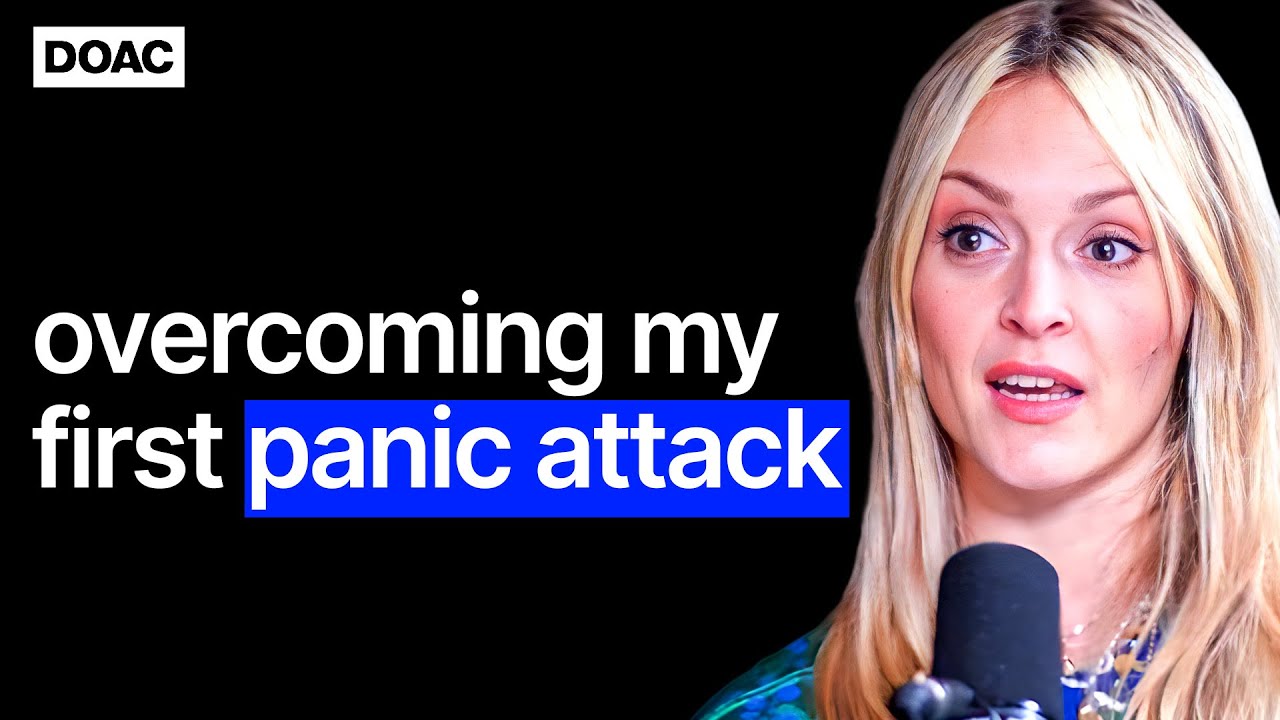
Full transcript · Read the full conversation in order, with its original context.
§01Transcript — part 1
When your cat is acting weirder, or your dog is being louder, or your turtle moves slower. Hello, Ted! Your cat seems thirstier. Whoa, slow down, buddy. Or your puppy is acting clumsier. Day or night, if you don't know what's wrong, know where to go. Vedge ER for Pets. This is Kate. Vedge, the better, kinder ER for pets.
I wanted to be liked and I wanted people to think I was interesting, and so I had to pretend. And the voice in my head, this ego, kept saying I’m a piece of shit. That I still really have a problem with and I’ve got to get better at. When you’re in that headspace, not much makes sense anymore and you have to start questioning everything. Otherwise, you just get stuck.
The new path that I’ve forged, which isn’t necessarily as mainstream and isn’t as shiny or celebrated or whatever, but I can be truly me. And there’s room to move and there’s room to change. It feels liberating.
Fearne Cotton. To me, she's the definition of authenticity. She absolutely exudes self-awareness and wisdom because she's spent the last 10, 20 years understanding herself. She went through this remarkable journey of entering the public spotlight at just 15 years old, where she started working on TV. Up until her 30s, where she worked on BBC's Radio 1, she remained front and center in British media.
But behind the scenes, something else was going on. Feeling like she wasn't being true to herself and she was living someone else's life, like she was wearing a mask. It all came to a head in her early 30s where she realized that something had to change. If her panic attacks and her depression were to end, she had to make big life changes.
And this meant leaving her job and pursuing a completely different, uncertain, unknown path. Her story is remarkable. But this conversation was so incredibly valuable because Fearne is wise. She's done the work. As she sits here today, she's able to tell us, to tell me, to tell you the listener, how to avoid making some of the mistakes that she made in her life so that we can all get to our own very happy place. I'm Steven Bartlett, and this is The Diary of a CEO. I hope nobody's listening, but if you are, then please keep this to yourself.
Fearne, one of the things that I’ve got from reading about you, reading about your story and reading your books, was how self-analytical and self-aware you've become as the years have gone by. It's pretty much central to a lot of what you do—really understanding yourself and having these conversations on Happy Place. When you look back at the start of your life, what were the things that were really formative to you that you’ve noticed in hindsight?
I guess like most people, it's my parents and their work ethic and their outlook on life. They’re very, very different people, so I’ve picked up very different things from both of them. My mom is tenacious, very honest, she gets things done. She’s been very dynamic over the years, but her work ethic has been amazing. When I was growing up, she had anywhere between one and four jobs at any one time, having to just sort of juggle life and get money on the table.
So I had that sort of tenacious force in my life. And then I also had my dad who’s so laid back, really super chilled, super creative. He only retired a couple of years ago, although he’s sort of started working again. But he was a sign writer throughout his whole working life. So I would go and watch him paint these beautiful signs by hand, obviously back in the day. He was always drawing and painting at home and I would do the same, so I’ve always had a huge love of art and creating.
My dad’s a really good storyteller and he’s very funny. My mom’s really social and really brilliant at talking to people. So I kind of just observed them. I wasn’t actively doing it as a kid, but by osmosis you take in all of this information and just what you’re seeing as a child growing up. I have my mom and dad to thank for everything, really. They gave me the stability and love to do what I wanted, but also they showed me work ethic, which I’ve always really held on tight to because I want to do well.
What about school? How were you in school? I heard not so great.
I was good, I guess, when I was tiny. I wanted to sort of stay in line. I wasn’t a rebel; I didn’t want to get in trouble. I was terrified of authority or getting detention, so I was pretty well behaved. And then I guess in my teen years, I started to just think, "This is so boring." It’s gray outside and it’s gray in here, and there must be something other than this suburban life that I’m in.
I was a very lucky kid who grew up with loving parents and a brother, and I had a school to go to, but I just found it so boring. That’s where I just started daydreaming constantly. That’s where I started getting in a teeny bit of trouble. I was dreaming of all these other options other than the ones I was being presented. You know, you have to fill in the form of "What career option are you going to have?" and it would always come back with something that was relatively social, but it was nothing to do with what I was interested in.
So I thought, "I’m not doing any of this crap. I want to do something that makes my heart sing." And that was always, at that stage, performing in some way. So I luckily found a brilliant local dance and drama school. It was in a church hall, run by all of these young, cool, brilliant dancers, singers, actors who were all in the West End doing stuff but then running this little local dance school on the side. And that was my everything.
At school, I was just watching the clock thinking, "When can I get out of here to get to my dance school?" I danced every day after school, all Saturday, all Sunday. That just felt incredible, like it was pure escapism. Getting to just listen to amazing music and learn incredible dance routines. I'm so grateful to Alex and Chris, the two people that ran the dance school. It was just the coolest place to be and to hang out, and I would spend every second there that I could.
So if I’d asked you at that age what you want to be when you grow up, post that dance school experience, what would you have said to me?
Probably an actor or a backing dancer on Top of the Pops was very appealing at that point. Like, "I want to be in a crop top and cargo pants dancing behind a cool pop star." That was very appealing to me. But I think I really wanted to act because it felt like pure escapism. We did all these brilliant shows, little tiny local theaters, but really overly rehearsed and well done, well thought through by our dance school teachers.
We had amazing teachers—people straight from "Cats" coming off stage and teaching us routines, or "Saturday Night Fever," whatever it might be. It just felt exciting and fun and something completely different to the mundane reality of going to school and my parents working really hard. So I think acting was the goal, but I went very off-piste.
Did you believe when you were 13, 14 that that was possible?
Yeah, and I don't know why, because I didn't know anyone in that world. I was at a local dance school; I wasn’t at RADA or even Sylvia Young’s. I was at a local dance school in a church. But I think the combination of being a big dreamer—having wild fantasies that I would just love escaping to—obviously this is before phones and social media, so your imagination was kind of where it was at.
I would dream big. And also my parents, they were never sort of pushy stage parents. They were too busy working, but they were certainly encouraging. Like, "You like this stuff? You keep doing it. Go all day Saturday, go all day Sunday." They were certainly encouraging. And obviously, that combined with a huge amount of naivety allowed me to believe that I could do it.
I think it’s good to have that naivety as a youngster because you become jaded as you get older and you see the pitfalls and you see where you've made mistakes. I miss that naivety because I don’t really have any of it anymore. I kind of know what I’m stepping into, I second guess the bad stuff that’s going to happen, I'm probably overly cautious. Whereas back then I could be ridiculously wild and brave because I was naive. It got me somewhere.
I couldn't relate more to that feeling of the preciousness of naivety, and also how that decays as we become adults and the world starts to make us be a bit more realistic than that.
Realism is so boring. Realistic is imprisoning. It is.
15 years old, you get a spot on a Disney show by hook or by crook. It seems like it was quite a fate.
Yeah, I guess, really. It was like most brilliant game-changing moments, lots of factors. So I was at this local dance school and one of the moms of another kid worked in TV. She had said to one of the dance school teachers, "We want to audition a couple of kids" or "I know someone that’s auditioning kids for this Disney Club show." So I went along to this audition with my nan because my mom was at work. My nan, obviously, this was completely not my nan's world whatsoever—my dear Nan Sylvia.
So we went into London, to Kensington, to this audition space and there were loads of kids. I felt completely out of place. They were all from the big dance schools, Anna Scher's, Sylvia Young’s, and they were all talking about that and saying, "Oh, what show are you doing?" and they were all in "Les Mis" or whatever. And I was going, "Oh shit, I haven't done anything. I go to a local dance school and I do little shows in my local theater."
I had done nothing of any prestige and I felt like I shouldn't be there. I was trying to not let that get the better of me. But again, I think naivety and lack of experience really helped me, benefited me in that circumstance. I went into the little audition room and I was told to speak to the camera, which I'd never done before because I'd just done stuff on stage where you're dancing or acting out a scene.
So I thought, "Why on earth am I talking to a camera? I don't even know what that is or how I'm meant to do that." So I was just me, which was what they were luckily looking for. I was just a kid chatting about stuff that I liked, which was like Hanson, and watching Top of the Pops and Zoe Ball. I talked about it with enthusiasm because I was enthusiastic about those things as a kid. And I somehow blagged my way onto this TV show on ITV.
Big TV—there were only five TV channels back then, or maybe even four, so it was a great exposure piece. But at the same time, due to a lack of social media, I was allowed to grow naturally and to make mistakes and to be bloody awful without much critique because there wasn't really any. So I had amazing TV producers teaching me the ropes and letting me experiment and work out who I was on camera. And I discovered I really liked it.
Imposter syndrome. You talked there, you said a sentence, you said, "I felt like I shouldn't be there." Was that the first real dose of imposter syndrome that you had encountered in your life?
Without a doubt. Because I moved out of my safe little world of being in Eastcote, Ruislip, all these little suburban towns that I was living in or doing the theater school in, where I had all my friends there and it was safe. They all had the same background as me and nobody had been in that world, so I felt really safe. And then moving into this other world with stage school kids or then eventually being on a TV set with professional people from the world of TV who had been doing it for years. I felt wildly out of place. But I don't think that’s ever left me. I think I’ve always kept that feeling like I don't really belong in it.
One of the things I’d noticed from reading about that part of your life is that you had started to overcompensate for that feeling of imposter syndrome by working exceptionally hard. And it’s funny because when you were describing your mother’s work ethic there, it sounded somewhat similar. Just like we’ve got to keep this steam engine running, we’ve got to keep shoveling the coal into the engine or it’s going to stop. And I guess an element of coming from suburbia into the limelight and somewhat not feeling like you’re going to be there is that fear that it might also be taken away at some point, right?
Without a doubt. I mean, I don't think you lose the feeling of your upbringing. You might lose bits of it and work your own thought processes into life, but I think it’s always there. And I’ll probably always have a kind of working-class ethic because that’s what I was brought up with. So I have always overcompensated.
And I think I still do, but I’m a little braver in not conforming to what is expected of me and having to do mainstream TV or having to do any mainstream broadcasting. I’m trying to do more of my own stuff where I feel I can experiment more, be truly authentic, and not have imposter syndrome because I don't in my own space, luckily. When I’m doing my podcast or I’m writing or we do a festival, whatever it might be, I do feel comfortable and safe.
But not in a way that dead-ends me. There's always room to improve, new things to learn, more people to listen to, which is a key part of what I do now. But I don't have that horrible feeling of "I shouldn't be here on this fancy TV set with all of these people that belong here." I don't think I’ve ever lost that, weirdly. And it maybe feels like a bit of a teenage hangover, but I’ve never felt comfortable in that space or like I truly belonged there, really.
What was the adverse consequence of not feeling like you belonged there throughout that period of your life?
Not being myself. Because I think, I mean, I wasn’t running from myself entirely, but I was certainly—I felt for a long period of time too boring or too average to be in that position. I thought you had to be complicated or exceptionally something to be in that space. Whereas I don't believe that anymore. I think everyone’s got their own worth and their own beautiful spirit that is worth putting forward.
But at that time, I thought, "How can I be here? This kid from the suburbs, what do I know? Why am I in front of the camera?" So I certainly, I guess, over-accentuated who I was or was a bit too smiley, a bit too enthusiastic, a bit too everything to get people to like me. I wanted to be liked. That’s the name of the game a lot of the time in that industry. If people like you, you have a job. If you’re not liked, you don't have a job.
So I wanted to be liked and I wanted people to think I was interesting and that I had some worth and had something to say. I didn’t believe I did, so I had to pretend that I had some worth there and make it look like I did. Whereas now with the work I do, I believe through my own life experiences, the people that I’ve learned from, the work that I’ve put in to be able to write the way I do and interview people the way I do, I can see my own worth. I can feel my own worth. But for years, I didn’t know what it was.
You’ve had probably at least a decade there of living almost professionally every day, living out almost like a character or being someone for the public, for the radio, for the TV. A lot of people have that in their own lives in various ways. They might be doing something professionally which isn't truly aligned with who they really are. Tell me about the consequence then of 10 years or more of playing a role and your life being not authentic to who you actually are.
I think you start creating your own barriers. It’s only you that’s doing that, because we’ve all got the freedom to be more authentic or to try new things or to just rock up to a situation fully as you. We can all do that. It’s scary, but we can do it. And as you say, I didn’t do it for years and years, probably way more than a decade. Certainly the first 10 years of my career, I didn’t know what that meant. I just turned up and was as happy as I could be and enthusiastic and read the lines, tried not to slip up over my words, and went home and felt chuffed.
And then the next decade in my 20s, that’s where I felt like, "Oh, I’m a bit boring, I need to kind of be a bit more exciting" or whatever it is that people want me to be. And you stop yourself from moving into new areas because you just think, "This is what the public want or the boss wants, so I will be enthusiastic and always, if I was on the radio, I will be happy and improve people’s day by bringing music and happiness," whatever.
Whereas now, I’m just me. So if I’m not feeling great, I will turn up to a podcast, a radio show, or if I’m writing, as I am. I did a recording just before Christmas, the day after one of my cats had died, and I’d had my cat for 20 years. You’ve got a pet, you know—they’re part of your family. And I was deeply grieving. And I thought, "I’m not going to cancel because I think there’s value in me turning up like this. But I’m not going to pretend that I feel any different. So I’m going to answer with these emotions bubbling up and I’m going to be me."
And I have much less care for people’s response to that or their reaction to it. I just think there’s worth in all of it. If people don’t want to listen to that, they don’t have to. That’s their choice. But I’m not going to pretend anymore that I’m anything other than how I am on that day. But I’ve had to forge a new path to do that. I don’t think I could be doing this in the old spaces that I worked in. There’s not as much room for it. I’m not talking about that in a derogatory way, because I had a great period of learning from doing all that stuff.
But the new path that I’ve forged, which isn’t necessarily as mainstream and isn’t necessarily as shiny or celebrated or whatever, but I can be truly me. And there’s room to move and there’s room to change and it feels liberating, I guess. And I feel very lucky to have created that space.
So you were in essence living a very one-dimensional life through that period. I speak to guests about this sometimes, about how when you're on TV, you're there to do a very one-dimensional job. I've learned from doing this podcast that this podcast is like therapy for me because I get to be multi-dimensional. I get to be my true self and honest. And also the medium of podcasting as well allows for depth and context that five-minute little news clips on Good Morning Britain don't allow.
And you described that as liberation. I find that incredibly important. A few of the TV presenters or radio presenters I've spoken to share that experience of their professional lives inadvertently making them one-dimensional. At some point in your life, you kind of—not rebounded, but you pushed that life away. That kind of one-dimensional sitting there doing TV or radio. Can you tell me about the build-up to that moment and what it was that made you realize it was time to move on or move forward or to leave?
So many things. I guess there’s only so much discomfort you can take. And it’s not due to the people I was working with or even the medium I was working in; I just didn’t feel right in it. Some people are made for it and they can do that job way better than I could and they have a level of comfort there. I don’t think I ever found that level of comfort. And I don’t know why.
But also I had stuff going on personally that meant at one point in my life I felt really, really awful. Really awful. And I was in a period of depression. And I think when you’re in that headspace, not much makes sense anymore and you have to start questioning everything if you want to get out of it. Otherwise, you just get stuck. And I did get stuck for a long time. I went on medication and did everything that one does to try and get your head above the water.
But there has to, I think, be a moment of self-inventory where you look at everything in your life objectively and you start to question everything. And I still have to face those fears every now and then because at the moment I’m promoting a new book and I’m going to have to go on live TV and I’m going to have to go on live radio. And it fills me with acute anxiety thinking about those things because there are parts of that experience that feel very synonymous with a not great time in my life.
So I’ve had to make a lot of very difficult decisions where there have been moments where I’ve been either offered lovely jobs or I’ve been doing lovely jobs but I haven’t been able to do them. It’s not even been something that I’ve cognitively had to think about; it’s like, "I cannot put myself in that position at the moment." I might be able to one day, but at the moment, where I’m at with my life and healing from stuff and also I’ve got young kids, I don’t want too much extra stress where I don’t have to have it.
But also, I don’t want to sit here professing like, "I made all these decisions, I left everything, I started a new life," because also I haven’t been offered many TV shows. It’s not like people have been going, "Please come and do a big mainstream TV show." It’s my own feelings about that world have coincided with me not being offered very much and at times being sacked. I use the word sacked—you never get officially sacked, you just aren’t on the show anymore and then someone else is doing it. You’re still sacked.
So you kind of get taken off a show for whatever reasons—they’ve changed up the format, whatever. And so that kind of coincided with me not feeling like I was really enjoying a lot of it. But I probably would have still—my ego still wanted to be asked and to be doing the odd bits and bobs on TV.
That speaks to the Law of Attraction a little bit there because, you know, reading about what you’ve written in your new book, about what you say about the Law of Attraction—because, you know, 13 years old you were trying to pull that world into your life, and then at some point you decided probably inside before maybe vocally, because of your ego, that you no longer were enjoying this and then it started to fall away.
Yeah, I guess it happens to all of us in many ways, whether it’s about work or people you have in your life or whatever it might be, that you do, hopefully, start to act less from your ego and more from a very deep, you know, sort of gut feeling place. And that’s a good thing. But it means that there are going to be changes and the people around you will react in certain ways to those changes and you might feel slightly wobbly about those changes at first.
Because, you know, when I sort of decided that I wanted to leave Radio 1, I’d had a great time at Radio 1. I’d had some bad times personally whilst I was there, but the opportunity in itself was a gift. I was very lucky to have had that job and to have interviewed all these brilliant musicians. No matter what level I was interviewing them at, it was a privilege to do that. But when I decided that I needed a new chapter and I needed something new and a new challenge, I don’t think I had a single person say to me, "That’s a great idea."
Everybody was sort of going, "Why are you leaving? You have a brilliant job on a brilliant radio station interviewing all these amazing people." So I think you can make those decisions—they won’t often be backed up by everyone around you. But if you know it’s right, that little voice will only get louder and louder. And I had that for probably six months before I decided, "Okay, I’ve really got to do this now." That voice was just again and again saying, "Try something else, do something new, give yourself a new challenge." But you’ve just got to jump into the void because you’re not going to have everyone go, "Great idea, I’m here to support you, let’s go." There is a moment where when you are acting from an authentic place that you just have to jump.
What was that voice saying? In the lead-up to you leaving Radio 1, what was that voice saying every day as you came into work, you sat there for three hours? How did you feel? What was going on in your mind?
You know what? Although I had that authentic voice and that sort of niggling feeling that I needed to do something different, there was also a voice going, "Who do you think you are leaving a job like that?" I still had that voice going on. "Who the hell do you think you are leaving that job? What are you going to do next? Good luck." I had that going on.
So I had these two voices, one saying, "Try something new, there’s another chapter to be had." I found the pressure of being live every day all-encompassing at times and the anxiety of that was tough. And I also didn’t love having a routine that was the same every day because you do have a very structured day when you’ve got a live show every day. And part of me felt a bit like, "Oh, I’m still feeling like I’m a bit at school with that kind of structure."
But as I said, this other voice was going, "What are you doing? You’re an idiot, you’re a fool. You’re out of that whole world of music where you get to go to the Brit Awards and you’re respected in the world of music." Because when you leave, you’re not. It’s quite instant. All of a sudden, you’re not invited to the Brit Awards and you’re not respected in it because you don't have a key part anymore, you don't have a platform to go, "I’m playing this song because I love it." You’re not important anymore.
So your ego takes a bruising. And that took about five or six months to go, "Oh god, that still hurts a bit that no one really gives a shit about me anymore." And then you get over it. So none of it’s easy or a quick "I left that and then I started Happy Place." It has been a bumpy road with lots of ego bruising and lots of worrying that it’s all going wrong, and then brilliant highs of magical things coming out of the blue. But that feels exciting rather than just going with the easier route, I guess. Which it was; it was an easier route.
Reading through your story and you talked about experiencing depression there for the first time. I, growing up, when I first read this word "depression," I thought, "Okay, that must be something that happens to other people," right? That’s not—I don't—And as I got older and started speaking to a lot of psychologists and people like Johann Hari who wrote the book "Lost Connections," my view on these mental health disorders and various sort of mental health conditions started to develop and evolve to realize that we’re really all—every single person listening to this now—is capable of experiencing one of these disorders. It’s actually part of being human. These are, in the view of many, but not always (I don't think anything is exclusive to anything but) a symptom of the way we live our lives sometimes, right? Is that accurate in from your experience in terms of it being a symptom of something?
Yeah. I never go into too much detail about the circumstance, but I was dealing with some heavy shit and things that I didn't want to deal with and I didn't know how to cope. And I think prior to me having that quite lengthy period of depression—I don't know how long because it's quite blurry—a year, two years? It could have incrementally been five, I don't know. There was a real intense period where it was very, very bad where I was on medication and I didn't really want to leave the house. Then it incrementally got a little easier and then there were bad patches again.
So it's a little bit blurry around the edges. But much like you, growing up, I don't think I even heard the word growing up; it certainly wasn't something I heard in the '80s or '90s, I wasn't exposed to it. Yet, my mom has dealt with depression and I probably sort of knew that growing up, but didn't know there was—I just thought that's my mom. I didn't think there was a label for it or there was—it was a thing.
But when I was writing my first book, "Happy," I said to my mom, "Would you write a piece for it about depression?" I'd never said that word out loud to her in context of her own experience. And she literally sent back this thing within about 10 minutes because it was all there ready to go. But we’d never had that chat properly.
So although I didn’t know the terminology, there was a feeling of it and I understood it. And my mom’s mom, my Nan Sylvia, she had nervous breakdowns when my mom was younger and I’d heard a little bit about that. So I knew it was sort of there and in the family. So, you know, how much of it is hereditary, how much of it is circumstantial, I don’t know. I think a lot of mine was circumstantial.
And then understanding that has led me to look at lots of different ways to eradicate awful memories, move on from the past, eradicating ugly emotions like shame, and learning to like myself. I think that’s been one of the big sort of movements in my own healing.
And you talk very openly as well about panic attacks. Again, something I was none the wiser to until—you know, it’s funny because I look back at when I started to learn about people’s panic attack experiences, I look back and think, "I think I had one." I remember a day where I had a very strange physiological reaction in my body and started feeling really overwhelmed and like I had all this energy building up, but I couldn’t quite understand what was going on with me. And when I started reading a little bit about your experiences with panic attacks, you know, when you were on that motorway that day for the first time, it kind of rang true to the experience I had. Talk to me about your—when the first panic attack you had, what you learned from that experience and the journey you’ve gone on with that with anxiety and panic attacks.
Well, I didn’t know it was a panic attack. When I had that experience on the motorway, I was with my friend Clare and we were driving home from somewhere we’d been—it was probably a two-hour journey. And all of a sudden, I went really hot and I was like—I didn’t say anything to Clare, I was like, "What the fuck is going on?" Took my coat off, wound the windows down. She was like, "Do you mind shutting the window? It's freezing." I was like, "I'm just feeling a bit weird."
And then I started to feel like I was sort of leaving my body, which is my experience of panic attacks. And I pulled over. And it’s even weird talking about it because I can draw that—I can feel it. It’s under the surface. I haven’t had one for a while, but that feeling is so familiar to me now. This was probably five years ago. My heart was racing, I had no idea what was going on.
So I went and saw a doctor and was like, "There’s something wrong with my heart, you need to check out my heart and see what’s going on with me because I’ve had this strange experience." Did all the tests, alas, nothing wrong with you, fit and healthy, thank the Lord. Brilliant.
Next week, I’m faced with some quite nerve-wracking TV prospects, being on live TV. At this point I hadn’t quite realized I had an anxiety around it; I was just plowing through. On the way in, I was getting that same awful feeling of "I’m leaving my body." I had it in the makeup chair, I had it before I went on air, I had it during the time I was on air. It felt torturous. Like, "I don’t want to have this, why can’t I just go back to what I used to do?"
I used to go on TV and be so relaxed, or be on the radio like online shopping. I was so chilled out. And then all of a sudden, this thing! It felt like something had infiltrated my neural pathways—like, why is this happening? And that’s where I started talking to lots of different people and, again, I thought panic attacks happened to other people. I was like, "I’ve never had that. I don’t feel panicked; I feel like I’m leaving my skin."
That’s a panic attack to some people. There are different manifestations of it, obviously. I think if you put me in the situation of having to do one of those triggering jobs, I would most definitely still have one, which is why I don’t really put myself in that situation anymore. Again, I don’t think it’ll always be the case; I’m sure I could do more therapy, more everything, and get to a place of comfort. But I can’t be bothered at the moment. I can’t be bothered to put myself in a position where I don’t feel safe. I’d rather forge new pathways work-wise and feel safe.
And I’m very fortunate that I have the propensity to do that. I haven’t always, but I do at the moment, so I’m going with it. All of my panic attacks are around work. I don’t really have them around social settings, I don’t really have them around any physical activity. It’s around work, judgment of others, etc. So I just have to, at the moment, not...
When your cat is acting weirder, or your dog is being louder, or your turtle moves slower. Hello, Ted! Your cat seems thirstier. Whoa, slow down, buddy. Or your puppy is acting clumsier. Day or night, if you don't know what's wrong, know where to go. Vedge ER for Pets. This is Kate. Vedge, the better, kinder ER for pets.
You said when you left Radio 1 it was a bumpy road. Now, everybody in their life at some point will have to make a big decision to leave a position of certainty, which might be certain misery, in the pursuit of something a bit more uncertain and unclear where there isn't a promise or a blueprint of how to achieve the thing they wanted to get to—to their happier place. So tell me about that bumpy road. You left, you made the decision, "I'm leaving Radio 1." What was the bumpy road?
First of all, I think all change requires a bumpy road. I don’t think any change for a human is smooth and great, even if, like you say, you’ve left something that you don’t like to follow your heart. That’s a brilliant thing to do, but I don’t think there are many people that would say that was a smooth transition.
So I left radio, I had my second kid—well, second/fourth because I’ve got two step-kids, but had the fourth in our family, little Honey. And I didn’t really have much work going on. I didn’t really know—I was still doing Celebrity Juice at the time, which was a lot of fun. And then I started talking to my publisher about writing something that felt a bit more honest.
And we hadn’t had a conversation about anything at this point to do with my own experience or life. I don’t think I’d told—I’d probably told three or four people that I had experienced depression and that I wasn’t feeling great. I still probably wasn’t feeling that great at that point; there were big highs and lows. And luckily, my publisher was really up for just sort of seeing what came out of me if I started writing.
So I wrote the book "Happy," which was my first go at writing about anything true and real to me, or even talking about it. I hadn’t ever done an interview that felt particularly properly raw. And luckily lots of people liked that book, which made me think, "Oh, maybe I could do that a bit more and less of the being the other person that’s on the telly."
So very, very slowly this sort of snowball effect happened. Well, I wrote two other books, "Calm" and "Quiet." And then podcasts were kind of becoming a bit of a thing. And me and my manager had talked about, "Should I do a podcast?" and everyone was going, "What’s a podcast?" And we were like, "Well, should we just try it anyway? It’s just sort of chatting."
So I started interviewing my friends to start off with, or just ringing people. "Please come on this podcast." I remember emailing Dawn French like, "Will you come on my podcast?" She’s like, "I don’t know what that is, but if you come to my house, yes." So I went to her house in Cornwall. She was one of my first guests. We were very lucky that we were able to make that happen.
And Happy Place sort of started—we started the ball rolling with it and other things started happening. But again, it wasn’t a smooth ascent or trajectory to where we are now. There have been loads of moments where probably more just mentally and internally I’ve felt like, "Am I getting this right? Is this going somewhere? Have I actually got anything to say? Is my platform helping people and doing something with positive impact?"
It’s probably been more cognitive than real problems happening. There have of course been problems and things going wrong, but the bigger problems have been in my head and me worrying about stuff and feeling like I’m a failure or like I’ve made a big mistake or that there’s something wrong with me—nobody wants me on the TV, I’m flawed, I’m too weird or I’m too outspoken, I don’t know what it is, I just don’t fit into that anymore.
And I’ve had to let go of worrying about that because it doesn’t really impact me so much anymore. I don’t have to be on the TV to do all the other stuff that I’m doing. But there was a big mental hangover of "There must be something wrong with me because people don’t want me on their screens anymore," or "The bosses don’t want me on their screens anymore." So I’ve had to let go of a lot of old thought patterns that do not serve me so I can really forge ahead clearly with proper clarity and with all of my energy to do something that’s different, that’s over here, that I really want to do.
And is that an ongoing practice or battle?
Yeah, I think it’s an ongoing discipline, which sounds really boring, but I think a lot of this stuff is. It can still be fun, but I think you have to stay dedicated to being nice to yourself and not letting these mental patterns stop your creativity or stop you trying new things or stop you putting yourself out there. So yeah, I guess it is a daily thing.
And also it’s undulating because some days I feel like, "Yes, I’ve got so much excitement for this podcast that I’m doing coming up," or "I can’t wait to write this new book." And then other times I don’t feel like that. I wake up feeling like, "Oh my god," you know, I’ll go into the compare and despair thing where everyone else is doing things slicker, better. "Look at Steven and all his cool cameras and look at all these lights, and I don’t have this." You get into all of that mindset.
So I undulate. Some days I feel great and I feel really grounded in what I’m meant to be doing. And other days I feel like I’m flying all over the shop and I don’t know what the hell I’m doing. And that’s okay, and I think it’s important to talk about that so people don’t look at people in the public eye or people who are doing things well and think, "Oh, they know what they’re doing, they feel great all the time." I don’t know, do you feel like that? I don’t feel great all the time.
No. So with that discipline, do you think the objective is just to get to a better place and not really to overcome the limiting belief? It’s just to get to a better place. Is that the objective for you?
I think the objective has to be always just to like myself. Because then the rest sorts itself out. It doesn't matter where you're going, what you're doing, how you're trying to do it—if you like yourself, none of that really matters so much. But also, equally as well as it not mattering so much, it will all happen with more ease anyway because you'll make better decisions, you'll set clearer boundaries, you'll turn up truly as yourself because you like you no matter what day it is or whatever you're going through.
You'll hang out with people that make you feel good, you'll do more of what you love, you'll do less of what you hate, you'll have less mental torture because you'll think, "Oh no, I don't deserve to be here in all that crap today," and you'll talk in a kinder voice to yourself. So for everybody, that has to be—it’s not even a goal, it’s just, let’s give that a try again today and see if I can like myself a bit more.
Which brings us, I think, nicely onto your brand new book, "Bigger Than Us," which is about the power of finding meaning in a messy world. And you’re talking there about liking yourself. Part one of that book talks a lot about—I just want to say before we get into the book that it really is just a really remarkable read. You’re a very, very good writer. I picked up the book and I thought, "Maybe I’ll skim whatever," because time is money...
I hear you! A quick skim read through chapter one, maybe the end chapter and we can be done with that.
Try and find the quote... but I opened it and I just found myself sucked in. And I said this to you before we started recording because you’re so descriptive in the way you write that I felt like it wasn’t a book; it was more of like a movie. I was inside the scenario. So you start in part one of the book talking about this sort of self-compassion experiment. So tell me about what this self-compassion experiment is and what it taught you and how it helped you with those limiting beliefs.
Well, first of all, thank you because I've had not so much feedback on the book because it's not out yet. So it truly, really means a lot that you said that to me. Oh yeah, because this is ahead of time. It’s out now everyone, it’s out! But at the time of the recording, I haven’t had as much feedback, only from luckily my publishers who really like it. But it really means a lot that you got that from the book, so I’m super grateful.
But self-compassion—I didn’t really know where this book would take me. I knew the subjects I wanted to cover; I didn’t know what the themes would be at the start. That kind of appeared later down the line as the book kind of formed. But the first section did very much end up sort of steeped in the theme of self-compassion.
And I guess the starting point was talking to Wendy, who is a shaman that I know, Wendy Mandey. And she’s lived with so many indigenous tribes and shamanic people the world over—I won’t say how old she is, but she’s done this for decades and decades. And every message seemed to go back to self-compassion. And I’ve always known it’s important, but I’ve certainly not practiced it because you do have to practice it, and I’ve certainly not nailed it.
I’ve allowed myself to get back into these loops of this acerbic voice that says I’m a piece of shit, etc. So I was like, if Wendy’s saying this again and again and again, and then so is the next person I interview, and the next person I interview, then I’ve got to focus on this. And it is a matter of focus. You can focus on all the things you don’t like about yourself, or you can choose to, you know, accept and acknowledge that there are some things you’re not as good at and mistakes you’ve made. Everyone has; we are human, we are fallible humans.
But you can focus on the stuff that you really like about yourself and that you really want to celebrate about yourself and that you know—and that you notice the gifts that you have, because we’ve all got that. Every single person has got something to give. So it’s a matter of putting your focus and attention here or putting it over here. So that was what I learned writing that chapter: I need to focus more on this stuff and not keep worrying so much. "Should I have said this? Have I upset that person? Is it awful that 10 years ago I did this thing that I really regret?"
You know, we’ve all done that. There’s no single person, even the shiny movie stars we see at the cinema or people we see on Instagram with 20 million followers—they have all made mistakes. They all have ugly bits of themselves they don’t like, silly things they’ve done, awful things they’ve said, slip-ups they’ve made, you know, they’ve done things not from a benevolent place. We’ve all done it. But we can choose to not live in that area the whole time and focus on it and drown in it. And we can look at the stuff that we do want to celebrate about ourselves with acceptance. You haven’t got to ignore and shun the shadow side because we’ve all got that, but have an acceptance of it alongside celebrating the good stuff. I think is really what I learned from writing that chapter.
And in practical terms, how do you celebrate the good stuff and try not to let the mind wander away? When you wake up in the morning and you start immediately thinking about "Oh my god, my hair is this, my nails are that, why haven't I done this, I'm a bad mom," etc. as you write about in the book? How do you—what’s the practical kind of discipline that you’ve engaged in to be more self-compassionate?
I’m quite lucky in the fact that I’m a very obvious person, so I can see myself very obviously. My habits are obvious and they’re big. And my big one is to work too much and to be a workaholic and to put the kids to bed and then keep working until I’m exhausted and my husband’s like, "Shut your fucking laptop! Like, what are you doing? Just stop, like, what are you doing?"
And sometimes that is coming from a place of wanting to do well—some of the time. A lot of the time, probably 80% of the time, that is coming from a place of "I’m a shitty person, I don’t deserve what I’ve got, I don’t deserve to have the job that I’ve got, I’ve made mistakes, I’m an idiot, I have to work harder if I am to believe that I deserve where I’m at." That’s where that’s coming from.
So I can see it; it’s obvious. When I go into workaholic mode, I go, "Oh, I must be not liking myself very much today. I’m beating myself up about something within me." And it’s deep-rooted; you have to get down to that place of "What is this that I don’t like about myself?" And on the days that I choose to do something nice for myself—and I’m not talking about anything fancy, I’m talking about going for a walk. That to me is bliss. Headphones, music, walking—I’m in heaven.
Going for a walk, resting, allowing myself time out, allowing myself time where I’m not worrying about emails and how well the podcast is doing and is my book selling, and just being and hanging out with nice people or having a friendly chat with someone. Then I know that my actions are coming from a place where I’m at peace with myself that day. So I’m obvious. It’ll be different for everyone, but you can probably spot the patterns where you’re in a little negative cycle versus the ones where you’re being nicer to yourself.
What have you done practically as well in your life to avoid putting yourself in scenarios where your self-comparison is going to be triggered? Because I imagine in the mainstream TV world... I'm like just tiptoeing into it. Dragons' Den's out this week, so starting to get invited to these places that I don't really want to be at.
Don't go!
Yeah, I'm like with my team now, they just said "No I don't want to go, no I don't want to go." Like I get some really great invites and I'm just like, "No I don't want to be there." Obviously one of the probably only things I've done in recent times was go to Jake’s charity thing.
Which was so nice!
Which was so nice and it was like—I think I cried at one point. It was gorgeous. Outside of that, all the other invites, as glamorous as they are, it’s just not me and I’m like—but what do you do on a practical level to avoid putting yourself in scenarios that you know—I mean social media is the global scenario of self-comparison—but to stop yourself being sucked into...
I don't think you can. I don't think anyone can in this day and age. So it’s less about the situations I put myself in and more about how I choose to receive that information. Because it is just information. Whether it’s looking at how we quantify our popularity—this new framework of "Look how popular this person is" and that must mean something—or if it’s just in your own friendship group, you haven’t been invited to a party or whatever the hell it is.
When we try and look at where we fit into it and how high up are we on the ladder or whatever, or how far down am I on the ladder, it’s how you receive that information. It’s not reality. We’re all beautiful beings of benevolent light. We are that, all of us are that. Yes, we’ll make mistakes, yes we’ll do shitty things, but we are all beautiful amazing humans that are deserving of love and kindness, whether that’s from ourselves or other people.
The rest of it is a bit of a game show. So I think I just try and extract myself mentally from it meaning too much. And just go, you know, like I say, it undulates. On a bad day where I already feel like shit in myself, I could look at the podcast chart and go, "Oh my god, I’m not even in the top 10, what does this mean? I’m not relevant anymore," la-la-la and then I’m off on a cycle of hell with berating myself about how crap I am at my job.
Or on a good day where I’ve woken up and I’ve done a few things I know make me feel good, I can then look at something like the podcast chart or Instagram and go, "Okay, there are people who are enjoying the work that I’m putting out there. I’m grateful. That’s amazing that I have the opportunity to talk and do a podcast or write a book or whatever it is." And I’m naturally more inclined to feel grateful than I am to worry about where I fit into it all.
So it’s much less about where I put myself now because I think for all of us it’s inevitable that we’re going to see ourselves in some sort of system or some sort of framework of society, and just look at how I’m imbibing that information and how seriously I’m taking it.
It's not easy. And it’s much easier for me than it is a lot of people. There are some people that have such a difficult situation in life because systemically they’re not looked after. People in the disability community—if you can’t get into a shop because there isn’t a ramp there, where do you feel you fit into society? You know, that is unfair. That is not a nice place to be where you are whether physically or mentally unable to slot into parts of society because the framework isn’t existing.
I’m lucky because I am able to move around in society with ease. Mine's more cognitive and a silly mental game I play with myself because of, you know, in the past thinking I’m a shitty person, etc. So I think we have to notice how much of it is practical, which is unfair and we need systemic change, versus how much of this am I putting on myself? How horrible am I being to myself? Why am I comparing myself to people I don’t know, etc.? So it’s easier for me to do that than for some people where systemic change is desperately needed.
And you’re quite an introverted person as well, aren’t you? In terms of you don’t really—you’re not out there partying or going to these glitzy, glamorous events or anything like that. Do you consider those mentally to be unsafe places?
Yes. I think I used to believe I had to go because people had to see me out and I had to be seen in a cool place or wearing the best dress or whatever. And, you know, occasionally I’ll go to the odd thing if there is some meaning or support for a friend or whatever. But I haven’t been to something like that in a very, very long time.
And I’m an introvert in the truest sense. If I’ve done a podcast of my own or when I finish this episode with you today, I will be tired. Like an old lady. Like, I need to go home and be quiet. I’m going to take my daughter swimming later, just me and her, and we will just have some quiet time. Like, I’m not the sort of person that after I’ve finished, even if it was like the most amazing episode and it was this cool big celebrity, I’m not the sort of person that then wants to go out and drink champagne to be like, "Yeah, let’s all be in a gang and celebrate that." I am drained. Drained to my core. And I need to go to bed early and read a book before bed and be on my own.
So although my job is to communicate and I love talking to people more than any other thing on the planet, I need something to counterbalance that and that is solitude and tranquility and just peace and being a hermit, quite frankly.
Solitude, tranquility, and being a hermit. In the first part of your book is where you talk about your relationship with meditation and what it’s taught you. One of the really interesting sort of conclusive points you make there is that it taught you that our thoughts—we aren't our thoughts. And I think we all, obviously, we all go through life thinking we are our thoughts because that is the voice in my head, it’s the control center, so if it says, "Steve, you're a piece of shit," I'm going to go, "Okay, we're a piece of shit." So talk to me about that dissociation you’ve learned with your thoughts and was that a moment in your life that the penny dropped?
I think I’ve heard a lot of people say it. I’ve heard a lot of people say "You are not your thoughts." And I’ve gone, "Ah, that’s kitsch, I like that, that’s cool." But I’ve never really applied it. And then I think again writing this book and talking to Jambo specifically in the book about this subject, and he had a really brilliant and sort of a more fun way of describing that voice in our head. Especially when we go into meditation.
And I’m not a daily meditator. I do a lot of walking meditation rather than—which is actually luckily a sort of lovely Buddhist concept. Not that I’m Buddhist or aligned to any religion, but it’s very much done by Buddhist monks, and seated meditation and walking meditation. And I can deal with walking meditation a lot better. I can go out into nature with no phone, nothing, and just walk and look around me and I enjoy that more than sitting. And there’s, you know, that’s a great introduction for me to get into it.
But Jambo talks about this moment where you sit down and you try and have this peaceful moment, and then you’ve got the voices—they start, and they might be really mean and it might be like you said, "You’re a piece of shit," or it might just be, "Oh my god, I haven’t emailed back this person," or just silly lists of things we haven’t done. And he likens it to you’re listening to your ego. You’re actually sat there without any distraction of a phone, a laptop, noise, being around people, and you’re listening to it.
And you have to sort of go to your ego, "Come here babe, what’s going on? Come here, stop, it’s fine, you don’t need to waffle on about—I know this story, you’ve told me this before." And you listen to it. Because we don’t in the day; we’re trying to distract ourselves from that voice. "Oh my god, I’m just going to eat some biscuits because I can’t deal with all that crap in my head right now" or "I’m going to work, I’m going to work until I am exhausted" or "I’m just going to scroll on social media." We’ll do anything to not listen to that!
And there’s nothing wrong with that egoic voice. We’ve all got it. I don’t think the key or the aim is to banish it from our minds and go, "This voice can’t exist, I must be egoless." Because unless you’re living on a mountain top in scarlet robes as an amazing enlightened being, it’s highly unlikely in the modern world we’re going to have that experience. So we listen to it. And you can have all the thoughts and the chatter going, but you don’t have to believe it and you don’t have to act on it. You just simply listen to it.
And then you might afterwards, after your meditation, you might go for a walk or you might even—like another thing I learned in the book—do some non-religious praying. Where you go, "Right, I just noticed that my ego kept saying that I’m a piece of shit because this happened. And the voice in my head, this ego kept saying that I am not worthy of whatever it is." So, whoever you decide to pray to, whatever it is—it doesn’t have to be a God or a being, it can just be a prayer sent outwards—"Please help me with this awful thought process that I have. I don’t want it anymore, I want to notice and recognize my own worth and love."
So it’s quite a nice combination that I learned about in the book: meditating followed by a non-religious—or if you are religious, a religious—prayer. Beautiful. But it’s quite a powerful kind of listening and then asking sort of balance.
On that listening and asking, in the second chapter of your book, you talk about how just like one thought for your life had really—this one unhelpful thought that underlay pretty much everything in your life had caused irregular moods, it caused you to turn down work, it had caused you to think not so well of yourself and as you describe it in the book, feeling like your rib cage was outside of your heart—your body for 10 years. And this underlying thought you had, which you’ve talked about there, is that you didn’t deserve better. We all have this, right? We all have these underlying self-opinions, I’ll call them, of ourselves that are inadvertently and sometimes usually unconsciously like running the show of our lives. If I was to ask you, how does one find out what these self-opinions are so that we can be liberated from them? How do I do that?
I think you get quiet. Because the more we distract ourselves, the less we know about ourselves. And we’re just living via other people’s projections of us. So we become what your work colleagues think of you, you become what your parents think of you, you become what your kids have said to you. You become the projection.
The only way you will really understand who you are and hear that voice is by getting quiet. And that’s not a one-off thing, like, "Oh, I’m just going to get quiet today and see what happens." It might be through journaling, through writing. You know, I’ve just re-read "The Artist’s Way," you do your pages every morning, you just write what comes to mind. You’re getting to know yourself. "God, I think this, I didn’t even know I was thinking that," you know, it just spills out of you. If you don’t like writing, you could speak it into your memos of your phone or a dictaphone if anyone owns one of those still.
Or you could just go walking and listen to that internal voice and know there’s nothing wrong with it. It doesn’t matter that that internal voice keeps saying something quite negative. You’ve just got to hear it and know it. And then understand that it is not true. Like, that is a given for anyone. Whatever that awful thing is that that sort of cycle of thoughts in your head—"I’m a piece of shit, I’m not worthy, I’m undeserving, I’m a bad parent, I’m a bad partner, I’m a bad friend"—they are all lies. Like all of it.
We’ve all made mistakes, we’ve covered this, we’ve all made mistakes, we’ve done things wrong. We will continue to do so for the rest of our lives. But that doesn’t mean any of that stuff’s true. We’re just getting up in the morning and trying. We are all just getting up and trying. So all of that stuff in your head is other people’s projections, it’s not true. And that is sometimes hard to swallow because people think, "No, but it is true, I’ve lived my whole life knowing that I’m a bad whatever it is."
And that almost keeps you—and I’ve had this personally—it keeps you safe and comfortable in that because you don’t try new things and you don’t push yourself and you don’t put yourself out there because "I can’t, I’m bad at that, I’m an idiot, I’m not worthy of greatness, abundance, whatever it is." So you keep yourself small and you build walls around yourself. It’s much scarier to rally against that negative thought and to have to try new things, to try again—that’s even harder. To try something you failed at or supposedly failed at.
But if you understand that those thoughts aren’t true, you give yourself the space and freedom to try new stuff or to get into a relationship again or to have a best friend again if you got hurt, whatever it is. It’s scary to do that stuff. I’ve certainly been trapped in walls like that before and believed that negative voice because it’s been quite comfortable, weirdly. But if you let them go and you decide to scare yourself a bit, there’s all sorts of things you could be doing and trying. It’s an expanse of stuff you could learn or experience in life. So I’m by no means at a place where I’m nailing all this stuff, but I’ve learned even more by writing this book and I’m even more willing to give new stuff a try and to not listen to this voice that is yabbering on in my head all the time.
You are like quite obviously a testament to the power of journaling and writing and putting your thoughts and feelings out into the world. Because because you've done that, you've written so many books, you've recorded so many podcast episodes, it's quite apparent to me that the self-awareness you exude is a consequence of that. And for me, one of the really unintended but really fortunate consequences of starting a podcast was you had to look at your thoughts a lot.
And "The Diary of a CEO" started with me in my bedroom, opening up my diary at the end of the week and reading out what it says. And that meant that I had to record a diary. And so I'd finish these podcasts after week one, two, three, and four and I'd go, "Oh my god, I'm like—my self-awareness is becoming heightened. I'm understanding things about my childhood that I never knew before." You know, we often think therapy is sitting in a room speaking to somebody else, but therapy for me was writing in my diary and looking down on the page, right? And so I just wanted to highlight that because I just think it's the most important, understated, easy, dare I say, thing that someone can do is just to look at their thoughts on a regular basis. Podcasting forces you to.
Yeah. Making quotes on Instagram again forces you to look back at your experiences and not just let them pass you by without the value extracted. So I just wanted to dwell on that for a second because I think everyone should do it. And I say this a lot, I say everyone should like keep a diary and just like write every day or every week.
It’s so therapeutic to do that. So therapeutic. I mean, I’ve written a diary since I was a tiny kid.
Wow.
And I’ve said—I’ve said this before on my own—I only said it recently; I only felt I guess kind of brave enough to say it out loud, but I thought it would have some worth because there’ll be people who have a similar thing going on. I wrote a diary since I was, I don’t know, 12, nearly every night.
Wow.
I had books and books and books. Had. So when I went through my very bad depression, I burned all of them. They went. I didn’t want to have a past, so they went. My dad had—there was a big incinerator at work, he took a big bag in. I said, "Don’t look at any of them, I want them gone."
And I did regret it for a while, although I’ve also made peace that it was actually a bit of a ceremony, a ritual for me to like—it went up in flames. You know, a lot of good times went up in flames, but there was stuff I wanted in there gone. And I know you can’t erase your past, and that’s not what I’m looking to do, but it felt like I could at least start again. So I have started writing again, and I won’t burn these ones. And it feels peaceful and, without sounding self-indulgent, it’s important. It’s important to me, it's not important to anyone else; it’s important to me that I take that time to do it. So I would always encourage people to give it a go.
You’ve sat and interviewed so many amazing people. And I’ve got to speak to a couple of really great people as well and I started to notice some like gender differences in success, ambition, in how certain people were much more comfortable speaking about their goals, their finances, their targets, their ambitions than other people. What have you noticed in this arena?
Oh yeah, I know what you’re hinting to, Steven. It’s hard as a woman and—I can only speak from experience—a working mom, to talk about certain things in a certain way. Ambition being one. Because for a man to say, you know, "I’ve got great ambitions," it’s been historically celebrated. I’m not saying anything out of turn; it’s very obvious.
No, you're absolutely right.
For women, that’s quite a new thing. Obviously there have been mavericks and amazing women over the years who have had huge ambition and been game-changers in history. They’re probably less celebrated in history, but they’ve been there. But I do think it’s still seen as a different choice for women to say "I’m very ambitious." I am ambitious, highly ambitious.
I’m also a mom, and I’m a nurturing mom who wants to bring her kids up well, for them to feel loved and supported and safe. And it’s hard to do both well. I try, but I’ve had to let my social life totally slide off the face of the earth to do two things really well. Or not saying like my standards are better than anyone else’s—for me, for me to feel like I’m doing them well. That I can cope with the level of work and that I can cope with what’s going on with my kids at home.
It’s really bloody hard. Whereas I look at a lot of men in that situation who have kids and they don’t have to worry so much about being vocal about the nurturing side of it. If they’re off doing a job overseas or whatever it is, there’s no judgment. Whereas for a woman to go away and if they were working abroad or if it’s like a female musician going on tour, the judgment around how what their kids would be doing and who’s looking after them etc. is huge and commented on.
I’ve had people—I had someone said to me on Instagram a year or so ago, and again no judgment to this person, this is just a story, but I had posted me doing a yoga workout or I don’t know some sort of workout. And they said, "I feel deeply, I don’t know what it was, upset that you’ve posted this for all moms out there that don’t have the time to do a yoga workout or a workout, this is really difficult for me to see."
And I just said to her, "Would you say the same to Joe Wicks? Because he does a workout every day. And I don’t think anyone’s going 'Who’s got Joe—where’s your kids? Who’s got your kids? You’ve got two young kids! Where are your kids?' Because they’ve automatically, without thought, gone 'Oh his wife’s got the kids so he can go to the gym and do a workout.'" I work more than my husband, so yeah, I’m going to say to him, "I’m going to take 20 minutes out to go for a walk or to do yoga. Or can you do the school run so I can do it?"
But it’s a subconscious thing. People aren’t sort of having these thoughts and going, "Oh this isn’t fair, I need to bring this up." This is subconscious, historic, problematic territory that we’re in. And you know, my parents’ generation were probably the first generation to be juggling on mass, work and kids. So this is very new for women. Before that, like my nans, they were sort of almost I think told by my granddad, "No you’re not working, you’ve got to bring up the kids, we’re at work." And they did it. So this is new. We’re still figuring it out and it’s still really hard and it’s still really painful and there’s so much judgment. I don’t know what meant to do about it, but you know, keep trying and encourage the younger generation of women growing up now, my daughter and step-daughter, to move through it with more ease.
Yeah. It’s actually something I noticed from doing this podcast was just there was just this clear distinct difference between... do you know what it was, really? It was when I’d invite a very, very successful woman onto this podcast to talk about her success, there was this kind of timidity, and especially when if they were also a mother. There was this real timidity that I just didn’t see in the men. They would be very out there, "Here's how much I'm making, it's 17.3 million," and I would sit and you know what, I’d have—I’d become friends with the person and speak to them after the podcast for many, many months and whatever, and they’d highlight that to me and say, "It's different for you Steve. I could sit here now and say how much money I'm making, how hard I'm working, all of these things. I could also post it on my Instagram and I swear to god everyone would just clap. But I know that Chrissy Teigen, who is in a similar position, really successful, running businesses—if she did that, I know what the comments section would look like." And I just—I feel like I have an obligation to share that and to talk about it a lot because it’s not fair.
Sadly, though, the comments would probably be all from women, which I hate to say. So we’ve been indoctrinated by the patriarchy, maybe more so than men, or certainly at an equal pegging. And I had a chat with Caitlin Moran about this. You know, it’s unfortunate that the patriarchy is screwing over men as much as it is women, but it’s also indoctrinating women as much as it has men. And we’re fighting against it, but we’re also still all judging each other and going, "How come she’s got to do that? Well, it’s all right for her, she can do this" or whatever it is, rather than celebrating each other and going, "That’s inspiring that you’ve done that alongside being a mother or not, just being a woman in business, still not easy with or without kids." There’s still judgment, there’s still you know, all sorts of things to do with that hierarchy that don’t make sense for a female to enter that system.
So there are, but I don't want to be too downbeat about it. Because also that in itself, there is excitement there for women to make great changes to that and to be part of a real positive movement where we celebrate each other and see for the younger generations that eradicated. So I think when there’s a big problem, we also have to look at the excitement in changing that, because that’s a great big juicy challenge there.
Are you optimistic about it?
Yeah, I am because I think—you're in a real position of power here as well to change that. Well, I hope so. I think the bolder I get in saying those things like, "Yes, I’m ambitious, yes, I want to be this," or "Yes, I am successful," or whatever it is without cringing too much, great. But also I don’t want to underestimate how young women today—teenagers, young people in their 20s, females—are already challenging that without the likes of me or anyone older. They’re doing it because they see it and they want to feel differently. And that, you know, I’ll always be in support of that, but I think they’re already doing it. Because I think the generation that comes next almost always acts as a reaction to what’s been and we’re still climbing ourselves out of this hole. So hopefully that’s happening. And I’m seeing, you know, like even within my own management company—not my management company, the my managers who look after me—it’s headed up globally by a female, not dissimilar age to me, who I respect hugely. She’s called Mary, I love her. And two other people that I work with that are in my management team, Holly and Sarah, females, and they’re doing brilliant work and they’re leading huge teams of people. So I’m just happy to celebrate them and to celebrate that and to hopefully just see more of that going forward.
"Bigger Than Us." The book is largely centered on this idea of meaning, right? That’s the kind of overarching purpose for writing the book, is trying to find meaning in a messy world. And at the end of the book in part four, you start to conclude that, you know, the real meaning in life is connection, in its various forms. So I guess my question for you is: What is it for you now is bringing meaning in your life? What does meaning mean to you in your life now? And yeah, where do you find it?
I find it in really simple places, like going for a walk. And that sounds a bit too sort of casual and flippant, but I do. I go for—I try and go for a walk every day. And I went for a walk this morning super early, the sun was still rising, it was pissing with rain, it was bloody horrible. But when I’m out, I might be listening to music, I might go without my phone and just walk. This could sound very cheesy, but I’m often brought to tears because I extract myself from the "Oh my god, my kids are late for school" or "I haven’t done this email" or "How am I doing with this?" or "What’s failing with that?" and I just let it all go.
And I’m lucky to live near a very green space, so I can walk around and look at trees and see—there’s green parrots in the park and whatever else is going on in nature—and be humbled by it, because it’s humbling when you really notice it. Or at night, look at the sky. If you’re lucky to live in an area where there isn’t too much light pollution, and see one star. That might not even be there anymore because we can’t talk about physics, it’s going to blow my head off, but you know what I mean.
Yeah, yeah, yeah.
Look at the greatness of what is going on around us rather than at your phone or the smallness of "Oh my god, my house is a shit" or "How everything’s messy." Look outside of that! I have to do that every day so I don’t get bogged down with "Am I doing this right? Where do I fit into society? How successful am I?" All of this greatness! And how short life is. How short life is, and that in 200 years none of us are going to be here. That’s humbling. It’s not bleak; it’s humbling to get up every day and think, there’s a whole new load of people and things that will be happening and systems in place and technology or whatever it might be that I won’t be around for.
So I have to get up and be grateful and do all that stuff I want to do today, not next year when I’m braver, in 20 years when I’m older and quirkier and more eccentric—I’ve got to do it now. So I have to find that meaning connection—this is bespoke, it’ll be different for everyone—but for looking at the bigger everything. Noticing that I’m on a floating ball in space. Noticing that all of this is changing always. That there are trees thousands of years old, and I’m just 40, and what do I fucking know? I have to get myself out of this small structure that we’ve created on a societal level and look at the hugeness of all of it. And remember, when you look at that hugeness, that we know fuck all.
Because we don't. Even—we can’t even get our heads around the fact of like what is infinity? How... no, I can't even go there. We don't know anything. We know nothing. And we have to keep coming back to that. As soon as we start going, "Yeah, I know everything about this and that, you don’t—I know more than you"... small, small lives. Small. I want big, expansive. I don’t know anything; I’m here to learn. I’m here to learn, yeah. And I won’t be here in however many years, so... gratitude.
It's funny, because what you're saying is just beautiful and very, very true and powerful. But from that I was realizing that my own self-importance is a curse, right? So like if I log into Instagram, the little like thing will tell me how important I am today and then I'll get sucked into that, or if I'm not a good enough mother because I didn't pack the right thing for sports day. This like system we've created, the kind of matrix we live in, sucks us into believing our own self-importance and that, you know, the color of my nails really is consequential to anything. And as you look up at the stars, you realize that you are just a speck. The universe doesn't really give a fuck about you. And that is liberation. It's liberation from all the pettiness that consumes our mind.
Yeah. But I also think as much as we are tiny and I don't want to use the word insignificant, but as tiny as we are in the grand, grand scheme of things, I also alongside that truly believe that we are supported by all of this greatness. Not necessarily by the societal structures that we see and that we are told about constantly, but something bigger, something inexplicable, something that you might not even be able to label or want to label. But I do believe that there is support there.
What does that mean for you? Because you start to write about this in the book.
Well, I have never aligned with a religion, so it's harder to talk about it eloquently. Because when there's the infrastructure of religion, you can talk about a God, a way of being, and a system that works, which is beautiful. I’ve never had that growing up, I’ve never aligned or felt drawn to it. But I deeply feel that I can communicate with the world around me, which in turn, when you get on the macro-micro level, is within you. It’s all the same thing; we are made of the same stuff.
So that might link to non-religious prayer and having a communication with that something bigger. It might also be the Law of Attraction, which you touched upon earlier, where you are manifesting the things that you’re cognitively thinking about and focusing on. You’re seeing more of what you’re focusing on. Like, you know, look for red cars when you stop listening to this, you’ll see bloody loads! Like, look and see what you’re wanting in your life and more of it will appear.
Lots of the things that I talk about in the book describe and support that notion that there is something bigger at play that we are part of that we can feel supported by, which will hopefully then, you know, eradicate loneliness or people feeling disconnected from the world around us and then forced more into sort of habitual negative cycles or whatever it might be. So there are lots of ways that I think you can tap into it and that you can explore it and have fun with it! It’s exciting! Like doing a little ritual, in the ritual chapter. I love doing rituals. That’s such a gorgeous way of honoring a moment for you to place meaning into something. For you to seek the meaning, find it, and honor it. There’s meaning in everything; we just—it just passes us by because we’re in a bloody rush. So hopefully in the book I go through lots of different ways in which I can articulate what that means to me. And some of it might resonate with you, some of it might not, but for me I found each subject very exciting. It was a new communication tool to communicate with everything around me.
The way you approach those topics as well, you approach it in a very humble way and a way that feels very inclusive in the book. So like I could investigate the idea of like non-religious prayer because it didn't feel like wishy-washy. You described it in a very human way as being you're speaking, you're kind of putting your thoughts out there, you don't know who you're doing it to. But, you know, a lot of people when they write about these topics would probably give it a name and a place, whatever. So it felt very, very relatable. And I actually probably, when I was reading that, thought I could see how non-religious prayer would help me in my life. What is non-religious prayer and what...
I'm so glad that you've said this because that was my whole aim for this book, was for this to be everyday stuff.
Yeah, exactly.
It’s not woo-woo, it’s not exclusive to a certain demographic who can afford to do it or they’re in the right time and place to do it. This is—we can all do this. This is the basics! This is the basics of life that we’re sort of ignoring, and it’s the simple and it’s the fun and it’s the curious. And they’re the things that we usually lose because we’re in a bloody rush.
So non-religious prayer, which my friend Donna Lancaster has taught me about beautifully—I was probably already doing it to an extent because I’ve always had some sort of communication where sometimes I’ll say "Dear Universe" or whatever, sometimes I’ll just speak. Or I’m just in my head—like before I go to bed now, I’m more sort of disciplined about it in the fact that I’ll put my head on the pillow and I’ll say first of all a prayer of thanks for whatever’s gone that day or just the general state of how I am.
I’m healthy, I’m in a warm bed. God, thank you for that! Like whoever you’re talking to, thank you for my warm bed. That’s so lucky! Then I’ll go through a list of people that I want to send a message of prayer to—you know, whether it’s someone that is in need of help, of support, and that they find some comfort. And then I’ll go to the trickier bit, which is to ask for something that I need.
And I find that bit sometimes quite hard again because of everything we’ve talked about. I deserve this, I deserve a little help in this department or some guidance. And I think as long as you think of it as a fun, curious thing to do, what’s the harm in it? You’re not signing up to some sort of like new religion or cult that you’re joining. It’s a fun thing to try to have and watch for the results. That’s what I would say. Be curious in what happens next and the guidance if you’re looking for the signs that appear—like weird coincidences and stuff that happens that you can’t ignore. You can’t ignore them; the signs are everywhere if you’ve got your eyes open.
Some people are just so unwilling to step outside of the measurable. And what I mean by that is well, I can't—you know, I've got KPIs for my life. If I post on Instagram I need likes, if I do this I need money, if I do this I need this. What you're talking about there is you know, going for a walk in the park. How do I measure the return on investment? If I do a prayer at night time, how do I measure that this is working? What do you say to people that think in that school of thought, which is a lot of people, specifically men?
I would say measure how good you feel! Measure how—like talking about how connected you feel is difficult because you can’t quantify that. You can’t see it. You know, it hasn’t got a flavor or a color. What is that feeling of connection? So first of all, look at all the times where you’ve felt disconnected. We can all remember a time we’ve felt hugely disconnected from other people, from nature, when you are buying shit you don’t need, disconnected from the natural beauty that is around us, when you’re bored and you’re sat around thinking life’s shit. They’re all moments of disconnection.
So just when you feel the opposite of that, you’re getting the return. And also I think it’s—we’ve got to stop looking at the return. We’ve got to start looking at just being. And it’s not always about being the best, the most successful, having the most—whatever it is—quantifying anything and it being the most. It’s about being part of a huge network of people and animals—please can we not forget the beautiful animals out there that we’re just totally disregarding all day every day who have probably more of a right to be on this planet than we do.
We are part of a huge mass of connectivity. And we can feel the beauty of that. We can feel that energy pulsing through us whenever we choose to. We deny ourselves of it all day every day and we’re about the singular, the insular: What can I get? What can I do for me? It’s not global. You know, parts of the world, more in the East, still have much more connection obviously to nature but also to community, to each other, to not looking for a social pecking order, to be part of something. When you feel part of something, you feel alive! And it hasn’t got to be like you being at a party with loads of people, but you feeling part of a movement, a collective, in a non-exclusive way. It’s not about then others being outside of that. Feeling part of something, just feeling your connection to nature—that is a beautiful starting point in any day to feel that connection. The rest is a bonus. If you can feel that, that is a lovely, lovely thing. It’s not a return, like what can nature give me, what can other people give me? How can I feel part of this? Rather than separate from it. Our separateness has caused us so much pain and we don’t even see it.
And that perfectly speaks to the journey you've been on where you said there, "measure how you feel," because as you—when we started this conversation you shared some stories about being in the radio and in TV and in those environments where you probably weren't as good at measuring how you were feeling, but you were more focused on the external quantifiable KPIs of what society's view of how you should be feeling based on the material success of your life. Really, really powerful I think sentiment to end on is that idea of measuring how you feel.
I do want to ask, because you know, this is a business podcast—that's the category we sit in. Happy Place. Big brand now. What’s your—it started as, I guess kind of from what you've said it started as this book, which developed into a podcast, now it’s a festival, you have a publishing business. What is your—what do you want Happy Place to be?
I do have big ambitions for Happy Place. And we’ve tried to sort of sit as a team and work out, "What is the goal?" And we keep landing on the same thing, and it is to help as many people as we can in varying ways. And in fun ways and in ways that are new to them. Whether it’s a book, a festival, a live experience, something digital. We’re constantly wanting to connect people, for them to feel less alone and to help them in some way.
Of course within a business structure. There’s lots of sort of business stuff that goes behind that sort of nice benevolent thought of helping as many people as we can. So we’re looking at loads of ways to do that and to introduce people to the subjects that sit within Happy Place. If it’s your first time learning—you know, or hearing about non-religious prayer or you’re pretty cynical about spirituality or even you’re moving into the territory of looking at mental health for the first time—that hopefully there’s something within our business plan, on our platform, that doesn’t feel scary to you or alien to you and that will allow you to listen to a new conversation or learn something new, hopefully at a very accessible or free level, to connect people. For people to feel less alone and for us to reach as many people as we possibly can doing that.
And do you think—are you in a happy place now?
Yeah. I am. I think I’ve got a lot more layers to peel back, I think I’ve got a lot more digging around to do to get to a place where I am truly authentic in myself. I still have that romantic notion or image of myself aged hopefully say 80 with loads of crazy jewelry and wild gray hair and being completely eccentric and out there. And I wonder why I’m not just doing—maybe not the gray bit, although who knows—but why I’m not just doing that now. I see myself as hugely authentic down the line. And I’d like to have the courage to step into that sooner. So I think the quicker I do that, the happier I will feel. And that’s just an everyday thing of waking up, "Do I feel like I can truly show as myself today?" or I don’t—I feel vulnerable, I feel fragile, maybe I don’t today. But I’d like to be more and more in the space where I can just be me and like myself for that person. I think that’s where my happiness will live.
That picture in my head of that 80-year-old with the rings and the gray hair—what's the difference between that person and who you are now in real terms?
Well, hair dye being obvious! I would say I still do things because I feel I should sometimes. Because I think, "Oh how could I possibly sell a book, do whatever, unless I do the bit that I find uncomfortable?" Whereas I hope to be at a level one day where I’m just doing the stuff that really makes me happy. And I know that that’s a real privilege to be in that place, but I would like at the age of 80 to have earned some I guess space to just doodle around doing things that I really like and to hopefully encourage others to do the same.
Without the shit.
Yeah, and without the voice in your head going, "Oh you should be doing this, you should be doing that." That will be—I'll be so bored of that by then. That will be just so dead to me.
We have a closing tradition on this podcast which is—this is the diary. And what we ask is the previous guest to write a question for the next guest. So—and I actually, and I swear to everything that is the truth, I don't see the question until I open this book, so sometimes I can't read their writing, so bear with me if I can't. But our previous guest wrote a question for you—they don't know who they're writing it for. And I'll tell you—I might tell you who they are later, but I typically don't, because it might distort the way the question is answered.
Okay, interesting.
If you had a twin, what is the most important bit of advice you would give them?
§02Transcript — part 2
I think it goes back to everything we've just talked about and that is to be 100% you. Don't mask bits of yourself you don't like, don't pretend to be fancier, cooler, smarter than you actually are. Literally, just be you.
I love that. Thank you so much. And you know, thank you—thank you so much for writing that book because for someone like me who is going on my—and you know, I told you about my girlfriend and she lives in Bali, she’s the reason I have crystals around my neck as we speak—for someone that's going on that journey of understanding the more metaphysical parts of life and spirituality and energies and these kinds of things, it felt really inclusive as I said. But also, the way the book is written is really enjoyable because of as I said how descriptive and wonderful it is. So and that was the first book of yours that I’d read, but I remember thinking, "Oh my god, if they’re all like this then I want to read all of them."
I’ll send you them! I’ll send you the whole bunch. You can—they can be doorstops if they’re not your thing, but hopefully you’ll like them.
No, but I really don't—I don't tend to blow gas up people's arse if I don't—if I don't really like something I'll just talk about something else. But it was a really, really phenomenal book and I think—I think my listeners especially are going to really, really enjoy that book and it is out right now anyway. It's called "Bigger Than Us." And yeah, it came out on the 20th of January, so hopefully everybody enjoys it. Thank you for your time, Fearne.
Thank you, Steven. I so appreciate it. Thank you so much.
Thank you.