
We replaced our sales team with 20 AI agents—here’s what happened | Jason Lemkin (SaaStr)
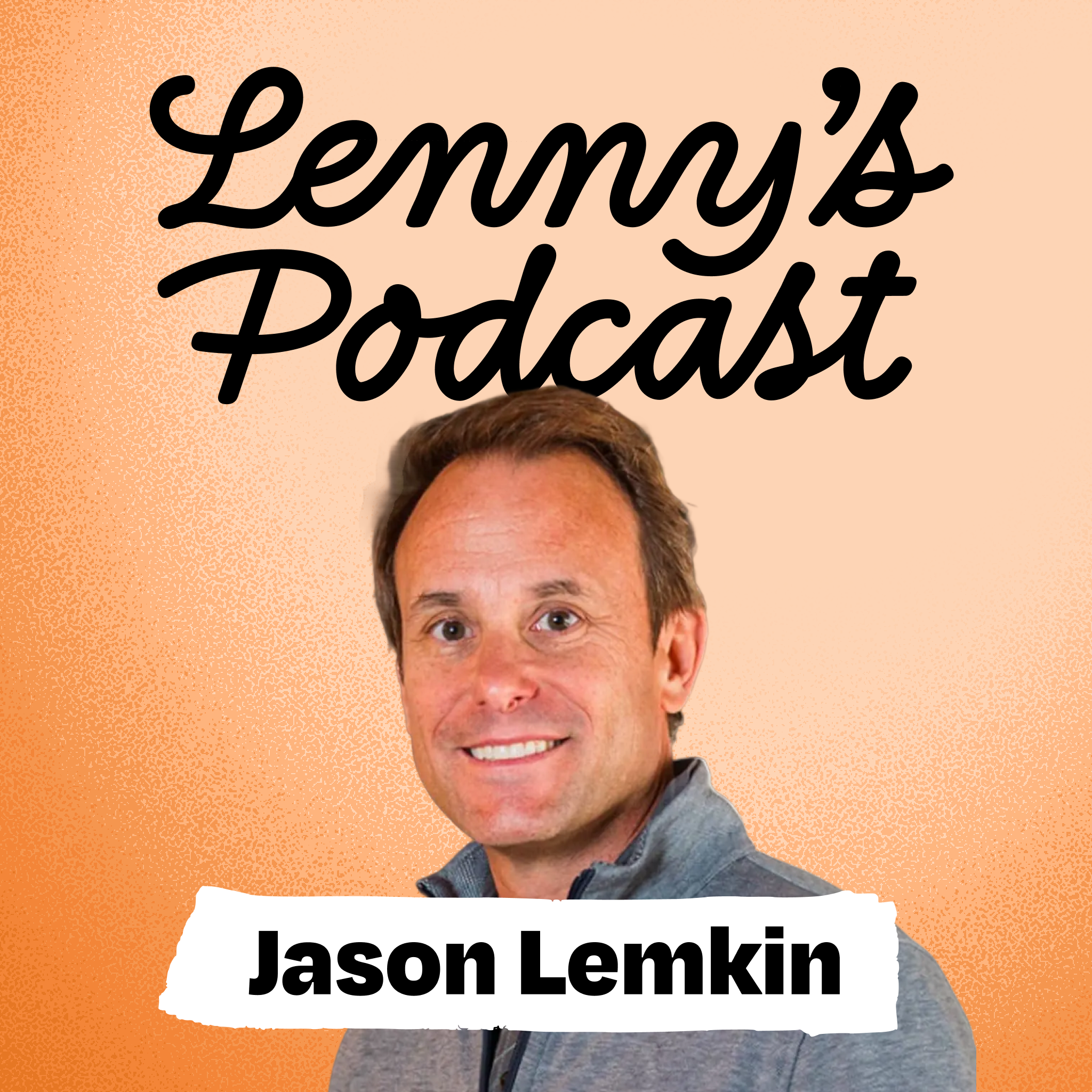
Guests: Jason Lemkin
In-depth read · Key ideas, reasoning, and examples, organized by topic.
§01From ten sellers to 1.2 humans and 20 agents
The episode opens on the headline claim: SaaStr's go-to-market function once had about ten full-time people and now runs on 1.2 humans and 20 AI agents. Jason Lemkin describes ten former sales desks now labeled with agent nicknames such as Repli, Quali and Arti, and stresses that the agents work nights, weekends and holidays. Lenny Rachitsky summarizes the result as business performance that looks very similar to the ten-person era.
Lemkin traces the switch to a specific moment. Going into SaaStr Annual, a 10,000-person event with a seven-figure budget and an eight-figure top line, two well-paid salespeople quit on site. He had already seen Delphi, a general-purpose "Digital Jason" agent not trained for sales, close a 70K sponsorship on its own, so he told Amelia, the chief AI officer, that the company would stop hiring humans for sales and push agents as far as they would go, even if it did not fully work.
We're done with hiring humans in sales. We're done.
The before-and-after staffing is concrete. Previously SaaStr had two to three SDRs and up to five AEs, roughly eight to nine people. Today the "1.2" means one full-time AE plus Amelia, who spends 20% of her time managing and orchestrating agents. The agents are split by job: separate agents for low-end ticket sales, high-end sponsorship cycles and lapsed customers, each with its own workflow and, for now, its own vendor.
§02What SaaStr sells and why volume favors agents
Lemkin frames SaaStr as a founder community that became a business: a blog started in 2012, meetups, a 10,000-person annual event, and eight figures of yearly revenue with heavy event costs and about a hundred sponsors. The sales team sells two things: sponsorships averaging about 70K to 80K, and tickets ranging from a couple hundred dollars to about two thousand for a VC who decides the night before.
Ticket sales are the high-volume, self-serve side, worth four or five million a year, and maximizing them takes drip campaigns, outreach and reactivating past attendees. Lemkin uses Lenny's roughly 1.2 million newsletter subscribers as an illustration: no human SDR fresh out of junior college can call a list that large. The exchange about how many of those a human would actually contact (Lenny suggests about 20,000) sets up the core argument that agents cover volume humans never touch.
§03Same output, more efficiency, and who is displaced
Lemkin's main reported result is parity, not a leap. He says net productivity is about the same as the human team, but far more efficient and scalable because software scales. He adds a caveat that runs through the rest of the conversation: agents do not work out of the box and only start to resemble your best salesperson after you train them on that person's work and scripts.
The net productivity is about the same.
He is explicit that this is not a refusal to hire talent. He would hire two more great people tomorrow, and he cites an OpenAI leader saying the company cannot hire enough enterprise reps. What agents replace, in his view, is the middle and lower tier: reps who do not understand the product, do not know what a pull request is, or still cannot explain what SaaStr does after three months. He says the best people will get superpowers from AI and that he is not sure the rest will.
AI is replacing the jobs people don't want to do today, and it is displacing the mid-pack and the mediocre.
The cold open previews his forecast for the profession: entry-level email SDRs and inbound lead qualifiers should largely disappear, while a smaller number of people who manage agents could be worth $250,000 a year, citing Vercel as a place where an SDR would manage ten agents rather than ten people. People who can actually deploy these systems, he says, will be highly employable.
§04The plays still work; the playbooks are broken
Asked how go-to-market will change, Lemkin separates tactics from formulas. Outbound, webinars, podcasts and events still work, which is why companies like ElevenLabs still run roadshows. What broke is the standard playbook, because slow-growing SaaS companies from the 2021 era have seen demand evaporate, while AI leaders such as Vercel, Replit and ElevenLabs have so much demand that they run the same plays through a heavy PLG focus and pick which prospects to answer.
All the plays work. It's the playbooks that are kind of broken in the age of AI.
His example is Bolt, which he calls a distant third behind Replit and Lovable. Its sales lead told him half the job was choosing which leads to respond to, and that Bolt won a seven-figure deal from Lovable because nobody at Lovable called the prospect back. Lemkin argues that both ends of a now bifurcated market have reasons to push AI in go-to-market in 2026: hypergrowth companies cannot reach everyone, and slow growers face pressure for ruthless efficiency. He also says most companies should buy rather than build these tools.
Keep reading as a member.
You've read the free preview. Become a member to read the rest, with side-by-side reading and downloads where available.