
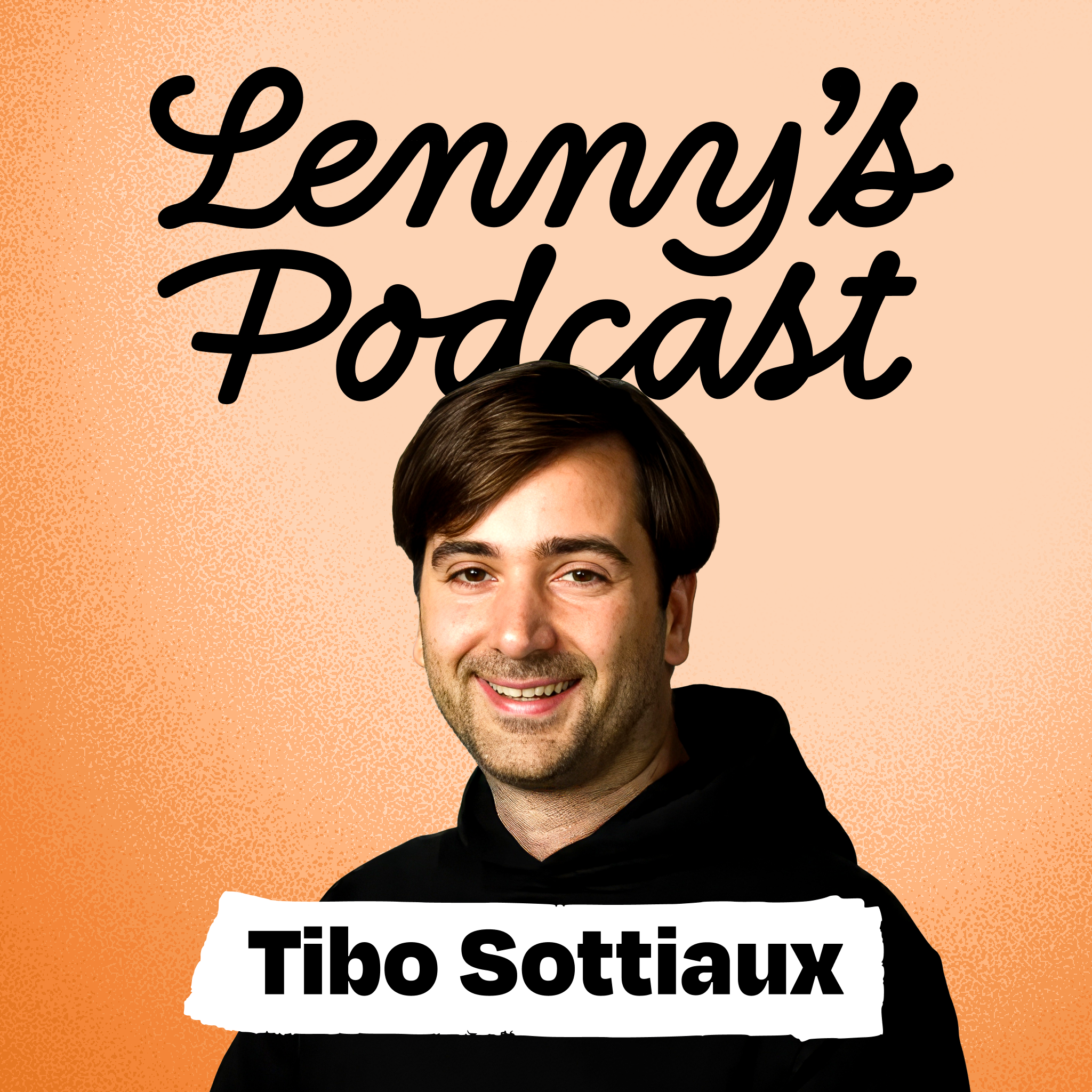
OpenAI’s Head of ChatGPT: We’re entering a new era of AI (again) | Tibo Sottiaux
Guests: Tibo Sottiaux
In-depth read · Key ideas, reasoning, and examples, organized by topic.
§01A provocation: build for models ten times better
Tibo Sottiaux opens with a challenge to builders: when he looks at what people are shipping, he often feels they are "not quite getting it." His test is to imagine the technology being roughly ten times better within a year, and he argues that taking this assumption seriously would change how products are designed today.
really imagining all of this being roughly 10 times better than it is today in a year
Asked what people are failing to price in, he makes a concrete prediction: most actions on the internet will be performed by agents rather than people. The practical consequence for product teams is scale, because a product that wants to succeed with agents must be built to absorb the volume of activity that agents generate.
The majority of actions on the internet will be taken by agents.
The cold open also previews two later themes. He doubts that hand-configured agent loops are the end state and expects systems that simply learn, and he predicts that work will keep changing radically because today's tools still feel clunky.
§02How Tibo works: Codex writes the code, agent teams expand and shrink
The conversation is recorded on a launch day. Tibo credits his team, who stayed up most of the night in an office room called the library, repurposed as a "mega war room."
Asked whether he still codes, he answers with a rhetorical "What is coding?" He still merges code occasionally, but most of the code produced on his behalf is written by Codex to run analyses: understanding trends, the business, the next feature, and how previous launches are performing. The only code he writes by hand is a "therapeutic" weekend LeetCode exercise.
A lot of code is written by Codex for that.
On parallel agents, he describes a cycle rather than a steady increase. He used to run many agents at once, but a speed breakthrough he calls Ultrafast lets him stay "in the flow" with a single faster agent, and he says it will be released more broadly soon. At the frontier he builds ever-larger teams of agents; then a model breakthrough lets one bigger agent keep everything in memory and learn, so the team shrinks again.
I kind of shrink the team again, and then it just goes through this expansion and shrinking expansion.
§03Beyond loops: dots as a persistent intelligence
Lenny asks whether this connects to the popular interest in agent loops and graphs. Tibo is skeptical: setting up and fiddling with loops excited people, but he does not think that is how things will work. Instead he points to dots, the product OpenAI is shipping: an agent that works around the clock, understands your goals and preferences, and learns from feedback.
I don't think this is the way that it's going to work
He admits the launch is "not perfect" and says the team expects to learn a great deal from releasing it to pro users. The goal is a system that learns what you want to achieve, so users do not have to design a loop in a precise way to get results.
Keep reading as a member.
You've read the free preview. Become a member to read the rest, with side-by-side reading and downloads where available.