
CZ's Untold Story: The Rise, Fall, and Redemption of Binance's Founder
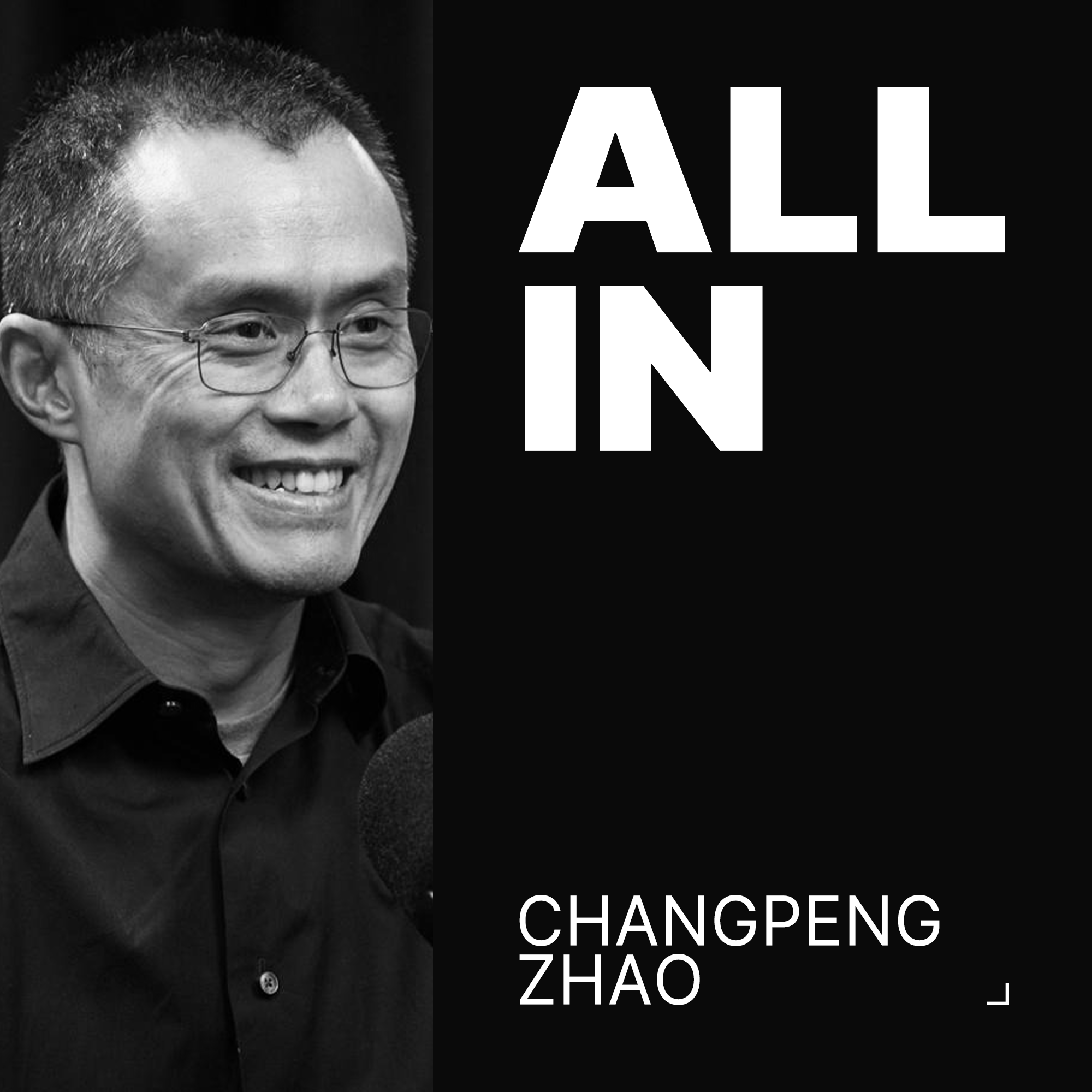
In-depth read · Key ideas, reasoning, and examples, organized by topic.
§01From a Chinese university campus to Vancouver
The interview opens by going back to the guest's early years. The host draws a parallel between their two immigrant journeys in Canada: one of them worked at McDonald's and the other at Burger King. The family's move started with the father, who went to Canada to study in 1984, five years before Tiananmen Square. He had been a teacher and professor in China. He first joined an exchange program at the University of Toronto and a couple of years later moved to the University of British Columbia (UBC) in Vancouver. While he was away he visited the family roughly twice a year.
Leaving China was slow. The family started applying around 1985. A Chinese passport took two to three years, a visa took a few more, and they finally got through in 1989. The host asks whether Tiananmen could have shut the door. The answer given is that it worked the other way: after the crackdown new passports got harder to obtain but visas got easier. The family already had passports from about a year earlier, so the change helped them get their visas "in some really weird way."
Asked whether the events shaped him at 12, the guest says he was not consciously changed. He allows that it may have had some subconscious effect, and he hedges on this with "I don't know." The family lived on the campus of China Science and Technology University, described as one of China's top four universities. Students there, probably seven to nine years older than him, were discussing democracy.
Vancouver is described as a completely new country. He had studied English for a couple of years in high school but was not fluent. The recollection of Canada is warm: greenery, open space, high living standards, cleanliness, and fruit that was bigger.
The family's finances were tight. The father, an assistant professor, received a stipend of about a thousand Canadian dollars a month, and the family lived in low-cost UBC faculty housing on campus. On the third day after arriving, the mother started work in a factory sewing clothes. She had been a math and history teacher in China but did not speak much English, so she could only get minimum-wage factory work, which she did for "seven, 10 years." The host shares a parallel story: his mother had been a nurse in Sri Lanka, his father was unemployed after the family got refugee status, and his mother worked as a housekeeper and then a nurse's aide.
Both describe getting their first jobs at about 14. A minimum wage of $6 is cited, along with an Ontario figure of $4.55. McDonald's paid $4.50, which the conversation describes as below the minimum wage because the chain "somehow had like a special exemption" since many young kids worked there. The application was made on a 14th birthday, and a week later he was flipping burgers. It was his first income.
§02A self-described decent coder who graduated without debt
The guest rejects the idea that he was a precocious coding prodigy. He says he was interested in programming in high school and studied computer science, but he was not "one of those really genius coders," just a decent one who wrote some decent code. He says he moved away from coding around age 28 to 30 and into business development and sales, which leaves roughly eight years of coding in his career.
He remembers his social life as broad. He had both Asian and non-Asian friends at a school where most Asian students stayed with each other, and he calls himself an exception. He describes his teenage years in Canada as some of his best and says they shaped him into a happy person.
The host teases him about not getting into the University of Waterloo, the host's alma mater. The guest says he was choosing between Waterloo, McGill and possibly the University of Toronto. He turned down an offer from UBC because he wanted a different city. Following advice from a friend's mother, who said doctors had a good living, he planned to study biology. Waterloo was not much of a biology school, so he went to McGill. One semester later he switched to computer science.
He paid for school by working every summer and part-time during the school year, and he took no student debt. He gives specific figures for family help: about $6,000 Canadian from his father in the first year and $3,000 from his sister in the second year. After that he was self-sustaining.
The host offers a contrasting story. Waterloo's co-op program was "a savior," but he still graduated with about $30,000 of debt. While working as a derivatives trader at a bank and trading equities on the side, he had made his boss, Mike Fisher, enough money that Fisher told him to go pay off the debt and wrote him a $32,000 check. The two use this to compare Canada with the United States. They say Canadian education does not leave people with debt they cannot overcome, and they note that American students paying international tuition at McGill still paid less than they would in the U.S.
He did not actually graduate from McGill. An internship in his third year kept getting extended, and he never went back. He later learned that a work visa in Japan required a bachelor's degree. Around 2000, at the height of the dot-com era, he earned one through an online program called the American College of Computer Science. Asked whether he is technically a graduate of that school, he answers, "Technically, yes."
§03Tokyo, order execution systems and the pursuit of low latency
He says he held programming jobs from his first year of college, starting with simulation software at a company called Original Sim. The internship that redirected his career was in Tokyo at Fusion Systems Japan. He describes it as a company run by "a bunch of American guys" that wrote order execution systems for brokers on the Tokyo Stock Exchange. Living in Tokyo as a college student is described as "a dream."
The host asks whether the software resembles what drives Binance today, and the answer is "Pretty much." The guest says he took on the subject because it was his job, not out of early passion. He was young and did not know the different industries. His first project was a digital imaging storage system for medical imaging for Nikon, but the company's main product was the order execution system, and that became the thread of his career. The appeal was technical: "Everything is about efficiency, making it go as fast as possible, process as low latency as possible."
I'm an efficiency kind of driven guy, like subconsciously.
The host points to high-frequency trading firms that build their own physical fiber infrastructure to shave off milliseconds and asks how that kind of optimization shows up in code. The answer describes several levels:
Write efficient software and remove database lookups so that everything runs in memory. Cut additional computation and simplify risk checks, especially pre-trade risk checks. Move logic onto an FPGA on the network card so data does not have to travel up to memory and back down to the processor. He says that when he was still writing code, "maybe 10 years ago," this cut a round trip of about 100 microseconds to about 20 microseconds. Move into physical infrastructure such as co-location.
The host draws an AI parallel from his own company: it is inefficient for a GPU to go all the way out to HBM and back, so the approach was to keep work in on-chip SRAM, which is very fast for the decode phase of inference. He then asks why high-frequency trading firms never built custom ASICs. The guest says he does not think they exist at very large scale. Trading algorithms change too often, and custom chips are fast but slow to change. In his view FPGAs offer the best of both, although even FPGA reprogramming takes a cycle about 10 times longer than software.
§04An acquisition, a failed spinout and four years at Bloomberg
The Tokyo company was successful. It was sold to a NASDAQ-listed company just before 2000 for about $52 million. In his early twenties, working as a coder or "salary man," he did not see this as a sign to start his own company.
He took two lessons from what happened next. The first came from the acquisition. The parent company's management and the original company's management clashed, which he calls his first experience of how mergers may not work. The second came from the partners' next venture. They had made quite a bit of money from the sale, though he got none, and they rented a very fancy office for a new company. It had zero revenue and folded within a year, in 2001. He summarizes the lesson:
It means that previous success doesn't guarantee future success.
In early 2001 he was job hunting from Tokyo and got an offer from Bloomberg in New York shortly before 9/11. After the attacks he called to ask whether the job still stood. They asked whether he still wanted to come, and he moved to New York in November 2001. He remembers the streets as quiet for a few months before the city became lively again.
He spent four years at Bloomberg, joining as a senior developer on a newly formed team called Trade Book Futures. The team consolidated scattered systems that let people trade futures on Bloomberg. He says he still had no entrepreneurial ambition. At 24 or 25 he was trying to gain experience in different parts of the world and knew he was not experienced enough to start a company. Next to the Tokyo firm's roughly 200 people, Bloomberg's roughly 3,000 seemed big, with fancy offices, fish tanks and free food.
He moved up quickly. He was promoted three times in two years and led a team that started at 60 people and grew to about 80. That was when he stopped writing code and became a manager, a change the conversation calls "the worst transition."
Keep reading as a member.
You've read the free preview. Become a member to read the rest, with side-by-side reading and downloads where available.