
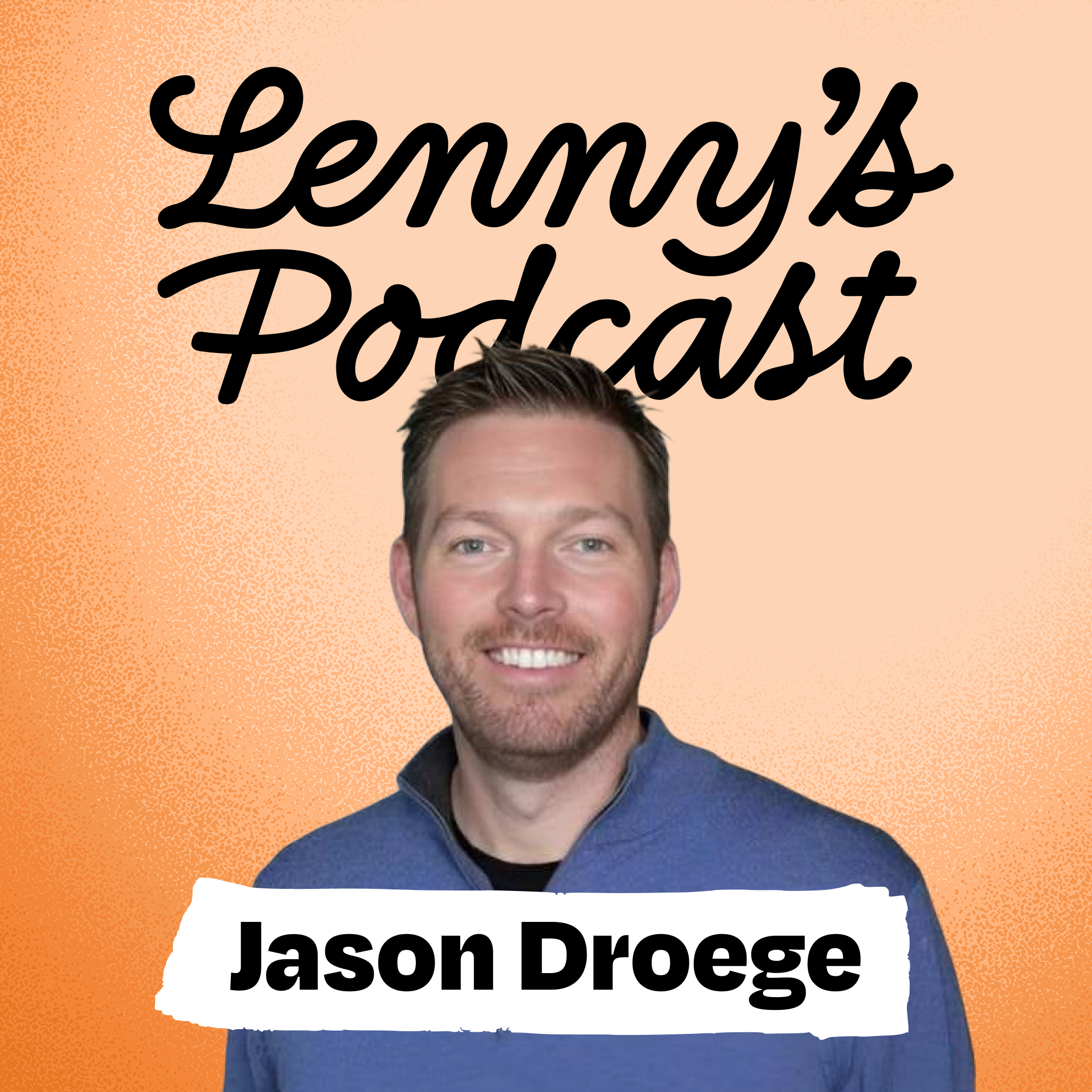
First interview with Scale AI’s CEO: $14B Meta deal, what’s working in enterprise AI, and what frontier labs are building next | Jason Droege
Guests: Jason Droege
In-depth read · Key ideas, reasoning, and examples, organized by topic.
§01Scale's position after the Meta transaction
Jason Droege opens by framing the practical AI question as a move from models that know things to agents that can reliably do things in real operating environments. He argues that the difficult work is not just model capability but reaching the reliability required to automate an important process, which he says can take six to twelve months.
Droege describes Scale as independent after Meta invested a little more than $14 billion for 49% non-voting stock. He says Meta did not gain a new board seat or preferential access, that the existing privacy and data-security protections remain, and that only about 15 people moved in the transaction. These are his account of the arrangement and the company’s position, not independently verified claims in the interview.
He characterizes Scale’s evolution as continual adaptation to the kind of data models need: autonomous-vehicle labeling, then computer vision, then generative-AI tasks. In contrast to what he calls competitors’ misleading positioning, he says current work often requires experts, such as accomplished web developers or people able to explain nuanced cancer topics, rather than only low-cost generalist labor.
§02Why expert data and evaluations remain necessary
Droege says expert contributors are difficult to recruit and that referrals are the largest channel, supplemented by campus outreach and conventional recruiting. His explanation is that specialists participate both for compensation and because contributing their expertise to AI can address a frustration they have with current models. The point is an account of Scale’s recruiting approach rather than a general measurement of the labor market.
On reinforcement learning, he focuses on environments: sandboxes in which an agent must accomplish a goal inside a particular software setup. The central data problem, he says, is not to enumerate every conceivable configuration, but to find tasks and environments whose lessons generalize across a broad range of use cases. A calendar-search example illustrates the distinction between a specific task and a reusable capability.
Keep reading as a member.
You've read the free preview. Become a member to read the rest, with side-by-side reading and downloads where available.