
Nobel Peace Prize Winner: María Corina Machado on Defeating Maduro, Socialism & Freeing Venezuela
Guests: María Corina Machado
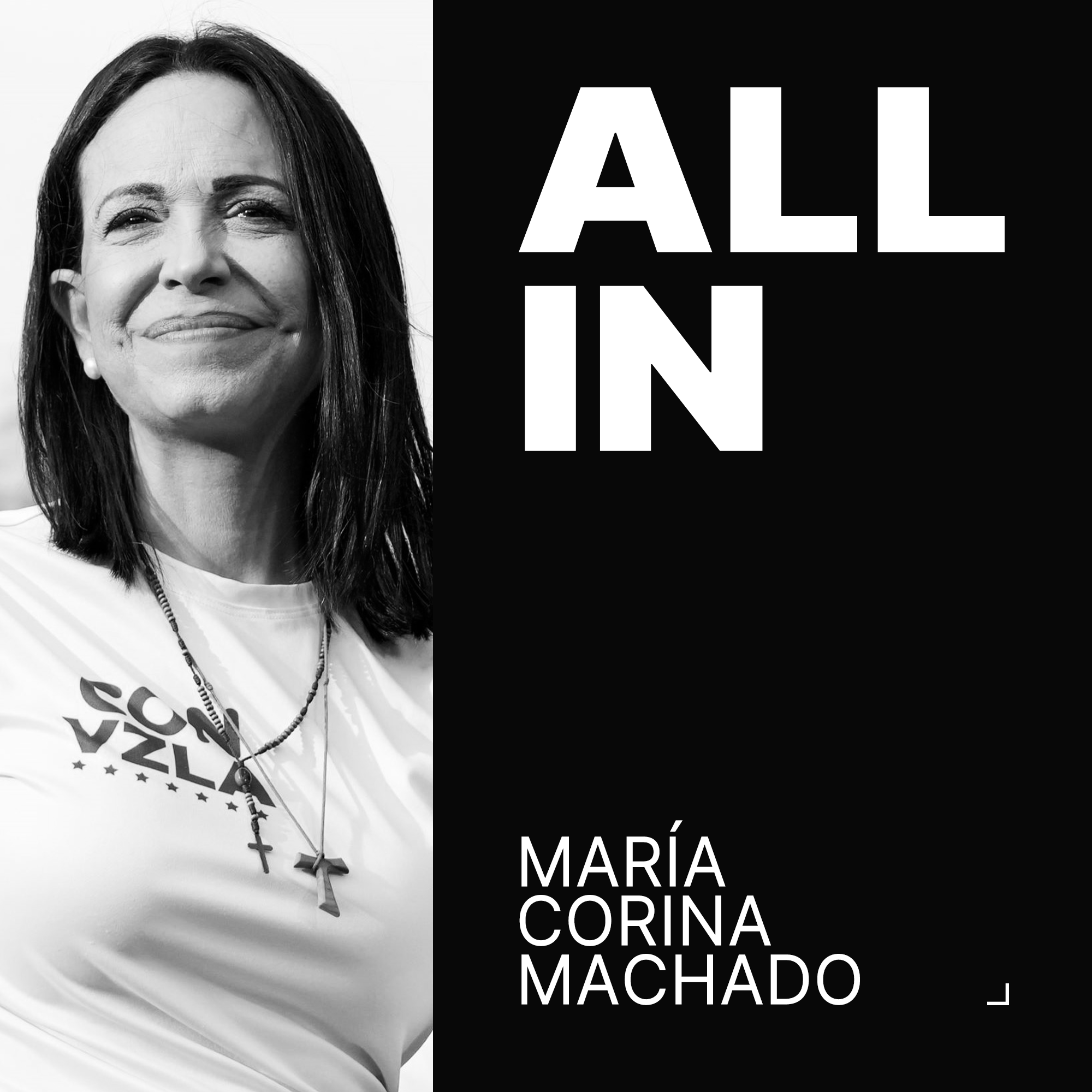
In-depth read · Key ideas, reasoning, and examples, organized by topic.
§01A disputed election set against the world's largest oil reserves
The interview opens with the guest's current situation: she is in hiding, two weeks after winning the Nobel Peace Prize. The introduction gives the political timeline. She won Venezuela's presidential primary in October 2023, was disqualified from the general election the following March, and ultimately appointed a surrogate, Edmundo Gonzalez. After the presidential vote, her party presented evidence that it said showed a 69.5% result in its favour. Maduro, through the National Electoral Council, declared himself the winner with 51% of the votes.
The economic backdrop is oil. The introduction dates the discovery of oil to 1914, with a boom that took off in 1922. It puts Venezuela's proven reserves at 300 billion barrels, the largest in the world, ahead of Saudi Arabia at 266 billion and the United States at 48 billion. In this telling, the economy first improved through investment by the 'seven sisters', a group of seven oil companies, and later moved to nationalized oil production. The introduction presents that shift as the start of the story that leads to the present.
§02Resources without institutions
The response frames the current moment as unique and decisive. It describes 26 years of a tyranny that has become 'a real criminal structure', turning one of the freest and richest countries in the Americas into one of the poorest, with a third of the population forced to flee. The lesson drawn from this is that natural resources alone do not create prosperity:
It shows that you can have huge, unique natural endowments, but that's not wealth. You need talent, you need institutions, and you need freedom in order to turn that in the well-being of your people.
The personal background is brief. It describes a large, close Latin American family and a father who was an industrial entrepreneur, called the smartest, most generous and most honest person the speaker has met, and who taught the responsibility that comes with family values and opportunity. The speaker says she belonged to a generation that viewed politics with rejection or even contempt (rendered 'content' in the transcript) and had vowed to do anything but politics. Chávez's arrival changed that. It forced the realization that freedom required active citizenship.
And, you know, we thought that we had inherited democracy forever. We took it for granted.
§03How Chávez came to power
The account of the pre-Chávez period is mixed. Democracy is credited with large opportunities and widespread education and health, but the country 'stopped short of a real free economy'. State control of institutions and of the nationalized oil companies created 'terrible incentives', and more people felt excluded from the country's wealth because it sat in the hands of the state. By the time Chávez arrived there had been a political crisis, growing tensions and corruption in the party system. Oil had also fallen to about $8 a barrel.
Chávez is described as offering a populist narrative of equality and of revenge against those blamed for poverty, while aligning with Fidel Castro's Cuba and other international interests seeking Venezuela's resources and strategic location. The arc runs from populism to autocracy to 'criminal structure'. The discussion confirms he took power in 1999. The two sides give different oil prices for that time: the question suggests about $14 a barrel, and the answer says it was 'Even less', consistent with the earlier $8 figure.
The promise, as reconstructed in the conversation, was to take resources from the rich and from companies and redistribute them to poor neighbourhoods and the most vulnerable. The verdict on that promise is harsh. Socialism made everyone equal 'in absolute mystery' (apparently 'misery' in the transcript), because people gave up their choices to a state that rewards only compliant behaviour. The concrete image offered is of children eating from garbage in the areas that sit above the oil reserves.
The conversation draws an explicit lesson for America and Europe from this.
Socialism is slavery.
There is no socialism without tyranny.
§04Petro-diplomacy, loyalty and the hollowing of institutions
As oil rose to $100 a barrel, the conversation describes what some have called 'Petro Diplomacy'. Venezuela gave Cuba 300,000 barrels a day at a 50% discount and cultivated Caribbean and African island states as surrogates. The question frames this as political influence projected abroad while ordinary people were excluded, and asks for examples of officials and military figures living in luxury while the population grew poorer.
Keep reading as a member.
You've read the free preview. Become a member to read the rest, with side-by-side reading and downloads where available.